



Hypaconitine
Based on 2 publication(s) in Google Scholar
Hypaconitine inhibits the KCNH2 current with an IC50 of 8.1 nM, and exhibits cardiotoxicity. Hypaconitine inhibits TGF-β1-induced epithelial-mesenchymal transition (EMT) in A549 cell through the inhibition of NF-κB nuclear translocation. Hypaconitine acts as the neuromuscular blocker. Hypaconitine is orally active.
For research use only. We do not sell to patients.
- Purity : 99.49%
- CAS No.: 6900-87-4
- Formula: C33H45NO10
- Molecular Weight:615.71
-
Storage:Powder -20°C, 3 years , 4°C, 2 years ; In solvent -80°C, 2 years , -20°C, 1 year

To place orders, for customer services and technical support, please contact: MedChemExpress USA
Tel: 609-228-6898 E-mail: [email protected] [email protected]


-
 Biological Activity
-
Chemical Information
-
Solvent & Solubility
- Protocols
- Purity & Documentation
- References
-
 Help & FAQs


-
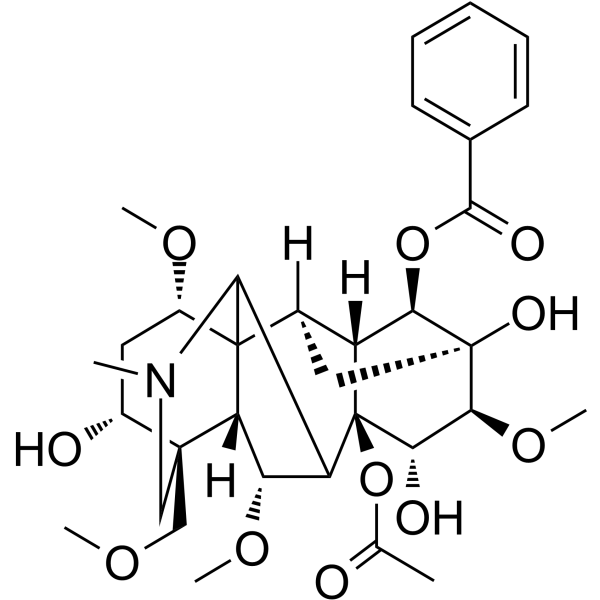
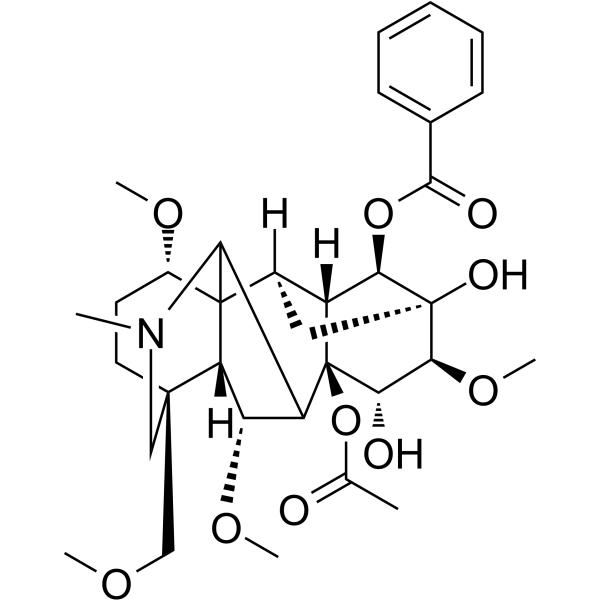
HY-N0724
MesaconitineNitric Oxide Synthase Activator -
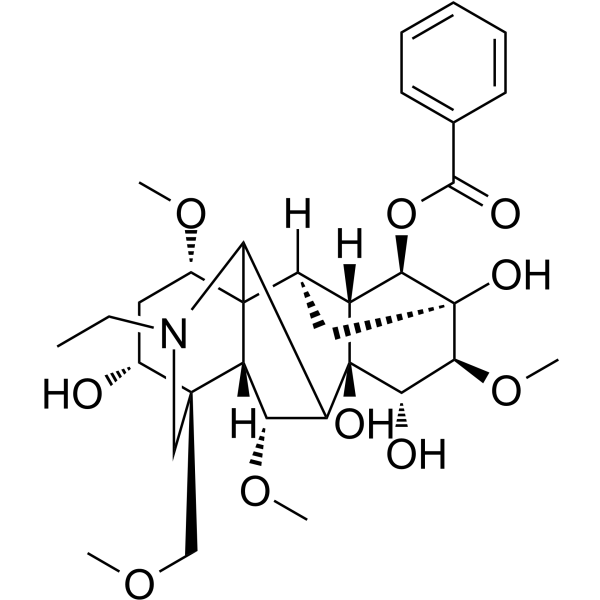
HY-N0217
BenzoylaconineAnti-inflammatory Agent -
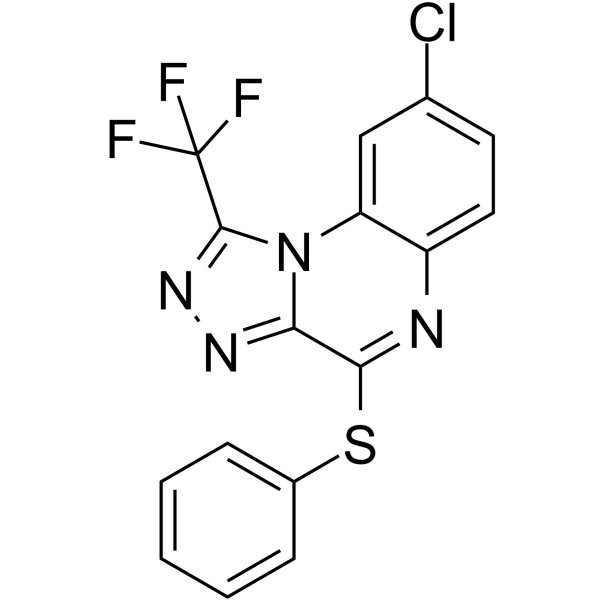
HY-110203
R-7050TNF Receptor Antagonist -
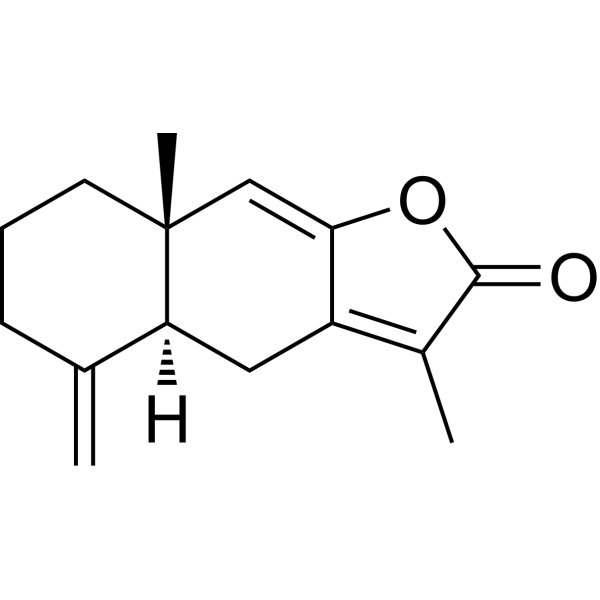
HY-N0201
Atractylenolide ITLR4 Antagonist -
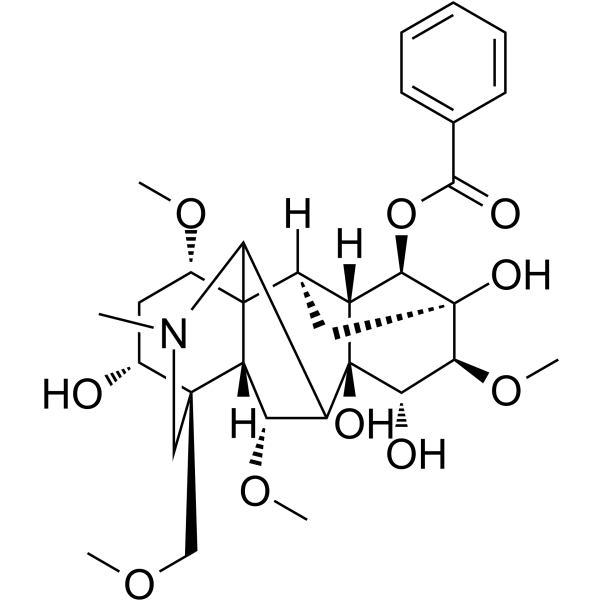
HY-N0218
BenzoylmesaconineAnti-Inflammatory Agent -
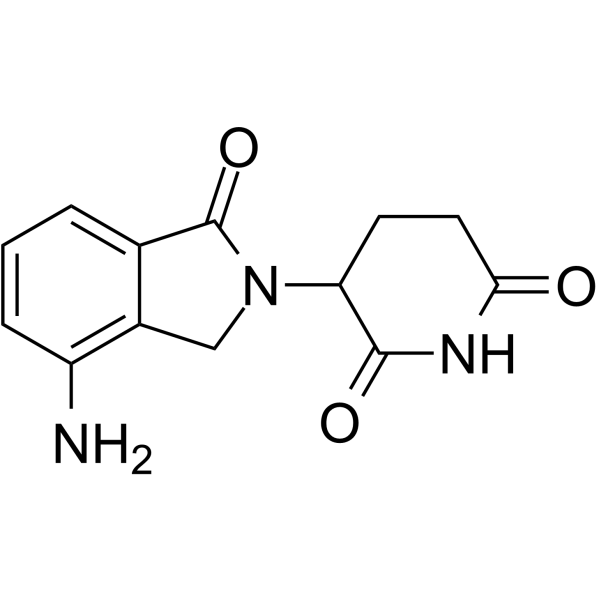
HY-A0003
LenalidomideImmunomodulator -
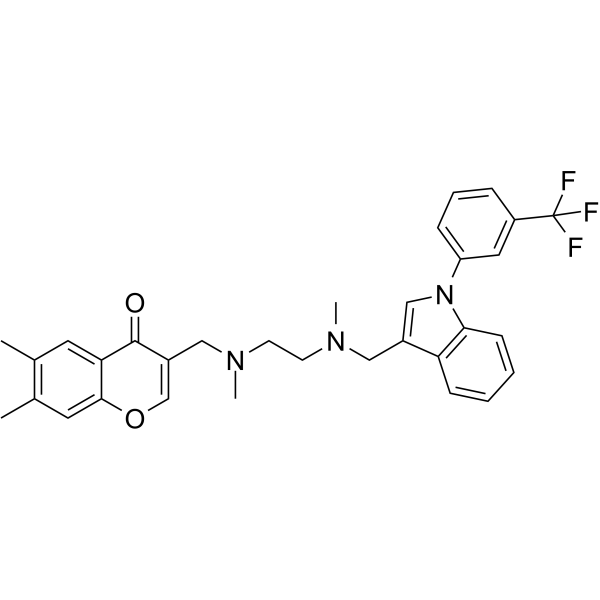
HY-111255
SPD304TNFα Inhibitor -

HY-N0267R
Hypaconitine (Standard)TNF Receptor Inhibitor -
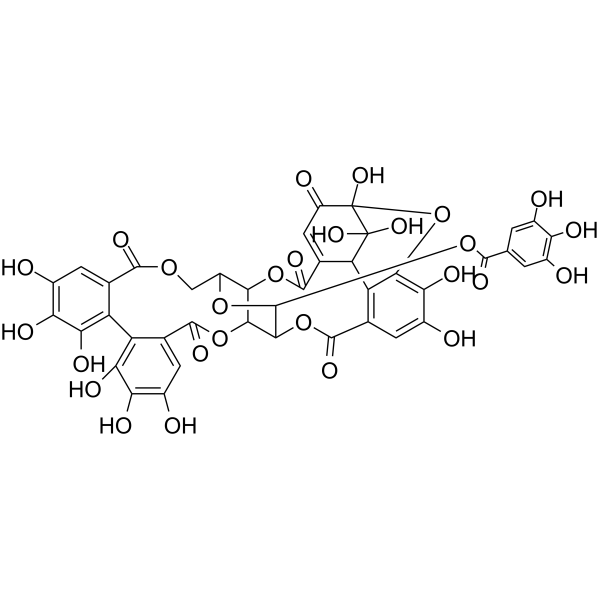
HY-N0472
GeraniinTNF Receptor Inhibitor -
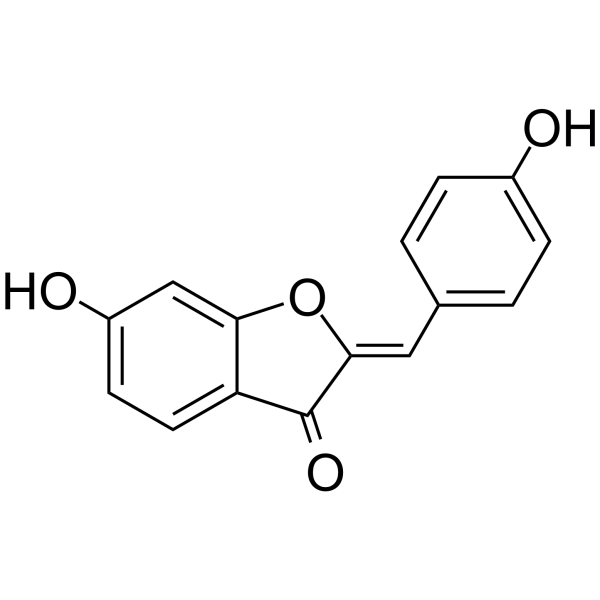
HY-102040
HispidolTNF-α Inhibitor -
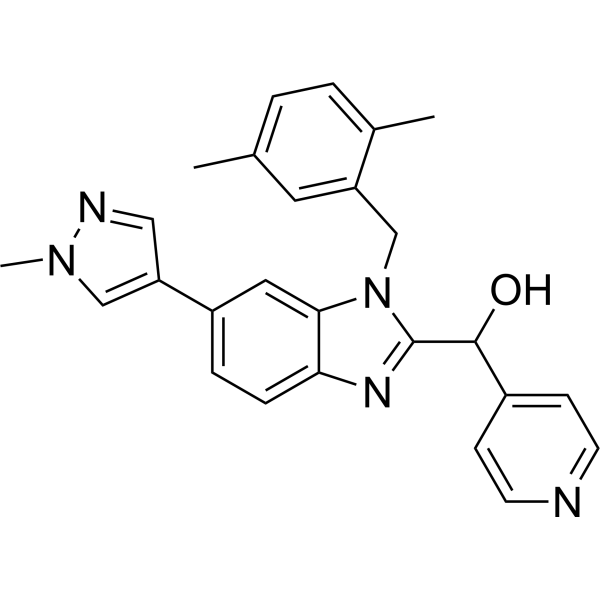
HY-133122
UCB-9260TNF Signaling Inhibitor -
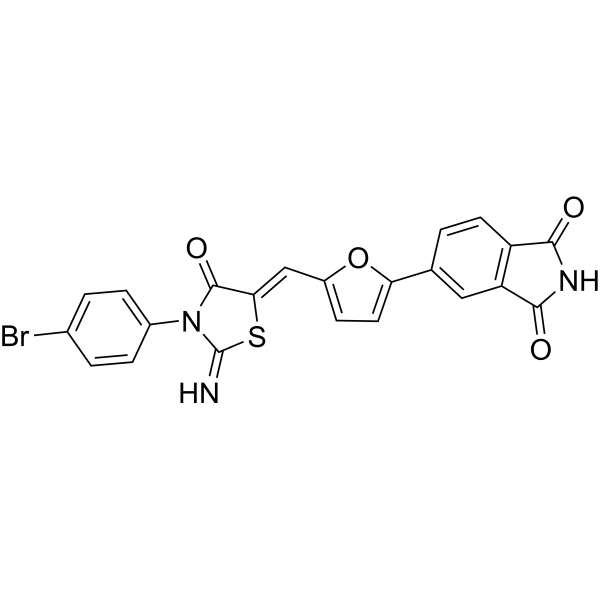
HY-18377
BioymifiDR5 Activator
Publications Citing Use of MedChemExpress (MCE) Hypaconitine
MoreAll Calcium Channel Isoforms
More

Biological Activity
Description
In Vitro
Hypaconitine (0-8 μM, 48 h) reverses TGF-β1-induced cell morphological changes (such as the disappearance of intercellular junctions and the appearance of spindle-shaped appearance), reverses the conversion of E-cadherin to N-cadherin in TGF-β1 administrated A549 cell and H1299 cell, reverses TGF-β1-induced cell migration and invasion of cell A549 and H1299[1].
Hypaconitine (10-60 μM, 24 h) regulates the calcium influx and calcium release through store-operated Ca2+ channels, and exhibits cytotoxicity in HCN-2 neuronal cells[3].
Hypaconitine (0-5 μM, 60 min) inhibits nerve-evoked twitch tension and nerve compound action potential in phrenic mouse diaphragm cells[4].
MedChemExpress (MCE) has not independently confirmed the accuracy of these methods. They are for reference only. Further protocols information, click here.
In Vivo
MedChemExpress (MCE) has not independently confirmed the accuracy of these methods. They are for reference only.
-
Animal Model:Beagle dog models[2]
-
Dosage:50-450 μg/kg
-
Administration:po, single dose
-
Result:Prolonged the QTcV interval (QT interval corrected using the Van de Water formula) with a maximum prolongation of 23%.


Chemical Information
-
CAS No. 6900-87-4
-
Appearance Solid
-
Molecular Weight 615.71
-
Formula C33H45NO10
-
Color White to off-white
-
SMILES
CO[C@@H](CC1)C23[C@@](C[C@@]4(O)[C@@H]5OC(C6=CC=CC=C6)=O)([H])[C@@]5([H])[C@](OC(C)=O)([C@@H](O)[C@@H]4OC)C7C2N(C)C[C@@]1(COC)[C@@]3([H])[C@H]7OC
-
Structure Classification
-
Initial Source
-
Shipping
Room temperature in continental US; may vary elsewhere.
-
Storage
Powder -20°C 3 years 4°C 2 years In solvent -80°C 2 years -20°C 1 year


Publications (2)
-
Journal Impact Factor
-
Most Recent
-
Chem Biol Interact
2019 Aug 1:308:288-293. PMID: 31150629 -
Xenobiotica
Comparative HPLC-MS/MS-based pharmacokinetic studies of multiple diterpenoid alkaloids following the administration of Zhenwu Tang and Radix Aconiti Lateralis Praeparata extracts to rats. [Abstract]2021 Mar;51(3):345-354. PMID: 33332226


Solvent & Solubility
In Vitro:
DMSO : 50 mg/mL (81.21 mM; Need ultrasonic; Hygroscopic DMSO has a significant impact on the solubility of product, please use newly opened DMSO)
Please refer to the solubility information to select the appropriate solvent. Once prepared, please aliquot and store the solution to prevent product inactivation from repeated freeze-thaw cycles.
Storage method and period of stock solution: -80°C, 2 years; -20°C, 1 year. When stored at -80°C, please use it within 2 years. When stored at -20°C, please use it within 1 year.
Please refer to the solubility information to select the appropriate solvent. Once prepared, please aliquot and store the solution to prevent product inactivation from repeated freeze-thaw cycles.
Storage method and period of stock solution: -80°C, 2 years; -20°C, 1 year. When stored at -80°C, please use it within 2 years. When stored at -20°C, please use it within 1 year.
Concentration (start) × Volume (start) = Concentration (final) × Volume (final)
In Vivo:
Select the appropriate dissolution method based on your experimental animal and administration route.
- For the following dissolution methods, please ensure to first prepare a clear stock solution using an In Vitro approach and then sequentially add co-solvents:
- To ensure reliable experimental results, the clarified stock solution can be appropriately stored based on storage conditions. As for the working solution for In Vivo experiments, it is recommended to prepare freshly and use it on the same day.
- The percentages shown for the solvents indicate their volumetric ratio in the final prepared solution. If precipitation or phase separation occurs during preparation, heat and/or sonication can be used to aid dissolution.
Add each solvent one by one: 10% DMSO 40% PEG300 5% Tween-80 45% Saline
Solubility: ≥ 2.5 mg/mL (4.06 mM); Clear solution
This protocol yields a clear solution of ≥ 2.5 mg/mL (saturation unknown).
Taking 1 mL working solution as an example, add 100 μL DMSO stock solution (25.0 mg/mL) to 400 μL PEG300, and mix evenly; then add 50 μL Tween-80 and mix evenly; then add 450 μL Saline to adjust the volume to 1 mL.
Preparation of Saline: Dissolve 0.9 g sodium chloride in ddH₂O and dilute to 100 mL to obtain a clear Saline solution.
In Vivo Dissolution Calculator
Please enter the basic information of animal experiments:
-
-
-
-
Recommended: Prepare an additional quantity of animals to account for potential losses during experiments.
Please enter your animal formula composition:
-
%DMSO +
Recommended: Keep the proportion of DMSO in working solution below 2% if your animal is weak.
-
%+
-
+%Tween-80 + +
-
%Saline +
The co-solvents required include: DMSO, . All of co-solvents are available by MedChemExpress (MCE). , Tween 80. All of co-solvents are available by MedChemExpress (MCE).
Working solution concentration: 0.22 mg/mL
Method for preparing stock solution: mg drug dissolved in μL DMSO. Stock solution concentration: mg/mL.
1. Take μL DMSO stock solution;
2. Add μL .
μL , mix evenly;
3. Then add μL Tween 80, mix evenly;
4. Then add μL
Please ensure that the stock solution in the first step is dissolved to a clear state, and add co-solvents in sequence. You can use ultrasonic heating (ultrasonic cleaner, recommended frequency 20-40 kHz), vortexing, etc. to assist dissolution.

Protocols
-
Cytoplasmic-Nuclear Fractionated Protein Extraction
Cytoplasmic-nuclear fractionated protein extraction separates soluble cytoplasmic proteins from nuclear-enriched proteins by mild plasma-membrane permeabilization, differential centrifugation, washing of nuclei, and extraction of nuclear proteins for downstream immunoblotting or related molecular analysis. The readout is the relative abundance of a protein in cytoplasmic and nuclear fractions, commonly assessed by western blotting together with compartment markers such as tubulin or pyruvate kinase for cytoplasm and lamin, nucleoporin, hnRNP, H2AX, or Lamin B for nuclear fractions.
-
Research Protocol for Inflammation-related Diseases
The NLRP3 inflammasome is a cytosolic innate immune signaling platform that integrates priming signals and danger-signal activation to promote caspase-1 activation, maturation of IL-1β and IL-18, and gasdermin D-mediated pyroptotic cell death. The core experimental logic is to determine whether inflammatory disease phenotypes are driven by increased NLRP3 expression, ASC-containing inflammasome assembly, caspase-1 cleavage, GSDMD cleavage, and extracellular release of IL-1β/IL-18 rather than by nonspecific cell injury alone. The pathway is strongly linked to inflammation-related disease phenotypes because monosodium urate crystals activate NALP3/NLRP3 inflammasome signaling in gout-like crystal inflammation, cholesterol crystals activate NLRP3 inflammasomes in atherogenesis models, and DSS-induced intestinal inflammation has been reported to involve NLRP3 inflammasome activity. However, experimental colitis studies also show context-dependent protective effects of NLRP3 inflammasome co


Purity & Documentation
-
Data Sheet (290 KB)
-
SDS (479 KB)
- English - EN (479 KB)
- Français - FR (479 KB)
- Deutsch - DE (479 KB)
- Norwegian - NO (479 KB)
- Español - ES (479 KB)
- Swedish - SV (479 KB)
- Italian - IT (479 KB)
- Korean - KR (479 KB)
- Portuguese - PT (479 KB)
-
Handling Instructions (2659 KB)
References
[1]. Feng HT, et al., Hypaconitine inhibits TGF-β1-induced epithelial-mesenchymal transition and suppresses adhesion, migration, and invasion of lung cancer A549 cells. Chin J Nat Med. 2017 Jun;15(6):427-435. [Content Brief]
[2]. Xie S, et al., Hypaconitine-induced QT prolongation mediated through inhibition of KCNH2 (hERG) potassium channels in conscious dogs. J Ethnopharmacol. 2015 May 26;166:375-9. [Content Brief]
[3]. Hsu SS, et al., Mechanism of action of a diterpene alkaloid hypaconitine on cytotoxicity and inhibitory effect of BAPTA-AM in HCN-2 neuronal cells. Clin Exp Pharmacol Physiol. 2021 May;48(5):801-810. [Content Brief]
[4]. Muroi M, et al., Blocking effects of hypaconitine and aconitine on nerve action potentials in phrenic nerve-diaphragm muscles of mice. Neuropharmacology. 1990 Jun;29(6):567-72. [Content Brief]


Complete Stock Solution Preparation Table
Please refer to the solubility information to select the appropriate solvent. Once prepared, please aliquot and store the solution to prevent product inactivation from repeated freeze-thaw cycles.
Storage method and period of stock solution: -80°C, 2 years; -20°C, 1 year. When stored at -80°C, please use it within 2 years. When stored at -20°C, please use it within 1 year.
| Optional Solvent | Concentration Solvent Mass | 1 mg | 5 mg | 10 mg | 25 mg |
|---|---|---|---|---|---|
| DMSO | 1 mM | 1.6241 mL | 8.1207 mL | 16.2414 mL | 40.6035 mL |
| 5 mM | 0.3248 mL | 1.6241 mL | 3.2483 mL | 8.1207 mL | |
| 10 mM | 0.1624 mL | 0.8121 mL | 1.6241 mL | 4.0604 mL | |
| 15 mM | 0.1083 mL | 0.5414 mL | 1.0828 mL | 2.7069 mL | |
| 20 mM | 0.0812 mL | 0.4060 mL | 0.8121 mL | 2.0302 mL | |
| 25 mM | 0.0650 mL | 0.3248 mL | 0.6497 mL | 1.6241 mL | |
| 30 mM | 0.0541 mL | 0.2707 mL | 0.5414 mL | 1.3535 mL | |
| 40 mM | 0.0406 mL | 0.2030 mL | 0.4060 mL | 1.0151 mL | |
| 50 mM | 0.0325 mL | 0.1624 mL | 0.3248 mL | 0.8121 mL | |
| 60 mM | 0.0271 mL | 0.1353 mL | 0.2707 mL | 0.6767 mL | |
| 80 mM | 0.0203 mL | 0.1015 mL | 0.2030 mL | 0.5075 mL |


Hypaconitine Related Classifications
HY-N0267 Related Classifications
 Powered by Bioz