Search Result
Results for "
UV irradiation
" in MedChemExpress (MCE) Product Catalog:
12
Biochemical Assay Reagents
1
Isotope-Labeled Compounds
| Cat. No. |
상품명 |
Target |
연구분야 |
Chemical Structure |
-
- HY-122198
-
ML367
1 Publications Verification
|
Checkpoint Kinase (Chk)
|
Cancer
|
|
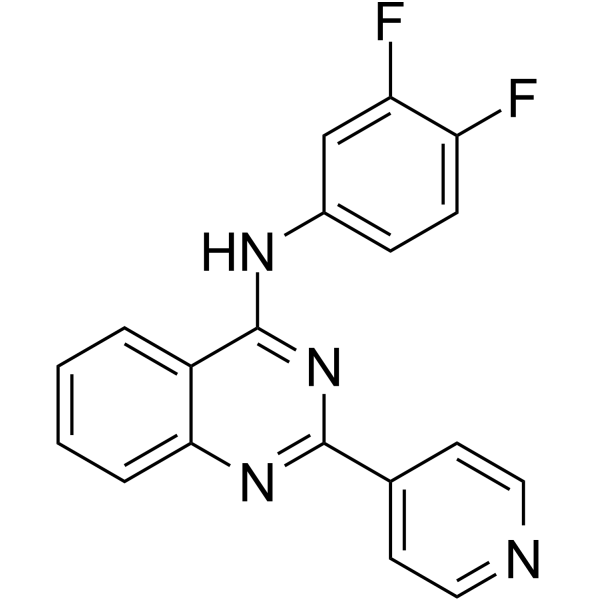
ML367 is a potent inhibitor of ATPase family AAA domain-containing protein 5 (ATAD5) stabilization, acts as a probe molecule that has low micromolar inhibitory activity. ML367 blocks DNA repair pathways, suppresses general DNA damage responses including RPA32-phosphorylation and CHK1-phosphorylation in response to UV irradiation .
|
-
-
- HY-164159
-
|
|
Reactive Oxygen Species (ROS)
MMP
|
Inflammation/Immunology
|
|
α-Glucosylrutin, a flavonoid, is a potent antioxidant with free radical scavenging activity. α-Glucosylrutin reduces MMP-1 gene expression, protein expression, and enzyme activity, and reduces MMP-2 protein expression and enzyme activity in UVA-irradiated human dermal fibroblasts. α-Glucosylrutin prevents oxidative stress-induced intracellular tyrosine residue phosphorylation and counteracts intracellular thiol level depletion in human skin cells. α-Glucosylrutin is effective in the prevention of dermatologic diseases in which oxidative stress is of pathogenetic relevance, e.g. in polymorphous light eruption (PLE). α-Glucosylrutin can be used for the research of UV-induced skin photodamage/photoaging .
|
-
-
- HY-109654
-
|
|
Reactive Oxygen Species (ROS)
|
Metabolic Disease
|
|
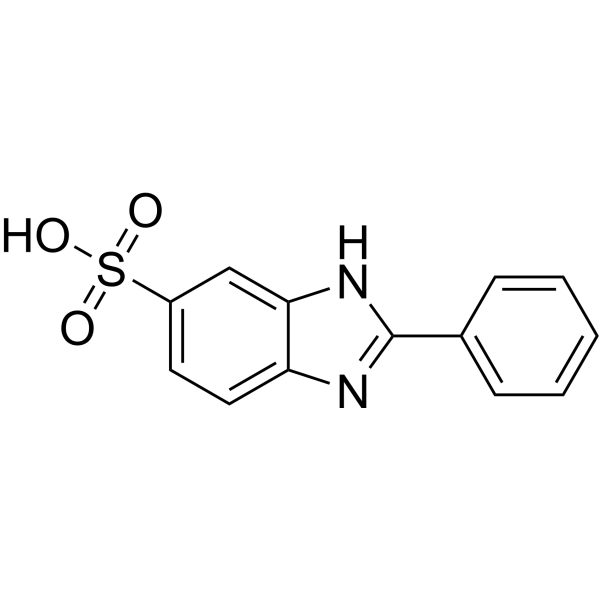
Ensulizole is a sulfonated UV absorber and can intense UVB and partial UVA absorption. Ensulizole can damage the DNA through the generation of reactive oxygen species (ROS) upon UV or sunlight irradiation .
|
-
-
- HY-W011168
-
|
|
Nucleoside Antimetabolite/Analog
DNA/RNA Synthesis
|
Inflammation/Immunology
Cancer
|
|
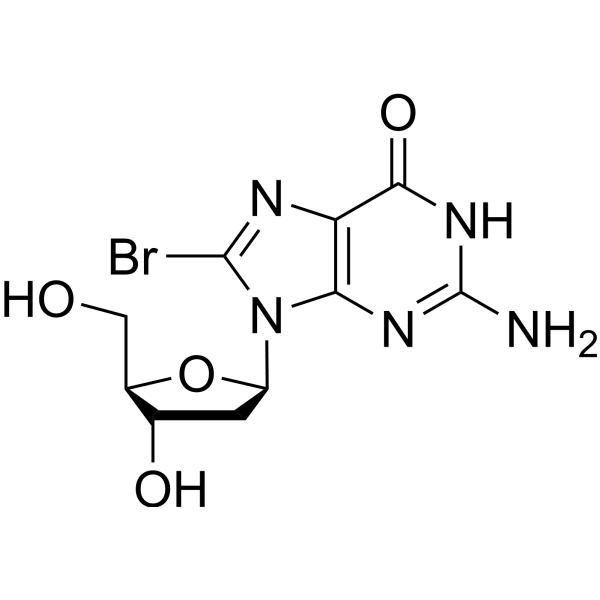
8-Bromo-2'-deoxyguanosine is an inflammation-related DNA halogenated adduct and an early biomarker of inflammation-induced oxidative tissue damage. The formation of 8-Bromo-2'-deoxyguanosine precedes that of oxidative and nitrative products, and it can be generated via the MPO-H2O2-Cl --Br - system. 8-Bromo-2'-deoxyguanosine serves as the immunogen for preparing the monoclonal antibody mAb8B3, which can be used to detect early DNA modifications in preclinical models; its urinary level also increases significantly in inflammatory disease models. 8-Bromo-2'-deoxyguanosine can also be produced in the dermis of UV-B irradiated mice, and the extract of Coprinus comatus significantly reduces its level. 8-Bromo-2'-deoxyguanosine finds applications in studies related to inflammatory diseases, diabetes, hepatocellular carcinoma, and UV-B induced skin inflammation .
|
-
-
- HY-W583212
-
|
ZnMP
|
Biochemical Assay Reagents
Heme Oxygenase (HO)
|
Inflammation/Immunology
|
Zn (II) Mesoporphyrin IX (ZnMP) is a heme oxygenase inhibitor with photochemical substrate activity. Zn (II) Mesoporphyrin IX specifically inhibits the activity of bone marrow heme oxygenase. In vitro, Zn (II) Mesoporphyrin IX inhibits the growth of erythroid and myeloid progenitor cells in rabbit bone marrow, and blocks the rhG-CSF-induced mobilization of these progenitor cells into the peripheral blood, exhibiting toxicity to hematopoietic growth and progenitor cell production in rabbits. Zn (II) Mesoporphyrin IX undergoes irreversible photochemical decomposition conforming to first-order kinetic characteristics when irradiated with UV-B in 95% ethanol solution. Zn (II) Mesoporphyrin IX can be used in hematopoietic regulation research, but its photolability and toxic effects on the hematopoietic system require attention .
|
-
-
- HY-W098021
-
|
Photoinitiator-651
|
Biochemical Assay Reagents
|
Others
|
|
2,2-Dimethoxy-2-phenylacetophenone is a hydrophobic benzoin ether-based free radical photoinitiator. 2,2-Dimethoxy-2-phenylacetophenone undergoes α-cleavage upon UV irradiation to generate benzoyl and substituted benzyl free radicals, thereby initiating photopolymerization reactions. 2,2-Dimethoxy-2-phenylacetophenone serves as a hydrophobic free radical photoinitiator for the photopolymerization of acrylamide and trimethylolpropane triacrylate in specific systems .
|
-
-
- HY-158220
-
|
HAMA (MW 400 kDa)
|
Biochemical Assay Reagents
|
Others
|
|
Hyaluronic acid Methacryloyl (HAMA) is methacrylated hyaluronic acid that is biocompatible. Hyaluronic acid Methacryloyl is also used as a 3D printing hydrogel ink, which has the characteristics of fast photosensitive response, fast gelation speed and stable hydrogel performance. Hyaluronic acid Methacryloyl can quickly induce gelation with lithium phenyl-2,4,6-trimethylbenzoylphosphinate (LAP) under UV irradiation. The combination of Hyaluronic acid Methacryloyl and tissue-specific extracellular matrix (ECM) materials (such as pancreatic extracellular matrix (pECM)) will become an important source material for organoid culture .
|
-
-
- HY-158220A
-
|
HAMA (MW 150 kDa)
|
Biochemical Assay Reagents
|
Others
|
|
Hyaluronic acid Methacryloyl (HAMA) MW 150 kDa is methacrylated hyaluronic acid that is biocompatible. Hyaluronic acid Methacryloyl is also used as a 3D printing hydrogel ink, which has the characteristics of fast photosensitive response, fast gelation speed and stable hydrogel performance. Hyaluronic acid Methacryloyl can quickly induce gelation with lithium phenyl-2,4,6-trimethylbenzoylphosphinate (LAP) under UV irradiation. The combination of Hyaluronic acid Methacryloyl and tissue-specific extracellular matrix (ECM) materials (such as pancreatic extracellular matrix (pECM)) will become an important source material for organoid culture .
|
-
-
- HY-P4417A
-
|
|
Fluorescent Dye
|
Others
|
|
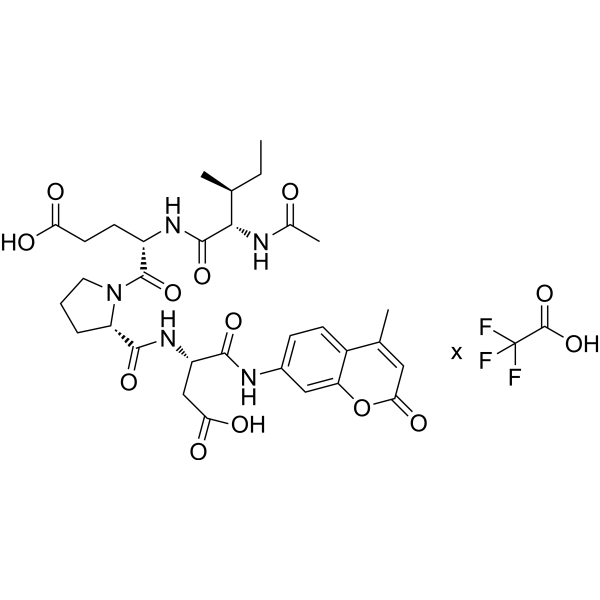
Ac-IEPD-AMC TFA is a fluorescent substrate used to measure protease activity. Ac-IEPD-AMC undergoes hydrolysis and releases the fluorescent product 7-amino-4-methylcoumarin (AMC). AMC fluoresces under UV light irradiation and can emit fluorescent signals .
|
-
-
- HY-W110540D
-
|
|
Biochemical Assay Reagents
|
Others
|
|
Poly(ethylene glycol) dimethacrylate (MW 2000) is a photopolymerizable poly(ethylene glycol)-based macromer and biocompatible crosslinking agent with a molecular weight of approximately 2000. Poly(ethylene glycol) dimethacrylate (MW 2000) can form photopolymerized hydrogels. Poly(ethylene glycol) dimethacrylate (MW 2000) can be used for research on tissue engineering and drug delivery .
|
-
-
- HY-171145
-
|
|
Biochemical Assay Reagents
|
Others
|
|
ATP-ArN3 is a UV-activatable ATP-crosslinker analog. ATP-ArN3 relys on UV irradiation to activate the aryl azide (ArN3) crosslinking group and conjugate substrate to kinases and associated proteins .
|
-
-
- HY-W110540H
-
|
|
Biochemical Assay Reagents
|
Others
|
|
Poly(ethylene glycol) dimethacrylate (MW 3400) is a photopolymerizable poly(ethylene glycol)-based macromer and biocompatible crosslinking agent with a molecular weight of approximately 3400. Poly(ethylene glycol) dimethacrylate (MW 3400) can form photopolymerized hydrogels. Poly(ethylene glycol) dimethacrylate (MW 3400) can be used for research on tissue engineering and drug delivery .
|
-
-
- HY-W110540K
-
|
|
Biochemical Assay Reagents
|
Others
|
|
Poly(ethylene glycol) dimethacrylate (MW 10000) is a photopolymerizable poly(ethylene glycol)-based macromer and biocompatible crosslinking agent with a molecular weight of approximately 10000. Poly(ethylene glycol) dimethacrylate (MW 10000) can form photopolymerized hydrogels. Poly(ethylene glycol) dimethacrylate (MW 10000) can be used for research on tissue engineering and drug delivery .
|
-
-
- HY-W110540L
-
|
|
Biochemical Assay Reagents
|
Others
|
|
Poly(ethylene glycol) dimethacrylate (MW 20000) is a photopolymerizable poly(ethylene glycol)-based macromer and biocompatible crosslinking agent with a molecular weight of approximately 20000. Poly(ethylene glycol) dimethacrylate (MW 20000) can form photopolymerized hydrogels. Poly(ethylene glycol) dimethacrylate (MW 20000) can be used for research on tissue engineering and drug delivery .
|
-
-
- HY-W110540C
-
|
|
Biochemical Assay Reagents
|
Others
|
|
Poly(ethylene glycol) dimethacrylate (MW 1000) is a photopolymerizable poly(ethylene glycol)-based macromer and biocompatible crosslinking agent with a molecular weight of approximately 1000. Poly(ethylene glycol) dimethacrylate (MW 1000) can form photopolymerized hydrogels. Poly(ethylene glycol) dimethacrylate (MW 1000) can be used for research on tissue engineering and drug delivery .
|
-
-
- HY-W110540A
-
|
|
Biochemical Assay Reagents
|
Others
|
|
Poly(ethylene glycol) dimethacrylate (MW 750) is a photopolymerizable poly(ethylene glycol)-based macromer and biocompatible crosslinking agent with a molecular weight of approximately 750. Poly(ethylene glycol) dimethacrylate (MW 750) can form photopolymerized hydrogels. Poly(ethylene glycol) dimethacrylate (MW 750) can be used for research on tissue engineering and drug delivery .
|
-
-
- HY-W110540
-
|
|
Biochemical Assay Reagents
|
Others
|
|
Poly(ethylene glycol) dimethacrylate (MW 550) is a photopolymerizable poly(ethylene glycol)-based macromer and biocompatible crosslinking agent with a molecular weight of approximately 550. Poly(ethylene glycol) dimethacrylate (MW 550) can form photopolymerized hydrogels. Poly(ethylene glycol) dimethacrylate (MW 550) can be used for research on tissue engineering and drug delivery .
|
-
-
- HY-W110540I
-
|
|
Biochemical Assay Reagents
|
Others
|
|
Poly(ethylene glycol) dimethacrylate (MW 4000) is a photopolymerizable poly(ethylene glycol)-based macromer and biocompatible crosslinking agent with a molecular weight of approximately 4000. Poly(ethylene glycol) dimethacrylate (MW 4000) can form photopolymerized hydrogels. Poly(ethylene glycol) dimethacrylate (MW 4000) can be used for research on tissue engineering and drug delivery .
|
-
-
- HY-W110540J
-
|
|
Biochemical Assay Reagents
|
Others
|
|
Poly(ethylene glycol) dimethacrylate (MW 6000) is a photopolymerizable poly(ethylene glycol)-based macromer and biocompatible crosslinking agent with a molecular weight of approximately 6000. Poly(ethylene glycol) dimethacrylate (MW 6000) can form photopolymerized hydrogels. Poly(ethylene glycol) dimethacrylate (MW 6000) can be used for research on tissue engineering and drug delivery .
|
-
-
- HY-109654R
-
|
|
Reference Standards
Reactive Oxygen Species (ROS)
|
Metabolic Disease
|
|
Ensulizole (Standard) is the analytical standard of Ensulizole. This product is intended for research and analytical applications. Ensulizole is a sulfonated UV absorber and can intense UVB and partial UVA absorption. Ensulizole can damage the DNA through the generation of reactive oxygen species (ROS) upon UV or sunlight irradiation .
|
-
-
- HY-161160
-
|
|
Fluorescent Dye
|
Others
|
|
Ac4ManNDAz is a cell-permeable photocross-linking probe. Ac4ManNDAz can effectively compete with endogenous sialic acid for incorporation into cell surface glycoproteins and form cross-links with glycoprotein ligands under UV light irradiation. Ac4ManNDAz can be used to study interactions between glycoproteins .
|
-
-
- HY-155730
-
|
|
PI3K
|
Cancer
|
|
PI3K-IN-41 (compound 2) is a photocaged compound, as well as a photocaged PI3K inhibitor (IC50=18.92 nM) with anticancer properties. PI3K-IN-41 has potential to be used in precisely controlled cancer therapeutics. PI3K-IN-41 exhibits potent PI3K ihibition upon UV light irradiation, and enhances antitumor effect .
|
-
-
- HY-W767399
-
|
|
Isotope-Labeled Compounds
DNA/RNA Synthesis
Nucleoside Antimetabolite/Analog
|
Cancer
|
|
8-Bromo-2'-deoxyguanosine- 13C, 15N2 is the 13C- and 15N-labeled 8-Bromo-2'-deoxyguanosine (HY-W011168). 8-Bromo-2'-deoxyguanosine is an inflammation-related DNA halogenated adduct and an early biomarker of inflammation-induced oxidative tissue damage. The formation of 8-Bromo-2'-deoxyguanosine precedes that of oxidative and nitrative products, and it can be generated via the MPO-H2O2-Cl --Br - system. 8-Bromo-2'-deoxyguanosine serves as the immunogen for preparing the monoclonal antibody mAb8B3, which can be used to detect early DNA modifications in preclinical models; its urinary level also increases significantly in inflammatory disease models. 8-Bromo-2'-deoxyguanosine can also be produced in the dermis of UV-B irradiated mice, and the extract of Coprinus comatus significantly reduces its level. 8-Bromo-2'-deoxyguanosine finds applications in studies related to inflammatory diseases, diabetes, hepatocellular carcinoma, and UV-B induced skin inflammation .
|
-
-
- HY-106849
-
|
|
Drug Derivative
|
Inflammation/Immunology
|
|
Y-26611 is an orally active new type of quinolone derivative. Y-26611 exhibits strong phototoxicity under UV irradiation and can significantly induce lipid peroxidation of human red blood cell membrane .
|
-
-
- HY-183342
-
|
|
NO Synthase
Drug Derivative
|
Metabolic Disease
|
|
DHEA Benzophenone-biotin is a photoactive DHEA (HY-14650) analog containing Biotin (HY-B0511) and Benzophenone (HY-Y0546) groups. DHEA Benzophenone-biotin inhibits plasma membrane binding of DHEA, activates endothelial NO synthase. DHEA Benzophenone-biotin cross-links to plasma membrane DHEA binding sites upon UV irradiation to identify associated proteins .
|
-
-
- HY-180983
-
|
|
PROTACs
Bcr-Abl
|
Cancer
|
|
Azo-PROTAC-4C-trans is a BCR-ABL PROTAC degrader that can efficiently degrade the BCR-ABL fusion protein and ABL protein. Azo-PROTAC-4C-trans exhibits potent selective anti-proliferative activity against K562 cells. Azo-PROTAC-4C-trans allows real-time, reversible regulation of its activity via UV (to inactivate it) /visible light (to activate it) irradiation. Azo-PROTAC-4C-trans can be used for the study of myeloid leukemia .
|
-
-
- HY-118720A
-
|
U-23 TFA
|
Reactive Oxygen Species (ROS)
|
Others
|
|
Ovothiol A TFA (U-23 TFA) is an antioxidant. Ovothiol A TFA can be isolated from the tissues of marine invertebrates, algae and fish. Ovothiol A acts synergistically with glutathione to actively scavenge ROS and free radicals, and quench the triplet state of Kynurenic acid (HY-100806), thereby inhibiting oxidative stress and photodamage. OSH is expected to serve as an excellent photoprotective agent to inhibit the harmful effects caused by solar ultraviolet radiation .
|
-
-
- HY-180985
-
|
|
PROTACs
Bcr-Abl
|
Cancer
|
|
Azo-PROTAC-4C-cis is a BCR-ABL PROTAC degrader, and its degradation efficiency of BCR-ABL is much lower than that of its trans isomer Azo-PROTAC-4C-trans (HY-180983). Azo-PROTAC-4C-cis is the product of the conformational transformation of Azo-PROTAC-4C-trans under ultraviolet (UV) light irradiation. Azo-PROTAC-4C-cis can be converted into highly active Azo-PROTAC-4C-trans under visible light, thereby initiating protein degradation. Azo-PROTAC-4C-cis can be used for the study of myeloid leukemia .
|
-
-
- HY-W583212
-
|
ZnMP
|
Biochemical Assay Reagents
|
Zn (II) Mesoporphyrin IX (ZnMP) is a heme oxygenase inhibitor with photochemical substrate activity. Zn (II) Mesoporphyrin IX specifically inhibits the activity of bone marrow heme oxygenase. In vitro, Zn (II) Mesoporphyrin IX inhibits the growth of erythroid and myeloid progenitor cells in rabbit bone marrow, and blocks the rhG-CSF-induced mobilization of these progenitor cells into the peripheral blood, exhibiting toxicity to hematopoietic growth and progenitor cell production in rabbits. Zn (II) Mesoporphyrin IX undergoes irreversible photochemical decomposition conforming to first-order kinetic characteristics when irradiated with UV-B in 95% ethanol solution. Zn (II) Mesoporphyrin IX can be used in hematopoietic regulation research, but its photolability and toxic effects on the hematopoietic system require attention .
|
-
- HY-158220
-
|
HAMA (MW 400 kDa)
|
Biochemical Assay Reagents
|
|
Hyaluronic acid Methacryloyl (HAMA) is methacrylated hyaluronic acid that is biocompatible. Hyaluronic acid Methacryloyl is also used as a 3D printing hydrogel ink, which has the characteristics of fast photosensitive response, fast gelation speed and stable hydrogel performance. Hyaluronic acid Methacryloyl can quickly induce gelation with lithium phenyl-2,4,6-trimethylbenzoylphosphinate (LAP) under UV irradiation. The combination of Hyaluronic acid Methacryloyl and tissue-specific extracellular matrix (ECM) materials (such as pancreatic extracellular matrix (pECM)) will become an important source material for organoid culture .
|
-
- HY-158220A
-
|
HAMA (MW 150 kDa)
|
Biochemical Assay Reagents
|
|
Hyaluronic acid Methacryloyl (HAMA) MW 150 kDa is methacrylated hyaluronic acid that is biocompatible. Hyaluronic acid Methacryloyl is also used as a 3D printing hydrogel ink, which has the characteristics of fast photosensitive response, fast gelation speed and stable hydrogel performance. Hyaluronic acid Methacryloyl can quickly induce gelation with lithium phenyl-2,4,6-trimethylbenzoylphosphinate (LAP) under UV irradiation. The combination of Hyaluronic acid Methacryloyl and tissue-specific extracellular matrix (ECM) materials (such as pancreatic extracellular matrix (pECM)) will become an important source material for organoid culture .
|
-
- HY-W110540D
-
|
|
Biochemical Assay Reagents
|
|
Poly(ethylene glycol) dimethacrylate (MW 2000) is a photopolymerizable poly(ethylene glycol)-based macromer and biocompatible crosslinking agent with a molecular weight of approximately 2000. Poly(ethylene glycol) dimethacrylate (MW 2000) can form photopolymerized hydrogels. Poly(ethylene glycol) dimethacrylate (MW 2000) can be used for research on tissue engineering and drug delivery .
|
-
- HY-W110540H
-
|
|
Biochemical Assay Reagents
|
|
Poly(ethylene glycol) dimethacrylate (MW 3400) is a photopolymerizable poly(ethylene glycol)-based macromer and biocompatible crosslinking agent with a molecular weight of approximately 3400. Poly(ethylene glycol) dimethacrylate (MW 3400) can form photopolymerized hydrogels. Poly(ethylene glycol) dimethacrylate (MW 3400) can be used for research on tissue engineering and drug delivery .
|
-
- HY-W110540K
-
|
|
Biochemical Assay Reagents
|
|
Poly(ethylene glycol) dimethacrylate (MW 10000) is a photopolymerizable poly(ethylene glycol)-based macromer and biocompatible crosslinking agent with a molecular weight of approximately 10000. Poly(ethylene glycol) dimethacrylate (MW 10000) can form photopolymerized hydrogels. Poly(ethylene glycol) dimethacrylate (MW 10000) can be used for research on tissue engineering and drug delivery .
|
-
- HY-W110540L
-
|
|
Biochemical Assay Reagents
|
|
Poly(ethylene glycol) dimethacrylate (MW 20000) is a photopolymerizable poly(ethylene glycol)-based macromer and biocompatible crosslinking agent with a molecular weight of approximately 20000. Poly(ethylene glycol) dimethacrylate (MW 20000) can form photopolymerized hydrogels. Poly(ethylene glycol) dimethacrylate (MW 20000) can be used for research on tissue engineering and drug delivery .
|
-
- HY-W110540C
-
|
|
Biochemical Assay Reagents
|
|
Poly(ethylene glycol) dimethacrylate (MW 1000) is a photopolymerizable poly(ethylene glycol)-based macromer and biocompatible crosslinking agent with a molecular weight of approximately 1000. Poly(ethylene glycol) dimethacrylate (MW 1000) can form photopolymerized hydrogels. Poly(ethylene glycol) dimethacrylate (MW 1000) can be used for research on tissue engineering and drug delivery .
|
-
- HY-W110540A
-
|
|
Biochemical Assay Reagents
|
|
Poly(ethylene glycol) dimethacrylate (MW 750) is a photopolymerizable poly(ethylene glycol)-based macromer and biocompatible crosslinking agent with a molecular weight of approximately 750. Poly(ethylene glycol) dimethacrylate (MW 750) can form photopolymerized hydrogels. Poly(ethylene glycol) dimethacrylate (MW 750) can be used for research on tissue engineering and drug delivery .
|
-
- HY-W110540
-
|
|
Biochemical Assay Reagents
|
|
Poly(ethylene glycol) dimethacrylate (MW 550) is a photopolymerizable poly(ethylene glycol)-based macromer and biocompatible crosslinking agent with a molecular weight of approximately 550. Poly(ethylene glycol) dimethacrylate (MW 550) can form photopolymerized hydrogels. Poly(ethylene glycol) dimethacrylate (MW 550) can be used for research on tissue engineering and drug delivery .
|
-
- HY-W110540I
-
|
|
Biochemical Assay Reagents
|
|
Poly(ethylene glycol) dimethacrylate (MW 4000) is a photopolymerizable poly(ethylene glycol)-based macromer and biocompatible crosslinking agent with a molecular weight of approximately 4000. Poly(ethylene glycol) dimethacrylate (MW 4000) can form photopolymerized hydrogels. Poly(ethylene glycol) dimethacrylate (MW 4000) can be used for research on tissue engineering and drug delivery .
|
-
- HY-W110540J
-
|
|
Biochemical Assay Reagents
|
|
Poly(ethylene glycol) dimethacrylate (MW 6000) is a photopolymerizable poly(ethylene glycol)-based macromer and biocompatible crosslinking agent with a molecular weight of approximately 6000. Poly(ethylene glycol) dimethacrylate (MW 6000) can form photopolymerized hydrogels. Poly(ethylene glycol) dimethacrylate (MW 6000) can be used for research on tissue engineering and drug delivery .
|
| Cat. No. |
상품명 |
Target |
Research Area |
-
- HY-P4417A
-
|
|
Fluorescent Dye
|
Others
|
|
Ac-IEPD-AMC TFA is a fluorescent substrate used to measure protease activity. Ac-IEPD-AMC undergoes hydrolysis and releases the fluorescent product 7-amino-4-methylcoumarin (AMC). AMC fluoresces under UV light irradiation and can emit fluorescent signals .
|
| Cat. No. |
상품명 |
Chemical Structure |
-
- HY-W767399
-
|
|
|
8-Bromo-2'-deoxyguanosine- 13C, 15N2 is the 13C- and 15N-labeled 8-Bromo-2'-deoxyguanosine (HY-W011168). 8-Bromo-2'-deoxyguanosine is an inflammation-related DNA halogenated adduct and an early biomarker of inflammation-induced oxidative tissue damage. The formation of 8-Bromo-2'-deoxyguanosine precedes that of oxidative and nitrative products, and it can be generated via the MPO-H2O2-Cl --Br - system. 8-Bromo-2'-deoxyguanosine serves as the immunogen for preparing the monoclonal antibody mAb8B3, which can be used to detect early DNA modifications in preclinical models; its urinary level also increases significantly in inflammatory disease models. 8-Bromo-2'-deoxyguanosine can also be produced in the dermis of UV-B irradiated mice, and the extract of Coprinus comatus significantly reduces its level. 8-Bromo-2'-deoxyguanosine finds applications in studies related to inflammatory diseases, diabetes, hepatocellular carcinoma, and UV-B induced skin inflammation .
|
-
| Cat. No. |
상품명 |
|
Classification |
-
- HY-W011168
-
|
|
|
Nucleoside Analogs
Guanosine
|
|
8-Bromo-2'-deoxyguanosine is an inflammation-related DNA halogenated adduct and an early biomarker of inflammation-induced oxidative tissue damage. The formation of 8-Bromo-2'-deoxyguanosine precedes that of oxidative and nitrative products, and it can be generated via the MPO-H2O2-Cl --Br - system. 8-Bromo-2'-deoxyguanosine serves as the immunogen for preparing the monoclonal antibody mAb8B3, which can be used to detect early DNA modifications in preclinical models; its urinary level also increases significantly in inflammatory disease models. 8-Bromo-2'-deoxyguanosine can also be produced in the dermis of UV-B irradiated mice, and the extract of Coprinus comatus significantly reduces its level. 8-Bromo-2'-deoxyguanosine finds applications in studies related to inflammatory diseases, diabetes, hepatocellular carcinoma, and UV-B induced skin inflammation .
|
Your information is safe with us. * Required Fields.
Inquiry Information
- 상품명:
- Cat. No.:
- 수량:
- MCE Japan Authorized Agent:

