1. Search Result
Search Result
Results for "

capacitation

" in MedChemExpress (MCE) Product Catalog:

10

Inhibitors & Agonists

2

Peptides

2

Natural
Products

Cat. No. Product Name Target Research Areas Chemical Structure
  • HY-111355B

    Sirtuin Endogenous Metabolite PKC AMPK DOCK Metabolic Disease Inflammation/Immunology Cancer
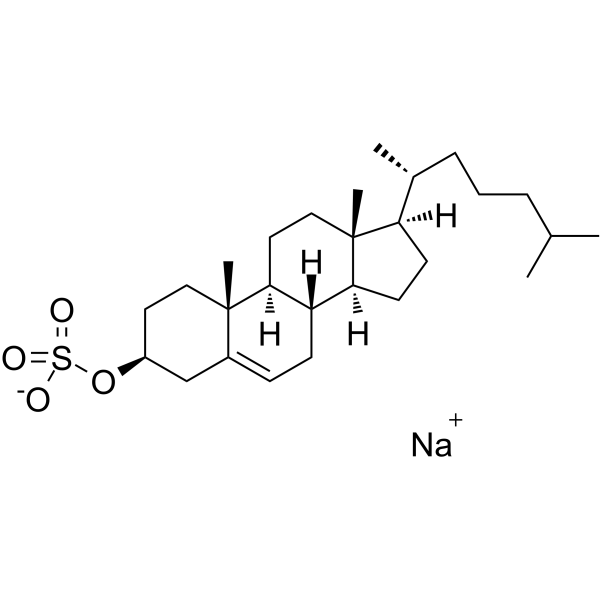
    Cholesterol sulfate sodium is a naturally occurring, orally active cholesterol derivative that is widely distributed in various tissues and body fluids. Cholesterol sulfate sodium acts as a DOCK2 inhibitor, with IC50 values of 2 μM and 2.9 μM against mouse and human targets, respectively. Cholesterol sulfate sodium restricts excessive neutrophil infiltration and alleviates intestinal inflammation and damage. Cholesterol sulfate sodium serves as an activator of protein kinase C (PKC), which promotes squamous cell differentiation and inhibits skin carcinogenesis. Cholesterol sulfate sodium regulates cholesterol homeostasis and cellular metabolism by activating the AMPK-Sirt1 pathway. Cholesterol sulfate sodium can be used in research related to actinic keratitis, ulcerative colitis, skin cancer, and other conditions .
    Cholesteryl sulfate sodium
  • HY-104013
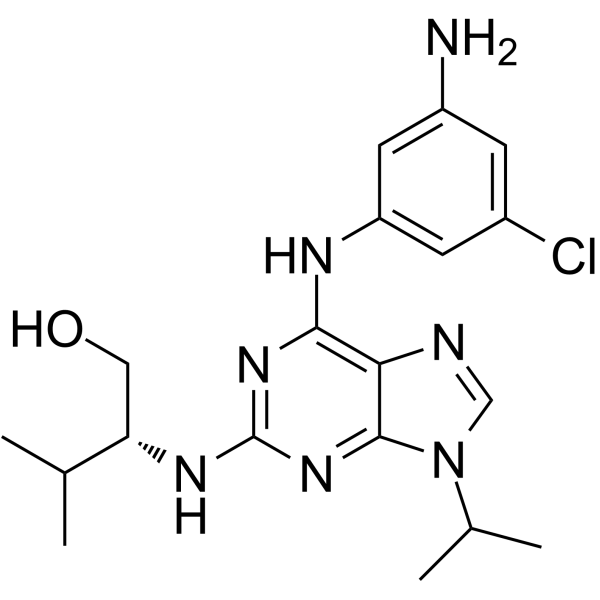
    Aminopurvalanol A
    1 Publications Verification

    CDK Apoptosis Cancer
    Aminopurvalanol A is a potent, selective, and cell permeable inhibitor of Cyclins/Cdk complexes. Aminopurvalanol A preferentially targets the G2/M-phase transition inhibiting cancer cell differentiation. Aminopurvalanol A causes the inhibition of sperm fertilizing ability via the inhibition of physiological capacitation-dependent actin polymerization .
    Aminopurvalanol A
  • HY-105028

    CP-66248

    COX Lipoxygenase Potassium Channel MMP Inflammation/Immunology
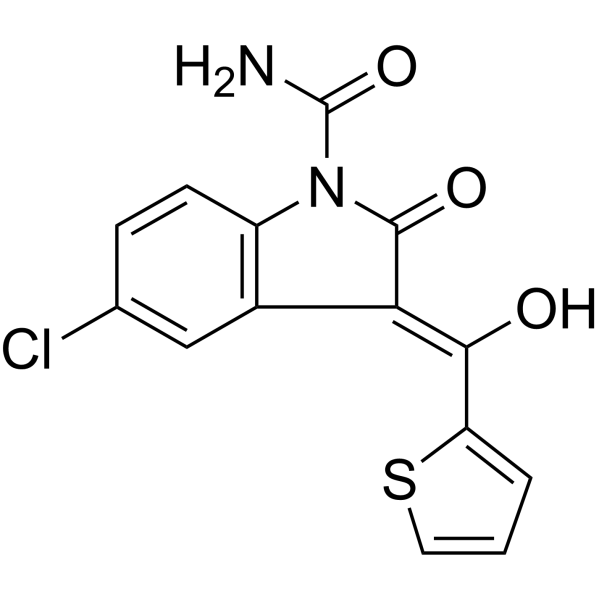
    Tenidap (CP-66248) is an orally active dual inhibitor of 5-LOX and COX with anti-inflammatory and immunomodulatory properties. Tenidap downregulates the expression of IL-1 receptors in chondrocytes, reduces the release of pro-inflammatory cytokines such as IL-1, IL-6 and TNF-α, and inhibits MMP production and cartilage degradation. Tenidap also blocks bone resorption and leukocyte adhesion to vascular endothelium, interferes with ion and pH changes associated with mouse sperm capacitation, and selectively enhances the activity of hKir2.3 channels (EC50=1.3 μM). Tenidap is applicable to research related to rheumatoid arthritis .
    Tenidap
  • HY-P10817

    Proton Pump Reactive Oxygen Species (ROS) Metabolic Disease
    Corza6 is a potent and selective human voltage-gated proton channel (hHv1) peptide inhibitor. Corza6 binds to the external voltage sensor domain (VSD) loop in hHv1 with a Kd of ~1 nM at the natural, hyperpolarized resting membrane potential (RMP) of mammalian cells. Corza6 allows capacitation in sperm and permits sustained reactive oxygen species (ROS) production in white blood cells (WBCs) .
    Corza6
  • HY-P10817A

    Proton Pump Reactive Oxygen Species (ROS) Metabolic Disease
    Corza6 TFA is a potent and selective human voltage-gated proton channel (hHv1) peptide inhibitor. Corza6 TFA binds to the external voltage sensor domain (VSD) loop in hHv1 with a Kd of ~1 nM at the natural, hyperpolarized resting membrane potential (RMP) of mammalian cells. Corza6 TFA allows capacitation in sperm and permits sustained reactive oxygen species (ROS) production in white blood cells (WBCs) .
    Corza6 TFA
  • HY-B1202
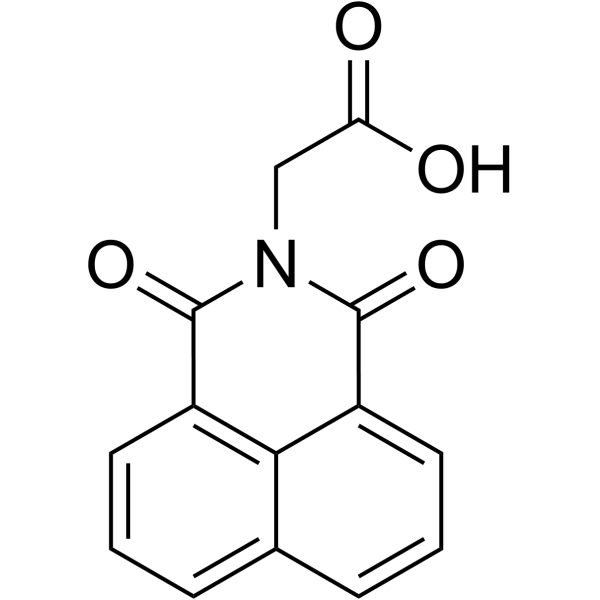
    Alrestatin
    1 Publications Verification

    AY-22284

    Aldose Reductase Metabolic Disease
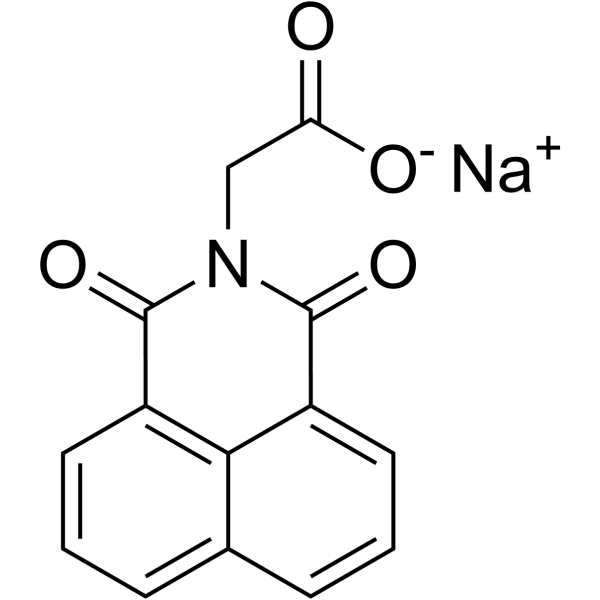
    Alrestatin (AY-22284) is an aldose reductase inhibitor. Alrestatin reduces fructose levels in the uterine fluid of mice. Alrestatin interferes with sperm capacitation and impairs fertilization function in mice. Alrestatin decreases basal and tyramine-induced norepinephrine release in rat pancreatic specimens in vitro. Alrestatin enhances glucose- and arginine-stimulated insulin secretion in vivo. Alrestatin can be used in studies related to diabetes and reproductive diseases .
    Alrestatin
  • HY-B1202A

    AY-22284A

    Aldose Reductase Metabolic Disease
    Alrestatin (AY-22284) sodium is an aldose reductase inhibitor. Alrestatin sodium reduces fructose levels in the uterine fluid of mice. Alrestatin sodium interferes with sperm capacitation and impairs fertilization function in mice. Alrestatin sodium decreases basal and tyramine-induced norepinephrine release in rat pancreatic specimens in vitro. Alrestatin sodium enhances glucose- and arginine-stimulated insulin secretion in vivo. Alrestatin sodium can be used in studies related to diabetes and reproductive diseases .
    Alrestatin sodium
  • HY-134460

    Endogenous Metabolite Others
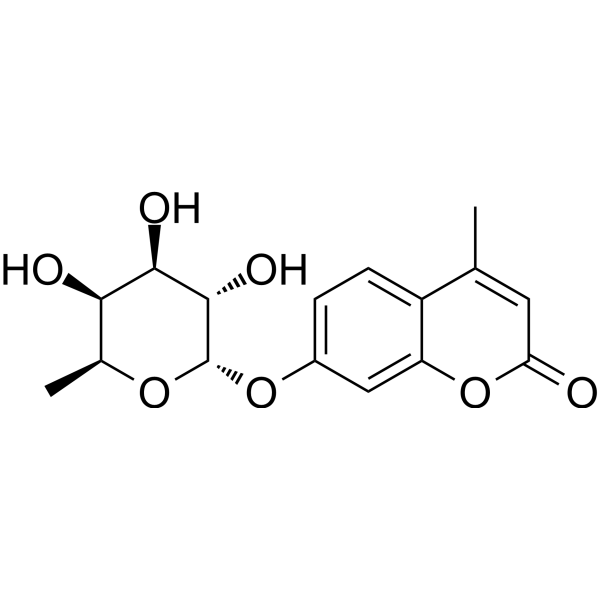
    4-Methylumbelliferyl α-L-fucopyranoside is an α-L-fucosidase. α-L-fucosidase can enhance capacitation of porcine sperm and protect sperm from premature acrosome reaction. Compared with human liver α-L-fucosidase, 4-Methylumbelliferyl α-L-fucopyranoside has considerable hydrophobicity and isoelectric focusing properties .
    4-Methylumbelliferyl α-L-fucopyranoside
  • HY-B1202R

    AY-22284 (Standard)

    Reference Standards Aldose Reductase Metabolic Disease
    Alrestatin (AY-22284) Standard is the analytical standard of Alrestatin (HY-B1202). This product is intended for research and analytical applications. Alrestatin (AY-22284) is an aldose reductase inhibitor. Alrestatin reduces fructose levels in the uterine fluid of mice. Alrestatin interferes with sperm capacitation and impairs fertilization function in mice. Alrestatin decreases basal and tyramine-induced norepinephrine release in rat pancreatic specimens in vitro. Alrestatin enhances glucose- and arginine-stimulated insulin secretion in vivo. Alrestatin can be used in studies related to diabetes and reproductive diseases.
    Alrestatin (Standard)
  • HY-104013R

    Reference Standards CDK Apoptosis Cancer
    Aminopurvalanol A (Standard) is the analytical standard of Aminopurvalanol A (HY-104013). This product is intended for research and analytical applications. Aminopurvalanol A is a potent, selective, and cell permeable inhibitor of Cyclins/Cdk complexes. Aminopurvalanol A preferentially targets the G2/M-phase transition inhibiting cancer cell differentiation. Aminopurvalanol A causes the inhibition of sperm fertilizing ability via the inhibition of physiological capacitation-dependent actin polymerization .
    Aminopurvalanol A (Standard)

Inquiry Online

Your information is safe with us. * Required Fields.

Salutation


Country or Region *

Applicant Name *


Organization Name *

Department *


Email Address *


Product Name *

Cat. No.


Requested quantity *

Phone Number *


Remarks

Inquiry Online

Inquiry Information

Product Name:
Cat. No.:
Quantity:
MCE Japan Authorized Agent:

