



DOCK
Dedicator of cytokinesis
Dedicator of cytokinesis (DOCK) proteins constitute a family of evolutionarily conserved guanine nucleotide exchange factors (GEFs) for the Rho family of GTPases. Although DOCK family proteins do not contain the Dbl homology domain typically found in other GEFs, they mediate the GTP-GDP exchange reaction through the DOCK homology region-2 (DHR-2) domain. In mammals, this family consists of 11 members, each of which has unique functions depending on the expression pattern and the substrate specificity. For example, DOCK2 is a Rac activator critical for migration and activation of leukocytes, whereas DOCK8 is a Cdc42-specific GEF that regulates interstitial migration of dendritic cells. Identification of DOCK2 and DOCK8 as causative genes for severe combined immunodeficiency syndromes in humans has highlighted their roles in immune surveillance. In addition, the recent discovery of a naturally occurring DOCK2-inhibitory metabolite has uncovered an unexpected mechanism of tissue-specific immune evasion. On the other hand, GEF-independent functions have been shown for DOCK8 in antigen-induced IL-31 production in helper T cells.
All Product Categories
-
DOCK Related Products (9)
Related Products (9)

-
Antibodies (6)
-
Cholesteryl sulfate sodium
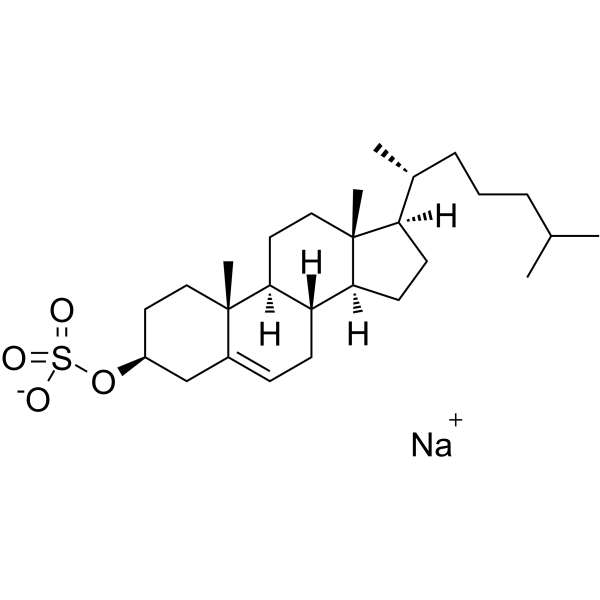 0 ImagesCholesterol sulfate sodium is a naturally occurring, orally active cholesterol derivative that is widely distributed in various tissues and body fluids. Cholesterol sulfate sodium acts as a DOCK2 inhibitor, with IC50 values of 2 μM and 2.9 μM against mouse and human targets, respectively. Cholesterol sulfate sodium restricts excessive neutrophil infiltration and alleviates intestinal inflammation and damage. Cholesterol sulfate sodium serves as an activator of protein kinase C (PKC), which promotes squamous cell differentiation and inhibits skin carcinogenesis. Cholesterol sulfate sodium regulates cholesterol homeostasis and cellular metabolism by activating the AMPK-Sirt1 pathway. Cholesterol sulfate sodium can be used in research related to actinic keratitis, ulcerative colitis, skin cancer, and other conditions.
-
CPYPP
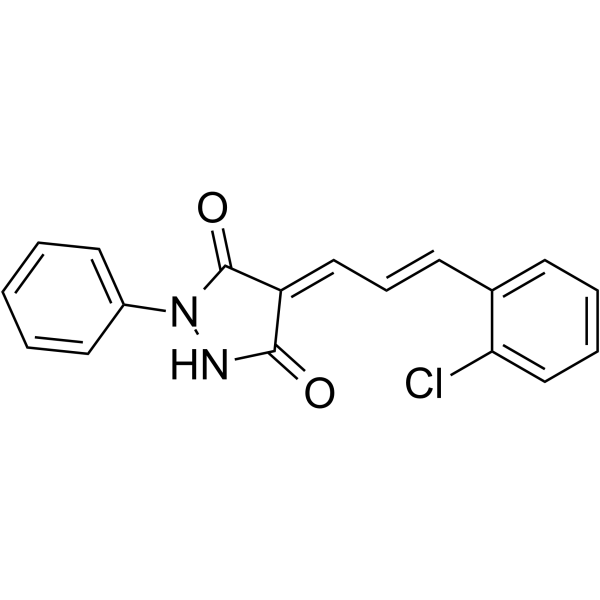 0 ImagesCPYPP is a DOCK2-Rac1 interaction inhibitor. CPYPP binds to DOCK2 DHR-2 domain and inhibits the guanine nucleotide exchange factor (GEF) activity of DOCK2DHR-2 for Rac1 in a dose-dependent manner with an IC50 of 22.8 µM. CPYPP also inhibits DOCK180 and DOCK5 and less inhibits DOCK9.
-
Cholesterol sulfate
 0 ImagesCholesterol sulfate is a naturally occurring, orally active cholesterol derivative that is widely distributed in various tissues and body fluids. Cholesterol sulfate acts as a DOCK2 inhibitor, with IC50 values of 2 μM and 2.9 μM against mouse and human targets, respectively. Cholesterol sulfate restricts excessive neutrophil infiltration and alleviates intestinal inflammation and damage. Cholesterol sulfate serves as an activator of protein kinase C (PKC), which promotes squamous cell differentiation and inhibits skin carcinogenesis. Cholesterol sulfate regulates cholesterol homeostasis and cellular metabolism by activating the AMPK-Sirt1 pathway. Cholesterol sulfate can be used in research related to actinic keratitis, ulcerative colitis, skin cancer, and other conditions.
-
Cholesterol sulfate-d7 sodium
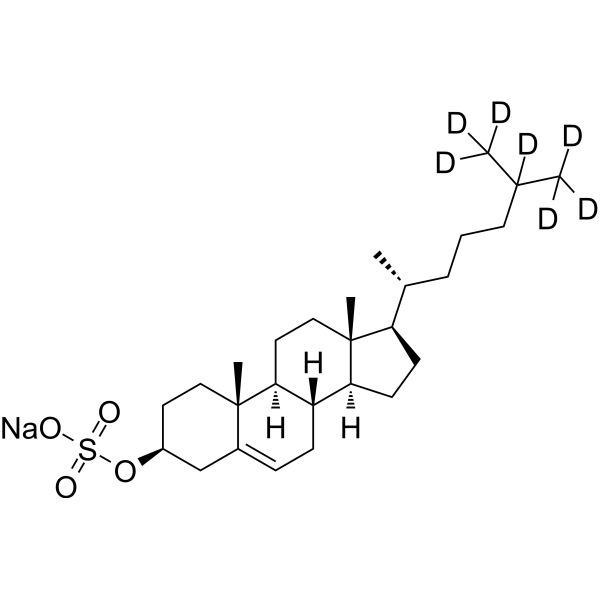 0 ImagesCholesterol sulfate sodium-d7 is the deuterium labeled Cholesterol sulfate sodium. Cholesterol sulfate sodium is a naturally occurring, orally active cholesterol derivative that is widely distributed in various tissues and body fluids. Cholesterol sulfate sodium acts as a DOCK2 inhibitor, with IC50 values of 2 μM and 2.9 μM against mouse and human targets, respectively. Cholesterol sulfate sodium restricts excessive neutrophil infiltration and alleviates intestinal inflammation and damage. Cholesterol sulfate sodium serves as an activator of protein kinase C (PKC), which promotes squamous cell differentiation and inhibits skin carcinogenesis. Cholesterol sulfate sodium regulates cholesterol homeostasis and cellular metabolism by activating the AMPK-Sirt1 pathway. Cholesterol sulfate sodium can be used in research related to actinic keratitis, ulcerative colitis, skin cancer, and other conditions.
-
DOCK2-IN-1
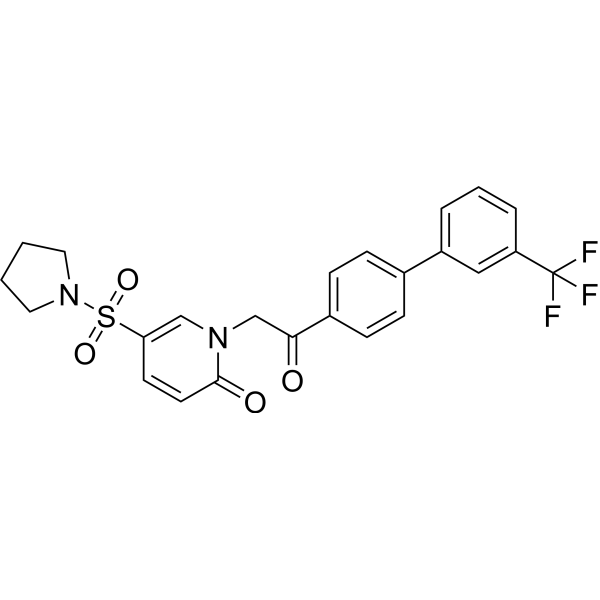
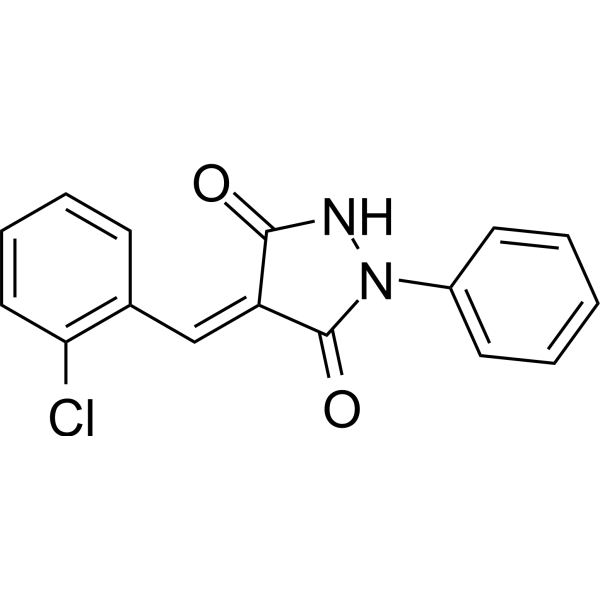 0 ImagesDOCK2-IN-1 (Compound 3) is an analog of CPYPP (HY-110100) and a DOCK2 inhibitor (IC50 = 19.1 μM). DOCK2-IN-1 binds to the DHR-2 domain of DOCK2 and inhibits its mediated Rac guanine nucleotide exchange factor activity. DOCK2-IN-1 blocks chemokine receptor- and antigen receptor-mediated activation of Rac in lymphocytes. DOCK2-IN-1 significantly inhibits chemotaxis and T cell activation. DOCK2-IN-1 can be used in the research of transplant rejection and organ-specific autoimmune diseases.
-
DOCK5-IN-1
 0 ImagesDOCK5-IN-1 (Compound 14) is the inhibitor for DOCK5 and exhibits no toxicity (100 μM) in cell RAW264.7.
-
E197
 0 ImagesE197 is the inhibitor for DOCK5 that destroys the podosome belt structure of osteoclasts, thereby inhibiting the bone resorption (IC50=3.44 μM in human osteoclast). E197 inhibits the Rac in DOCK5 expressing HEK293 cell with an IC50 of 36 μM. E197 prevents the bone loss in mouse ovariectomized models.
-
CPYPP (Standard)
 0 ImagesCat. No.: HY-110100RCAS No.: 310460-39-0CPYPP (Standard) is the analytical standard of CPYPP (HY-110100). This product is intended for research and analytical applications. CPYPP is a DOCK2-Rac1 interaction inhibitor. CPYPP binds to DOCK2 DHR-2 domain and inhibits the guanine nucleotide exchange factor (GEF) activity of DOCK2DHR-2 for Rac1 in a dose-dependent manner with an IC50 of 22.8 μM. CPYPP also inhibits DOCK180 and DOCK5 and less inhibits DOCK9.




