



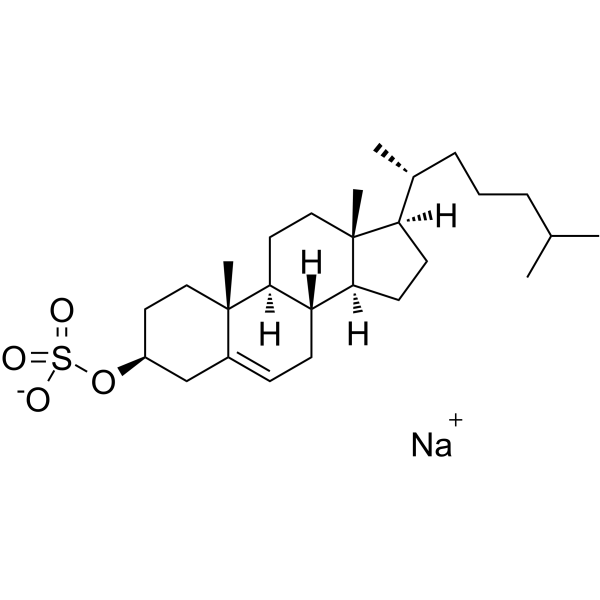
Cholesteryl sulfate sodium

Based on 1 Customer Validation
Cholesterol sulfate sodium is a naturally occurring, orally active cholesterol derivative that is widely distributed in various tissues and body fluids. Cholesterol sulfate sodium acts as a DOCK2 inhibitor, with IC50 values of 2 μM and 2.9 μM against mouse and human targets, respectively. Cholesterol sulfate sodium restricts excessive neutrophil infiltration and alleviates intestinal inflammation and damage. Cholesterol sulfate sodium serves as an activator of protein kinase C (PKC), which promotes squamous cell differentiation and inhibits skin carcinogenesis. Cholesterol sulfate sodium regulates cholesterol homeostasis and cellular metabolism by activating the AMPK-Sirt1 pathway. Cholesterol sulfate sodium can be used in research related to actinic keratitis, ulcerative colitis, skin cancer, and other conditions.
For research use only. We do not sell to patients.
- Purity : 99.86%
- CAS No.: 2864-50-8
- Formula: C27H45NaO4S
- Molecular Weight:488.70
-
Storage:
-20°C, stored under nitrogen, away from moisture
* In solvent : -80°C, 6 months; -20°C, 1 month (stored under nitrogen, away from moisture)

To place orders, for customer services and technical support, please contact: MedChemExpress USA
Tel: 609-228-6898 E-mail: [email protected] [email protected]


-
 Biological Activity
-
Chemical Information
-
Solvent & Solubility
- Protocols
- Purity & Documentation
- References
-
 Help & FAQs




Biological Activity
Description
In Vitro
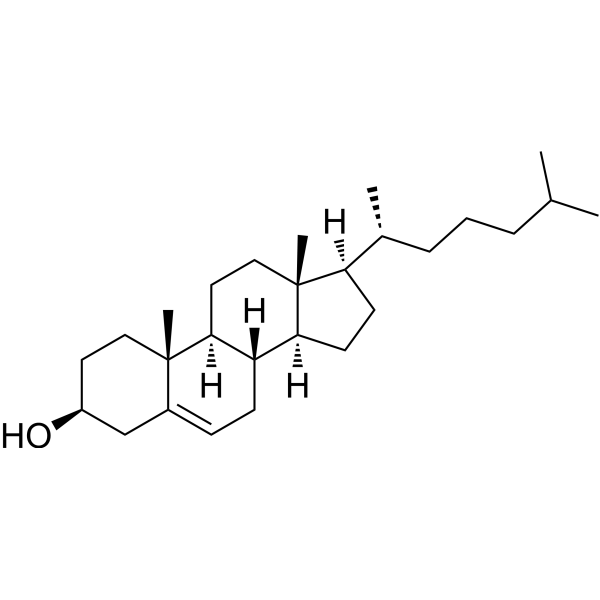
Cholesterol sulfate (0.19-150 μM; 20 min-6 h) sodium inhibits chemokine-induced Rac activation in mouse T cells and bone marrow-derived neutrophils, thereby blocking the migration of these cells in vitro[1].
Cholesterol sulfate (12.5 μM; 60 min) sodium potently inhibits phorbol ester (PMA) (HY-18739)-induced reactive oxygen species (ROS) production in mouse bone marrow-derived neutrophils[2].
Cholesterol sulfate sodium is a sulfated cholesterol. At concentrations of 5-100 μM for 24 h, it activates the SREBP2 signaling pathway in a dose-dependent manner in SULT2B1-knockout human colon cancer cell line HT-29, and this activating effect is enhanced upon SLC10A6 overexpression[3].
Cholesterol sulfate (25-50 μM; 6-18 h) sodium promotes the proteolytic activation of SREBP2 in HEK293T cells[3].
Cholesterol sulfate (50 μM; 24 h) sodium upregulates the expression of key cholesterol biosynthesis genes in human colonic epithelial cell lines HT-29, LOVO, SW480, HCT116, SW1116 and NCM460[3].
Cholesterol sulfate (50 μM; 6-48 h) sodium increases the levels of total cholesterol and free cholesterol in HT-29 cells and SULT2B1-knockout HT-29 human colon cancer cells[3].
Cholesterol sulfate (25-50 μM) sodium increases the cell viability of HT-29 human colon cancer cells treated with 25 or 50 μM cholesterol sulfate, as well as SULT2B1-knockout HT-29 human colon cancer cells, and this effect depends on the activation of SREBP2[3].
Cholesterol sulfate (50 μM) sodium increases the level of mature nuclear-localized SREBP2 in HT-29 cells and SULT2B1-knockout HT-29 human colon cancer cells[3].
Cholesterol sulfate (25 μM; 12-48 h) sodium significantly reduces the intracellular total cholesterol level by 20% to 30% in HEK 293T, Huh-7 and MEF cells[4].
Cholesterol sulfate (50 μM; 24 h) sodium significantly reduces intracellular cholesterol levels in Huh-7 cells[4].
Cholesterol sulfate (25 μM; 12 h) sodium inhibits de novo cholesterol synthesis in HEK 293T, Huh-7 and MEF cells[4].
Cholesterol sulfate (25 μM) sodium can partially inhibit LDL-cholesterol uptake by cholesterol-depleted Huh-7 cells switched to FBS-containing medium[4].
Cholesterol sulfate (3.12-25 μM; 5-16 h) sodium reduces the protein expression level of HMGCR in Huh-7 cells at the post-translational level, with an IC50 of 5.6 μM for inhibiting T7-tagged HMGCR after 5 h of treatment[4].
Cholesterol sulfate (12.5-25 μM; 5 h,) sodium promotes ubiquitination and proteasomal degradation of wild-type HMGCR in Huh-7 cells, and this process depends on Lys89 and Lys248 of HMGCR[4].
Cholesterol sulfate (25 μM; 8 h) sodium promotes the interaction between INSIG1 and HMGCR in HEK 293T cells, a process that mediates the ubiquitination and degradation of HMGCR[4].
Cholesterol sulfate (25 μM; 8 h) sodium promotes the interaction between INSIG1 and SCAP in HEK 293T cells, thereby inhibiting the translocation of SREBP2 to the Golgi apparatus; this interaction depends on the L343 and V355 residues of SCAP, but not on I348[4].
Cholesterol sulfate (25 μM; 4-24 h) sodium reduces LDL-cholesterol uptake in Huh-7 cells through two mechanisms: a secondary effect of cholesterol depletion, and direct inhibition of clathrin-mediated endocytosis[4].
Cholesterol sulfate (25 μM; 4-24 h) sodium inhibits LDLR endocytosis in Huh-7 cells, resulting in the accumulation of LDLR on the cell surface[4].
Cholesterol sulfate (25 μM; 8 h) sodium partially inhibits the upregulation of SREBP2 target genes in cholesterol-depleted Huh-7 cells[4].
Cholesterol sulfate (25 μM) sodium inhibits the proteolytic processing of SREBP2 in cholesterol-depleted Huh-7 cells and reduces the level of the active nuclear form of SREBP2[4].
Cholesterol sulfate (20-40 μM; 2-4 days) sodium inhibits RANKL-induced osteoclast differentiation and NFATc1 pathway activation in mouse bone marrow macrophages (BMMs) without reducing cell viability; treatment with 30 μM for 2 days suppresses the expression of NFATc1 and its target genes, and this inhibitory effect persists for up to 4 days[5].
Cholesterol sulfate (30 μM; 2-4 days) sodium inhibits RANKL-induced osteoclast differentiation in a RORα-independent manner, as it exerts comparable inhibitory effects on osteoclast formation and NFATc1 expression in bone marrow macrophages (BMMs) from wild-type (WT) and RORα-deficient mice[5].
Cholesterol sulfate (30 μM; 0.5-24 h) sodium activates the AMPK-Sirt1 axis in a RORα-independent manner, thereby inhibiting NF-κB activity in mouse bone marrow-derived macrophages (BMMs) and RAW264.7 cells[5].
Cholesterol sulfate (30 μM; 10 h-8 days) sodium induces caspase-dependent apoptosis in differentiated murine osteoclasts, disrupts their actin ring structure, and inhibits bone resorptive activity[5].
Cholesterol sulfate (30 μM; 12 h-4 days) sodium induces apoptosis of mouse osteoclasts via AMPK-dependent NF-κB inhibition, thereby reducing the production of IL-1β; treatment with IL-1β reverses the aforementioned pro-apoptotic and inhibitory effects without altering the activation level of AMPK[5].
Cholesterol sulfate sodium induces squamous differentiation of normal human keratinocytes by inhibiting cell growth and upregulating the expression and activity of TGase 1[6].
Cholesterol sulfate sodium induces granular cell differentiation in mouse basal keratinocytes and regulates the expression of differentiation markers[6].
MedChemExpress (MCE) has not independently confirmed the accuracy of these methods. They are for reference only. Further protocols information, click here.
-
Cell Line:HT-29, LOVO, SW480, HCT116, SW1116, NCM460 human colon epithelial cell lines
-
Concentration:50 μM
-
Incubation Time:24 h
-
Result:Increased mRNA levels of HMGCS1, DHCR7, FDFT1, and CYP51A1 significantly in all tested human colon epithelial cell lines.
-
Cell Line:Huh-7 cells, Huh-7 cells stably expressing T7-tagged HMGCR
-
Concentration:12.5 μM, 25 μM (endogenous HMGCR); 3.12 μM, 6.25 μM, 12.5 μM, 25 μM (T7-tagged HMGCR)
-
Incubation Time:16 h (endogenous HMGCR); 5 h (T7-tagged HMGCR)
-
Result:Reduced endogenous HMGCR protein levels in a dose-dependent manner.
Reduced T7-tagged HMGCR protein levels, with an estimated IC50 of 5.6 μM.
-
Cell Line:Huh-7 cells stably expressing T7-tagged HMGCR
-
Concentration:12.5 μM, 25 μM (with 20 μM MG132); 25 μM (mutant analysis)
-
Incubation Time:5 h
-
Result:Abolished CS-induced HMGCR reduction when co-treated with MG132.
Increased polyubiquitination of HMGCR.
Reduced protein levels of wild-type HMGCR but not K89R/K248R double mutant HMGCR.
-
Cell Line:HEK 293T cells
-
Concentration:25 μM
-
Incubation Time:8 h
-
Result:Induced the interaction between INSIG1 and HMGCR, albeit with less potency than 25-HC.
Induced the interaction between INSIG1 and wild-type SCAP, albeit with less potency than 25-HC.
Mutations at L343A or V355A significantly reduced SCAP retention in the presence of CS.
The I348F mutation did not reduce CS-induced SCAP-INSIG1 binding.
-
Cell Line:Huh-7 cells
-
Concentration:12.5 and 25 μM
-
Incubation Time:5 h (after 16 h lovastatin pretreatment)
-
Result:Abolished statin-induced accumulation of HMGCR protein, reducing it even beyond control levels in a dose-dependent manner.
-
Cell Line:Huh-7 cells
-
Concentration:25 μM
-
Incubation Time:4 h, 24 h
-
Result:Did not alter total LDLR expression, but significantly increased cell surface LDLR levels compared to controls.
-
Cell Line:Huh-7 cells
-
Concentration:25 μM
-
Incubation Time:8 h (after 16 h cholesterol depletion with lovastatin)
-
Result:Partially attenuated the cholesterol depletion-induced increase in SREBP2 target gene transcripts (SREBF2, HMGCS1, HMGCR, SQLE, LDLR).
-
Cell Line:Mouse bone marrow-derived macrophages (BMMs)
-
Concentration:20, 30 and 40 μM (osteoclast differentiation assay, 3-4 days); 30 μM (NFATc1 protein/ mRNA expression, 2 days)
-
Incubation Time:3-4 days (osteoclast differentiation assay); 2 days (NFATc1 protein/ mRNA expression); 3 days (cell viability assay)
-
Result:Inhibited RANKL-induced osteoclast differentiation in a dose-dependent manner.
Showed no effect on BMM cell viability at all tested concentrations.
Strongly inhibited RANKL-induced NFATc1 protein expression, with suppression sustained for 4 days.
Inhibited the transcription of Nfatc1 and its target genes Acp5, Ctsk, and Mmp9.
-
Cell Line:Wild-type (WT) and myeloid-specific RORα conditional knockout (cKO) mouse bone marrow-derived macrophages (BMMs)
-
Concentration:30 μM (osteoclast differentiation assay, 4 days); 30 μM (protein expression analysis, 2 days)
-
Incubation Time:4 days (osteoclast differentiation assay); 2 days (protein expression analysis)
-
Result:Inhibited RANKL-induced osteoclast formation and NFATc1 protein expression in cKO BMMs to the same extent as in WT BMMs.
In Vivo
Cholesterol sulfate (8 μg/μL; topical; three times daily; for 3 days) sodium suppresses inflammatory cell infiltration in the conjunctiva of experimental allergic conjunctivitis models in Sult2b1−/− mice[1].
Cholesterol sulfate (200 mg/kg; p.o.; three times at 4-hour intervals) sodium ameliorates Indomethacin (HY-14397)-induced small intestinal ulceration and reduces neutrophil infiltration into ulcerative lesions in Sult2b1-/- mice[2].
Cholesterol sulfate (0.004%; dietary supplementation; continued for 6 days) sodium alleviates 2.5% DSS-induced acute ulcerative colitis in Sult2b1ΔIEC mice by reducing disease severity markers and promoting colonic epithelial cell proliferation[3].
Cholesterol sulfate (20 mg/kg; subcutaneous (calvarial); 2 doses (Days 0 and 2)) sodium inhibits LPS-induced bone destruction and osteoclast formation in male C57BL/6 mice, reducing bone cavity formation by ~6-fold and TRAP-positive osteoclasts by ~24-fold[5].
Cholesterol sulfate (20 mg/kg; intraperitoneal; six times weekly; 3 weeks) sodium protects against ovariectomy-induced bone loss in female C57BL/6 mice, restoring key bone density parameters and increasing osteoclast apoptosis to ~55% of TRAP-positive cells[5].
Cholesterol sulfate (400 µg; topical; weekly; 19 weeks) sodium inhibits skin tumor promotion in mice, reducing tumor incidence by 56%, tumor number per mouse by 81%, and tumor size by 60% at 20 weeks[6].
MedChemExpress (MCE) has not independently confirmed the accuracy of these methods. They are for reference only.
-
Animal Model:C57BL/6 background Sult2b1−/− (age- and sex-matched littermates)[1]
-
Dosage:8 μg/μL
-
Administration:topical (eye drop); 6 total doses (1 pre-UV, 5 at 4-hour intervals)
-
Result:Significantly reduced the number of inflammatory cells in the anterior chamber compared to vehicle-treated controls.
-
Animal Model:C57BL/6 background Sult2b1−/− (age- and sex-matched littermates)[1]
-
Dosage:8 μg/μL
-
Administration:topical (eye drop); three times daily at 4-hour intervals; days 10, 11, 12
-
Result:Significantly reduced the number of inflammatory cells in the conjunctiva compared to vehicle-treated controls.
-
Animal Model:C57BL/6J (male, 9-12 weeks old, indomethacin-induced small intestinal ulceration)[2]
-
Dosage:200 mg/kg
-
Administration:p.o.; three times at 4-hour intervals
-
Result:Reduced the number of small intestinal ulcers in Sult2b1-/- mice to levels comparable to Sult2b1+/+ mice.
Reduced the total ulcer area in Sult2b1-/- mice to levels matching Sult2b1+/+ mice.
Suppressed the increase in absolute neutrophil counts in ulcerative lesions of Sult2b1-/- mice, bringing neutrophil numbers close to those in Sult2b1+/+ mice.
-
Animal Model:C57BL/6 (female, 8-week-old; postmenopausal osteoporosis model via ovariectomy)[5]
-
Dosage:20 mg/kg
-
Administration:intraperitoneal; six times weekly; 3 weeks
-
Result:Restored ovariectomy-induced reductions in bone mineral density, trabecular number, bone surface density, and bone volume density.
Reduced ovariectomy-induced increases in trabecular separation.
Reduced ovariectomy-induced increases in TRAP-positive osteoclasts by ~2-fold.
Increased the percentage of caspase 3-positive TRAP-positive cells to ~55% (compared to ~35% in ovariectomized controls).
Had no effect on bone mineral apposition rate.


Chemical Information
-
CAS No. 2864-50-8
-
Appearance Solid
-
Molecular Weight 488.70
-
Formula C27H45NaO4S
-
Color White to yellow
-
SMILES
CC(C)CCC[C@@H](C)[C@@]1([H])CC[C@@]2([H])[C@]3([H])CC=C4C[C@@H](OS(=O)(O[Na])=O)CC[C@]4(C)[C@@]3([H])CC[C@@]21C
-
Structure Classification
-
Initial Source
-
Shipping
Room temperature in continental US; may vary elsewhere.
-
Storage
-20°C, stored under nitrogen, away from moisture
* In solvent : -80°C, 6 months; -20°C, 1 month (stored under nitrogen, away from moisture)


Solvent & Solubility
In Vitro:
DMSO : 10 mg/mL (20.46 mM; ultrasonic and warming and heat to 60°C; Hygroscopic DMSO has a significant impact on the solubility of product, please use newly opened DMSO)
H2O : < 0.1 mg/mL (insoluble)
Please refer to the solubility information to select the appropriate solvent. Once prepared, please aliquot and store the solution to prevent product inactivation from repeated freeze-thaw cycles.
Storage method and period of stock solution: -80°C, 6 months; -20°C, 1 month (stored under nitrogen, away from moisture). When stored at -80°C, please use it within 6 months. When stored at -20°C, please use it within 1 month.
Please refer to the solubility information to select the appropriate solvent. Once prepared, please aliquot and store the solution to prevent product inactivation from repeated freeze-thaw cycles.
Storage method and period of stock solution: -80°C, 6 months; -20°C, 1 month (stored under nitrogen, away from moisture). When stored at -80°C, please use it within 6 months. When stored at -20°C, please use it within 1 month.
Concentration (start) × Volume (start) = Concentration (final) × Volume (final)
In Vivo:
Select the appropriate dissolution method based on your experimental animal and administration route.
- For the following dissolution methods, please ensure to first prepare a clear stock solution using an In Vitro approach and then sequentially add co-solvents:
- To ensure reliable experimental results, the clarified stock solution can be appropriately stored based on storage conditions. As for the working solution for In Vivo experiments, it is recommended to prepare freshly and use it on the same day.
- The percentages shown for the solvents indicate their volumetric ratio in the final prepared solution. If precipitation or phase separation occurs during preparation, heat and/or sonication can be used to aid dissolution.
Add each solvent one by one: 10% DMSO 40% PEG300 5% Tween-80 45% Saline
Solubility: ≥ 1 mg/mL (2.05 mM); Clear solution
This protocol yields a clear solution of ≥ 1 mg/mL (saturation unknown).
Taking 1 mL working solution as an example, add 100 μL DMSO stock solution (10.0 mg/mL) to 400 μL PEG300, and mix evenly; then add 50 μL Tween-80 and mix evenly; then add 450 μL Saline to adjust the volume to 1 mL.
Preparation of Saline: Dissolve 0.9 g sodium chloride in ddH₂O and dilute to 100 mL to obtain a clear Saline solution.
Add each solvent one by one: 10% DMSO 90% (20% SBE-β-CD in Saline)
Solubility: ≥ 1 mg/mL (2.05 mM); Clear solution
This protocol yields a clear solution of ≥ 1 mg/mL (saturation unknown).
Taking 1 mL working solution as an example, add 100 μL DMSO stock solution (10.0 mg/mL) to 900 μL 20% SBE-β-CD in Saline, and mix evenly.
Preparation of 20% SBE-β-CD in Saline (4°C, storage for one week): 2 g SBE-β-CD powder is dissolved in 10 mL Saline, completely dissolve until clear.
In Vivo Dissolution Calculator
Please enter the basic information of animal experiments:
-
-
-
-
Recommended: Prepare an additional quantity of animals to account for potential losses during experiments.
Please enter your animal formula composition:
-
%DMSO +
Recommended: Keep the proportion of DMSO in working solution below 2% if your animal is weak.
-
%+
-
+%Tween-80 + +
-
%Saline +
The co-solvents required include: DMSO, . All of co-solvents are available by MedChemExpress (MCE). , Tween 80. All of co-solvents are available by MedChemExpress (MCE).
Working solution concentration: 0.22 mg/mL
Method for preparing stock solution: mg drug dissolved in μL DMSO. Stock solution concentration: mg/mL. * In solvent : -80°C, 6 months; -20°C, 1 month (stored under nitrogen, away from moisture)
1. Take μL DMSO stock solution;
2. Add μL .
μL , mix evenly;
3. Then add μL Tween 80, mix evenly;
4. Then add μL
Please ensure that the stock solution in the first step is dissolved to a clear state, and add co-solvents in sequence. You can use ultrasonic heating (ultrasonic cleaner, recommended frequency 20-40 kHz), vortexing, etc. to assist dissolution.

Protocols
-
Cell Cytotoxicity Assay
Cytotoxicity assays are usually based on the assessment of cell membrane damage, which can also be indirectly detected by measuring cell viability. Detection methods include MTT assay, CKK-8 assay, LDH assay and ATP assay, etc.
-
DSS-Induced Colitis
Dextran sulfate sodium (DSS)-induced colitis is generated by administering DSS in mouse drinking water, producing epithelial injury, barrier disruption, weight loss, diarrhea, fecal blood, colon shortening, histologic mucosal damage, and inflammatory mediator changes; the model is mainly used to study acute or chronic intestinal inflammation resembling selected features of ulcerative colitis. DSS injury is interpreted through clinical and tissue readouts rather than a single molecular endpoint: daily body weight, stool consistency, and bleeding are combined into a disease activity index, while colon length, histology, cytokines, myeloperoxidase activity, intestinal permeability, and tight-junction markers provide complementary measures of inflammation and barrier damage.
-
TNBS-Induced Colitis
TNBS-induced colitis is produced by intrarectal delivery of 2,4,6-trinitrobenzene sulfonic acid in ethanol, where ethanol disrupts the mucosal barrier and TNBS haptenates colonic proteins, generating immune-mediated colonic inflammation with weight loss, diarrhea, ulceration, transmural injury, inflammatory-cell infiltration, and cytokine responses. The model is used as an experimental intestinal inflammation model with Crohn’s disease–like features, especially when Th1-type responses, IL-12–dependent inflammation, chronic relapsing inflammation, or fibrosis-related endpoints are studied.
-
Research Protocol for Inflammation-related Diseases
The NLRP3 inflammasome is a cytosolic innate immune signaling platform that integrates priming signals and danger-signal activation to promote caspase-1 activation, maturation of IL-1β and IL-18, and gasdermin D-mediated pyroptotic cell death. The core experimental logic is to determine whether inflammatory disease phenotypes are driven by increased NLRP3 expression, ASC-containing inflammasome assembly, caspase-1 cleavage, GSDMD cleavage, and extracellular release of IL-1β/IL-18 rather than by nonspecific cell injury alone. The pathway is strongly linked to inflammation-related disease phenotypes because monosodium urate crystals activate NALP3/NLRP3 inflammasome signaling in gout-like crystal inflammation, cholesterol crystals activate NLRP3 inflammasomes in atherogenesis models, and DSS-induced intestinal inflammation has been reported to involve NLRP3 inflammasome activity. However, experimental colitis studies also show context-dependent protective effects of NLRP3 inflammasome co
-
iPSC cell differentiation
Induced pluripotent stem cells (iPSCs) are a type of cell that has similar properties to embryonic stem cells through somatic cell reprogramming.


Purity & Documentation
-
Data Sheet (305 KB)
-
SDS (644 KB)
- English - EN (644 KB)
- Français - FR (644 KB)
- Deutsch - DE (644 KB)
- Norwegian - NO (644 KB)
- Español - ES (644 KB)
- Swedish - SV (644 KB)
- Italian - IT (644 KB)
- Korean - KR (644 KB)
- Portuguese - PT (644 KB)
-
Handling Instructions (2659 KB)
References
[1]. Sakurai T, et al. Cholesterol sulfate is a DOCK2 inhibitor that mediates tissue-specific immune evasion in the eye. Sci Signal. 2018;11(541):eaao4874. Published 2018 Jul 31. [Content Brief]
[2]. Morino K, et al. Cholesterol sulfate limits neutrophil recruitment and gut inflammation during mucosal injury. Front Immunol. 2023;14:1131146. Published 2023 Mar 17. [Content Brief]
[4]. Nam LB, et al. Cholesterol sulfate as a negative regulator of cellular cholesterol homeostasis. Mol Cells. 2025;48(6):100209. [Content Brief]
[5]. Park JH, et al. Cholesterol sulfate inhibits osteoclast differentiation and survival by regulating the AMPK-Sirt1-NF-κB pathway. J Cell Physiol. 2023;238(9):2063-2075. [Content Brief]
[6]. Kuroki T, et al. Cholesterol sulfate, an activator of protein kinase C mediating squamous cell differentiation: a review. Mutat Res. 2000;462(2-3):189-195. [Content Brief]


Complete Stock Solution Preparation Table
Please refer to the solubility information to select the appropriate solvent. Once prepared, please aliquot and store the solution to prevent product inactivation from repeated freeze-thaw cycles.
Storage method and period of stock solution: -80°C, 6 months; -20°C, 1 month (stored under nitrogen, away from moisture). When stored at -80°C, please use it within 6 months. When stored at -20°C, please use it within 1 month.
| Optional Solvent | Concentration Solvent Mass | 1 mg | 5 mg | 10 mg | 25 mg |
|---|---|---|---|---|---|
| DMSO | 1 mM | 2.0462 mL | 10.2312 mL | 20.4625 mL | 51.1561 mL |
| 5 mM | 0.4092 mL | 2.0462 mL | 4.0925 mL | 10.2312 mL | |
| 10 mM | 0.2046 mL | 1.0231 mL | 2.0462 mL | 5.1156 mL | |
| 15 mM | 0.1364 mL | 0.6821 mL | 1.3642 mL | 3.4104 mL | |
| 20 mM | 0.1023 mL | 0.5116 mL | 1.0231 mL | 2.5578 mL |


Cholesteryl sulfate sodium Related Classifications
HY-111355B Related Classifications
 Powered by Bioz