





1. Search Result
Search Result
Results for "

carrier peptide

" in MedChemExpress (MCE) Product Catalog:

36

Inhibitors & Agonists

12

Biochemical Assay Reagents

21

Peptides

1

Natural
Products

1

Recombinant Proteins

2

Oligonucleotides

Cat. No. Product Name Target Research Area
  • HY-P10709

    Collagen Cardiovascular Disease Cancer
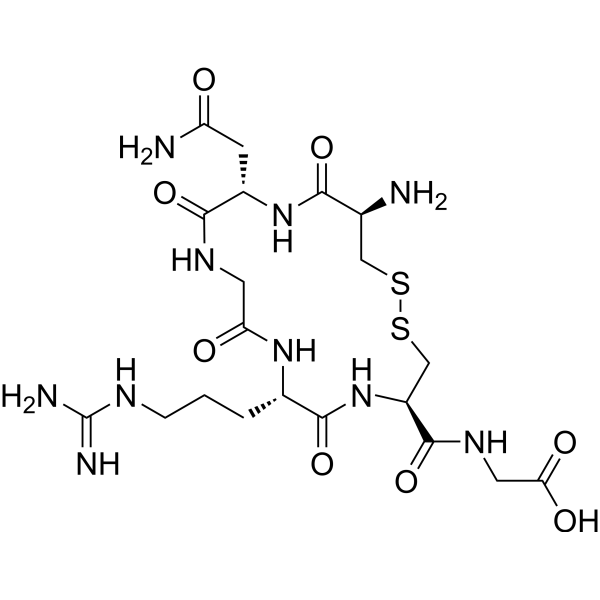
    CREKA peptide is a selective non-covalent binding agent targeting fibrin, type IV collagen, and fibronectin, often used as a targeting ligand to modify delivery carriers. CREKA peptide specifically recognizes fibrin, fibronectin, and type IV collagen that are excessively deposited in the tumor microenvironment or fibrotic tissue, mediating the targeted accumulation of the carrier at the lesion site and promoting drug internalization into target cells (such as cancer cells and activated hepatic stellate cells). CREKA peptide can enhance targeted delivery efficiency, increase drug concentration at the lesion site, and reduce systemic side effects .
  • HY-P10128
    GE11
    1 Publications Verification

    Biochemical Assay Reagents Inflammation/Immunology
    GE11 is a active peptide and combines with colloidal drug delivery systems as smart carriers for antitumor drugs and can be used for cancer study .
  • HY-P10502
    L57

    LDLR Infection
    L57 is a low-density lipoprotein receptor-related protein 1 (LRP1)-binding peptide. L57 exhibits high affinity for LRP1, with an EC50 of 45 nM. L57 possesses blood-brain barrier (BBB) permeability and plasma stability. L57 can serve as a carrier for central nervous system drug delivery .
  • HY-P6022

    Integrin Others
    G4RGDSP, Integrin-binding peptide is a cell integrin-binding peptide that targets integrin receptors. G4RGDSP, integrin-binding peptide is coupled to alginate to increase the viability of cells in the scaffold. G4RGDSP, integrin-binding peptide can be used as an extrudable carrier for chondrocyte delivery for the study of 3D printing technology
  • HY-P3436

    Exosomes Cardiovascular Disease
    WLSEAGPVVTVRALRGTGSW is a cardiomyocyte-targeting peptide that specifically recognizes tenascin X on the surface of cardiomyocytes. WLSEAGPVVTVRALRGTGSW can serve as a targeting ligand to conjugate with various therapeutic carriers (drugs, genes, exosomes, nanoparticles, etc.) for research on cardiovascular diseases (such as myocardial infarction, heart failure) .
  • HY-113003

    γ-Glutamylglutamine; γ-Glu-Gln

    Peptides Others Cancer
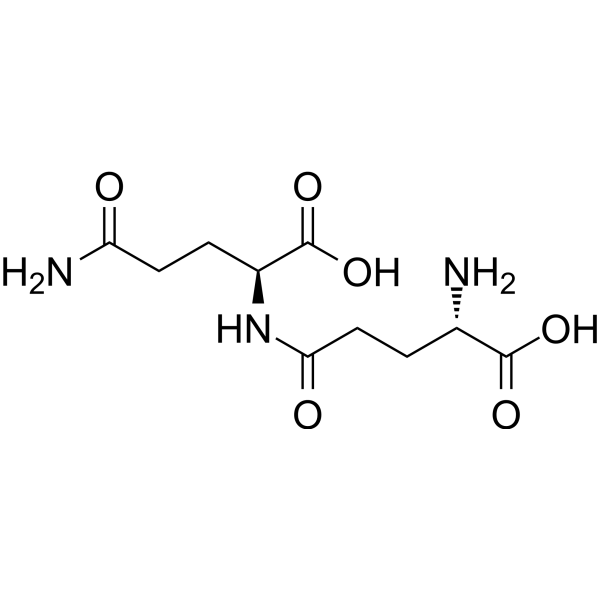
    H-γ-Glu-Gln-OH is a hydrophilic peptide and can be conjugated to drugs. The carrier composed of H-γ-Glu-Gln-OH has the characteristics of high water solubility and drug-loading capacity, good biocompatibility, low toxicity, improved tumor targeting ability, and anti-tumor efficacy .
  • HY-P10502A

    LDLR Others
    L57 acetate is a Low-density lipoprotein receptor-related protein 1 (LRP1)-binding peptide. L57 acetate exhibits high affinity to LRP1 with Ki of 45 nM. L57 acetate exhibits blood-brain barrier (BBB) permeability and plasma stability. L57 acetate can be utilized as the carrier for CNS drug delivery .
  • HY-P4104

    Peptides Others
    pVEC (Cadherin-5) is a cell-penetrating 18-amino acid-long peptide derived from the murine sequence of the cell adhesion molecule vascular endothelial cadherin. pVEC (Cadherin-5) is efficiently and rapidly taken up into cells, it can be used as a carrier peptide .
  • HY-P4123

    MMP Cardiovascular Disease Inflammation/Immunology Cancer
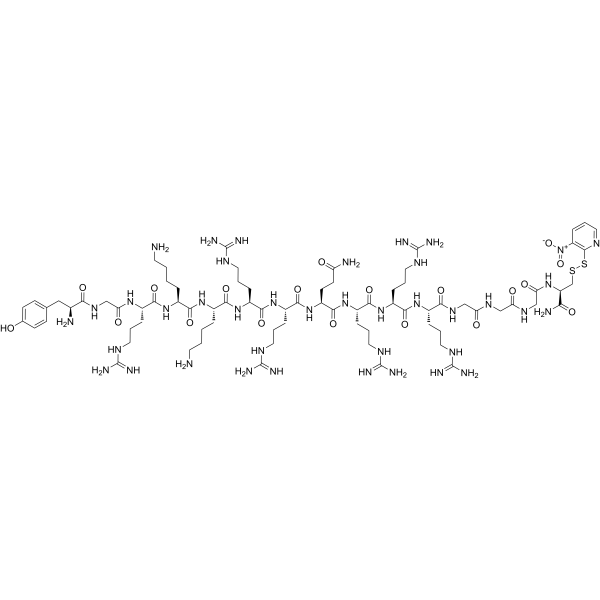
    TAT (47-57) GGG-Cys (Npys) is a cell-penetrating peptide and delivery carrier derived from TAT. TAT (47-57) GGG-Cys (Npys) facilitates the translocation of conjugated drug molecules across cell membranes. TAT (47-57) GGG-Cys (Npys) acts as a delivery carrier for MT1-MMP inhibitors. TAT (47-57) GGG-Cys (Npys) is applicable to research on diseases associated with MT1-MMP activity, such as cancer, arthritis, heart disease, and vascular disorders .
  • HY-P10501A

    Antifolate Cancer
    FRα-targeting peptide C7 TFA is a selective peptide ligand for folate receptor α (FRα) that has specific binding to FRα expressing cells and in vivo tumor targeting ability. FRα-targeting peptide C7 TFA can be used in the research of tumor diagnosis and treatment .
  • HY-P5107

    LMWP; TDSP5

    VEGFR Cancer
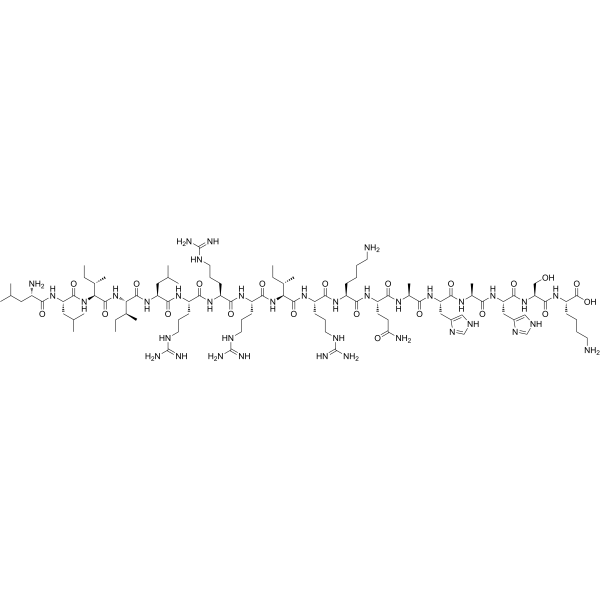
    Low molecular weight protamine (LMWP;TDSP5) is a truncated arginine-rich protamine peptide, as well as a heparin/low-molecular-weight heparin antidote and a cell-penetrating delivery carrier. Low molecular weight protamine neutralizes heparin-induced anticoagulant activities, including aPTT, anti-Xa and anti-IIa activities, and also neutralizes anti-Xa activity of commercially available low-molecular-weight heparin preparations. Low molecular weight protamine translocates across mammalian cell membranes, delivers conjugated impermeable molecules across tumor tissues, enhances skin permeability of conjugated epidermal growth factor, and accelerates wound healing when conjugated with epidermal growth factor. Low molecular weight protamine retains the in vitro cell proliferation activity of conjugated EGF, and also enables site-specific conjugation with peptides or proteins via genetic recombination. Low molecular weight protamine can be used in studies related to colon adenocarcinoma, skin wounds and diabetic skin wounds .
  • HY-P4080

    Peptides Others
    MPG peptides, Pα is an amphipathic carrier peptide that can be used for drug delivery .
  • HY-P4205

    Aminopeptidase Cancer
    Aminopeptidase N Ligand (CD13) NGR peptide is a polypeptide targeting CD13 and can be used as a carrier to mediate intracellular transmission. Aminopeptidase N Ligand (CD13) NGR peptide is often used in cancer research .
  • HY-P10501

    Antifolate Cancer
    FRα-targeting peptide C7 is a selective peptide ligand for folate receptor α (FRα) that has specific binding to FRα expressing cells and in vivo tumor targeting ability. FRα-targeting peptide C7 can be used in the research of tumor diagnosis and treatment .
  • HY-P10786

    Transmembrane Glycoprotein Cancer
    LinTT1 peptide is a tumor-penetrating peptide with the amino acid sequence AKRGARST. LinTT1 peptide targets peritoneal carcinoma (PC) by binding to the p32 (gC1qR) receptor. It can conjugate with iron oxide nanoworms (NWs) to form a nanocarrier. This nanocarrier is taken up by peritoneal carcinoma cells in vitro and enters the mitochondria; it also exhibits significant tumor targeting and penetration effects in mice. Moreover, LinTT1-functionalized nanocarriers, combined with the pro-apoptotic peptide [D(KLAKLAK)2], show significant tumor suppression in a mouse peritoneal tumor model. LinTT1 peptide holds promise as a delivery carrier for peritoneal cancer research .
  • HY-P10157

    Biochemical Assay Reagents Others
    ARF(1-22) is potentially capable of intracellular penetration to deliver small molecules, proteins, imaging agents, and pharmaceutical nanocarriers .
  • HY-P3436A

    Exosomes Cardiovascular Disease
    WLSEAGPVVTVRALRGTGSW TFA is a cardiomyocyte-targeting peptide that specifically recognizes tenascin X on the surface of cardiomyocytes. WLSEAGPVVTVRALRGTGSW TFA can serve as a targeting ligand to conjugate with various therapeutic carriers (drugs, genes, exosomes, nanoparticles, etc.) for research on cardiovascular diseases (such as myocardial infarction, heart failure) .
  • HY-P5439

    PKC MARCKS Others
    Epsilon-V1-2, Cys-conjugated is a biological active peptide. (This peptide is the εPKC specific inhibitor. Its inhibitory activity is based on εPKC translocation and MARCKS phosphorylation. This peptide interferes with εPKC interaction with the anchoring protein εRACK. This peptide contains a cysteine residue added to the C-terminus for potential S-S bond formation with a carrier protein.Pyroglutamyl (pGlu) peptides may spontaneously form when either Glutamine (Q) or Glutamic acid (E) is located at the sequence N-terminus. The conversion of Q or E to pGlu is a natural occurrence and in general it is believed that the hydrophobic γ-lactam ring of pGlu may play a role in peptide stability against gastrointestinal proteases. Pyroglutamyl peptides are therefore considered a normal subset of such peptides and are included as part of the peptide purity during HPLC analysis.)
  • HY-P11301

    Biochemical Assay Reagents Neurological Disease Cancer
    C16-pHD108 is a pH-responsive nanopore-forming peptide. C16-pHD108 functions as a macromolecule delivery carrier via endosomal membrane nanoporation. C16-pHD108 is promising for research of cancers and neurodegenerative diseases .
  • HY-P11733

    Bacterial Infection
    (KFF)3K-acpP is an antibacterial agent conjugating of cell penetrating peptide (KFF)3K (HY-P10556) and acpP
    peptide nucleic acid. (KFF)3K-acpP binds to the translation start site region of acpP mRNA, sterically blocking ribosome binding and inhibiting translation of the acyl carrier protein. (KFF)3K-acpP induces bacterial envelope stress response pathways, and triggers depletion of outer membrane protein F (ompF) transcript. (KFF)3K-acpP can be used for the research of infections .
  • HY-P11612

    Biochemical Assay Reagents Metabolic Disease
    ATS-9R is a peptide consisting of an adipocyte-targeting sequence and D-form 9-arginine. ATS-9R selectively transfects mature adipocytes by binding to prohibitin. ATS-9R allows an adipocyte-targeted gene delivery in vitro and in vivo. ATS-9R can be used for the development of an adipocyte-targeted gene carrier. ATS-9R can be used for the study of obesity as well as obesity-induced metabolic syndromes .

Inquiry Online

Your information is safe with us. * Required Fields.

Salutation


Country or Region *

Applicant Name *


Organization Name *

Department *


Email Address *


Product Name *

Cat. No.


Requested quantity *

Phone Number *


Remarks

Inquiry Online

Inquiry Information

Product Name:
Cat. No.:
Quantity:
MCE Japan Authorized Agent:

