1. Search Result
Search Result
Results for "

coreceptor

" in MedChemExpress (MCE) Product Catalog:

32

Inhibitors & Agonists

1

Screening Libraries

3

Inhibitory Antibodies

7

Recombinant Proteins

1

Antibodies

5

Oligonucleotides

Cat. No. Product Name Target Research Areas Chemical Structure
  • HY-P990093

    CM310

    Interleukin Related STAT Inflammation/Immunology
    Stapokibart (CM310) is a humanized monoclonal antibody targeting IL-4Rα (KD values of 0.25 nM, 1.50 nM, and 2.75 nM for human, cynomolgus monkey, and rat IL-4Rα, respectively). Stapokibart effectively blocks the interaction of cytokines IL-4 and IL-13 with their co-receptor subunit IL-4Rα. Stapokibart reduces IL-4 and IL-13 mRNA, inhibits CD23 upregulation, and inhibits IL-4 and IL-13-induced STAT6 activation. Stapokibart improves inflammation (airway inflammation, rhinitis, dermatitis) .
    Stapokibart
  • HY-P991200

    HCV Claudin Infection
    OM-7D3-B3 is an antibody-based antiviral agent targeting the tight junction protein CLDN1 (Kd=4 nM). By binding to the first extracellular domain of CLDN1, OM-7D3-B3 disrupts the formation of the CLDN1-CD81 co-receptor complex, thereby effectively inhibiting the entry of hepatitis C virus (HCV). OM-7D3-B3 not only prevents de novo and chronic HCV infections in humanized liver chimeric mice and uPA-SCID mice transplanted with human livers, but also exhibits favorable safety with no toxic effects observed. OM-7D3-B3 serves as a critical tool for research on HCV infection mechanisms and antiviral drug development .
    OM-7D3-B3
  • HY-P2988B

    Bacterial HIV Infection
    Neuraminidase, arthrobacter ureafaciens is a neuraminidase derived from Arthrobacter ureafaciens. Neuraminidase, arthrobacter ureafaciens catalyzes the removal of sialic acid residues from cell surfaces and viral glycoconjugates. Neuraminidase, arthrobacter ureafaciens enhances HIV-1-mediated syncytium formation and promotes the viral binding and entry steps in the HIV-1 replication cycle .
    Neuraminidase, arthrobacter ureafaciens
  • HY-125982

    Insecticide Others
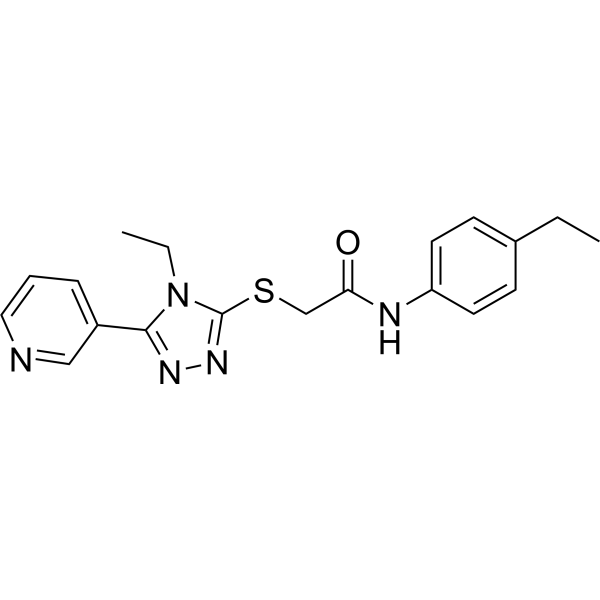
    VUAA1 is an insect odorant co-receptor (Orco) agonist. VUAA1 activates both heteromeric and homomeric Orco-containing channels. VUAA1 can disrupt the destructive behaviors of nuisance insects. VUAA1 can be used for insect olfactory research .
    VUAA1
  • HY-134851
    HIV-1 inhibitor-6
    1 Publications Verification

    HIV Infection
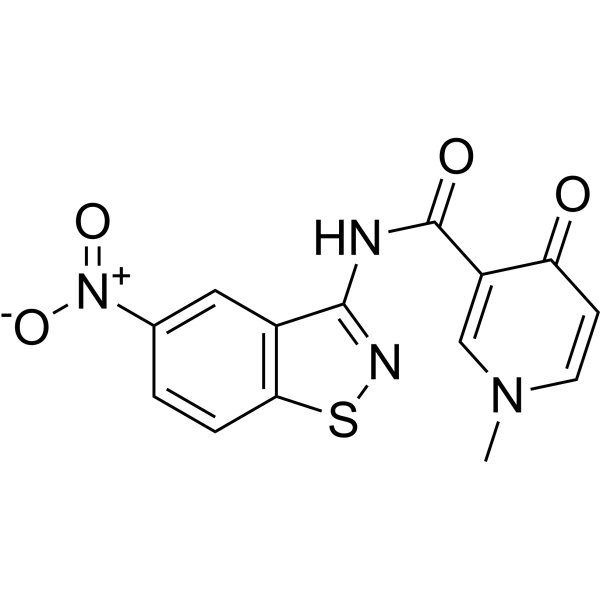
    HIV-1 inhibitor-6 (compound 9), a diheteroarylamide-based compound, is a potent HIV-1 pre-mRNA alternative splicing inhibitor. HIV-1 inhibitor-6 blocks HIV replication. HIV-1 inhibitor-6 is active against wild-type HIV-1IIIB (subtype B, X4-tropic) and HIV-1 97USSN54 (subtype A, R5-tropic) with EC50s of 0.6 μM and 0.9 μM, respectively. HIV-1 inhibitor-6 inhibits HIV strains resistant to agents targeting HIV reverse transcriptase, protease, integrase, and coreceptor CCR5 with EC50s ranging from 0.9 to 1.5 μM .
    HIV-1 inhibitor-6
  • HY-146413

    CXCR HIV Infection Cancer
    HF50731 (compound 21) is a potent CXCR4 antagonist. HF50731 shows strong CXCR4 binding affinity, with IC50 of 19.8 nM. HF50731 effectively inhibits calcium mobilization, cell migration, and HIV-1 infection via CXCR4 coreceptor, with IC50 values of 119.2 nM, 621.4 nM and 1.5 μM .
    HF50731
  • HY-111224

    HIV CXCR Infection
    GSK812397 is a CXCR4 antagonist with potential for the treatment of HIV infection. To evaluate the clinical potential of GSK812397, kilogram-scale agent candidates are needed. Here, an improved, scalable synthetic route for the CXCR4 antagonist GSK812397 is described. This new route has been scaled up in a 50-liter stationary facility to obtain 1.2 kg of agent substance in 20% overall yield and >99% chemical and enantiomeric purity in five steps. CXC chemokine receptor 4 (CXCR4) is a 7-transmembrane protein that functions in part as a host co-receptor for multiple strains of HIV-1. It is thought that targeting CXCR4 will help inhibit the replication of several late cytopathic viruses; therefore, CXCR4 antagonists are one of the most promising new classes of experimental anti-HIV agents. GSK812397 is a potent CXCR4 antagonist and is therefore a candidate for investigation for the treatment of HIV infection.
    GSK812397
  • HY-167945

    HIV CXCR Infection
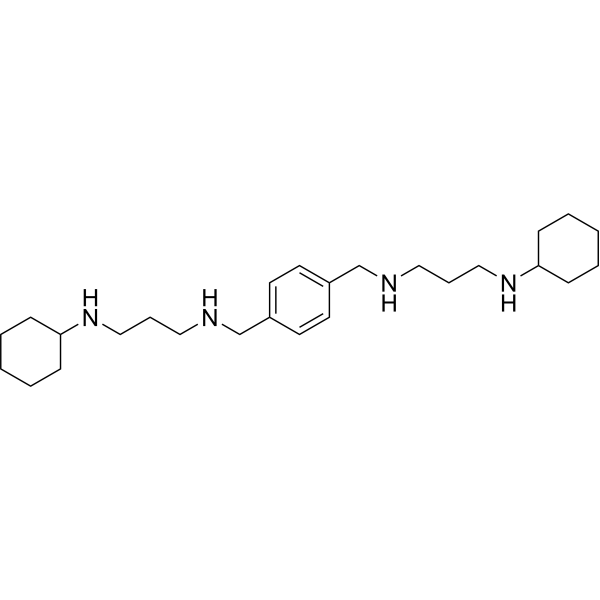
    AMD-3329 is a potent and selective anti-HIV-1 and HIV-2 agent, exhibiting activity by inhibiting virus replication through binding to the chemokine receptor CXCR4, which serves as a co-receptor for the entry of X4 viruses.
    AMD-3329
  • HY-174529

    mRNA Inflammation/Immunology
    Human TGFBR3 mRNA encodes the human transforming growth factor beta receptor 3 (TGFBR3) protein, a transforming growth factor (TGF)-beta type III receptor. TGFBR3 is a membrane proteoglycan that often functions as a co-receptor with other TGF-beta receptor superfamily members. Ectodomain shedding produces soluble TGFBR3, which may inhibit TGFB signaling. Decreased expression of this receptor has been observed in various cancers.
    Human TGFBR3 mRNA
  • HY-E70776

    RET Cancer
    Rearranged during transfection (RET) is a transmembrane receptor protein tyrosine kinase (PTK) activated normally by forming ternary complexes with its cognate ligands and co-receptors. RET alterations by point mutations and gene fusions were found in diverse cancers. RET S891A is a mutant of RET. RET S891A Recombinant Human Active Protein Kinase is a recombinant RET S891A protein that can be used to study RET S891A-related functions .
    RET S891A Recombinant Human Active Protein Kinase
  • HY-E70778

    RET Cancer
    Rearranged during transfection (RET) is a transmembrane receptor protein tyrosine kinase (PTK) activated normally by forming ternary complexes with its cognate ligands and co-receptors. RET alterations by point mutations and gene fusions were found in diverse cancers. RET V804L is a mutant of RET. RET V804L Recombinant Human Active Protein Kinase is a recombinant RET V804L protein that can be used to study RET V804L-related functions .
    RET V804L Recombinant Human Active Protein Kinase
  • HY-E70777

    RET Cancer
    Rearranged during transfection (RET) is a transmembrane receptor protein tyrosine kinase (PTK) activated normally by forming ternary complexes with its cognate ligands and co-receptors. RET alterations by point mutations and gene fusions were found in diverse cancers. RET V804E is a mutant of RET. RET V804E Recombinant Human Active Protein Kinase is a recombinant RET V804E protein that can be used to study RET V804E-related functions .
    RET V804E Recombinant Human Active Protein Kinase
  • HY-E70859

    RET Cancer
    Rearranged during transfection (RET) is a transmembrane receptor protein tyrosine kinase (PTK) activated normally by forming ternary complexes with its cognate ligands and co-receptors. RET alterations by point mutations and gene fusions were found in diverse cancers. RET L790F is a mutant of RET. RET L790F Recombinant Human Active Protein Kinase is a recombinant RET L790F protein that can be used to study RET L790F-related functions .
    RET L790F Recombinant Human Active Protein Kinase
  • HY-E70771

    RET Cancer
    Rearranged during transfection (RET) is a transmembrane receptor protein tyrosine kinase (PTK) activated normally by forming ternary complexes with its cognate ligands and co-receptors. RET alterations by point mutations and gene fusions were found in diverse cancers. RET L730I is a mutant of RET. RET L730I Recombinant Human Active Protein Kinase is a recombinant RET L730I protein that can be used to study RET L730I-related functions .
    RET L730I Recombinant Human Active Protein Kinase
  • HY-E70779

    RET Cancer
    Rearranged during transfection (RET) is a transmembrane receptor protein tyrosine kinase (PTK) activated normally by forming ternary complexes with its cognate ligands and co-receptors. RET alterations by point mutations and gene fusions were found in diverse cancers. RET V804M is a mutant of RET. RET V804M Recombinant Human Active Protein Kinase is a recombinant RET V804M protein that can be used to study RET V804M-related functions .
    RET V804M Recombinant Human Active Protein Kinase
  • HY-E70767

    RET Cancer
    Rearranged during transfection (RET) is a transmembrane receptor protein tyrosine kinase (PTK) activated normally by forming ternary complexes with its cognate ligands and co-receptors. RET alterations by point mutations and gene fusions were found in diverse cancers. RET G691S is a mutant of RET. RET G691S Recombinant Human Active Protein Kinase is a recombinant RET G691S protein that can be used to study RET G691S-related functions .
    RET G691S Recombinant Human Active Protein Kinase
  • HY-E70768

    RET Cancer
    Rearranged during transfection (RET) is a transmembrane receptor protein tyrosine kinase (PTK) activated normally by forming ternary complexes with its cognate ligands and co-receptors. RET alterations by point mutations and gene fusions were found in diverse cancers. RET G810C is a mutant of RET. RET G810C Recombinant Human Active Protein Kinase is a recombinant RET G810C protein that can be used to study RET G810C-related functions .
    RET G810C Recombinant Human Active Protein Kinase
  • HY-E70773

    RET Cancer
    Rearranged during transfection (RET) is a transmembrane receptor protein tyrosine kinase (PTK) activated normally by forming ternary complexes with its cognate ligands and co-receptors. RET alterations by point mutations and gene fusions were found in diverse cancers. RET M918T is a mutant of RET. RET M918T Recombinant Human Active Protein Kinase is a recombinant RET M918T protein that can be used to study RET M918T-related functions .
    RET M918T Recombinant Human Active Protein Kinase
  • HY-E70775

    RET Cancer
    Rearranged during transfection (RET) is a transmembrane receptor protein tyrosine kinase (PTK) activated normally by forming ternary complexes with its cognate ligands and co-receptors. RET alterations by point mutations and gene fusions were found in diverse cancers. RET R813Q is a mutant of RET. RET R813Q Recombinant Human Active Protein Kinase is a recombinant RET R813Q protein that can be used to study RET R813Q-related functions .
    RET R813Q Recombinant Human Active Protein Kinase
  • HY-E70772

    RET Cancer
    Rearranged during transfection (RET) is a transmembrane receptor protein tyrosine kinase (PTK) activated normally by forming ternary complexes with its cognate ligands and co-receptors. RET alterations by point mutations and gene fusions were found in diverse cancers. RET L730M is a mutant of RET. RET L730M Recombinant Human Active Protein Kinase is a recombinant RET L730M protein that can be used to study RET L730M-related functions .
    RET L730M Recombinant Human Active Protein Kinase
  • HY-E70774

    RET Cancer
    Rearranged during transfection (RET) is a transmembrane receptor protein tyrosine kinase (PTK) activated normally by forming ternary complexes with its cognate ligands and co-receptors. RET alterations by point mutations and gene fusions were found in diverse cancers. RET R749T is a mutant of RET. RET R749T Recombinant Human Active Protein Kinase is a recombinant RET R749T protein that can be used to study RET R749T-related functions .
    RET R749T Recombinant Human Active Protein Kinase
  • HY-E70769

    RET Cancer
    Rearranged during transfection (RET) is a transmembrane receptor protein tyrosine kinase (PTK) activated normally by forming ternary complexes with its cognate ligands and co-receptors. RET alterations by point mutations and gene fusions were found in diverse cancers. RET G810R is a mutant of RET. RET G810R Recombinant Human Active Protein Kinase is a recombinant RET G810R protein that can be used to study RET G810R-related functions .
    RET G810R Recombinant Human Active Protein Kinase
  • HY-E70766

    RET Cancer
    Rearranged during transfection (RET) is a transmembrane receptor protein tyrosine kinase (PTK) activated normally by forming ternary complexes with its cognate ligands and co-receptors. RET alterations by point mutations and gene fusions were found in diverse cancers. RET E762Q is a mutant of RET. RET E762Q Recombinant Human Active Protein Kinase is a recombinant RET E762Q protein that can be used to study RET E762Q-related functions .
    RET E762Q Recombinant Human Active Protein Kinase
  • HY-E70780

    RET Cancer
    Rearranged during transfection (RET) is a transmembrane receptor protein tyrosine kinase (PTK) activated normally by forming ternary complexes with its cognate ligands and co-receptors. RET alterations by point mutations and gene fusions were found in diverse cancers. RET Y791F is a mutant of RET. RET Y791F Recombinant Human Active Protein Kinase is a recombinant RET Y791F protein that can be used to study RET Y791F-related functions .
    RET Y791F Recombinant Human Active Protein Kinase
  • HY-E70781

    RET Cancer
    Rearranged during transfection (RET) is a transmembrane receptor protein tyrosine kinase (PTK) activated normally by forming ternary complexes with its cognate ligands and co-receptors. RET alterations by point mutations and gene fusions were found in diverse cancers. RET Y806H is a mutant of RET. RET Y806H Recombinant Human Active Protein Kinase is a recombinant RET Y806H protein that can be used to study RET Y806H-related functions .
    RET Y806H Recombinant Human Active Protein Kinase
  • HY-E70770

    RET Cancer
    Rearranged during transfection (RET) is a transmembrane receptor protein tyrosine kinase (PTK) activated normally by forming ternary complexes with its cognate ligands and co-receptors. RET alterations by point mutations and gene fusions were found in diverse cancers. RET G810S is a mutant of RET. RET G810S Recombinant Human Active Protein Kinase is a recombinant RET G810S protein that can be used to study RET G810S-related functions .
    RET G810S Recombinant Human Active Protein Kinase
  • HY-174745

    mRNA Inflammation/Immunology
    Human CCR3 mRNA encodes the human C-C motif chemokine receptor 3 (CCR3) protein, a member of G protein-coupled receptors family. CCR3 may contribute to the accumulation and activation of eosinophils and other inflammatory cells in the allergic airway. It is also known to be an entry co-receptor for HIV-1.
    Human CCR3 mRNA
  • HY-174743

    mRNA Inflammation/Immunology
    Human CCR5 mRNA encodes the human C-C motif chemokine receptor 5 (CCR5) protein, a member of the beta chemokine receptor family. CCR5 is known to be an important co-receptor for macrophage-tropic virus, including HIV, to enter host cells. It may also play a role in granulocyte lineage proliferation and differentiation.
    Human CCR5 mRNA
  • HY-174731

    mRNA Inflammation/Immunology
    Human CX3CR1 mRNA encodes the human C-X3-C motif chemokine receptor 1 (CX3CR1) protein, a receptor for fractalkine. CX3CR1 is also a coreceptor for HIV-1, and some variations in this gene lead to increased susceptibility to HIV-1 infection and rapid progression to AIDS.
    Human CX3CR1 mRNA
  • HY-174751

    mRNA Inflammation/Immunology
    Human CCL5 mRNA encodes the human C-C motif chemokine ligand 5 (CCL5) protein, a member of the CC subfamily, functions as a chemoattractant for blood monocytes, memory T helper cells and eosinophils. CCL5 is one of the major HIV-suppressive factors produced by CD8+ cells. It functions as one of the natural ligands for the chemokine receptor chemokine (C-C motif) receptor 5 (CCR5), and it suppresses in vitro replication of the R5 strains of HIV-1, which use CCR5 as a coreceptor.
    Human CCL5 mRNA
  • HY-175076

    Endogenous Metabolite Metabolic Disease Inflammation/Immunology
    Globotriaosylceramide (non-hydroxy) (porcine RBC) is a glycosphingolipid found in the cell membranes of mammals. Globotriaosylceramide (non-hydroxy) (porcine RBC) is the core pathogenic molecule of Fabry disease, and its level can be downregulated by supplementing α-galactosidase A. Globotriaosylceramide (non-hydroxy) (porcine RBC) amplifies B-cell receptor signals by regulating the localization of co-receptor CD19, and can be used as a vaccine adjuvant, capable of guiding the generation of broad-spectrum and cross-protective antibody responses. Globotriaosylceramide (non-hydroxy) (porcine RBC) promotes wound healing and reduces scar formation by regulating fibroblast heterogeneity .
    Globotriaosylceramide (non-hydroxy) (porcine RBC)
  • HY-P991827

    CTLA-4 Inflammation/Immunology
    Anti-Mouse CTLA-4 Antibody (UC10-4F10-11) reacts with mouse cytotoxic T lymphocyte antigen-4 (CTLA-4, CD152). Anti-Mouse CTLA-4 Antibody (UC10-4F10-11) promotes T cell co-stimulation by blocking CTLA-4 binding to the B7 co-receptors, allowing for CD28 binding. Recommend Isotype Controls: Polyclonal Armenian hamster IgG, Isotype Control (HY-P990305) .
    Anti-Mouse CTLA-4 Antibody (UC10-4F10-11)

Inquiry Online

Your information is safe with us. * Required Fields.

Salutation


Country or Region *

Applicant Name *


Organization Name *

Department *


Email Address *


Product Name *

Cat. No.


Requested quantity *

Phone Number *


Remarks

Inquiry Online

Inquiry Information

Product Name:
Cat. No.:
Quantity:
MCE Japan Authorized Agent: