



Claudin
Claudins are a family of transmembrane proteins, are the most important components of the tight junctions (zonulae occludentes). They have four transmembrane domains, with the N-terminus and the C-terminus in the cytoplasm. Claudin expression and functions are regulated at multiple levels and by diverse mechanisms. Delocalization of claudins from membrane appears to be common among the transformed cells. Constitutive activation of Ras or Ras-mediated signaling pathway/s is one of the initial steps during tumorigenesis that is causatively associated with neoplastic transformation. Importantly, claudins are expressed in the epithelial cells and in a tissue-specific manner and changes among claudin family members in cancer follow tissue-specific and sometimes contrasting pattern. Thus, claudin family of proteins may hold the potential cue to the heterogeneity among the tumors of epithelial origin and beyond being useful markers may also help provide therapeutic opportunities suited for specific cancer type[1].
All Product Categories
-
Claudin 관련 제품 (41)
관련 제품 (41)

-
Alvelestat
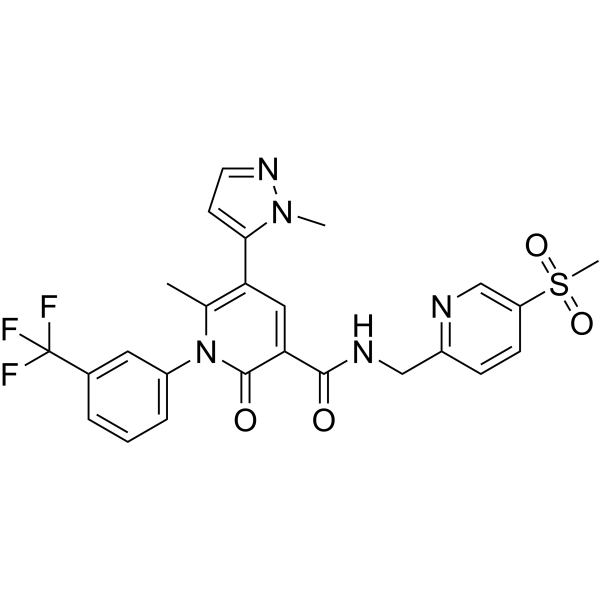 0 ImagesSynonyms: AZD9668Alvelestat (AZD9668) is an orally active, selective inhibitor of neutrophil elastase. Alvelestat reduces elastase activity, myeloperoxidase release, neutrophil recruitment and activation, and calcium phosphate precipitation; promotes smooth muscle cell colonization and collagen deposition; and inhibits the formation of neutrophil extracellular traps (NETs) as well as NET-derived neutrophil elastase activity. Alvelestat restores endothelial dysfunction, regulates antioxidant factors, improves the expression of endothelial tight junctions, reduces vascular leakage, and accelerates wound healing. Alvelestat prevents pulmonary hemorrhage, matrix protein degradation, airspace enlargement, and small airway wall remodeling; and alleviates cigarette-induced inflammatory responses. Alvelestat inhibits the growth of abdominal aortic aneurysms exacerbated by Porphyromonas gingivalis. Alvelestat can be used in research related to chronic obstructive pulmonary disease, abdominal aortic aneurysm, radiation-induced skin injury, and bronchiectasis.
-
Homogentisic acid
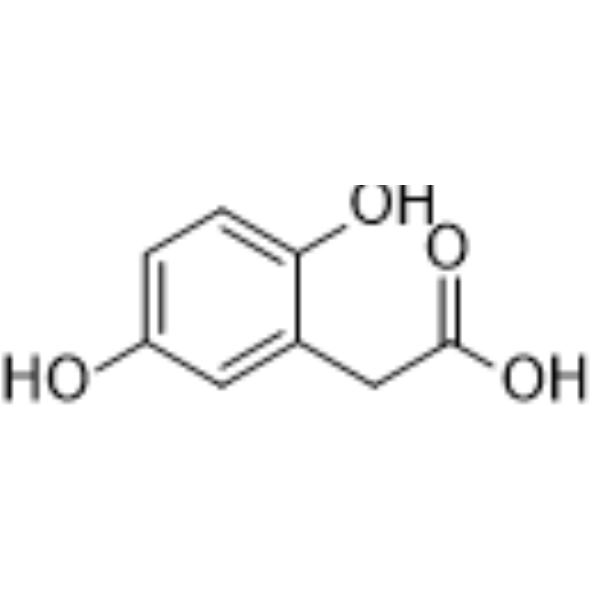 0 ImagesHomogentisic acid is an orally active, blood-brain barrier-permeable amyloidogenic compound that functions as both an amyloid component and a pigment precursor. Accumulation of homogentisic acid downregulates tight junction proteins (such as claudin-5, occludin, ZO-1) and impairs blood-brain barrier integrity. Homogentisic acid and its oxidation product benzoquinone acetic acid not only induce the aggregation and fibrosis of multiple proteins (such as Aβ1-42, α-synuclein, SAA, Transthyretin (TTR), atrial natriuretic peptide), but also trigger oxidative stress, damage to the Wnt/β-catenin pathway, and neurotoxicity, leading to ochronosis pigment deposition and synaptic dysfunction. At specific concentrations, homogentisic acid exerts no cytotoxicity or genotoxicity on human peripheral blood lymphocytes, and even counteracts the genotoxicity induced by Irinotecan (HY-16562). Homogentisic acid serves as an important tool molecule for investigating the mechanisms of diseases including ochronosis, secondary amyloidosis, Alzheimer's disease, and colorectal cancer.
-
Xylobiose
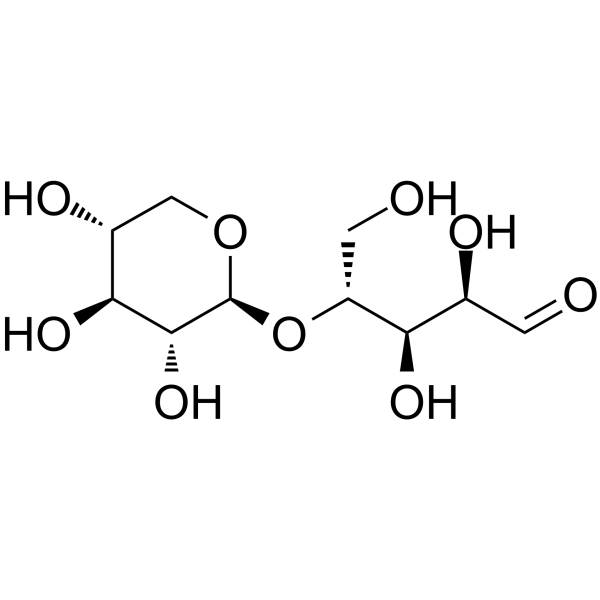 0 ImagesXylobiose (1,4-β-D-Xylobiose; 1,4-D-Xylobiose) is an orally active Claudin 2/CLDN2 inhibitor and HSP27 inducer. Xylobiose works by regulating intestinal barrier function and glucose and lipid metabolism-related signaling pathways. Xylobiose inhibits CLDN2 expression to reduce intestinal permeability, induces HSP27 to enhance cell protection, and regulates the miR-122a/miR-33a axis to inhibit liver lipid synthesis and improve insulin resistance. Xylobiose can strengthen intestinal barrier integrity, reduce blood sugar and blood lipid levels, and reduce oxidative stress and inflammatory response. Xylobiose can be used in the study of type 2 diabetes and metabolic syndrome.
-
Lixudebart
 0 ImagesSynonyms: ALE.F02Lixudebart (ALE.F02) is a humanized immunoglobulin G1-kappa, anti-CLDN1 monoclonal antibody. Lixudebart disrupts CLDN1 interactions with CD44 and MMP14, reduces renal macrophage infiltration, epithelial activation, and urinary albumin-to-creatinine ratio, and attenuates glomerulosclerosis. Lixudebart can be used for the research of focal segmental glomerulosclerosis.
-
Vasculotide
 0 ImagesVasculotide is a blood-brain barrier (BBB)-penetrant Tie2 agonist. Vasculotide binds to a unique domain of Tie2, induces receptor clustering to drive phosphorylation, activates downstream PI3K/Akt and eNOS pathways, enhances inter-endothelial cell junctions (such as VE-cadherin and claudin-5), and inhibits inflammatory adhesion molecules, ultimately stabilizing the vascular endothelial barrier and reducing its permeability. Vasculotide alleviates pulmonary microvascular leakage and microcirculatory dysfunction caused by cardiopulmonary bypass, acts as an adjuvant radioprotective agent to reduce acute radiation dermatitis, and promotes BBB recovery after focused ultrasound (FUS). Combination of Vasculotide with antibiotics reduces lung injury.
-
3-Oxo deoxycholic acid
 0 Images3-Oxo deoxycholic acid is a secondary bile acid and a metabolic intermediate of Deoxycholic acid (HY-N0593) under the action of gut microbiota. 3-Oxo deoxycholic acid enhances the intestinal barrier by upregulating tight junction proteins, and maintains bile acid homeostasis and reduces toxicity via the gut bacterial enzyme system. 3-Oxo deoxycholic acid can be used in research on colonic barrier dysfunction and colonic inflammation.
-
Givastomig
 0 ImagesSynonyms: TJ-CD4B; ABL111; TJ033721Givastomig (ABL111, TJ033721) is a bispecific antibody (BsAb) inhibitor. Givastomig can specifically binds to Claudin18.2 (CLDN 18.2) on the surface of cancer cells and 4-1BB (CD137, TNFRSF9) on the surface of activated T cells and natural killer (NK) cells. Givastomig is engineered to contain a single Fc-domain mutation (asparagine to alanine) to eliminate Fc-effector function. Givastomig-bound cell lines expressing a range of CLDN18.2 levels with high affinity and induced 4-1BB activation only in the context of CLDN18.2 binding. Givastomig can be used for the study of colon carcinoma.
-
9,10-Phenanthrenequinone
 0 Images9,10-Phenanthrenequinone is an inhibitor of claudin-5/CLDN5 that induces apoptosis via a NO synthase/ROS-dependent mechanism. 9,10-Phenanthrenequinone also promotes endothelial barrier dysfunction by promoting caspase activation and DNA fragmentation, and reducing CLDN5 expression and proteasomal proteolysis.
-
Arcotatug
 0 ImagesSynonyms: IBI-343 antibody; HB37A6; TAK-921 AntibodyArcotatug (IBI-343 antibody) is a CLDN18.2 targeting humanized monoclonal antibody. Arcotatug can be used for synthesis of ADCs.
-
4-Methoxybenzyl alcohol
 0 ImagesSynonyms: P-Methoxy-benzyl alcoho; (4-Methoxyphenyl)methanol4-Methoxybenzyl alcohol (P-Methoxy-benzyl alcoho; (4-Methoxyphenyl) methanol) is a naturally derived volatile aromatic compound. 4-Methoxybenzyl alcohol upregulates the phosphorylation level of PI3K/Akt pathway proteins, downregulates the expression of pro-inflammatory factors, increases the content of tight junction proteins occludin and claudin-5, and alleviates structural damage to the blood-brain barrier. 4-Methoxybenzyl alcohol improves the decrease in viability and NO level of cerebral microvascular endothelial cells induced by oxygen-glucose deprivation/reperfusion, and reduces the release of lactate dehydrogenase. 4-Methoxybenzyl alcohol serves as a substrate in the two-phase persulfate-mediated electro-oxidation system, where it is directionally oxidized to p-anisaldehyde. 4-Methoxybenzyl alcohol acts as a substrate for wild-type fungal aryl alcohol oxidase. 4-Methoxybenzyl alcohol can be used in studies related to ischemic stroke, as well as in research across various fields such as chemical synthesis, including the synthesis of fragrances and flavorings.
-
Vasculotide TFA
 0 ImagesCat. No.: HY-P10580APurity: 99.88%Vasculotide TFA is a blood-brain barrier (BBB)-penetrant Tie2 agonist. Vasculotide TFA binds to a unique domain of Tie2, induces receptor clustering to drive phosphorylation, activates downstream PI3K/Akt and eNOS pathways, enhances inter-endothelial cell junctions (such as VE-cadherin and claudin-5), and inhibits inflammatory adhesion molecules, ultimately stabilizing the vascular endothelial barrier and reducing its permeability. Vasculotide TFA alleviates pulmonary microvascular leakage and microcirculatory dysfunction caused by cardiopulmonary bypass, acts as an adjuvant radioprotective agent to reduce acute radiation dermatitis, and promotes BBB recovery after focused ultrasound (FUS). Combination of Vasculotide TFA with antibiotics reduces lung injury.
-
Ixotatug
 0 ImagesSynonyms: TORL-1-23 AntibodyIxotatug (TORL-1-23 Antibody) is a monoclonal antibody targeting claudin-6 (CLDN6) that serves as the antibody component of the ADC drug Ixotatug vedotin (TORL-1-23). Ixotatug is applicable to research related to various cancers including ovarian cancer.
-
OM-7D3-B3
 0 ImagesCat. No.: HY-P991200OM-7D3-B3 is an antibody-based antiviral agent targeting the tight junction protein CLDN1 (Kd=4 nM). By binding to the first extracellular domain of CLDN1, OM-7D3-B3 disrupts the formation of the CLDN1-CD81 co-receptor complex, thereby effectively inhibiting the entry of hepatitis C virus (HCV). OM-7D3-B3 not only prevents de novo and chronic HCV infections in humanized liver chimeric mice and uPA-SCID mice transplanted with human livers, but also exhibits favorable safety with no toxic effects observed. OM-7D3-B3 serves as a critical tool for research on HCV infection mechanisms and antiviral drug development.
-
NSC 357754 dihydrochloride
 0 ImagesCat. No.: HY-171152APurity: 98.01%NSC 357754 dihydrochloride is an inhibitor of Claudin. NSC 357754 dihydrochloride can increase the transepithelial electrical resistance of cells and reduce the permeability of specific cations. NSC 357754 dihydrochloride can be used in the research of intestinal diseases mediated by Claudin-2 and/or Claudin-15.
-
Zifogaptide
 0 ImagesZifogaptide is a gap junction protein channel regulator. Zifogaptide mimics the PDZ-binding motif at the C-terminal of Claudin C and competitively interferes with the interaction between Claudin–TJP1 (ZO-1) scaffold. Zifogaptide can promote epithelial cell migration, reduce scar formation, and accelerate wound healing. Zifogaptide can be used for radiation dermatitis, skin injuries, etc.
-
Oleanolic acid 28-O-β-D-glucopyranoside
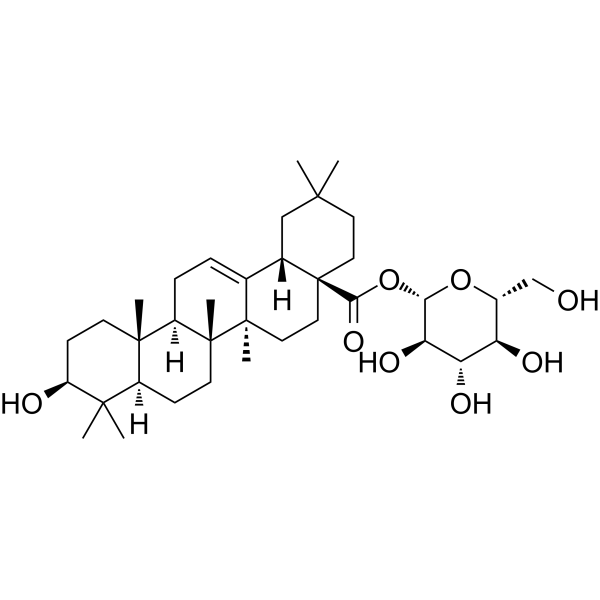 0 ImagesSynonyms: β-D-Glucopyranosyl oleanolateOleanolic acid 28-O-β-D-glucopyranoside (β-D-Glucopyranosyl oleanolate) is an orally active pentacyclic triterpenoid compound. Oleanolic acid 28-O-β-D-glucopyranoside has anti-inflammatory effects. In ulcerative colitis models, Oleanolic acid 28-O-β-D-glucopyranoside can inhibit the inflammatory response, enhance the intestinal epithelial barrier function, and modulate the gut microbiota. Its mechanism of action is related to the PI3K-AKT and MAPK signaling pathways. Oleanolic acid 28-O-β-D-glucopyranoside can be used in the research of diseases such as colitis.
-
Emaretamig
 0 ImagesCat. No.: HY-P991681CAS No.: 3051701-97-1Synonyms: ASP-2138Emaretamig is a humanized IgG1κ monoclonal antibody inhibitor targeting CLDN18 and CD3E. Abdakibart can be used for cancers like gastric and pancreatic cancer research.
-
NSC 357754
 0 ImagesCat. No.: HY-171152CAS No.: 2938216-28-3NSC 357754 is an inhibitor of Claudin. NSC 357754 can increase the transepithelial electrical resistance of cells and reduce the permeability of specific cations. NSC 357754 can be used in the research of intestinal diseases mediated by Claudin-2 and/or Claudin-15.
-
Gaspantatug
 0 ImagesCat. No.: HY-P991687CAS No.: 3004869-54-6




