



OM-7D3-B3

Based on 1 Customer Validation
OM-7D3-B3 is an antibody-based antiviral agent targeting the tight junction protein CLDN1 (Kd=4 nM). By binding to the first extracellular domain of CLDN1, OM-7D3-B3 disrupts the formation of the CLDN1-CD81 co-receptor complex, thereby effectively inhibiting the entry of hepatitis C virus (HCV). OM-7D3-B3 not only prevents de novo and chronic HCV infections in humanized liver chimeric mice and uPA-SCID mice transplanted with human livers, but also exhibits favorable safety with no toxic effects observed. OM-7D3-B3 serves as a critical tool for research on HCV infection mechanisms and antiviral drug development.
For research use only. We do not sell to patients.
- Purity : 97.98%
-
Storage:
Please store the product under the recommended conditions in the Certificate of Analysis.


To place orders, for customer services and technical support, please contact: MedChemExpress USA
Tel: 609-228-6898 E-mail: [email protected] [email protected]


-
 Biological Activity
-
Chemical Information
- Protocols
- Purity & Documentation
- References
-
 Help & FAQs





Biological Activity
Description
Isotype
Human IgG1 kappa
Recommend Isotype Controls
Species Reactivity
Human
IC50 & Target
|
Claudin-1 4 nM (Kd) |
In Vitro
OM-7D3-B3 (20 μg/mL) specifically binds to CLDN1 on the surface of Huh7.5.1 cells, HepG2 cells, primary human hepatocytes, and 293T cells overexpressing CLDN1[1].
OM-7D3-B3 partially inhibits the entry of HCV pseudovirions (genotypes 1a and 1b) into primary human hepatocytes[1].
Serial dilutions of OM-7D3-B3 dose-dependently inhibit infection of Huh7.5.1 cells by wild-type and DAA-resistant HCVcc, with IC50 values of 0.13 μg/mL, 0.23 μg/mL, and 0.36 μg/mL against Jc1, Jc1-A156S, and Jc1-R155K, respectively[1].
OM-7D3-B3 (11 μg/mL; 24 h) effectively inhibits cell-to-cell transmission of HCV between Huh7.5.1 producer cells and target cells[1].
When used in combination with Sofosbuvir (HY-15005) and Daclatasvir (HY-10466), OM-7D3-B3 exhibits synergistic antiviral activity against HCVcc infection in Huh7.5.1 cells[1].
MedChemExpress (MCE) has not independently confirmed the accuracy of these methods. They are for reference only.
-
Cell Line:Huh7.5.1 producer and target cells
-
Concentration:11 μg/mL
-
Incubation Time:24 h
-
Result:Inhibited HCV cell-cell transmission between Huh7.5.1 producer and target cells
In Vivo
OM-7D3-B3 prevents HCV infection in human liver-grafted uPA-SCID mice by binding the first extracellular domain of CLDN-1[2].
MedChemExpress (MCE) has not independently confirmed the accuracy of these methods. They are for reference only.
-
Animal Model:uPA-SCID (severe combined immunodeficient, homologous for urokinase-type plasminogen activator expression under control of the mouse albumin promoter, human-liver chimeric, engrafted with primary human hepatocytes, HCV-infected)[1]
-
Dosage:25 mg/kg
-
Administration:i.p.; weekly; 4 weeks
-
Result:Cleared chronic HCV infection, resulting in undetectable HCV RNA levels at the end of the study period.
Maintained stable human albumin levels, confirming preserved human hepatocyte engraftment and no adverse effects on liver function.
Gene ID
Accession
O95832
Conjugated
Unconjugated
Reconsititution
The product can be reconstituted/diluted with sterile PBS or saline.
Format
-
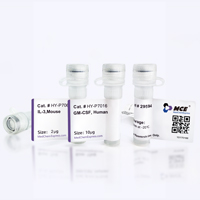
Product Image
Application
ELISA, FACS, Functional assay


Chemical Information
-
Appearance Liquid
-
Color Colorless to light yellow
-
SMILES
N/A
-
Shipping
Shipping with dry ice.
-
Formulation
Please refer to the lot-specific COA for specific buffer information.
-
Storage
Please store the product under the recommended conditions in the Certificate of Analysis.


Purity & Documentation
-
Data Sheet (261 KB)
-
SDS (251 KB)
- English - EN (251 KB)
- Français - FR (251 KB)
- Deutsch - DE (251 KB)
- Norwegian - NO (251 KB)
- Español - ES (251 KB)
- Swedish - SV (251 KB)
- Italian - IT (251 KB)
- Korean - KR (251 KB)
- Portuguese - PT (251 KB)
-
Inhibitory Antibodies User Guide (603 KB)
References
[1]. Colpitts CC, et al. Humanisation of a claudin-1-specific monoclonal antibody for clinical prevention and cure of HCV infection without escape. Gut. 2018;67(4):736-745. [Content Brief]
[2]. Hashimoto Y, et al. Claudin-targeted drug development using anti-claudin monoclonal antibodies to treat hepatitis and cancer. Ann N Y Acad Sci. 2017;1397(1):5-16. [Content Brief]

Calculators
Concentration (start) × Volume (start) = Concentration (final) × Volume (final)


OM-7D3-B3 Related Classifications
HY-P991200 Related Classifications
 Powered by Bioz