



Claudin Inhibitor
- 1
- 2
-
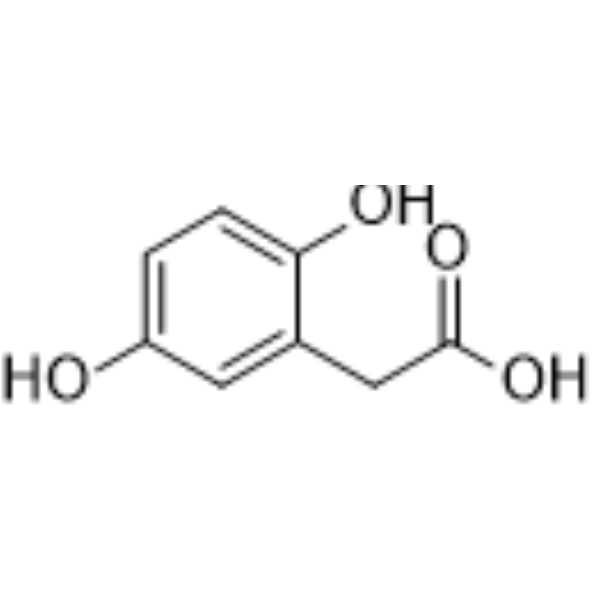
Homogentisic acid
 0 Images
Homogentisic acid is an orally active, blood-brain barrier-permeable amyloidogenic compound that functions as both an amyloid component and a pigment precursor. Accumulation of homogentisic acid downregulates tight junction proteins (such as claudin-5, occludin, ZO-1) and impairs blood-brain barrier integrity. Homogentisic acid and its oxidation product benzoquinone acetic acid not only induce the aggregation and fibrosis of multiple proteins (such as Aβ1-42, α-synuclein, SAA, Transthyretin (TTR), atrial natriuretic peptide), but also trigger oxidative stress, damage to the Wnt/β-catenin pathway, and neurotoxicity, leading to ochronosis pigment deposition and synaptic dysfunction. At specific concentrations, homogentisic acid exerts no cytotoxicity or genotoxicity on human peripheral blood lymphocytes, and even counteracts the genotoxicity induced by Irinotecan (HY-16562). Homogentisic acid serves as an important tool molecule for investigating the mechanisms of diseases including ochronosis, secondary amyloidosis, Alzheimer's disease, and colorectal cancer.
-
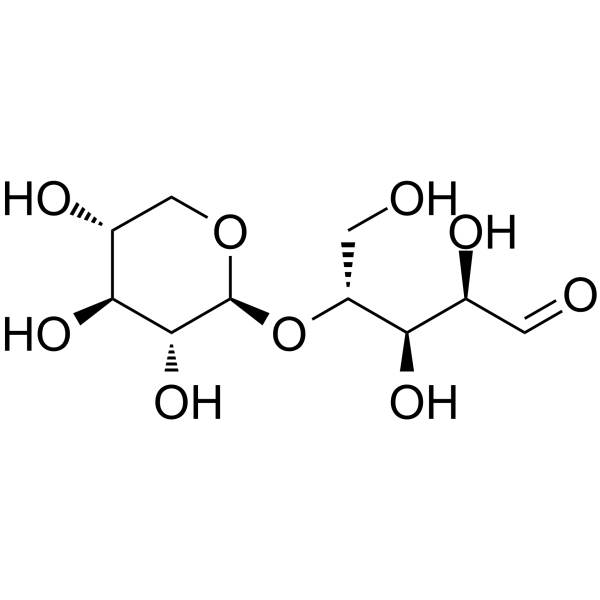
Xylobiose
 0 Images
Xylobiose (1,4-β-D-Xylobiose; 1,4-D-Xylobiose) is an orally active Claudin 2/CLDN2 inhibitor and HSP27 inducer. Xylobiose works by regulating intestinal barrier function and glucose and lipid metabolism-related signaling pathways. Xylobiose inhibits CLDN2 expression to reduce intestinal permeability, induces HSP27 to enhance cell protection, and regulates the miR-122a/miR-33a axis to inhibit liver lipid synthesis and improve insulin resistance. Xylobiose can strengthen intestinal barrier integrity, reduce blood sugar and blood lipid levels, and reduce oxidative stress and inflammatory response. Xylobiose can be used in the study of type 2 diabetes and metabolic syndrome.
-
Lixudebart
 0 ImagesSynonyms: ALE.F02
Lixudebart (ALE.F02) is a humanized immunoglobulin G1-kappa, anti-CLDN1 monoclonal antibody. Lixudebart disrupts CLDN1 interactions with CD44 and MMP14, reduces renal macrophage infiltration, epithelial activation, and urinary albumin-to-creatinine ratio, and attenuates glomerulosclerosis. Lixudebart can be used for the research of focal segmental glomerulosclerosis.
-
AB011
 0 ImagesCat. No.: HY-P992167
AB011 is a recombinant humanized anti-CLDN18.2 IgG1 monoclonal antibody. AB011 exhibits synergistic effects with cytotoxic compounds in preclinical studies. AB011 can be used for research on advanced gastric/gastroesophageal junction adenocarcinoma and advanced pancreatic cancer.
-
9,10-Phenanthrenequinone
 0 Images
9,10-Phenanthrenequinone is an inhibitor of claudin-5/CLDN5 that induces apoptosis via a NO synthase/ROS-dependent mechanism. 9,10-Phenanthrenequinone also promotes endothelial barrier dysfunction by promoting caspase activation and DNA fragmentation, and reducing CLDN5 expression and proteasomal proteolysis.
-
Arcotatug
 0 ImagesSynonyms: IBI-343 antibody; HB37A6; TAK-921 Antibody
Arcotatug (IBI-343 antibody) is a CLDN18.2 targeting humanized monoclonal antibody. Arcotatug can be used for synthesis of ADCs.
-
Givastomig
 0 ImagesSynonyms: TJ-CD4B; ABL111; TJ033721
Givastomig (ABL111, TJ033721) is a bispecific antibody (BsAb) inhibitor. Givastomig can specifically binds to Claudin18.2 (CLDN 18.2) on the surface of cancer cells and 4-1BB (CD137, TNFRSF9) on the surface of activated T cells and natural killer (NK) cells. Givastomig is engineered to contain a single Fc-domain mutation (asparagine to alanine) to eliminate Fc-effector function. Givastomig-bound cell lines expressing a range of CLDN18.2 levels with high affinity and induced 4-1BB activation only in the context of CLDN18.2 binding. Givastomig can be used for the study of colon carcinoma.
-
NSC 357754 dihydrochloride
 0 ImagesCat. No.: HY-171152APurity: 98.01%
NSC 357754 dihydrochloride is an inhibitor of Claudin. NSC 357754 dihydrochloride can increase the transepithelial electrical resistance of cells and reduce the permeability of specific cations. NSC 357754 dihydrochloride can be used in the research of intestinal diseases mediated by Claudin-2 and/or Claudin-15.
-
Emaretamig
 0 ImagesCat. No.: HY-P991681CAS No.: 3051701-97-1Synonyms: ASP-2138
Emaretamig is a humanized IgG1κ monoclonal antibody inhibitor targeting CLDN18 and CD3E. Abdakibart can be used for cancers like gastric and pancreatic cancer research.
-
NSC 357754
 0 ImagesCat. No.: HY-171152CAS No.: 2938216-28-3
NSC 357754 is an inhibitor of Claudin. NSC 357754 can increase the transepithelial electrical resistance of cells and reduce the permeability of specific cations. NSC 357754 can be used in the research of intestinal diseases mediated by Claudin-2 and/or Claudin-15.
-
Gaspantatug
 0 ImagesCat. No.: HY-P991687CAS No.: 3004869-54-6

-
Lumivatamig
 0 ImagesCat. No.: HY-P991700CAS No.: 3035406-55-1
Lumivatamig is an H-γ1_L-κ-scFvhl dimer-type bispecific antibody targeting CLDN18.2 & CD3E.

-
SPX-101
 0 ImagesCat. No.: HY-P992508Synonyms: SX001
SPX-101 (SX001) is a humanized monoclonal antibody targeting CLDN18.2. CLDN18.2 is only transiently expressed in the differentiated epithelial cells of the gastric mucosa and is hardly found in healthy tissues, thus having an extremely wide therapeutic window. SPX-101 can be used for the study of solid tumors.
-
GB7004-09
 0 ImagesCat. No.: HY-P992355Synonyms: GB7004-09hu15
GB7004-09 (GB7004-09hu15) is a humanized monoclonal antibody against CLDN18.2. GB7004-09 can be used in cancer research.
-
SOT102 Antibody
 0 ImagesCat. No.: HY-P992467
-
MIL93
 0 ImagesCat. No.: HY-P992412
MIL93 is a humanized defucosylated IgG1 monoclonal antibody targeting Claudin18.2 (CLDN18.2) with enhanced antibody-dependent cellular cytotoxicity (ADCC) activity. MIL93 can be used for research on advanced solid tumors and gastric cancer. The recommended isotype control is human IgG1 kappa (HY-P99001).
-
ZL-1211
 0 ImagesCat. No.: HY-P992487
ZL-1211 is an anti-CLDN18.2 monoclonal antibody. ZL-1211 exhibits enhanced binding affinity to CD16A. ZL-1211 induces ADCC-mediated cell lysis and triggers the production of IFNγ, TNFα and IL6. ZL-1211 promotes antibody-dependent cellular cytotoxicity. ZL-1211 exerts anti-tumor activity in a mouse xenograft model of gastric cancer. ZL-1211 can be used for the research of gastric cancer.
-
Ruberythric acid
 0 ImagesCat. No.: HY-W718178CAS No.: 152-84-1
Ruberythric acid is a natural product found in madder (Rubia tinctorum). Acid treatment induces hydrolysis of Ruberythric acid, producing pentose-containing sugar residues and alizarin. Ruberythric acid inhibits stimulus-induced phosphorylation of IKK, IκBα and p65 in the NF-κB pathway, regulates tight junction integrity, suppresses stimulus-induced MLCK activation and myosin light chain phosphorylation, reduces tight junction disruption associated with cytoskeletal contraction, alleviates stimulus-induced increase in intestinal permeability, and prevents stimulus-induced redistribution of tight junction proteins. Ruberythric acid forms red salts when dissolved in alkali and can be used as a dye. Ruberythric acid is applicable to research related to inflammatory bowel disease.
- 1
- 2



