1. Search Result
Search Result
Results for "

endogenous dopamine

" in MedChemExpress (MCE) Product Catalog:

16

Inhibitors & Agonists

2

Peptides

4

Natural
Products

Cat. No. Product Name Target Research Areas Chemical Structure
  • HY-128483

    TGF-beta/Smad PI3K NF-κB Akt Apoptosis Dopamine β-hydroxylase mTOR Adrenergic Receptor Cardiovascular Disease Endocrinology Cancer
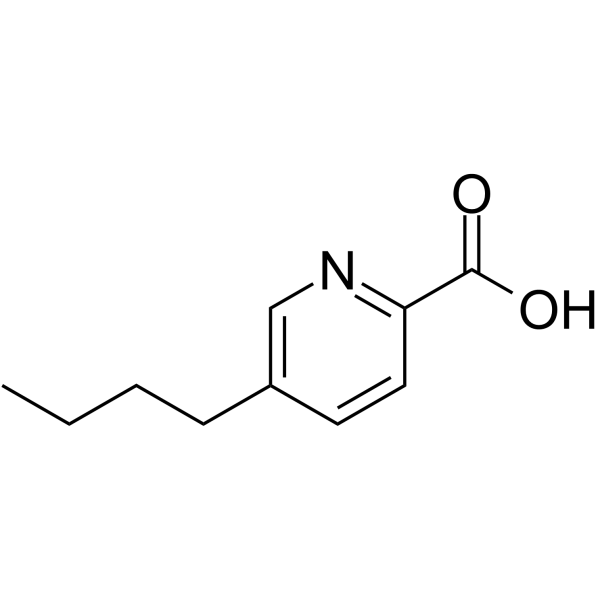
    Fusaric acid is an orally active multi-pathway inhibitor with the activity of inducing oxidative stress and apoptosis. Fusaric acid can chelate divalent metal cations, damage mitochondrial membrane structure, and activate apoptosis-related proteases such as Caspase-3/7, -8, and -9. Fusaric acid also regulates Bax/Bcl-2 protein, inhibits fibrosis-related signaling pathways such as NF-κB, TGF-β1/SMADs, and PI3K/AKT/mTOR, and reduces collagen deposition. Fusaric acid is also a dopamine β-hydroxylase inhibitor, which reduces endogenous levels of norepinephrine and epinephrine in the brain, heart, spleen, and adrenal glands. Fusaric acid can play a role in myocardial fibrosis and improve cardiac hypertrophy in heart disease, and can also be used in the study of esophageal cancer and liver cancer .
    Fusaric acid
  • HY-107663A

    Pro-Leu-Gly-NH2 TFA; Melanostatin TFA

    Dopamine Receptor Neurological Disease
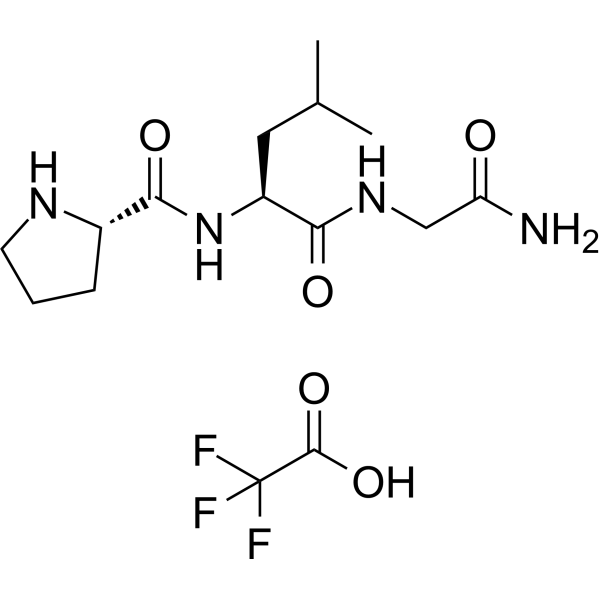
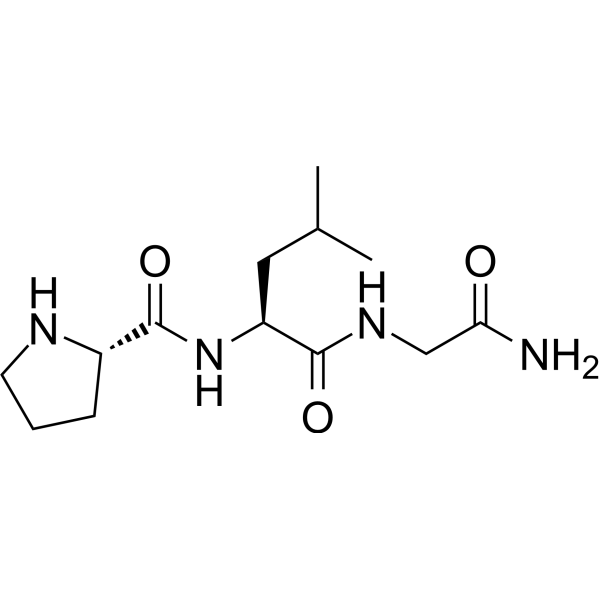
    MIF-1 TFA (Melanostatin), an endogenous brain peptide, is a potent dopamine receptor allosteric modulator. MIF-1 TFA inhibits melanin formation. MIF-1 TFA blocks the effects of opioid receptor activation to modulate the analgesic effects. MIF-1 TFA accesses from the blood to the CNS by directly crossing the blood-brain barrier (BBB) .
    MIF-1 TFA
  • HY-16639

    GPR35 Neurotensin Receptor Neurological Disease Endocrinology
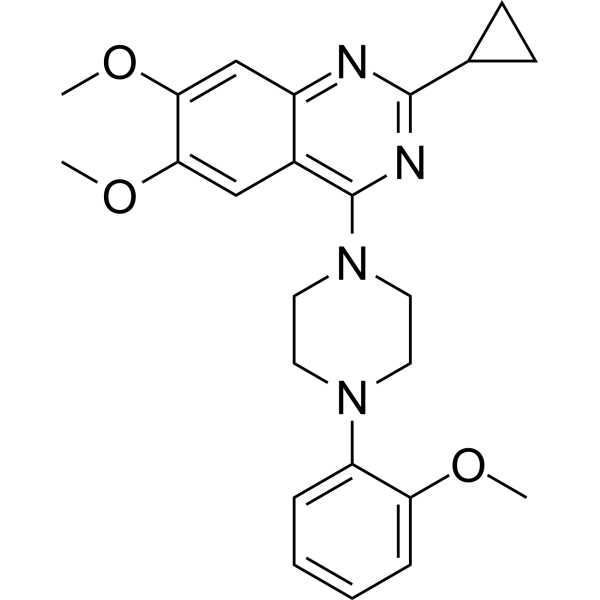
    ML314 is a potent, BBB-penetrant and β-arrestin biased molecule agonist of NTR1 (EC50 = 1.9 μM). ML314 shows good selectivity against NTR2 and GPR35, but does not stimulate Ca2+ mobilization. ML314 can attenuate amphetamine-like hyperlocomotion in dopamine transporter knockout mice. ML314 attenuates methamphetamine-associated hyperlocomotion and potentiates the psychostimulant inhibitory effects of a ghrelin antagonist in wild type mouse model. ML314 also acts as an allosteric enhancer of endogenous neurotensin. ML314 antagonizes G protein signaling. ML314 can be studied in research for methamphetamine abuse conditions .
    ML314
  • HY-148867

    Dopamine Receptor Neurological Disease
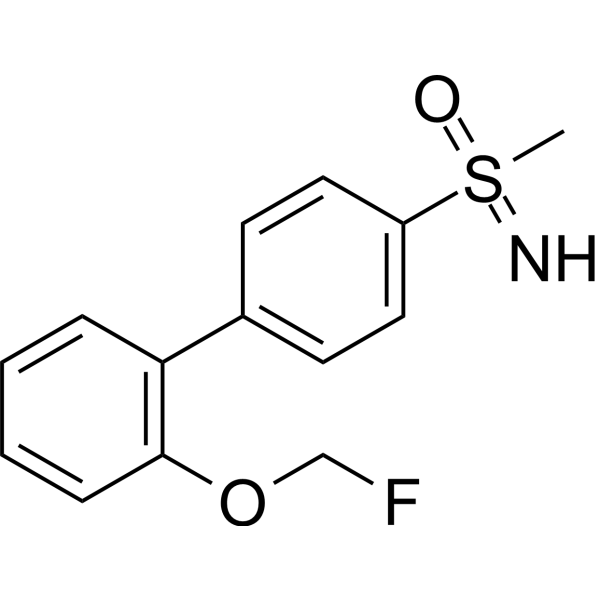
    UCM-1306 is a potent and orally active human dopamine D1 receptor allosteric modulator (PAM). UCM-1306 increases the endogenous dopamine (DA) maximal effect both in human and mouse D1 receptors. UCM-1306 is not only for improving motor symptoms but also for addressing the key comorbid cognitive impairment associated with long-term Parkinson’s disease (PD) .
    UCM-1306
  • HY-108455

    PALDA

    Dopamine Receptor TRP Channel Neurological Disease
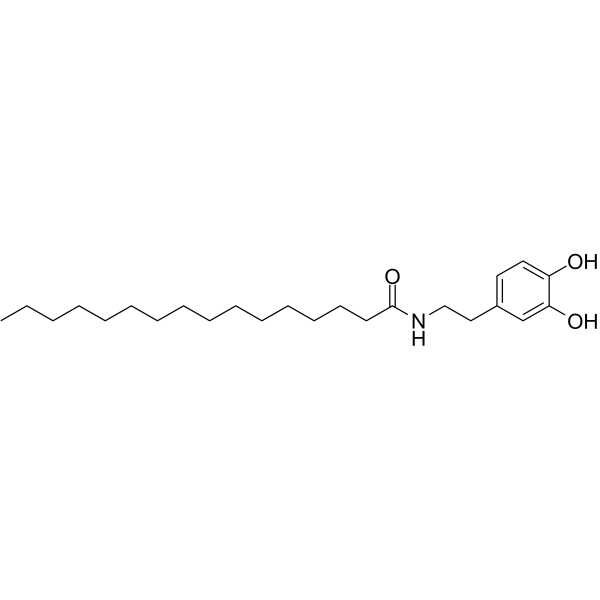
    N-Palmitoyl dopamine (PALDA) is a endogenous, long-chain, linear fatty acid dopamide, which is inactive on TRPV1. N-Palmitoyl dopamine displays 'entourage' effects on endovanilloids N-arachidonoyl-dopamine (NADA) and anandamide .
    N-Palmitoyl dopamine
  • HY-113316B

    (-)-Salsolinol

    Endogenous Metabolite Neurological Disease
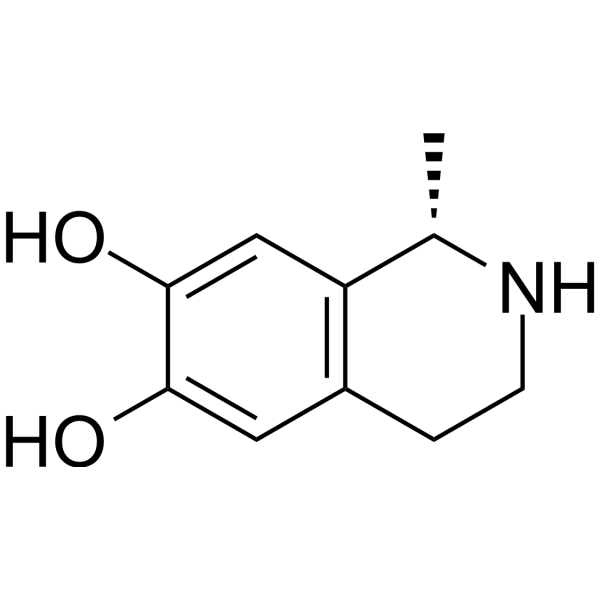
    (S)-Salsolinol ((-)-Salsolinol) is a dopamine-derived endogenous metabolite .
    (S)-Salsolinol
  • HY-113316A

    Endogenous Metabolite Opioid Receptor Neurological Disease
    (±)-Salsolinol hydrochloride is the hydrochloride form of (±)-Salsolinol (HY-113316). (±)-Salsolinol hydrochloride is a Dopamine (HY-B0451)-derived endogenous metabolite. (±)-Salsolinol hydrochloride activates μ-opioid receptors (MORs), reduces GABAergic transmission, increases the excitability of dopamine (DA) neurons, and thus accelerates the sustained firing of neurons in the posterior ventral tegmental area (pVTA) .
    (±)-Salsolinol hydrochloride
  • HY-107663

    Pro-Leu-Gly-NH2; Melanostatin

    Dopamine Receptor Neurological Disease
    MIF-1 (Melanostatin), an endogenous brain peptide, is a potent dopamine receptor allosteric modulator. MIF-1 inhibits melanin formation. MIF-1 blocks the effects of opioid receptor activation to modulate the analgesic effects. MIF-1 accesses from the blood to the CNS by directly crossing the blood-brain barrier (BBB) .
    MIF-1
  • HY-12701A

    U-99194A; PNU-99194A maleate; JPC-211 maleate

    Dopamine Receptor Neurological Disease
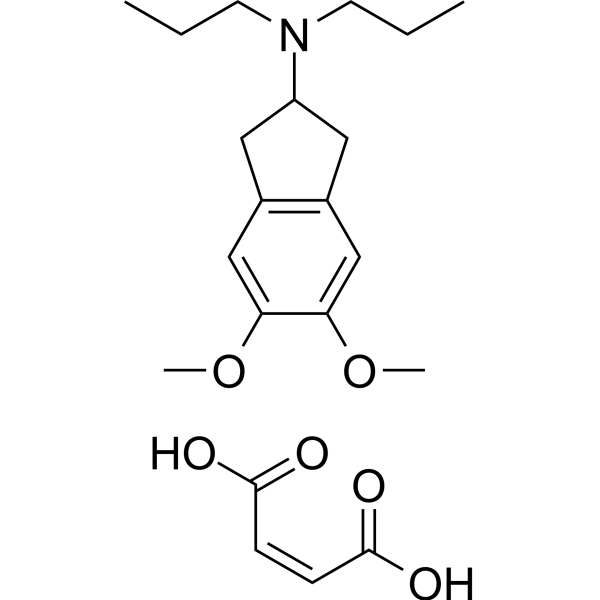
    U-99194 (PNU-99194) maleate is a selective, potent dopamine D3 receptor antagonist (Ki =160 nM). U-99194 maleate inhibits the activation of D3 receptor mediated by endogenously released dopamine or exogenous D3 agonists. U-99194 maleate abrogates the IPSC-suppressive effect of the D3 agonist PD 128907 in rat hippocampal slices. U-99194 maleate significantly suppresses Nicotine (HY-127019)-induced tremor in mice. U-99194 maleate can be used for the study of dopamine D3 receptor-mediated motor disorders, particularly kinetic tremors .
    U-99194 maleate
  • HY-113316BR

    (-)-Salsolinol (Standard)

    Endogenous Metabolite Reference Standards Neurological Disease
    (S)-Salsolinol (Standard) is the analytical standard of (S)-Salsolinol. This product is intended for research and analytical applications. (S)-Salsolinol ((-)-Salsolinol) is a dopamine-derived endogenous metabolite .
    (S)-Salsolinol (Standard)
  • HY-W1030828

    Dopamine β-hydroxylase Cardiovascular Disease
    SKF-102698 is a dopamine β-hydroxylase inhibitor. SKF 102698 increases endogenous dopamine levels. SKF-102698 can be used in hypertension research .
    SKF-102698
  • HY-W013353

    Endogenous Metabolite Opioid Receptor Neurological Disease
    (RS)-Salsolinol hydrobromide is the hydrobromide form of (±)-Salsolinol (HY-113316). (RS)-Salsolinol hydrobromide is a Dopamine (HY-B0451)-derived endogenous metabolite. (RS)-Salsolinol hydrobromide activates μ-opioid receptors (MORs), reduces GABAergic transmission, increases the excitability of dopamine (DA) neurons, and thus accelerates the sustained firing of neurons in the posterior ventral tegmental area (pVTA) .
    (RS)-Salsolinol hydrobromide
  • HY-12701

    U-99194A free base; PNU-99194A; JPC-211

    Dopamine Receptor Neurological Disease
    U-99194 (PNU-99194) is a selective, potent dopamine D3 receptor antagonist. U-99194 inhibits the activation of D3 receptor mediated by endogenously released dopamine or exogenous D3 agonists. U-99194 abrogates the IPSC-suppressive effect of the D3 agonist PD 128907 in rat hippocampal slices. U-99194 significantly suppresses Nicotine (HY-127019)-induced tremor in mice. U-99194 can be used for the study of dopamine D3 receptor-mediated motor disorders, particularly kinetic tremors .
    U-99194
  • HY-128483R

    TGF-beta/Smad PI3K NF-κB Akt Apoptosis Dopamine β-hydroxylase mTOR Adrenergic Receptor Reference Standards Cardiovascular Disease Endocrinology Cancer
    Fusaric acid (Standard) is the analytical standard of Fusaric acid (HY-128483). This product is intended for research and analytical applications. Fusaric acid is an orally active multi-pathway inhibitor with the activity of inducing oxidative stress and apoptosis. Fusaric acid can chelate divalent metal cations, damage mitochondrial membrane structure, and activate apoptosis-related proteases such as Caspase-3/7, -8, and -9. Fusaric acid also regulates Bax/Bcl-2 protein, inhibits fibrosis-related signaling pathways such as NF-κB, TGF-β1/SMADs, and PI3K/AKT/mTOR, and reduces collagen deposition. Fusaric acid is also a dopamine β-hydroxylase inhibitor, which reduces endogenous levels of norepinephrine and epinephrine in the brain, heart, spleen, and adrenal glands. Fusaric acid can play a role in myocardial fibrosis and improve cardiac hypertrophy in heart disease, and can also be used in the study of esophageal cancer and liver cancer .
    Fusaric acid (Standard)
  • HY-108448R

    OLDA (Standard)

    Reference Standards TRP Channel Lipoxygenase Cardiovascular Disease Neurological Disease Metabolic Disease
    N-Oleoyldopamine (Standard) is the analytical standard of N-Oleoyldopamine (HY-108448). This product is intended for research and analytical applications. N-Oleoyldopamine (OLDA) is a product of condensation of oleic acid and dopamine (DA) and an endogenous TRPV1 selective agonist. N-Oleoyldopamine (OLDA) can crosses the blood-brain barrier. N-oleoyl-dopamine protects the heart against ischemia-reperfusion injury via activation of TRPV1 .
    N-Oleoyldopamine (Standard)
  • HY-182893

    α-synuclein Reactive Oxygen Species (ROS) Tyrosine Hydroxylase Neurological Disease
    SK-129 is a blood-brain barrier-permeable inhibitor of α-synuclein (αS) oligomers with a Kd of 221 nM. SK-129 preferentially binds to neurotoxic αS oligomers over physiological αS monomers, inhibits αS aggregation, blocks the interaction and co-aggregation of αS with tau protein, and prevents the maturation of αS-tau condensates into amyloid aggregates. SK-129 reduces ROS production, rescues dopaminergic neuron degeneration, improves motor function, restores endogenous dopamine synthesis, increases the number of Tyrosine Hydroxylase-positive neurons, prevents brain histopathological changes, alleviates neuroinflammation, and improves survival rates in relevant models. SK-129 can be used in research related to Parkinson's disease (PD) and Lewy body dementia (LBD) .
    SK-129

Inquiry Online

Your information is safe with us. * Required Fields.

Salutation


Country or Region *

Applicant Name *


Organization Name *

Department *


Email Address *


Product Name *

Cat. No.


Requested quantity *

Phone Number *


Remarks

Inquiry Online

Inquiry Information

Product Name:
Cat. No.:
Quantity:
MCE Japan Authorized Agent:

