14 Results for "

including inflammatory bowel disease

" in MedChemExpress (MCE) Product Catalog:
Products (14)

14 Results for "including inflammatory bowel disease" in MCE Product Catalog:

3
3 Cited Publications
Cat. No.: HY-173236
Target:  

STAT

STAT4-IN-1 is an inhibitor of STAT4 with a Ki of 0.35 μM. STAT4-IN-1 is expected to be used in the research of autoimmune diseases, including inflammatory bowel disease, multiple sclerosis, rheumatoid arthritis, and diabetes .
loading...
    loading...
3
3 Cited Publications
Cat. No.: HY-70005
CAS No.: 223532-02-3
Synonyms: Carboxypeptidase inhibitor
Research Areas:  

Inflammation/Immunology

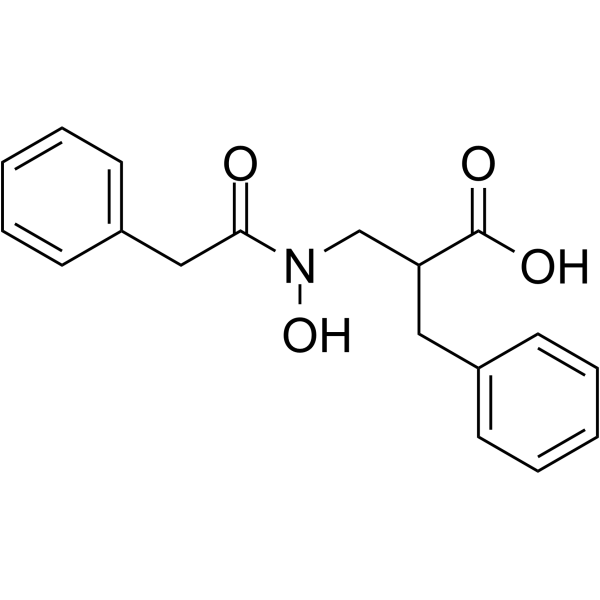
CPA inhibitor (Compound 5) (Carboxypeptidase inhibitor) is an orally active competitive carboxypeptidase A (CPA) inhibitor with a Ki value of 0.32 μM. CPA inhibitor blocks the activity of carboxypeptidase A3 (CPA3). CPA activator activates the Wnt/Lrp6/β-catenin signaling pathway. CPA inhibitor reduces epithelial damage. CPA inhibitor is applicable to research related to inflammatory bowel disease, including ulcerative colitis and Crohn's disease .
loading...
    loading...
Cat. No.: HY-162734
Target:  

GPR65

Research Areas:  

Inflammation/Immunology

BRD5075 is a selective GPR65 activator. BRD5075 enhances GPR65 activity under acidic conditions, promotes Gαs-dependent signaling pathways, including cAMP production and G protein recruitment. BRD5075 regulates the cytokine and chemokine expression network in dendritic cells, and inhibits the expression of pro-inflammatory cytokines and chemokines in a GPR65-dependent manner. BRD5075 is applicable to research related to inflammatory bowel disease .
loading...
    loading...
Cat. No.: HY-128063
CAS No.: 870998-13-3
Purity:  98.40%
Target:  

CXCR

Research Areas:  

Inflammation/Immunology

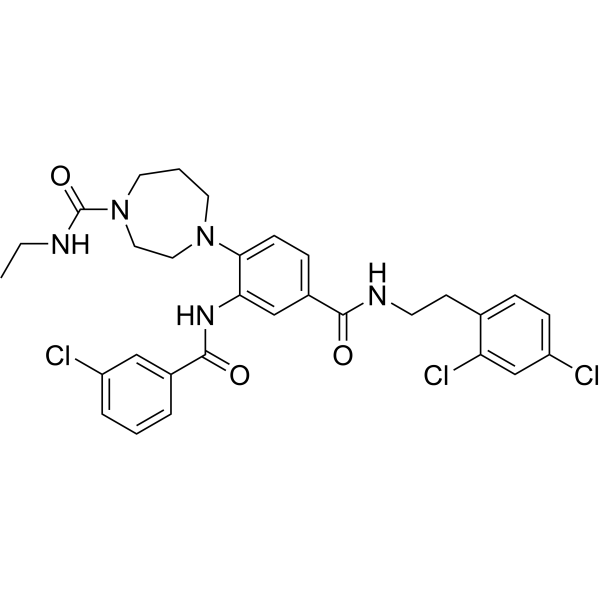
CXCR3 antagonist 1 (compound 6c) is a selective and non-cytotoxic CXCR3 antagonist (IC50=0.06 µM). CXCR3 antagonist 1 has potential in researching inflammatory diseases (including inflammatory bowel disease, multiple sclerosis, rheumatoid arthritis, and diabetes) .
loading...
    loading...
Cat. No.: HY-P2958
CAS No.: 37289-07-9
Synonyms: Bile salt hydrolase
Target:  

Acyltransferase

Research Areas:  

Inflammation/Immunology

Choloylglycine hydrolase (Bile salt hydrolase) is an important intestinal hydrolase. Choloylglycine hydrolase not only catalyzes the decomposition of conjugated bile acids into free bile acids and amino acids, but also exhibits amine N-acyltransferase activity, which re-links amino acids/amines to free bile acids (even conjugated bile acids) to produce bacterial bile acid amides. Choloylglycine hydrolase regulates the composition of the bile acid pool, intestinal mucosal barrier integrity, intestinal inflammatory responses, intestinal flora composition, host weight gain, circadian rhythm, and colonization resistance to Clostridioides difficile. Choloylglycine hydrolase can be used in the research of inflammatory bowel diseases, including ulcerative colitis and Crohn's disease .
loading...
    loading...
Cat. No.: HY-N9454
CAS No.: 91893-83-3
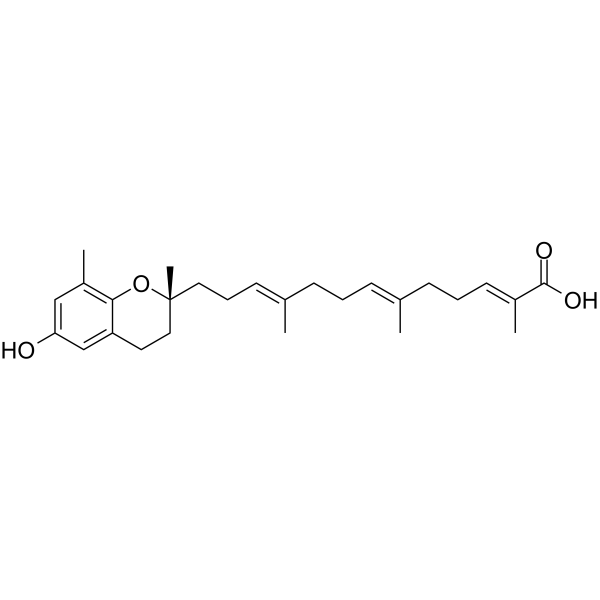
Garcinoic acid is an orally active anti-inflammatory agent that crosses the blood-brain barrier. Garcinoic acid also enhances efferocytosis and enzyme/receptor regulation, and selectively inhibits human COX-2, porcine α-amylase, Saccharomyces cerevisiae α-glucosidase and human DNA polymerase β (IC50=11 μM), as well as activates human PXR. Garcinoic acid enhances macrophage efferocytosis via receptors such as MerTK and LRP-1, and promotes the production of pro-resolving lipid mediators. Garcinoic acid inhibits NF-κB activation and pro-inflammatory cytokine secretion, interferes with aggregation, downregulates NLRP3 inflammasome activity, and binds to targets including CD44 and EGFR to inhibit leukemia cell proliferation. The pharmacological activities of Garcinoic acid, such as antioxidant, anti-inflammatory and lipid metabolism-regulating effects, are widely used in studies related to various diseases including atherosclerosis, Alzheimer's disease, type 2 diabetes, inflammatory bowel disease and viral pneumonia .
loading...
    loading...
Cat. No.: HY-176265
CAS No.: 2871481-31-9
Target:  

CD28

Research Areas:  

Inflammation/Immunology

DDS5 is a CD28 inhibitor with a kd of 175.57 µM. DDS5 significantly inhibits CD28-CD80 interaction (IC50: 332 µM). DDS5 can be used for research of immune-mediated diseases, including inflammatory bowel disease and rheumatoid arthritis .
loading...
    loading...
Cat. No.: HY-175863
2-PMPA prodrug 1 is an orally active prodrug of 2-PMPA (HY-100788), a glutamate carboxypeptidase II (GCPII) inhibitor. 2-PMPA prodrug 1 effectively delivers 2-PMPA into the bloodstream and produces sustained 2-PMPA exposure in plasma. 2-PMPA prodrug 1 can be used in the research of GCPII-related peripheral diseases, including prostate cancer and inflammatory bowel disease .
loading...
    loading...
Cat. No.: HY-176535
CAS No.: 2648377-08-4
Synonyms: BBC0115
KB-0118 (BBC0115) is an orally active BET bromodomain inhibitor. KB-0118 selective binds to BRD2 and BRD4 over BRD3, with Kd values of 36.7 μM for BRD2 BD1 and 47.4 μM for BRD4 BD1. KB-0118 inhibits pro-inflammatory cytokines, including TNF, IL-1β, and IL-23a and selectively suppresses Th17 cell differentiation. KB-0118 modulates Th17-driven inflammation occurs through epigenetic suppression of BRD4, confirmed by downregulation of STAT3 and BRD4 target genes. KB-0118 has immunomodulatory effects in inflammatory bowel disease (IBD) model.
loading...
    loading...
Cat. No.: HY-116164
CAS No.: 141579-87-5
Target:  

Lipoxygenase

Research Areas:  

Inflammation/Immunology

A-79175 is a potent 5-lipoxygenase inhibitor that inhibits leukotriene formation. A-79175 is promising for research of various allergic and inflammatory diseases including asthma, allergic rhinitis, rheumatoid arthritis and inflammatory bowel disease .
loading...
    loading...
Cat. No.: HY-138454
CAS No.: 3979-00-8
Synonyms: Mercaptoethylguanidine hemisulfate
Target:  

NO Synthase

Research Areas:  

Inflammation/Immunology

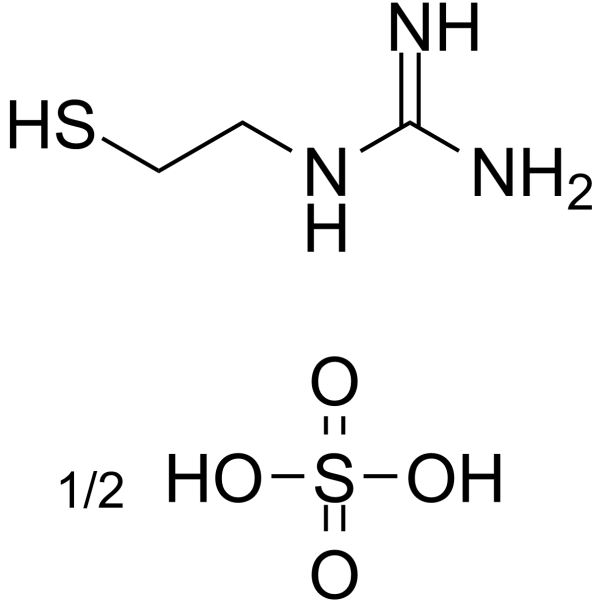
MEG (Mercaptoethylguanidine) hemisulfate is a potent and selective inhibitor of the inducible NO synthase (iNOS), with EC50s of 11.5, 110, and 60 μM for iNOS, ecNOS, and bNOS respectively in tissue homogenates. MEG hemisulfate is also a potent scavenger of peroxynitrite and inhibits peroxynitrite-induced oxidative processes. MEG hemisulfate has a protective effect in many experimental models of inflammation, including ischemia/reperfusion injury, periodontitis, hemorrhagic shock, inflammatory bowel disease, and endotoxic and septic shock .
loading...
    loading...
Cat. No.: HY-184936
Research Areas:  

Inflammation/Immunology

p38α-IN-14 is a selective p38α inhibitor with an IC50 of 65 nM. p38α-IN-14 exhibits only weak inhibitory activity against hERG channels, with an IC50 > 30 μM. p38α-IN-14 can be used in the research of chronic inflammatory and autoimmune diseases, including rheumatoid arthritis, psoriasis and inflammatory bowel disease .
loading...
    loading...
Cat. No.: HY-L078
475 compounds

Accumulating evidence has revealed that intestinal microbiota play an important role in human health and disease, including cardiovascular diseases, inflammatory bowel disease, diabetes, obesity, cancer, and depression, etc. Changes in the composition of gut microbiota associated with disease, referred to as dysbiosis, have been linked to pathologies. Indeed, the gut microbiome functions like an endocrine organ, generating bioactive metabolites which play important roles in human metabolism, health, and disease. Gut microbiome has become a novel therapeutic target for many diseases. Analysis and identification of gut microbial metabolite will contribute to the development of therapeutic methods.

In order to meet the need of gut microbiome research, MCE carefully selected a unique collection of 475 gut microbial metabolites. MCE gut microbial metabolite library is a powerful tool for gut microbiome research and gut microbiome -related drug discovery.

Cat. No.: HY-L014
1,801 compounds

Nuclear factor-κB (NF-κB)/Rel proteins include NF-κB2 p52/p100, NF-κB1 p50/p105, c-Rel, RelA/p65, and RelB. These proteins function as dimeric transcription factors that regulate the expression of genes and influence a broad range of biological processes including innate and adaptive immunity, inflammation, stress responses, B-cell development, and lymphoid organogenesis. NF-κB plays a key role in regulating the immune response to infection. In addition, activation of the NF-κB pathway is involved in the pathogenesis of chronic inflammatory diseases, such as asthma, rheumatoid arthritis, and inflammatory bowel disease. Incorrect regulation of NF-κB has been linked to cancer, inflammatory and autoimmune diseases, septic shock, viral infection, and improper immune development.

MCE owns a unique collection of 1,801 small molecule compounds that can be used in the research of NF-κB signaling pathway or high throughput screening (HTS) related drug discovery.

  • 1

