1. Search Result
Search Result
Results for "

plasma elimination

" in MedChemExpress (MCE) Product Catalog:

20

Inhibitors & Agonists

1

Screening Libraries

2

Biochemical Assay Reagents

1

Inhibitory Antibodies

1

Natural
Products

1

Isotope-Labeled Compounds

1

Oligonucleotides

Cat. No. Product Name Target Research Areas Chemical Structure
  • HY-W018781
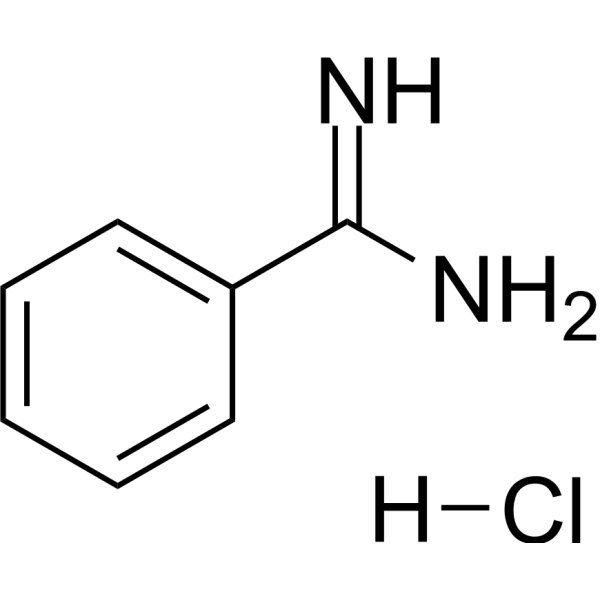
    Benzamidine hydrochloride
    3 Publications Verification

    Ser/Thr Protease Cancer
    Benzamidine hydrochloride is a competitive protease inhibitor that blocks the hydrolytic cleavage of glucagon by plasmin, trypsin and thrombin. Benzamidine hydrochloride effectively inhibits the degradation of glucagon by relevant proteases during the collection, storage and analysis of human plasma and blood samples. During in vivo metabolism, Benzamidine hydrochloride undergoes N-hydroxylation and produces multiple metabolites, exhibiting characteristics of delayed excretion or biphasic elimination. Benzamidine hydrochloride only induces slight single-strand DNA breaks at high concentrations and shows no significant genotoxic potential overall. Benzamidine hydrochloride may interfere with the detection of some glucagon antisera, but does not affect key antigen-antibody affinity at specific concentrations. Benzamidine hydrochloride can be used as a stabilizer in glucagon radioimmunoassays to ensure the accuracy and recovery rate of detection results .



    Benzamidine hydrochloride
  • HY-W145519

    Environmental Pollutants Biochemical Assay Reagents Cardiovascular Disease
    Hydroxyethyl starch (MW170-230 kDa) is a type of hydroxyethyl starch with a molecular weight of 170-230 kDa. A medium-molecular-weight hydroxyethyl starch (HES 200/0.62) exhibits minimal intravascular hydrolysis. The rapidly degradable medium-molecular-weight Hydroxyethyl starch 200/0.5 causes almost no coagulation disorders and improves hemorheological parameters .
    Hydroxyethyl starch (MW170-230 kDa)
  • HY-125913
    Benzamidine
    3 Publications Verification

    Ser/Thr Protease Inflammation/Immunology
    Benzamidine is a competitive protease inhibitor that blocks the hydrolytic cleavage of glucagon by plasmin, trypsin and thrombin. Benzamidine effectively inhibits the degradation of glucagon by relevant proteases during the collection, storage and analysis of human plasma and blood samples. During in vivo metabolism, Benzamidine undergoes N-hydroxylation and produces multiple metabolites, exhibiting characteristics of delayed excretion or biphasic elimination. Benzamidine only induces slight single-strand DNA breaks at high concentrations and shows no significant genotoxic potential overall. Benzamidine may interfere with the detection of some glucagon antisera, but does not affect key antigen-antibody affinity at specific concentrations. Benzamidine can be used as a stabilizer in glucagon radioimmunoassays to ensure the accuracy and recovery rate of detection results .
    Benzamidine
  • HY-B1128A

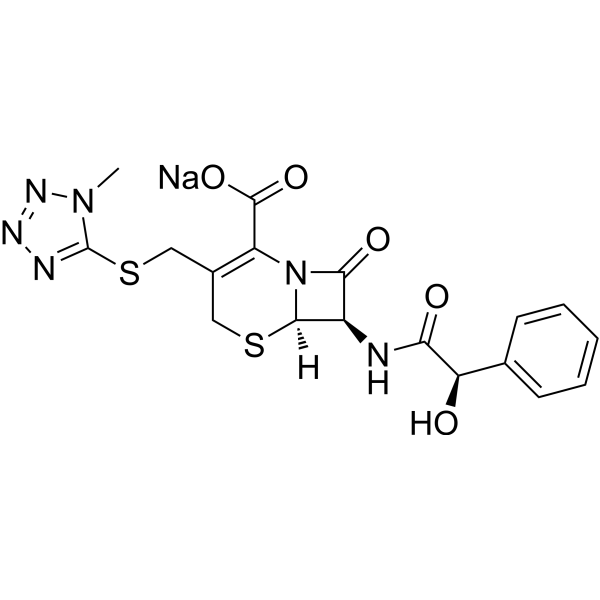
    Cephamandole sodium

    Antibiotic Bacterial Infection
    Cefamandole (Cephamandole) sodium is a semi-synthetic second-generation cephalosporin antibiotic with broad-spectrum antimicrobial activity. Cefamandole sodium is resistant to hydrolysis by β-lactamases produced by some Gram-negative bacteria. Cefamandole sodium kills Gram-positive cocci and various Gram-negative bacilli mainly by inhibiting cell wall synthesis, but it is inactive against Pseudomonas, Proteus vulgaris and Providencia stuartii, and its efficacy is affected by inoculum size. The plasma elimination half-life of Cefamandole sodium in rats is only 0.4 h, it is mainly excreted in urine in biologically active form, and it hardly penetrates the non-inflamed blood-brain barrier. Cefamandole sodium is widely used in studies related to bacterial infections .
    Cefamandole sodium
  • HY-158315

    Dipeptidyl Peptidase Inflammation/Immunology
    NZ-97 is an inhibitor for dipeptidyl peptidase 4 (DPP4) with an IC50 of 18 nM. NZ-97 exhibits a low initial plasma exposure with Cmax of 0.13 µM, which is eliminated in 8 h. NZ-97 ameliorates damage in the Lipopolysaccharides (HY-D1056)-induced lung injury and Bleomycin (HY-108345)-induced lung fibrosis in mice model .
    NZ-97
  • HY-W087937
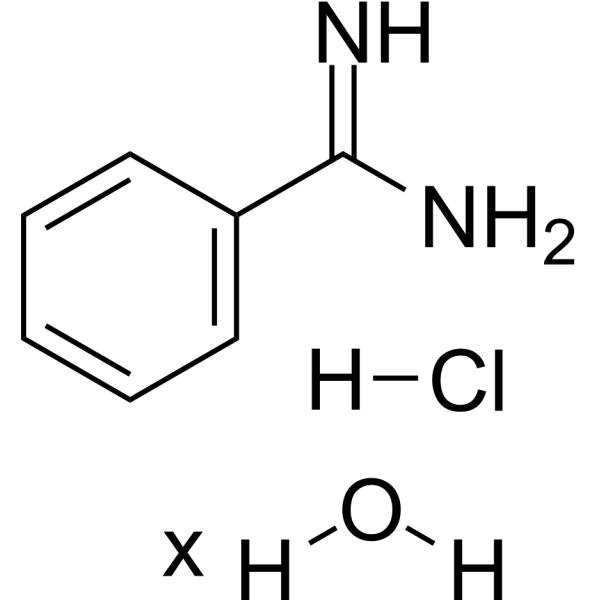
    Benzamidine hydrochloride hydrate
    3 Publications Verification

    Benzenecarboximidamide hydrochloride hydrate

    Ser/Thr Protease Cancer
    Benzamidine (Benzenecarboximidamide) hydrochloride hydrate is a competitive protease inhibitor that blocks the hydrolytic cleavage of glucagon by plasmin, trypsin and thrombin. Benzamidine hydrochloride hydrate effectively inhibits the degradation of glucagon by relevant proteases during the collection, storage and analysis of human plasma and blood samples. During in vivo metabolism, Benzamidine hydrochloride hydrate undergoes N-hydroxylation and produces multiple metabolites, exhibiting characteristics of delayed excretion or biphasic elimination. Benzamidine hydrochloride hydrate only induces slight single-strand DNA breaks at high concentrations and shows no significant genotoxic potential overall. Benzamidine hydrochloride hydrate may interfere with the detection of some glucagon antisera, but does not affect key antigen-antibody affinity at specific concentrations. Benzamidine hydrochloride hydrate can be used as a stabilizer in glucagon radioimmunoassays to ensure the accuracy and recovery rate of detection results .
    Benzamidine hydrochloride hydrate
  • HY-B1128

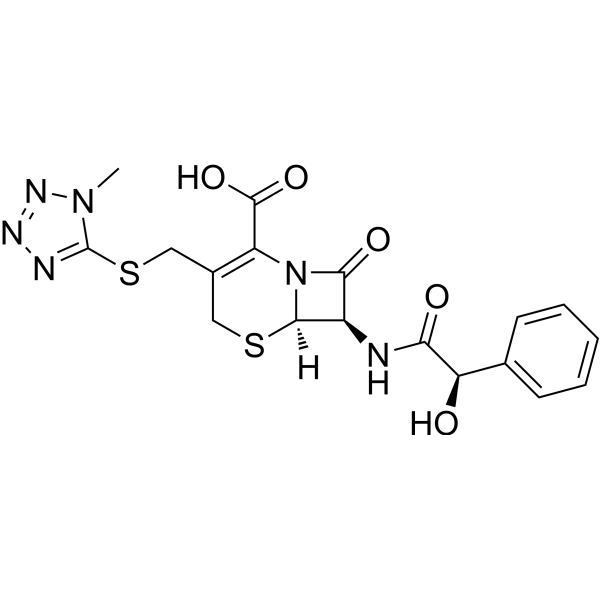
    Cephamandole

    Antibiotic Bacterial Infection
    Cefamandole (Cephamandole) is a semi-synthetic second-generation cephalosporin antibiotic with broad-spectrum antimicrobial activity. Cefamandole is resistant to hydrolysis by β-lactamases produced by some Gram-negative bacteria. Cefamandole kills Gram-positive cocci and various Gram-negative bacilli mainly by inhibiting cell wall synthesis, but it is inactive against Pseudomonas, Proteus vulgaris and Providencia stuartii, and its efficacy is affected by inoculum size. The plasma elimination half-life of Cefamandole in rats is only 0.4 h, it is mainly excreted in urine in biologically active form, and it hardly penetrates the non-inflamed blood-brain barrier. Cefamandole is widely used in studies related to bacterial infections .
    Cefamandole
  • HY-121243

    Herbicide Others
    Halauxifen is a herbicide with plasma elimination half-life of 1 h .
    Halauxifen
  • HY-164815

    Tianeptine metabolite MC5

    Drug Metabolite Neurological Disease
    S 8849-1 (free base) (Tianeptine metabolite MC5) is a Tianeptine (HY-90003) metabolite that is found in plasma. The mean elimination half-lives of S 8849-1 (free base) is 7.53 h in rats. S 8849-1 (free base) is promising for research of antidepressants .
    S 8849-1 free base
  • HY-106572A

    T-1982 sodium

    Bacterial Infection
    Cefbuperazone sodium is an antibacterial agent that demonstrates significant activity against bacterial infections. Cefbuperazone sodium exhibits a linear pharmacokinetic profile, allowing for effective dosage determination in clinical settings. Cefbuperazone sodium reaches peak concentrations in human plasma following intravenous infusion, indicating its rapid absorption and distribution. Cefbuperazone sodium is primarily excreted unchanged in urine, highlighting its efficiency in renal elimination.
    Cefbuperazone sodium
  • HY-121814A

    (R)-Acenocoumarin; (R)-Nicoumalone

    VD/VDR Cardiovascular Disease
    (R)-Acenocoumarol ((R)-Acenocoumarin; (R)-Nicoumalone) is a short-acting and orally active anticoagulant, like Warfarin (HY-B0687), works by inhibiting vitamin K epoxide reductase. (R)-Acenocoumarol has a greater in vivo anticoagulant potency than Warfarin. (R)-Acenocoumarol has a single chiral center that produces two different enantiomeric forms. (R)-Acenocoumarol has a longer plasma elimination half-life (6.6 h) and a slower plasma clearance rate (1.9 L/h) than the (S)-enantiomer, resulting in a stronger in vivo anticoagulant effect.
    (R)-Acenocoumarol
  • HY-113691

    Lipoxygenase Others
    (E)-L-652343 is a compound with potent cyclooxygenase and 5-lipoxygenase inhibitory activity. (E)-L-652343 can effectively inhibit the synthesis of products of these two pathways in vivo. (E)-L-652343 showed high sensitivity and specificity in the detection of geometric isomers in canine and human plasma. (E)-L-652343 showed selective metabolism in vivo, and the elimination rate of the E isomer was faster than that of the Z isomer .
    (E)-L-652343
  • HY-166341S

    Tianeptine metabolite MC5-d4

    Isotope-Labeled Compounds Drug Metabolite Neurological Disease
    S 8849-1-d4 (free base) (Tianeptine metabolite MC5-d4) is deuterium labeled S 8849-1 (free base). S 8849-1 (free base) (Tianeptine metabolite MC5) is a Tianeptine (HY-90003) metabolite that is found in plasma. The mean elimination half-lives of S 8849-1 (free base) is 7.53 h in rats. S 8849-1 (free base) is promising for research of antidepressants .
    S 8849-1-d4 free base
  • HY-B1128B

    Cephamandole lithium

    Antibiotic Bacterial Infection
    Cefamandole (Cephamandole) lithium is a semi-synthetic second-generation cephalosporin antibiotic with broad-spectrum antimicrobial activity. Cefamandole lithium is resistant to hydrolysis by β-lactamases produced by some Gram-negative bacteria. Cefamandole lithium kills Gram-positive cocci and various Gram-negative bacilli mainly by inhibiting cell wall synthesis, but it is inactive against Pseudomonas, Proteus vulgaris and Providencia stuartii, and its efficacy is affected by inoculum size. The plasma elimination half-life of Cefamandole lithium in rats is only 0.4 h, it is mainly excreted in urine in biologically active form, and it hardly penetrates the non-inflamed blood-brain barrier. Cefamandole lithium is widely used in studies related to bacterial infections .
    Cefamandole lithium
  • HY-B1128AR

    Cephamandole sodium (Standard)

    Reference Standards Antibiotic Bacterial Infection
    Cefamandole (sodium) (Standard) is the analytical standard of Cefamandole (sodium). This product is intended for research and analytical applications. Cefamandole (Cephamandole) sodium is a semi-synthetic second-generation cephalosporin antibiotic with broad-spectrum antimicrobial activity. Cefamandole sodium is resistant to hydrolysis by β-lactamases produced by some Gram-negative bacteria. Cefamandole sodium kills Gram-positive cocci and various Gram-negative bacilli mainly by inhibiting cell wall synthesis, but it is inactive against Pseudomonas, Proteus vulgaris and Providencia stuartii, and its efficacy is affected by inoculum size. The plasma elimination half-life of Cefamandole sodium in rats is only 0.4 h, it is mainly excreted in urine in biologically active form, and it hardly penetrates the non-inflamed blood-brain barrier. Cefamandole sodium is widely used in studies related to bacterial infections .
    Cefamandole sodium (Standard)
  • HY-W018781R

    Reference Standards Ser/Thr Protease Cancer
    Benzamidine hydrochloride (Standard) is the analytical standard of Benzamidine (hydrochloride). This product is intended for research and analytical applications. Benzamidine hydrochloride is a competitive protease inhibitor that blocks the hydrolytic cleavage of glucagon by plasmin, trypsin and thrombin. Benzamidine hydrochloride effectively inhibits the degradation of glucagon by relevant proteases during the collection, storage and analysis of human plasma and blood samples. During in vivo metabolism, Benzamidine hydrochloride undergoes N-hydroxylation and produces multiple metabolites, exhibiting characteristics of delayed excretion or biphasic elimination. Benzamidine hydrochloride only induces slight single-strand DNA breaks at high concentrations and shows no significant genotoxic potential overall. Benzamidine hydrochloride may interfere with the detection of some glucagon antisera, but does not affect key antigen-antibody affinity at specific concentrations. Benzamidine hydrochloride can be used as a stabilizer in glucagon radioimmunoassays to ensure the accuracy and recovery rate of detection results .
    Benzamidine hydrochloride (Standard)
  • HY-129708

    Drug Metabolite Neurological Disease
    LU 2443 is an orally active antiepileptic mesoionic. LU 2443 is extensively absorbed, in the maximum 18% are eliminated unabsorbed in rats. The half-time of the activity in plasma is 13.17 h .
    LU 2443
  • HY-N18296

    Drug Derivative Others
    Karelinine is a steroidal alkaloid found in the bulbs of Fritillaria ussuriensis Maxim and Fritillaria karelinii. Karelinine shows accelerated absorption and elimination rates, and increased area under the curve (AUC0-t) when administered as part of the nanodispersion preparation (FUN) in rat plasma following oral administration .
    Karelinine
  • HY-P991898

    RD126

    CD19 Inflammation/Immunology
    IASO-782 (RD126) is a fully human monoclonal antibody targeting human CD19. The Fc segment of IASO-782 is mutated to enhance antibody-dependent cell-mediated cytotoxicity (ADCC) while maintaining the integrity of other Fc segment functions, such as ADCP. IASO-782 effectively eliminates CD19+ B cells, plasmablasts, and some plasma cells, thereby reducing or completely eliminating autoreactive antibodies produced by these cells. IASO-782 can be used for the study of immune thrombocytopenic purpura (ITP), warm autoimmune hemolytic anemia (wAIHA) and systemic lupus erythematosus (SLE).
    IASO-782
  • HY-182301

    Renin Cardiovascular Disease
    CP 71362 is a renin inhibitor, a highly potent substrate-analog transition state mimic with antihypertensive properties. CP 71362 exhibits significant inhibitory activity against plasma renin from rats, dogs, and humans (IC50 values are 3 nM, 0.0033 nM, and 20 nM, respectively). CP 71362 reduces the mean arterial pressure of anesthetized and conscious sodium-depleted animals in a dose-dependent manner, and has pharmacokinetic characteristics of rapid elimination and short duration of action. CP 71362 can be used in research related to hypertension and congestive heart failure .
    CP 71362

Inquiry Online

Your information is safe with us. * Required Fields.

Salutation


Country or Region *

Applicant Name *


Organization Name *

Department *


Email Address *


Product Name *

Cat. No.


Requested quantity *

Phone Number *


Remarks

Inquiry Online

Inquiry Information

Product Name:
Cat. No.:
Quantity:
MCE Japan Authorized Agent: