1. Search Result
Search Result
Results for "

platinum compound

" in MedChemExpress (MCE) Product Catalog:

18

Inhibitors & Agonists

2

Biochemical Assay Reagents

Cat. No. Product Name Target Research Areas Chemical Structure
  • HY-Y0091

    9,9-Dimethyl-4,5-bis(diphenylphosphino)xanthene

    Biochemical Assay Reagents Others
    Xantphos (9,9-Dimethyl-4,5-bis(diphenylphosphino)xanthene) is a bisphosphine ligand. Xantphos coordinates to metals in either cis or trans chelation mode. Xantphos acts as a key ligand in palladium or platinum catalyzed reactions. Xantphos can be used in the construction of heterocyclic compounds in organic synthesis .
    Xantphos
  • HY-B1022
    Dimesna
    1 Publications Verification

    BNP-7787

    Drug Derivative Endocrinology Cancer
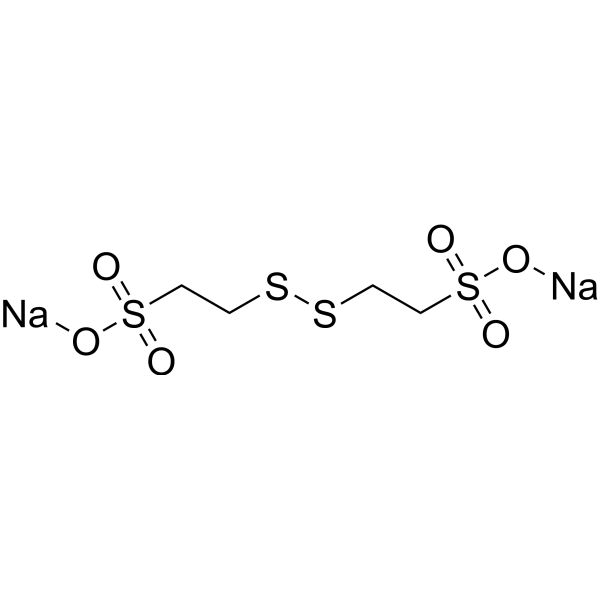
    Dimesna (BNP-7787), the disulfide form of Mesna (HY-13679), is a platinum-related toxicity protective agent. Dimesna converts to Mesna, which in turn inactivates toxic platinum substances. Dimesna does not interfere with the antitumor activity of platinum compounds. Dimesna does not affect the antiproliferative effects of Cisplatin (HY-17394) or Carboplatin (HY-17393). Dimesna counteracts Cisplatin-induced nephrotoxicity. Dimesna exerts selective protective effects on the kidneys. Dimesna can be used in studies related to ovarian cancer and Cisplatin-induced nephrotoxicity .
    Dimesna
  • HY-W034985

    Tetrakis(triphenylphosphine)platinum(0)

    Biochemical Assay Reagents Others
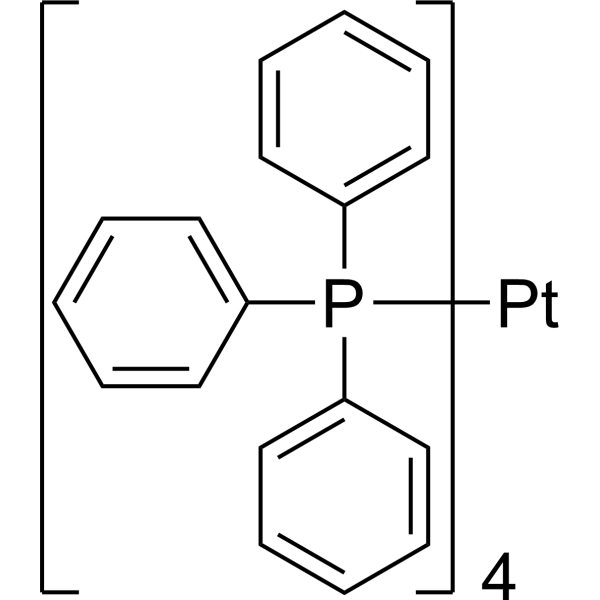
    Tetrakis(triphenylphosphine)platinum is a biochemical reagent that can be used as a biological material or organic compound for life science related research.
    Tetrakis(triphenylphosphine)platinum
  • HY-151883

    Apoptosis MDM-2/p53 Cancer
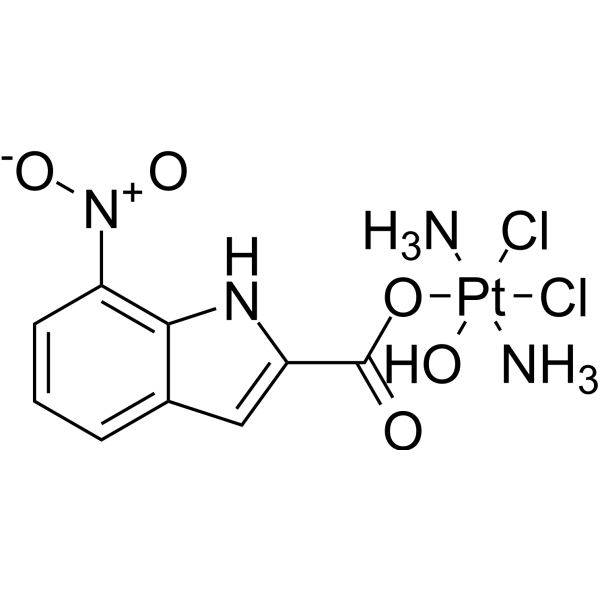
    APE1-IN-2 (compound AP1) is a Pt(IV) proagent, targeting a critical BER protein, apurinic/apyrimidinic endonuclease 1 (APE1). APE1-IN-2 shows anticancer activity. APE1-IN-2 induces intracellular accumulation of platinum and activates DNA damage response and apoptosis signals .
    APE1-IN-2
  • HY-W033728

    Bacterial Infection
    Platinum(COD)dichloride (Compound Pt1) is an Antibacterial agent. Platinum(COD)dichloride shows antibacterial activity against a panel of gram-positive bacteria including Vancomycin (HY-B0671) and Methicillin (HY-121544) resistant Staphylococcus aureus .
    Platinum(COD)dichloride
  • HY-125010

    DNA/RNA Synthesis Apoptosis Cancer
    Dicycloplatin is a DNA damage inducer. Dicycloplatin induces DNA damage by activating biphosphorylated checkpoint kinase 2 (CHK2), breast cancer 1 (BRCA1) and triphosphorylated p53. Dicycloplatin can induce cell cycle arrest, inhibit proliferation and lead to apoptosis in prostate cancer PC3 cells and lung cancer NCI/H446 cells. Dicycloplatin can be used in cancer researchr .
    Dicycloplatin
  • HY-176149

    CaMK MMP AMPK Apoptosis Autophagy Cancer
    Fluoxetine-Conjugated Platinum(IV) prodrug-1 (Compound 8) is an eEF2K inhibitor. Fluoxetine-Conjugated Platinum(IV) prodrug-1 inhibits cancer cell proliferation, induces DNA damage, cell cycle arrest at S phase and apoptosis. Fluoxetine-Conjugated Platinum(IV) prodrug-1 induces ROS accumulation and mitochondrial dysfunction. Fluoxetine-Conjugated Platinum(IV) prodrug-1 inhibits TNBC cell migration and invasion by inhibiting MMP-2 activity. Fluoxetine-Conjugated Platinum(IV) prodrug-1 induces autophagy in TNBC cells by activating AMPK. Fluoxetine-Conjugated Platinum(IV) prodrug-1 has antitumor activity and activates immunosuppression in the 4T1-Luc mouse model. Fluoxetine-Conjugated Platinum(IV) prodrug-1 can be used in triple-negative breast cancer (TNBC) research .
    Fluoxetine-Conjugated Platinum(IV) prodrug-1
  • HY-105530

    CL 286558

    Biochemical Assay Reagents Cancer
    Zeniplatin is a third-generation, water-soluble platinum compound that has shown broad antitumor activity. Zeniplatin can be used for cancer research .
    Zeniplatin
  • HY-129909

    Apoptosis Infection Cancer
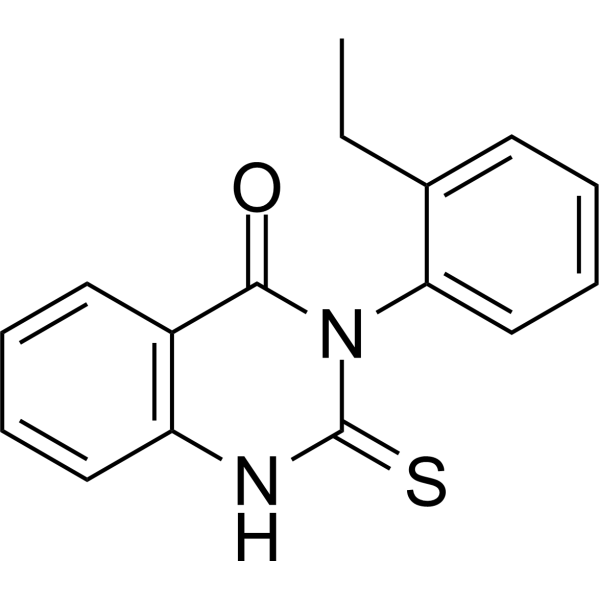
    Anticancer agent 173 (compound 19) is a potent thioxodihydroquinazolinone analogs when combined with platinum drugs in inducing apoptotic cancer cells death .
    Anticancer agent 173
  • HY-B1022A

    BNP-7787 free acid

    Drug Derivative Endocrinology Cancer
    Dimesna (BNP-7787) free acid, the disulfide form of Mesna (HY-13679), is a platinum-related toxicity protective agent. Dimesna free acid converts to Mesna, which in turn inactivates toxic platinum substances. Dimesna free acid does not interfere with the antitumor activity of platinum compounds. Dimesna free acid does not affect the antiproliferative effects of Cisplatin (HY-17394) or Carboplatin (HY-17393). Dimesna free acid counteracts Cisplatin-induced nephrotoxicity. Dimesna free acid exerts selective protective effects on the kidneys. Dimesna free acid can be used in studies related to ovarian cancer and Cisplatin-induced nephrotoxicity .
    Dimesna free acid
  • HY-157222

    Apoptosis Ferroptosis Cancer
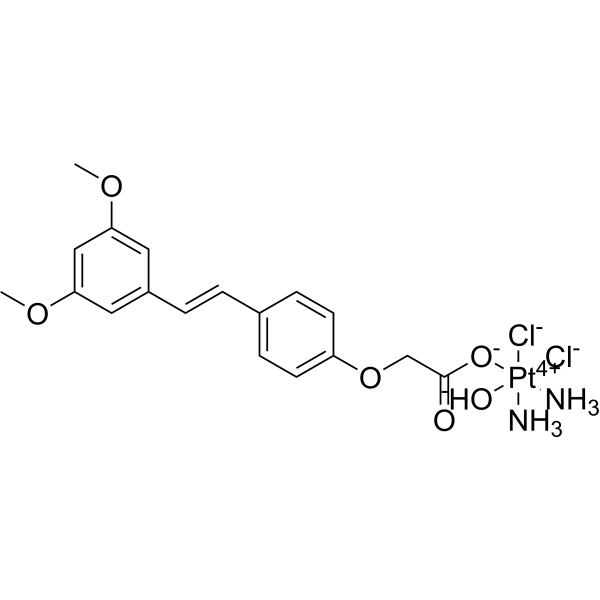
    Antitumor agent-125 (compound 17A) is a novel platinum(IV) prodrug. Antitumor agent-125 can activate the mitochondrion-dependent apoptosis pathway. Antitumor agent-125 induces ferroptosis in HCT-116/OXA .
    Antitumor agent-125
  • HY-155012

    Bcl-2 Family Cancer
    Mcl-1 inhibitor 16 (Compound 9) is a mitochondrial targeting Platinum-based inhibitor of Mcl-1. Mcl-1 inhibitor 1 induces Bax/Bak-dependent apoptosis in cancer cells. Mcl-1 inhibitor 16 can be used alone or together with ABT-199 (HY-15531) and shows anti-tumor activity .
    Mcl-1 inhibitor 16
  • HY-161623

    DNA/RNA Synthesis Cancer
    ERCC1/XPA interaction inhibitor 1 (compound 27o) is a potent ERCC1/XPA67-80 interaction inhibitor with an EC50 value of 4.7 µM. ERCC1/XPA interaction inhibitor 1 has the potential for the research of DNA damaging agents and overcoming resistance to platinum-based chemotherapy .
    ERCC1/XPA interaction inhibitor 1
  • HY-155808

    STAT JAK Apoptosis COX Cancer
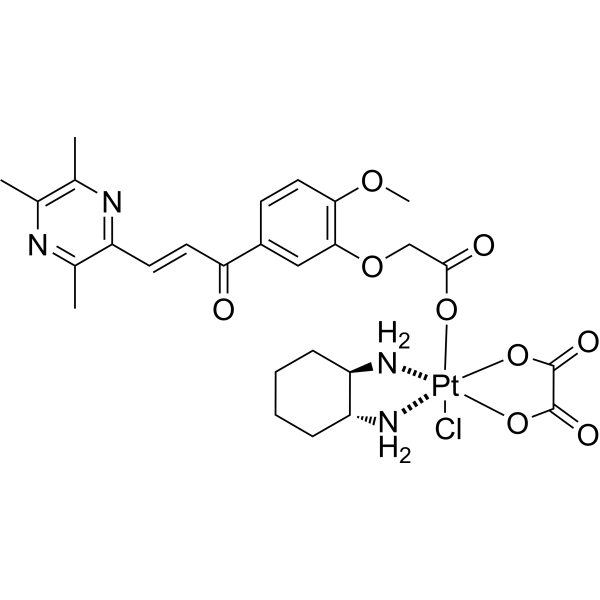
    STAT3-IN-18 (compound SPP) is a platinum (IV) complex with an axial ligand derived from sandalwood. STAT3-IN-18 inhibits the JAK2-STAT3 pathway in breast cancer (BC) cells, with anti-proliferative activity. STAT3-IN-18 activates caspase-3 and increases cleaved polyADP-ribose polymerase to induce apoptosis. STAT3-IN-18 promotes maturation and antigen presentation of dendritic cells and demonstrates safety in vivo.
    STAT3-IN-18
  • HY-183544

    TrxR Glutathione Peroxidase Ferroptosis Reactive Oxygen Species (ROS) Cancer
    Platinum (IV) Prodrug-1 (Compound 6b) is a Pt (IV) prodrug and selective TrxR1 inhibitor. Platinum (IV) Prodrug-1 induces ferroptosis (Ferroptosis) by depleting glutathione, accumulating intracellular lipid peroxides, and inactivating Glutathione peroxidase 4. Platinum (IV) Prodrug-1 triggers endoplasmic reticulum stress and immunogenic cell death via excessive accumulation of intracellular ROS. Platinum (IV) Prodrug-1 exhibits anticancer activity against both Cisplatin (HY-17394)-sensitive and Cisplatin-resistant triple-negative breast cancer cells. Platinum (IV) Prodrug-1 can be used for the research of triple-negative breast cancer .
    Platinum(IV) Prodrug-1
  • HY-182360

    PERK Eukaryotic Initiation Factor (eIF) Bcl-2 Family Apoptosis Reactive Oxygen Species (ROS) STING DNA/RNA Synthesis PD-1/PD-L1 Cancer
    Cytisine-Platinum(IV) Prodrug-1 is a Pt(IV) prodrug incorporating the natural compound Cytisine (HY-N0175) with antiproliferative activity against tumor cells. Cytisine-Platinum(IV) Prodrug-1 promotes calcium transfer across the IP3R1-GRP75-VDAC1 axis to drive mitochondrial calcium overload. Cytisine-Platinum(IV) Prodrug-1 initiates unfolded protein response via PERK, eIF2α, ATF4, and CHOP to modulate Bcl-2 and Bax, triggering apoptosis. Cytisine-Platinum(IV) Prodrug-1 induces mitochondrial dysfunction, ROS production, reduced ATP synthesis, DNA damage, and S-phase cell cycle arrest. Cytisine-Platinum(IV) Prodrug-1 activates the cGAS-STING pathway, reduces PD-L1 expression, drives immunogenic cell death. Cytisine-Platinum(IV) Prodrug-1 exhibits high physiological stability, efficient cellular accumulation, and enhanced platinum-DNA binding, and inhibits tumor growth in mouse models with reduced systemic toxicity. Cytisine-Platinum(IV) Prodrug-1 can be used for the research of lung cancer .
    Cytisine-platinum(IV) prodrug-1
  • HY-W583012

    DWA-2114R

    DNA/RNA Synthesis Cancer
    Miboplatin (DWA-2114R), a platinum compound, is a DNA synthesis inhibitor. Miboplatin reduces its template activity for prokaryotic and eukaryotic DNA polymerases .
    Miboplatin
  • HY-175048

    platinum(II)-N-heterocyclic carbene complex 2C

    Reactive Oxygen Species (ROS) Apoptosis ER-phagy Cancer
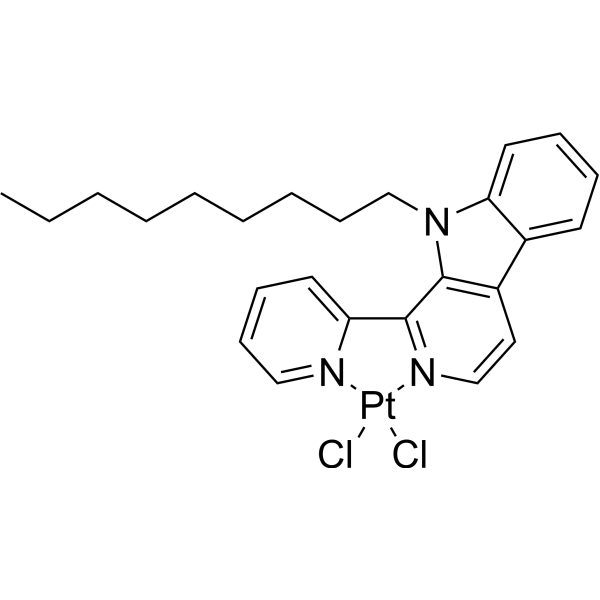
    Pt(II)-NHC Complex 2C (Platinum(II)-N-Heterocyclic Carbene complex 2C) (Compound 2C) is a platinum(II) complex based on N-heterocyclic carbene (NHC). Pt(II)-NHC Complex 2C is an immunogenic cell death (ICD) inducer that can induce endoplasmic reticulum stress (ERS) in liver cancer cells and produce reactive oxygen species (ROS), ultimately leading to the release of damage-associated molecular patterns (DAMP). Pt(II)-NHC Complex 2C blocks the cell cycle at the S phase and significantly induces cell apoptosis. Pt(II)-NHC Complex 2C shows anti-liver cancer potential in mouse models and activates immune cells in liver injury models.
    Pt(II)-NHC complex 2C

Inquiry Online

Your information is safe with us. * Required Fields.

Salutation


Country or Region *

Applicant Name *


Organization Name *

Department *


Email Address *


Product Name *

Cat. No.


Requested quantity *

Phone Number *


Remarks

Inquiry Online

Inquiry Information

Product Name:
Cat. No.:
Quantity:
MCE Japan Authorized Agent:

