1. Search Result
Search Result
Pathways Recommended: Neuronal Signaling
Results for "

rat hippocampal neuronal

" in MedChemExpress (MCE) Product Catalog:

9

Inhibitors & Agonists

1

Peptides

Cat. No. Product Name Target Research Areas Chemical Structure
  • HY-178121

    iGluR Neurological Disease Inflammation/Immunology
    JNJ-78911118 is a potent, brain-penetrant, selective GluN2A antagonist (IC50 = 44 nM). JNJ-78911118 shows >200-fold selectivity against GluN1/2B, 2C and 2D receptors. JNJ-78911118 functions as a negative allosteric modulator (NAM) by insurmountably suppressing glutamate efficacy and reducing glycine potency at GluN1/2A receptors. JNJ-78911118 produces profound pharmacodynamic effects in vivo. JNJ-78911118 can be used for depression research .
    JNJ-78911118
  • HY-116586

    Sigma Receptor mAChR ERK Amyloid-β Tau Protein Neurological Disease
    AF710B is an orally effective allosteric agonist for the M1 muscarinic receptor and σ1 receptor. AF710B activates the downstream phosphorylated ERK1/2 and phosphorylated CREB signaling pathways. AF710B simultaneously improves cognitive function and alleviates the core pathological features of Alzheimer's disease, including deposition, excessive Tau phosphorylation and neuroinflammation. AF710B is applicable to the research of Alzheimer's disease .
    AF710B
  • HY-P3528

    Caspase Apoptosis Neurological Disease
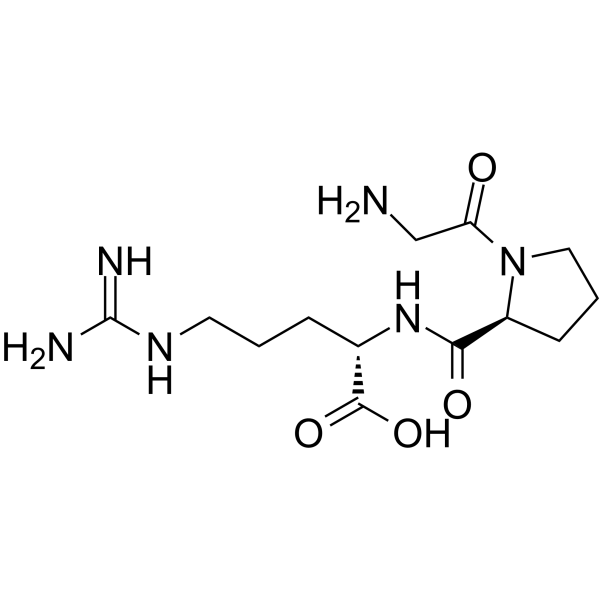
    GPR is a three amino acid peptide. GPR can rescue cultured rat hippocampal neurons from Aβ-induced neuronal death by inhibiting caspase-3/p53 dependent apoptosis. GPR can be used for the research of Alzheimer's disease (AD).
    GPR
  • HY-147681

    FGFR Neurological Disease
    SUN13837 is an orally active, blood-brain barrier permeable FGFR modulator and neuroprotective agent. SUN13837 mimics the activity of basic fibroblast growth factor, stimulates intracellular tyrosine phosphorylation of FGFR and signal transduction in neuronal cells, induces neurite outgrowth, and inhibits glutamate-induced neuronal death. SUN13837 can be used in research related to acute cervical spinal cord injury and severe spinal cord injury .
    SUN13837
  • HY-158693

    Sigma Receptor Neurological Disease
    WLB-87848 is a selective, orally active, and blood-brain barrier (BBB) permeable σ1 receptor agonist with the Ki of 9 nM. WLB-87848 rescues recognition memory impairment .
    WLB-87848
  • HY-116260

    Cholecystokinin Receptor Neurological Disease Inflammation/Immunology
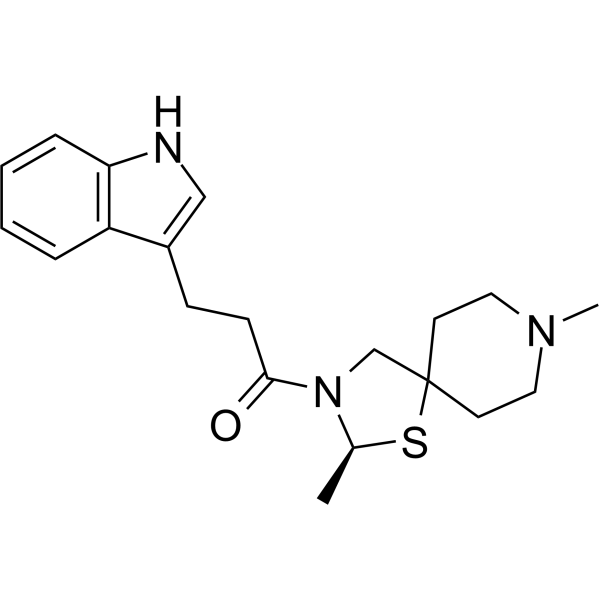
    RP-69758 is a potent and selective non-peptide cholecystokinin-B (CCKB)/gastrin receptor antagonist. RP-69758 exhibits >200-fold selectivity for CCKB over CCKA receptors. RP-69758 antagonizes CCK-8-induced neuronal firing in rat hippocampal slices. RP-69758 inhibits Pentagastrin (HY-A0261)-induced gastric acid secretion in the rat. RP-69758 can be used for neurological disorders and gastrointestinal disease research .
    RP-69758
  • HY-181178

    Amyloid-β Neurological Disease
    (Mor-Cor)Ag(III) is a blood-brain barrier-penetrant silver(III) corrole complex that penetrates the blood-brain barrier. (Mor-Cor)Ag(III) scavenges reactive oxygen species induced by Aβ42 and disrupts Aβ42 aggregation, attenuating Aβ42-induced neuronal hyperactivity. (Mor-Cor)Ag(III) can be used for the research of Alzheimer's disease .
    (Mor-Cor)Ag(III)
  • HY-186105A

    Opioid Receptor Apoptosis Neurological Disease
    (-)-P7C3-S243 is an orally active, blood-brain barrier permeable neuroprotective agent. (-)-P7C3-S243 binds to μ-opioid Receptor and TSPO. (-)-P7C3-S243 inhibits the premature apoptosis death of newborn hippocampal neurons, protects mature nigral dopaminergic neurons, promotes neuronal survival and prevents cognitive impairment. (-)-P7C3-S243 ameliorates depression-like behaviors in rat models. (-)-P7C3-S243 is applicable to research related to Parkinson's disease and Alzheimer's disease .
    (-)-P7C3-S243
  • HY-183944

    NO Synthase Reactive Oxygen Species (ROS) Cardiovascular Disease Neurological Disease
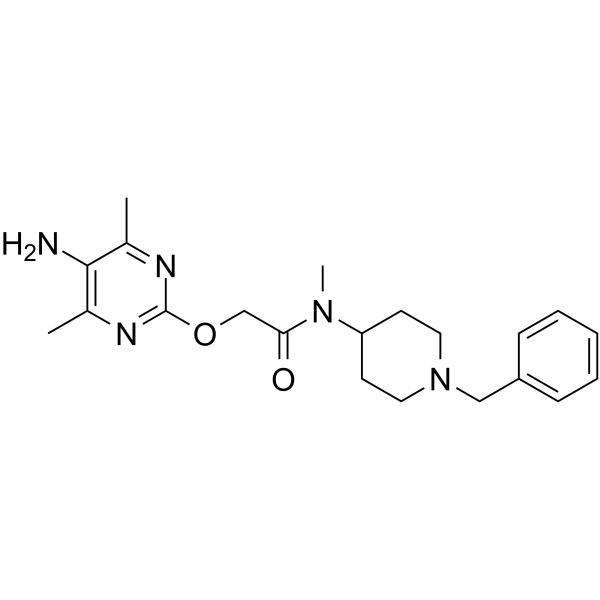
    BN80933 is a selective neuronal nitric oxide synthase (nNOS) inhibitor with a rat Ki of 0.92 μM. BN80933 inhibits lipid peroxidation, and blocks hypoxia-induced lactate dehydrogenase elevation and delayed 8-epiprostaglandin F2α elevation. BN80933 can be used for the research of stroke, and traumatic brain injury .
    BN80933

Inquiry Online

Your information is safe with us. * Required Fields.

Salutation


Country or Region *

Applicant Name *


Organization Name *

Department *


Email Address *


Product Name *

Cat. No.


Requested quantity *

Phone Number *


Remarks

Inquiry Online

Inquiry Information

Product Name:
Cat. No.:
Quantity:
MCE Japan Authorized Agent:

