1. Search Result
Search Result
Results for "

transmembrane+receptor

" in MedChemExpress (MCE) Product Catalog:

29

Inhibitors & Agonists

3

Screening Libraries

2

Peptides

3

Inhibitory Antibodies

20

Recombinant Proteins

1

Isotope-Labeled Compounds

2

Antibodies

Cat. No. Product Name Target Research Areas Chemical Structure
  • HY-P9976
    Isatuximab
    1 Publications Verification

    ch38SB19; hu38SB19; SAR-650984

    CD38 Apoptosis Cancer
    Isatuximab is a monoclonal antibody targeting the transmembrane receptor and ectoenzyme CD38, a protein highly expressed on hematological malignant cells, including those in multiple myeloma (MM). Isatuximab has antitumor activity via multiple biological mechanisms, including antibody-dependent cellular-mediated cytotoxicity, complement-dependent cytotoxicity, antibody-dependent cellular phagocytosis, and direct induction of apoptosis without crosslinking. Isatuximab also directly inhibits CD38 ectoenzyme activity, which is implicated in many cellular functions .
    Isatuximab
  • HY-114456
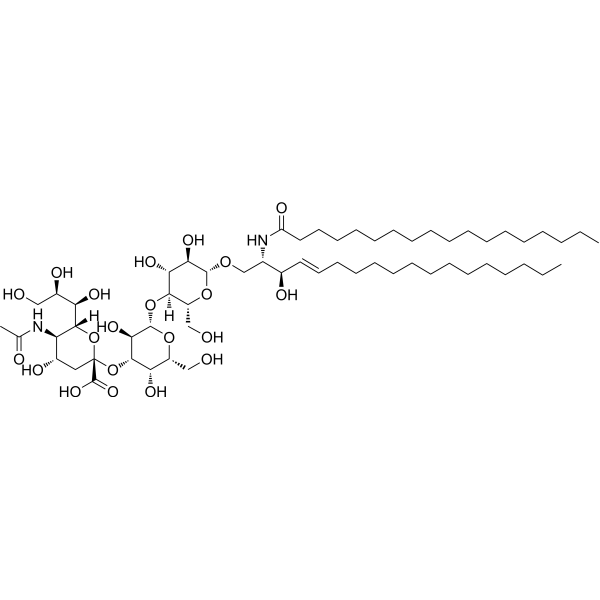
    Ganglioside GM3
    2 Publications Verification

    Insulin Receptor Metabolic Disease
    Ganglioside GM3 is a precursor of a-, b-, and c-series gangliosides, interacts with transmembrane receptors such as the epidermal growth factor and insulin receptors, and regulates receptor functions by creating a specialized lipid environment. Ganglioside GM3 is synthesized by GM3 synthase and can be used for the research of hypercholesterolemia .
    Ganglioside GM3
  • HY-P9976A
    Isatuximab (anti-CD38)
    1 Publications Verification

    CD38 Apoptosis Cancer
    Isatuximab (anti-CD38) is a monoclonal antibody that targets the transmembrane receptor and extracellular enzyme CD38, a protein highly expressed in hematological malignancies, including multiple myeloma. Isatuximab (anti-CD38) exhibits anti-tumor activity through multiple biological mechanisms, including antibody-dependent cell-mediated cytotoxicity, complement-dependent cytotoxicity, antibody-dependent cell phagocytosis, and non-crosslinking direct induction of apoptosis. Isatuximab (anti-CD38) also directly inhibits the extracellular enzyme activity of CD38, which is related to many cellular functions .
    Isatuximab (anti-CD38)
  • HY-P0207

    Endothelin-2 (human, canine); Human endothelin-2

    Endothelin Receptor Cardiovascular Disease Cancer
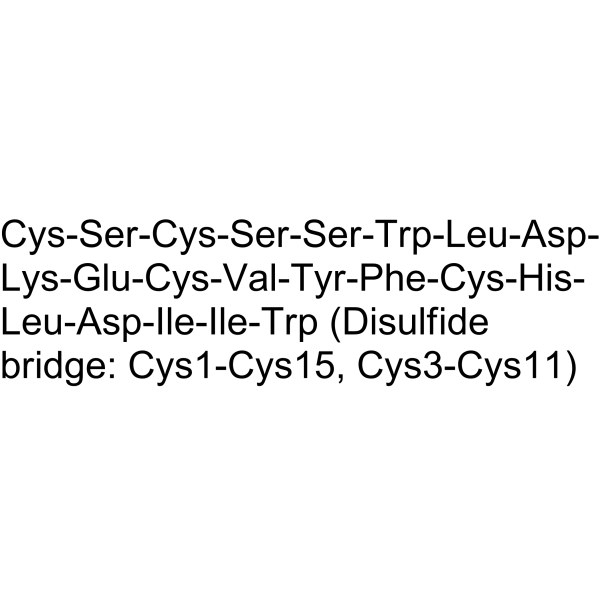
    Endothelin-2 (49-69), human (Endothelin-2 (human, canine)) is a 21-amino acid vasoactive peptide that binds to G-protein-linked transmembrane receptors, ET-RA and ET-RB.
    Endothelin-2 (49-69), human
  • HY-P0207A

    Endothelin-2 (49-69) (human, canine) TFA; Human endothelin-2 TFA

    Endothelin Receptor Cardiovascular Disease Cancer
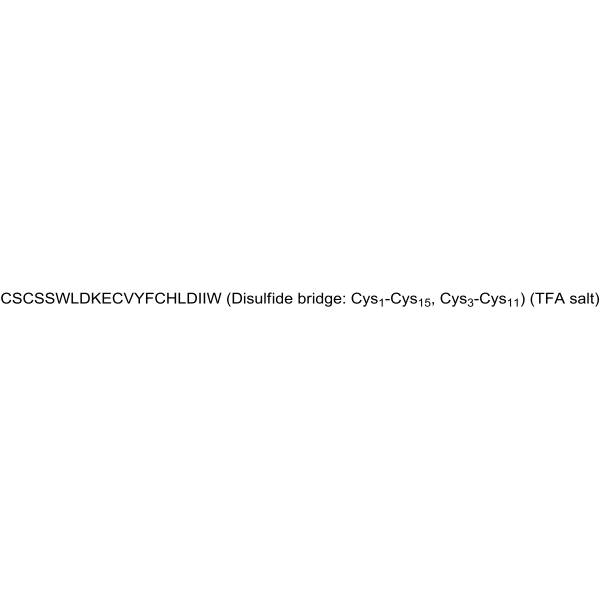
    Endothelin-2 (49-69), human (TFA) (Endothelin-2 (49-69) (human, canine) (TFA)) is a 21-amino acid vasoactive peptide that binds to G-protein-linked transmembrane receptors, ET-RA and ET-RB.
    Endothelin-2 (49-69), human TFA
  • HY-108507

    Smo Cancer
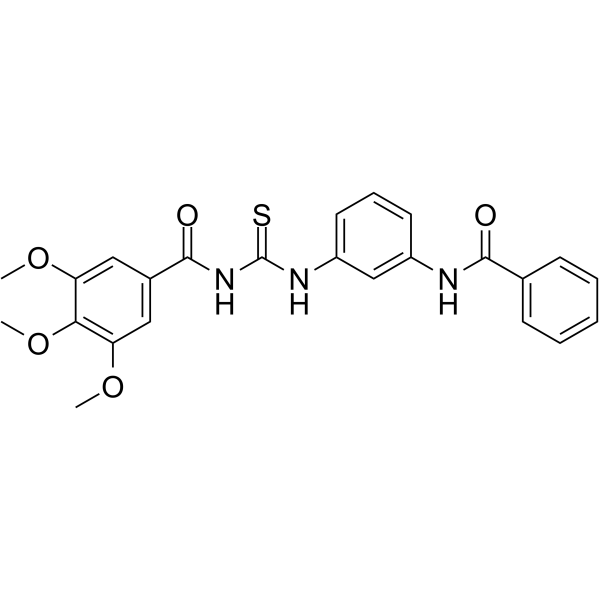
    MRT-10 is a seven-transmembrane receptor smoothened (Smo) antagonist with an IC50 of 0.65 μM in the micromolar range in various Hedgehog (Hh) assays. MRT-10 binds to the Smo receptor at the level of the Bodipycyclopamine binding site. MRT-10 can be used for the research of cancer .
    MRT-10
  • HY-123504

    Bacterial Infection
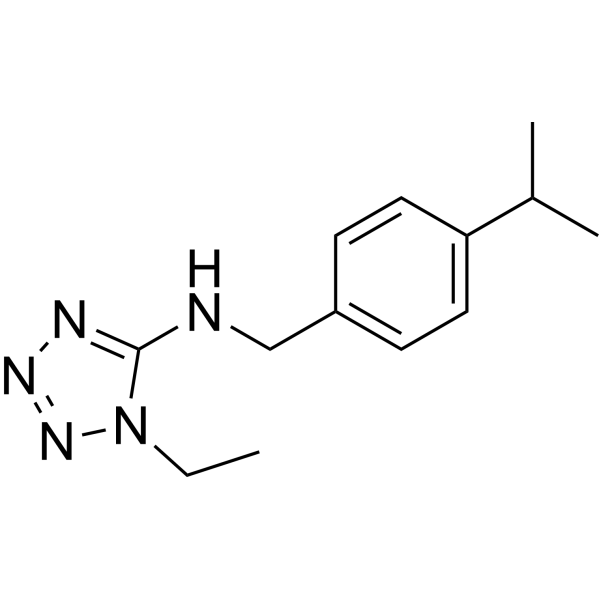
    ML344 is an agonist of Vibrio cholerae CqsS, a transmembrane receptor .
    ML344
  • HY-170019

    RET Cancer
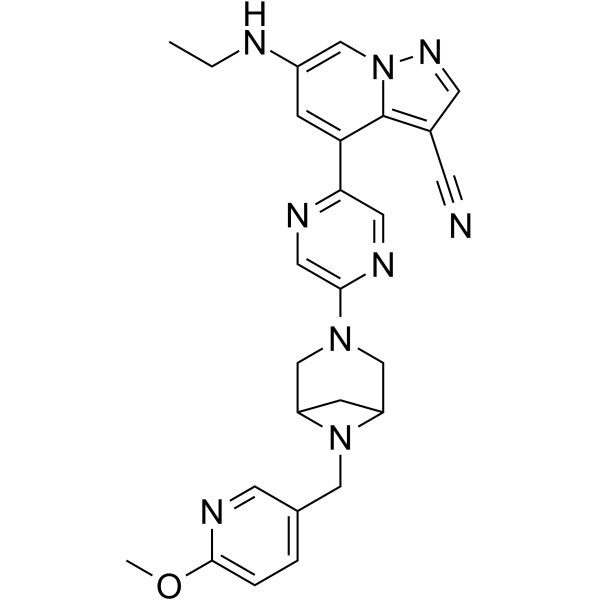
    RET-IN-28 (Compound 16) is a RET (transmembrane receptor tyrosine protein kinase) inhibitor. RET-IN-28 inhibits the activity of the mutant RET enzyme (RET-V804M), and can be applied to cancer research .
    RET-IN-28
  • HY-114456S

    Isotope-Labeled Compounds Others Metabolic Disease
    Ganglioside GM3-d7 is deuterium labeled Ganglioside GM3. Ganglioside GM3 is a precursor of a-, b-, and c-series gangliosides, interacts with transmembrane receptors such as the epidermal growth factor and insulin receptors, and regulates receptor functions by creating a specialized lipid environment. Ganglioside GM3 is synthesized by GM3 synthase and can be used for the research of hypercholesterolemia .
    Ganglioside GM3-d7
  • HY-E70776

    RET Cancer
    Rearranged during transfection (RET) is a transmembrane receptor protein tyrosine kinase (PTK) activated normally by forming ternary complexes with its cognate ligands and co-receptors. RET alterations by point mutations and gene fusions were found in diverse cancers. RET S891A is a mutant of RET. RET S891A Recombinant Human Active Protein Kinase is a recombinant RET S891A protein that can be used to study RET S891A-related functions .
    RET S891A Recombinant Human Active Protein Kinase
  • HY-143546

    RET Cancer
    RET-IN-9 is a potent inhibitor of RET. RET kinase is a single-pass transmembrane receptor tyrosine kinase that plays an important role in the development of the kidney and enteric nervous system, and the maintenance of homeostasis in the nervous, endocrine, hematopoietic, and male reproductive systems. RET-IN-9 has the potential for the research of RET-related disease including non-small cell lung cancer and medullary thyroid cancer (extracted from patent WO2021115457A1, compound 29) .
    RET-IN-9
  • HY-E70778

    RET Cancer
    Rearranged during transfection (RET) is a transmembrane receptor protein tyrosine kinase (PTK) activated normally by forming ternary complexes with its cognate ligands and co-receptors. RET alterations by point mutations and gene fusions were found in diverse cancers. RET V804L is a mutant of RET. RET V804L Recombinant Human Active Protein Kinase is a recombinant RET V804L protein that can be used to study RET V804L-related functions .
    RET V804L Recombinant Human Active Protein Kinase
  • HY-E70777

    RET Cancer
    Rearranged during transfection (RET) is a transmembrane receptor protein tyrosine kinase (PTK) activated normally by forming ternary complexes with its cognate ligands and co-receptors. RET alterations by point mutations and gene fusions were found in diverse cancers. RET V804E is a mutant of RET. RET V804E Recombinant Human Active Protein Kinase is a recombinant RET V804E protein that can be used to study RET V804E-related functions .
    RET V804E Recombinant Human Active Protein Kinase
  • HY-E70859

    RET Cancer
    Rearranged during transfection (RET) is a transmembrane receptor protein tyrosine kinase (PTK) activated normally by forming ternary complexes with its cognate ligands and co-receptors. RET alterations by point mutations and gene fusions were found in diverse cancers. RET L790F is a mutant of RET. RET L790F Recombinant Human Active Protein Kinase is a recombinant RET L790F protein that can be used to study RET L790F-related functions .
    RET L790F Recombinant Human Active Protein Kinase
  • HY-E70771

    RET Cancer
    Rearranged during transfection (RET) is a transmembrane receptor protein tyrosine kinase (PTK) activated normally by forming ternary complexes with its cognate ligands and co-receptors. RET alterations by point mutations and gene fusions were found in diverse cancers. RET L730I is a mutant of RET. RET L730I Recombinant Human Active Protein Kinase is a recombinant RET L730I protein that can be used to study RET L730I-related functions .
    RET L730I Recombinant Human Active Protein Kinase
  • HY-E70775

    RET Cancer
    Rearranged during transfection (RET) is a transmembrane receptor protein tyrosine kinase (PTK) activated normally by forming ternary complexes with its cognate ligands and co-receptors. RET alterations by point mutations and gene fusions were found in diverse cancers. RET R813Q is a mutant of RET. RET R813Q Recombinant Human Active Protein Kinase is a recombinant RET R813Q protein that can be used to study RET R813Q-related functions .
    RET R813Q Recombinant Human Active Protein Kinase
  • HY-E70772

    RET Cancer
    Rearranged during transfection (RET) is a transmembrane receptor protein tyrosine kinase (PTK) activated normally by forming ternary complexes with its cognate ligands and co-receptors. RET alterations by point mutations and gene fusions were found in diverse cancers. RET L730M is a mutant of RET. RET L730M Recombinant Human Active Protein Kinase is a recombinant RET L730M protein that can be used to study RET L730M-related functions .
    RET L730M Recombinant Human Active Protein Kinase
  • HY-E70774

    RET Cancer
    Rearranged during transfection (RET) is a transmembrane receptor protein tyrosine kinase (PTK) activated normally by forming ternary complexes with its cognate ligands and co-receptors. RET alterations by point mutations and gene fusions were found in diverse cancers. RET R749T is a mutant of RET. RET R749T Recombinant Human Active Protein Kinase is a recombinant RET R749T protein that can be used to study RET R749T-related functions .
    RET R749T Recombinant Human Active Protein Kinase
  • HY-E70769

    RET Cancer
    Rearranged during transfection (RET) is a transmembrane receptor protein tyrosine kinase (PTK) activated normally by forming ternary complexes with its cognate ligands and co-receptors. RET alterations by point mutations and gene fusions were found in diverse cancers. RET G810R is a mutant of RET. RET G810R Recombinant Human Active Protein Kinase is a recombinant RET G810R protein that can be used to study RET G810R-related functions .
    RET G810R Recombinant Human Active Protein Kinase
  • HY-E70766

    RET Cancer
    Rearranged during transfection (RET) is a transmembrane receptor protein tyrosine kinase (PTK) activated normally by forming ternary complexes with its cognate ligands and co-receptors. RET alterations by point mutations and gene fusions were found in diverse cancers. RET E762Q is a mutant of RET. RET E762Q Recombinant Human Active Protein Kinase is a recombinant RET E762Q protein that can be used to study RET E762Q-related functions .
    RET E762Q Recombinant Human Active Protein Kinase
  • HY-E70780

    RET Cancer
    Rearranged during transfection (RET) is a transmembrane receptor protein tyrosine kinase (PTK) activated normally by forming ternary complexes with its cognate ligands and co-receptors. RET alterations by point mutations and gene fusions were found in diverse cancers. RET Y791F is a mutant of RET. RET Y791F Recombinant Human Active Protein Kinase is a recombinant RET Y791F protein that can be used to study RET Y791F-related functions .
    RET Y791F Recombinant Human Active Protein Kinase
  • HY-E70779

    RET Cancer
    Rearranged during transfection (RET) is a transmembrane receptor protein tyrosine kinase (PTK) activated normally by forming ternary complexes with its cognate ligands and co-receptors. RET alterations by point mutations and gene fusions were found in diverse cancers. RET V804M is a mutant of RET. RET V804M Recombinant Human Active Protein Kinase is a recombinant RET V804M protein that can be used to study RET V804M-related functions .
    RET V804M Recombinant Human Active Protein Kinase
  • HY-E70767

    RET Cancer
    Rearranged during transfection (RET) is a transmembrane receptor protein tyrosine kinase (PTK) activated normally by forming ternary complexes with its cognate ligands and co-receptors. RET alterations by point mutations and gene fusions were found in diverse cancers. RET G691S is a mutant of RET. RET G691S Recombinant Human Active Protein Kinase is a recombinant RET G691S protein that can be used to study RET G691S-related functions .
    RET G691S Recombinant Human Active Protein Kinase
  • HY-E70768

    RET Cancer
    Rearranged during transfection (RET) is a transmembrane receptor protein tyrosine kinase (PTK) activated normally by forming ternary complexes with its cognate ligands and co-receptors. RET alterations by point mutations and gene fusions were found in diverse cancers. RET G810C is a mutant of RET. RET G810C Recombinant Human Active Protein Kinase is a recombinant RET G810C protein that can be used to study RET G810C-related functions .
    RET G810C Recombinant Human Active Protein Kinase
  • HY-E70773

    RET Cancer
    Rearranged during transfection (RET) is a transmembrane receptor protein tyrosine kinase (PTK) activated normally by forming ternary complexes with its cognate ligands and co-receptors. RET alterations by point mutations and gene fusions were found in diverse cancers. RET M918T is a mutant of RET. RET M918T Recombinant Human Active Protein Kinase is a recombinant RET M918T protein that can be used to study RET M918T-related functions .
    RET M918T Recombinant Human Active Protein Kinase
  • HY-E70781

    RET Cancer
    Rearranged during transfection (RET) is a transmembrane receptor protein tyrosine kinase (PTK) activated normally by forming ternary complexes with its cognate ligands and co-receptors. RET alterations by point mutations and gene fusions were found in diverse cancers. RET Y806H is a mutant of RET. RET Y806H Recombinant Human Active Protein Kinase is a recombinant RET Y806H protein that can be used to study RET Y806H-related functions .
    RET Y806H Recombinant Human Active Protein Kinase
  • HY-E70770

    RET Cancer
    Rearranged during transfection (RET) is a transmembrane receptor protein tyrosine kinase (PTK) activated normally by forming ternary complexes with its cognate ligands and co-receptors. RET alterations by point mutations and gene fusions were found in diverse cancers. RET G810S is a mutant of RET. RET G810S Recombinant Human Active Protein Kinase is a recombinant RET G810S protein that can be used to study RET G810S-related functions .
    RET G810S Recombinant Human Active Protein Kinase
  • HY-P991780

    EGFR Cancer
    Anti-Mouse HER2 (domain I) Antibody (H2Mab-304) reacts with domain I of mouse HER2. HER2 is a 185 kDa transmembrane receptor tyrosine kinase that is part of the EGFR family. Recommend Isotype Controls: Rat IgG1 kappa, Isotype Control (HY-P99979).
    Anti-Mouse HER2 (domain I) Antibody (H2Mab-304)
  • HY-108507R

    Reference Standards Smo Cancer
    MRT-10 (Standard) is the analytical standard of MRT-10 (HY-108507). This product is intended for research and analytical applications. MRT-10 is a seven-transmembrane receptor smoothened (Smo) antagonist with an IC50 of 0.65 μM in the micromolar range in various Hedgehog (Hh) assays. MRT-10 binds to the Smo receptor at the level of the Bodipycyclopamine binding site. MRT-10 can be used for the research of cancer .
    MRT-10 (Standard)

Inquiry Online

Your information is safe with us. * Required Fields.

Salutation


Country or Region *

Applicant Name *


Organization Name *

Department *


Email Address *


Product Name *

Cat. No.


Requested quantity *

Phone Number *


Remarks

Inquiry Online

Inquiry Information

Product Name:
Cat. No.:
Quantity:
MCE Japan Authorized Agent: