10 Results for "

urinary glucose excretion

" in MedChemExpress (MCE) Product Catalog:
Products (10)

10 Results for "urinary glucose excretion" in MCE Product Catalog:

4
4 Cited Publications
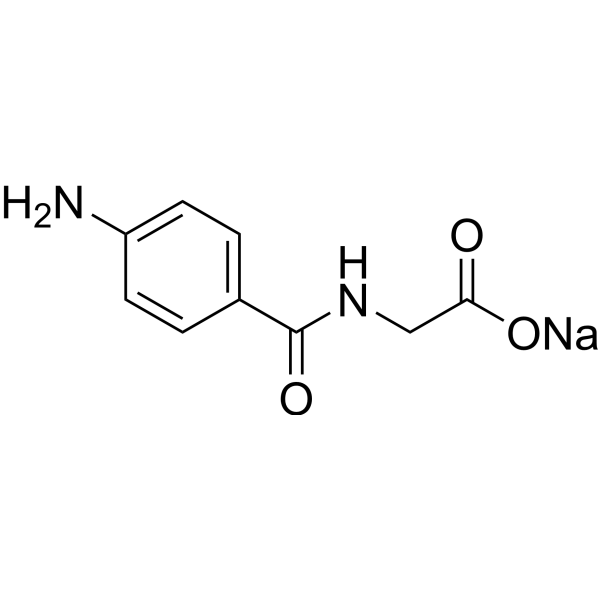
Cat. No.: HY-A0080
CAS No.: 94-16-6
Synonyms: Sodium p-aminohippurate; p-Aminohippuric acid sodium salt
Research Areas:  

Inflammation/Immunology

Aminohippurate sodium (Sodium p-aminohippurate) is a renal tubular transport inhibitor and a substrate for organic anion transporters. Aminohippurate sodium inhibits renal tubular reabsorption of phosphate and promotes increased urinary phosphate excretion. Aminohippurate sodium inhibits renal tubular reabsorption of vitamin C as well as the transport of glucose .
loading...
    loading...
1
1 Cited Publications
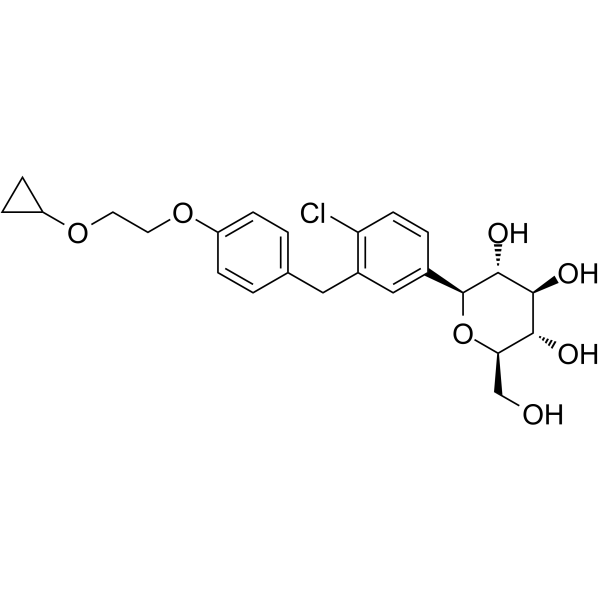
Cat. No.: HY-17604
CAS No.: 1118567-05-7
Synonyms: EGT1442; EGT0001442; THR-1442
Target:  

SGLT

Bexagliflozin (EGT1442) is an orally active and selective SGLT2 inhibitor with IC50 values of 0.002 μM and 5.6 μM for SGLT2 and SGLT1, respectively. Bexagliflozin selectively inhibits SGLT2-mediated sodium-dependent glucose uptake. Bexagliflozin induces saturable urinary glucose excretion in normal rats and dogs. Bexagliflozin reduces blood glucose and HbA1c levels in db/db mice without affecting body mass or insulin level. Bexagliflozin can be used for the research of type 2 diabetes mellitus, hypertensive stroke .
loading...
    loading...
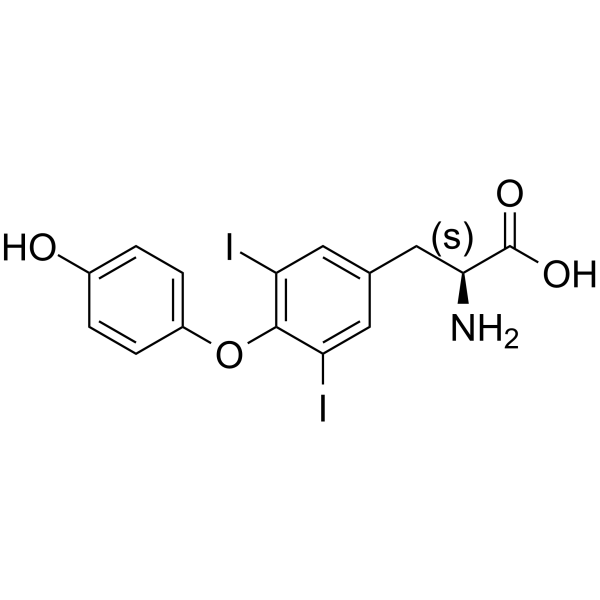
Cat. No.: HY-114557
CAS No.: 1041-01-6
Purity:  99.38%
Synonyms: 3,5-Diiodo-L-thyronine
NSC 90469 (3,5-Diiodo-L-thyronine) is an orally active thyroid hormone derivative. NSC 90469 inhibits JNK phosphorylation and NF-κB acetylation, blocks SIRT1 protein expression, induces elevated PGC-1α levels, and stimulates COX activity. NSC 90469 enhances UCP1-mediated thermogenesis, increases hepatic Dio1 activity, inhibits TSH levels and hypothalamic-pituitary-thyroid axis function, enhances lipid metabolism, and regulates energy metabolism via the mitochondrial pathway. NSC 90469 prevents blood glucose reduction, reduces urinary albumin excretion, inhibits renal matrix expansion, decreases TGF-β1 expression, and reduces renal fibronectin and type Ⅳ collagen deposition. NSC 90469 also increases energy expenditure and prevents diet-induced overweight. NSC 90469 can be used in studies related to diabetic nephropathy, hypothyroidism, non-alcoholic fatty liver disease, and diet-induced obesity .
loading...
    loading...
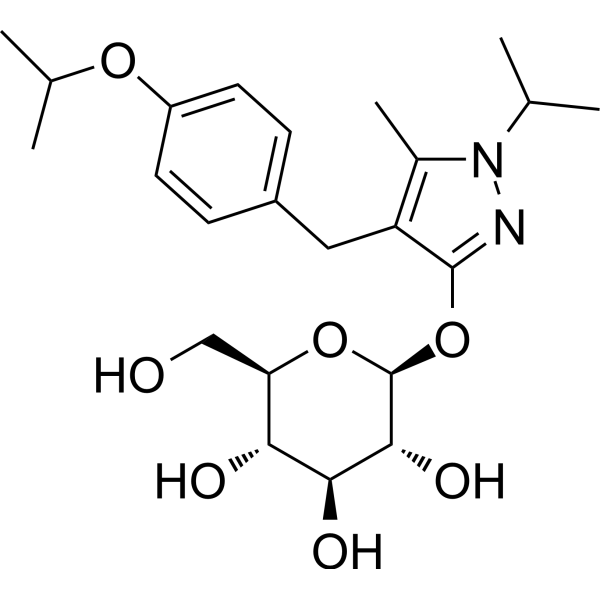
Cat. No.: HY-13414
CAS No.: 329045-45-6
Synonyms: Remogliflozin A
Target:  

SGLT

Research Areas:  

Metabolic Disease

Remogliflozin (Remogliflozin A) is an orally active, highly selective sodium-glucose cotransporter 2 (SGLT2) inhibitor, with a Ki of 12.4 nM for human SGLT2 and 26.0 nM for rat SGLT2. Remogliflozin increases urinary glucose excretion by inhibiting renal glucose reabsorption. Without insulin stimulation, remogliflozin suppresses the elevation of plasma glucose, reduces fasting blood glucose and glycated hemoglobin, and improves glycosuria, hyperglycemia, hyperinsulinemia, hypertriglyceridemia and insulin resistance in diabetic rodents. Remogliflozin can be used in research related to type 2 diabetes .
loading...
    loading...
Cat. No.: HY-122613
CAS No.: 655237-16-4
Target:  

SGLT

Research Areas:  

Metabolic Disease

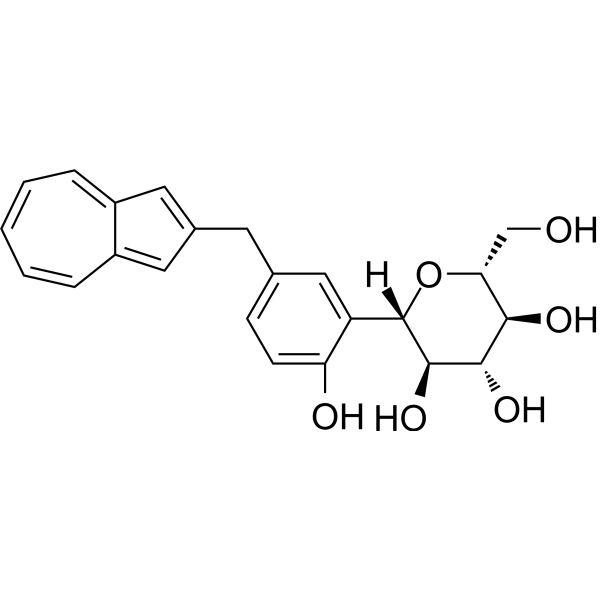
YM543 free base is a potent and orally active sodium-glucose cotransporter (SGLT) 2 inhibitor. YM543 free base reduces blood glucose levels. YM543 free base can be used in research of diabetes .
loading...
    loading...
Cat. No.: HY-125327
CAS No.: 1610007-47-0
Target:  

SGLT

Research Areas:  

Metabolic Disease

YM-543 is a selective SGLT2 inhibitor that effectively reduces hyperglycemia in type 2 diabetic mice through increased urinary glucose excretion. YM-543 demonstrates potent inhibition of both mouse and human SGLT2 activities at nanomolar concentrations. YM-543, when administered orally, significantly improves glucose tolerance in diabetic models and sustains its effects for over 12 hours. YM-543, in combination with other antidiabetic agents like rosiglitazone or metformin, enhances the therapeutic effects on diabetic symptoms. YM-543 does not affect blood glucose levels in normal mice, indicating its specificity for diabetic conditions.
loading...
    loading...
Cat. No.: HY-114557R
CAS No.: 1041-01-6
Synonyms: 3,5-Diiodo-L-thyronine (Standard)
NSC 90469 (Standard) is the analytical standard of NSC 90469. This product is intended for research and analytical applications. NSC 90469 (3,5-Diiodo-L-thyronine) is an orally active thyroid hormone derivative. NSC 90469 inhibits JNK phosphorylation and NF-κB acetylation, blocks SIRT1 protein expression, induces elevated PGC-1α levels, and stimulates COX activity. NSC 90469 enhances UCP1-mediated thermogenesis, increases hepatic Dio1 activity, inhibits TSH levels and hypothalamic-pituitary-thyroid axis function, enhances lipid metabolism, and regulates energy metabolism via the mitochondrial pathway. NSC 90469 prevents blood glucose reduction, reduces urinary albumin excretion, inhibits renal matrix expansion, decreases TGF-β1 expression, and reduces renal fibronectin and type Ⅳ collagen deposition. NSC 90469 also increases energy expenditure and prevents diet-induced overweight. NSC 90469 can be used in studies related to diabetic nephropathy, hypothyroidism, non-alcoholic fatty liver disease, and diet-induced obesity .
loading...
    loading...
Cat. No.: HY-178734
CAS No.: 1800115-22-3
Target:  

SGLT

Research Areas:  

Metabolic Disease

Janagliflozin is orally active and highly selective sodium-glucose cotransporter 2 (SGLT2) inhibitor (IC50=0.0058 μM for SGLT2 and 4.802 μM for SGLT1). Janagliflozin inhibits SGLT2 in the proximal renal tubules, reducing glucose reabsorption and promoting urinary glucose excretion (UGE) to lower blood glucose levels. Janagliflozin is promising for research of type 2 diabetes mellitus .
loading...
    loading...
Cat. No.: HY-119058
CAS No.: 463976-07-0
Synonyms: CP-744809
Target:  

Aldose Reductase

Research Areas:  

Metabolic Disease

ARI-809 (CP-744809) is a highly selective, orally active aldose reductase inhibitor with an IC50 of 1 nM. ARI-809 blocks excessive glucose flux through the polyol pathway. ARI-809 normalizes elevated sorbitol and fructose levels in sciatic nerve tissues of diabetic rat models, inhibits sorbitol accumulation in lens tissues, and brings elevated urinary albumin excretion close to normal. ARI-809 can be used in diabetes research .
loading...
    loading...
Cat. No.: HY-180528
Research Areas:  

Metabolic Disease

SGLT2-IN-6 (Compound 101) is an orally active SGLT2 inhibitor with IC₅₀ values for SGLT2, SGLT1, and DPP4 of 0.8, 6.7, and 72 nM respectively. SGLT2-IN-6 controls blood sugar levels in diabetic rat models and increases the levels of active GLP-1. SGLT2-IN-6 can be used for the study of type 2 diabetes .
loading...
    loading...

