



Bexagliflozin
Based on 1 publication(s) in Google Scholar
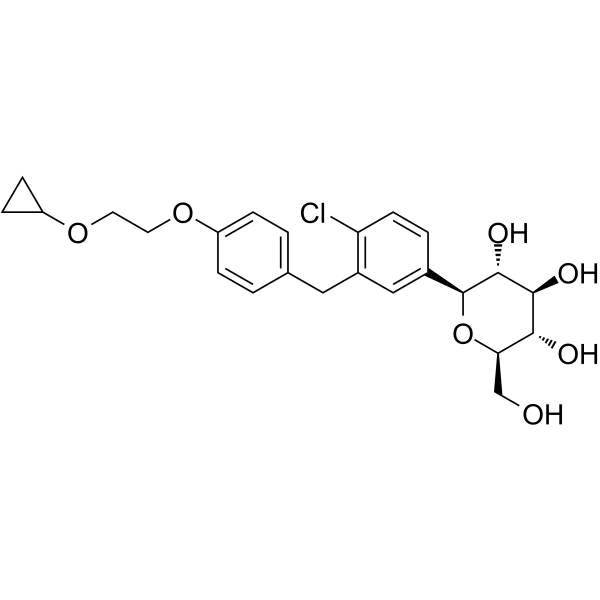
Bexagliflozin (EGT1442; EGT0001442; THR-1442) is an orally active and selective SGLT2 inhibitor with IC50 values of 0.002 μM and 5.6 μM for SGLT2 and SGLT1, respectively. Bexagliflozin selectively inhibits SGLT2-mediated sodium-dependent glucose uptake. Bexagliflozin induces saturable urinary glucose excretion in normal rats and dogs. Bexagliflozin reduces blood glucose and HbA1c levels in db/db mice without affecting body mass or insulin level. Bexagliflozin can be used for the research of type 2 diabetes mellitus, hypertensive stroke.
연구목적의 판매만을 진행합니다. 환자를 대상으로 한 판매는 하지 않습니다.
- Purity : 98.81%
- CAS No.: 1118567-05-7
- 화학식: C24H29ClO7
- 분자량:464.94
-
보관:Powder -20°C, 3 years , 4°C, 2 years ; In solvent -80°C, 6 months , -20°C, 1 month

To place orders, for customer services and technical support, please contact: MedChemExpress USA
Tel: 609-228-6898 E-mail: [email protected] [email protected]


-
 Biological Activity
-
Chemical Information
-
용액&용해도
- Protocol
- 순도&문서
- References
-
 Help & FAQs


-
HY-10451
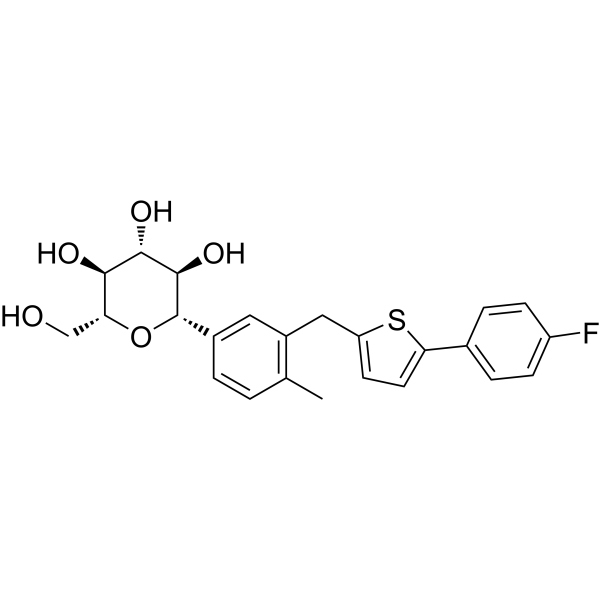
CanagliflozinSGLT2 Inhibitor -
HY-109018
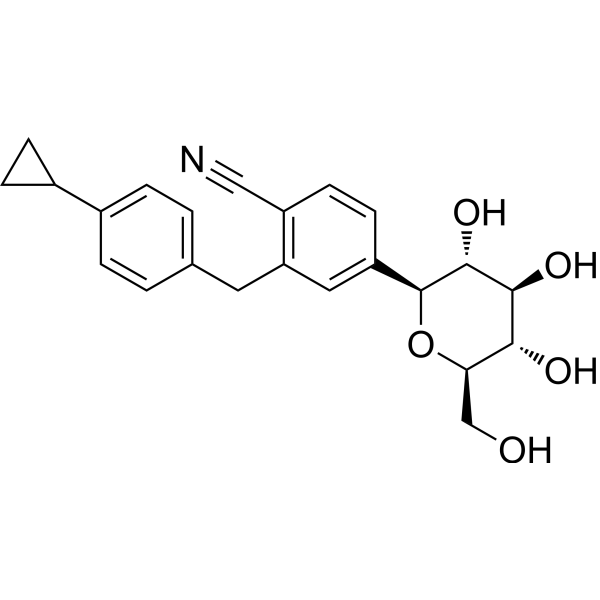
VelagliflozinSGLT Inhibitor -
HY-N0142
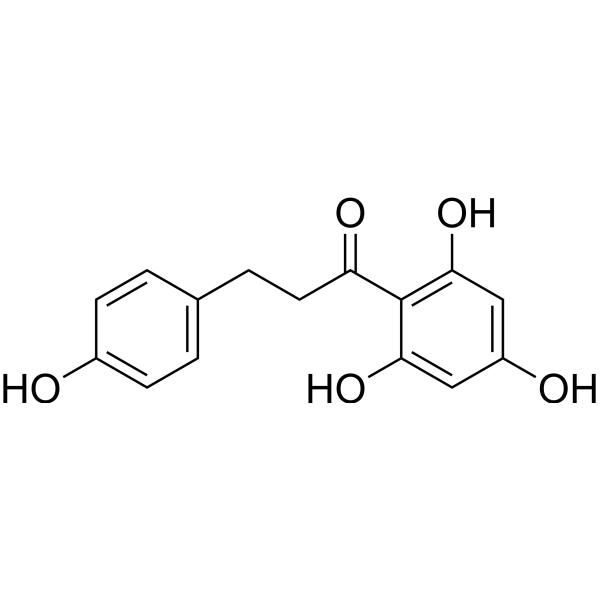
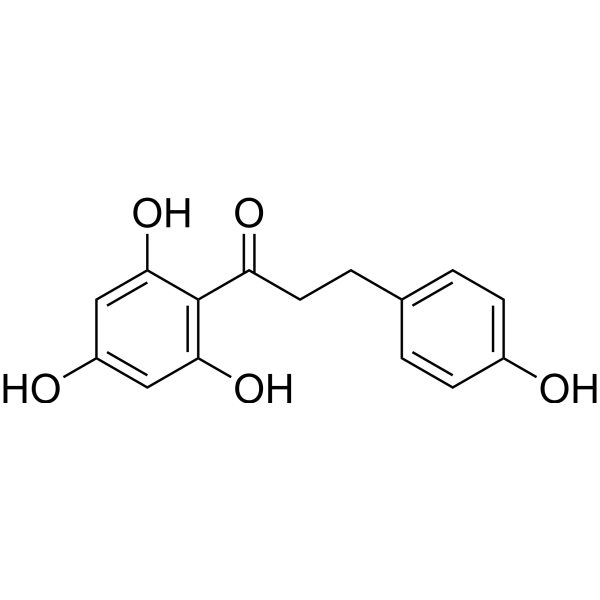
PhloretinAnti-inflammatory Agent -
HY-N0143
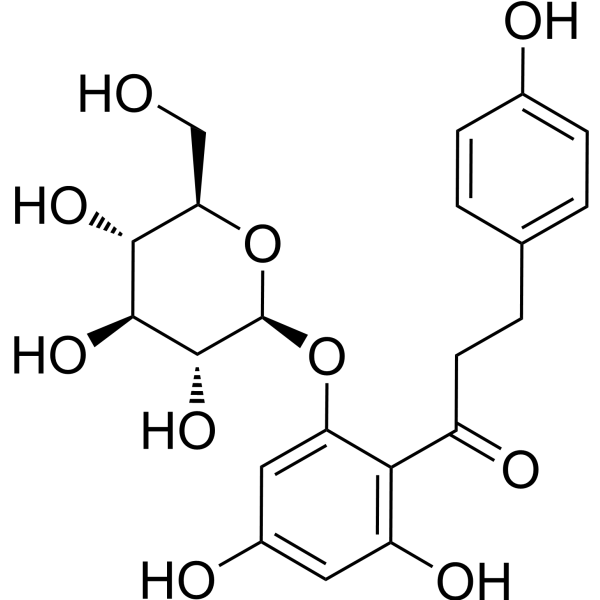
PhlorizinSGLT Inhibitor -
HY-N0142R
Phloretin (Standard) -
HY-15516
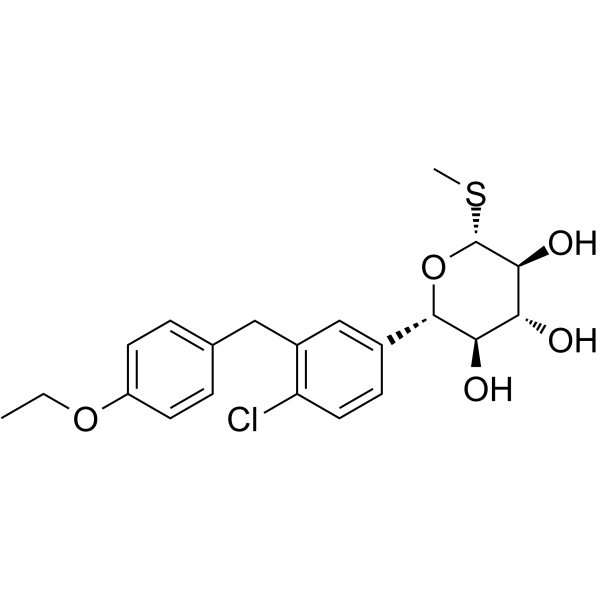
SotagliflozinSGLT Inhibitor -
HY-10450
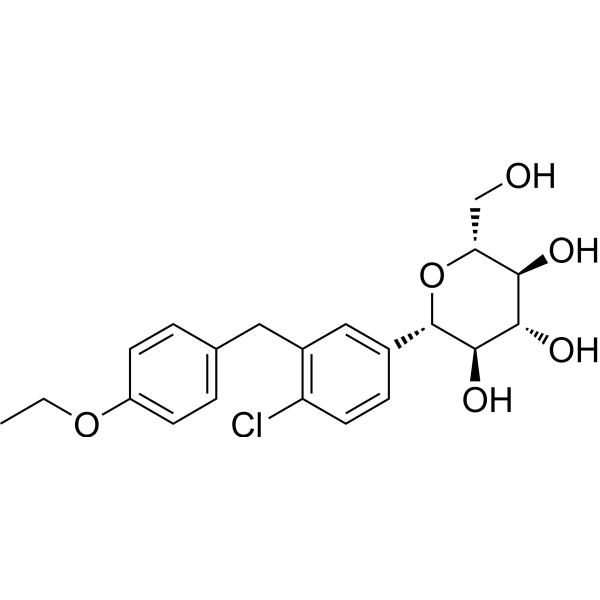
DapagliflozinSGLT2 Inhibitor -
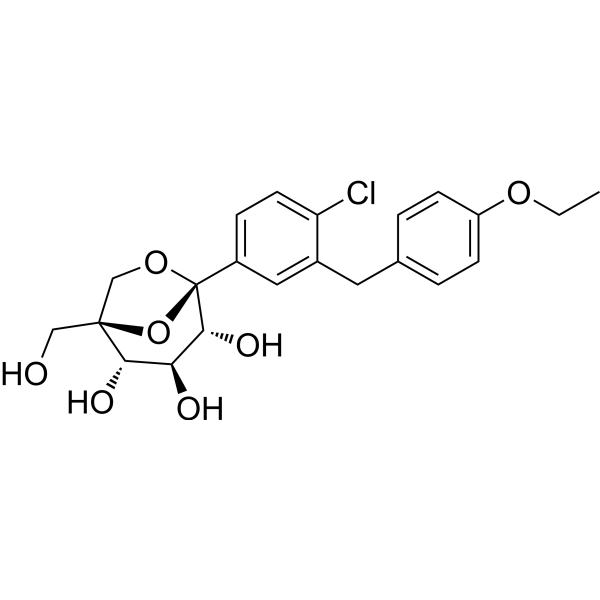
HY-15461
ErtugliflozinSGLT2 Inhibitor -
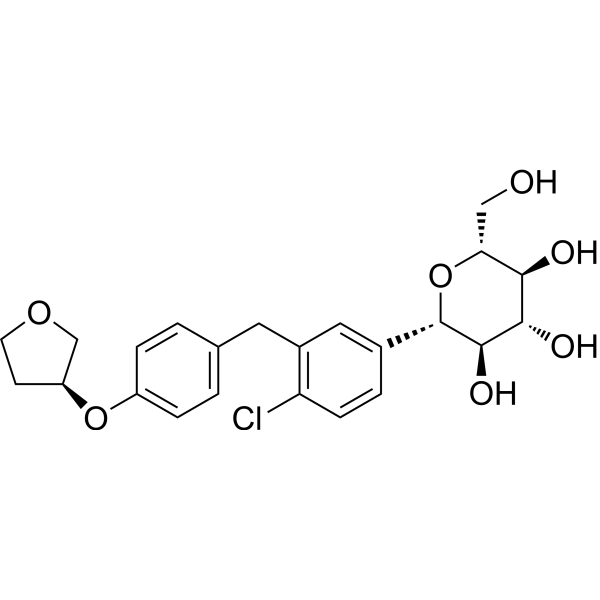
HY-15409
EmpagliflozinSGLT2 Inhibitor -
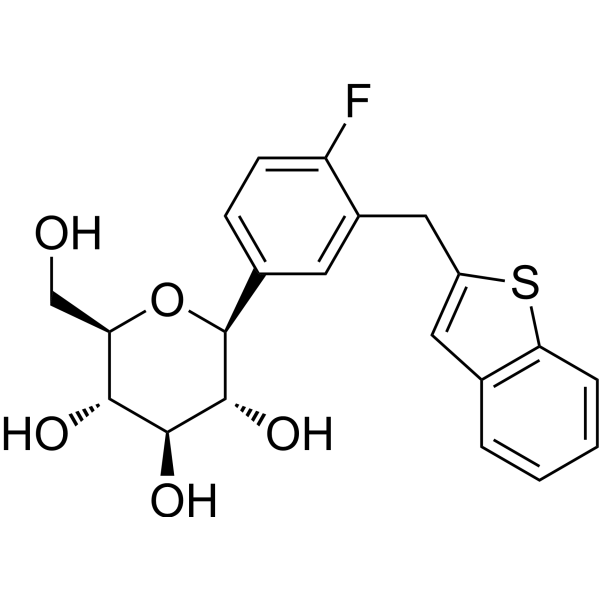
HY-14894
IpragliflozinSGLT Inhibitor -

HY-15461R
Ertugliflozin (Standard)SGLT2 Inhibitor -
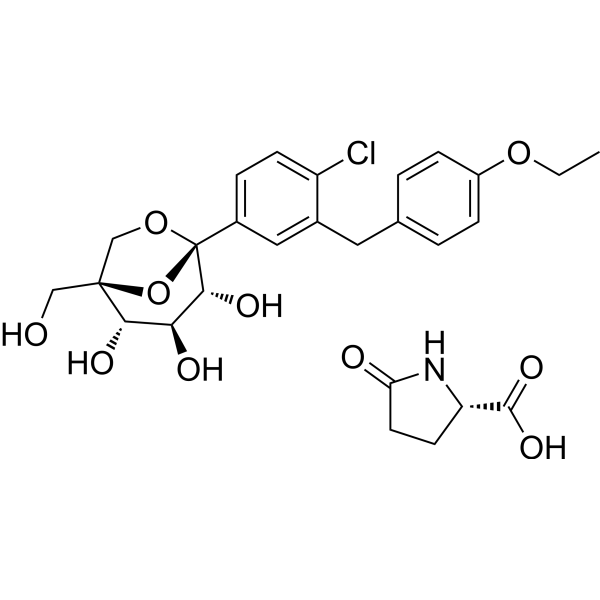
HY-15461A
Ertugliflozin L-pyroglutamic acidSGLT2 Inhibitor
Publications Citing Use of MedChemExpress (MCE) Bexagliflozin
More

Biological Activity
제품 설명
IC50 & Target
[1]|
hSGLT2 2 nM (IC50) |
hSGLT1 5.6 μM (IC50) |
Cellular Effect
|
Cell Line

|
Type | Value | Description | References |
|---|---|---|---|---|
| COS-7 | IC50 |
2.3 nM
Compound: 29
|
Inhibition of human SGLT2 expressed in african green monkey COS7 cells assessed as inhibition of [14C]-methyl-alpha-D-glucopyranoside uptake after 2 hrs by scintillation counting in presence of 25 % human plasma
Inhibition of human SGLT2 expressed in african green monkey COS7 cells assessed as inhibition of [14C]-methyl-alpha-D-glucopyranoside uptake after 2 hrs by scintillation counting in presence of 25 % human plasma
|
[PMID: 21737266] |
| HEK293 | IC50 |
5600 nM
Compound: 29
|
Inhibition of human SGLT1 expressed in human 293 cells assessed as inhibition of [14C]-methyl-alpha-D-glucopyranoside uptake after 1.5 hrs by scintillation counting in presence of 25 % human plasma
Inhibition of human SGLT1 expressed in human 293 cells assessed as inhibition of [14C]-methyl-alpha-D-glucopyranoside uptake after 1.5 hrs by scintillation counting in presence of 25 % human plasma
|
[PMID: 21737266] |
In Vitro
In Vivo
Bexagliflozin (0.03-3 mg/kg; p.o.; single dose) reduces post-glucose challenge blood glucose and induces dose-dependent urinary glucose excretion in normal beagle dogs, with an ED50 of 0.09 mg/kg for urinary glucose excretion[1].
Bexagliflozin (0.1-3 mg/kg; p.o.; daily; 30 days) dose-dependently reduces non-fasting blood glucose and HbA1c levels, and improves oral glucose tolerance in db/db mice over 30 days of daily oral administration, without affecting plasma insulin or body weight[1].
Bexagliflozin (3.0 mg/kg; p.o.; daily via drinking water; up to 2 months) significantly prolongs median survival by approximately 67% (from 32 to 53 days) in SHRSP rats fed a stroke-promoting high-salt diet[1].
MedChemExpress (MCE) has not independently confirmed the accuracy of these methods. They are for reference only.
-
Animal Model:C57BL/KsJ-db/db (male, 6-8 weeks old, genetic type 2 diabetes model)[1]
-
Dosage:0.1 mg/kg; 0.3 mg/kg; 1 mg/kg; 3 mg/kg
-
Administration:p.o.; daily; 30 days
-
Result:Dose-dependently reduced non-fasting blood glucose levels from day 1 to day 28, with significant decreases across all treated groups.
Reduced HbA1c levels by 0.51%, 1.08%, 1.13%, and 1.37% for 0.1, 0.3, 1, and 3 mg/kg doses, respectively.
Significantly improved oral glucose tolerance on day 30, with dose-dependent reductions in blood glucose AUC during glucose challenge.
Caused no changes in plasma insulin levels, body weight, food consumption, water consumption, or urine output.
Caused no significant increase in urinary glucose excretion at 2 or 4 weeks compared to control.
Clinical Trial
| NCT Number | Sponsor | Condition | Start Date |
Phase
|
|---|---|---|---|---|
| NCT01329991 | 2011-05 | PHASE1 |


Chemical Information
-
CAS No. 1118567-05-7
-
Appearance Solid
-
분자량 464.94
-
화학식 C24H29ClO7
-
Color White to off-white
-
SMILES
O[C@H]([C@H]1O)[C@@H](O[C@H](CO)[C@H]1O)C2=CC(CC3=CC=C(OCCOC4CC4)C=C3)=C(Cl)C=C2
-
Synonyms
EGT1442; EGT0001442; THR-1442
-
선적
Room temperature in continental US; may vary elsewhere.
-
보관
Powder -20°C 3 years 4°C 2 years In solvent -80°C 6 months -20°C 1 month


Publications (1)
-
Journal Impact Factor
-
Most Recent
-
Biochem Pharmacol
Canagliflozin exerts anti-inflammatory effects by inhibiting intracellular glucose metabolism and promoting autophagy in immune cells. [Abstract]2018 Jun:152:45-59. PMID: 29551587


용액&용해도
In Vitro:
DMSO : ≥ 100 mg/mL (215.08 mM; Hygroscopic DMSO has a significant impact on the solubility of product, please use newly opened DMSO)
* "≥" means soluble, but saturation unknown.
Please refer to the solubility information to select the appropriate solvent. Once prepared, please aliquot and store the solution to prevent product inactivation from repeated freeze-thaw cycles.
Storage method and period of stock solution: -80°C, 6 months; -20°C, 1 month. When stored at -80°C, please use it within 6 months. When stored at -20°C, please use it within 1 month.
Please refer to the solubility information to select the appropriate solvent. Once prepared, please aliquot and store the solution to prevent product inactivation from repeated freeze-thaw cycles.
Storage method and period of stock solution: -80°C, 6 months; -20°C, 1 month. When stored at -80°C, please use it within 6 months. When stored at -20°C, please use it within 1 month.
Concentration (start) × Volume (start) = Concentration (final) × Volume (final)
In Vivo:
Select the appropriate dissolution method based on your experimental animal and administration route.
- For the following dissolution methods, please ensure to first prepare a clear stock solution using an In Vitro approach and then sequentially add co-solvents:
- To ensure reliable experimental results, the clarified stock solution can be appropriately stored based on storage conditions. As for the working solution for In Vivo experiments, it is recommended to prepare freshly and use it on the same day.
- The percentages shown for the solvents indicate their volumetric ratio in the final prepared solution. If precipitation or phase separation occurs during preparation, heat and/or sonication can be used to aid dissolution.
Add each solvent one by one: 10% DMSO 40% PEG300 5% Tween-80 45% Saline
Solubility: ≥ 3 mg/mL (6.45 mM); Clear solution
This protocol yields a clear solution of ≥ 3 mg/mL (saturation unknown).
Taking 1 mL working solution as an example, add 100 μL DMSO stock solution (30.0 mg/mL) to 400 μL PEG300, and mix evenly; then add 50 μL Tween-80 and mix evenly; then add 450 μL Saline to adjust the volume to 1 mL.
Preparation of Saline: Dissolve 0.9 g sodium chloride in ddH₂O and dilute to 100 mL to obtain a clear Saline solution.
Add each solvent one by one: 10% DMSO 90% (20% SBE-β-CD in Saline)
Solubility: ≥ 3 mg/mL (6.45 mM); Clear solution
This protocol yields a clear solution of ≥ 3 mg/mL (saturation unknown).
Taking 1 mL working solution as an example, add 100 μL DMSO stock solution (30.0 mg/mL) to 900 μL 20% SBE-β-CD in Saline, and mix evenly.
Preparation of 20% SBE-β-CD in Saline (4°C, storage for one week): 2 g SBE-β-CD powder is dissolved in 10 mL Saline, completely dissolve until clear.
In Vivo Dissolution Calculator
Please enter the basic information of animal experiments:
-
-
-
-
Recommended: Prepare an additional quantity of animals to account for potential losses during experiments.
Please enter your animal formula composition:
-
%DMSO +
Recommended: Keep the proportion of DMSO in working solution below 2% if your animal is weak.
-
%+
-
+%Tween-80 + +
-
%Saline +
The co-solvents required include: DMSO, . All of co-solvents are available by MedChemExpress (MCE). , Tween 80. All of co-solvents are available by MedChemExpress (MCE).
Working solution concentration: 0.22 mg/mL
Method for preparing stock solution: mg drug dissolved in μL DMSO. Stock solution concentration: mg/mL.
1. Take μL DMSO stock solution;
2. Add μL .
μL , mix evenly;
3. Then add μL Tween 80, mix evenly;
4. Then add μL
Please ensure that the stock solution in the first step is dissolved to a clear state, and add co-solvents in sequence. You can use ultrasonic heating (ultrasonic cleaner, recommended frequency 20-40 kHz), vortexing, etc. to assist dissolution.


순도&문서
-
Data Sheet (284 KB)
-
SDS (396 KB)
- English - EN (396 KB)
- Français - FR (396 KB)
- Deutsch - DE (396 KB)
- Norwegian - NO (396 KB)
- Español - ES (396 KB)
- Swedish - SV (396 KB)
- Italian - IT (396 KB)
- Korean - KR (396 KB)
- Portuguese - PT (396 KB)
-
Handling Instructions (2659 KB)
References


Complete Stock Solution Preparation Table
Please refer to the solubility information to select the appropriate solvent. Once prepared, please aliquot and store the solution to prevent product inactivation from repeated freeze-thaw cycles.
Storage method and period of stock solution: -80°C, 6 months; -20°C, 1 month. When stored at -80°C, please use it within 6 months. When stored at -20°C, please use it within 1 month.
| Optional Solvent | Concentration Solvent Mass | 1 mg | 5 mg | 10 mg | 25 mg |
|---|---|---|---|---|---|
| DMSO | 1 mM | 2.1508 mL | 10.7541 mL | 21.5082 mL | 53.7704 mL |
| 5 mM | 0.4302 mL | 2.1508 mL | 4.3016 mL | 10.7541 mL | |
| 10 mM | 0.2151 mL | 1.0754 mL | 2.1508 mL | 5.3770 mL | |
| 15 mM | 0.1434 mL | 0.7169 mL | 1.4339 mL | 3.5847 mL | |
| 20 mM | 0.1075 mL | 0.5377 mL | 1.0754 mL | 2.6885 mL | |
| 25 mM | 0.0860 mL | 0.4302 mL | 0.8603 mL | 2.1508 mL | |
| 30 mM | 0.0717 mL | 0.3585 mL | 0.7169 mL | 1.7923 mL | |
| 40 mM | 0.0538 mL | 0.2689 mL | 0.5377 mL | 1.3443 mL | |
| 50 mM | 0.0430 mL | 0.2151 mL | 0.4302 mL | 1.0754 mL | |
| 60 mM | 0.0358 mL | 0.1792 mL | 0.3585 mL | 0.8962 mL | |
| 80 mM | 0.0269 mL | 0.1344 mL | 0.2689 mL | 0.6721 mL | |
| 100 mM | 0.0215 mL | 0.1075 mL | 0.2151 mL | 0.5377 mL |


Bexagliflozin Related Classifications
HY-17604 Related Classifications
 Powered by Bioz
Keywords