1. Search Result
Search Result
Results for "

viral capsid

" in MedChemExpress (MCE) Product Catalog:

32

Inhibitors & Agonists

1

Biochemical Assay Reagents

3

Peptides

3

Natural
Products

1

Click Chemistry

Cat. No. Product Name Target Research Areas Chemical Structure
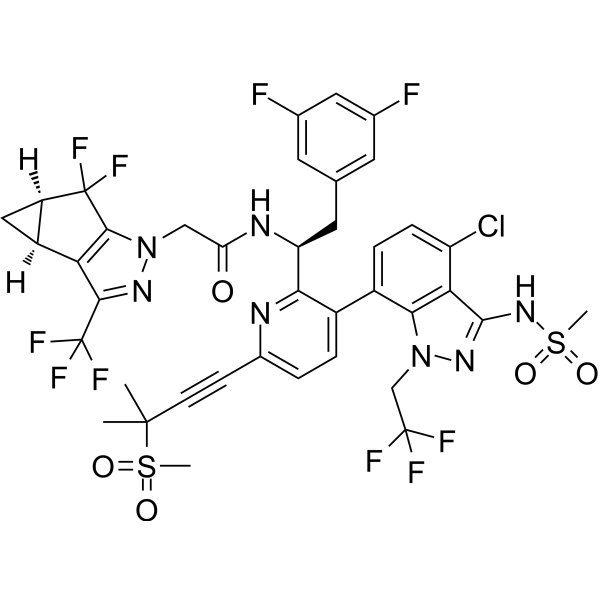
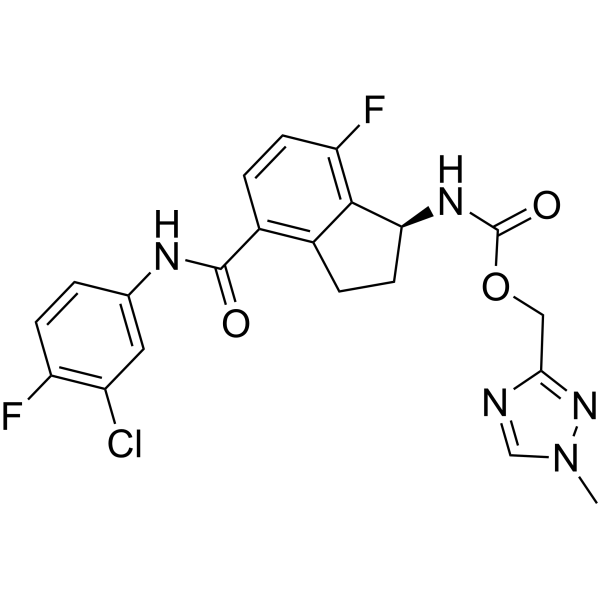
  • HY-111964
    Lenacapavir
    Maximum Cited Publications
    19 Publications Verification

    GS-6207

    HIV Infection
    Lenacapavir (GS-6207) is an HIV-1 capsid inhibitor. Lenacapavir binds to the interface between capsid hexamers and CA monomers, disrupts capsid assembly and viral maturation, inhibits nuclear translocation of HIV-1 DNA, interferes with CA-mediated protein-protein interactions, reduces the formation of 2-LTR circles and pre-integration proviruses, induces aberrant capsids, and decreases the production of mature HIV-1. Lenacapavir exhibits activity against a variety of HIV-1 subtypes and clinical isolates. Lenacapavir is applicable to research related to human immunodeficiency virus type 1 (HIV-1) infection .
    Lenacapavir
  • HY-125474
    Carrageenan
    1 Publications Verification

    Environmental Pollutants HIV HSV Infection Cancer
    Carrageenan is an antiviral and anticancer agent. Carrageenan inhibits herpes simplex virus (HSV), HIV, and hepatitis A virus (HAV) by directly binding to the viral capsid to block the attachment of viruses such as HPV to HSPG factors on the cell surface. Carrageenan delays and arrests cell cycle progression, exhibits cytotoxicity against HeLa cancer cells, and can be applied to studies related to cervical cancer, genital warts, hepatitis A, and other conditions. Carrageenan also induces acute non-immune inflammation, triggers a three-phase inflammatory response involving the release of multiple proinflammatory mediators, and causes persistent edema, hyperalgesia, and neutrophil recruitment in mice .
    Carrageenan
  • HY-120072
    PF-3450074
    5 Publications Verification

    PF-74

    HIV Infection
    PF-3450074 (PF-74) is a specifical inhibitor of HIV-1 capsid protein (CA) and displays a broad-spectrum inhibition of HIV isolates with submicromolar potency (EC50=8-640 nM). PF-3450074 (PF-74) acts at an early stage of HIV-1 infection, inhibits viral replication by directly competing with the binding of CPSF6 and NUP153, and blocks the uncoating, assembly, and the reverse transcription steps of the viral life cycle . CPSF6: nuclear host factors cleavage and polyadenylation specific factor 6; NUP153: nucleoporin 153.
    PF-3450074
  • HY-148348

    HBV Infection
    AB-836 is an orally active HBV capsid inhibitor. AB-836 inhibits viral replication by interacting with HBV core protein. AB-836 can be used in research related to chronic hepatitis B .
    AB-836
  • HY-N0842
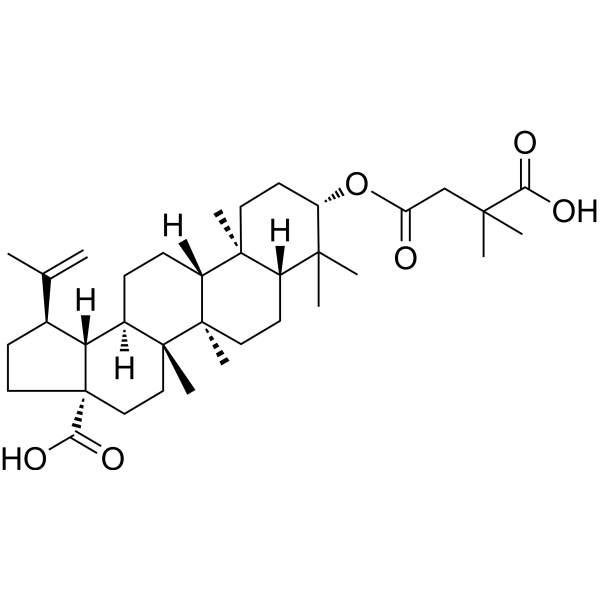
    Bevirimat
    2 Publications Verification

    PA-457; MPC-4326; YK FH312

    Virus Protease Infection
    Bevirimat (PA-457, MPC-4326, YK FH312) is an inhibitor of HIV-1 viral particle maturation.Bevirimat specifically inhibits the final rate-limiting step in Gag processing, preventing the release of the mature capsid protein (CA) from its precursor (CA-SP1), resulting in the production of immature non-infectious viral particles. Bevirimat can be used in HIV-1 infection studies .
    Bevirimat
  • HY-N2036
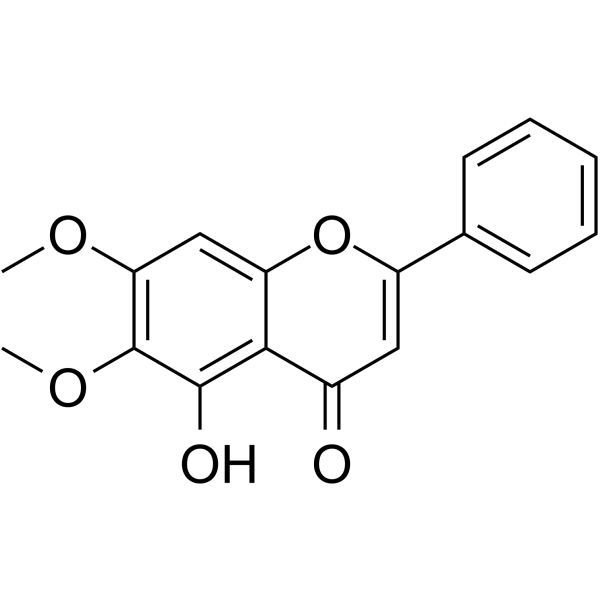
    Mosloflavone
    1 Publications Verification

    TNF Receptor Enterovirus Bacterial Infection
    Mosloflavone is a flavonoid isolated from Scutellaria baicalensis Georgi with ?anti-EV71 activity. Mosloflavone? inhibits VP2 virus replication and protein expression during the initial stage of virus infection and inhibits viral VP2 capsid protein synthesis. Mosloflavone is a promising biocide and inhibits P. aeruginosa virulence and biofilm formation.
    Mosloflavone
  • HY-147255

    ZM-H1505R

    HBV Infection
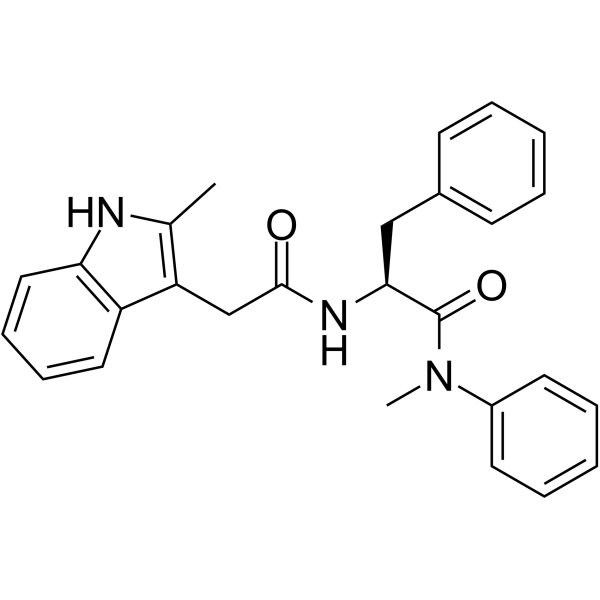
    Canocapavir (ZM-H1505R) is an orally active HBV core protein-targeting antiviral agent. Canocapavir binds to the hydrophobic pocket at the dimer-dimer interface of HBV core protein (HBc), stimulating intracellular accumulation of nonfunctional HBV capsids, disrupting viral replication. Canocapavir interferes with the interaction between HBc and HBV large surface protein, resulting in diminished
    production of empty virionsis. Canocapavir can be used for the research of hepatitis B virus (HBV) infection .
    Canocapavir
  • HY-111964A
    Lenacapavir sodium
    Maximum Cited Publications
    19 Publications Verification

    GS-6207 sodium

    HIV Infection
    Lenacapavir (GS-6207) sodium is an HIV-1 capsid inhibitor. Lenacapavir sodium binds to the interface between capsid hexamers and CA monomers, disrupts capsid assembly and viral maturation, inhibits nuclear translocation of HIV-1 DNA, interferes with CA-mediated protein-protein interactions, reduces the formation of 2-LTR circles and pre-integration proviruses, induces aberrant capsids, and decreases the production of mature HIV-1. Lenacapavir sodium exhibits activity against a variety of HIV-1 subtypes and clinical isolates. Lenacapavir sodium is applicable to research related to human immunodeficiency virus type 1 (HIV-1) infection .
    Lenacapavir sodium
  • HY-19476

    Virus Protease Infection
    AG-7404 is an orally active, irreversible inhibitor of the picornavirus 3C protease. AG-7404 blocks the processing of viral polyproteins, thereby inhibiting viral replication. AG-7404 has synergistic antiviral activity with capsid inhibitors such as V-073 (HY-104074) or BTA798 (HY-106254) and is effective against V-073-resistant variants. AG-7404 is used in the study of enterovirus infections such as poliovirus .
    AG-7404
  • HY-111233

    WIN-51711

    Enterovirus Infection
    Disoxaril (WIN-51711) is an antivirus agent with activity against poliovirus types 1 and 2. Disoxaril inserts into the hydrophobic interior of virus capsid protein VP1 to stabilize virion conformation, inhibits poliovirus uncoating, and prevents viral RNA release and synthesis. Disoxaril can be used for the research of poliovirus infection .
    Disoxaril
  • HY-121663

    Dengue Virus Infection
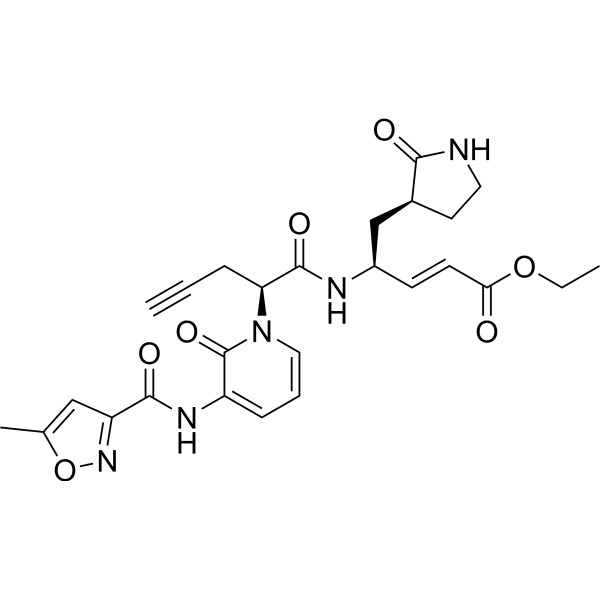
    ST-148 is a novel small molecule compound that has potent inhibitory effects against all four dengue virus serotypes. In the nonlethal AG129 mouse dengue virus infection model, ST-148 significantly reduced viremia and viral load in vital organs and tended to reduce plasma cytokine levels. Compound resistance was associated with the dengue virus capsid (C) gene, and the direct interaction of ST-148 with the C protein was presumed to be achieved through the protein's built-in fluorescence change in the presence of the compound. Therefore, ST-148 appears to interact with the dengue virus C protein and inhibit one or more unique steps of the viral replication cycle.
    ST-148
  • HY-P5694

    HPV Parasite Infection
    Human α-defensin 5 is an antiviral peptide. Human α-defensin 5 blocks infection of non-enveloped viruses, including AdV, HPV, and polyomaviruses (IC50: 0.6-1.25 μM for HPV16). Human α-defensin 5 can bind to the viral capsid and blocks escape of the virus from the endosome. Human α-defensin 5 increases HIV binding to the cell surface. Human α-defensin 5 also has parasiticidal activity .
    Human α-defensin 5
  • HY-177097

    HIV Infection
    Lenacapavir pacfosacil (Example 44) is a viral capsid and nucleocapsid inhibitor. Lenacapavir pacfosacil has antiviral effects. Lenacapavir pacfosacil can be used for research of Retroviridae infection, including an HIV infection .
    Lenacapavir pacfosacil
  • HY-145850

    Enterovirus Infection
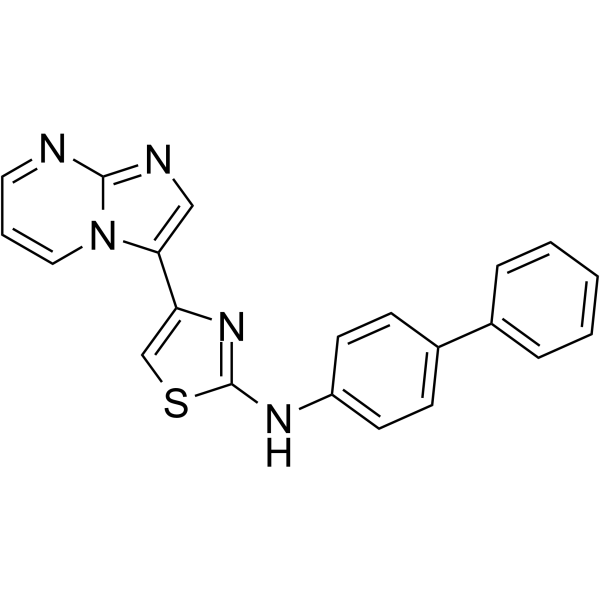
    EV-A71-IN-1 is a human enterovirus A71 (EV-A71) capsid protein inhibitor with an EC50 of 0.27 μM against EV-A71. EV-A71-IN-1 is a capsid binder that blocks the interaction between the viral VP1 and the host receptor hSCARB2. EV-A71-IN-1 inhibits a series of different human enteroviruses without significant cytotoxicity (CC50>56.2 μM) .
    EV-A71-IN-1
  • HY-P10686

    EGFR Cancer
    CH401 peptide is a HER2-derived antigen peptide. After being bound to the artificial viral capsid by a self-assembled β-cyclic peptide, CH401 peptide is encapsulated in a lipid bilayer containing the lipid adjuvant α-GalCer, and can be studied as a self-adjuvant anti-breast cancer vaccine candidate .
    CH401 peptide
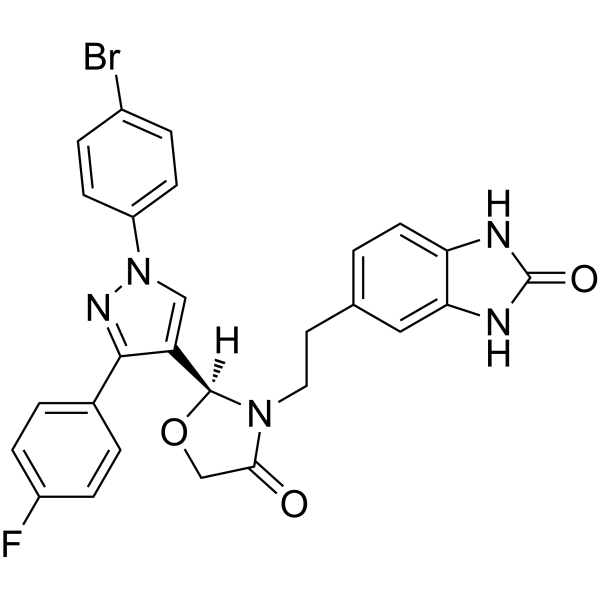
  • HY-148768

    HBV Inflammation/Immunology
    AB-506 is an orally active inhibitor of HBV replication targeting the viral core protein. AB-506 can bind to HBV core protein, accelerate capsid assembly and inhibit HBV pgRNA encapsidation. AB-506 can be used in chronic hepatitis B (CHB) research .
    AB-506
  • HY-117137

    CMV Infection
    GW 275175X is an inhibitor of the terminase complex involved in cleavage and packaging of the unit length DNA into the capsids. GW 275175X exhibits long plasma half-life. GW 275175X is a BDCRB derivative. GW 275175X exhibits anti-HCMV activity through inhibiting maturation of viral DNA .
    GW 275175X
  • HY-120764

    HIV Infection
    PF-46396 is a potent HIV-1 inhibitor with an EC50 value of 0.206 µM. PF-46396 shows antiviral activity. PF-46396 inhibits the processing of capsid (CA)/spacer peptide 1 (SP1) (p25) Gag precursor proteins and blocks maturation of the viral core particle .
    PF-46396
  • HY-12349

    Enterovirus Infection
    H1PVAT is a potent and selective inhibitor of poliovirus serotypes (PV-1, PV-2, PV-3), and inhibits early stage of the replication. H1PVAT interacts with viral capsid directly and protects PV against heat inactivation .
    H1PVAT
  • HY-173278

    HBV Potassium Channel Infection
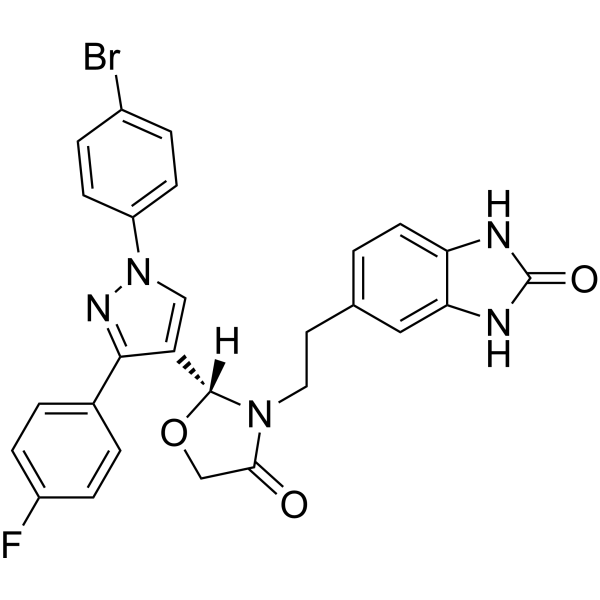
    AIC263282 is a potent Hepatitis B Virus (HBV) capsid assembly modulator with an EC50 of 3.8 nM. AIC263282 shows an IC50 of 61 nM for hERG. AIC263282 exhibits activity against viral replication and hepatitis B surface antigen (HBsAG) on primary human hepatocytes .
    AIC263282
  • HY-116633

    Endogenous Metabolite Infection
    BCM-599 is a HBV (hepatitis B virus) capsid assembly inhibitor with the activity of inhibiting HBV capsid assembly. BCM-599 showed an IC50 value of 0.88μM and a CC50 value of 144μM in HepG2.2.15 cells. When used in combination with lamivudine, BCM-599 showed a synergistic inhibitory effect on viral concentration. BCM-599 can be used as an effective combined inhibition option for HBV infection .
    BCM-599
  • HY-116113

    HIV DNA/RNA Synthesis Infection
    SJP-L-5 is an HIV-1 capsid dissociation inhibitor. SJP-L-5 exhibits inhibitory activity against multiple HIV-1 strains, with an EC50 ranging from 0.16 to 0.97 μg/mL. SJP-L-5 inhibits viral infection by blocking HIV-1 viral DNA entry into the nucleus. SJP-L-5 can be used in HIV-1 infection research .
    SJP-L-5
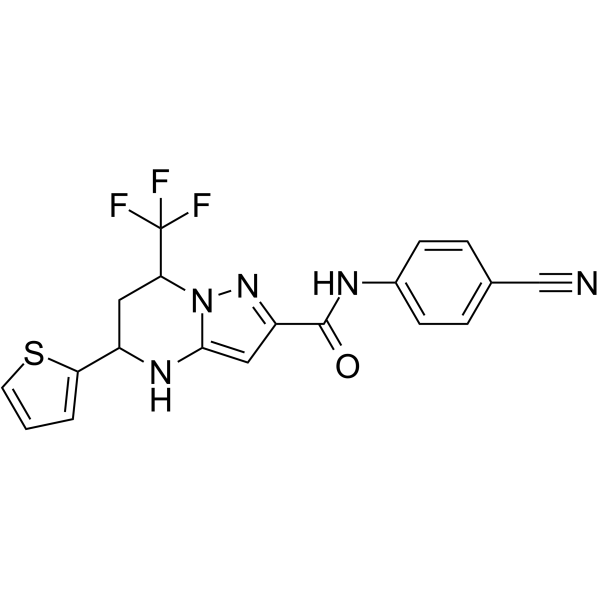
  • HY-170605

    HBV Infection
    BA-AZT1 is the inhibitor for HBV polymerase and sodium taurocholate cotransporting polypeptide (NTCP). BA-AZT1 inhibits the secretion of viral capsid protein HBsAg and HBeAg with IC50 of 0.65 µM and 13.42 µM, inhibits the HBV DNA replication with an IC50 of 0.70 µM .
    BA-AZT1
  • HY-N0842R

    PA-457 (Standard); MPC-4326 (Standard); YK FH312 (Standard)

    Reference Standards Virus Protease Infection
    Bevirimat (Standard) is the analytical standard of Bevirimat. This product is intended for research and analytical applications. Bevirimat (PA-457, MPC-4326, YK FH312) is an inhibitor of HIV-1 viral particle maturation.Bevirimat specifically inhibits the final rate-limiting step in Gag processing, preventing the release of the mature capsid protein (CA) from its precursor (CA-SP1), resulting in the production of immature non-infectious viral particles. Bevirimat can be used in HIV-1 infection studies[1][2][3][4].
    Bevirimat (Standard)
  • HY-P10653

    HCV HIV Infection
    C5A is a microbicidal peptide, anti-hepatitis C virus (HCV), and anti-HIV agent. C5A disrupts the membrane integrity of the HIV virion as well as the integrity of the conical capsid core that surrounds the viral genome. C5A inhibits in vitro infectivity of a broad range of primary HIV isolates in various primary target cells. C5A protects mice against vaginal and rectal HIV challenges .
    C5A
  • HY-147255A

    (S)-ZM-H1505R

    HBV Infection
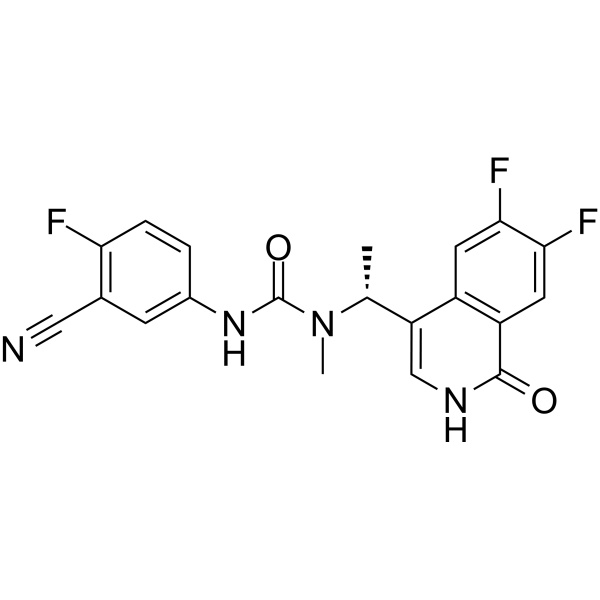
    (S)-Canocapavir is the isomer of Canocapavir (HY-147255A). Canocapavir (ZM-H1505R) is an orally active HBV core protein-targeting antiviral agent. Canocapavir binds to the hydrophobic pocket at the dimer-dimer interface of HBV core protein (HBc), stimulating intracellular accumulation of nonfunctional HBV capsids, disrupting viral replication. Canocapavir interferes with the interaction between HBc and HBV large surface protein, resulting in diminished
    production of empty virionsis. Canocapavir can be used for the research of hepatitis B virus (HBV) infection .
    (S)-Canocapavir
  • HY-180524

    HBV Infection
    CAB7-3 is an orally active HBV capsid assembly modulator (CAM). CAB7-3 exhibits an exceptional antiviral efficacy reducing HBV DNA with an EC50 = 70 nM, CC50 = 32.3 μM in HepDES19 cells. CAB7-3 exhibits significant anti-HBV activity in HBV-integrated HepDES19 (EC50 = 70 nM), HepAD38 (EC50 = 1 nM) and HBV-infected HLCZ01 cells (EC50 = 2 nM), respectively. CAB7-3 effectively reduces Hepatic HBV core protein levels and suppresses viral replication in vivo. CAB7-3 demonstrates a favorable drug-like and safety profile. CAB7-3 can be used for Hepatitis B Virus (HBV) research .
    CAB7-3
  • HY-173121

    HBV Infection
    KR019 is a potent HBV capsid assembly modulator, exhibits potent antiviral activity in HBV-replicating cells. KR019 binds to the hydrophobic pocket at the core protein dimer-dimer interface, misdirecting capsid assembly into genome-free capsids and thereby inhibiting viral replication .
    KR019
  • HY-181920

    PROTACs Dengue Virus Infection
    RPG-01-132 is a DENV capsid protein PROTAC degrader, with a DC50 of 2.4 μM. RPG-01-132 blocks viral assembly, eliminates viral particles, and interferes with the non-structural functions of capsid protein. RPG-01-132 exhibits significant antiviral activity against all four DENV serotypes and the ST148 (HY-121663)-resistant DENV2 mutant strain. RPG-01-132 is applicable to research related to dengue virus infection .
    RPG-01-132
  • HY-176531

    Others Infection
    Antiviral agent 69 (Compound L2) is a capsid protein residue THR155-targeting inhibitor of phytoviral intercellular traffic. Antiviral agent 69 has an excellent antiviral activity against Potato virus Y (PVY) with an EC50 of 128.10 μg/mL for inactivation effect. Antiviral agent 69 effectively decreases viral accumulation in host plant Nicotiana benthamiana, promising for novel pesticide research and development .
    Antiviral agent 69
  • HY-183322

    HPV Infection
    Antiviral agent 83 is a boronic acid-modified Neocryptolepine (HY-E70250) derivative and is an anti-HPV agent. Antiviral agent 83 bind to the viral capsid protein and/or envelope protein, inducing conformational changes that effectively obstruct the interaction between the virus and host cell receptors. Antiviral agent 83 exhibits inhibitory activity against multiple high-risk HPV strains. Antiviral agent 83 inhibits HPV infection in vitro and in vaginal tract in vivo .
    Antiviral agent 83
  • HY-182924

    PROTACs Enterovirus Infection
    Jun15702 is a PROTAC degrader targeting the capsid protein VP1 of enterovirus D68. Jun15702 recruits the Cereblon (CRBN) E3 ligase and activates the ubiquitin-proteasome pathway. Jun15702 inhibits viral entry and exerts inhibitory effects during the early, middle and late stages of viral replication. Jun15702 exhibits antiviral activity against multiple wild-type enterovirus D68 strains, and also shows submicromolar antiviral activity against the Pleconaril (HY-19952)-resistant enterovirus D68 variant rMO-VP1 F159V. Jun15702 can be used in studies related to enterovirus D68 (EV-D68) infection .
    Jun15702

Inquiry Online

Your information is safe with us. * Required Fields.

Salutation


Country or Region *

Applicant Name *


Organization Name *

Department *


Email Address *


Product Name *

Cat. No.


Requested quantity *

Phone Number *


Remarks

Inquiry Online

Inquiry Information

Product Name:
Cat. No.:
Quantity:
MCE Japan Authorized Agent: