



Canocapavir

Based on 1 Customer Validation
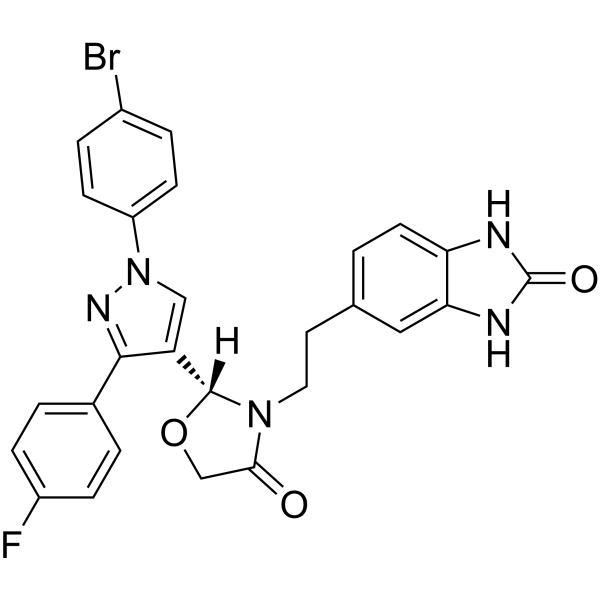
Canocapavir (ZM-H1505R) is an orally active HBV core protein-targeting antiviral agent. Canocapavir binds to the hydrophobic pocket at the dimer-dimer interface of HBV core protein (HBc), stimulating intracellular accumulation of nonfunctional HBV capsids, disrupting viral replication. Canocapavir interferes with the interaction between HBc and HBV large surface protein, resulting in diminished
production of empty virionsis. Canocapavir can be used for the research of hepatitis B virus (HBV) infection.
For research use only. We do not sell to patients.
- Purity : 98.91%
- CAS No.: 2137847-19-7
- Formula: C27H21BrFN5O3
- Molecular Weight:562.39
-
Storage:
4°C, sealed storage, away from moisture and light
* In solvent : -80°C, 6 months; -20°C, 1 month (sealed storage, away from moisture and light)

To place orders, for customer services and technical support, please contact: MedChemExpress USA
Tel: 609-228-6898 E-mail: [email protected] [email protected]


-
 Biological Activity
-
Chemical Information
-
Solvent & Solubility
- Protocols
- Purity & Documentation
- References
-
 Help & FAQs


-
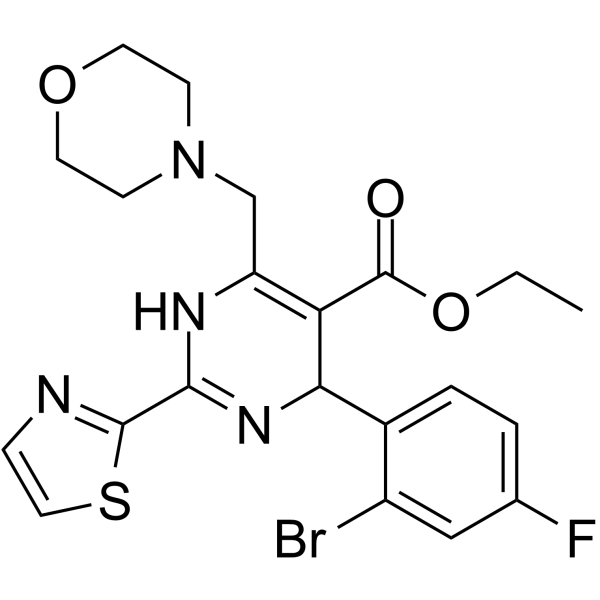
HY-108917
MorphothiadinHBV Inhibitor -
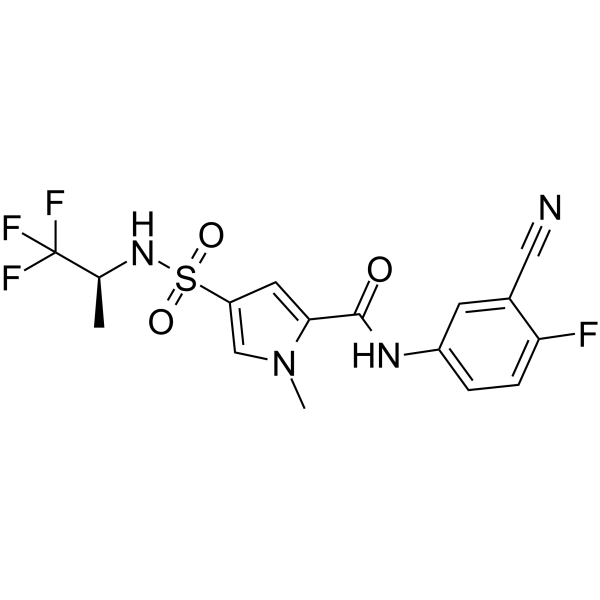
HY-109168
BersacapavirHBV Inhibitor -
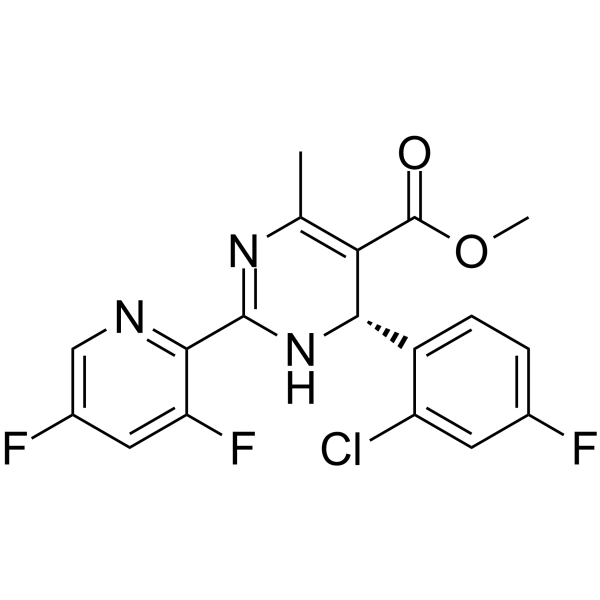
HY-100029
Bay 41-4109HBV Inhibitor -
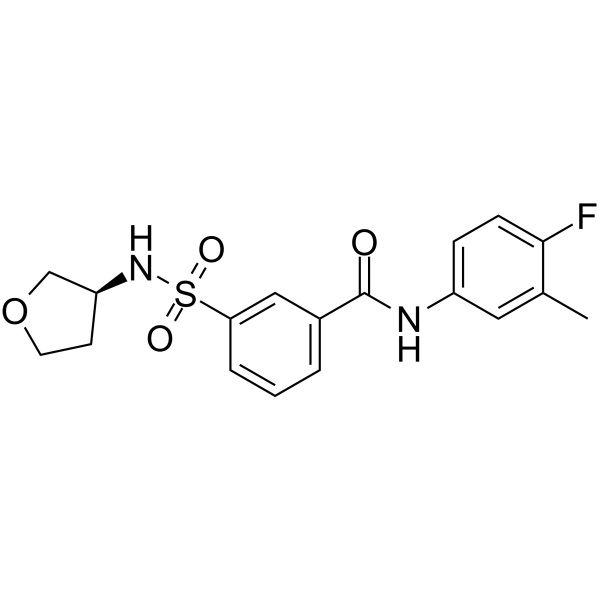
HY-112564
JNJ-632HBV CAM -
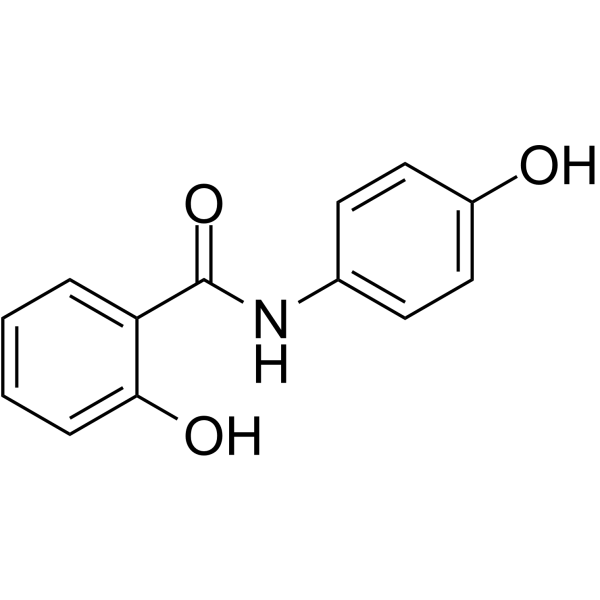
HY-B2116
OsalmidHBV Inhibitor -
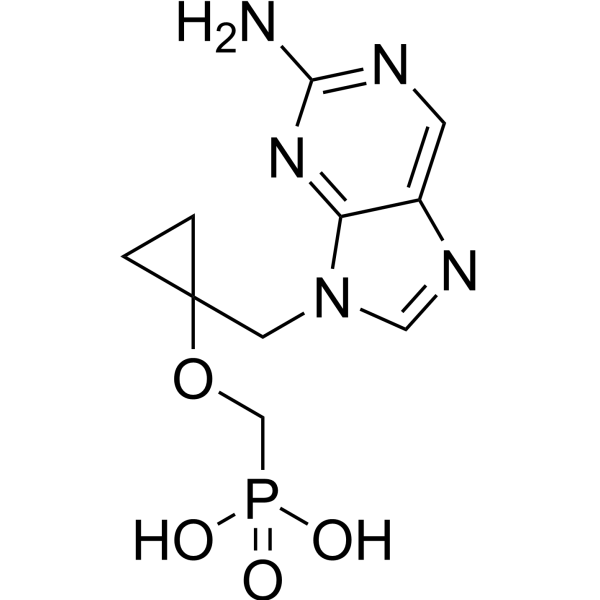
HY-19447
BesifovirHBV Inhibitor -
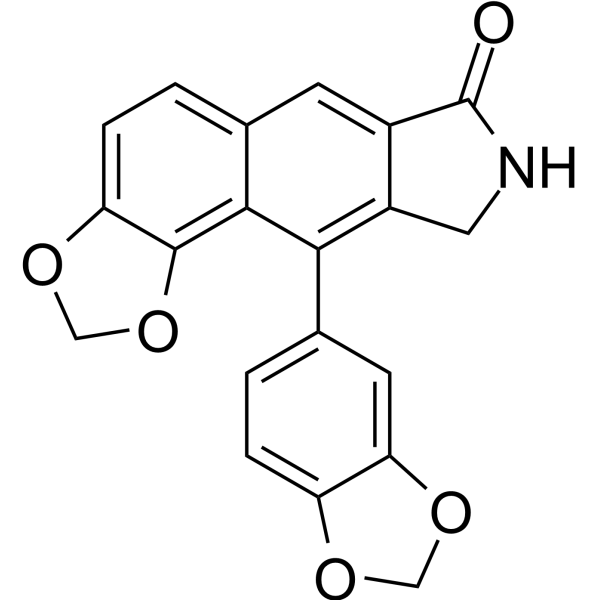
HY-16679
Helioxanthin derivative 5-4-2HBV Inhibitor -
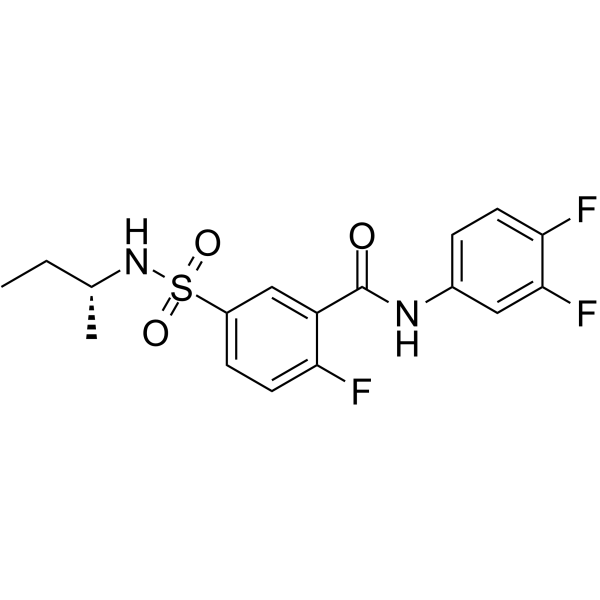
HY-112142
AB-423 -
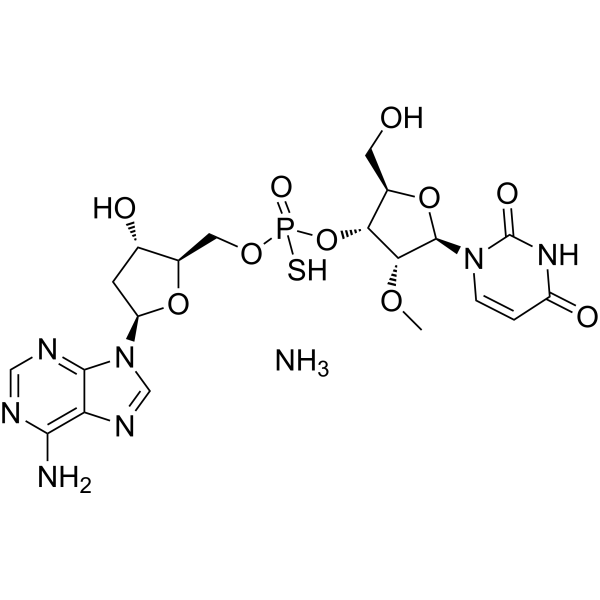
HY-101954A
Inarigivir ammoniumHBV Inhibitor -
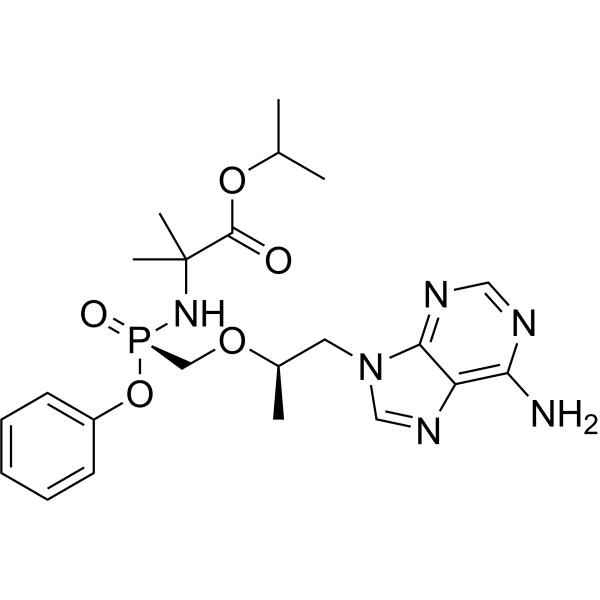
HY-137453
Tenofovir amibufenamideAntiviral Agent -
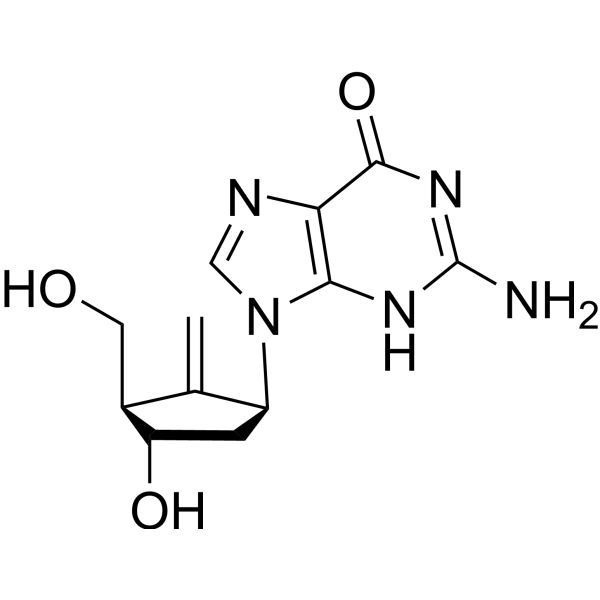
HY-13623
EntecavirHBV Inhibitor -
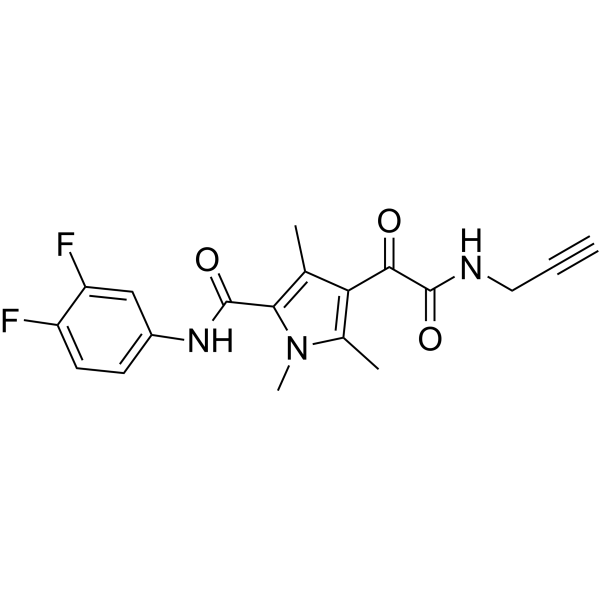
HY-124614
GLP-26HBV Capsid Effector


Biological Activity
Description
production of empty virionsis. Canocapavir can be used for the research of hepatitis B virus (HBV) infection[1][2].
In Vitro
Canocapavir (135 ng/mL) potently inhibits pan-genotypic HBV replication with a an EC50 of 135 ng/mL[1].
Canocapavir (0.160-5.000 μM; 2 days) potently inhibits HBV replication in HepAD38 Tet-off cells with an EC50 of 0.1185 μM and lacks significant cytotoxicity at concentrations up to 24 μM[2].
Canocapavir (0.02-2 μM; 4 days) dose-dependently inhibits HBV replication in pHBV1.1-transfected HepG2 cells[2].
Canocapavir (3 days) does not affect HBV transcription in HepAD38 Tet-off cells[2].
Canocapavir (0.02-2 μM; 6 days) promotes accumulation of morphologically normal intracellular empty capsids and inhibits HBV pgRNA encapsidation in HepAD38 Tet-off cells[2].
Canocapavir (0.02-2 μM; 2 days) inhibits naked capsid egress and promotes intracellular capsid accumulation in HBc-transfected HepG2 cells[2].
Canocapavir (2 μM; 2 days) inhibits naked capsid egress in HBc-transfected HepG2 cells[2].
Canocapavir (3 μM; 4 days) inhibits empty virion secretion in pHBV1.1-Δpol-transfected Huh7 cells without altering extracellular HBsAg or LHBsAg levels[2].
Canocapavir (3 μM) interrupts the interaction between HBc and LHBs in co-transfected HEK 293T cells[2].
MedChemExpress (MCE) has not independently confirmed the accuracy of these methods. They are for reference only.
-
Cell Line:HepAD38 Tet-off cells
-
Concentration:0.02, 0.2, 2 μM
-
Incubation Time:6 days
-
Result:Increased the formation of the intracellular capsid.
In Vivo
Clinical Trial
| NCT Number | Sponsor | Condition | Start Date |
Phase

|
|---|---|---|---|---|
| NCT01329991 | Plexxikon| | 2011-05 | PHASE1 |


Chemical Information
-
CAS No. 2137847-19-7
-
Appearance Solid
-
Molecular Weight 562.39
-
Formula C27H21BrFN5O3
-
Color White to off-white
-
SMILES
O=C1NC2=CC=C(C=C2N1)CCN3[C@@](OCC3=O)([H])C4=CN(C5=CC=C(C=C5)Br)N=C4C6=CC=C(C=C6)F
-
Synonyms
ZM-H1505R
-
Shipping
Room temperature in continental US; may vary elsewhere.
-
Storage
4°C, sealed storage, away from moisture and light
* In solvent : -80°C, 6 months; -20°C, 1 month (sealed storage, away from moisture and light)


Solvent & Solubility
In Vitro:
DMSO : 300 mg/mL (533.44 mM; ultrasonic and warming and heat to 60°C; Hygroscopic DMSO has a significant impact on the solubility of product, please use newly opened DMSO)
Please refer to the solubility information to select the appropriate solvent. Once prepared, please aliquot and store the solution to prevent product inactivation from repeated freeze-thaw cycles.
Storage method and period of stock solution: -80°C, 6 months; -20°C, 1 month (sealed storage, away from moisture and light). When stored at -80°C, please use it within 6 months. When stored at -20°C, please use it within 1 month.
Please refer to the solubility information to select the appropriate solvent. Once prepared, please aliquot and store the solution to prevent product inactivation from repeated freeze-thaw cycles.
Storage method and period of stock solution: -80°C, 6 months; -20°C, 1 month (sealed storage, away from moisture and light). When stored at -80°C, please use it within 6 months. When stored at -20°C, please use it within 1 month.
Concentration (start) × Volume (start) = Concentration (final) × Volume (final)
In Vivo:
Select the appropriate dissolution method based on your experimental animal and administration route.
- For the following dissolution methods, please ensure to first prepare a clear stock solution using an In Vitro approach and then sequentially add co-solvents:
- To ensure reliable experimental results, the clarified stock solution can be appropriately stored based on storage conditions. As for the working solution for In Vivo experiments, it is recommended to prepare freshly and use it on the same day.
- The percentages shown for the solvents indicate their volumetric ratio in the final prepared solution. If precipitation or phase separation occurs during preparation, heat and/or sonication can be used to aid dissolution.
Add each solvent one by one: 10% DMSO 40% PEG300 5% Tween-80 45% Saline
Solubility: ≥ 7.5 mg/mL (13.34 mM); Clear solution
This protocol yields a clear solution of ≥ 7.5 mg/mL (saturation unknown).
Taking 1 mL working solution as an example, add 100 μL DMSO stock solution (75.0 mg/mL) to 400 μL PEG300, and mix evenly; then add 50 μL Tween-80 and mix evenly; then add 450 μL Saline to adjust the volume to 1 mL.
Preparation of Saline: Dissolve 0.9 g sodium chloride in ddH₂O and dilute to 100 mL to obtain a clear Saline solution.
In Vivo Dissolution Calculator
Please enter the basic information of animal experiments:
-
-
-
-
Recommended: Prepare an additional quantity of animals to account for potential losses during experiments.
Please enter your animal formula composition:
-
%DMSO +
Recommended: Keep the proportion of DMSO in working solution below 2% if your animal is weak.
-
%+
-
+%Tween-80 + +
-
%Saline +
The co-solvents required include: DMSO, . All of co-solvents are available by MedChemExpress (MCE). , Tween 80. All of co-solvents are available by MedChemExpress (MCE).
Working solution concentration: 0.22 mg/mL
Method for preparing stock solution: mg drug dissolved in μL DMSO. Stock solution concentration: mg/mL. * In solvent : -80°C, 6 months; -20°C, 1 month (sealed storage, away from moisture and light)
1. Take μL DMSO stock solution;
2. Add μL .
μL , mix evenly;
3. Then add μL Tween 80, mix evenly;
4. Then add μL
Please ensure that the stock solution in the first step is dissolved to a clear state, and add co-solvents in sequence. You can use ultrasonic heating (ultrasonic cleaner, recommended frequency 20-40 kHz), vortexing, etc. to assist dissolution.


Purity & Documentation
-
Data Sheet (279 KB)
-
SDS (254 KB)
- English - EN (254 KB)
- Français - FR (254 KB)
- Deutsch - DE (254 KB)
- Norwegian - NO (254 KB)
- Español - ES (254 KB)
- Swedish - SV (254 KB)
- Italian - IT (254 KB)
- Korean - KR (254 KB)
- Portuguese - PT (254 KB)
-
Handling Instructions (2659 KB)
References
[1]. Jia H, et al. Safety, tolerability, pharmacokinetics, and antiviral activity of the novel core protein allosteric modulator ZM-H1505R (Canocapavir) in chronic hepatitis B patients: a randomized multiple-dose escalation trial. BMC Med. 2023;21(1):98. Published 2023 Mar 16. [Content Brief]
[2]. Zheng Y, et al. Canocapavir Is a Novel Capsid Assembly Modulator Inducing a Conformational Change of the Linker Region of HBV Core Protein. Viruses. 2023;15(5):1195. Published 2023 May 18. [Content Brief]


Complete Stock Solution Preparation Table
Please refer to the solubility information to select the appropriate solvent. Once prepared, please aliquot and store the solution to prevent product inactivation from repeated freeze-thaw cycles.
Storage method and period of stock solution: -80°C, 6 months; -20°C, 1 month (sealed storage, away from moisture and light). When stored at -80°C, please use it within 6 months. When stored at -20°C, please use it within 1 month.
| Optional Solvent | Concentration Solvent Mass | 1 mg | 5 mg | 10 mg | 25 mg |
|---|---|---|---|---|---|
| DMSO | 1 mM | 1.7781 mL | 8.8906 mL | 17.7813 mL | 44.4531 mL |
| 5 mM | 0.3556 mL | 1.7781 mL | 3.5563 mL | 8.8906 mL | |
| 10 mM | 0.1778 mL | 0.8891 mL | 1.7781 mL | 4.4453 mL | |
| 15 mM | 0.1185 mL | 0.5927 mL | 1.1854 mL | 2.9635 mL | |
| 20 mM | 0.0889 mL | 0.4445 mL | 0.8891 mL | 2.2227 mL | |
| 25 mM | 0.0711 mL | 0.3556 mL | 0.7113 mL | 1.7781 mL | |
| 30 mM | 0.0593 mL | 0.2964 mL | 0.5927 mL | 1.4818 mL | |
| 40 mM | 0.0445 mL | 0.2223 mL | 0.4445 mL | 1.1113 mL | |
| 50 mM | 0.0356 mL | 0.1778 mL | 0.3556 mL | 0.8891 mL | |
| 60 mM | 0.0296 mL | 0.1482 mL | 0.2964 mL | 0.7409 mL | |
| 80 mM | 0.0222 mL | 0.1111 mL | 0.2223 mL | 0.5557 mL | |
| 100 mM | 0.0178 mL | 0.0889 mL | 0.1778 mL | 0.4445 mL |


Canocapavir Related Classifications
HY-147255 Related Classifications
 Powered by Bioz