1. Search Result
Search Result
Results for "

xenograft model of hepatocellular carcinoma

" in MedChemExpress (MCE) Product Catalog:

26

Inhibitors & Agonists

1

Peptides

Cat. No. Product Name Target Research Areas Chemical Structure
  • HY-16706A
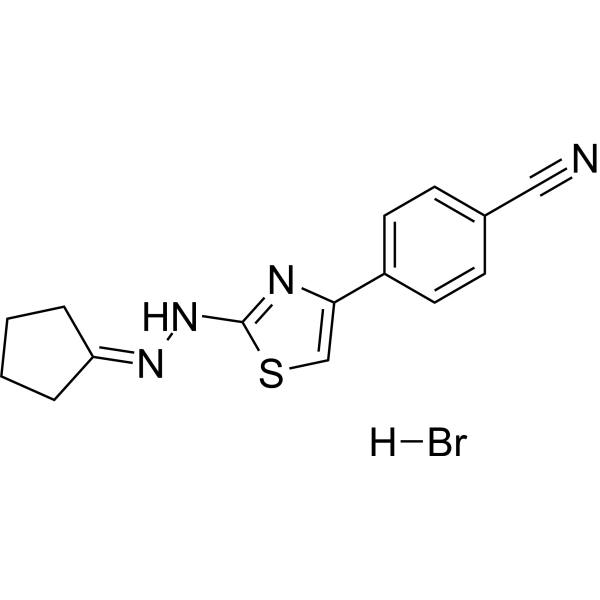
    Remodelin hydrobromide
    15+ Cited Publications

    Histone Acetyltransferase Cancer
    Remodelin hydrobromide is an orally active and selective inhibitor of acetyltransferase NAT10. Remodelin hydrobromide inhibits NAT10 activitity and slows DNA replication and suppresses growth of prostate cancer cells. Remodelin hydrobromide inhibits the growth of prostate cancer and hepatocellular carcinoma in xenograft model. Remodelin hydrobromide enhances the healthspan in hutchinson-gilford progeria syndrome (HGPS) mouse model .
    Remodelin hydrobromide
  • HY-16706
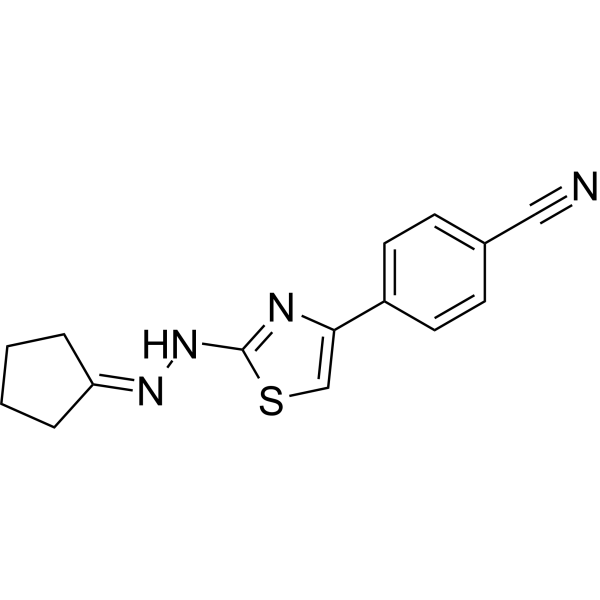
    Remodelin
    15+ Cited Publications

    Histone Acetyltransferase Cancer
    Remodelin is an orally active and selective inhibitor of acetyltransferase NAT10. Remodelin inhibits NAT10 activitity and slows DNA replication and suppresses growth of prostate cancer cells. Remodelin inhibits the growth of prostate cancer and hepatocellular carcinoma in xenograft model. Remodelin enhances the healthspan in hutchinson-gilford progeria syndrome (HGPS) mouse model .
    Remodelin
  • HY-150072

    PKA Cancer
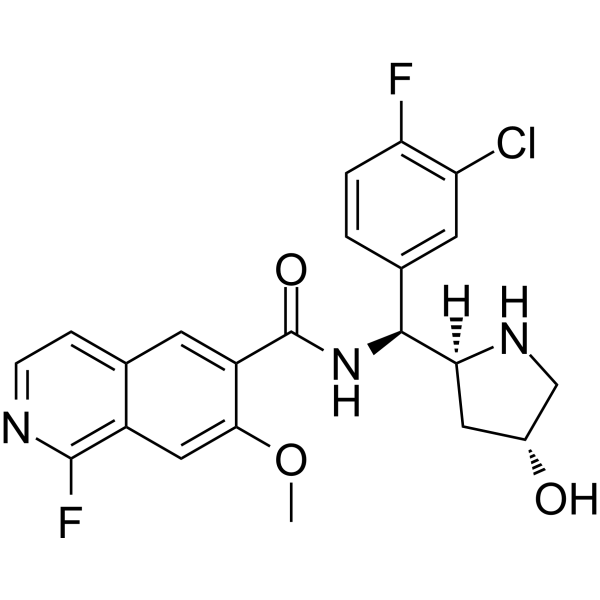
    DS89002333 is an orally active and potent PRKACA inhibitor, with an IC50 of 0.3 nM. DS89002333 shows good anti-tumor activity in an FL-HCC patient-derived xenograft model (expressing the DNAJB1-PRKACA fusion gene). DS89002333 can be used in study of fibrolamellar hepatocellular carcinoma (FL-HCC) .
    DS89002333
  • HY-168016

    PROTACs YAP Cancer
    PROTAC YAP degrader-1 is a VHL-recruiting PROTAC degrader (DC50=8.2 μM) and antiproliferative agent that targets YAP. PROTAC YAP degrader-1 recruits the E3 ligase VHL and binds to VHL to form a ternary complex containing YAP. PROTAC YAP degrader-1 inhibits the nuclear localization of YAP in cancer cells, reduces YAP/TEAD-mediated transcription, and induces TAZ protein degradation. PROTAC YAP degrader-1 reduces the oncogenic activity of YAP and exerts antiproliferative effects in the Huh7 xenograft mouse model. PROTAC YAP degrader-1 can be used for the research of hepatocellular carcinoma and mesothelioma .
    PROTAC YAP degrader-1
  • HY-P11228

    PROTACs Apoptosis DNA/RNA Synthesis Cancer
    FPP29 is a potent peptide-based FOXM1 PROTAC degrader. FPP29 induces ubiquitination and degradation of FOXM1. FPP29 inhibits FOXM1 via the ubiquitin-proteasome degradation pathway. FPP29 induces Apoptosis. FPP29 suppresses tumor growth in hepatocellular carcinoma xenograft models. FPP29 can be used in the research of hepatocellular carcinoma (cell-penetrating peptide: (HY-P0133); VHL ligase ligand: (HY-P11493); linker: (HY-W013664); FOXM1 ligand: (HY-P11494)) .
    FPP29
  • HY-175646

    Acyltransferase mTOR Ribosomal S6 Kinase (RSK) Apoptosis Cancer
    AGPAT4-IN-1 (Compound CL26) is a covalent AGPAT4 inhibitor with an IC50 of 795 nM. AGPAT4-IN-1 covalently binds to AGPAT4 at Cys 228 and significantly inhibits acyltransferase activity, LPA-to-PA conversion and downstream mTOR/S6K pathways. AGPAT4-IN-1 sensitizes hepatocellular carcinoma (HCC) tumors to Sorafenib (HY-10201) and significantly induces apoptosis with a synergistic response. AGPAT4-IN-1 has antitumor activity and reduces tumorigenicity and stemness in HCC xenograft mouse models .
    AGPAT4-IN-1
  • HY-176508

    Casein Kinase Cancer
    KDX1381 is a bivalent CK2α inhibitor (IC50: 17 nM, KD: 54 nM). KDX1381 has antitumor activity in mouse 786-O and A375 tumor xenograft models. KDX1381 combined with VEGFR inhibitors or DNA damaging agents enhances antitumor efficacy in mouse hepatocellular carcinoma and glioma models .
    KDX1381
  • HY-179395

    YAP Cancer
    TEAD-IN-23 (Compound 22) is an efficient pan-TEAD inhibitor with an IC50 of 10 nM. TEAD-IN-23 exhibits potent anti-proliferative activity in both NCI-H226 and MSTO-211H. TEAD-IN-23 causes complete tumor regression in the MSTO-211H xenograft tumor model. TEAD-IN-23 can be used for the study of mesothelioma and hepatocellular carcinoma .
    TEAD-IN-23
  • HY-163301

    Reactive Oxygen Species (ROS) Cancer
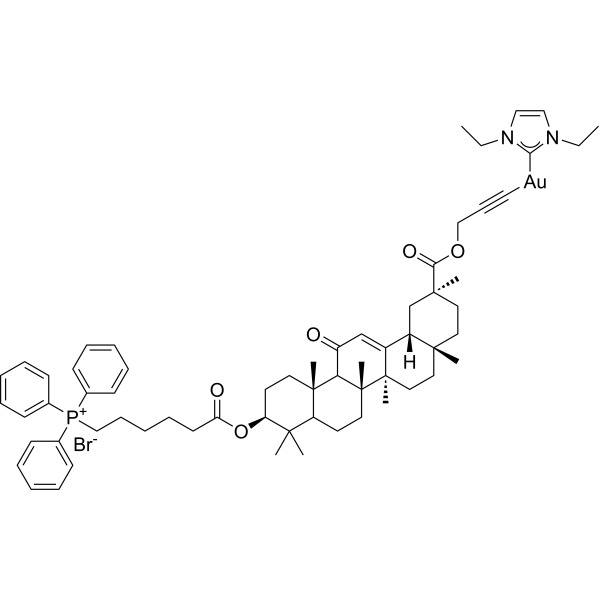
    Antitumor agent-139 (compound 9b) is a liver - and mitochondria-targeting gold(I) complexe, and produces reactive oxygen species (ROS) and facilitates DNA excretion. Antitumor agent-139 inhibits tumor growth in a patient-derived xenograft model of hepatocellular carcinoma .
    Antitumor agent-139
  • HY-178918

    Acetyl-CoA Carboxylase Cancer
    XZA-1 is a 3-hydroxyacyl-coenzyme A dehydrogenase (HADH) activator. XZA-1 increases the intracellular level of acetoacetyl-CoA, which in turn induces acetoacetylation modification of Chromobox Protein Homolog 4 (CBX4) at lysine 106 (K106). XZA-1 exhibits antitumor effects in a xenograft model of human hepatocellular carcinoma SMMC7721 cells overexpressing CBX4. XZA-1 can be used for the study of hepatocellular carcinoma .
    XZA-1
  • HY-178098

    YAP Cancer
    TEAD-IN-21 is a potent and orally active pan-TEAD inhibitor with an IC50 of 3 nM. TEAD-IN-21 effectively inhibited the proliferation of Huh-7 cells. TEAD-IN-21 selectively downregulates TEAD-dependent downstream genes. TEAD-IN-21 achieves tumor regression in a liver cancer-derived tumor xenograft mice model. TEAD-IN-21 can be used in the research of hepatocellular carcinoma (HCC) .
    TEAD-IN-21
  • HY-161515

    NAMPT Epigenetic Reader Domain Cancer
    BRD4/NAMPT-IN-1 (Compound A2) shows strong inhibitory effects on NAMPT and BRD4 (IC50=35 nM (NAMPT) and 58 nM (BRD4)). BRD4/NAMPT-IN-1 inhibits the growth and migration of hepatocellular carcinoma cells and promotes apoptosis. BRD4/NAMPT-IN-1 also shows potent anticancer effects in HCCLM3 xenograft mouse model, with no obvious toxic effects .
    BRD4/NAMPT-IN-1
  • HY-177796

    Apoptosis CDK Caspase PARP Cancer
    TMLB-C16 is a potent and orally active B3GAT3 inhibitor with a KD of 3.962 μM. TMLB-C16 suppresses proliferation and migration, and induces cell cycle arrest and apoptosis in MHCC-97H (IC50 = 6.53 μM) and HCCLM3 cells (IC50 = 6.22 μM). TMLB-C16 inhibits tumor growth in both MHCC-97H and HCCLM3 xenograft tumor mouse models without causing obvious toxicity. TMLB-C16 can be used for hepatocellular carcinoma research .
    TMLB-C16
  • HY-177268

    Apoptosis Reactive Oxygen Species (ROS) PARP Caspase Akt Cancer
    CHNQD-01426 (Compound 4a) is an anticancer agent. CHNQD-01426 has cytotoxic activities against cancer cells. CHNQD-01426 significantly inhibits hepatocellular carcinoma cells proliferation via arresting S and G2/M phase cell cycle and induces apoptosis by inducing ROS production and elevating apoptosis-related proteins expression. CHNQD-01426 potently inhibits tumor growth in HepG2 xenograft mice model .
    CHNQD-01426
  • HY-179033

    Nuclear Hormone Receptor 4A/NR4A Apoptosis ASK1 JNK p38 MAPK Cancer
    Nur77 antagonist 2 (Compound 12b) is an orally active Nur77 antagonist with a KD value of 0.42 μM. Nur77 antagonist 2 exhibits proliferative activity on liver cancer cells. Nur77 antagonist 2 stabilizes Nur77 by inhibiting its ubiquitin-proteasomal degradation, leading to Nur77-dependent apoptosis via the ASK1-JNK/p38 pathway. Nur77 antagonist 2 inhibits tumor growth in the HCCLM3 xenograft model. Nur77 antagonist 2 can be used for the study of hepatocellular carcinoma (HCC) .
    Nur77 antagonist 2
  • HY-W717425

    SHP1 STAT Caspase Apoptosis Bcl-2 Family CDK Survivin Drug Derivative Cancer
    SC-60 is a derivative of Sorafenib (HY-10201). SC-60 exerts its anti-tumor effect by activating the phosphatase activity of SHP-1, thereby inhibiting the STAT3 signaling pathway. SC-60 exhibits strong proliferation inhibitory activity in various hepatocellular carcinoma (HCC) cell lines. SC-60 downregulates the expression of downstream anti-apoptotic proteins (such as Bcl-2, Cyclin D1, Survivin), ultimately inducing caspase-dependent apoptosis. SC-60 significantly inhibits tumor growth in xenograft tumor models. SC-60 can be used for the study of HCC .
    SC-60
  • HY-145836

    FGFR Cancer
    FGFR4-IN-8 (Compound 7v) is an ATP-competitive, highly selective covalent inhibitor of wild-type and gatekeeper mutant FGFR4. FGFR4-IN-8 exhibits excellent potency against FGFR4, FGFR4 V550L, FGFR4 V550M and FGFR4 C552S with IC50s of 0.5, 0.25, 1.6, 931 nM, respectively. FGFR4-IN-8 exhibits potent antiproliferative activity against Hep3B hepatocellular carcinoma cells with the IC50 value of 29 nM. FGFR4-IN-8 demonstrates modest in vivo antitumor efficacy in nude mice bearing the Huh-7 xenograft model .
    FGFR4-IN-8
  • HY-155046

    FGFR Cancer
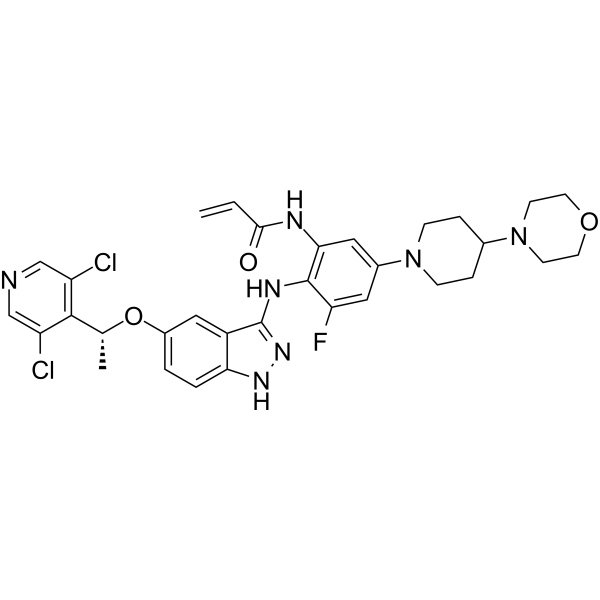
    FGFR4-IN-14 (Compound 27i) is a FGFR4 inhibitor (IC50: 2.4 nM. FGFR4-IN-14 inhibits the proliferation of V550L and N535K mutant strains, with IC50s of 21 nM, 2.5 nM, 171 nM against huh7, BaF3/ETV6-FGFR4-V550L and BaF3/ETV6-FGFR4-N535K cells respectively. FGFR4-IN-14 has potent antitumor efficacy in the Huh7 xenograft model. FGFR4-IN-14 can be used for research of hepatocellular carcinoma (HCC) .
    FGFR4-IN-14
  • HY-183078

    Deubiquitinase Cancer
    P6620 is an orally active USP7 inhibitor. P6620 specifically binds to USP7 and disrupts its interaction with LRRC41. P6620 exhibits anticancer activity against hepatocellular carcinoma. P6620 enhances the antitumor effect of Lenvatinib (HY-10981) in xenograft mouse models. P6620 can be used for the research of hepatocellular carcinoma .
    P6620
  • HY-133151

    CXCR Cancer
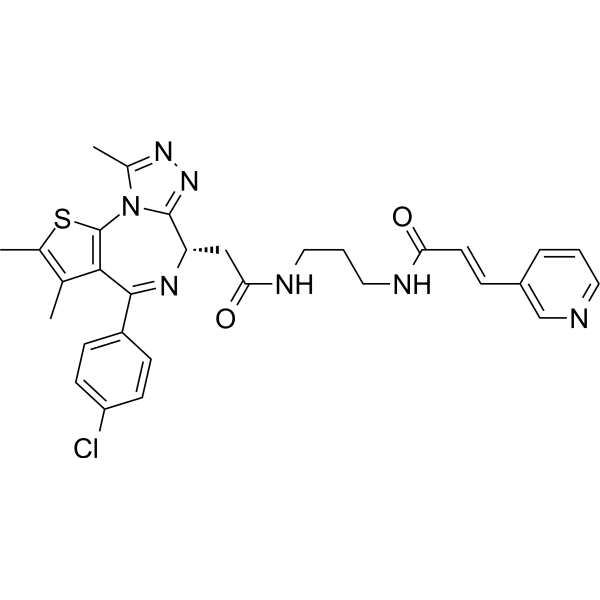
    CXCR6 antagonist 1 (Compound 81) is an orally active CXCR6 antagonist. CXCR6 antagonist 1 inhibits the CXCR6 receptor signaling pathway, including β-arrestin recruitment and Forskolin (HY-15371)-induced cAMP production. CXCR6 antagonist 1 reduces tumor growth in a mouse xenograft model of hepatocellular carcinoma. CXCR6 antagonist 1 can be used in research related to hepatocellular carcinoma .
    CXCR6 antagonist 1
  • HY-181675

    Microtubule/Tubulin Apoptosis Bcl-2 Family Caspase Cancer
    CHNQD-01522 is a microtubule inhibitor targeting the colchicine binding site on β-tubulin. CHNQD-01522 binds to the colchicine binding site on β-tubulin, inhibits microtubule polymerization, and evades P-glycoprotein transport in cancer cells. CHNQD-01522 inhibits proliferation, suppresses tumor cell colony formation, arrests cell cycle in G2/M phases, and induces apoptosis in cancer cells. CHNQD-01522 upregulates of Bax and activation of caspase-9 and caspase-3. CHNQD-01522 shows anti-tumor efficacy in subcutaneous and orthotopic hepatocellular carcinoma xenograft tumor models. CHNQD-01522 can be used for the research of hepatocellular carcinoma .
    CHNQD-01522
  • HY-119618

    Endogenous Metabolite Cancer
    R1498 is a multi-target kinase inhibitor with anti-angiogenic and anti-proliferative activities. R1498 mainly targets targets such as Aurora kinase and VEGFR2, which are associated with tumor development. R1498 showed moderate in vitro growth inhibition in a variety of tumor cells, with IC50 values in the micromolar range. R1498 showed anti-tumor efficacy superior to sorafenib in a variety of gastric cancer and hepatocellular carcinoma xenograft models, with tumor growth inhibition rates exceeding 80%, and tumor shrinkage was observed in some models. R1498 showed a 10-30% tumor shrinkage rate in three xenograft models derived from human primary gastric cancer tumors, further demonstrating its inhibitory potential. R1498 effectively inhibited Aurora A activity in vivo and reduced tumor vascularization .
    R1498
  • HY-182037

    DNA/RNA Synthesis Pyruvate Kinase Cancer
    Multi-target kinase-IN-9 is a multi-target enzyme inhibitor with antiproliferative and antiangiogenic activities, and exhibits remarkable selectivity against hepatocellular carcinoma cells. By broadly binding to the active sites or ATP-binding regions of multiple key enzymes including DNA polymerase β, Pyruvate Kinase M2 (PKM2), Multi-target kinase-IN-9 comprehensively disrupts DNA repair and replication, glycolysis, chromatin dynamics and transcriptional programs, and blocks the self-renewal of cancer stem cells. Multi-target kinase-IN-9 induces genomic instability, lysosomal dysfunction and autophagic flux impairment, thereby triggering tumor cell death, effectively inhibiting tumor proliferation, invasion, metastasis and angiogenesis, and significantly reducing tumor volume in xenograft models. Multi-target kinase-IN-9 is applicable to hepatocellular carcinoma-related research .
    Multi-target kinase-IN-9
  • HY-181152

    FGFR Cancer
    FGFR3-IN-11(compound B11) is a Fibroblast growth factor receptor 3 (FGFR3) inhibitor with a Ka value of 4.8 μM. FGFR3-IN-11 induces apoptosis, suppresses colony formation, and causes dose-dependent G0/G1 cell cycle arrest in cancer cells. FGFR3-IN-11 exerts anticancer activity against cancer cells with minimal toxicity toward normal hepatocytes and demonstrates tumor growth suppression in xenograft mouse models. FGFR3-IN-11 can be used for the research of hepatocellular carcinoma .
    FGFR3-IN-11
  • HY-179381

    FGFR Cancer
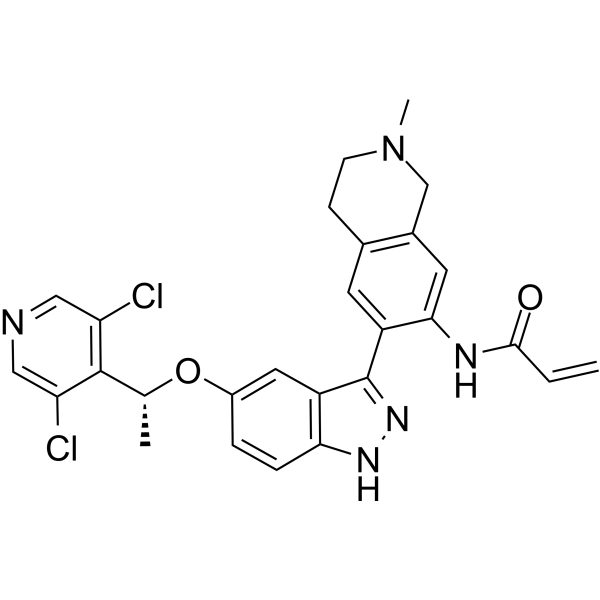
    FGFR4-IN-24 is a selective irreversible covalent FGFR4 inhibitor (IC50 = 1.2 nM). FGFR4-IN-24 shows much weaker activity against the other three FGFR family kinases (FGFR1-3). FGFR4-IN-24 inhibits the FGF19/FGFR4 signaling pathway, effectively suppressing the proliferation of the HuH-7 HCC cell line (GI50 = 17 nM). FGFR4-IN-24 exhibits significant antitumor activity in a HuH-7 mouse xenograft model. FGFR4-IN-24 can be used for the research of hepatocellular carcinoma .
    FGFR4-IN-24
  • HY-180281

    Zinc Finger Protein Apoptosis PI3K Akt Cancer
    PLAGL2-IN-1 is a inhibitor of pleiomorphic adenoma-like protein 2 (PLAGL2) with a Kd of 2.23 µM. PLAGL2-IN-1 suppresses PLAGL2 transcriptional activity, induces G0/G1 cell cycle arrest, and apoptosis, thereby inhibiting hepatocellular carcinoma (HCC) cell proliferation. PLAGL2-IN-1 disrupts extracellular matrix organization and suppresses the PI3K-AKT pathway by reducing AKT phosphorylation. PLAGL2-IN-1 inhibits tumor growth in an HCCLM3 xenograft mouse model. PLAGL2-IN-1 can be used for the research of HCC .
    PLAGL2-IN-1

Inquiry Online

Your information is safe with us. * Required Fields.

Salutation


Country or Region *

Applicant Name *


Organization Name *

Department *


Email Address *


Product Name *

Cat. No.


Requested quantity *

Phone Number *


Remarks

Inquiry Online

Inquiry Information

Product Name:
Cat. No.:
Quantity:
MCE Japan Authorized Agent: