1. Epigenetics
  2. Histone Acetyltransferase
  3. Remodelin

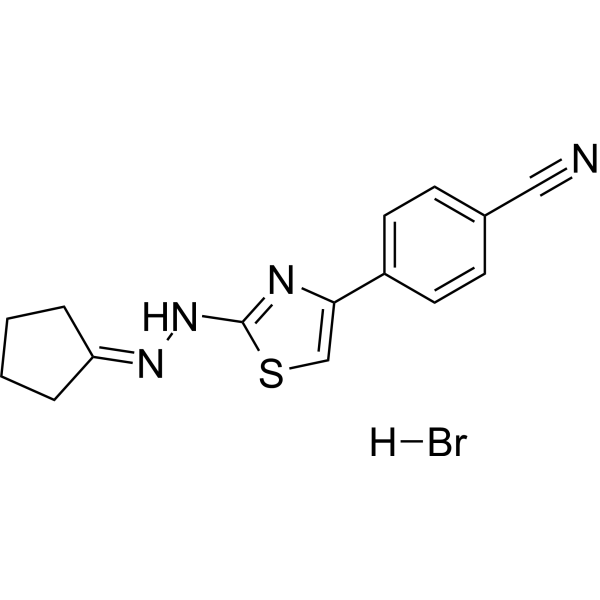
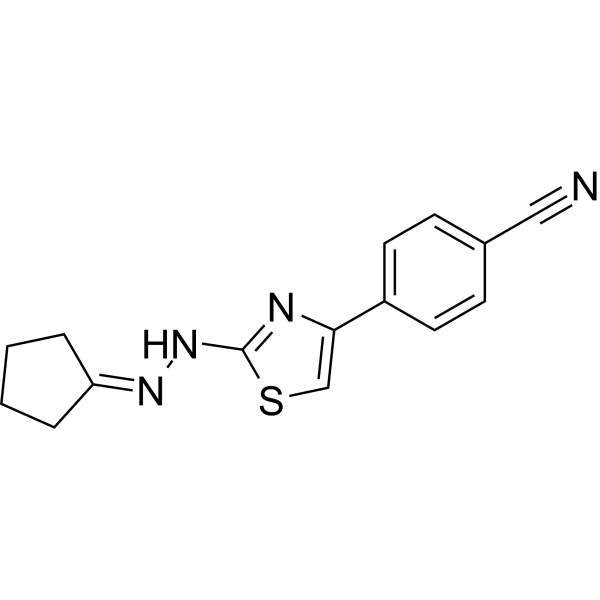
Remodelin is an orally active and selective inhibitor of acetyltransferase NAT10. Remodelin inhibits NAT10 activitity and slows DNA replication and suppresses growth of prostate cancer cells. Remodelin inhibits the growth of prostate cancer and hepatocellular carcinoma in xenograft model. Remodelin enhances the healthspan in hutchinson-gilford progeria syndrome (HGPS) mouse model.

For research use only. We do not sell to patients.

CAS No. : 949912-58-7

Size Price Stock Quantity
Free Sample (0.1 - 0.2 mg)   Apply Now  
Solid + Solvent (Highly Recommended)
10 mM * 1 mL in DMSO
ready for reconstitution
In-stock
Solution
10 mM * 1 mL in DMSO In-stock
Solid
5 mg In-stock
10 mg In-stock
25 mg In-stock
50 mg In-stock
100 mg In-stock
200 mg   Get quote  
500 mg   Get quote  

* Please select Quantity before adding items.

This product is a controlled substance and not for sale in your territory.

Customer Review

Based on 17 publication(s) in Google Scholar

Other Forms of Remodelin:

Top Publications Citing Use of Products

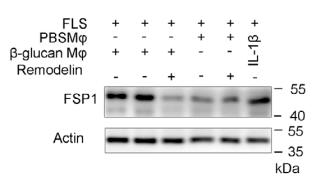
    Remodelin purchased from MedChemExpress. Usage Cited in: Adv Sci (Weinh). 2025 Dec;12(46):e04245.  [Abstract]

    CIA-FLS co-cultured with trained macrophages in a 1:1 ratio for 72 h in the presence of 25.0 μM Remodelin ± 4.5 μg/mL anti-IL-1β, Western blot analysis of FSP1 or Actin expression.

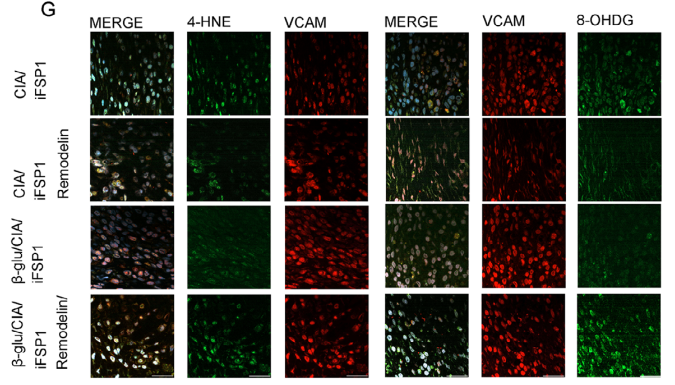
    Remodelin purchased from MedChemExpress. Usage Cited in: Adv Sci (Weinh). 2025 Dec;12(46):e04245.  [Abstract]

    The levels of 4-HNE and 8-OHDG in VCAM+ FLS were elevated in the hyperplastic synovium of β-glu/CIA rats treated with both iFSP1 and Remodelin (40.0 mg/kg daily).

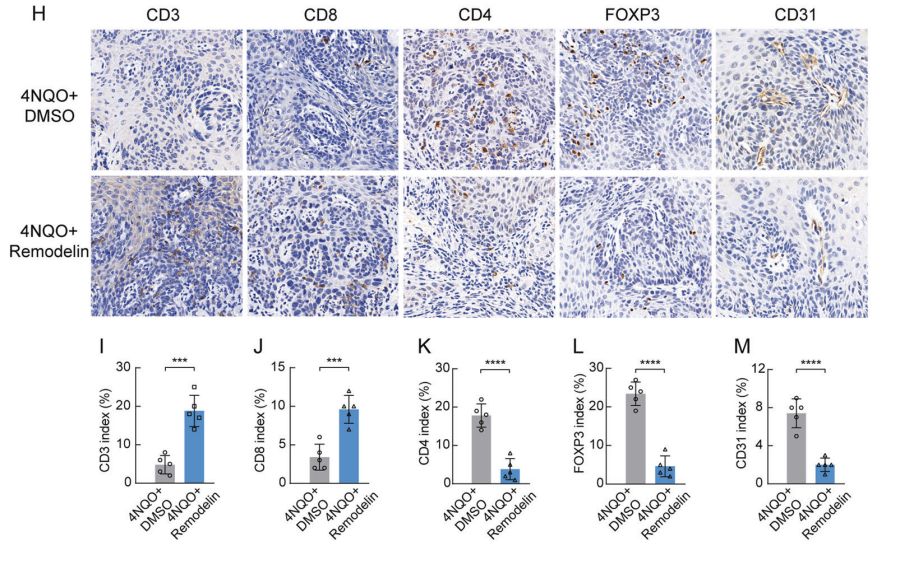
    Remodelin purchased from MedChemExpress. Usage Cited in: Cell Death Dis. 2023 Nov 1;14(11):712.  [Abstract]

    Representative of IHC (H) were displayed in randomly selected tumor and quantification of the relative intensities of IHC staining (I–M) was performed. Data are shown as mean ± SEM at least three independent experiments. P-values were calculated by two-sided Student’s t-test in (F) and two-sided log-rank test in (G). (Remodelin 5 mg/kg).

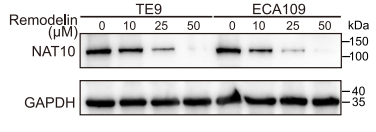
    Remodelin purchased from MedChemExpress. Usage Cited in: Cell Rep. 2023 Jul 17;42(7):112810.  [Abstract]

    Remodelin (0-50 μM) treatment reduced the protein level of NAT10 and inhibited ESCA cell proliferation in a dose-dependent manner

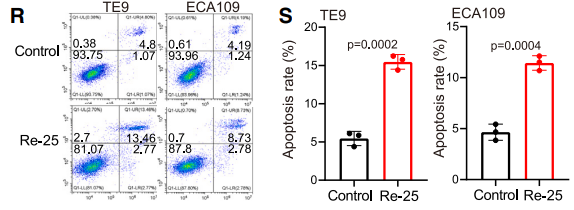
    Remodelin purchased from MedChemExpress. Usage Cited in: Cell Rep. 2023 Jul 17;42(7):112810.  [Abstract]

    Remodelin (25 μM) treatment can significantly increase the apoptosis of both TE9 and ECA109 ESCA cells.

    View All Histone Acetyltransferase Isoform Specific Products:

    • Biological Activity

    • Purity & Documentation

    • References

    • Customer Review

    Description

    Remodelin is an orally active and selective inhibitor of acetyltransferase NAT10. Remodelin inhibits NAT10 activitity and slows DNA replication and suppresses growth of prostate cancer cells. Remodelin inhibits the growth of prostate cancer and hepatocellular carcinoma in xenograft model. Remodelin enhances the healthspan in hutchinson-gilford progeria syndrome (HGPS) mouse model[1][2][3][4].

    Cellular Effect
    Cell Line Type Value Description References
    BTI-TN-5B1-4 IC50
    221 nM
    Compound: 9
    Inhibition of human recombinant MAOB expressed in baculovirus infected BTI-TN-5B1-4 insect cells assessed as hydrogen peroxide production from p-tyramine by amplex red assay
    Inhibition of human recombinant MAOB expressed in baculovirus infected BTI-TN-5B1-4 insect cells assessed as hydrogen peroxide production from p-tyramine by amplex red assay
    [PMID: 20579890]
    BTI-TN-5B1-4 IC50
    644 nM
    Compound: 9
    Inhibition of human recombinant MAOA expressed in baculovirus infected BTI-TN-5B1-4 insect cells assessed as hydrogen peroxide production from p-tyramine by amplex red assay
    Inhibition of human recombinant MAOA expressed in baculovirus infected BTI-TN-5B1-4 insect cells assessed as hydrogen peroxide production from p-tyramine by amplex red assay
    [PMID: 20579890]
    In Vitro

    Remodelin (10-40 μΜ, 1-7 days) inhibits NAT10 activity and cell proliferation with a dose-dependent manner in both AR-positive and AR-negative prostate cancer cells[2].
    Remodelin (20 μΜ, 24 hours) inhibits NAT10 and slows DNA replication in prostate cancer cells[2].
    Remodelin (1 μΜ, 7 days) decreases nuclear shape defects and increase genomic stability in LmnaG609G/G609G fibroblasts[3].

    MedChemExpress (MCE) has not independently confirmed the accuracy of these methods. They are for reference only.

    Cell Proliferation Assay[2]

    Cell Line: Prostate cancer cell lines VCaP, PC3, and DU145
    Concentration: 0,10,20,40 μM
    Incubation Time: 1,2,7 days
    Result: Inhibited NAT10 and suppressed the growth of both AR-positive and AR-negative prostate cancer cells.
    Displayed significantly decreased cell proliferation activity over time, compared to the control group.
    Decreased colony formation ability with a dose-dependent manner.

    Immunofluorescence[2]

    Cell Line: Prostate cancer cell lines VCaP, PC3, and DU145
    Concentration: 0,10,20,40 μM
    Incubation Time: 24 hours
    Result: Showed a significant decrease in both the positive labeling rate and the fluorescence intensity compared to the control group.
    Significantly reduced both the staining foci of IdU and the staining foci of CldU compared to control group.

    Western Blot Analysis[3]

    Cell Line: Skin fibroblasts from LmnaG609G/G609G and wildtype (WT) littermates
    Concentration: 1 μM
    Incubation Time: 7 days
    Result: Decreased the higher level of the DNA double-strand break (DSB) marker gamma H2AX (γH2AX, Ser-139 phosphorylated histone H2AX).
    In Vivo

    Remodelin (2 or 20 mg/kg, i.p., once every two days for 4 weeks) significantly reduces AR-negative prostate cancer tumor growth in tumor xenograft nude mice model[2].
    Remodelin (100 mg/kg, p.o.) inhibits NAT10 and significantly enhances the healthspan in aLmnaG609G/G609G hutchinson-gilford progeria syndrome (HGPS) mouse model. Remodelin (5 mg/kg, p.o.) shows a T1/2 of 1.81 hours and oral bioavailability (F%) of 43.5% in mice[3].
    Pharmacokinetic parameters for Remodelin in Mice[1]

    Pharmacokinetic parameters for Remodelin in Mice[1]
    Route Dose (mg/kg) T1/2 (h) Tmax (h) Cmax (ng/mL) AUC0-t (ng/h/mL) AUC0-Ꝏ (ng/h/mL) MRT_last (h) F(%)
    p.o. 5 1.81 0.25 409 235 259 0.84 43.5%

    MedChemExpress (MCE) has not independently confirmed the accuracy of these methods. They are for reference only.

    Route Dose (mg/kg) T1/2 (h) Tmax (h) Cmax (ng/mL) AUC0-t (ng/h/mL) AUC0-Ꝏ (ng/h/mL) MRT_last (h) F(%)
    p.o. 5 1.81 0.25 409 235 259 0.84 43.5%
    Animal Model: PC-3 cells tumor xenograft model in nude athymic BALB/c nu/nu mice[2]
    Dosage: 2 or 20 mg/kg
    Administration: Intraperitoneal injection (i.p.), once every two days for 4 weeks
    Result: Significantly reduced AR-negative prostate cancer tumor growth.
    In the high-dose group, xenograft tumor weight at the endpoint was much smaller than that in the low-dose group.
    Animal Model: LmnaG609G/G609G hutchinson-gilford progeria syndrome (HGPS) mouse model[3]
    Dosage: 100 mg/kg
    Administration: Oral gavage (p.o.), daily schedule for 3 weeks of age onward, until the end-point Ameliorated age-dependent weight loss.
    Result: Ameliorated cardiac pathology.
    Led to the dramatic amelioration of HGPS cardiac pathologies, including reduction of adventitial fibrosis of the aorta, rescue of vascular smooth muscle cell loss, and salvage of smooth muscle actin (SMA) loss, both in the aorta and the coronary arteries.
    Animal Model: WT Mice (Pharmacokinetic assay)[3]
    Dosage: 5 mg/kg
    Administration: Oral gavage (p.o.)
    Result: Showed a T1/2 of 1.81 hours and oral bioavailability (F%) of 43.5% in mice[3].
    Molecular Weight

    282.36

    Formula

    C15H14N4S

    CAS No.
    Appearance

    Solid

    Color

    Off-white to light yellow

    SMILES

    N#CC1=CC=C(C2=CSC(N/N=C3CCCC/3)=N2)C=C1

    Shipping

    Room temperature in continental US; may vary elsewhere.

    Storage

    4°C, protect from light

    *In solvent : -80°C, 6 months; -20°C, 1 month (protect from light)
    Solvent & Solubility
    In Vitro: 

    DMSO : 116.67 mg/mL (413.20 mM; Need ultrasonic; Hygroscopic DMSO has a significant impact on the solubility of product, please use newly opened DMSO)

    Preparing
    Stock Solutions
    Concentration Solvent Mass 1 mg 5 mg 10 mg
    1 mM 3.5416 mL 17.7079 mL 35.4158 mL
    5 mM 0.7083 mL 3.5416 mL 7.0832 mL
    View the Complete Stock Solution Preparation Table

    * Please refer to the solubility information to select the appropriate solvent. Once prepared, please aliquot and store the solution to prevent product inactivation from repeated freeze-thaw cycles.
    Storage method and period of stock solution: -80°C, 6 months; -20°C, 1 month (protect from light). When stored at -80°C, please use it within 6 months. When stored at -20°C, please use it within 1 month.

    • Molarity Calculator

    • Dilution Calculator

    Mass (g) = Concentration (mol/L) × Volume (L) × Molecular Weight (g/mol)

    Mass
    =
    Concentration
    ×
    Volume
    ×
    Molecular Weight *

    Concentration (start) × Volume (start) = Concentration (final) × Volume (final)

    This equation is commonly abbreviated as: C1V1 = C2V2

    Concentration (start)

    C1

    ×
    Volume (start)

    V1

    =
    Concentration (final)

    C2

    ×
    Volume (final)

    V2

    In Vivo:

    Select the appropriate dissolution method based on your experimental animal and administration route.

    For the following dissolution methods, please ensure to first prepare a clear stock solution using an In Vitro approach and then sequentially add co-solvents:
    To ensure reliable experimental results, the clarified stock solution can be appropriately stored based on storage conditions. As for the working solution for in vivo experiments, it is recommended to prepare freshly and use it on the same day.
    The percentages shown for the solvents indicate their volumetric ratio in the final prepared solution. If precipitation or phase separation occurs during preparation, heat and/or sonication can be used to aid dissolution.

    • Protocol 1

      Add each solvent one by one:  10% DMSO    40% PEG300    5% Tween-80    45% Saline

      Solubility: ≥ 5 mg/mL (17.71 mM); Clear solution

      This protocol yields a clear solution of ≥ 5 mg/mL (saturation unknown).

      Taking 1 mL working solution as an example, add 100 μL DMSO stock solution (50.0 mg/mL) to 400 μL PEG300, and mix evenly; then add 50 μL Tween-80 and mix evenly; then add 450 μL Saline to adjust the volume to 1 mL.

      Preparation of Saline: Dissolve 0.9 g sodium chloride in ddH₂O and dilute to 100 mL to obtain a clear Saline solution.
    • Protocol 2

      Add each solvent one by one:  10% DMSO    90% (20% SBE-β-CD in Saline)

      Solubility: ≥ 5 mg/mL (17.71 mM); Clear solution

      This protocol yields a clear solution of ≥ 5 mg/mL (saturation unknown).

      Taking 1 mL working solution as an example, add 100 μL DMSO stock solution (50.0 mg/mL) to 900 μL 20% SBE-β-CD in Saline, and mix evenly.

      Preparation of 20% SBE-β-CD in Saline (4°C, storage for one week): 2 g SBE-β-CD powder is dissolved in 10 mL Saline, completely dissolve until clear.

    For the following dissolution methods, please prepare the working solution directly. It is recommended to prepare fresh solutions and use them promptly within a short period of time.
    The percentages shown for the solvents indicate their volumetric ratio in the final prepared solution. If precipitation or phase separation occurs during preparation, heat and/or sonication can be used to aid dissolution.

    • Protocol 1

      Add each solvent one by one:  50% PEG300    50% Saline

      Solubility: 10 mg/mL (35.42 mM); Suspended solution; Need ultrasonic

    • Protocol 2

      Add each solvent one by one:  0.5% CMC/saline water

      Solubility: 5 mg/mL (17.71 mM); Suspended solution; Need ultrasonic

    In Vivo Dissolution Calculator
    Please enter the basic information of animal experiments:

    Dosage

    mg/kg

    Animal weight
    (per animal)

    g

    Dosing volume
    (per animal)

    μL

    Number of animals

    Recommended: Prepare an additional quantity of animals to account for potential losses during experiments.
    Please enter your animal formula composition:
    %
    DMSO +
    +
    %
    Tween-80 +
    %
    Saline
    Recommended: Keep the proportion of DMSO in working solution below 2% if your animal is weak.
    The co-solvents required include: DMSO, . All of co-solvents are available by MedChemExpress (MCE). , Tween 80. All of co-solvents are available by MedChemExpress (MCE).
    Calculation results:
    Working solution concentration: mg/mL
    Method for preparing stock solution: mg drug dissolved in μL  DMSO (Stock solution concentration: mg/mL).

    *In solvent : -80°C, 6 months; -20°C, 1 month (protect from light)

    The concentration of the stock solution you require exceeds the measured solubility. The following solution is for reference only. If necessary, please contact MedChemExpress (MCE).
    Method for preparing in vivo working solution for animal experiments: Take μL DMSO stock solution, add μL . μL , mix evenly, next add μL Tween 80, mix evenly, then add μL Saline.
     If the continuous dosing period exceeds half a month, please choose this protocol carefully.
    Please ensure that the stock solution in the first step is dissolved to a clear state, and add co-solvents in sequence. You can use ultrasonic heating (ultrasonic cleaner, recommended frequency 20-40 kHz), vortexing, etc. to assist dissolution.
    Purity & Documentation

    Purity: 99.84%

    References

    Complete Stock Solution Preparation Table

    * Please refer to the solubility information to select the appropriate solvent. Once prepared, please aliquot and store the solution to prevent product inactivation from repeated freeze-thaw cycles.
    Storage method and period of stock solution: -80°C, 6 months; -20°C, 1 month (protect from light). When stored at -80°C, please use it within 6 months. When stored at -20°C, please use it within 1 month.

    Optional Solvent Concentration Solvent Mass 1 mg 5 mg 10 mg 25 mg
    DMSO 1 mM 3.5416 mL 17.7079 mL 35.4158 mL 88.5395 mL
    5 mM 0.7083 mL 3.5416 mL 7.0832 mL 17.7079 mL
    10 mM 0.3542 mL 1.7708 mL 3.5416 mL 8.8539 mL
    15 mM 0.2361 mL 1.1805 mL 2.3611 mL 5.9026 mL
    20 mM 0.1771 mL 0.8854 mL 1.7708 mL 4.4270 mL
    25 mM 0.1417 mL 0.7083 mL 1.4166 mL 3.5416 mL
    30 mM 0.1181 mL 0.5903 mL 1.1805 mL 2.9513 mL
    40 mM 0.0885 mL 0.4427 mL 0.8854 mL 2.2135 mL
    50 mM 0.0708 mL 0.3542 mL 0.7083 mL 1.7708 mL
    60 mM 0.0590 mL 0.2951 mL 0.5903 mL 1.4757 mL
    80 mM 0.0443 mL 0.2213 mL 0.4427 mL 1.1067 mL
    100 mM 0.0354 mL 0.1771 mL 0.3542 mL 0.8854 mL
    • No file chosen (Maximum size is: 1024 Kb)
    • If you have published this work, please enter the PubMed ID.
    • Your name will appear on the site.
    Help & FAQs
    • Do most proteins show cross-species activity?

      Species cross-reactivity must be investigated individually for each product. Many human cytokines will produce a nice response in mouse cell lines, and many mouse proteins will show activity on human cells. Other proteins may have a lower specific activity when used in the opposite species.

    Your Recently Viewed Products:

    Inquiry Online

    Your information is safe with us. * Required Fields.

    Product Name


    Requested Quantity *

    Applicant Name *


    Salutation

    Email Address *


    Phone Number *

    Department


    Organization Name *

    City

    State

    Country or Region *


    Remarks

    Bulk Inquiry

    Inquiry Information

    Product Name:
    Remodelin
    Cat. No.:
    HY-16706
    Quantity:
    MCE Japan Authorized Agent: