



MOZ/MORF
MOZ (KAT6A) and MORF (KAT6B) are paralogous members of the MYST family of lysine acetyltransferases that function in multisubunit chromatin-regulatory complexes and catalyze histone H3 acetylation to promote transcriptionally active chromatin states[1][2]. Mechanistically, MOZ/MORF complexes interact with BRPF and ING proteins, integrate histone-reader functions with catalytic activity, and regulate chromatin-dependent gene expression programs involved in development, stem-cell maintenance, and hematopoiesis[1][3][4]. Recent structural and genomic studies further demonstrated that MOZ and MORF recognize unmethylated CpG-rich promoter regions through N-terminal winged-helix domains, facilitating promoter targeting, H3K23 acetylation, and transcriptional activation[5]. These chromatin-regulatory activities are closely linked to biological processes including embryogenesis, skeletogenesis, cellular differentiation, and maintenance of hematopoietic stem-cell function[3][4][5]. Disease relevance is supported by recurrent chromosomal rearrangements involving KAT6A or KAT6B in acute myeloid leukemia and related hematologic malignancies, as well as developmental disorders associated with germline variants in either gene[2][4]. Compared with related MYST family acetyltransferases, MOZ and MORF share high sequence homology and similar domain organization, yet they function as distinct catalytic subunits within mutually exclusive complexes and can display context-dependent biological specialization[2][6]. For experimental applications, MOZ/MORF-containing complexes provide a tractable model for investigating epigenetic regulation, chromatin targeting mechanisms, and acetyltransferase-dependent transcriptional control in development and disease[1][3][5].
References:
- [1]. Klein BJ, et al. Crosstalk between epigenetic readers regulates the MOZ/MORF HAT complexes. Epigenetics. 2014 Feb;9(2):186-93. [Content Brief]
- [2]. Doyon Y, et al. ING tumor suppressor proteins are critical regulators of chromatin acetylation required for genome expression and perpetuation. Mol Cell. 2006 Jan 6;21(1):51-64. [Content Brief]
- [3]. Viita T, et al. The MOZ-BRPF1 acetyltransferase complex in epigenetic crosstalk linked to gene regulation, development, and human diseases. Front Cell Dev Biol. 2023 Jan 11;10:1115903. [Content Brief]
- [4]. Zu G, et al. BRPF1-KAT6A/KAT6B Complex: Molecular Structure, Biological Function and Human Disease. Cancers (Basel). 2022 Aug 23;14(17):4068. [Content Brief]
- [5]. Becht DC, et al. MORF and MOZ acetyltransferases target unmethylated CpG islands through the winged helix domain. Nat Commun. 2023 Feb 8;14(1):697. [Content Brief]
- [6]. Yang XJ, et al. MOZ and MORF, two large MYSTic HATs in normal and cancer stem cells. Oncogene. 2007 Aug 13;26(37):5408-19. [Content Brief]
All Product Categories
-
MOZ/MORF Related Products (7)
Related Products (7)

-
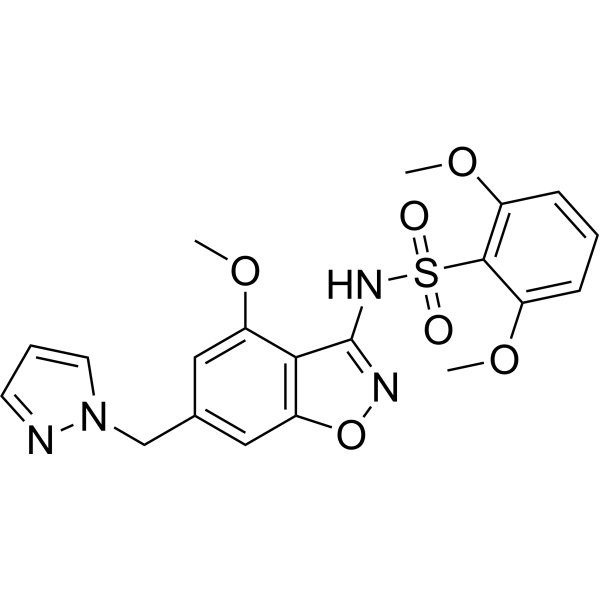
WM-8014
 0 ImagesWM-8014 is an inhibitor of MOZ, a member of histone acetyltransferases, with an IC50 of 55 nM.
-
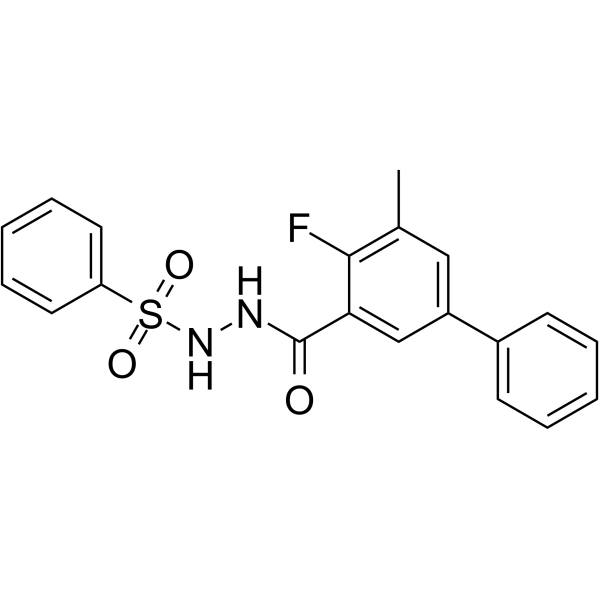
WM-1119
 0 ImagesWM-1119, a chemical probe, is a highly potent and selective KAT6A inhibitor, with an IC50 of 0.25 μM for KAT6A in lymphoma cells, the binding KD values of WM-1119 with KAT6A, KAT5 and KAT7 are 2 nM, 2.2 μM, 0.5 μM , respectively.
-
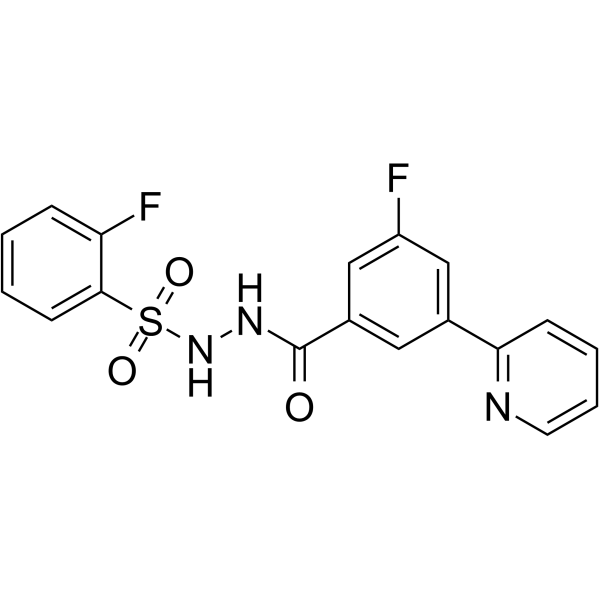
MOZ-IN-3
 0 ImagesMOZ-IN-3 is an orally active KAT6A (MOZ) inhibitor with an IC50 of 0.03 μM against human targets, and it exhibits high selectivity over other MYST family histone acetyltransferases. MOZ-IN-3 modulates monocyte function, exerts anti-tumor effects, increases the nucleocytoplasmic ratio, and enhances cellular resistance to chemotherapeutic drug-induced cell death. MOZ-IN-3 is applicable to leukemia-related research.
-
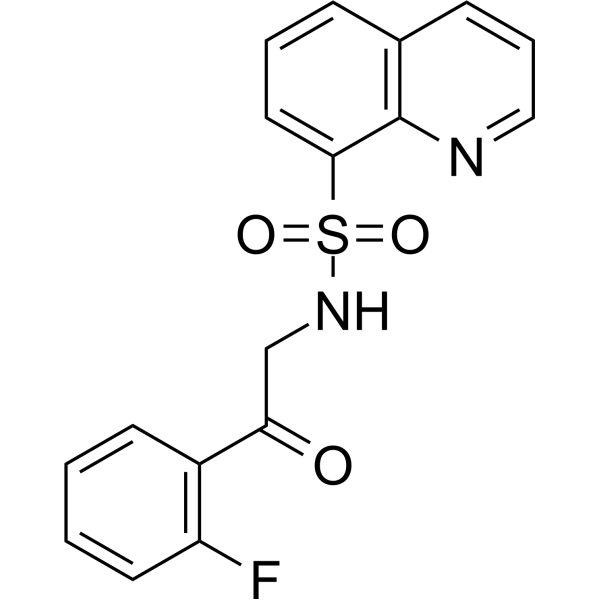
MOZ-IN-2
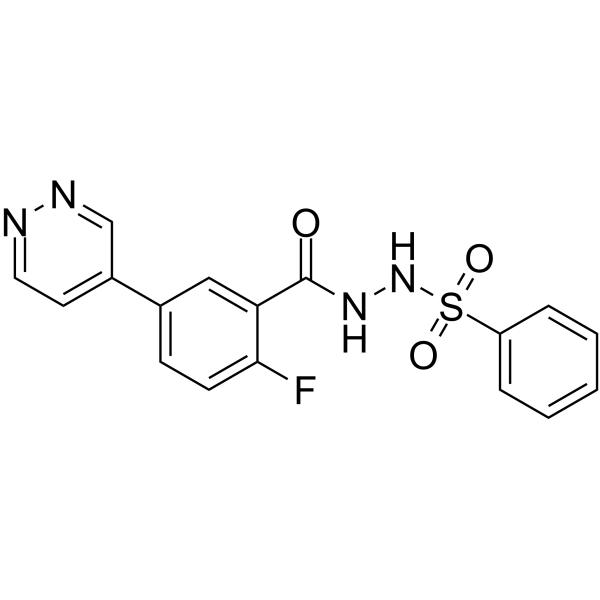 0 ImagesMOZ-IN-2 is an inhibitor of protein MOZ, a member of histone acetyltransferases, with an IC50 of 125 μM.

-
KAT6A/KAT7-IN-4
 0 ImagesCat. No.: HY-177046CAS No.: 3092067-21-2KAT6A/KAT7-IN-4 is a KAT6A and KAT7 inhibitor. KAT6A/KAT7-IN-4 has IC50 values of both ≤ 1 nM for KAT6A and KAT7. KAT6A/KAT7-IN-4 can inhibit the acetylation of H3K14 and H3K23. KAT6A/KAT7-IN-4 also inhibits tumor cell proliferation, with an IC50 of ≤ 100 nM for CAMA-1. KAT6A/KAT7-IN-4 can be used in the study of breast cancer.



