



Mavorixafor trihydrochloride
Based on 9 publication(s) in Google Scholar
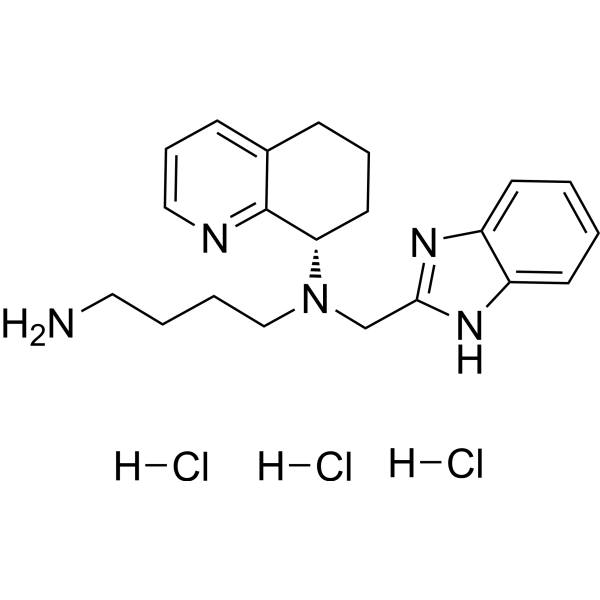
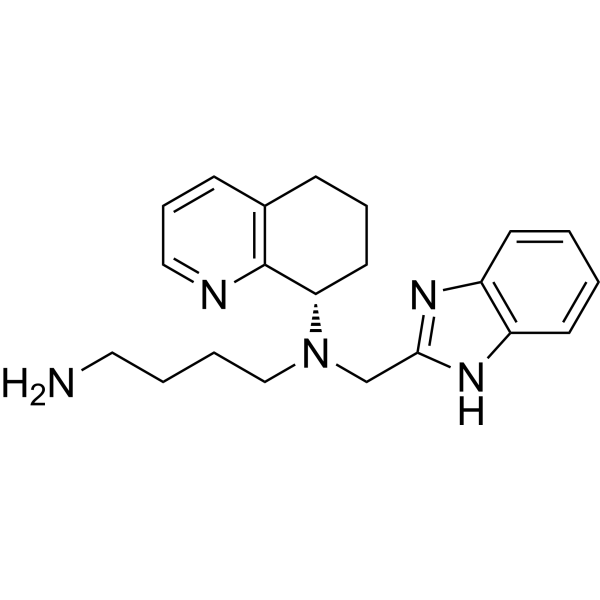
Mavorixafor trihydrochloride (AMD-070 trihydrochloride) is a potent, selective and orally available CXCR4 antagonist, with an IC50 value of 13 nM against CXCR4 125I-SDF binding, and also inhibits the replication of T-tropic HIV-1 (NL4.3 strain) in MT-4 cells and PBMCs with an IC50 of 1 and 9 nM, respectively.Mavorixafor trihydrochloride can be used for the study of WHIM syndrome.
商品は「研究用試薬」です。人や動物の医療用・臨床診断用・食品用の製品ではありません。
研究用途以外に使用した場合、当社は一切の責任を負いかねます。
- 純度 : 99.01%
- CAS 番号: 2309699-17-8
- 分子式: C21H30Cl3N5
- 分子量:458.86
-
保管条件:
4°C, sealed storage, away from moisture
* In solvent : -80°C, 6 months; -20°C, 1 month (sealed storage, away from moisture)

To place orders, for customer services and technical support, please contact: MedChemExpress USA
Tel: 609-228-6898 E-mail: [email protected] [email protected]


-
 生物活性
生物活性
-
化学情報
-
溶剤 & 溶解度
- 純度とドキュメンテーション
- 参考文献
-
 Help & FAQs


-
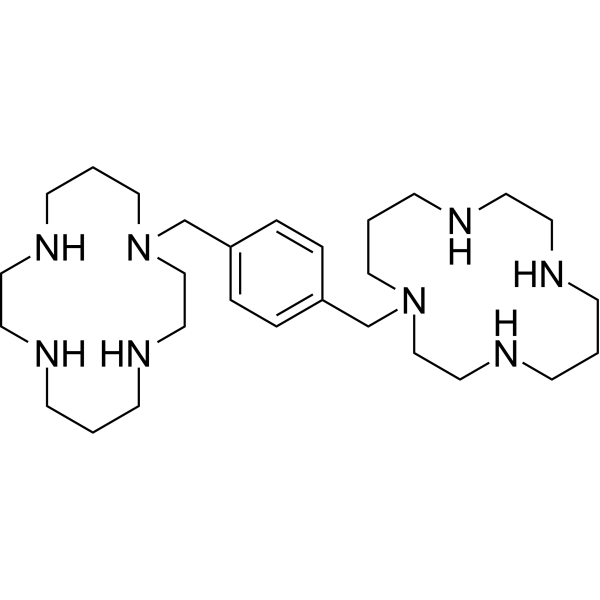
HY-10046
PlerixaforCXCR4 Antagonist -
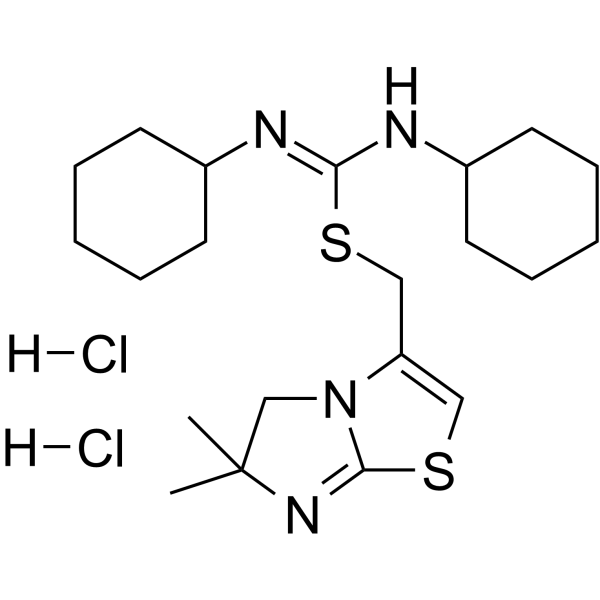
HY-101458A
IT1t dihydrochlorideCXCR4 Antagonist -
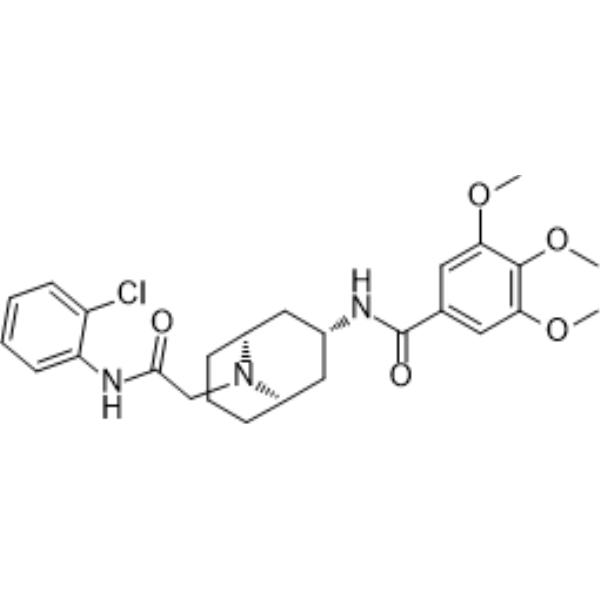
HY-122197
ML339CXCR6 Antagonist -
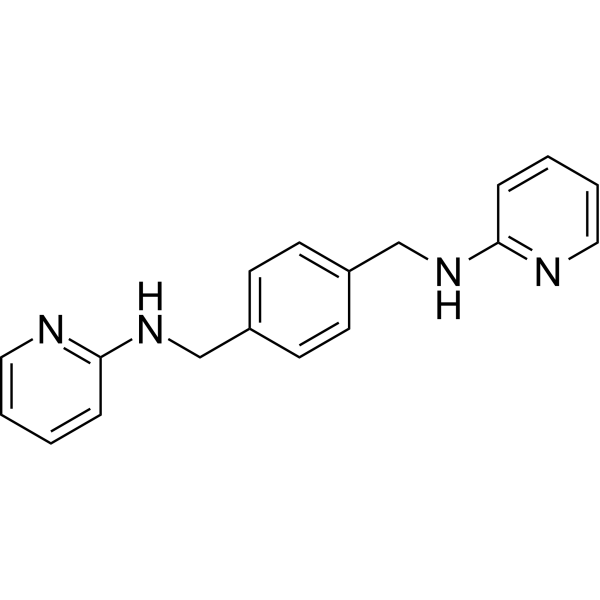
HY-15478
WZ811CXCR4 Antagonist -
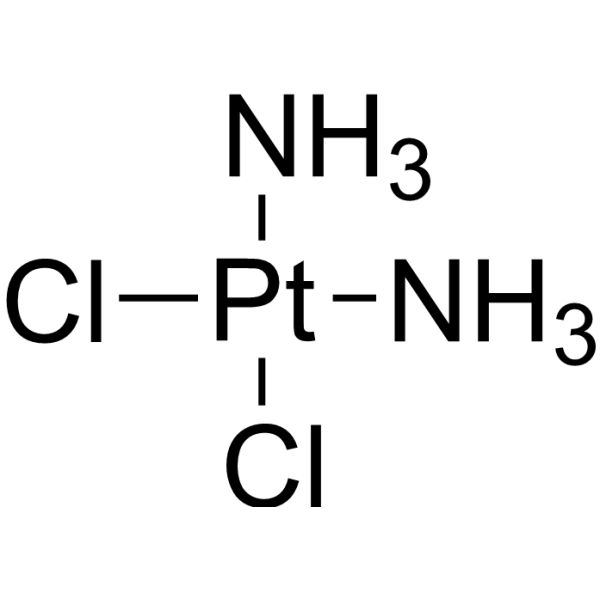
HY-17394
CisplatinDNA Alkylator -
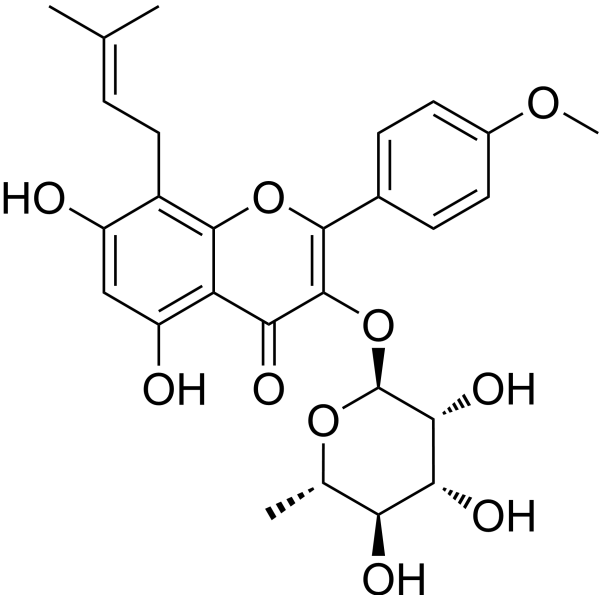
HY-N0011
Baohuoside ICXCR4 Inhibitor -
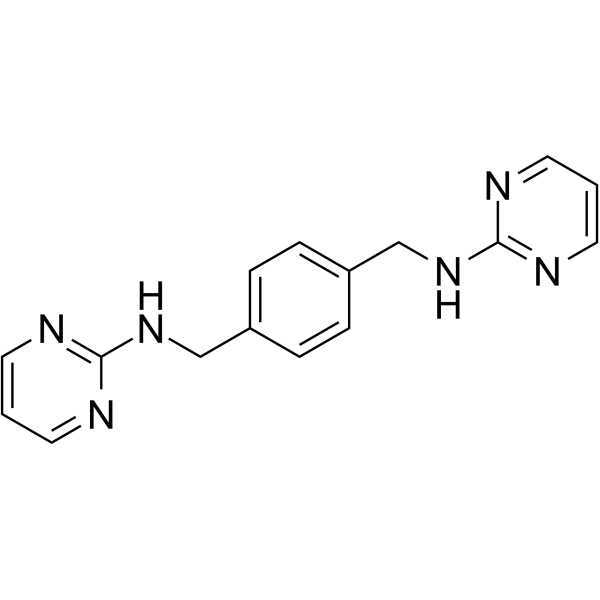
HY-13696
MSX-122CXCR4 Antagonist -
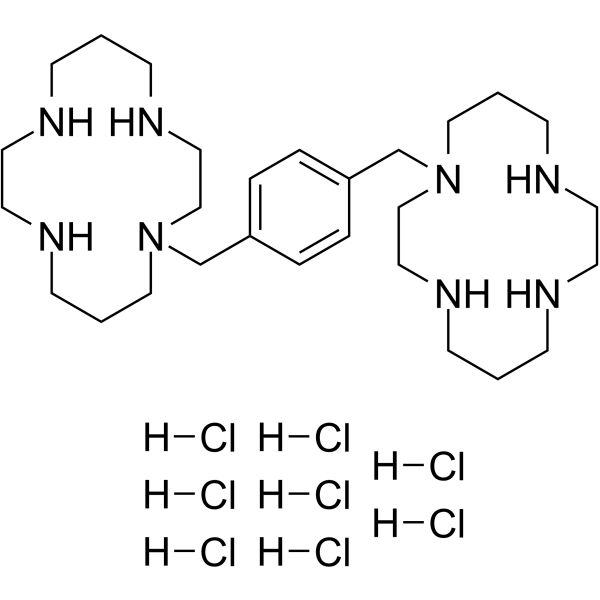
HY-50912
Plerixafor octahydrochlorideCXCR4 Antagonist -
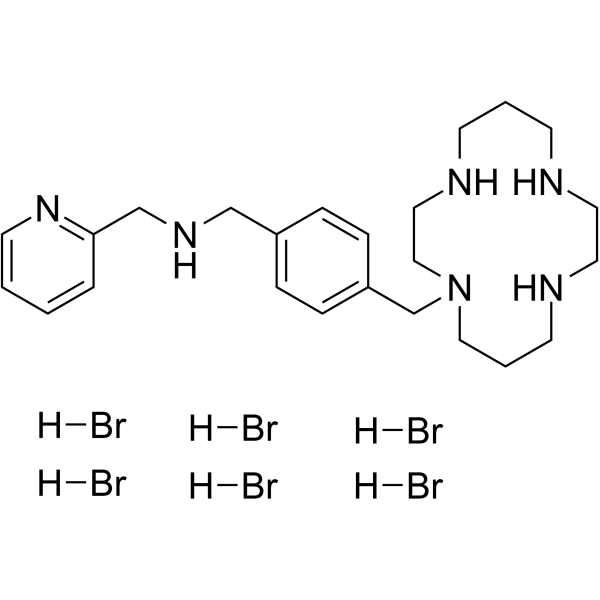
HY-15971
AMD 3465 hexahydrobromideCXCR4 Antagonist -
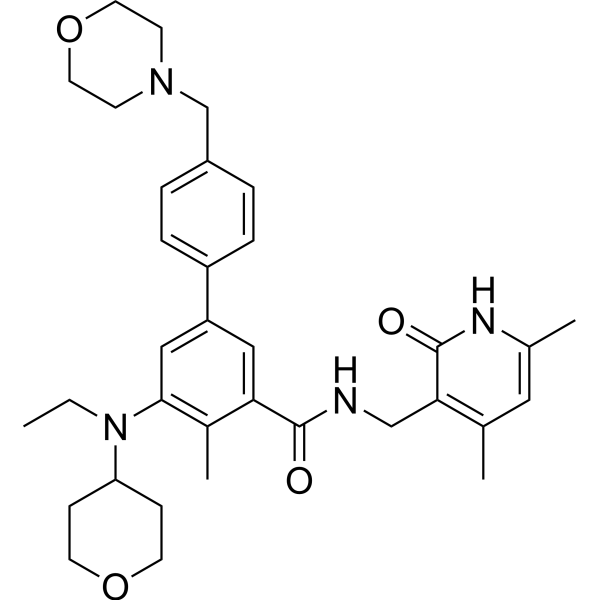
HY-13803
TazemetostatEZH2 Inhibitor -
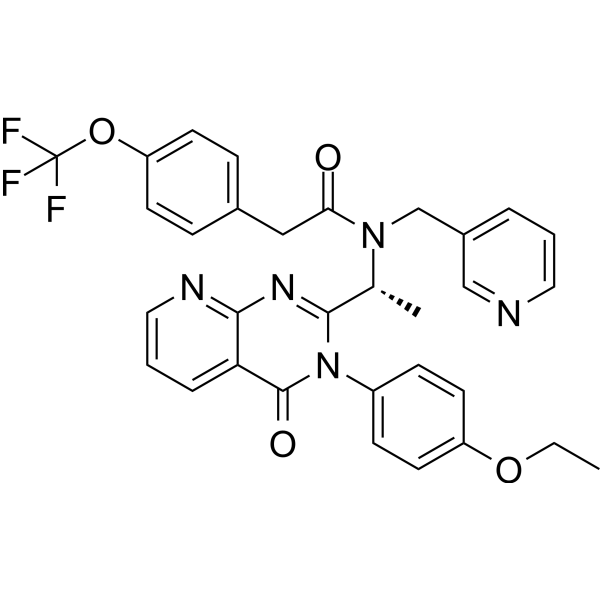
HY-15319
AMG 487CXCR3 Antagonist -
HY-50101
MavorixaforCXCR4 Antagonist
MedChemExpress(MCE)の使用を引用している文献 Mavorixafor trihydrochloride
More- Proc Natl Acad Sci U S A. 2025 Mar 18;122(11):e2425795122. [Abstract]
- Cell Chem Biol. 2026 Jul 14:S2451-9456(26)00232-1. [Abstract]
- Cell Mol Life Sci. 2024 Mar 13;81(1):132. [Abstract]
- Am J Physiol Cell Physiol. 2025 Apr 1;328(4):C1260-C1278. [Abstract]
- Oncol Rep. 2022 Apr;47(4):68. [Abstract]
- Biosci Rep. 2023 Dec 22;43(12):BSR20230981. [Abstract]
- Br J Haematol. 2023 May;201(3):459-469. [Abstract]
- PLoS One. 2016 Mar 21;11(3):e0151765. [Abstract]
- Patent. US20220273751A1.
 Customer Validation & Images

-
Others

-
Cell Imaging/Staining


生物活性
製品説明
IC50 & Target
[1]|
125I-SDF-CXCR4 13 nM (IC50) |
HIV-1 (NL4.3 strain) 1 nM (IC50, in MT-4 cells) |
HIV-1 (NL4.3 strain) 9 nM (IC50, in PBMCs) |
HIV-1 (NL4.3 strain) 3 nM (IC90, in MT-4 cells) |
HIV-1 (NL4.3 strain) 26 nM (IC90, in PBMCs) |
体外実験
Mavorixafor (AMD-070) is a potent and orally available CXCR4 antagonist, with an IC50 value of 13 nM against CXCR4 125I-SDF binding, and also inhibits the replication of T-tropic HIV-1 (NL4.3 strain) in MT-4 cells and PBMCs with an IC50 of 1 and 9 nM, respectively. Mavorixafor (AMD-070) shows no effect on other chemokine receptors (CCR1, CCR2b, CCR4, CCR5, CXCR1, and CXCR2)[1]. Mavorixafor (AMD-070) (6.6 μM) significantly suppresses the anchorage-dependent growth, the migration and matrigel invasion of the B88-SDF-1 cells[2].
MedChemExpress (MCE) has not independently confirmed the accuracy of these methods. They are for reference only. .
体内実験
MedChemExpress (MCE) has not independently confirmed the accuracy of these methods. They are for reference only.


化学情報
-
CAS 番号 2309699-17-8
-
性状 Solid
-
分子量 458.86
-
分子式 C21H30Cl3N5
-
Color Light yellow to yellow
-
SMILES
[H]Cl.[H]Cl.[H]Cl.NCCCCN(CC1=NC2=CC=CC=C2N1)[C@@H]3C4=NC=CC=C4CCC3
-
別名
AMD-070 trihydrochloride; AMD-11070 trihydrochloride
-
輸送条件
Room temperature in continental US; may vary elsewhere.
-
保管条件
4°C, sealed storage, away from moisture
* In solvent : -80°C, 6 months; -20°C, 1 month (sealed storage, away from moisture)


Publications (9)
-
Journal Impact Factor
-
Most Recent
-
Proc Natl Acad Sci U S A
Structural mechanisms underlying the modulation of CXCR4 by diverse small-molecule antagonists. [Abstract]2025 Mar 18;122(11):e2425795122. PMID: 40063796 -
Cell Chem Biol
2026 Jul 14:S2451-9456(26)00232-1. PMID: 42447861
Mavorixafor trihydrochloride purchased from MedChemExpress. Usage Cited in: Cell Chem Biol. 2026 Jul 14:S2451-9456(26)00232-1. [Abstract]
Cells were transfected with a constant amount (20 ng/well) of donor (NLuc_CXCR4) and acceptor (SNAP_CXCR4). Cells were labeled with SNAP_Surface-AlexaFluor 488 (0.2 μM final concentration) for 30 min before experimentation. Cells were then incubated for 30 min with EGF (0.1 μM), CXCL12 (0.1 μM), EGF+CXCL12 (both 0.1 μM), AMD3100 (10 μM), AMD070 (10 μM), IT1t (10 μM), erlotinib (10 μM), VUN400c (0.1 μM), VUN401 (0.1 μM), VUN415c (0.1 μM), Q44c (0.1 μM), or Q86c (0.1 μM).
-
Cell Mol Life Sci
Crosstalk between purinergic receptor P2Y11 and chemokine receptor CXCR7 is regulated by CXCR4 in human macrophages. [Abstract]2024 Mar 13;81(1):132. PMID: 38472446 -
Am J Physiol Cell Physiol
Mechanistic insights into SENP1 and OCT4 interaction in promoting drug resistance and stem cell features in colon cancer. [Abstract]2025 Apr 1;328(4):C1260-C1278. PMID: 40063360 -
Oncol Rep
Enhanced CXCL12/CXCR4 signaling increases tumor progression in radiation‑resistant pancreatic cancer. [Abstract]2022 Apr;47(4):68. PMID: 35119076
Mavorixafor trihydrochloride purchased from MedChemExpress. Usage Cited in: Oncol Rep. 2022 Apr;47(4):68. [Abstract]
Normal and radiation-resistant MIA PaCa-2 cells were treated with AMD070 (2.5 µM) for 72 h, after which 200 cells were seeded in 6-cm dishes and irradiated at a dose of 2 Gy.
-
Biosci Rep
Biological and mutational analyses of CXCR4-antagonist interactions and design of new antagonistic analogs. [Abstract]2023 Dec 22;43(12):BSR20230981. PMID: 38131305 -
Br J Haematol
CXCR4 antagonists disrupt leukaemia-meningeal cell adhesion and attenuate chemoresistance. [Abstract]2023 May;201(3):459-469. PMID: 36535585 -
PLoS One
Impact of a CXCL12/CXCR4 Antagonist in Bleomycin (BLM) Induced Pulmonary Fibrosis and Carbon Tetrachloride (CCl4) Induced Hepatic Fibrosis in Mice. [Abstract]2016 Mar 21;11(3):e0151765. PMID: 26998906 -


溶剤 & 溶解度
体外:
DMSO : 100 mg/mL (217.93 mM; Need ultrasonic; Hygroscopic DMSO has a significant impact on the solubility of product, please use newly opened DMSO)
H2O : 100 mg/mL (217.93 mM; Need ultrasonic)
Please refer to the solubility information to select the appropriate solvent. Once prepared, please aliquot and store the solution to prevent product inactivation from repeated freeze-thaw cycles.
Storage method and period of stock solution: -80°C, 6 months; -20°C, 1 month (sealed storage, away from moisture). When stored at -80°C, please use it within 6 months. When stored at -20°C, please use it within 1 month.
* Note: If you choose water as the stock solution, please dilute it to the working solution, then filter and sterilize it with a 0.22 μm filter before use.
Please refer to the solubility information to select the appropriate solvent. Once prepared, please aliquot and store the solution to prevent product inactivation from repeated freeze-thaw cycles.
Storage method and period of stock solution: -80°C, 6 months; -20°C, 1 month (sealed storage, away from moisture). When stored at -80°C, please use it within 6 months. When stored at -20°C, please use it within 1 month.
* Note: If you choose water as the stock solution, please dilute it to the working solution, then filter and sterilize it with a 0.22 μm filter before use.
濃度 (開始) × 体積 (開始) = 濃度 (終了) × 体積 (終了)
体内:
Select the appropriate dissolution method based on your experimental animal and administration route.
- For the following dissolution methods, please ensure to first prepare a clear stock solution using an In Vitro approach and then sequentially add co-solvents:
- To ensure reliable experimental results, the clarified stock solution can be appropriately stored based on storage conditions. As for the working solution for In Vivo experiments, it is recommended to prepare freshly and use it on the same day.
- The percentages shown for the solvents indicate their volumetric ratio in the final prepared solution. If precipitation or phase separation occurs during preparation, heat and/or sonication can be used to aid dissolution.
Add each solvent one by one: 10% DMSO 40% PEG300 5% Tween-80 45% Saline
Solubility: ≥ 0.6 mg/mL (1.31 mM); Clear solution
This protocol yields a clear solution of ≥ 0.6 mg/mL (saturation unknown).
Taking 1 mL working solution as an example, add 100 μL DMSO stock solution (6.0 mg/mL) to 400 μL PEG300, and mix evenly; then add 50 μL Tween-80 and mix evenly; then add 450 μL Saline to adjust the volume to 1 mL.
Preparation of Saline: Dissolve 0.9 g sodium chloride in ddH₂O and dilute to 100 mL to obtain a clear Saline solution.
Add each solvent one by one: 10% DMSO 90% (20% SBE-β-CD in Saline)
Solubility: ≥ 0.6 mg/mL (1.31 mM); Clear solution
This protocol yields a clear solution of ≥ 0.6 mg/mL (saturation unknown).
Taking 1 mL working solution as an example, add 100 μL DMSO stock solution (6.0 mg/mL) to 900 μL 20% SBE-β-CD in Saline, and mix evenly.
Preparation of 20% SBE-β-CD in Saline (4°C, storage for one week): 2 g SBE-β-CD powder is dissolved in 10 mL Saline, completely dissolve until clear.
For the following dissolution methods, please prepare the working solution directly:
It is recommended to prepare fresh solutions and use them promptly within a short period of time.
The percentages shown for the solvents indicate their volumetric ratio in the final prepared solution. If precipitation or phase separation occurs during preparation, heat and/or sonication can be used to aid dissolution.
Add each solvent one by one: PBS
Solubility: 100 mg/mL (217.93 mM); Clear solution; Need ultrasonic
In Vivo Dissolution Calculator
Please enter the basic information of animal experiments:
-
-
-
-
Recommended: Prepare an additional quantity of animals to account for potential losses during experiments.
Working solution concentration: 0.22 mg/mL
This product has good water solubility, please refer to the measured solubility data in water/PBS/Saline for details.


純度とドキュメンテーション
-
データシート (282 KB)
-
SDS (394 KB)
- English - EN (394 KB)
- Français - FR (394 KB)
- Deutsch - DE (394 KB)
- Norwegian - NO (394 KB)
- Español - ES (394 KB)
- Swedish - SV (394 KB)
- Italian - IT (394 KB)
- Korean - KR (394 KB)
- Portuguese - PT (394 KB)
-
取扱説明書 (2659 KB)
参考文献
[1]. Skerlj RT, et al. Discovery of novel small molecule orally bioavailable C-X-C chemokine receptor 4 antagonists that are potent inhibitors of T-tropic (X4) HIV-1 replication. J Med Chem. 2010 Apr 22;53(8):3376-88. [Content Brief]
[2]. Uchida D, et al. Effect of a novel orally bioavailable CXCR4 inhibitor, AMD070, on the metastasis of oral cancer cells. Oncol Rep. 2018 Jul;40(1):303-308. [Content Brief]


Complete Stock Solution Preparation Table
Please refer to the solubility information to select the appropriate solvent. Once prepared, please aliquot and store the solution to prevent product inactivation from repeated freeze-thaw cycles.
Storage method and period of stock solution: -80°C, 6 months; -20°C, 1 month (sealed storage, away from moisture). When stored at -80°C, please use it within 6 months. When stored at -20°C, please use it within 1 month.
| Optional Solvent | Concentration Solvent Mass | 1 mg | 5 mg | 10 mg | 25 mg |
|---|---|---|---|---|---|
| DMSO / H2O | 1 mM | 2.1793 mL | 10.8966 mL | 21.7931 mL | 54.4829 mL |
| 5 mM | 0.4359 mL | 2.1793 mL | 4.3586 mL | 10.8966 mL | |
| 10 mM | 0.2179 mL | 1.0897 mL | 2.1793 mL | 5.4483 mL | |
| 15 mM | 0.1453 mL | 0.7264 mL | 1.4529 mL | 3.6322 mL | |
| 20 mM | 0.1090 mL | 0.5448 mL | 1.0897 mL | 2.7241 mL | |
| 25 mM | 0.0872 mL | 0.4359 mL | 0.8717 mL | 2.1793 mL | |
| 30 mM | 0.0726 mL | 0.3632 mL | 0.7264 mL | 1.8161 mL | |
| 40 mM | 0.0545 mL | 0.2724 mL | 0.5448 mL | 1.3621 mL | |
| 50 mM | 0.0436 mL | 0.2179 mL | 0.4359 mL | 1.0897 mL | |
| 60 mM | 0.0363 mL | 0.1816 mL | 0.3632 mL | 0.9080 mL | |
| 80 mM | 0.0272 mL | 0.1362 mL | 0.2724 mL | 0.6810 mL | |
| 100 mM | 0.0218 mL | 0.1090 mL | 0.2179 mL | 0.5448 mL |
* Note: If you choose water as the stock solution, please dilute it to the working solution, then filter and sterilize it with a 0.22 μm filter before use.


Mavorixafor trihydrochloride 関連分類
HY-50101A 関連分類
 Powered by Bioz