



Mavorixafor
Based on 9 publication(s) in Google Scholar
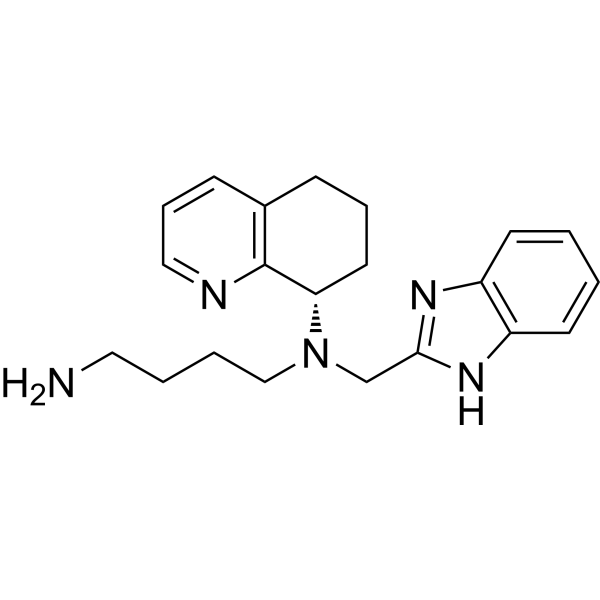
Mavorixafor (AMD-070) is a potent, selective and orally available CXCR4 antagonist, with an IC50 value of 13 nM against CXCR4 125I-SDF binding, and also inhibits the replication of T-tropic HIV-1 (NL4.3 strain) in MT-4 cells and PBMCs with an IC50 of 1 and 9 nM, respectively. Mavorixafor can be used for the study of WHIM syndrome.
For research use only. We do not sell to patients.
- Purity : 99.66%
- CAS No.: 558447-26-0
- Formula: C21H27N5
- Molecular Weight:349.47
-
Storage:
4°C, stored under nitrogen
* In solvent : -80°C, 6 months; -20°C, 1 month (stored under nitrogen)

To place orders, for customer services and technical support, please contact: MedChemExpress USA
Tel: 609-228-6898 E-mail: [email protected] [email protected]


-
 Biological Activity
-
Chemical Information
-
Solvent & Solubility
- Purity & Documentation
- References
-
 Help & FAQs


-
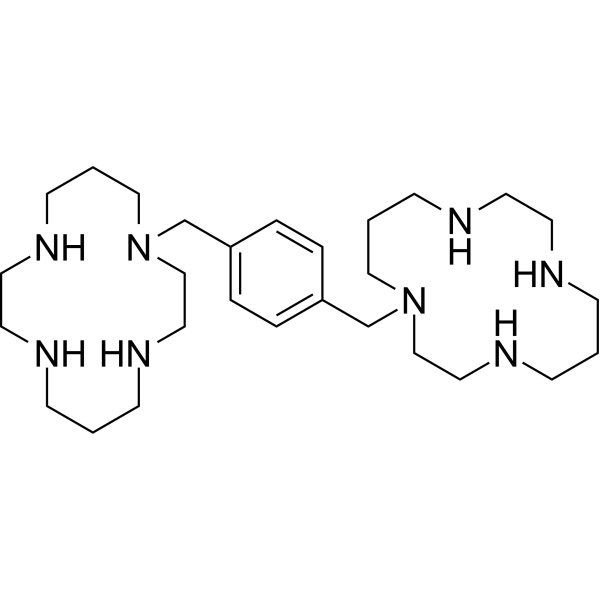
HY-10046
PlerixaforCXCR4 Antagonist -
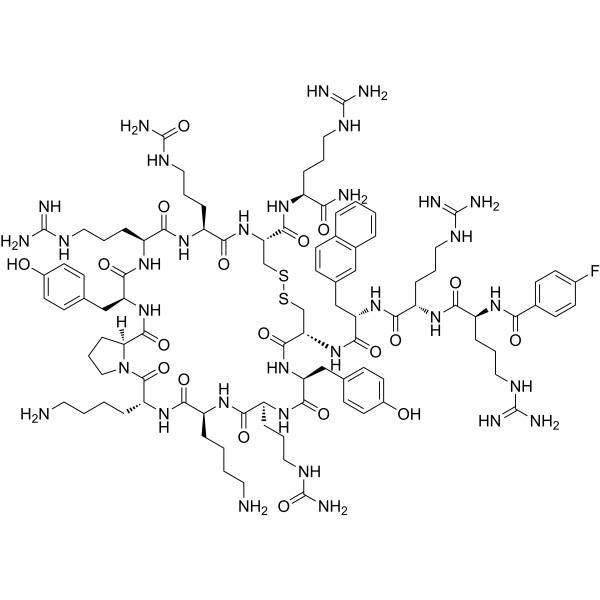
HY-P0171
MotixafortideCXCR4 Antagonist -
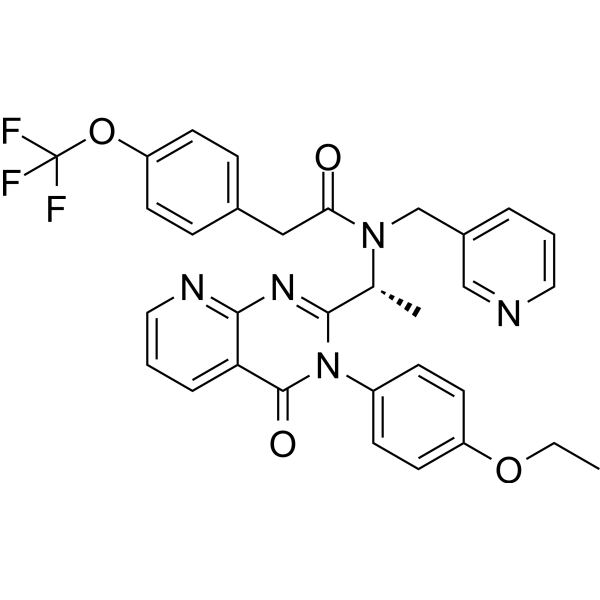
HY-15319
AMG 487CXCR3 Antagonist -
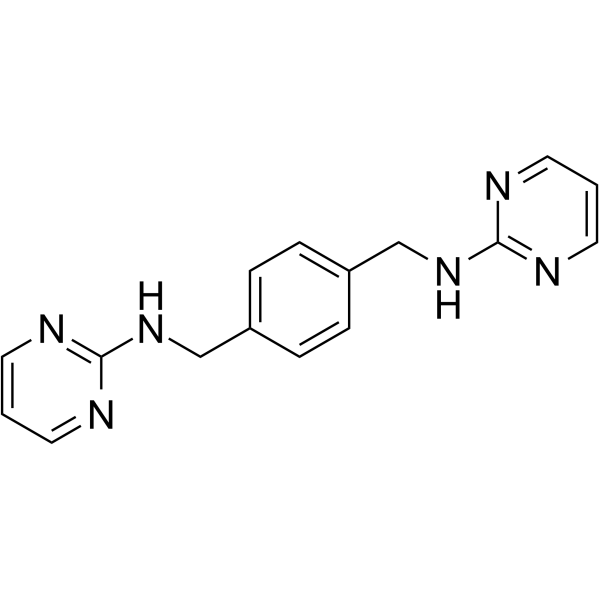
HY-13696
MSX-122CXCR4 Antagonist -
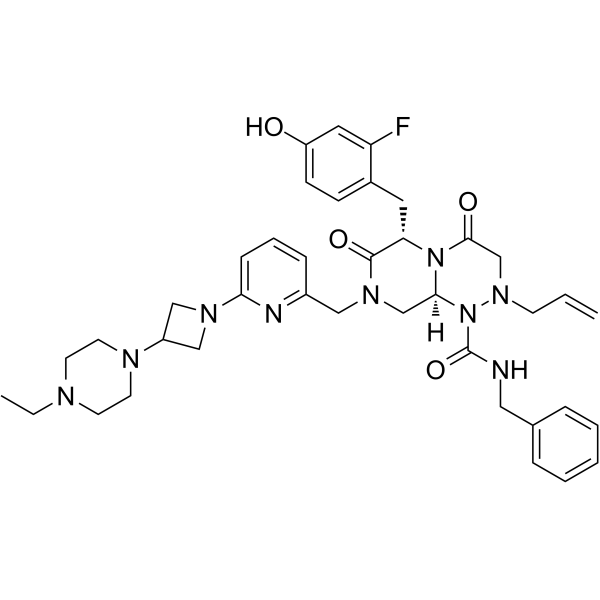
HY-111386
E-7386CBP/beta-catenin Modulator -
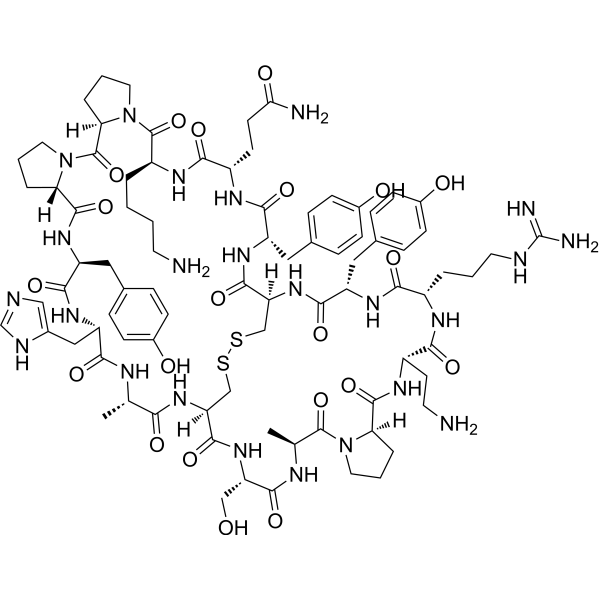
HY-P1682
BalixafortideCXCR4 Antagonist -
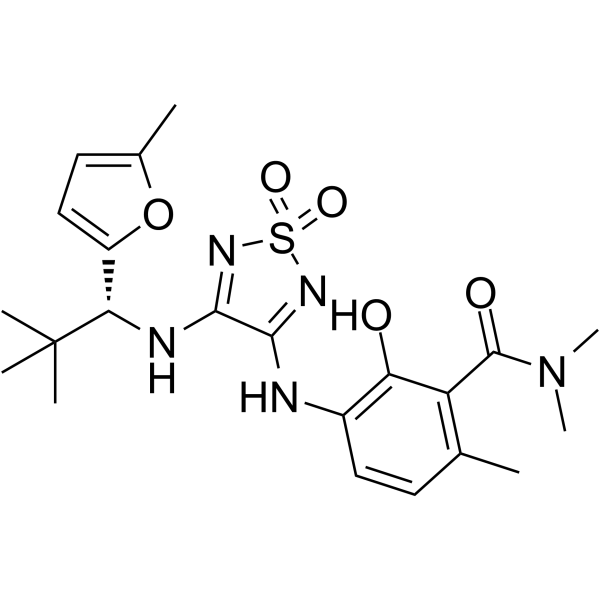
HY-133073
CCR7 Ligand 1CCR7 Antagonist -
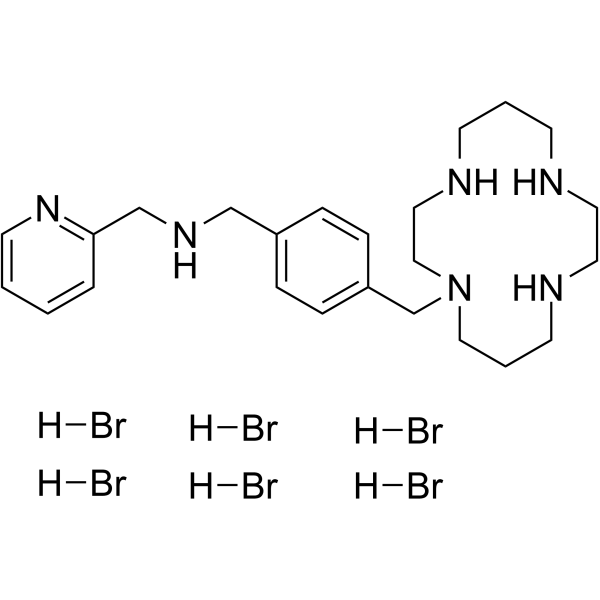
HY-15971
AMD 3465 hexahydrobromideCXCR4 Antagonist -
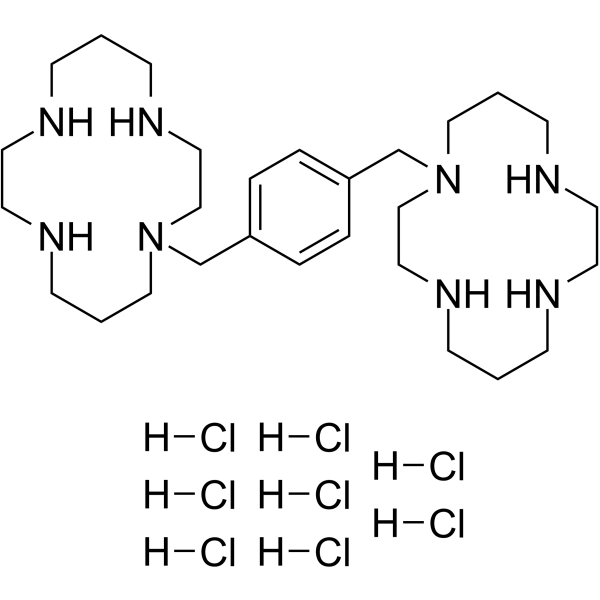
HY-50912
Plerixafor octahydrochlorideCXCR4 Antagonist -
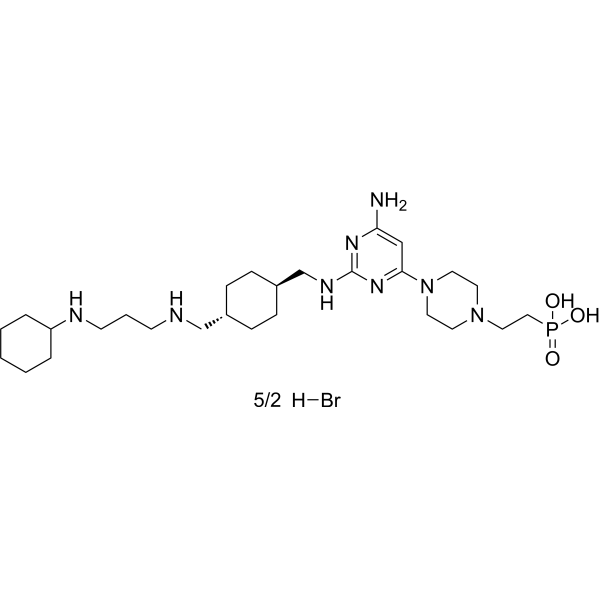
HY-19867A
Burixafor hydrobromideCXCR4 Antagonist -
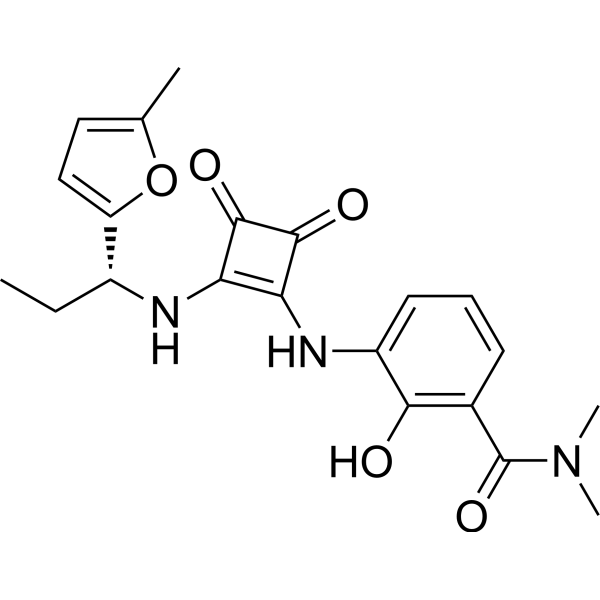
HY-10198
NavarixinCXCR1/2 Antagonist -
HY-15251
ReparixinCXCR1/2 Inhibitor
Publications Citing Use of MedChemExpress (MCE) Mavorixafor
More- Proc Natl Acad Sci U S A. 2025 Mar 18;122(11):e2425795122. [Abstract]
- Cell Chem Biol. 2026 Jul 14:S2451-9456(26)00232-1. [Abstract]
- Cell Mol Life Sci. 2024 Mar 13;81(1):132. [Abstract]
- Am J Physiol Cell Physiol. 2025 Apr 1;328(4):C1260-C1278. [Abstract]
- Oncol Rep. 2022 Apr;47(4):68. [Abstract]
- Biosci Rep. 2023 Dec 22;43(12):BSR20230981. [Abstract]
- Br J Haematol. 2023 May;201(3):459-469. [Abstract]
- PLoS One. 2016 Mar 21;11(3):e0151765. [Abstract]
- Patent. US20220273751A1.
 Customer Validation & Images

-
Others

-
Cell Imaging/Staining


Biological Activity
Description
IC50 & Target
[1]|
125I-SDF-CXCR4 13 nM (IC50) |
HIV-1 (NL4.3 strain) 1 nM (IC50, in MT-4 cells) |
HIV-1 (NL4.3 strain) 9 nM (IC50, in PBMCs) |
HIV-1 (NL4.3 strain) 3 nM (IC90, in MT-4 cells) |
HIV-1 (NL4.3 strain) 26 nM (IC90, in PBMCs) |
Cellular Effect
|
Cell Line

|
Type | Value | Description | References |
|---|---|---|---|---|
| HOS | CC50 |
>10 μM
Compound: 1, AMD-070
|
Cytotoxicity against human HOS cells
Cytotoxicity against human HOS cells
|
[PMID: 19640718] |
| HOS | IC50 |
0.01 μM
Compound: 1, AMD-070
|
Antiviral activity against HIV1 3B infected in human HOS cells
Antiviral activity against HIV1 3B infected in human HOS cells
|
[PMID: 19640718] |
| HOS | IC50 |
10 nM
Compound: AMD-070
|
Antiviral activity against HIV1 3B infected in human HOS cells expressing human CXCR4/CCR5/CD4/pHIV-LTR luciferase assessed as inhibition of viral infection to cells
Antiviral activity against HIV1 3B infected in human HOS cells expressing human CXCR4/CCR5/CD4/pHIV-LTR luciferase assessed as inhibition of viral infection to cells
|
[PMID: 20443225] |
| MT4 | IC50 |
0.003 μM
Compound: 2, AMD-070
|
Antiviral activity against HIV1 NL4.3 infected in human MT4 cells expressing CD4 and CXCR4 assessed as inhibition of virus-induced cytopathicity
Antiviral activity against HIV1 NL4.3 infected in human MT4 cells expressing CD4 and CXCR4 assessed as inhibition of virus-induced cytopathicity
|
[PMID: 20297846] |
| MT4 | IC50 |
0.016 μM
Compound: 2, AMD-070
|
Antiviral activity against HIV1 NL4.3 infected in human MT4 cells assessed as inhibition of virus-induced cytopathicity in presence of 10% human serum
Antiviral activity against HIV1 NL4.3 infected in human MT4 cells assessed as inhibition of virus-induced cytopathicity in presence of 10% human serum
|
[PMID: 20297846] |
| MT4 | IC50 |
2.3 ng/mL
Compound: AMD-070
|
Antiviral activity against HIV1 NL4.3 in human MT4 cells
Antiviral activity against HIV1 NL4.3 in human MT4 cells
|
[PMID: 17452489] |
| MT4 | IC50 |
4.8 nM
Compound: 1, AMD070
|
Antiviral activity against X4 tropic HIV1 NL4.3 infected in CD4 and CXCR4 expressing human MT4 cells assessed as inhibition of viral cytopathicity
Antiviral activity against X4 tropic HIV1 NL4.3 infected in CD4 and CXCR4 expressing human MT4 cells assessed as inhibition of viral cytopathicity
|
[PMID: 21295470] |
In Vitro
Mavorixafor (AMD-070) is a potent and orally available CXCR4 antagonist, with an IC50 value of 13 nM against CXCR4 125I-SDF binding, and also inhibits the replication of T-tropic HIV-1 (NL4.3 strain) in MT-4 cells and PBMCs with an IC50 of 1 and 9 nM, respectively. Mavorixafor (AMD-070) shows no effect on other chemokine receptors (CCR1, CCR2b, CCR4, CCR5, CXCR1, and CXCR2)[1]. Mavorixafor (AMD-070) (6.6 μM) significantly suppresses the anchorage-dependent growth, the migration and matrigel invasion of the B88-SDF-1 cells[2].
MedChemExpress (MCE) has not independently confirmed the accuracy of these methods. They are for reference only.
In Vivo
MedChemExpress (MCE) has not independently confirmed the accuracy of these methods. They are for reference only.
Clinical Trial
| NCT Number | Sponsor | Condition | Start Date |
Phase
|
|---|---|---|---|---|
| NCT01329991 | 2011-05 | PHASE1 |


Chemical Information
-
CAS No. 558447-26-0
-
Appearance Solid
-
Molecular Weight 349.47
-
Formula C21H27N5
-
Color White to gray
-
SMILES
NCCCCN(CC1=NC2=C(N1)C=CC=C2)[C@@H]3C4=C(CCC3)C=CC=N4
-
Synonyms
AMD-070; AMD-11070
-
Shipping
Room temperature in continental US; may vary elsewhere.
-
Storage
4°C, stored under nitrogen
* In solvent : -80°C, 6 months; -20°C, 1 month (stored under nitrogen)


Publications (9)
-
Journal Impact Factor
-
Most Recent
-
Proc Natl Acad Sci U S A
Structural mechanisms underlying the modulation of CXCR4 by diverse small-molecule antagonists. [Abstract]2025 Mar 18;122(11):e2425795122. PMID: 40063796 -
Cell Chem Biol
2026 Jul 14:S2451-9456(26)00232-1. PMID: 42447861
Mavorixafor purchased from MedChemExpress. Usage Cited in: Cell Chem Biol. 2026 Jul 14:S2451-9456(26)00232-1. [Abstract]
Cells were transfected with a constant amount (20 ng/well) of donor (NLuc_CXCR4) and acceptor (SNAP_CXCR4). Cells were labeled with SNAP_Surface-AlexaFluor 488 (0.2 μM final concentration) for 30 min before experimentation. Cells were then incubated for 30 min with EGF (0.1 μM), CXCL12 (0.1 μM), EGF+CXCL12 (both 0.1 μM), AMD3100 (10 μM), AMD070 (10 μM), IT1t (10 μM), erlotinib (10 μM), VUN400c (0.1 μM), VUN401 (0.1 μM), VUN415c (0.1 μM), Q44c (0.1 μM), or Q86c (0.1 μM).
-
Cell Mol Life Sci
Crosstalk between purinergic receptor P2Y11 and chemokine receptor CXCR7 is regulated by CXCR4 in human macrophages. [Abstract]2024 Mar 13;81(1):132. PMID: 38472446 -
Am J Physiol Cell Physiol
Mechanistic insights into SENP1 and OCT4 interaction in promoting drug resistance and stem cell features in colon cancer. [Abstract]2025 Apr 1;328(4):C1260-C1278. PMID: 40063360 -
Oncol Rep
Enhanced CXCL12/CXCR4 signaling increases tumor progression in radiation‑resistant pancreatic cancer. [Abstract]2022 Apr;47(4):68. PMID: 35119076
Mavorixafor purchased from MedChemExpress. Usage Cited in: Oncol Rep. 2022 Apr;47(4):68. [Abstract]
Normal and radiation-resistant MIA PaCa-2 cells were treated with AMD070 (2.5 µM) for 72 h, after which 200 cells were seeded in 6-cm dishes and irradiated at a dose of 2 Gy.
-
Biosci Rep
Biological and mutational analyses of CXCR4-antagonist interactions and design of new antagonistic analogs. [Abstract]2023 Dec 22;43(12):BSR20230981. PMID: 38131305 -
Br J Haematol
CXCR4 antagonists disrupt leukaemia-meningeal cell adhesion and attenuate chemoresistance. [Abstract]2023 May;201(3):459-469. PMID: 36535585 -
PLoS One
Impact of a CXCL12/CXCR4 Antagonist in Bleomycin (BLM) Induced Pulmonary Fibrosis and Carbon Tetrachloride (CCl4) Induced Hepatic Fibrosis in Mice. [Abstract]2016 Mar 21;11(3):e0151765. PMID: 26998906 -


Solvent & Solubility
In Vitro:
DMSO : 100 mg/mL (286.15 mM; Need ultrasonic; Hygroscopic DMSO has a significant impact on the solubility of product, please use newly opened DMSO)
Please refer to the solubility information to select the appropriate solvent. Once prepared, please aliquot and store the solution to prevent product inactivation from repeated freeze-thaw cycles.
Storage method and period of stock solution: -80°C, 6 months; -20°C, 1 month (stored under nitrogen). When stored at -80°C, please use it within 6 months. When stored at -20°C, please use it within 1 month.
Please refer to the solubility information to select the appropriate solvent. Once prepared, please aliquot and store the solution to prevent product inactivation from repeated freeze-thaw cycles.
Storage method and period of stock solution: -80°C, 6 months; -20°C, 1 month (stored under nitrogen). When stored at -80°C, please use it within 6 months. When stored at -20°C, please use it within 1 month.
Concentration (start) × Volume (start) = Concentration (final) × Volume (final)
In Vivo:
Select the appropriate dissolution method based on your experimental animal and administration route.
- For the following dissolution methods, please ensure to first prepare a clear stock solution using an In Vitro approach and then sequentially add co-solvents:
- To ensure reliable experimental results, the clarified stock solution can be appropriately stored based on storage conditions. As for the working solution for In Vivo experiments, it is recommended to prepare freshly and use it on the same day.
- The percentages shown for the solvents indicate their volumetric ratio in the final prepared solution. If precipitation or phase separation occurs during preparation, heat and/or sonication can be used to aid dissolution.
Add each solvent one by one: 10% DMSO 40% PEG300 5% Tween-80 45% Saline
Solubility: ≥ 2.5 mg/mL (7.15 mM); Clear solution
This protocol yields a clear solution of ≥ 2.5 mg/mL (saturation unknown).
Taking 1 mL working solution as an example, add 100 μL DMSO stock solution (25.0 mg/mL) to 400 μL PEG300, and mix evenly; then add 50 μL Tween-80 and mix evenly; then add 450 μL Saline to adjust the volume to 1 mL.
Preparation of Saline: Dissolve 0.9 g sodium chloride in ddH₂O and dilute to 100 mL to obtain a clear Saline solution.
Add each solvent one by one: 10% DMSO 90% (20% SBE-β-CD in Saline)
Solubility: ≥ 2.5 mg/mL (7.15 mM); Clear solution
This protocol yields a clear solution of ≥ 2.5 mg/mL (saturation unknown).
Taking 1 mL working solution as an example, add 100 μL DMSO stock solution (25.0 mg/mL) to 900 μL 20% SBE-β-CD in Saline, and mix evenly.
Preparation of 20% SBE-β-CD in Saline (4°C, storage for one week): 2 g SBE-β-CD powder is dissolved in 10 mL Saline, completely dissolve until clear.
In Vivo Dissolution Calculator
Please enter the basic information of animal experiments:
-
-
-
-
Recommended: Prepare an additional quantity of animals to account for potential losses during experiments.
Please enter your animal formula composition:
-
%DMSO +
Recommended: Keep the proportion of DMSO in working solution below 2% if your animal is weak.
-
%+
-
+%Tween-80 + +
-
%Saline +
The co-solvents required include: DMSO, . All of co-solvents are available by MedChemExpress (MCE). , Tween 80. All of co-solvents are available by MedChemExpress (MCE).
Working solution concentration: 0.22 mg/mL
Method for preparing stock solution: mg drug dissolved in μL DMSO. Stock solution concentration: mg/mL. * In solvent : -80°C, 6 months; -20°C, 1 month (stored under nitrogen)
1. Take μL DMSO stock solution;
2. Add μL .
μL , mix evenly;
3. Then add μL Tween 80, mix evenly;
4. Then add μL
Please ensure that the stock solution in the first step is dissolved to a clear state, and add co-solvents in sequence. You can use ultrasonic heating (ultrasonic cleaner, recommended frequency 20-40 kHz), vortexing, etc. to assist dissolution.


Purity & Documentation
-
Data Sheet (279 KB)
-
SDS (394 KB)
- English - EN (394 KB)
- Français - FR (394 KB)
- Deutsch - DE (394 KB)
- Norwegian - NO (394 KB)
- Español - ES (394 KB)
- Swedish - SV (394 KB)
- Italian - IT (394 KB)
- Korean - KR (394 KB)
- Portuguese - PT (394 KB)
-
Handling Instructions (2659 KB)
References
[1]. Skerlj RT, et al. Discovery of novel small molecule orally bioavailable C-X-C chemokine receptor 4 antagonists that are potent inhibitors of T-tropic (X4) HIV-1 replication. J Med Chem. 2010 Apr 22;53(8):3376-88. [Content Brief]
[2]. Uchida D, et al. Effect of a novel orally bioavailable CXCR4 inhibitor, AMD070, on the metastasis of oral cancer cells. Oncol Rep. 2018 Jul;40(1):303-308. [Content Brief]


Complete Stock Solution Preparation Table
Please refer to the solubility information to select the appropriate solvent. Once prepared, please aliquot and store the solution to prevent product inactivation from repeated freeze-thaw cycles.
Storage method and period of stock solution: -80°C, 6 months; -20°C, 1 month (stored under nitrogen). When stored at -80°C, please use it within 6 months. When stored at -20°C, please use it within 1 month.
| Optional Solvent | Concentration Solvent Mass | 1 mg | 5 mg | 10 mg | 25 mg |
|---|---|---|---|---|---|
| DMSO | 1 mM | 2.8615 mL | 14.3074 mL | 28.6148 mL | 71.5369 mL |
| 5 mM | 0.5723 mL | 2.8615 mL | 5.7230 mL | 14.3074 mL | |
| 10 mM | 0.2861 mL | 1.4307 mL | 2.8615 mL | 7.1537 mL | |
| 15 mM | 0.1908 mL | 0.9538 mL | 1.9077 mL | 4.7691 mL | |
| 20 mM | 0.1431 mL | 0.7154 mL | 1.4307 mL | 3.5768 mL | |
| 25 mM | 0.1145 mL | 0.5723 mL | 1.1446 mL | 2.8615 mL | |
| 30 mM | 0.0954 mL | 0.4769 mL | 0.9538 mL | 2.3846 mL | |
| 40 mM | 0.0715 mL | 0.3577 mL | 0.7154 mL | 1.7884 mL | |
| 50 mM | 0.0572 mL | 0.2861 mL | 0.5723 mL | 1.4307 mL | |
| 60 mM | 0.0477 mL | 0.2385 mL | 0.4769 mL | 1.1923 mL | |
| 80 mM | 0.0358 mL | 0.1788 mL | 0.3577 mL | 0.8942 mL | |
| 100 mM | 0.0286 mL | 0.1431 mL | 0.2861 mL | 0.7154 mL |


Mavorixafor Related Classifications
HY-50101 Related Classifications
 Powered by Bioz