



CCR1
CCR1 is a chemokine GPCR with broad ligand promiscuity, recognizing multiple CC chemokines and shaping leukocyte trafficking during inflammatory responses[1]. Mechanistically, CCR1 can signal through ligand-dependent Gi pathways and also shows constitutive, β-arrestin-mediated internalization, making receptor activation and trafficking experimentally separable[1][2]. Proteolytic processing further refines CCR1 biology because inflammatory proteases convert alternative CCR1 ligands into potent chemoattractants[3]. In monocyte-to-macrophage differentiation, CCR1 and CCR5 expression increase with enhanced functional response to MIP-1α, linking CCR1 to macrophage recruitment models[4]. Compared with CCR2 and CCR5, CCR1 blockade inhibited rheumatoid arthritis synovial-fluid-induced monocyte migration, whereas CCR2 or CCR5 blockade did not[5]. In disease models, pharmacological CCR1 blockade ameliorated murine arthritis and altered cytokine networks, supporting CCR1 as a tractable inflammatory target[6]. Clinical rheumatoid arthritis studies provided proof-of-concept for chemokine blockade, while medicinal chemistry studies produced selective CCR1 antagonists such as BMS-817399 for translational evaluation[7][8].
References:
- [1]. Shao Z, et al. Identification and mechanism of G protein-biased ligands for chemokine receptor CCR1. Nat Chem Biol. 2022 Mar;18(3):264-271. [Content Brief]
- [2]. Gilliland CT, et al. The chemokine receptor CCR1 is constitutively active, which leads to G protein-independent, β-arrestin-mediated internalization. J Biol Chem. 2013 Nov 8;288(45):32194-32210. [Content Brief]
- [3]. Berahovich RD, et al. Proteolytic activation of alternative CCR1 ligands in inflammation. J Immunol. 2005 Jun 1;174(11):7341-51. [Content Brief]
- [4]. Kaufmann A, et al. Increase of CCR1 and CCR5 expression and enhanced functional response to MIP-1alpha during differentiation of human monocytes to macrophages. J Leukoc Biol. 2001;69(2):248-252.
- [5]. Lebre MC, et al. Why CCR2 and CCR5 blockade failed and why CCR1 blockade might still be effective in the treatment of rheumatoid arthritis. PLoS One. 2011;6(7):e21772. [Content Brief]
- [6]. Amat M, et al. Pharmacological blockade of CCR1 ameliorates murine arthritis and alters cytokine networks in vivo. Br J Pharmacol. 2006 Nov;149(6):666-75. [Content Brief]
- [7]. Haringman JJ, et al. Chemokine blockade and chronic inflammatory disease: proof of concept in patients with rheumatoid arthritis. Ann Rheum Dis. 2003 Aug;62(8):715-21. [Content Brief]
- [8]. Santella JB 3rd, et al. Discovery of the CCR1 antagonist, BMS-817399, for the treatment of rheumatoid arthritis. J Med Chem. 2014 Sep 25;57(18):7550-64. [Content Brief]
-
CCR1 Related Products (19)
Related Products (19)

-
Recombinant Proteins (2)
- 1
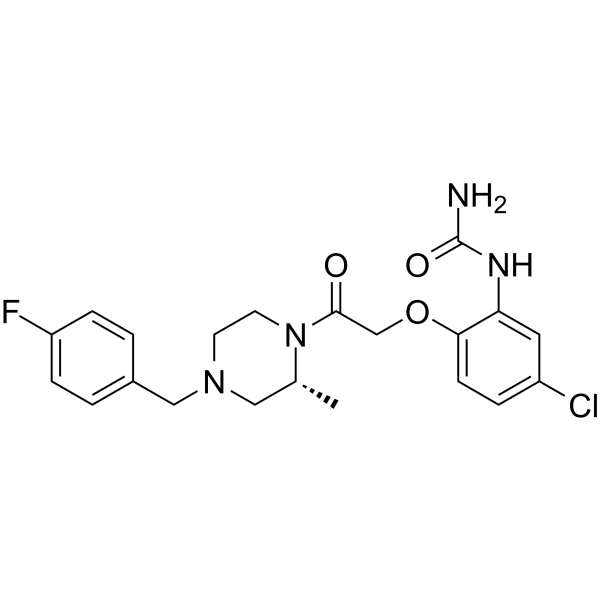
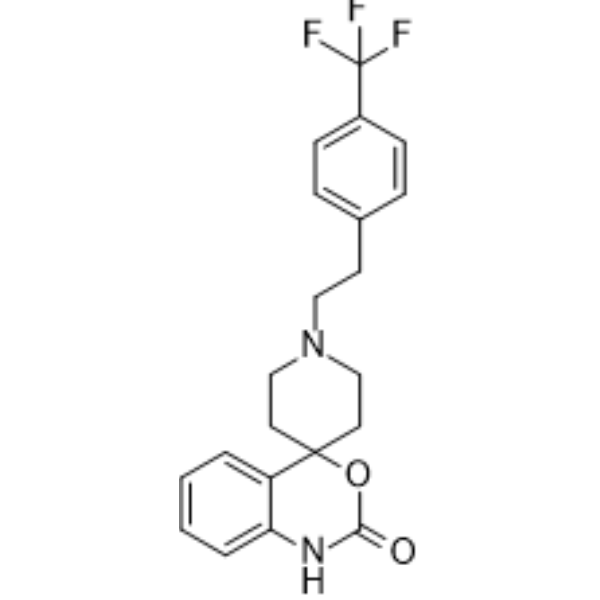
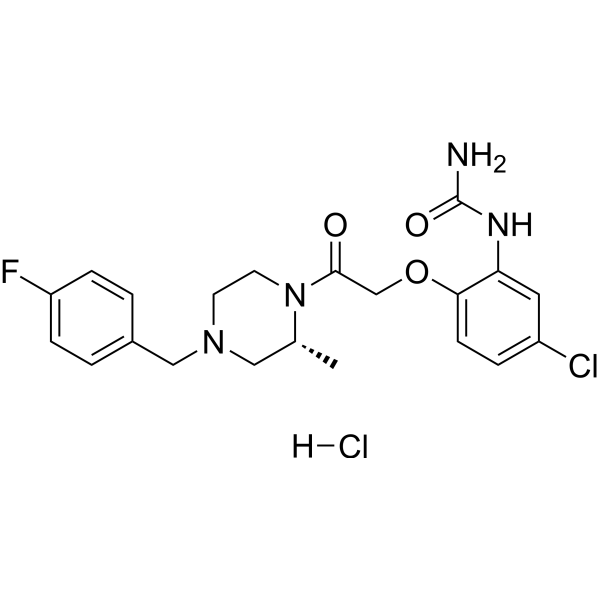
-
Abaucin hydrochloride
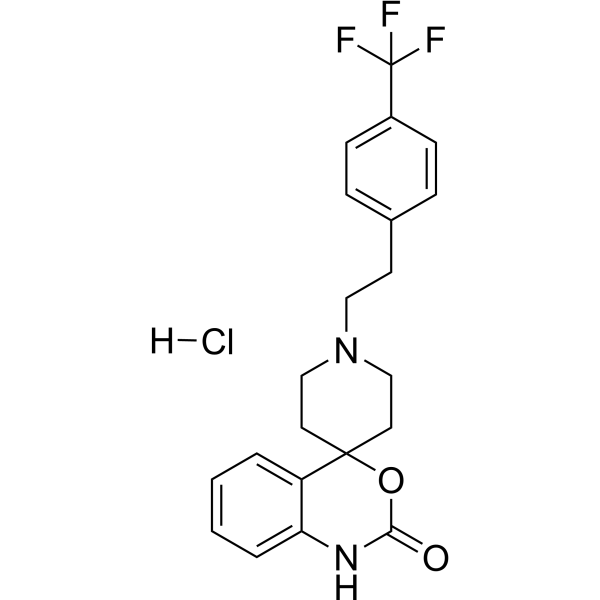 0 ImagesSynonyms: RS102895 hydrochloride; MLJS-21001 hydrochloride
-
J-113863
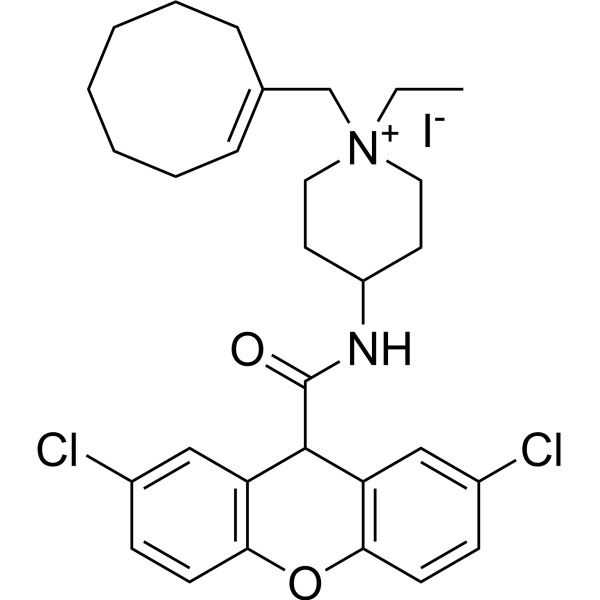 0 ImagesCat. No.: HY-103360CAS No.: 353791-85-2J-113863 is a potent and selective CCR1 antagonist with IC50 values of 0.9 nM and 5.8 nM for human and mouse CCR1 receptors, respectively. J-113863 is also a potent antagonist of the human CCR3 (IC50 of 0.58 nM) , but a weak antagonist of the mouse CCR3 (IC50 of 460 nM). J-113863 is inactive against CCR2, CCR4 and CCR5, as well as the LTB4 or TNF-α receptors. Anti-inflammatory effect.
-
YM022
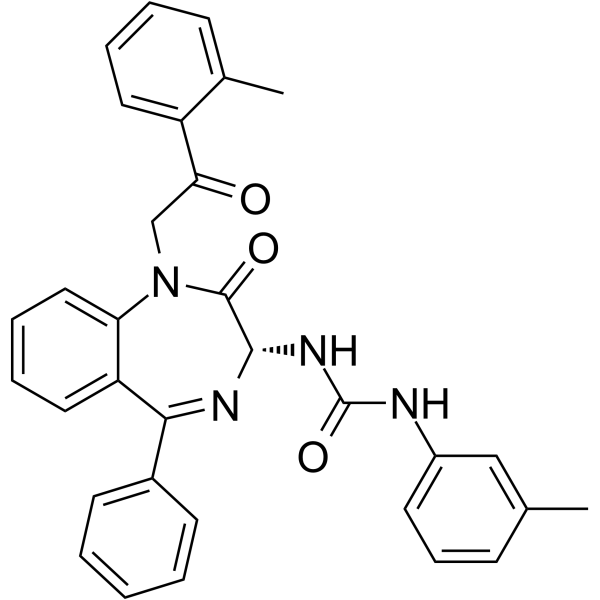 0 ImagesYM022 is a highly potent, selective and orally active gastrin/cholecystokinin (CCK)-B receptor (CCK-BR) antagonist. YM022 shows the Ki values of 68 pM and 63 nM for CCK-B and CCK-A receptor, respectively. YM022 can inhibit gastrin-induced gastric acid secretion and histidine decarboxylase activation in vivo.
-
AZD-4818
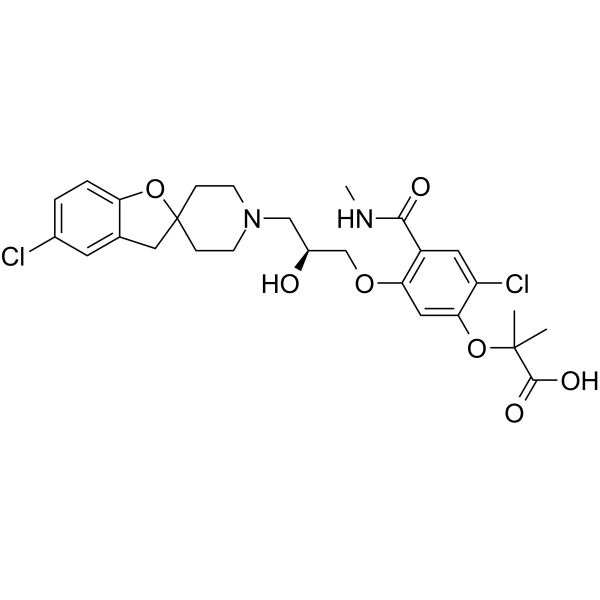 0 ImagesAZD-4818 is a potent, orally active antagonist of chemokine CCR1. AZD-4818 can be used for researching chronic obstructive pulmonary disease (COPD) .
-
Met-RANTES (human) acetate
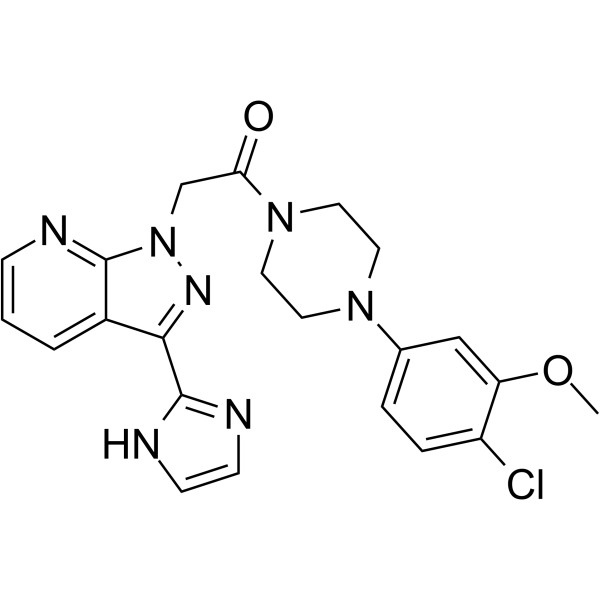
 0 ImagesCat. No.: HY-P4191APurity: 99.39%Met-RANTES (human) acetate is the acetate form of Met-RANTES (human) (HY-P4191). Met-RANTES (human) acetate is the antagonist for CCR1 and CCR5. Met-RANTES (human) acetate inhibits chemokines human MIP-1α and MIP-1β with IC50 of 5 and 2 nM. Met-RANTES (human) acetate reduces bone destruction and ameliorates rats adjuvant-induced arthritis (AIA).
-
BMS-817399
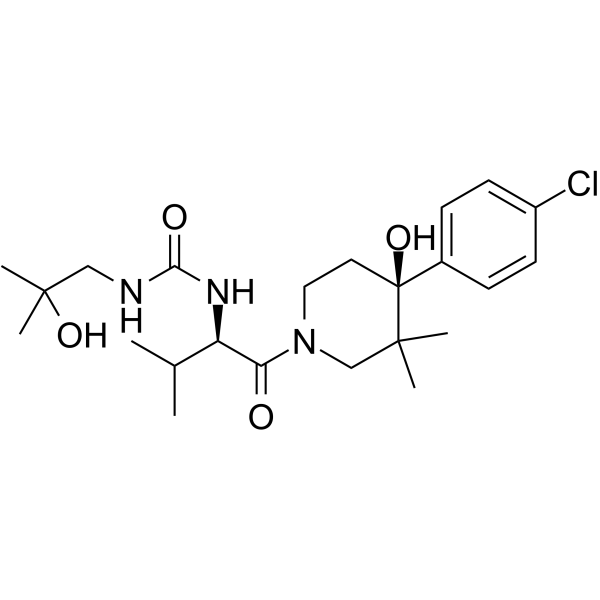 0 ImagesBMS-817399 is a potent, selective, and orally bioavailable CCR1 antagonist. BMS-817399 exhibits CCR1 binding affinity and chemotaxis inhibition potencies of 1 and 6 nM (IC50), respectively. BMS-817399 can be used for the research of rheumatoid arthritis.
-
CCR1 antagonist 9
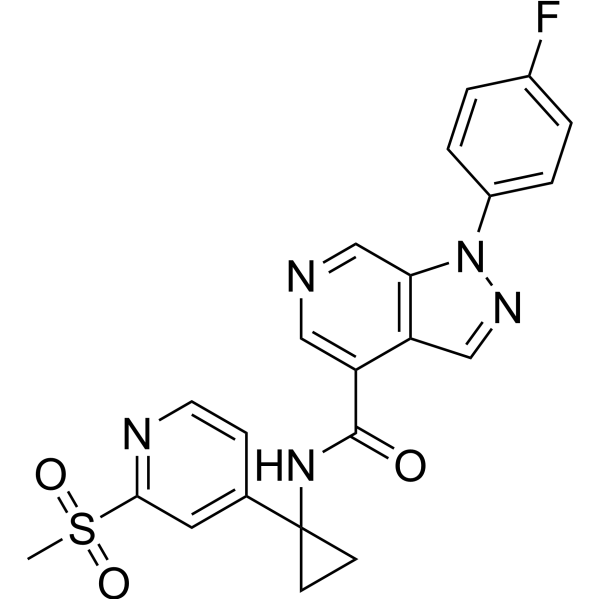
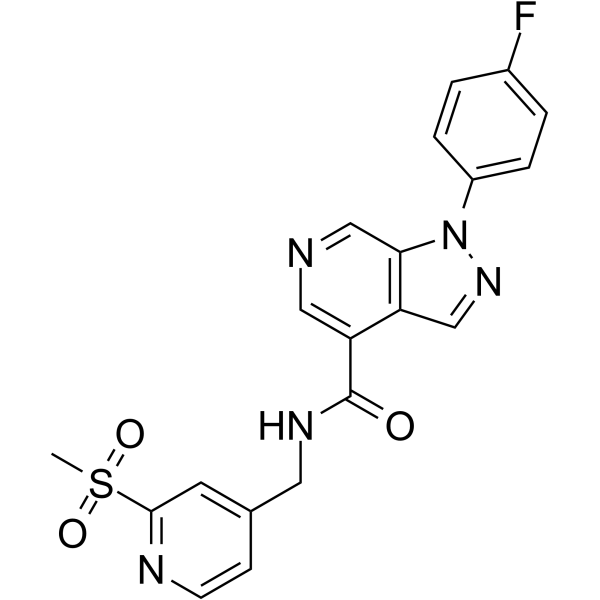 0 ImagesCCR1 antagonist 9 is a potent and selective CCR1 antagonist with an IC50 of 6.8 nM in calcium flux assay.
-
Met-RANTES (human)
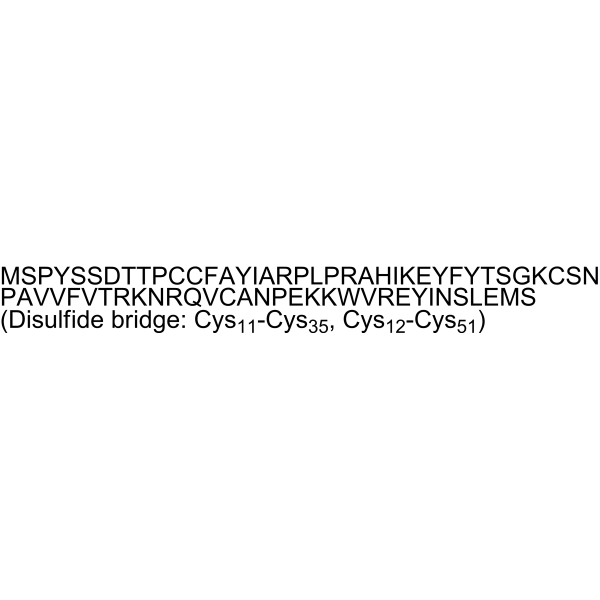 0 ImagesCat. No.: HY-P4191CAS No.: 1883816-50-9Synonyms: MSPYSSDTTPCCFAYIARPLPRAHIKEYFYTSGKCSN
-
CP-481715
 0 ImagesCat. No.: HY-12079CAS No.: 212790-31-3CP-481715 is a potent, reversible and selective CCR1 antagonist with a Kd of 9.2 nM for human CCR1. CP-481715 is >100-fold selective for CCR1 as compared with a panel of G-protein-coupled receptors including related chemokine receptors. CP-481715 has the potential for rheumatoid arthritis and other inflammatory diseases research.
-
CCR1 antagonist 12
 0 ImagesCat. No.: HY-124668CAS No.: 921208-19-7CCR1 antagonist 12 (Compound 12) is an antagonist for CCR1 with IC50 of 3 nM for human CCR1. CCR1 antagonist 12 inhibits CCL3-induced transwell chemotaxis with an IC50 of 0.009 µM. CCR1 antagonist 12 exhibits good pharmacokinetic characters in rats model.
-
CCR1 antagonist 13
 0 ImagesCat. No.: HY-124668ACAS No.: 868408-20-2CCR1 antagonist 13 is a selective CCR1 small molecule antagonist.
-
(E/Z)-MLN3897
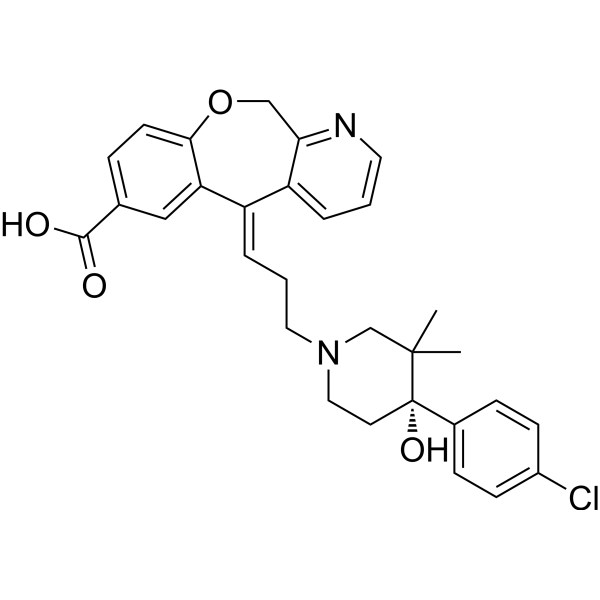 0 ImagesCat. No.: HY-15544CAS No.: 1010731-97-1Synonyms: CCR1 antagonist 10CCR1 antagonist 10 (example 1) is a potent and orally active CCR1 antagonist. CCR1 antagonist 10 inhibits 125I-MIP-1α binding to THP-1 cell membranes with an Ki value of 2.3 nM.
-
IBS007125
 0 ImagesCat. No.: HY-185661CAS No.: 2941099-67-6IBS007125 is a c-Maf inhibitor. IBS007125 does not alter the protein level or post-translational modification of c-Maf. IBS007125 inhibits some target genes of c-Maf (such as ITGB7 and CCR1). IBS007125 exerts anticancer effects on multiple myeloma expressing c-Maf. IBS007125 can be used for the research of multiple myeloma.
-
CP-865569
 0 ImagesCat. No.: HY-171476CAS No.: 478833-25-9CP-865569 is a CCR1 antagonist. CP-865569 can be used in the research of inflammatory diseases and autoimmune diseases, such as rheumatoid arthritis and multiple sclerosis.
- 1




