



CCR3
CCR3 is a CC chemokine receptor highly expressed on eosinophils and human blood basophils, where it mediates chemokine-driven migration toward eotaxin, RANTES, MCP-2, MCP-3, and MCP-4[1][2]. Mechanistically, eotaxin acts through CCR3 to induce calcium flux, tyrosine phosphorylation, F-actin reorganization, cell-shape change, and chemotaxis in human eosinophils[1][3]. In endothelial inflammation models, CCR3 participates in eosinophil arrest on activated endothelium under shear flow, linking chemokine sensing to firm leukocyte adhesion[4]. In allergic airway models, eotaxin chemokines and CCR3 fundamentally regulate allergen-induced pulmonary eosinophilia, with combined eotaxin-1/eotaxin-2 deletion producing reductions approaching those seen in CCR3-deficient mice[5]. In bleomycin-induced lung injury, CCL11 and CCR3 support granulocyte recruitment and pathogenic lung fibrosis, while neutralizing CCR3 antibodies reduce fibrosis, eosinophilia, neutrophilia, and profibrotic cytokine expression[6]. Compared with related isoforms, CCR3 differs from CCR1 because eotaxin binds CCR3 but not CCR1, while MIP-1α binds CCR1 but not CCR3[7]. For experimental applications, CCR3 antagonistic monoclonal antibodies block ligand binding, chemotaxis, and calcium flux, supporting CCR3 blockade as a practical tool for eosinophil-response studies[1].
References:
- [1]. Heath H, et al. Chemokine receptor usage by human eosinophils. The importance of CCR3 demonstrated using an antagonistic monoclonal antibody. J Clin Invest. 1997 Jan 15;99(2):178-84. [Content Brief]
- [2]. Uguccioni M, et al. High expression of the chemokine receptor CCR3 in human blood basophils. Role in activation by eotaxin, MCP-4, and other chemokines. J Clin Invest. 1997 Sep 1;100(5):1137-43. [Content Brief]
- [3]. El-Shazly A, et al. Novel association of the src family kinases, hck and c-fgr, with CCR3 receptor stimulation: A possible mechanism for eotaxin-induced human eosinophil chemotaxis. Biochem Biophys Res Commun. 1999 Oct 14;264(1):163-70. [Content Brief]
- [4]. Kitayama J, et al. The C-C chemokine receptor CCR3 participates in stimulation of eosinophil arrest on inflammatory endothelium in shear flow. J Clin Invest. 1998 May 1;101(9):2017-24. [Content Brief]
- [5]. Pope SM, et al. The eotaxin chemokines and CCR3 are fundamental regulators of allergen-induced pulmonary eosinophilia. J Immunol. 2005 Oct 15;175(8):5341-50. [Content Brief]
- [6]. Huaux F, et al. Role of eotaxin-1 (CCL11) and CC chemokine receptor 3 (CCR3) in bleomycin-induced lung injury and fibrosis. Am J Pathol. 2005;167(6):1485-1496. [Content Brief]
- [7]. Pease JE, et al. The N-terminal extracellular segments of the chemokine receptors CCR1 and CCR3 are determinants for MIP-1alpha and eotaxin binding, respectively, but a second domain is essential for efficient receptor activation. J Biol Chem. 1998 Aug 7;273(32):19972-6. [Content Brief]
-
CCR3 Related Products (13)
Related Products (13)

- 1
-
SB-328437
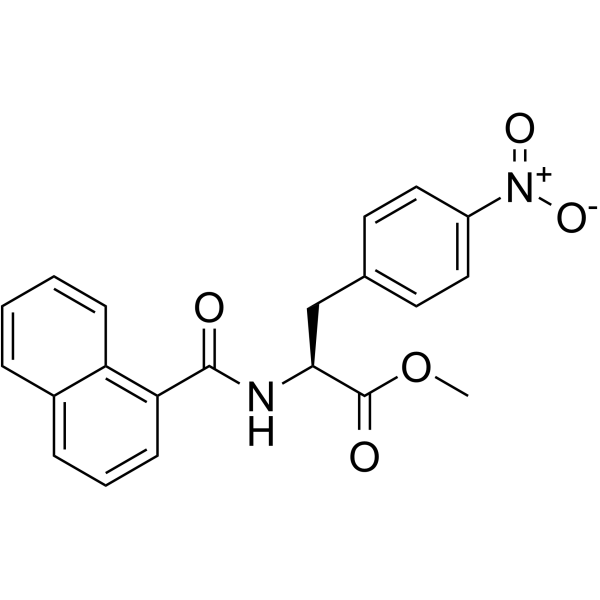 0 ImagesSB-328437 is a potent, selective non-peptide CCR3 antagonist with an IC50 of 4.5 nM. SB-328437 can inhibit eosinophil migration induced by eotaxin, eotaxin-2, and monocyte chemotactic protein-4. In addition, SB-328437 can sensitize 5-FU (HY-90006)-resistant gastric cancer cells. SB-328437 can also reduce the recruitment of neutrophils to the lungs and pulmonary inflammation during acute inflammation. SB-328437 can be used in the research of inflammation-related diseases.
-
J-113863
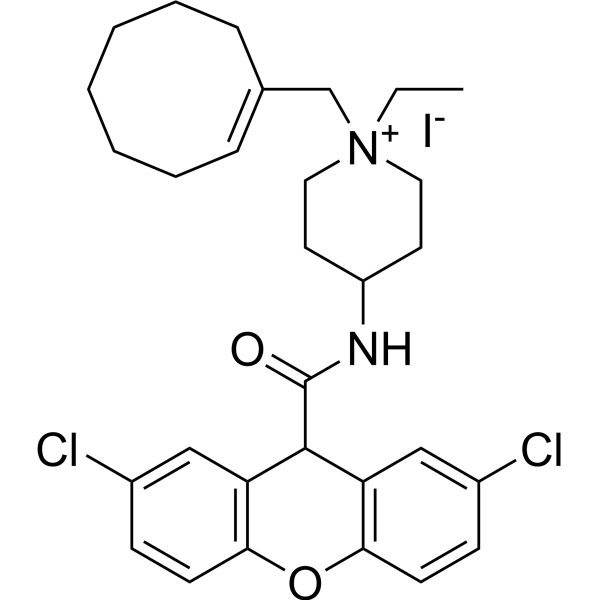 0 ImagesCat. No.: HY-103360CAS No.: 353791-85-2J-113863 is a potent and selective CCR1 antagonist with IC50 values of 0.9 nM and 5.8 nM for human and mouse CCR1 receptors, respectively. J-113863 is also a potent antagonist of the human CCR3 (IC50 of 0.58 nM) , but a weak antagonist of the mouse CCR3 (IC50 of 460 nM). J-113863 is inactive against CCR2, CCR4 and CCR5, as well as the LTB4 or TNF-α receptors. Anti-inflammatory effect.
-
GW 766994
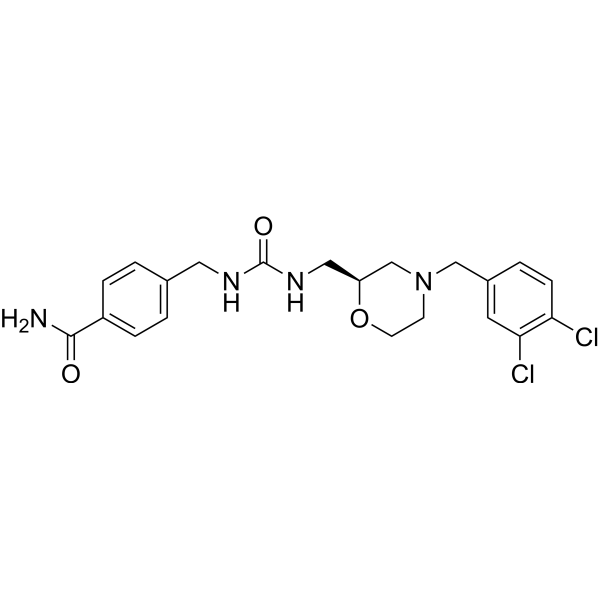 0 ImagesSynonyms: GW 994GW 766994 (GW 994) is an orally active and specific chemokine receptor-3 (CCR3) antagonist. GW 766994 has the potential for asthma and eosinophilic bronchitis research.

-
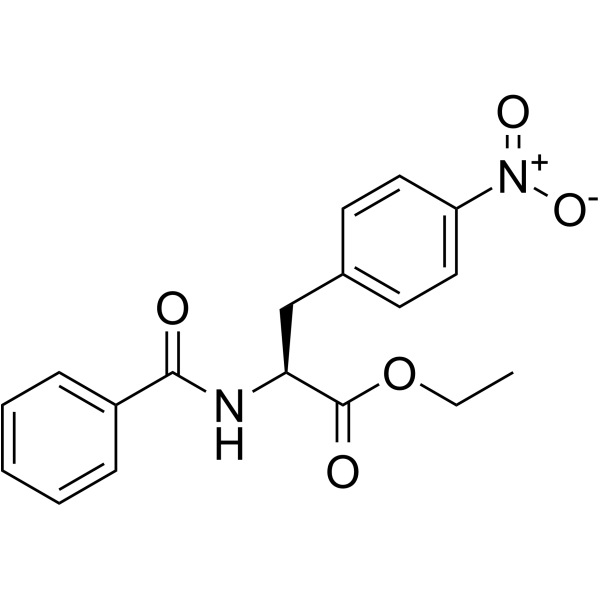
YM-344484
 0 ImagesCat. No.: HY-182736CAS No.: 671205-14-4YM-344484 is an orally active dual antagonist of chemokine CCR3 receptor and histamine histamine H1 receptor. YM-344484 inhibits ligand-induced Ca2+ influx, chemotaxis of CCR3-expressing cells, histamine-induced Ca2+ influx, increased vascular permeability and eosinophil accumulation. YM-344484 suppresses vascular permeability and inhibits eosinophil infiltration in a mouse asthma model. YM-344484 can be used in research related to asthma, allergic rhinitis and atopic dermatitis.
-
AZD3778
 0 ImagesCat. No.: HY-182439CAS No.: 485391-80-8AZD3778 (Compound 8) is an inhibitor of CCR3 and histamine H1 receptor (histamine H1 receptor), with IC50 values of 8.1 nM and 40 nM, respectively. AZD3778 inhibits the binding of eosinophil chemokines to CCR3, as well as the binding of histamine to histamine H1 receptor. AZD3778 exhibits anti-eosinophilic activity. AZD3778 alleviates symptoms associated with allergic rhinitis. AZD3778 can be used in research related to allergic rhinitis and asthma.
-
BMS-570520
 0 ImagesCat. No.: HY-182735CAS No.: 388101-58-4BMS-570520 is an orally bioavailable CCR3 antagonist with an IC50 of 1.9 nM against hCCR3 and an IC50 of 1300 nM against hCYP2D6. BMS-570520 inhibits CYP2D6, but shows low activity against off-target G protein-coupled receptors, biogenic amine transporters, and the hERG potassium channel. BMS-570520 regulates chemotaxis, calcium mobilization, and anti-inflammatory pathways. BMS-570520 can be used in research related to asthma, allergic rhinitis, and contact dermatitis.
-
CCR3 antagonist 1
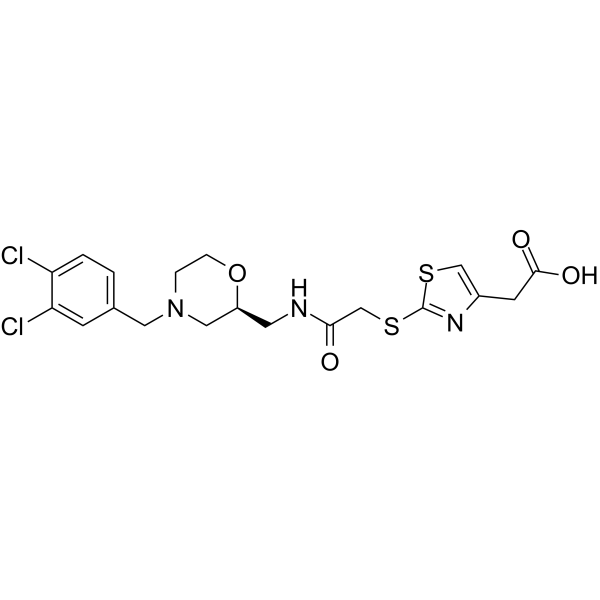 0 ImagesCCR3 antagonist 1 is a potent antagonist of CCR3, used for the research of immunologic and inflammatory diseases.
-
ALK4290
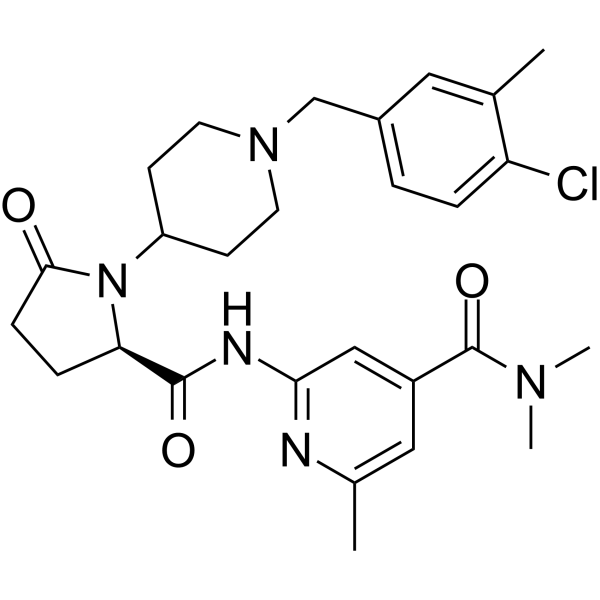 0 ImagesSynonyms: AKST4290; BI144807ALK4290 (AKST4290) is a potent, orally active and selective CCR3 inhibitor with a Ki of 3.2 nM. ALK4290 blocks CCR3-mediated signaling, abrogates macrophage supernatant-driven mesothelial-to-mesenchymal transition, and decreases p38 phosphorylation. ALK4290 inhibits CCL26-CCR3 axis-driven GPX2-mediated B-cell activation, and targets B cells to inhibit activation by GPX2-overexpressing tumor cells. ALK4290 can be used for the research of hepatocellular carcinome and Parkinson’s disease.
-
YM-344031
 0 ImagesCat. No.: HY-160998CAS No.: 671204-98-1YM-344031 is an orally active antagonist for CCR3. YM-344031 inhibits binding of Eotaxin-1 and RANTES to CCR3, with IC50 of 3.0 and 16.3 nM. YM-344031 inhibits ligand-induced rise in intracellular Ca[2+] and the ligand-induced chemotaxis. YM-344031 inhibits eotaxin-1-induced changes in eosinophil morphology in macaques blood, and prevents allergic skin reactions in a mouse allergy model.
-
Maceneolignan H
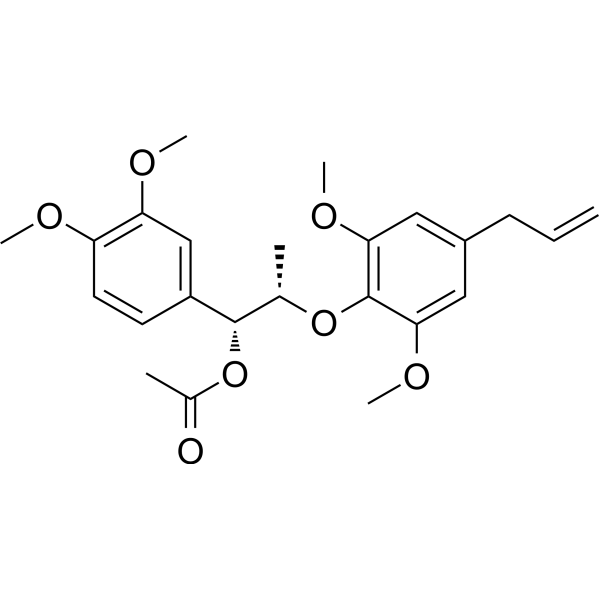 0 ImagesCat. No.: HY-N10397CAS No.: 1314042-85-7Maceneolignan H (Compound 8) is a neolignane compound isolated from the arils of Myristica fragrans. Maceneolignan H is a selective CCR3 antagonist (EC50 = 1.4 μM). Maceneolignan H has the potential for the research of allergic diseases.
-
BMS-639623
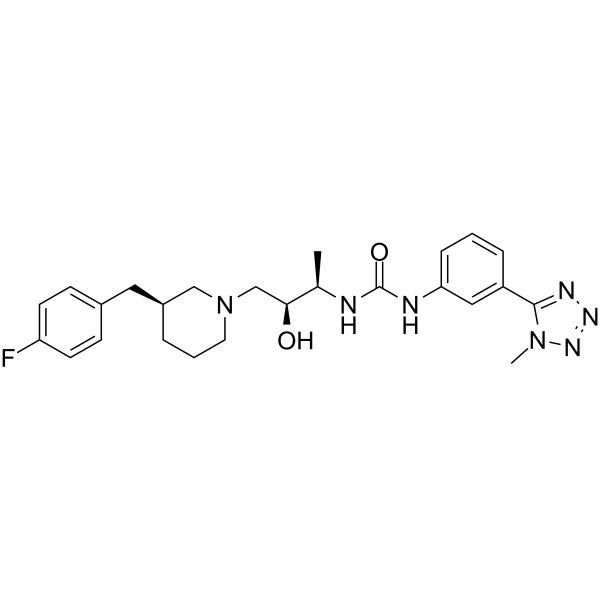 0 ImagesCat. No.: HY-120629CAS No.: 675122-44-8
- 1



