



SB-328437
Based on 7 publication(s) in Google Scholar
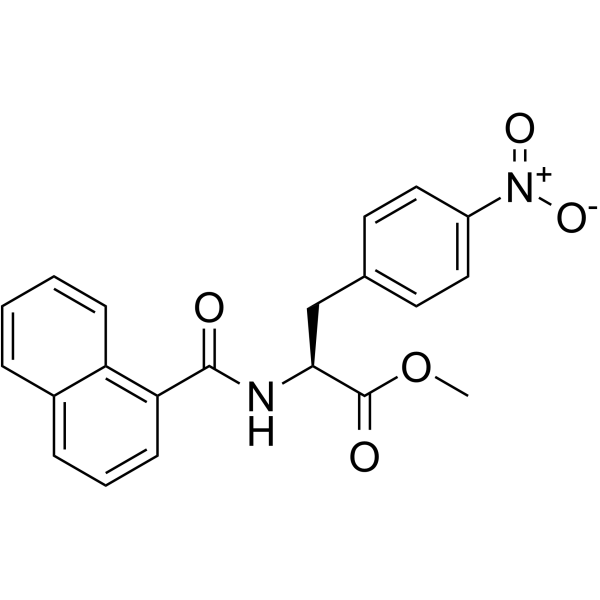
SB-328437 is a potent, selective non-peptide CCR3 antagonist with an IC50 of 4.5 nM. SB-328437 can inhibit eosinophil migration induced by eotaxin, eotaxin-2, and monocyte chemotactic protein-4. In addition, SB-328437 can sensitize 5-FU (HY-90006)-resistant gastric cancer cells. SB-328437 can also reduce the recruitment of neutrophils to the lungs and pulmonary inflammation during acute inflammation. SB-328437 can be used in the research of inflammation-related diseases.
For research use only. We do not sell to patients.
- Purity : 99.58%
- CAS No.: 247580-43-4
- Formula: C21H18N2O5
- Molecular Weight:378.38
-
Storage:
4°C, protect from light
* In solvent : -80°C, 6 months; -20°C, 1 month (protect from light)

To place orders, for customer services and technical support, please contact: MedChemExpress USA
Tel: 609-228-6898 E-mail: [email protected] [email protected]


-
 Biological Activity
-
Chemical Information
-
Solvent & Solubility
- Protocols
- Purity & Documentation
- References
-
 Help & FAQs


-
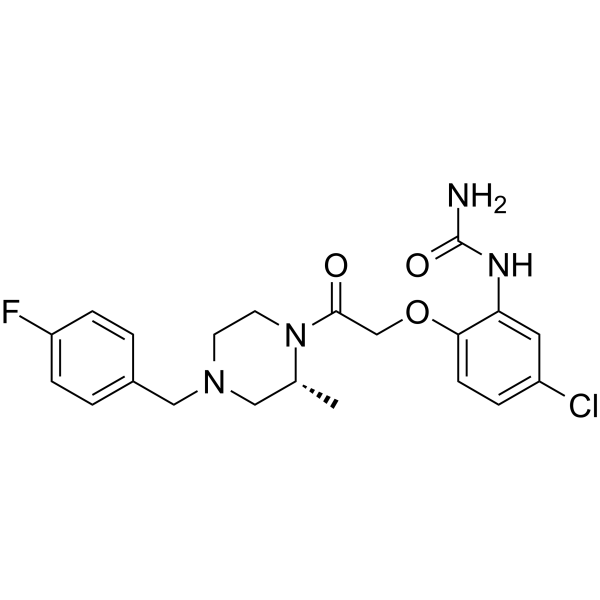
HY-12080
BX471CCR1 Antagonist -
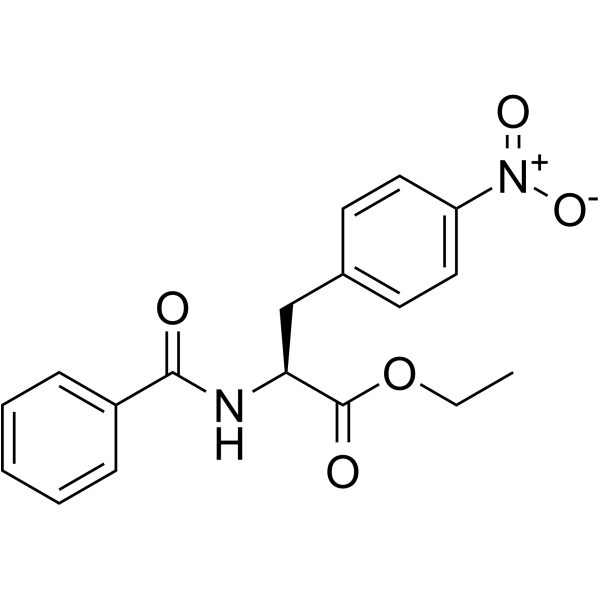
HY-103361
SB297006CCR3 Antagonist -
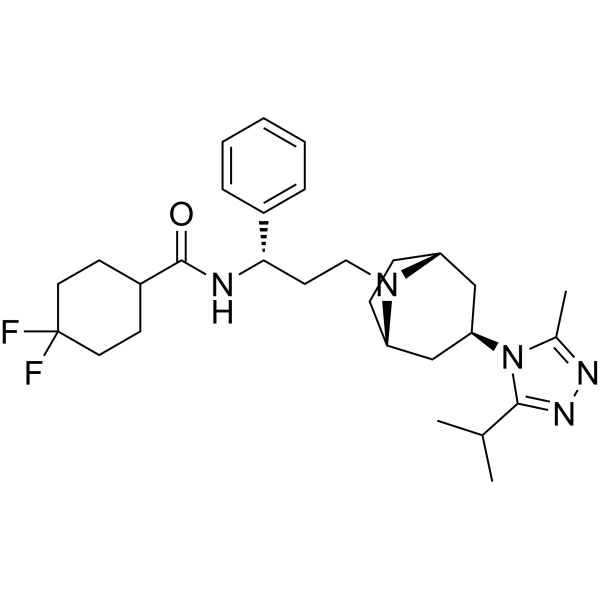
HY-13004
MaravirocCCR5 Antagonist -
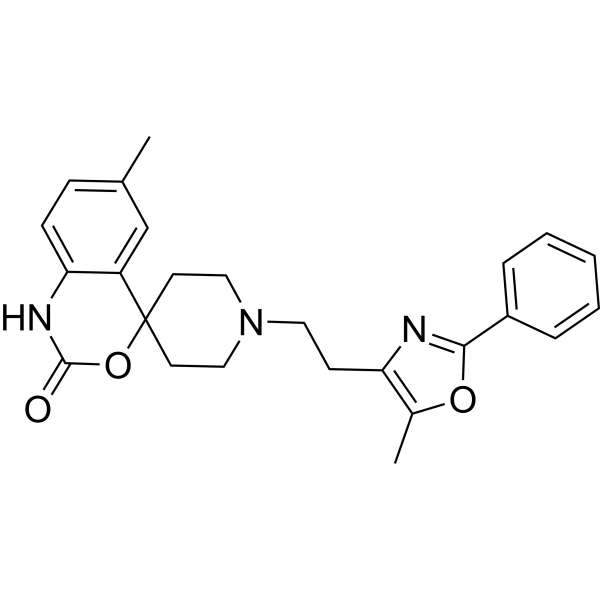
HY-15418
RS 504393CCR2 Antagonist -
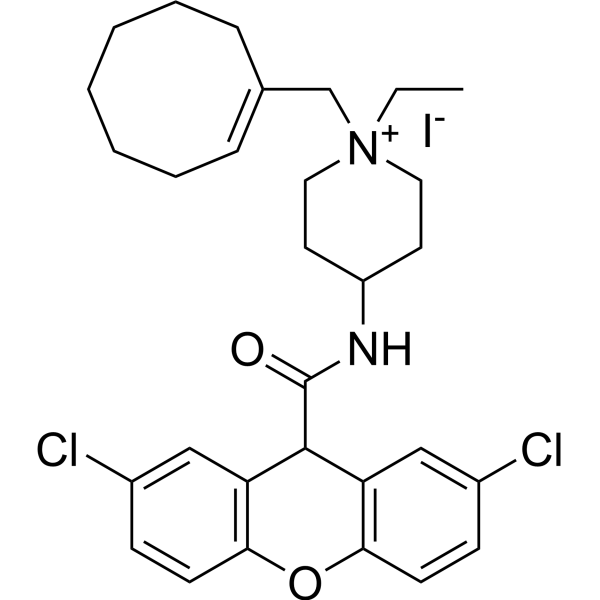
HY-103360
J-113863CCR1 Antagonist -
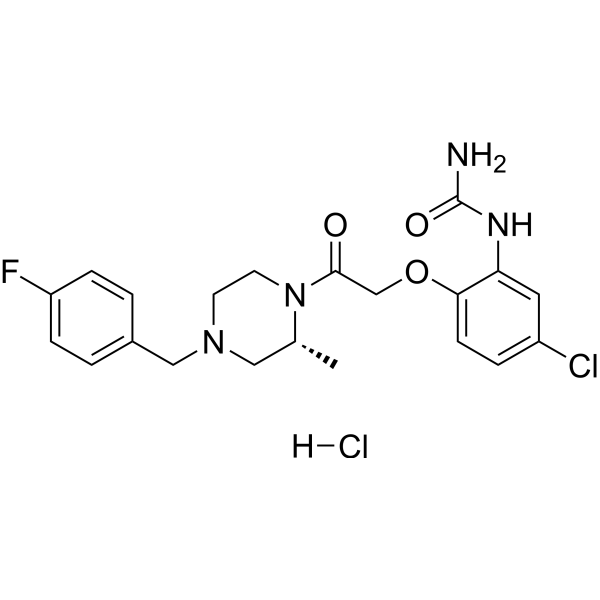
HY-12080A
BX471 hydrochlorideCCR Antagonist -
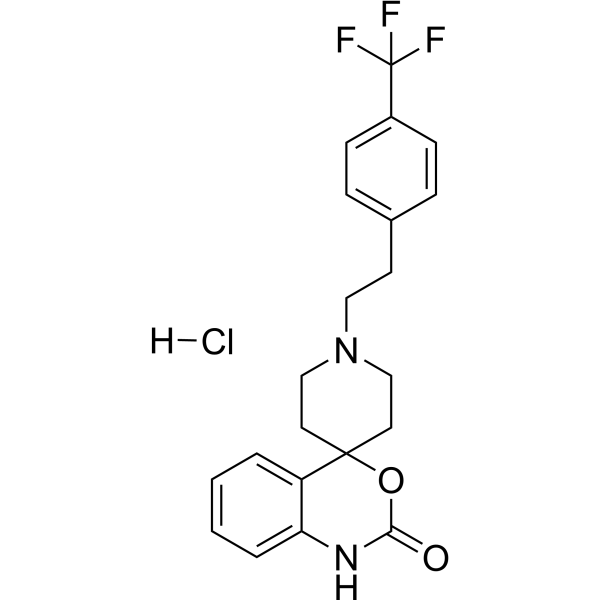
HY-18611
Abaucin hydrochlorideCCR2antagonist -
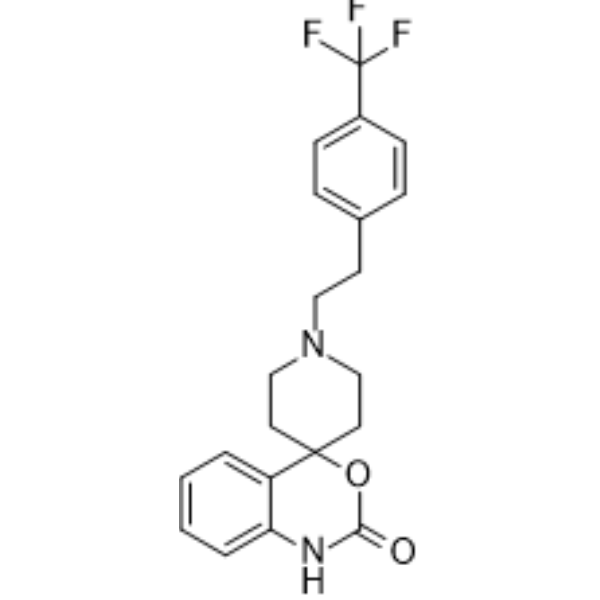
HY-18611A
AbaucinCCR Antagonist -
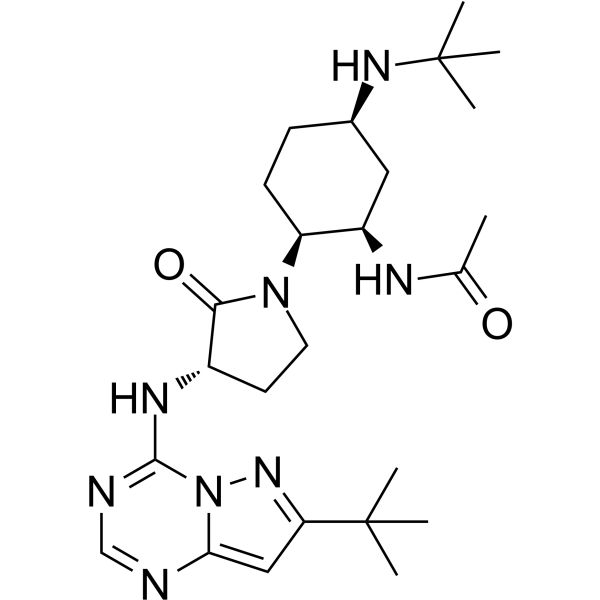
HY-109593
BMS-813160CCR2/CCR5 Antagonist -
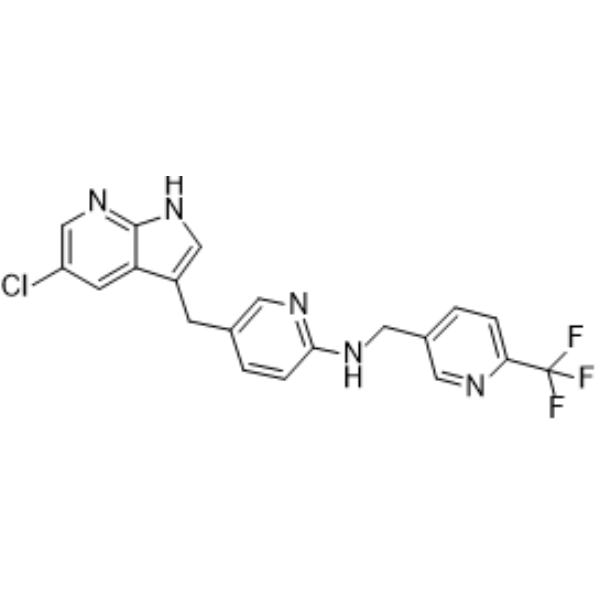
HY-16749
PexidartinibCSF1R/c-Kit Inhibitor -
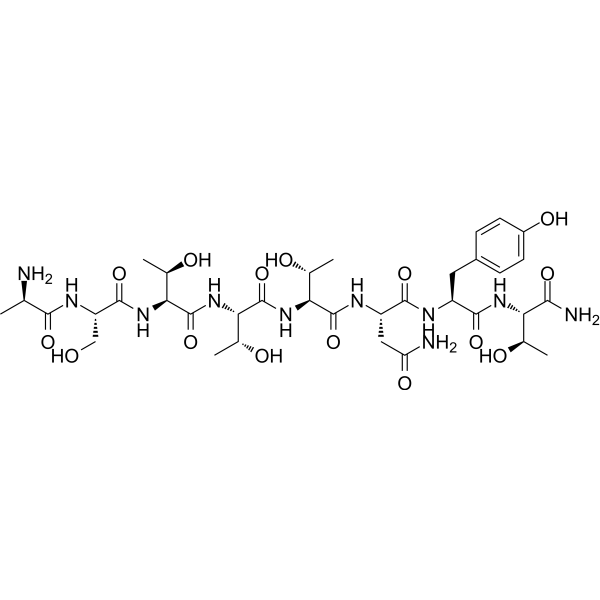
HY-P1034
DAPTACCR5 Inhibitor -
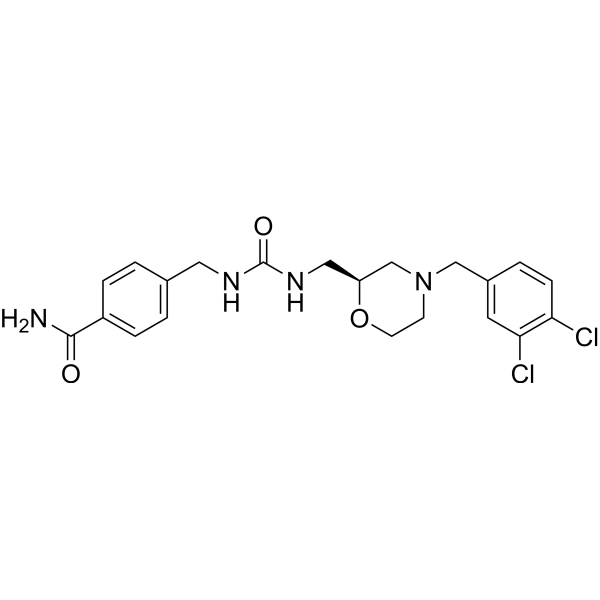
HY-107051
GW 766994CCR3 Antagonist
Publications Citing Use of MedChemExpress (MCE) SB-328437
More- J Biomed Sci. 2026 Jan 9;33(1):10. [Abstract]
- Int J Biol Sci. 2026 Jan 30;22(4):2157-2176.
- Front Immunol. 2026 Aug 10:17:1893377.
- Biochem Pharmacol. 2026 May 14;250(Pt 2):118056. [Abstract]
- Transl Res. 2025 Dec 23:S1931-5244(25)00120-3. [Abstract]
- Oncol Lett. 2024 May 1;28(1):296. [Abstract]
- bioRxiv. 2026 Aug 13.
 Customer Validation & Images

-
IF

-
WB

-
Flow Cytometry

-
Cell Proliferation/Viability Assay

-
RT-PCR


Biological Activity
Description
IC50 & Target
[3]|
CCR3 4.5 nM (IC50) |
In Vitro
SB-328437 (50 μM; 72 h) can reduce the viability of 5-FU-resistant AGS cells and inhibit the mRNA levels of CCR3 and thymidylate synthase, when used in combination with 5-FU (HY-90006)[1].
MedChemExpress (MCE) has not independently confirmed the accuracy of these methods. They are for reference only.
-
Cell Line:5-FU (HY-90006) treated 5‑FU‑resistant AGS cell line
-
Concentration:50 μM
-
Incubation Time:72 h
-
Result:Did not significantly affect cell viability.
Significantly reduced cell viability when combined with 5-FU.
In Vivo
MedChemExpress (MCE) has not independently confirmed the accuracy of these methods. They are for reference only.
-
Animal Model:Influenza A strain pmd09 treated C57BL/6 female mice aged 8-10 weeks old (18-20 g) [2]
-
Dosage:5 g/kg
-
Administration:Intraperitoneal injection (i.p.); single dose
-
Result:Reduced neutrophil recruitment to the lung alveolar space.
Reduced tissue damage.
Reduced lung inflammation and the expression of pro-inflammatory cytokines, Tnfa and Cxcl1. Decreased the activation level of neutrophils.
Lowered the viral load in mice.


Chemical Information
-
CAS No. 247580-43-4
-
Appearance Solid
-
Molecular Weight 378.38
-
Formula C21H18N2O5
-
Color White to off-white
-
SMILES
O=C(OC)[C@H](CC1=CC=C([N+]([O-])=O)C=C1)NC(C2=C3C=CC=CC3=CC=C2)=O
-
Shipping
Room temperature in continental US; may vary elsewhere.
-
Storage
4°C, protect from light
* In solvent : -80°C, 6 months; -20°C, 1 month (protect from light)


Publications (7)
-
Journal Impact Factor
-
Most Recent
-
J Biomed Sci
2026 Jan 9;33(1):10. PMID: 41508046
SB-328437 purchased from MedChemExpress. Usage Cited in: J Biomed Sci. 2026 Jan 9;33(1):10. [Abstract]
Subcellular localization of NFATc2 following SB-328437 (100 nM).treatments visualized by immunostaining.
SB-328437 purchased from MedChemExpress. Usage Cited in: J Biomed Sci. 2026 Jan 9;33(1):10. [Abstract]
Protein levels of NFATc2 in BV2 cells were analyzed under treatment with SB-328437 (100 nM).
SB-328437 purchased from MedChemExpress. Usage Cited in: J Biomed Sci. 2026 Jan 9;33(1):10. [Abstract]
BV2 cell populations were further analyzed by flow cytometry under treatment with SB-328437 (100 nM).
-
-
-
Biochem Pharmacol
Hypoxia-driven TCF21/CCL11 axis in GCMSCs orchestrates macrophage polarization and lymphatic remodeling to promote gastric cancer lymph node metastasis. [Abstract]2026 May 14;250(Pt 2):118056. PMID: 42134670 -
Transl Res
Inhibiting CCR3 expands cancer stem cells via c-Myc-NTSR1 axis and associates with tumor innervation features. [Abstract]2025 Dec 23:S1931-5244(25)00120-3. PMID: 41448270 -
Oncol Lett
Targeting CCR3 with antagonist SB 328437 sensitizes 5‑fluorouracil‑resistant gastric cancer cells: Experimental evidence and computational insights. [Abstract]2024 May 1;28(1):296. PMID: 38737977
SB-328437 purchased from MedChemExpress. Usage Cited in: Oncol Lett. 2024 May 1;28(1):296. [Abstract]
Cell viability of AGS R-5FU cells treated with 5-FU and/or CCR3 antagonist, SB 328437 (50 μM), for 72 h.
SB-328437 purchased from MedChemExpress. Usage Cited in: Oncol Lett. 2024 May 1;28(1):296. [Abstract]
mRNA expression levels of CCR3 and TS after treatment with SB 328437 (50 μM) and/or 5-FU.
-


Solvent & Solubility
In Vitro:
DMSO : 87.5 mg/mL (231.25 mM; Need ultrasonic; Hygroscopic DMSO has a significant impact on the solubility of product, please use newly opened DMSO)
Please refer to the solubility information to select the appropriate solvent. Once prepared, please aliquot and store the solution to prevent product inactivation from repeated freeze-thaw cycles.
Storage method and period of stock solution: -80°C, 6 months; -20°C, 1 month (protect from light). When stored at -80°C, please use it within 6 months. When stored at -20°C, please use it within 1 month.
Please refer to the solubility information to select the appropriate solvent. Once prepared, please aliquot and store the solution to prevent product inactivation from repeated freeze-thaw cycles.
Storage method and period of stock solution: -80°C, 6 months; -20°C, 1 month (protect from light). When stored at -80°C, please use it within 6 months. When stored at -20°C, please use it within 1 month.
Concentration (start) × Volume (start) = Concentration (final) × Volume (final)
In Vivo:
Select the appropriate dissolution method based on your experimental animal and administration route.
- For the following dissolution methods, please ensure to first prepare a clear stock solution using an In Vitro approach and then sequentially add co-solvents:
- To ensure reliable experimental results, the clarified stock solution can be appropriately stored based on storage conditions. As for the working solution for In Vivo experiments, it is recommended to prepare freshly and use it on the same day.
- The percentages shown for the solvents indicate their volumetric ratio in the final prepared solution. If precipitation or phase separation occurs during preparation, heat and/or sonication can be used to aid dissolution.
For the following dissolution methods, please prepare the working solution directly:
It is recommended to prepare fresh solutions and use them promptly within a short period of time.
The percentages shown for the solvents indicate their volumetric ratio in the final prepared solution. If precipitation or phase separation occurs during preparation, heat and/or sonication can be used to aid dissolution.
Add each solvent one by one: 15% Cremophor EL 85% Saline
Solubility: 1 mg/mL (2.64 mM); Suspended solution; Need ultrasonic
In Vivo Dissolution Calculator
Please enter the basic information of animal experiments:
-
-
-
-
Recommended: Prepare an additional quantity of animals to account for potential losses during experiments.
Please enter your animal formula composition:
-
%DMSO +
Recommended: Keep the proportion of DMSO in working solution below 2% if your animal is weak.
-
%+
-
+%Tween-80 + +
-
%Saline +
The co-solvents required include: DMSO, . All of co-solvents are available by MedChemExpress (MCE). , Tween 80. All of co-solvents are available by MedChemExpress (MCE).
Working solution concentration: 0.22 mg/mL
Method for preparing stock solution: mg drug dissolved in μL DMSO. Stock solution concentration: mg/mL. * In solvent : -80°C, 6 months; -20°C, 1 month (protect from light)
1. Take μL DMSO stock solution;
2. Add μL .
μL , mix evenly;
3. Then add μL Tween 80, mix evenly;
4. Then add μL
Please ensure that the stock solution in the first step is dissolved to a clear state, and add co-solvents in sequence. You can use ultrasonic heating (ultrasonic cleaner, recommended frequency 20-40 kHz), vortexing, etc. to assist dissolution.


Purity & Documentation
-
Data Sheet (278 KB)
-
SDS (537 KB)
- English - EN (537 KB)
- Français - FR (537 KB)
- Deutsch - DE (537 KB)
- Norwegian - NO (537 KB)
- Español - ES (537 KB)
- Swedish - SV (537 KB)
- Italian - IT (537 KB)
- Korean - KR (537 KB)
- Portuguese - PT (537 KB)
-
Handling Instructions (2659 KB)
References
[1]. Gutiérrez Á, et al. Targeting CCR3 with antagonist SB 328437 sensitizes 5‑fluorouracil‑resistant gastric cancer cells: Experimental evidence and computational insights. Oncol Lett. 2024 May 1;28(1):296. [Content Brief]
[2]. Lopez-Leal F, et al. Blockade of the CCR3 receptor reduces neutrophil recruitment to the lung during acute inflammation. J Leukoc Biol. 2024 Nov 4;116(5):1198-1207. [Content Brief]
[3]. White JR, et al. Identification of potent, selective non-peptide CC chemokine receptor-3 antagonist that inhibits eotaxin-, eotaxin-2-, and monocyte chemotactic protein-4-induced eosinophil migration. J Biol Chem. 2000 Nov 24;275(47):36626-31. [Content Brief]


Complete Stock Solution Preparation Table
Please refer to the solubility information to select the appropriate solvent. Once prepared, please aliquot and store the solution to prevent product inactivation from repeated freeze-thaw cycles.
Storage method and period of stock solution: -80°C, 6 months; -20°C, 1 month (protect from light). When stored at -80°C, please use it within 6 months. When stored at -20°C, please use it within 1 month.
| Optional Solvent | Concentration Solvent Mass | 1 mg | 5 mg | 10 mg | 25 mg |
|---|---|---|---|---|---|
| DMSO | 1 mM | 2.6428 mL | 13.2142 mL | 26.4285 mL | 66.0711 mL |
| 5 mM | 0.5286 mL | 2.6428 mL | 5.2857 mL | 13.2142 mL | |
| 10 mM | 0.2643 mL | 1.3214 mL | 2.6428 mL | 6.6071 mL | |
| 15 mM | 0.1762 mL | 0.8809 mL | 1.7619 mL | 4.4047 mL | |
| 20 mM | 0.1321 mL | 0.6607 mL | 1.3214 mL | 3.3036 mL | |
| 25 mM | 0.1057 mL | 0.5286 mL | 1.0571 mL | 2.6428 mL | |
| 30 mM | 0.0881 mL | 0.4405 mL | 0.8809 mL | 2.2024 mL | |
| 40 mM | 0.0661 mL | 0.3304 mL | 0.6607 mL | 1.6518 mL | |
| 50 mM | 0.0529 mL | 0.2643 mL | 0.5286 mL | 1.3214 mL | |
| 60 mM | 0.0440 mL | 0.2202 mL | 0.4405 mL | 1.1012 mL | |
| 80 mM | 0.0330 mL | 0.1652 mL | 0.3304 mL | 0.8259 mL | |
| 100 mM | 0.0264 mL | 0.1321 mL | 0.2643 mL | 0.6607 mL |


SB-328437 Related Classifications
HY-103363 Related Classifications
 Powered by Bioz