



Bronchitis
-
Bronchitis (9)

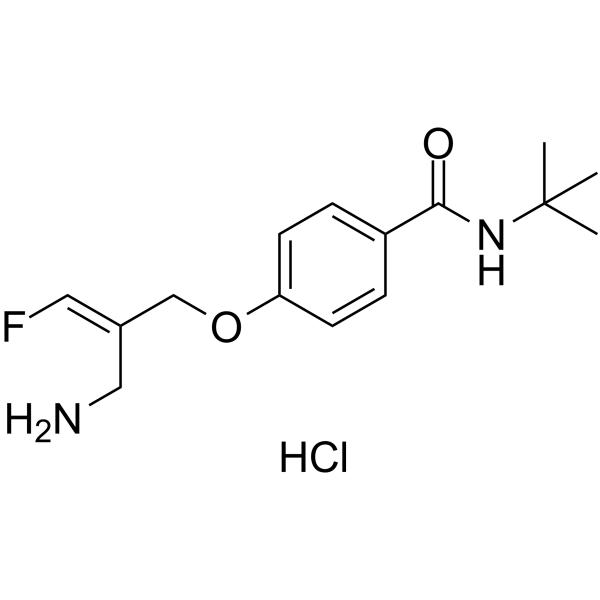
- Formula: C15H22ClFN2O2
- Molecular Weight: 316.80
PXS-4728A is an orally active, selective VAP-1/SSAO inhibitor with an IC50 of 5 nM and a Ki of 175 nM. PXS-4728A inhibits the expression of MMP-9. It reduces cell rolling, adhesion and migration, decreases cell infiltration levels, pro-inflammatory cytokines, chemokines and collagen deposition, and improves pulmonary function. PXS-4728A reduces the formation and progression of atherosclerotic plaques, and decreases blood lipid and blood glucose levels as well as body weight gain. PXS-4728A can be used in research related to chronic obstructive pulmonary disease, cystic fibrosis, acute pulmonary inflammation, acute lung injury, bronchiolitis obliterans syndrome, rhinovirus-exacerbated asthma, sepsis, Klebsiella pneumoniae pulmonary infection and atherosclerosis.
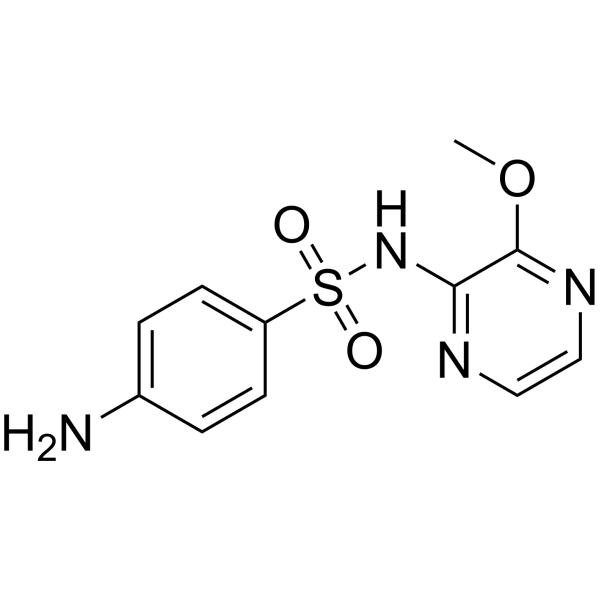
- Formula: C11H12N4O3S
- Molecular Weight: 280.30
Sulfalene (Sulfametopyrazine) is an orally active antimalarial agent. Sulfalene competes with para-aminobenzoic acid in plasmodial and bacterial folic acid synthesis pathways. Sulfalene reduces trachoma-associated pathological changes. Sulfalene can be used for the research of acute falciparum malaria, Schistosoma mansoni infection, trachoma, chronic bronchitis, and bacteriuria in pregnancy.

- Formula: CaH2O3Si
- Molecular Weight: 118.18
Wollastonite is a white, chain-structured pyroxene silicate mineral with biocompatibility, biodegradability, osteogenicity and antibacterial properties. Wollastonite induces transient pulmonary inflammatory responses, reversible alveolar macrophage responses, early inflammatory/proliferative mesothelial cell responses, ROS production, and mild chronic pulmonary interstitial inflammation in rats. Wollastonite induces osteogenic differentiation, promotes bone growth, supports angiogenesis, and facilitates the formation of hydroxycarbonate apatite on its surface. Wollastonite enhances the strength, bioactivity and biodegradability of hydroxyapatite scaffolds, and is used to construct porous bone tissue engineering scaffolds. Wollastonite is applied in research related to diseases such as bronchitis, decreased lung function and bone defects.

- Formula: C31H35FN4O3
- Molecular Weight: 530.63
Verducatib (BI 1291583) is an orally active inhibitor of cathepsin C (also known as DPP1). Verducatib restores the protease-inhibitor balance by inhibiting the activation of neutrophil serine proteases, thereby alleviating pulmonary inflammation and regulating infection responses. Verducatib significantly reduces the risk (including severe exacerbations) and frequency of acute exacerbations in bronchiectasis (BE). Verducatib also improves lung function and quality of life, and shortens the duration of antibiotic use. The overall incidence of adverse events of Verducatib is comparable to that of placebo, with only slightly more mild-to-moderate cutaneous adverse events observed in the high-dose group, demonstrating promising clinical application potential.

- Formula: C12H9BrFNO4
- Molecular Weight: 330.11
PSB-18422 is a GPR17 agonist, with an EC50 of 0.0279 μM for humans, 0.47 μM for rats, 0.753 μM for mice, and a human Ki of 1.46 μM. PSB-18422 triggers intracellular calcium mobilization via cross-species activation of GPR17. PSB-18422 can be used in the research of allergic bronchial inflammation.

- Formula: C17H16O2
- Molecular Weight: 252.31
(+)-Nyasol is a stilbene-type organic compound that can be naturally extracted from the dried roots of Asparagus filicinus Ham. ex D. Don (an Asparagus species) from Fenna, Tibet, China. This plant is traditionally used in the study of bronchitis, cough, and pneumonia, and can be used in research related to respiratory diseases.

- Formula: C16H14O5
- Molecular Weight: 286.28
Guaimesal is a new antiphlogistic and mucus-regulating agent. Guaimesal improves bronchitis symptoms.

- Formula: C50H60Br4N6O6S2
- Molecular Weight: 1224.79
Cistinexine is a new expectorant agent. Cistinexine interacts with the complex form of RdRp. Cistinexine can be used in the study of chronic bronchitis. RdRp is involved in the replication and transcription of the SARS-CoV-2 genome.

- Formula: C15H21FN2O2
- Molecular Weight: 280.34
PXS-4728A free base is an orally active, selective VAP-1/SSAO inhibitor with an IC50 of 5 nM and a Ki of 175 nM. PXS-4728A free base inhibits the expression of MMP-9. It reduces cell rolling, adhesion and migration, decreases cell infiltration levels, pro-inflammatory cytokines, chemokines and collagen deposition, and improves pulmonary function. PXS-4728A free base reduces the formation and progression of atherosclerotic plaques, and decreases blood lipid and blood glucose levels as well as body weight gain. PXS-4728A free base can be used in research related to chronic obstructive pulmonary disease, cystic fibrosis, acute pulmonary inflammation, acute lung injury, bronchiolitis obliterans syndrome, rhinovirus-exacerbated asthma, sepsis, Klebsiella pneumoniae pulmonary infection and atherosclerosis.



