Delivery of temperature sensitive items including proteins and kits will be paused on 6/19 for the Juneteenth holiday. For urgent orders please contact customer service.
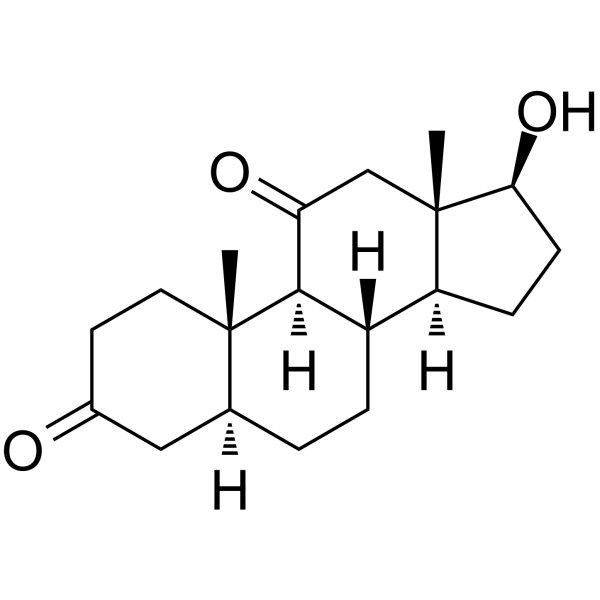
11-Ketodihydrotestosterone (11-KDHT; 5α-Dihydro-11-keto testosterone) is an endogenous steroid and a metabolite of 11β-Hydroxyandrostenedione. 11-Ketodihydrotestosterone is an active androgen and is also a potent androgen receptor (AR) agonist with a Ki of 20.4 nM and an EC50 of 1.35 nM for human AR. 11-Ketodihydrotestosterone drives gene regulation, protein expression and cell growth in androgen-dependent prostate cancer cells .
5α-reductase, Rat (Sprague-Dawley) Liver is an enzyme involved in steroid metabolism and participates in the androgen metabolic pathway. 5α-reductase, Rat (Sprague-Dawley) Liver catalyzes the conversion of testosterone to 5α-dihydrotestosterone (DHT). DHT plays important roles in the development of male sex organs, hair growth, prostate function, and other aspects .
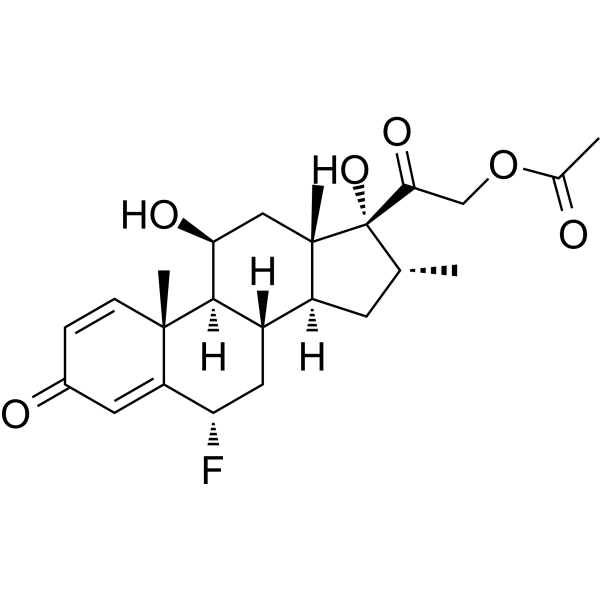
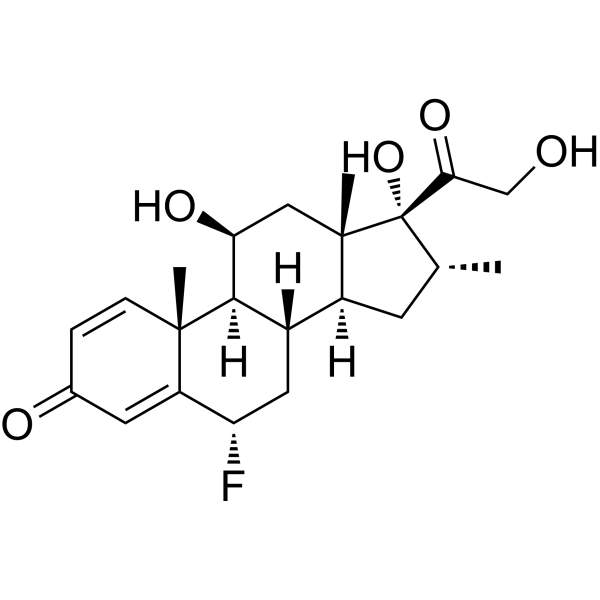
Paramethasone Acetate is an orally active long-acting glucocorticoid. Paramethasone Acetate directly inhibits testicular aromatase, thereby reducing the synthesis of estradiol. Paramethasone Acetate suppresses the basal and midcycle luteinizing hormone surges in female animals and blocks estrogen synthesis. Paramethasone Acetate also decreases circulating levels of dihydrotestosterone, androstenedione and estradiol in male animals. Paramethasone Acetate inhibits cartilage degeneration and alleviates joint pathological damage in osteoarthritis models. Paramethasone Acetate can be used in research related to osteoarthritis and endocrinology .
DHT/KLH is a conjugate of DHT (dihydrotestosterone) and keyhole limpet hemocyanin (KLH). By conjugating the antigen with a protein adjuvant, the production of antigen-specific antibodies in vaccine models can be enhanced. The conjugate does not affect protein folding or disrupt linear epitopes, and it can enhance cross-presentation and the generation of antigen-specific T cells.
SRD5A1-IN-1 (Compound 4) is a competitive and covalent steroid 5α-reductase type 1 (SRD5A1) inhibitor with an IC50 of 1.44 µM. SRD5A1-IN-1 modulates SRD5A1 function, leading to a lower level of dihydrotestosterone (DHT) production and SRD5A1 protein suppression .
5α-Reductase, Rat (Sprague-Dawley) Testis is the enzyme responsible for the conversion of testosterone into 5-alpha dihydrotestosterone (DHT), which is a potent androgen involved in male sexual differentiation.5α-reductase enzyme family is comprised of 3 subfamilies and 5 isoenzyme members: 5αR1, 5αR2, 5αR3, GPSN2, and GPSN2L .
MK-0963 is a steroidal 5α-reductase inhibitor. MK-0963 reduces serum dihydrotestosterone (DHT) concentrations in a dose-dependent manner. MK-0963 can be used for the study of dihydrotestosterone-related diseases such as benign prostate hyperplasia (BPH) .
FCE 28260 is an orally active 4-azacyclic 5α-reductase (5αR) inhibitor. FCE 28260 exhibits IC₅₀ values for human 5αR type 1 and 5αR type 2 of 36 and 3.3 nM, respectively, and for human and rat prostates with IC₅₀ values of 16 and 15 nM, respectively. FCE 28260 simultaneously blocks the production of dihydrotestosterone (DHT) in the prostate and peripheral tissues. FCE 28260 can significantly inhibit the induction of prostatic and seminal vesicle hyperplasia by testosterone (T) in rat models, without inhibiting the growth of the prostate in DHT implantation models. FCE 28260 can be used for the studies DHT-dependent diseases such as benign prostatic hyperplasia (BPH) .
ONO-3805 is an early lead compound of a non-steroidal 5α-reductase inhibitor, used to inhibit the conversion of testosterone to dihydrotestosterone, with potential effects in inhibiting benign prostatic hyperplasia.
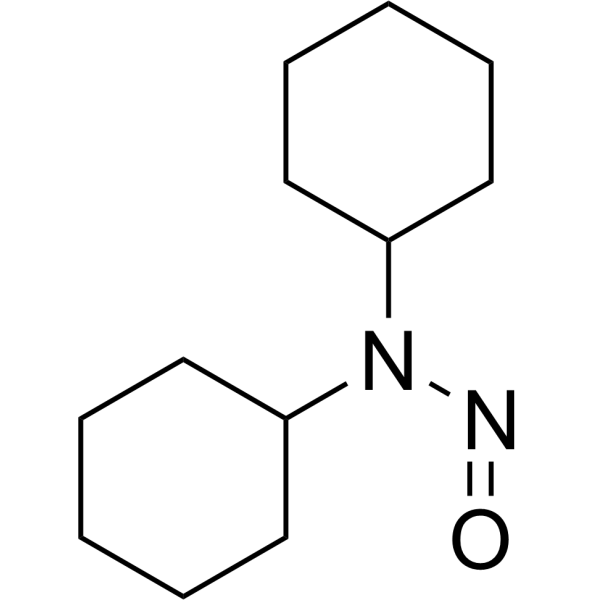
N-Nitrosodicyclohexylamine (NDCHA) is a N-nitrosocompound with anti-androgenic activities. N-Nitrosodicyclohexylamine shows the competitive binding to androgen receptor (AR) against 5α-dihydrotestosterone and decreased the level of AR protein .
MK-0434 is an orally active steroid 5α-reductase inhibitor. MK-0434 specifically inhibits steroid 5α-reductase, thereby reducing the level of dihydrotestosterone (DHT) in the body. MK-0434 can be used in the study of benign prostatic hyperplasia .
DHT/BSA is an antigen-adjuvant conjugate formed by the coupling of DHT (dihydrotestosterone) and bovine serum albumin (BSA). By conjugating the antigen with the protein adjuvant, the production of antigen-specific antibodies in vaccine models can be enhanced. The conjugate does not affect protein folding or disrupt major epitopes, and it can enhance cross-presentation and the generation of antigen-specific T cells.
Izonsteride (Compound LY320236) is an inhibitor of 5α-reductase (IC50 = 11.6 nM for type I; 7.37 nM for type II). LY320236 inhibits the activity of steroid 5α-reductase, preventing the conversion of testosterone (T) to dihydrotestosterone (DHT). LY320236 can significantly inhibit the growth of LNCaP tumors in thymic mice without exhibiting obvious host toxicity .
Osaterone acetate is an orally active steroid anti-androgen agent, mainly used for benign prostatic hyperplasia (BPH) in dogs. Osaterone acetate competitively antagonizes androgen receptor and inhibits 5α-reductase, reducing the concentration of dihydrotestosterone (DHT) while blocking the growth-stimulating effects of testosterone and DHT on prostate cells. Osaterone acetate can rapidly alleviate the symptoms of BPH in dogs without affecting the fertility of breeding dogs .
11-Ketodihydrotestosterone (Standard) is the analytical standard of 11-Ketodihydrotestosterone. This product is intended for research and analytical applications. 11-Ketodihydrotestosterone (11-KDHT; 5α-Dihydro-11-keto testosterone) is an endogenous steroid and a metabolite of 11β-Hydroxyandrostenedione. 11-Ketodihydrotestosterone is an active androgen and is also a potent androgen receptor (AR) agonist with a Ki of 20.4 nM and an EC50 of 1.35 nM for human AR. 11-Ketodihydrotestosterone drives gene regulation, protein expression and cell growth in androgen-dependent prostate cancer cells .
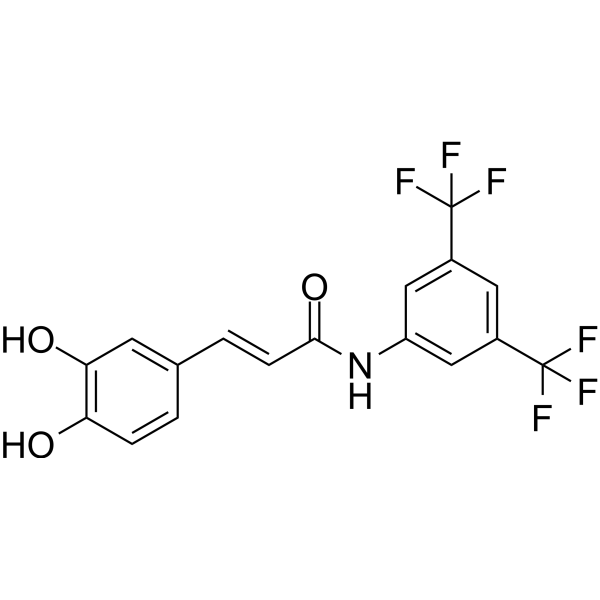
ZC9 is a novel androgen receptor (AR) degrader. ZC9 directly binds to AR and inhibits Dihydrotestosterone-induced nuclear translocation of AR. ZC9 promotes AR degradation via the ubiquitin-proteasome system and suppresses AR transcriptional activity. ZC9 significantly decreases the mRNA levels of other AR downstream genes, including PSA, TMPRSS2, and PMEPA1. ZC9 promotes Apoptosis. ZC9 exhibits anticancer activity against prostate cancer .
LGD-2226 is a selective and orally active androgen receptor modulator with an EC50 of 0.2 nM and a Ki of 1.5 nM for human androgen receptor. LGD-2226 shows tissue selectivity in animal models, with reduced effects on prostate compared to muscle. LGD-2226 can be used for muscle wasting, osteoporosis and sexual dysfunction .
2-Iodoestradiol is a potent human sex hormone binding globulin (SHBG) ligand with a remarkably high affinity for SHBG. 2-Iodoestradiol exhibits competition for the same binding site as dihydrotestosterone in binding to human SHBG. The binding affinity constant of 2-Iodoestradiol at physiological pH and 37 degrees Celsius is 2.4 x 10(9) M-1, exceeding that for SHBG. 2-Iodoestradiol has been shown to bind to serum albumin, but with lower affinity. The radioisotope 125I-derivative of 2-Iodoestradiol has been used to study the binding properties of human SHBG, demonstrating its potential application in biological research .
Neoaureothin is a bacterial metabolite that has been found in Streptomyces. It is an androgen receptor (AR) antagonist that inhibits binding of dihydrotestosterone (DHT) to ARs (IC50=13 μM) and inhibits DHT-induced expression of prostate-specific antigen in LNCaP cells (IC50=1.75 nM). Neoaureothin is cytotoxic to A549, HCT116, and HepG2 cells (IC50s=34.3, 47, and 37.2 μg/mL, respectively). It also has nematocidal activity against the pine wood nematode B. xylophilus (LC50=0.84 μg/mL) and increases survival of P. densiflora trees inoculated with B. xylophilus.
Zanoterone is an orally active antagonist of the androgen receptor (AR) with a Ki of 2.2 μM. Zanoterone blocks the binding of androgens such as testosterone and dihydrotestosterone (DHT), inhibiting the androgen signaling pathway, thereby reducing androgen-dependent prostate hyperplasia and prostate cancer growth .
DHT-OVA is a conjugate of DHT (Dihydrotestosterone) and OVA peptide. By conjugating the antigen with a protein adjuvant, the production of antigen-specific antibodies in vaccine models can be enhanced. The conjugate does not affect protein folding or disrupt linear epitopes, and it can enhance cross-presentation and the generation of antigen-specific T cells.
N-Nitrosodicyclohexylamine (Standard) is the analytical standard of N-Nitrosodicyclohexylamine. This product is intended for research and analytical applications. N-Nitrosodicyclohexylamine (NDCHA) is a N-nitrosocompound with anti-androgenic activities. N-Nitrosodicyclohexylamine shows the competitive binding to androgen receptor (AR) against 5α-dihydrotestosterone and decreased the level of AR protein .
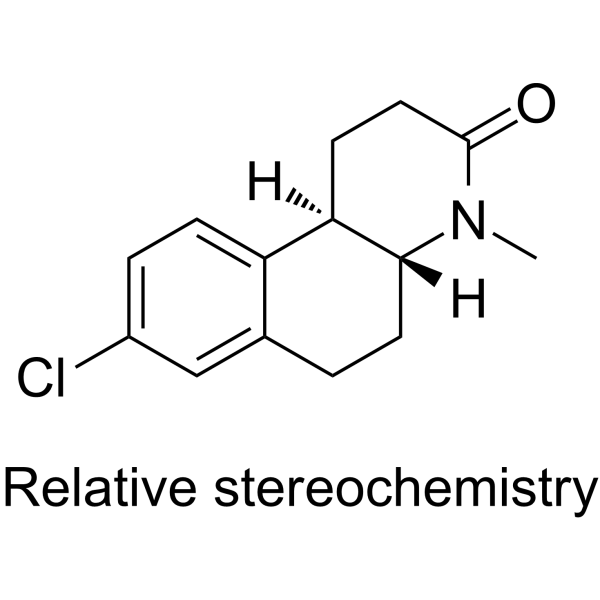
LY191704, as a benzoquinolinone, is a potent, nonsteroidal, noncompetitive and selective human type I 5α-reductase inhibitor. LY191704 is a racemic mixture of the compounds LY300502 and LY300503. LY191704 may be useful in the research of human endocrine disorders associated with overproduction of dihydrotestosterone (DHT) by 5α-reductase type 1 .
Paramethasone is an orally active long-acting glucocorticoid. Paramethasone directly inhibits testicular aromatase, thereby reducing the synthesis of estradiol. Paramethasone suppresses the basal and midcycle luteinizing hormone surges in female animals and blocks estrogen synthesis. Paramethasone also decreases circulating levels of dihydrotestosterone, androstenedione and estradiol in male animals. Paramethasone inhibits cartilage degeneration and alleviates joint pathological damage in osteoarthritis models. Paramethasone can be used in research related to osteoarthritis and endocrinology .
Paramethasone Acetate (Standard) is the analytical standard of Paramethasone Acetate (HY-107939). This product is intended for research and analytical applications. Paramethasone Acetate is an orally active long-acting glucocorticoid. Paramethasone Acetate directly inhibits testicular aromatase, thereby reducing the synthesis of estradiol. Paramethasone Acetate suppresses the basal and midcycle luteinizing hormone surges in female animals and blocks estrogen synthesis. Paramethasone Acetate also decreases circulating levels of dihydrotestosterone, androstenedione and estradiol in male animals. Paramethasone Acetate inhibits cartilage degeneration and alleviates joint pathological damage in osteoarthritis models. Paramethasone Acetate can be used in research related to osteoarthritis and endocrinology.
SRD5A1-IN-2 is a inhibitor of steroid 5α-reductase type-1 (SRD5A1), with an IC50 of 8.5 μM. SRD5A1-IN-2 downregulates SRD5A1 protein expression in HaCaT cells. SRD5A1-IN-2 reduces dihydrotestosterone (DHT) production in HaCaT cells. SRD5A1-IN-2 can be used for the study of androgen-related conditions such as androgenetic alopecia (AGA) .
(15α)-15,26-Dihydroxylanosta-7,9(11),24-trien-3-one shows a 5a-reductase inhibitory activity with an IC50 value of 41.9 μM. (15α)-15,26-Dihydroxylanosta-7,9(11),24-trien-3-one inhibits the growth of the ventral prostate induced by testosterone in rat. (15α)-15,26-Dihydroxylanosta-7,9(11),24-trien-3-one is promising for research of benign prostatic hyperplasia (BPH) as well as other 5α-dihydrotestosterone (DHT)-related disorders, such as acne and male pattern baldness .
Ro 13-3978 is an orally active antischistosomal agent. Ro 13-3978 exhibits excellent in vivo antischistosomal activity against juvenile and adult Schistosoma mansoni infections. Ro 13-3978 shows no in vivo activity against E. caproni and F. hepatica. Ro 13-3978 blocks dihydrotestosterone-induced proliferation of androgen-dependent cells. Ro 13-3978 can be used in research related to schistosomiasis .
LGD-2226 (Standard) is the analytical standard of LGD-2226 (HY-105318). This product is intended for research and analytical applications. LGD-2226 is a selective and orally active androgen receptor modulator with an EC50 of 0.2 nM and a Ki of 1.5 nM for human androgen receptor. LGD-2226 shows tissue selectivity in animal models, with reduced effects on prostate compared to muscle. LGD-2226 can be used for muscle wasting, osteoporosis and sexual dysfunction .
2α-Ferrocenylmethyl-DHT is a dihydrotestosterone-derived ferrocene-steroid conjugate. 2α-Ferrocenylmethyl-DHT inhibits the growth of various cancer cells. 2α-Ferrocenylmethyl-DHT induces S-phase cell cycle arrest in ovarian cancer cells, elevates intracellular iron levels, triggers ROS-dependent cell death, and disrupts the integrity of multicellular tumor spheroids of ovarian cancer cells. 2α-Ferrocenylmethyl-DHT can be used in the research of prostate cancer and ovarian cancer .
DHT/KLH is a conjugate of DHT (dihydrotestosterone) and keyhole limpet hemocyanin (KLH). By conjugating the antigen with a protein adjuvant, the production of antigen-specific antibodies in vaccine models can be enhanced. The conjugate does not affect protein folding or disrupt linear epitopes, and it can enhance cross-presentation and the generation of antigen-specific T cells.
DHT/BSA is an antigen-adjuvant conjugate formed by the coupling of DHT (dihydrotestosterone) and bovine serum albumin (BSA). By conjugating the antigen with the protein adjuvant, the production of antigen-specific antibodies in vaccine models can be enhanced. The conjugate does not affect protein folding or disrupt major epitopes, and it can enhance cross-presentation and the generation of antigen-specific T cells.
DHT-OVA is a conjugate of DHT (Dihydrotestosterone) and OVA peptide. By conjugating the antigen with a protein adjuvant, the production of antigen-specific antibodies in vaccine models can be enhanced. The conjugate does not affect protein folding or disrupt linear epitopes, and it can enhance cross-presentation and the generation of antigen-specific T cells.
(15α)-15,26-Dihydroxylanosta-7,9(11),24-trien-3-one shows a 5a-reductase inhibitory activity with an IC50 value of 41.9 μM. (15α)-15,26-Dihydroxylanosta-7,9(11),24-trien-3-one inhibits the growth of the ventral prostate induced by testosterone in rat. (15α)-15,26-Dihydroxylanosta-7,9(11),24-trien-3-one is promising for research of benign prostatic hyperplasia (BPH) as well as other 5α-dihydrotestosterone (DHT)-related disorders, such as acne and male pattern baldness .
The androgen receptor protein is a steroid hormone receptor that acts as a ligand-activated transcription factor that regulates gene expression and affects cell proliferation and differentiation. Coactivators and corepressors such as ZBTB7A negatively regulate androgen receptor signaling by recruiting NCOR1 and NCOR2 to androgen response elements on target genes. Androgen receptor Protein, Human (His) is the recombinant human-derived Androgen receptor protein, expressed by E. coli , with C-6*His.
The androgen receptor protein is a steroid hormone receptor that acts as a ligand-activated transcription factor that regulates gene expression and affects cell proliferation and differentiation. Coactivators and corepressors such as ZBTB7A negatively regulate androgen receptor signaling by recruiting NCOR1 and NCOR2 to androgen response elements on target genes. Androgen receptor Protein, Human (His-SUMO, Myc) is the recombinant human-derived Androgen receptor protein, expressed by E. coli , with N-10*His, N-SUMO, C-Myc labeled tag.
Western blot analysis of extracts from THP-1(lane 2(20μg), Jurkat (lane 3(20μg) and NIH3T3(lane 4(20μg) using FOXO1A (HY-P80132) Rabbit mAb. Proteins were transferred
to a PVDF membrane and blocked with 5% non-fat milk in TBST for 2 hour at room temperature. The primary antibody (1/1000) and Loading control antibody (Beta Actin, HY-P80438, 1/10000) was
used in 5% non-fat milk in TBST at 4°C overnight. Goat Anti-Mouse/Rabbit IgG-HRP Secondary Antibody (1/10000) was used for 1 hour at room temperature.
Western blot analysis of extracts from THP-1(lane 2(20μg), Jurkat (lane 3(20μg) and NIH3T3(lane 4(20μg) using FOXO1A (HY-P80132) Rabbit mAb. Proteins were transferred
to a PVDF membrane and blocked with 5% non-fat milk in TBST for 2 hour at room temperature. The primary antibody (1/1000) and Loading control antibody (Beta Actin, HY-P80438, 1/10000) was
used in 5% non-fat milk in TBST at 4°C overnight. Goat Anti-Mouse/Rabbit IgG-HRP Secondary Antibody (1/10000) was used for 1 hour at room temperature.
Western blot analysis of extracts from THP-1(lane 2(20μg), Jurkat (lane 3(20μg) and NIH3T3(lane 4(20μg) using FOXO1A (HY-P80132) Rabbit mAb. Proteins were transferred
to a PVDF membrane and blocked with 5% non-fat milk in TBST for 2 hour at room temperature. The primary antibody (1/1000) and Loading control antibody (Beta Actin, HY-P80438, 1/10000) was
used in 5% non-fat milk in TBST at 4°C overnight. Goat Anti-Mouse/Rabbit IgG-HRP Secondary Antibody (1/10000) was used for 1 hour at room temperature.
Western blot analysis of extracts from THP-1(lane 2(20μg), Jurkat (lane 3(20μg) and NIH3T3(lane 4(20μg) using FOXO1A (HY-P80132) Rabbit mAb. Proteins were transferred
to a PVDF membrane and blocked with 5% non-fat milk in TBST for 2 hour at room temperature. The primary antibody (1/1000) and Loading control antibody (Beta Actin, HY-P80438, 1/10000) was
MedchemExpress Validation 03
Western blot analysis of extracts from THP-1(lane 2(20μg), Jurkat (lane 3(20μg) and NIH3T3(lane 4(20μg) using FOXO1A (HY-P80132) Rabbit mAb. Proteins were transferred
MedchemExpress Validation 04
Western blot analysis of extracts from THP-1(lane 2(20μg), Jurkat (lane 3(20μg) and NIH3T3(lane 4(20μg) using FOXO1A (HY-P80132) Rabbit mAb. Proteins were transferred
to a PVDF membrane and blocked with 5% non-fat milk in TBST for 2 hour at room temperature. The primary antibody (1/1000) and Loading control antibody (Beta Actin, HY-P80438, 1/10000) was
used in 5% non-fat milk in TBST at 4°C overnight. Goat Anti-Mouse/Rabbit IgG-HRP Secondary Antibody (1/10000) was used for 1 hour at room temperature.
MedchemExpress Validation
Western blot analysis of extracts from THP-1(lane 2(20μg), Jurkat (lane 3(20μg) and NIH3T3(lane 4(20μg) using FOXO1A (HY-P80132) Rabbit mAb. Proteins were transferred
to a PVDF membrane and blocked with 5% non-fat milk in TBST for 2 hour at room temperature. The primary antibody (1/1000) and Loading control antibody (Beta Actin, HY-P80438, 1/10000) was
used in 5% non-fat milk in TBST at 4°C overnight. Goat Anti-Mouse/Rabbit IgG-HRP Secondary Antibody (1/10000) was used for 1 hour at room temperature.
Western blot analysis of extracts from THP-1(lane 2(20μg), Jurkat (lane 3(20μg) and NIH3T3(lane 4(20μg) using FOXO1A (HY-P80132) Rabbit mAb. Proteins were transferred
to a PVDF membrane and blocked with 5% non-fat milk in TBST for 2 hour at room temperature. The primary antibody (1/1000) and Loading control antibody (Beta Actin, HY-P80438, 1/10000) was
used in 5% non-fat milk in TBST at 4°C overnight. Goat Anti-Mouse/Rabbit IgG-HRP Secondary Antibody (1/10000) was used for 1 hour at room temperature.
MedchemExpress Validation
Western blot analysis of extracts from THP-1(lane 2(20μg), Jurkat (lane 3(20μg) and NIH3T3(lane 4(20μg) using FOXO1A (HY-P80132) Rabbit mAb. Proteins were transferred
to a PVDF membrane and blocked with 5% non-fat milk in TBST for 2 hour at room temperature. The primary antibody (1/1000) and Loading control antibody (Beta Actin, HY-P80438, 1/10000) was
used in 5% non-fat milk in TBST at 4°C overnight. Goat Anti-Mouse/Rabbit IgG-HRP Secondary Antibody (1/10000) was used for 1 hour at room temperature.
MedchemExpress Validation
Western blot analysis of extracts from THP-1(lane 2(20μg), Jurkat (lane 3(20μg) and NIH3T3(lane 4(20μg) using FOXO1A (HY-P80132) Rabbit mAb. Proteins were transferred
to a PVDF membrane and blocked with 5% non-fat milk in TBST for 2 hour at room temperature. The primary antibody (1/1000) and Loading control antibody (Beta Actin, HY-P80438, 1/10000) was
used in 5% non-fat milk in TBST at 4°C overnight. Goat Anti-Mouse/Rabbit IgG-HRP Secondary Antibody (1/10000) was used for 1 hour at room temperature.
MedchemExpress Validation
Western blot analysis of extracts from THP-1(lane 2(20μg), Jurkat (lane 3(20μg) and NIH3T3(lane 4(20μg) using FOXO1A (HY-P80132) Rabbit mAb. Proteins were transferred
to a PVDF membrane and blocked with 5% non-fat milk in TBST for 2 hour at room temperature. The primary antibody (1/1000) and Loading control antibody (Beta Actin, HY-P80438, 1/10000) was
used in 5% non-fat milk in TBST at 4°C overnight. Goat Anti-Mouse/Rabbit IgG-HRP Secondary Antibody (1/10000) was used for 1 hour at room temperature.
MedchemExpress Validation
Western blot analysis of extracts from THP-1(lane 2(20μg), Jurkat (lane 3(20μg) and NIH3T3(lane 4(20μg) using FOXO1A (HY-P80132) Rabbit mAb. Proteins were transferred
to a PVDF membrane and blocked with 5% non-fat milk in TBST for 2 hour at room temperature. The primary antibody (1/1000) and Loading control antibody (Beta Actin, HY-P80438, 1/10000) was
used in 5% non-fat milk in TBST at 4°C overnight. Goat Anti-Mouse/Rabbit IgG-HRP Secondary Antibody (1/10000) was used for 1 hour at room temperature.
MedchemExpress Validation
Western blot analysis of extracts from THP-1(lane 2(20μg), Jurkat (lane 3(20μg) and NIH3T3(lane 4(20μg) using FOXO1A (HY-P80132) Rabbit mAb. Proteins were transferred
to a PVDF membrane and blocked with 5% non-fat milk in TBST for 2 hour at room temperature. The primary antibody (1/1000) and Loading control antibody (Beta Actin, HY-P80438, 1/10000) was
used in 5% non-fat milk in TBST at 4°C overnight. Goat Anti-Mouse/Rabbit IgG-HRP Secondary Antibody (1/10000) was used for 1 hour at room temperature.
MedchemExpress Validation
Western blot analysis of extracts from THP-1(lane 2(20μg), Jurkat (lane 3(20μg) and NIH3T3(lane 4(20μg) using FOXO1A (HY-P80132) Rabbit mAb. Proteins were transferred
to a PVDF membrane and blocked with 5% non-fat milk in TBST for 2 hour at room temperature. The primary antibody (1/1000) and Loading control antibody (Beta Actin, HY-P80438, 1/10000) was
used in 5% non-fat milk in TBST at 4°C overnight. Goat Anti-Mouse/Rabbit IgG-HRP Secondary Antibody (1/10000) was used for 1 hour at room temperature.
MedChemExpress values your privacy and your trust is important to us. We use cookies to enhance your website experience. Some cookies are necessary to run the website.
Privacy and Cookie Policy