



Amaranthaceae Extract
-
- Achyranthes bidentata (8)
- Alternanthera philoxeroides (Mart.) Griseb. (5)
- Cyathula officinalis Kuan (5)
- Beta vulgaris L. (4)
- Celosia argentea Linn. (4)
- Spinacia oleracea L. (4)
- Cyathula capitata Moq. (3)
- Beta vulgaris var. cicla L. (2)
- Celosia cristata L. (2)
- Achyranthes aspera L. (1)
- Achyranthes aspera var. rubrofusca (Wight) J. D. Hooker (1)
- Achyranthes bidentata var. japonica Miq. (1)
- Achyranthes (1)
- Atriplex littoralis L. (1)
- Bassia indica (Wight) A.J.Scott (1)
- Gomphrena globosa L. (1)
- Halocnemum strobilaceum (Pall.) Bieb. (1)
- Haloxylon ammodendron (C. A. Mey.) Bunge (1)
- Oxybasis rubra (L.) S. Fuentes, Uotila & Borsch (1)
- Suaeda vermiculata Forssk. ex J.F.Gmel. (1)
- Xylosalsola arbuscula(Pall.) Tzvelev (1)
-
Amaranthaceae Extract (50)

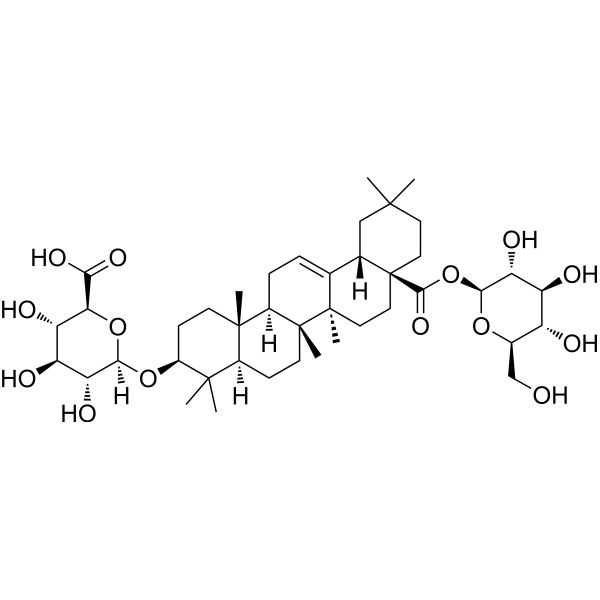
- Formula: C42H66O14
- Molecular Weight: 794.97
Chikusetsusaponin IVa is an orally active protein kinase activator. Chikusetsusaponin IVa binds to YAP with a KD value of 0.388 mM. Chikusetsusaponin IVa reduces inflammatory mediators (IL-6, IL-10, COX-2) expression, NO production, promotes ROS generation, induces Apoptosis, inhibits MAPK, TAZ, and regulates Nrf2, JAK/STAT. Chikusetsusaponin Iva has anti-H9N2 AIV and anti-endometrial cancer activities. Chikusetsusaponin Iva shows anti-inflammatory, hepatoprotective and osteoprotective effects.
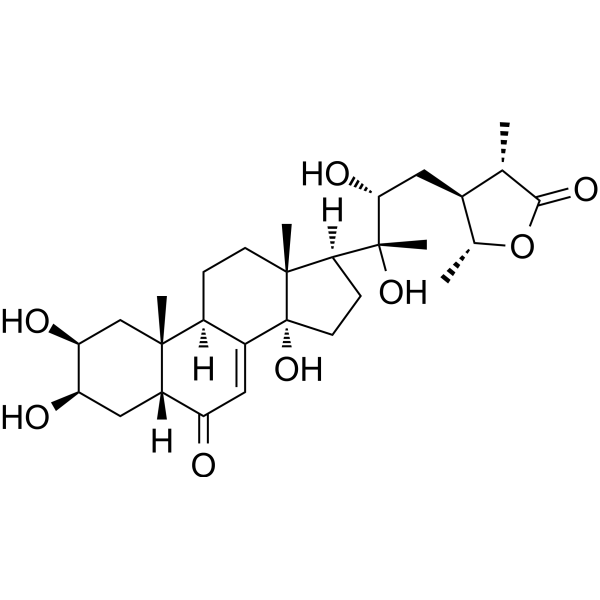
- Formula: C29H44O8
- Molecular Weight: 520.65
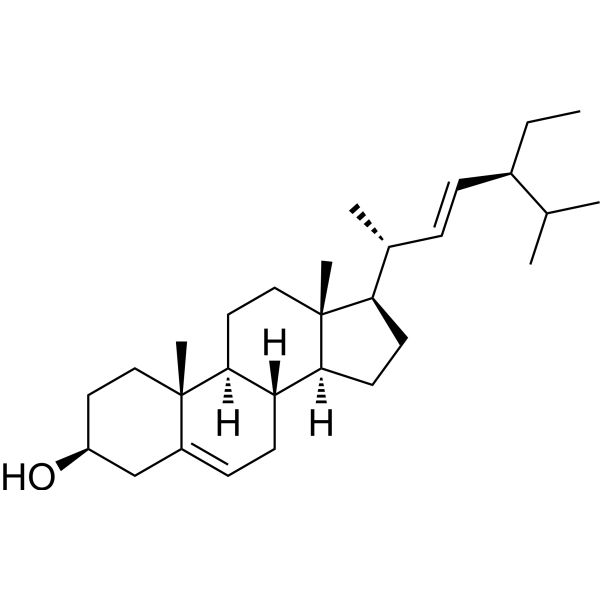
- Formula: C29H48O
- Molecular Weight: 412.69
Stigmasterol (Standard) is the analytical standard of Stigmasterol (HY-N0131). This product is intended for research and analytical applications. Stigmasterol is a plant sterol which has been focused on the cholesterol-lowering activity and is valued as an anti-stiffness factor in the therapy of rheumatic diseases.
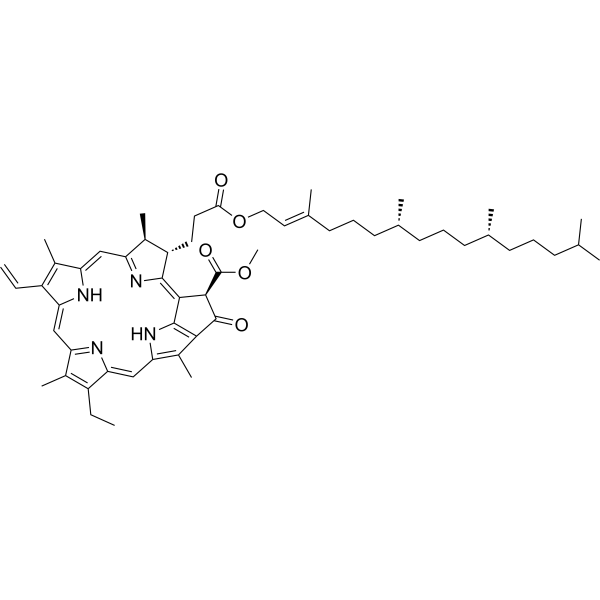
- Formula: C55H74N4O5
- Molecular Weight: 871.20
Pheophytin a is a multi-target inhibitor, anticancer agent, antioxidant and antiviral agent. Pheophytin a directly binds to and inhibits HCV-NS3/4A protease (IC50=0.89 μM) to block viral replication. Pheophytin a also scavenges free radicals, reduces ferric ions, and exhibits cytotoxic activity against breast cancer cells. Pheophytin a effectively inhibits LPS-induced production of nitric oxide, prostaglandin E2, NOS2 and COX-2, as well as various pro-inflammatory cytokines, by downregulating the transcription levels of inflammatory mediators and blocking the ERK1/2 and STAT-1 pathways. In a low nerve growth factor environment, Pheophytin a also enhances ERK1/2 phosphorylation and synergistically promotes neurite outgrowth through MAPK pathway. Pheophytin a can be used to investigate the pathogenic mechanisms of diseases including chronic hepatitis C, sepsis, breast cancer and Alzheimer's disease.
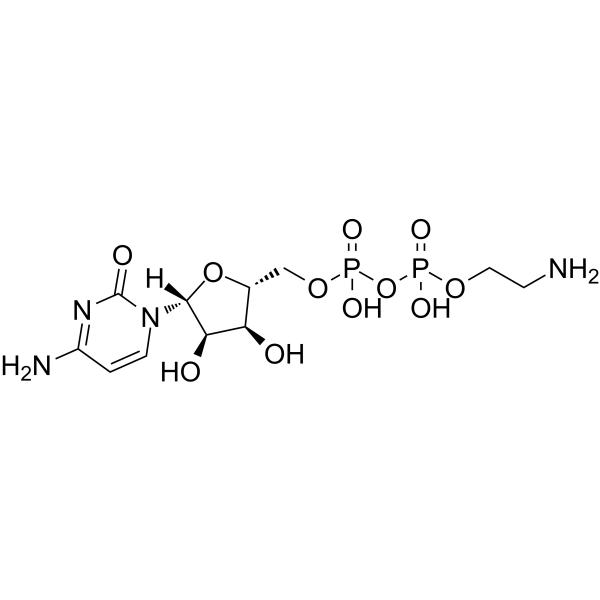
- Formula: C11H20N4O11P2
- Molecular Weight: 446.24
Cytidine 5′-diphosphoethanolamine is a cytidine diphosphate derivative. Cytidine 5′-diphosphoethanolamine serves as an intermediate in the biosynthesis of phosphatidylethanolamine. Cytidine 5′-diphosphoethanolamine stimulates choline uptake and acetylcholine (AChE) synthesis. Cytidine 5′-diphosphoethanolamine can be used in research related to phospholipid biosynthesis.

- Formula: C13H18O7
- Molecular Weight: 286.28
4-Hydroxybenzyl-β-D-glucopyranoside is a phenolic glucoside found in the halophyte Atriplex littoralis. 4-Hydroxybenzyl-β-D-glucopyranoside is one of the components of Rhodiola injection. 4-Hydroxybenzyl-β-D-glucopyranoside exhibits radiation-mitigating activity by reducing the frequency of radiation-induced micronuclei in human lymphocytes. 4-Hydroxybenzyl-β-D-glucopyranoside can be used in research related to radiation injury and oxidative stress.

- Formula: C21H20O9
- Molecular Weight: 416.38

- Formula: C29H44O8
- Molecular Weight: 520.65
Cyasterone (Standard) is the analytical standard of Cyasterone. This product is intended for research and analytical applications. Cyasterone, a natural EGFR inhibitor, mainly isolated from Ajuga decumbens Thunb (Labiatae). Cyasterone manifests anti-proliferation effect by induced apoptosis and cell cycle arrests. Cyasterone may serves as a therapeutic anti-tumor agent against human tumors.
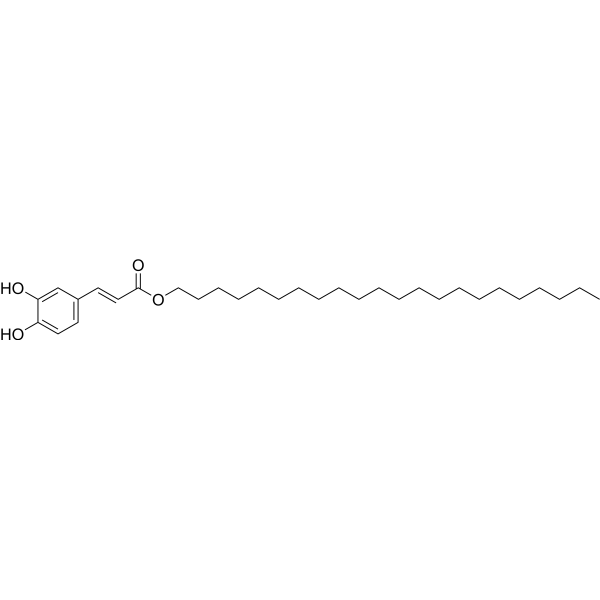
- Formula: C31H52O4
- Molecular Weight: 488.74
(E)-Docosyl caffeate (compound 1) can be isolated from the halophytic plant Halocnemum strobilaceum.

- Formula: C5H8O5
- Molecular Weight: 148.11
Citramalic acid is an organic acid and soil phosphorus-solubilizing agent. Citramalic acid can be secreted by beet roots, and low phosphorus conditions promote its secretion.
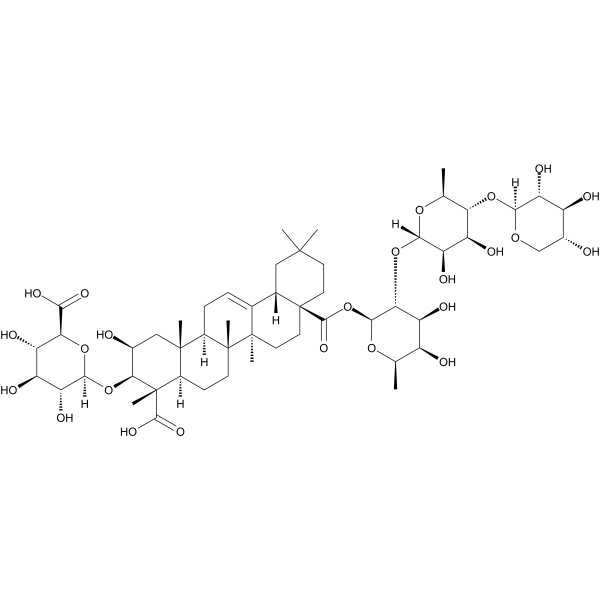
- Formula: C53H82O24
- Molecular Weight: 1103.20
Celosin I, an oleanane-type triterpenoid saponin isolated from the seeds of Celosia argentea L, could be used as chemical markers for the quality control of C. argentea seeds. Celosin I exhibits significant hepatoprotective effect on carbon tetrachloride-induced and N,N-dimethylformamide-induced hepatotoxicity in mice.
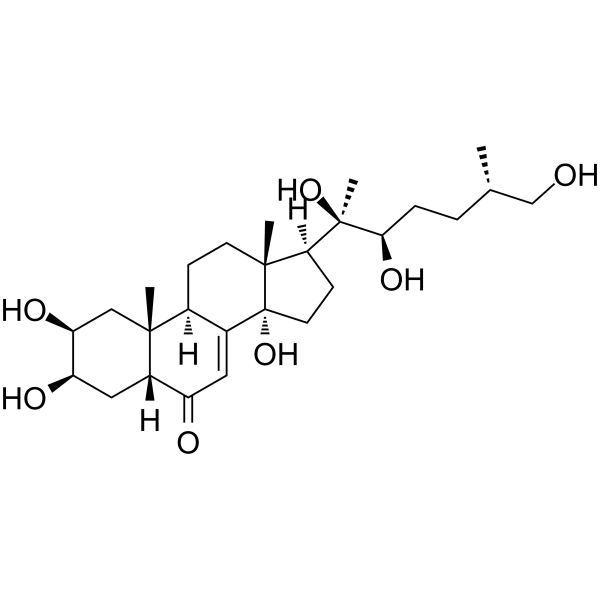
- Formula: C27H44O7
- Molecular Weight: 480.63
25S-Inokosterone is a phytoecdysone in the roots of two same species of A. bidentata Blume and A. japonica Nakai, and two different species of C. capitata Moq and C. officinalis Kuan. 25S-Inokosterone has the potential for the LPS-induced acute kidney injury research.
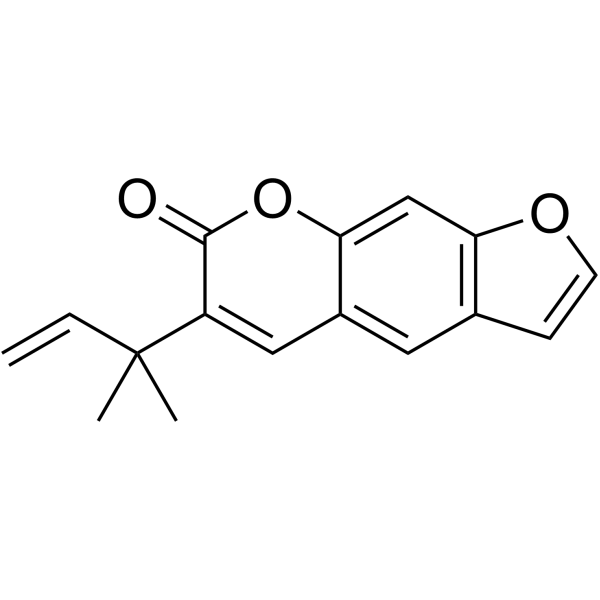
- Formula: C16H14O3
- Molecular Weight: 254.28
Chalepensin is a nematicide and CYP inhibitor. Chalepensin inhibits CYP2A6, CYP1A1, CYP1A2, CYP2A13, CYP2C9, CYP2D6, CYP2E1, and CYP3A4 to varying degrees, with IC50 values of 82.3 μM, 2.86 μM, 3.01 μM, 0.21 μM, 6.58 μM, 1.67 μM, 61.1 μM, and 61.7 μM, respectively. Chalepensin potently and selectively kills third-stage infective larvae of Strongyloides venezuelensis.
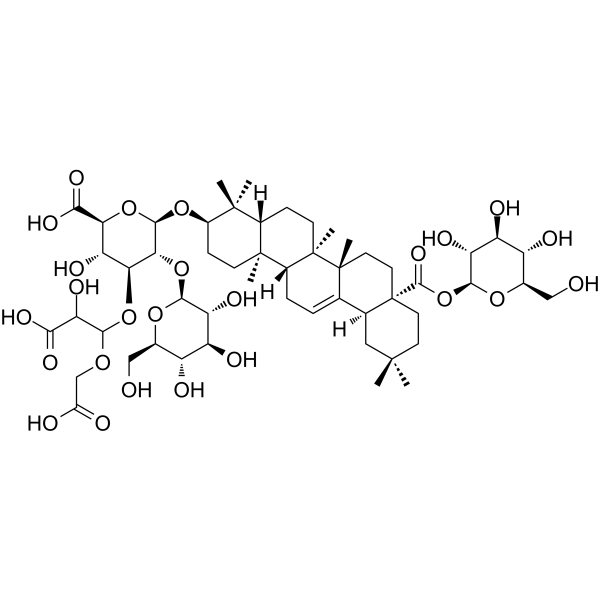
- Formula: C53H82O25
- Molecular Weight: 1119.20
Achyranthoside D is a triterpene saponin from Achyranthes root.
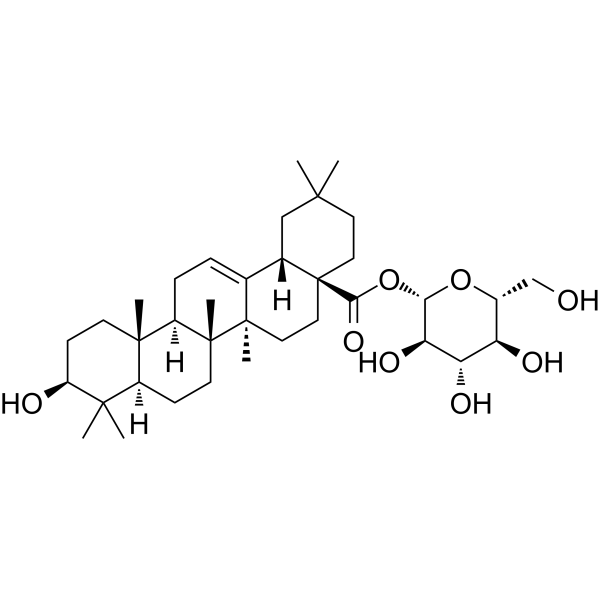
- Formula: C36H58O8
- Molecular Weight: 618.84
Oleanolic acid 28-O-β-D-glucopyranoside (β-D-Glucopyranosyl oleanolate) is an orally active pentacyclic triterpenoid compound. Oleanolic acid 28-O-β-D-glucopyranoside has anti-inflammatory effects. In ulcerative colitis models, Oleanolic acid 28-O-β-D-glucopyranoside can inhibit the inflammatory response, enhance the intestinal epithelial barrier function, and modulate the gut microbiota. Its mechanism of action is related to the PI3K-AKT and MAPK signaling pathways. Oleanolic acid 28-O-β-D-glucopyranoside can be used in the research of diseases such as colitis.
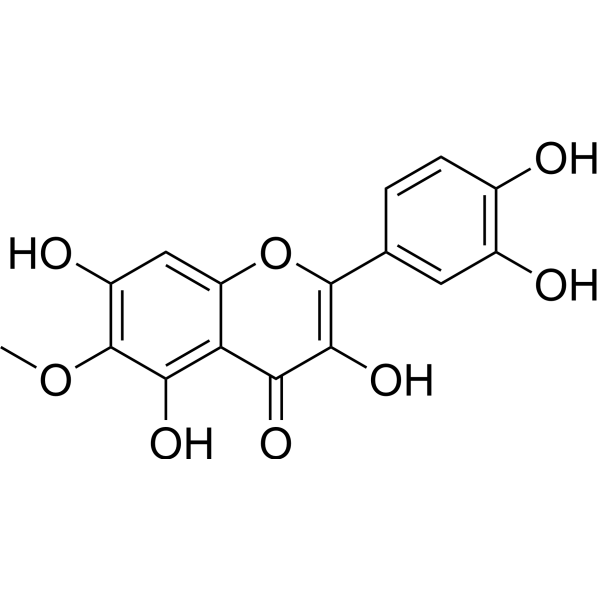
- Formula: C16H12O8
- Molecular Weight: 332.26
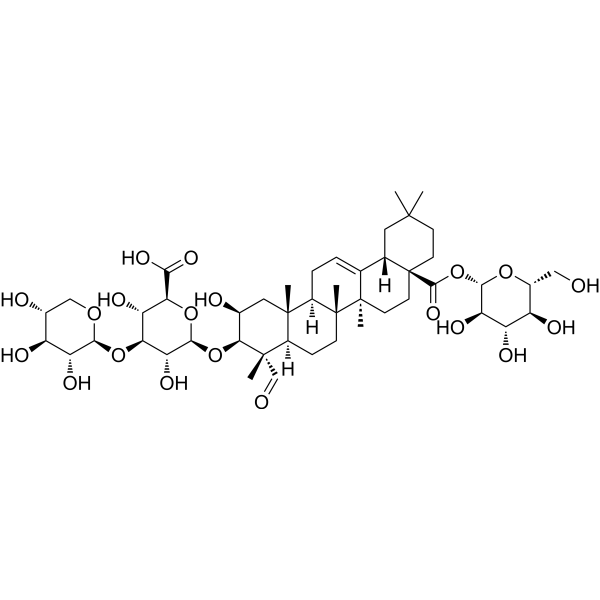
- Formula: C47H72O20
- Molecular Weight: 957.06
Celosin H is a hepatoprotective triterpenoid saponin that can be isolated from Celosiae Semen.
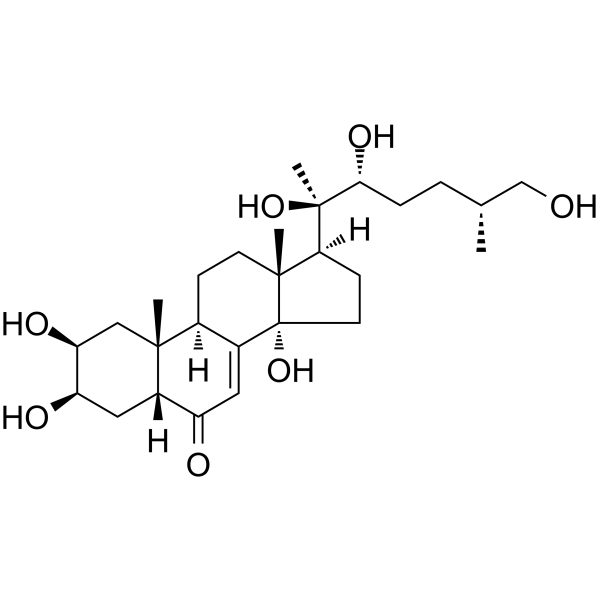
- Formula: C27H44O7
- Molecular Weight: 480.63
25R-Inokosterone is a phytoecdysone isolated from Achyranthis Radix.

- Formula: C27H30O15
- Molecular Weight: 594.52
Vitexin 7-O-β-D-glucopyranoside (Vitexin 7-glucoside) is a flavone glycoside found in Beta vulgaris var. cicla. Vitexin 7-O-β-D-glucopyranoside shows a hepatoprotective activity in primary cultured rat hepatocytes with Carbon tetrachloride (CCl4) (HY-Y0298)-induced cell toxicity.
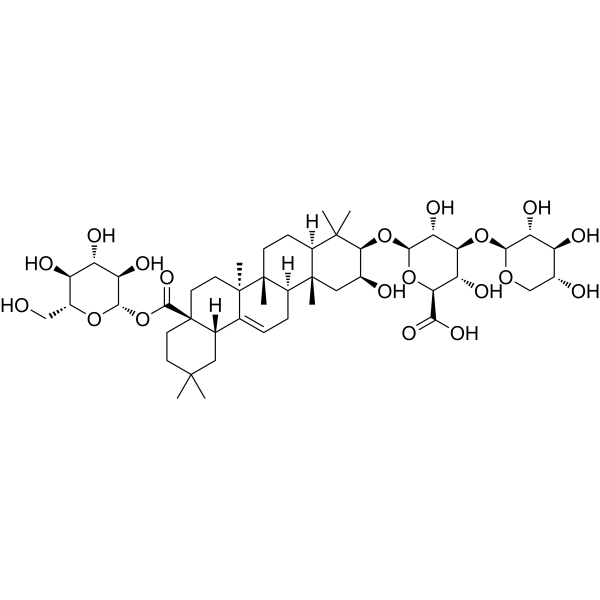
- Formula: C47H74O19
- Molecular Weight: 943.08



