1. Productos naturales
  2. Plants Flavonoids Phenols
  3. Compositae Flavonols Polyphenols
  4. Carthamus tinctorius L.
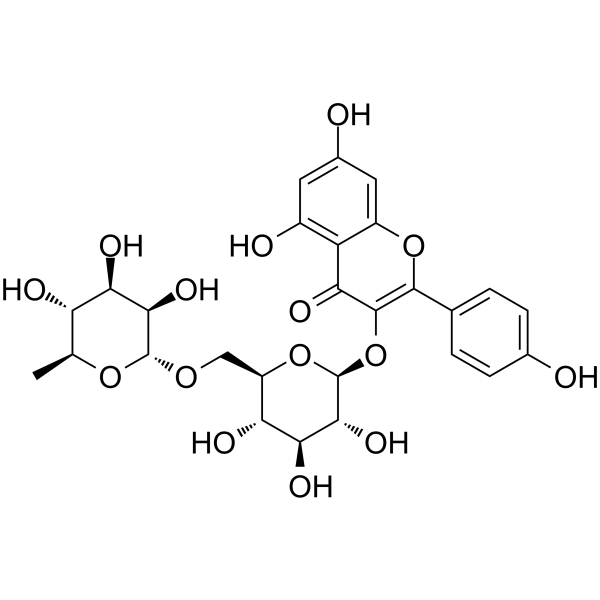
  5. Nicotiflorin

Nicotiflorin is a flavonoid glycoside extracted from a traditional Chinese medicine Carthamus tinctorius. Nicotiflorin shows potent antiglycation activity and neuroprotection effects.

Para uso exclusivo en investigación. No vendemos a pacientes.

No. CAS : 17650-84-9

Tamaño Precio Stock Cantidad
Solid + Solvent (Highly Recommended)
10 mM * 1 mL in DMSO
ready for reconstitution
En stock
Solution
10 mM * 1 mL in DMSO En stock
Solid
5 mg En stock
10 mg En stock
25 mg En stock
50 mg   Obtener un presupuesto  
100 mg   Obtener un presupuesto  

* Seleccione Cantidad antes de agregar artículos.

This product is a controlled substance and not for sale in your territory.

Revisión del cliente

Based on 4 publication(s) in Google Scholar

Other Forms of Nicotiflorin:

Top Publications Citing Use of Products

    Nicotiflorin purchased from MedChemExpress. Usage Cited in: Nephrology (Carlton). 2021 Apr;26(4):358-368.  [Abstract]

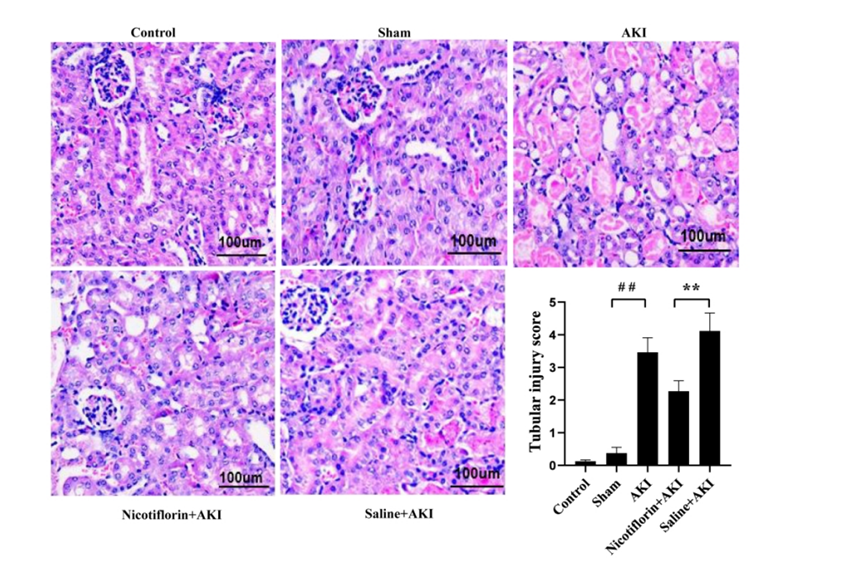
    H&E staining of kidney tissue treated with Nicotiflorin (50 mg/kg).

    Nicotiflorin purchased from MedChemExpress. Usage Cited in: Nephrology (Carlton). 2021 Apr;26(4):358-368.  [Abstract]

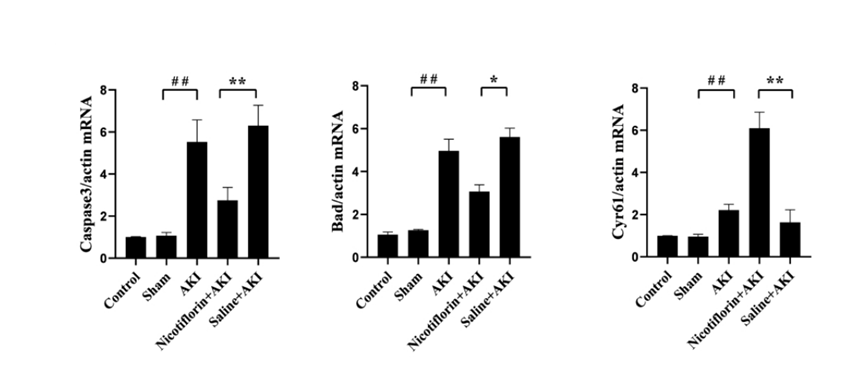
    Verification by quantitative real-time PCR of some target genes in I/R kidneys. Compared with NS group, Nicotiflorin (50 mg/kg) alleviated the apoptosis of renal tubular epithelial cells of AKI and increased the expression of Cyr61.

    Nicotiflorin purchased from MedChemExpress. Usage Cited in: Nephrology (Carlton). 2021 Apr;26(4):358-368.  [Abstract]

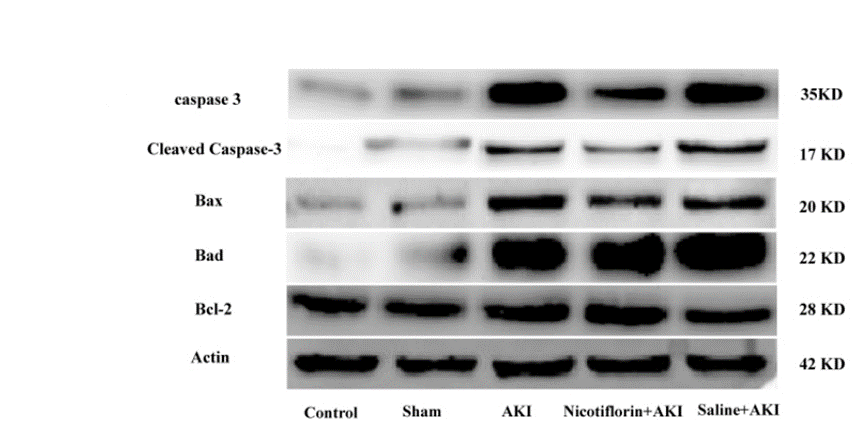
    Western blot images of caspase3, Bad, Bcl-2 treated with Nicotiflorin (50 mg/kg).

    Nicotiflorin purchased from MedChemExpress. Usage Cited in: Nephrology (Carlton). 2021 Apr;26(4):358-368.  [Abstract]

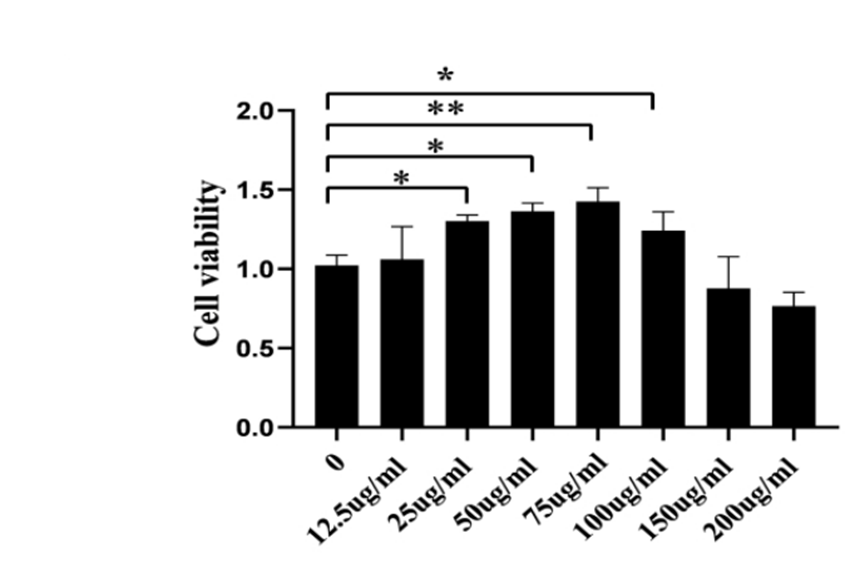
    HK-2 cells were treated with Nicotiflorin (0-200 μg/ml) for 24 hours, which showed the effect of different nicotiflorin concentrations on cell viability.

    Nicotiflorin purchased from MedChemExpress. Usage Cited in: Nephrology (Carlton). 2021 Apr;26(4):358-368.  [Abstract]

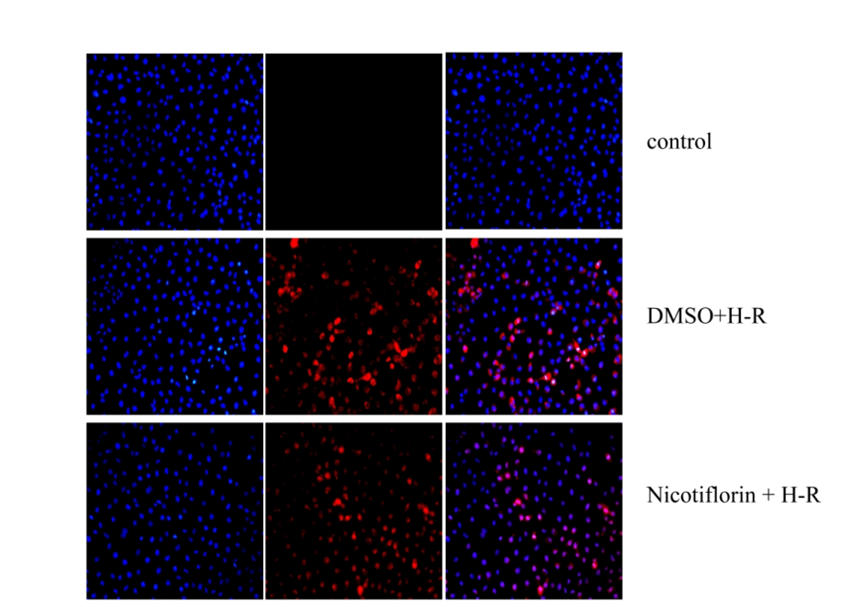
    TUNEL staining in cortical cells under fluorescence microscopy treated with Nicotiflorin (75 μg/mL).
    • Actividad biológica

    • Protocolo

    • Pureza y Documentación

    • Referencias

    • Revisión del cliente

    Descripciòn

    Nicotiflorin is a flavonoid glycoside extracted from a traditional Chinese medicine Carthamus tinctorius. Nicotiflorin shows potent antiglycation activity and neuroprotection effects.

    IC50 & Target

    Antiglycation[1]

    Cellular Effect
    Cell Line Type Value Description References
    A549 IC50
    >10 μM
    Compound: 8
    Cytotoxicity against human A549 cells after 48 hrs by SRB assay
    Cytotoxicity against human A549 cells after 48 hrs by SRB assay
    [PMID: 28165740]
    BMDC IC50
    >50 μM
    Compound: 13
    Inhibition of LPS-induced IL-12 p40 production in wild-type C57BL/6 mouse BMDC pretreated with compound for 1 hr before LPS treatment measured 16 hrs by ELISA
    Inhibition of LPS-induced IL-12 p40 production in wild-type C57BL/6 mouse BMDC pretreated with compound for 1 hr before LPS treatment measured 16 hrs by ELISA
    [PMID: 25769817]
    BMDC IC50
    >50 μM
    Compound: 13
    Inhibition of LPS-induced IL-6 production in wild-type C57BL/6 mouse BMDC pretreated with compound for 1 hr before LPS treatment measured 16 hrs by ELISA
    Inhibition of LPS-induced IL-6 production in wild-type C57BL/6 mouse BMDC pretreated with compound for 1 hr before LPS treatment measured 16 hrs by ELISA
    [PMID: 25769817]
    BMDC IC50
    >50 μM
    Compound: 13
    Inhibition of LPS-induced TNF-alpha production in wild-type C57BL/6 mouse BMDC pretreated with compound for 1 hr before LPS treatment measured 16 hrs by ELISA
    Inhibition of LPS-induced TNF-alpha production in wild-type C57BL/6 mouse BMDC pretreated with compound for 1 hr before LPS treatment measured 16 hrs by ELISA
    [PMID: 25769817]
    BT-549 IC50
    >10 μM
    Compound: 8
    Cytotoxicity against human BT549 cells after 48 hrs by SRB assay
    Cytotoxicity against human BT549 cells after 48 hrs by SRB assay
    [PMID: 28165740]
    BV-2 IC50
    121.72 μM
    Compound: 14
    Antineuroinflammatory activity against mouse BV2 cells assessed as inhibition of LPS-induced nitric oxide production after 24 hrs by Griess method
    Antineuroinflammatory activity against mouse BV2 cells assessed as inhibition of LPS-induced nitric oxide production after 24 hrs by Griess method
    [PMID: 23149227]
    BV-2 IC50
    44.44 μM
    Compound: 8
    Antiinflammatory activity in mouse BV2 cells assessed as inhibition of LPS-induced nitrite production after 24 hrs by Griess assay
    Antiinflammatory activity in mouse BV2 cells assessed as inhibition of LPS-induced nitrite production after 24 hrs by Griess assay
    [PMID: 28165740]
    BV-2 IC50
    88.05 μM
    Compound: 6
    Antineuroinflammatory activity in human BV2 cells assessed as inhibition of LPS-induced NO production after 24 hrs in presence of LPS by Griess reaction
    Antineuroinflammatory activity in human BV2 cells assessed as inhibition of LPS-induced NO production after 24 hrs in presence of LPS by Griess reaction
    [PMID: 27623545]
    MDCK CC50
    >300 μM
    Compound: 14
    Cytotoxicity against MDCK cells after 48 hrs by MTT assay
    Cytotoxicity against MDCK cells after 48 hrs by MTT assay
    [PMID: 19729316]
    MDCK EC50
    40.1 μM
    Compound: 14
    Antiviral activity against influenza A virus H1N1 A/PR/8/34 infected in MDCK cells assessed as reduction in virus-induced cytopathic effect
    Antiviral activity against influenza A virus H1N1 A/PR/8/34 infected in MDCK cells assessed as reduction in virus-induced cytopathic effect
    [PMID: 19729316]
    MDCK EC50
    72.9 μM
    Compound: 14
    Antiviral activity against influenza A virus H9N2 A/Chicken/Korea/MS96/96 infected in MDCK cells assessed as reduction in virus-induced cytopathic effect
    Antiviral activity against influenza A virus H9N2 A/Chicken/Korea/MS96/96 infected in MDCK cells assessed as reduction in virus-induced cytopathic effect
    [PMID: 19729316]
    N9 IC50
    >100 μM
    Compound: 13
    Antineuroinflammatory activity in mouse N9 cells assessed as inhibition of LPS-induced nitric oxide production after 24 hrs by Griess assay
    Antineuroinflammatory activity in mouse N9 cells assessed as inhibition of LPS-induced nitric oxide production after 24 hrs by Griess assay
    [PMID: 28073678]
    RAW264.7 IC50
    41.5 μM
    Compound: 20
    Antiinflammatory activity in mouse RAW264.7 cells assessed as inhibition of LPS-induced TNF-alpha secretion after 18 hrs by sandwich ELISA
    Antiinflammatory activity in mouse RAW264.7 cells assessed as inhibition of LPS-induced TNF-alpha secretion after 18 hrs by sandwich ELISA
    [PMID: 24679441]
    RAW264.7 IC50
    45.3 μM
    Compound: 20
    Antiinflammatory activity in mouse RAW264.7 cells assessed as inhibition of LPS-induced nitric oxide production after 18 hrs by griess reaction analysis
    Antiinflammatory activity in mouse RAW264.7 cells assessed as inhibition of LPS-induced nitric oxide production after 18 hrs by griess reaction analysis
    [PMID: 24679441]
    SK-MEL-2 IC50
    >10 μM
    Compound: 8
    Cytotoxicity against human SK-MEL-2 cells after 48 hrs by SRB assay
    Cytotoxicity against human SK-MEL-2 cells after 48 hrs by SRB assay
    [PMID: 28165740]
    SK-OV-3 IC50
    >10 μM
    Compound: 8
    Cytotoxicity against human SKOV3 cells after 48 hrs by SRB assay
    Cytotoxicity against human SKOV3 cells after 48 hrs by SRB assay
    [PMID: 28165740]
    In Vitro

    For primarily cultured neurons suffered 2 h hypoxia followed by 24 h reoxygenation, nicotiflorin significantly attenuates cell death and reduces LDH release. Morphological observation also directly confirms its protective effect on neuron[2]. After total 4 h hypoxia and 12 h reoxygenation, eNOS activity, mRNA and protein levels in the primarily cultured rat cerebral blood vessel endothelial cells treated with nicotiflorin (25-100 g/mL) 2 h after onset of hypoxia are significantly higher than eNOS activity, mRNA and protein levels in the pure H-R cells and also higher than eNOS activity, mRNA and protein levels in cells cultured under normoxic conditions[3].

    MedChemExpress (MCE) has not independently confirmed the accuracy of these methods. They are for reference only.

    In Vivo

    At doses of 2.5, 5 and 10 mg/kg, nicotiflorin administered immediately after the onset of ischemia markedly reduces brain infarct volume and neurological deficits[2]. Nicotiflorin (2.5-10 mg/kg) administered after onset of ischemia markedly reduces brain infarct volume by 24.5-63.2% and neurological deficits[3].

    MedChemExpress (MCE) has not independently confirmed the accuracy of these methods. They are for reference only.

    Peso molecular

    594.52

    Fòrmula

    C27H30O15

    No. CAS
    Appearance

    Solid

    Color

    Light yellow to yellow

    SMILES

    O=C1C(O[C@H]2[C@@H]([C@H]([C@@H]([C@@H](CO[C@H]3[C@@H]([C@@H]([C@H]([C@H](C)O3)O)O)O)O2)O)O)O)=C(C4=CC=C(O)C=C4)OC5=CC(O)=CC(O)=C15

    Structure Classification
    Initial Source
    Envío

    Room temperature in continental US; may vary elsewhere.

    Almacenamiento

    4°C, protect from light

    *In solvent : -80°C, 6 months; -20°C, 1 month (protect from light)

    Solvente y solubilidad
    In Vitro: 

    DMSO : 250 mg/mL (420.51 mM; Need ultrasonic; Hygroscopic DMSO has a significant impact on the solubility of product, please use newly opened DMSO)

    Preparing
    Stock Solutions
    Concentration Solvent Mass 1 mg 5 mg 10 mg
    1 mM 1.6820 mL 8.4101 mL 16.8203 mL
    5 mM 0.3364 mL 1.6820 mL 3.3641 mL
    View the Complete Stock Solution Preparation Table

    * Please refer to the solubility information to select the appropriate solvent. Once prepared, please aliquot and store the solution to prevent product inactivation from repeated freeze-thaw cycles.
    Storage method and period of stock solution: -80°C, 6 months; -20°C, 1 month (protect from light). When stored at -80°C, please use it within 6 months. When stored at -20°C, please use it within 1 month.

    • Calculadora de molaridad

    • Calculadora de dilución

    Mass (g) = Concentration (mol/L) × Volume (L) × Molecular Weight (g/mol)

    Mass
    =
    Concentration
    ×
    Volume
    ×
    Molecular Weight *

    Concentration (start) × Volume (start) = Concentration (final) × Volume (final)

    This equation is commonly abbreviated as: C1V1 = C2V2

    Concentration (start)

    C1

    ×
    Volume (start)

    V1

    =
    Concentration (final)

    C2

    ×
    Volume (final)

    V2

    In Vivo:

    Select the appropriate dissolution method based on your experimental animal and administration route.

    For the following dissolution methods, please ensure to first prepare a clear stock solution using an In Vitro approach and then sequentially add co-solvents:
    To ensure reliable experimental results, the clarified stock solution can be appropriately stored based on storage conditions. As for the working solution for in vivo experiments, it is recommended to prepare freshly and use it on the same day.
    The percentages shown for the solvents indicate their volumetric ratio in the final prepared solution. If precipitation or phase separation occurs during preparation, heat and/or sonication can be used to aid dissolution.

    • Protocol 1

      Add each solvent one by one:  10% DMSO    40% PEG300    5% Tween-80    45% Saline

      Solubility: ≥ 2.08 mg/mL (3.50 mM); Clear solution

      This protocol yields a clear solution of ≥ 2.08 mg/mL (saturation unknown).

      Taking 1 mL working solution as an example, add 100 μL DMSO stock solution (20.8 mg/mL) to 400 μL PEG300, and mix evenly; then add 50 μL Tween-80 and mix evenly; then add 450 μL Saline to adjust the volume to 1 mL.

      Preparation of Saline: Dissolve 0.9 g sodium chloride in ddH₂O and dilute to 100 mL to obtain a clear Saline solution.
    • Protocol 2

      Add each solvent one by one:  10% DMSO    90% (20% SBE-β-CD in Saline)

      Solubility: ≥ 2.08 mg/mL (3.50 mM); Clear solution

      This protocol yields a clear solution of ≥ 2.08 mg/mL (saturation unknown).

      Taking 1 mL working solution as an example, add 100 μL DMSO stock solution (20.8 mg/mL) to 900 μL 20% SBE-β-CD in Saline, and mix evenly.

      Preparation of 20% SBE-β-CD in Saline (4°C, storage for one week): 2 g SBE-β-CD powder is dissolved in 10 mL Saline, completely dissolve until clear.
    In Vivo Dissolution Calculator
    Please enter the basic information of animal experiments:

    Dosage

    mg/kg

    Animal weight
    (per animal)

    g

    Dosing volume
    (per animal)

    μL

    Number of animals

    Recommended: Prepare an additional quantity of animals to account for potential losses during experiments.
    Please enter your animal formula composition:
    %
    DMSO +
    +
    %
    Tween-80 +
    %
    Saline
    Recommended: Keep the proportion of DMSO in working solution below 2% if your animal is weak.
    The co-solvents required include: DMSO, . All of co-solvents are available by MedChemExpress (MCE). , Tween 80. All of co-solvents are available by MedChemExpress (MCE).
    Calculation results:
    Working solution concentration: mg/mL
    Method for preparing stock solution: mg drug dissolved in μL  DMSO (Stock solution concentration: mg/mL).

    *In solvent : -80°C, 6 months; -20°C, 1 month (protect from light)

    The concentration of the stock solution you require exceeds the measured solubility. The following solution is for reference only. If necessary, please contact MedChemExpress (MCE).
    Method for preparing in vivo working solution for animal experiments: Take μL DMSO stock solution, add μL . μL , mix evenly, next add μL Tween 80, mix evenly, then add μL Saline.
     If the continuous dosing period exceeds half a month, please choose this protocol carefully.
    Please ensure that the stock solution in the first step is dissolved to a clear state, and add co-solvents in sequence. You can use ultrasonic heating (ultrasonic cleaner, recommended frequency 20-40 kHz), vortexing, etc. to assist dissolution.
    Pureza y Documentación

    Purity: 99.85%

    Referencias
    Ensayo celular
    [2]

    Cortical neurons are treated with nicotiflorin (25-100 mg/mL) just before hypoxia. Cell viability is determined using the MTT assay[2].

    MCE no ha confirmado la precisión de estos métodos independientemente. Son solo para referencia.

    Administraciòn de animales
    [2]

    Rats[2]

    A neurological examination is performed on each rat 24 h after the onset of ischemia. Briefly, neurological scores (NS) are derived using a 10-point sliding scale. Rats are administered 2.5, 5, and 10 mg/kg nicotiflorin or vehicle immediately after occlusion. Each animal is examined for reduced resistance to lateral push (score, 4), open field circling (score, 3), and shoulder adduction (score, 2) or contralateral forelimb flexion (score, 1) when held by the tail and suspended approximately 0.5 m above the floor. Rats extending both forelimbs toward the floor and not showing any other signs of neurological impairment are scored 0[2].

    MCE no ha confirmado la precisión de estos métodos independientemente. Son solo para referencia.

    Referencias

    Complete Stock Solution Preparation Table

    * Please refer to the solubility information to select the appropriate solvent. Once prepared, please aliquot and store the solution to prevent product inactivation from repeated freeze-thaw cycles.
    Storage method and period of stock solution: -80°C, 6 months; -20°C, 1 month (protect from light). When stored at -80°C, please use it within 6 months. When stored at -20°C, please use it within 1 month.

    Optional Solvent Concentration Solvent Mass 1 mg 5 mg 10 mg 25 mg
    DMSO 1 mM 1.6820 mL 8.4101 mL 16.8203 mL 42.0507 mL
    5 mM 0.3364 mL 1.6820 mL 3.3641 mL 8.4101 mL
    10 mM 0.1682 mL 0.8410 mL 1.6820 mL 4.2051 mL
    15 mM 0.1121 mL 0.5607 mL 1.1214 mL 2.8034 mL
    20 mM 0.0841 mL 0.4205 mL 0.8410 mL 2.1025 mL
    25 mM 0.0673 mL 0.3364 mL 0.6728 mL 1.6820 mL
    30 mM 0.0561 mL 0.2803 mL 0.5607 mL 1.4017 mL
    40 mM 0.0421 mL 0.2103 mL 0.4205 mL 1.0513 mL
    50 mM 0.0336 mL 0.1682 mL 0.3364 mL 0.8410 mL
    60 mM 0.0280 mL 0.1402 mL 0.2803 mL 0.7008 mL
    80 mM 0.0210 mL 0.1051 mL 0.2103 mL 0.5256 mL
    100 mM 0.0168 mL 0.0841 mL 0.1682 mL 0.4205 mL
    • No file chosen (Maximum size is: 1024 Kb)
    • If you have published this work, please enter the PubMed ID.
    • Your name will appear on the site.
    Help & FAQs
    • Do most proteins show cross-species activity?

      Species cross-reactivity must be investigated individually for each product. Many human cytokines will produce a nice response in mouse cell lines, and many mouse proteins will show activity on human cells. Other proteins may have a lower specific activity when used in the opposite species.

    Productos vistos recientemente:

    Consulta en línea

    Your information is safe with us. * Required Fields.

    Nombre del producto


    Requested Quantity *

    Nombre del solicitante *


    Saludo

    Direcciòn del E-mail *


    Número de teléfono *

    Department


    Nombre de la Organizaciòn *

    City

    Provincia

    Country or Region *


    Observaciones

    Consulta para venta a granel

    Inquiry Information

    Nombre del producto:
    Nicotiflorin
    Cat. No.:
    HY-N1475
    Cantidad:
    MCE Japan Authorized Agent: