



Cancer Immunotherapy
Cancer immunotherapy (CIT) is a type of biological therapy, aiming to improve anti-tumor immune responses with fewer off-target effects than chemotherapy. Several types of immunotherapy include: oncolytic virus therapies, cancer vaccines, cytokine therapies, adoptive cell transfer (ACT), and immune checkpoint inhibitors (ICIs). In particular, ICIs and ACT have obtained immense clinical response, but their efficacy varies from person to person. Immune cells can be harnessed to eliminate tumor cells, such as T cells, B cells, NK cells, and myeloid cells. T cells have potent tumor-killing capability, therefore, a plethora of cancer immunotherapy research have focused on inducing T-cell-mediated anti-tumor responses. CTLA-4 and PD-1 are found on the cell surface of T cells as co-inhibitory receptors. The breakthrough in cancer immunotherapy results from the identification and subsequent targeting of checkpoint mechanisms in T cells with monoclonal antibodies against CTLA-4 and programmed death-ligand 1/programmed death-1 (PD-L1/PD-1).
Several types of cancers (e.g., melanoma, mismatch repair-deficient cancers, bladder cancer, and non-small cell lung cancer) have achieved significant clinical responses in T-cell checkpoint blockade therapies. However, single-mode immunotherapy faces challenges such as low immune response, low tumor infiltration, and complex immunosuppressive tumor microenvironment. Recently, combined therapies based on tumor immunity have received extensive attention in the research of enhancing tumor cells immunogenicity and inhibiting their growth. For example, anti CTLA-4 and PD-1, immune checkpoint blockade (ICB) combined with chemotherapy, anti-angiogenic drugs and kinase inhibitors.

-
HJC0416
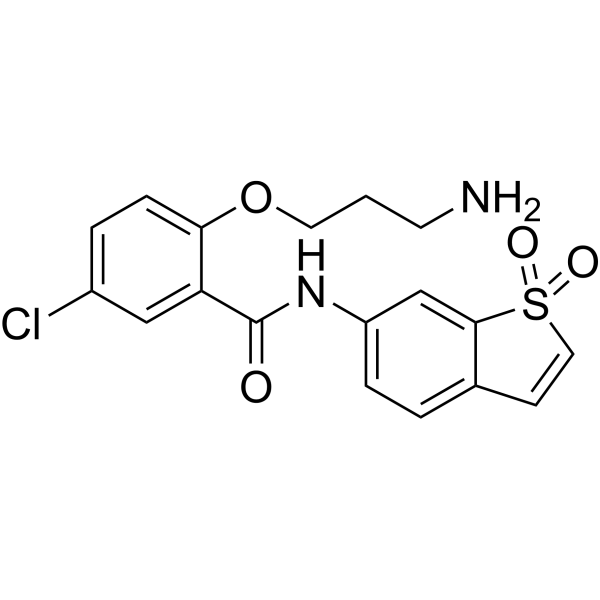 0 ImagesCat. No.: HY-12352CAS No.: 1617518-22-5
-
GSK235
 0 ImagesCat. No.: HY-179625
GSK235 is an orally active, selective and allosteric endoplasmic reticulum aminopeptidase 1 (ERAP1) inhibitor with pIC50 values of 8.45 and 7.59 for human and mouse ERAP1, respectively. GSK235 exhibits over 1000-fold selectivity for the two most homologous enzymes, ERAP2 and IRAP. GSK235 can regulate the immunopeptidome of cancer cells and enhance cancer cell antigenicity. GSK235 can be used for the study of colorectal cancer and arthritis.
-
ASP-1948
 0 ImagesCat. No.: HY-P991329
ASP-1948 is a human monoclonal antibody (mAb) targeting NRP1/VEGF165R/CD34. ASP-1948 reverses the suppressive effects of regulatory T cells. ASP-1948 can be used in solid tumors research.
-
(2-Pyridyldithio)-PEG6 acid
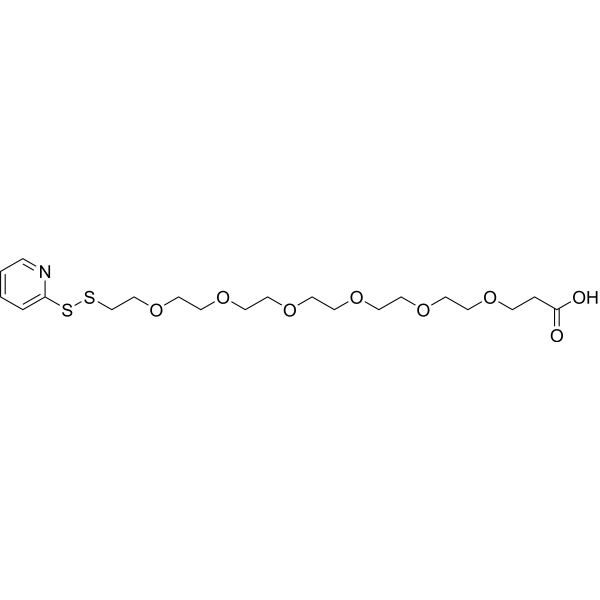 0 ImagesCat. No.: HY-132086
2-Pyridyldithio-PEG6 acid is a cleavable 6 unit PEG ADC linker used in the synthesis of antibody-drug conjugates (ADCs).
-
S2.2 aptamer sodium scrambled negative control
 0 ImagesCat. No.: HY-160062A
S2.2 aptamer sodium scrambled negative control is the sequence scrambled negative control of S2.2 aptamer sodium.
-
MT16-001
 0 ImagesCat. No.: HY-182636CAS No.: 1895049-73-6
MT16-001 is a cell-permeable UCHL1 inhibitor with an IC50 value of 580 nM. MT16-001 also exhibits considerable inhibitory activity against USP30, and shows selectivity for other UCH family deubiquitinases (DUBs) as well as the broader proteome. MT16-001 binds covalently to the cysteine residue at the active site of UCHL1, and forms covalent interactions with ALDH2, ALDH9A1 and GATD3A in intact cells. Meanwhile, as a cytotoxic agent, it displays a steep dose-response curve in human embryonic kidney cells. MT16-001 can be used for research on various cancers, liver fibrosis and pulmonary fibrosis.
-
Anti-PD-L2 Antibody (3.2)
 0 ImagesCat. No.: HY-P991847
-
Feldamycin
 0 ImagesCat. No.: HY-N21790CAS No.: 61230-27-1
Feldamycin is an antibacterial agent. Feldamycin inhibits highly purified Escherichia coli RNA polymerase, semi-conservative DNA replication, and the integration of 34S DNA fragments into larger DNA, and causes the accumulation of a 34S DNA species during replication. Feldamycin inhibits melanin synthesis and leukemia cell growth, and possesses antibacterial activity. Feldamycin can be used in research related to bacterial infections, leukemia, and melanoma.
-
Py-MPB-amino-C3-PBD
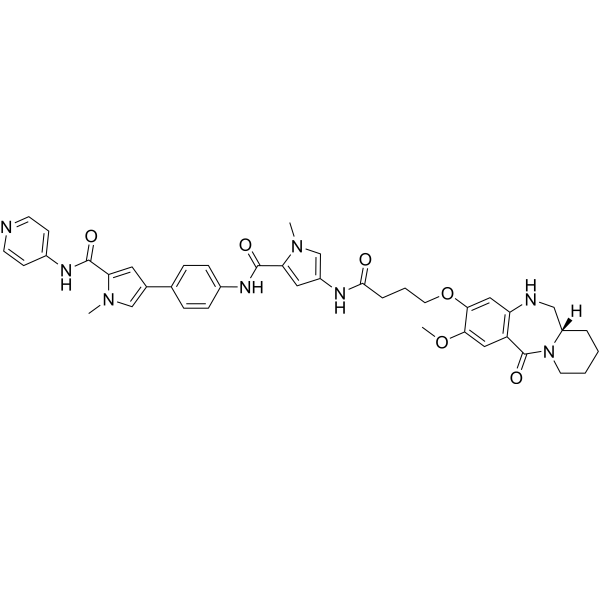 0 ImagesCat. No.: HY-135901CAS No.: 2412924-07-1
Py-MPB-amino-C3-PBD is a cytotoxic agent comprised non-alkylating group. Py-MPB-amino-C3-PBD acts as the payload for ADCs. Antimicrobial activity.
-
MALT1-IN-6
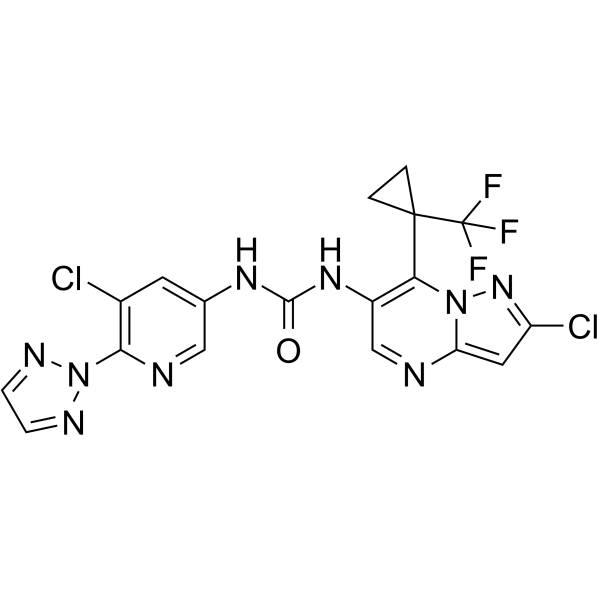 0 ImagesCat. No.: HY-143424CAS No.: 2254669-07-1
MALT1-IN-6 is a potent MALT1 protease inhibitor with a Ki of 9 nM. MALT1-IN-6 has anticancer effects (WO2018226150A1; Compound 4).
-
Lactate sodium-13C2
 0 ImagesCat. No.: HY-W769991CAS No.: 1173021-18-5Synonyms: Lactic acid sodium-13C2
Lactic acid-13C2 (DL-Lactic acid-13C2) sodium is the 13C-labeled Lactic acid sodium . Lactic acid (DL-Lactic acid) sodium is a hydroxycarboxylic acid receptor 1 (HCAR1) activator and an epigenetic modulator inducing lysine residues lactylation. Lactic acid sodium is a glycolysis end-product, bridging the gap between glycolysis and oxidative phosphorylation. Lactic acid sodium is an oncometabolite and has immune protective role of lactate in anti-tumor immunity. Lactic acid sodium also has antimicrobial activity, which can be used as a food preservative.
-
Fluphenazine dimaleate
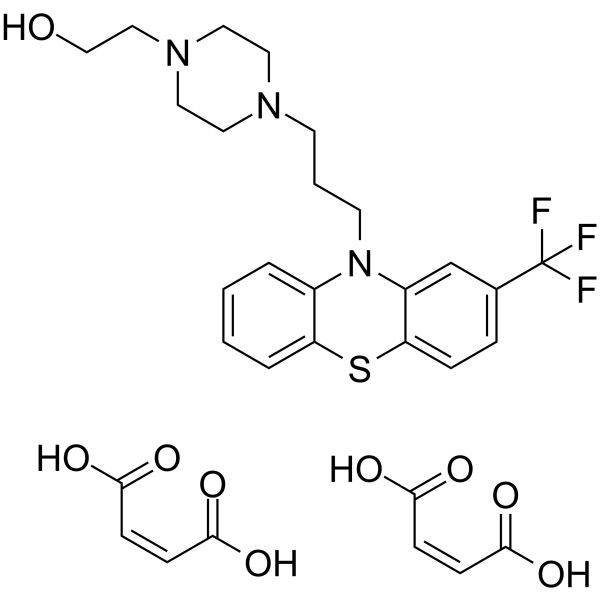 0 ImagesCat. No.: HY-119980ACAS No.: 3093-66-1
Fluphenazine dimaleate is a potent, orally active phenothiazine-based dopamine receptor antagonist. Fluphenazine dimaleate blocks neuronal voltage-gated sodium channels. Fluphenazine dimaleate acts primarily through antagonism of postsynaptic dopamine-2 receptors in mesolimbic, nigrostriatal, and tuberoinfundibular neural pathways. Fluphenazine dimaleate can antagonize Methylphenidate-induced stereotyped gnawing and inhibit climbing behaviour in mice. Fluphenazine dimaleate can be used for researching psychosis and painful peripheral neuropathy associated with diabetes and has potential to inhibit SARS-CoV-2.
-
Pertuzumab-LD3
 0 ImagesCat. No.: HY-185460
Pertuzumab-LD3 is a humanized antibody-drug conjugate (ADC) targeting HER2. Pertuzumab-LD3 consists of the anti-HER2 humanized IgG1 monoclonal antibody Pertuzumab (HY-P9912), the cleavable linker Gly-Gly-Phe-Gly (HY-P3669), and the PI3K/mTOR-IN-21 (HY-185456) payload. Pertuzumab-LD3 can be used in research on metastatic HER2-positive breast cancer.
-
Pumitamig (Mouse IgG2a)
 0 ImagesCat. No.: HY-P992518
Pumitamig (Mouse IgG2a) is the Mouse IgG2a control antibody for Pumitamig (HY-P991097). Pumitamig (PM-8002, BNT-327) is a bispecific antibody targeting PD-L1 and VEGF-A, with immune activation and anti-angiogenic activities. By binding to PD-L1, Pumitamig restores the function of effector T cells, while neutralizing VEGF-A in the tumor microenvironment to reverse its inhibition on the infiltration and activation of immune cells and normalize tumor blood vessels. Pumitamig can also be combined with various ADCs targeting TROP2, B7H3, HER2, HER3 for the research of advanced/metastatic solid tumors, including non-small cell lung cancer, ovarian cancer, triple-negative breast cancer, cervical cancer, etc. Pumitamig also exhibits potential efficacy in "cold" tumors with low PD-L1 expression that are insensitive to immunotherapy.
-
YT117R
 0 ImagesCat. No.: HY-169148
YT117R is a PROTAC degrader targeting BRD4. YT117R binds stereoselectively and site-specifically to the cysteine residue C1113 of DCAF1 to form a covalent interaction. YT117R promotes BRD4 degradation via a DCAF1-dependent, proteasome- and cullin-RING E3 ligase-mediated process. YT117R exhibits stereoselective activity dependent on wild-type DCAF1, which is blocked by the DCAF1C1113A mutation.
-
6-Biopterin-d3
 0 ImagesCat. No.: HY-102015SCAS No.: 1217838-71-5Synonyms: L-Biopterin-d3
6-Biopterin-d3 (L-Biopterin-d3) is deuterium labeled 6-Biopterin. 6-Biopterin (L-Biopterin), a pterin derivative, is a NO synthase cofactor.
-
IKKβ-IN-5
 0 ImagesCat. No.: HY-180119
IKKβ-IN-5 is an orally active and selective IKKβ inhibitor with an IC50 of 7.5 nM. IKKβ-IN-5 directly inhibits IKKβ phosphorylation and attenuates NF κB mediated inflammatory and survival signals while promoting autophagy flux. IKKβ-IN-5 exhibits a 6-fold selectivity forIKKβ over the homologous kinase IKKα. IKKβ-IN-5 exerts robust antiproliferative effects through a dual mechanism involving G₂/M phase cell cycle arrest and autophagy activation, even under inflammatory stimulation in vitro. IKKβ-IN-5 demonstrates favorable pharmacokinetics and suppresses tumor growth in vivo. IKKβ-IN-5 can be used for colorectal cancer and potentially other inflammation driven malignancies research.
-
Sym-021
 0 ImagesCat. No.: HY-P991353
-
NHWL071065
 0 ImagesCat. No.: HY-182797CAS No.: 3117340-01-6
NHWL071065 is a CRBN-targeting IKZF1/IKZF3 molecular glues degrader. NHWL071065 selectively degrades IKZF1 and IKZF3 in lymphoma cells via the ubiquitin-proteasome pathway. NHWL071065 inhibits the proliferation of lymphoma cells. NHWL071065 downregulates proteins involved in cytoskeleton assembly, cell adhesion and immune regulation in cells, while upregulating proteins related to the type I IFN signaling pathway. NHWL071065 can be used in the research of lymphoma.



