Infection
-
Infection Related Products (18904)
Related Products (18904)

-
Antibodies (22)
-
Eugenol acetate (Standard)
 0 ImagesSynonyms: Acetyleugenol (Standard)
Eugenol acetate (Standard) is the analytical standard of Eugenol acetate. This product is intended for research and analytical applications. Eugenol acetate (Eugenyl acetate) is an antibacterial, anticancer, anti-inflammatory and antioxidant. Eugenol acetate inhibits NF-κB and enhances the expression of p53 and p21 (WAF1). Eugenol acetate can prevent chemically induced skin cancer, inhibit cancer cell proliferation and induce apoptosis.
-
Neuraminidase-IN-10
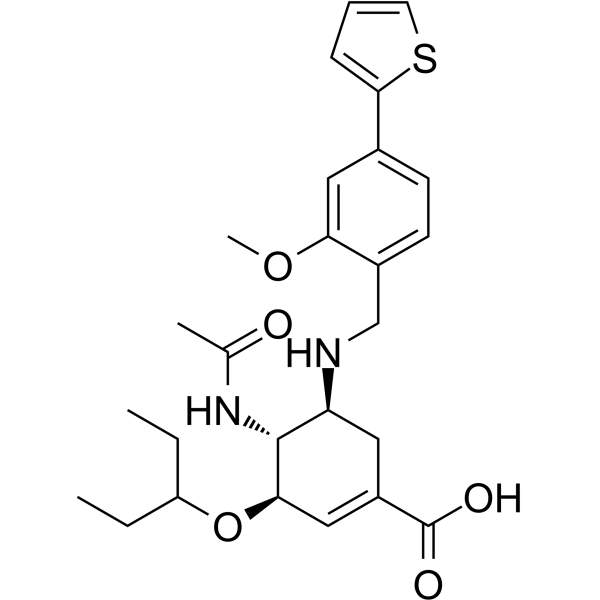 0 ImagesCat. No.: HY-151103CAS No.: 2685786-29-0
Neuraminidase-IN-10 is a potent neuraminidase (NA) inhibitor with anti-influenza activity. Neuraminidase-IN-10 is against H1N1, H5N1, and H5N8 with IC50 values of 2.6 nM, 5.1 nM, and 1.65 nM, respectively.
-
Antifungal agent-170
 0 ImagesCat. No.: HY-184735CAS No.: 2924270-62-0
Antifungal agent-170 is an Antifungal agent. Antifungal agent-170 potently inhibits the growth of recombinant Saccharomyces cerevisiae strains expressing wild-type and mutant fungal CYP51 enzymes. Antifungal agent-170 potently inhibits the growth of Candida albicans, Candida glabrata, Candida krusei, Cryptococcus neoformans and Cryptococcus gattii. Antifungal agent-170 provides survival benefits in the Galleria mellonella (greater wax moth) infection model. Antifungal agent-170 can be used for the research of invasive fungal infections.
-
Cadazolid (Standard)
 0 ImagesSynonyms: ACT-179811 (Standard)
Cadazolid (Standard) is the analytical standard of Cadazolid. This product is intended for research and analytical applications. Cadazolid (ACT-179811) is a new oxazolidinone antibiotic with potent activity against Clostridium difficile.
-
HIV-1 inhibitor-56
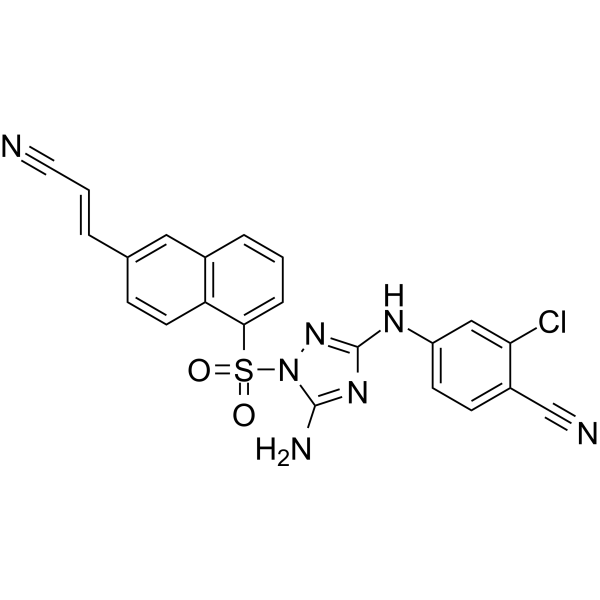 0 ImagesCat. No.: HY-149991CAS No.: 2952530-45-7
-
Sp-dGTPαS tetrasodium
 0 ImagesCat. No.: HY-137618A
-
GSK-1264
 0 ImagesCat. No.: HY-182277CAS No.: 1392118-63-6
GSK-1264 is an HIV-1 integrase inhibitor. GSK-1264 binds to a site spanning the HIV-1 integrase catalytic core domain and C-terminal domain, mediates formation of an open polymer of HIV-1 integrase dimers via inhibitor-bridged contacts between adjacent dimers. GSK-1264 disrupts late-stage HIV replication by interfering with viral particle assembly. GSK-1264 stimulates inappropriate polymerization of HIV-1 integrase. GSK-1264 can be used for the research of HIV infection.
-
Dextran sulfate, high sulfate (MW 5000)
 0 ImagesCat. No.: HY-116282PCAS No.: 9011-18-1
Dextran sulfate, high sulfate (MW 5000) is a type of dextran sulfate with a high degree of sulfation. Dextran sulfate sodium can be used to induce ulcerative colitis models, and the greater the total number of sulfur atoms, the stronger the induced toxic effect. Dextran sulfate has certain antibacterial activity, and can form the ionic cross-linking core of nanoparticles together with chitosan, serving as a highly efficient dressing material to accelerate wound healing.
-
HBV-IN-9
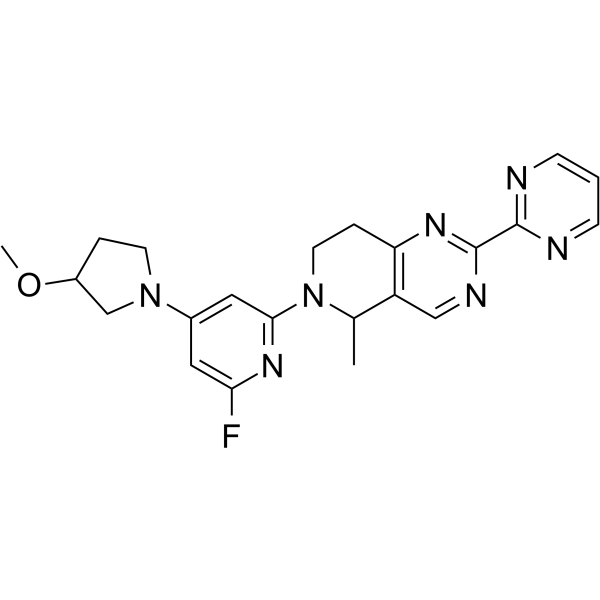 0 ImagesCat. No.: HY-145052CAS No.: 2170998-69-1
-
L-Amoxicillin (Standard)
 0 ImagesCat. No.: HY-129836RCAS No.: 26889-93-0
L-Amoxicillin (Standard) is the analytical standard of L-Amoxicillin. This product is intended for research and analytical applications. L-Amoxicillin is an antibiotic with activity against a wide range of bacterial infections. L-Amoxicillin is commonly used in antibacterial combinations when used in combination with the β-lactamase inhibitor potassium clavulanic acid. The related substances analysis method for L-Amoxicillin has been developed and validated according to the International Conference on Harmonization (ICH) guidelines, ensuring its effectiveness and accuracy in mixtures. L-Amoxicillin and some of its impurities have been further analyzed in stress testing and stability studies, providing support for optimizing its application.
-
3,3'-Bi[1H-indole]
![3,3'-Bi[1H-indole]](https://file.medchemexpress.com/product_pic/hy-w616426.gif "Click to View 3,3'-Bi[1H-indole] Product Detail") 0 ImagesCat. No.: HY-W616426CAS No.: 13637-37-1
0 ImagesCat. No.: HY-W616426CAS No.: 13637-37-13,3'-Bi[1H-indole] is a MtbFtsZ inhibitor. 3,3'-Bi[1H-indole] inhibits the GTPase activity of MtbFtsZ. 3,3'-Bi[1H-indole] increases the cell length of Mycobacterium smegmatis and Bacillus subtilis. 3,3'-Bi[1H-indole] can be used in the research of tuberculosis.
-
Panowamycin B
 0 ImagesCat. No.: HY-N16437ACAS No.: 1375224-56-8
Panowamycin B is an isochroman compound that can be produced by Streptomyces sp. K07-0010. Panowamycin B exhibits antitrypanosomal activity against the Trypanosoma brucei brucei GUTat 3.1 strain (IC50: 3.30 μg/mL). Panowamycin B shows weak cytotoxicity towards human fetal lung fibroblast MRC-5 cells (IC50: 13 μg/mL). Panowamycin B can be used for research in the field of antitrypanosomal studies.
-
Antituberculosis agent-9
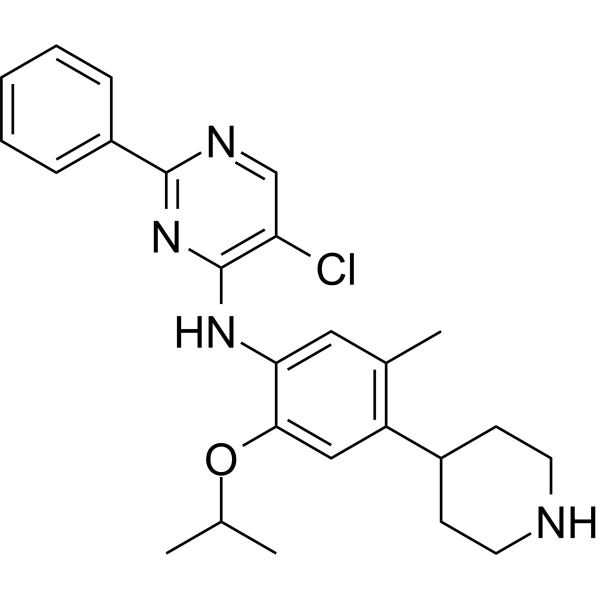 0 ImagesCat. No.: HY-149064CAS No.: 2998587-72-5
Antituberculosis agent-9 (Compound 5a) is an orally active antitubercular agent with an MIC of 0.5 μg/mL against H37Ra.
-
BMAP-28
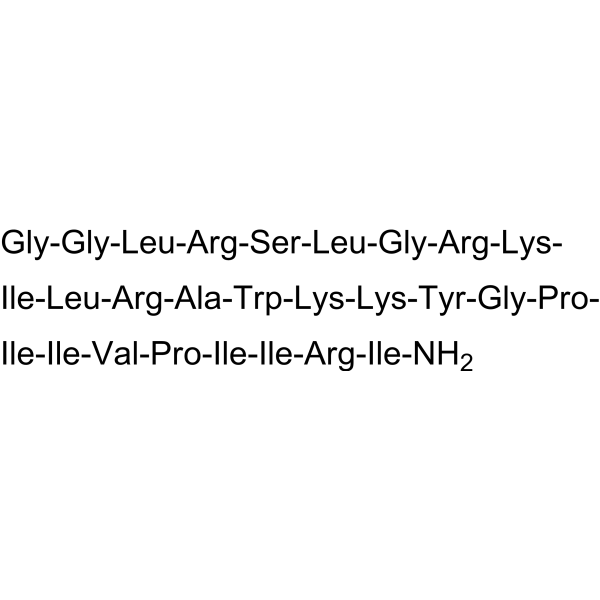 0 ImagesCat. No.: HY-P5288CAS No.: 184870-31-3
BMAP-28 is an antibiotic peptide and an inducer of the mitochondrial permeability transition pore. BMAP-28 induces cell death through opening of the mitochondrial permeability transition pore. BMAP-28 can be used in study of microbial infections and cancer.
-
Antibacterial agent 373
 0 ImagesCat. No.: HY-189127CAS No.: 668468-75-5
Antibacterial agent 373 is a broad-spectrum antibacterial agent. Antibacterial agent 373 exhibits antibacterial activity against Gram-negative/Gram-positive bacteria and some fungi, with MIC values ranging from 11.25 to 22.5 mg/mL. Antibacterial agent 373 is predicted to target Staphylococcus aureus topoisomerase IV, occupy the novobiocin binding pocket, and form hydrogen bonds with the active site residues Asn49 and Glu53. Antibacterial agent 373 can be used in studies related to bacterial and Candida infections.
-
COX-2-IN-24
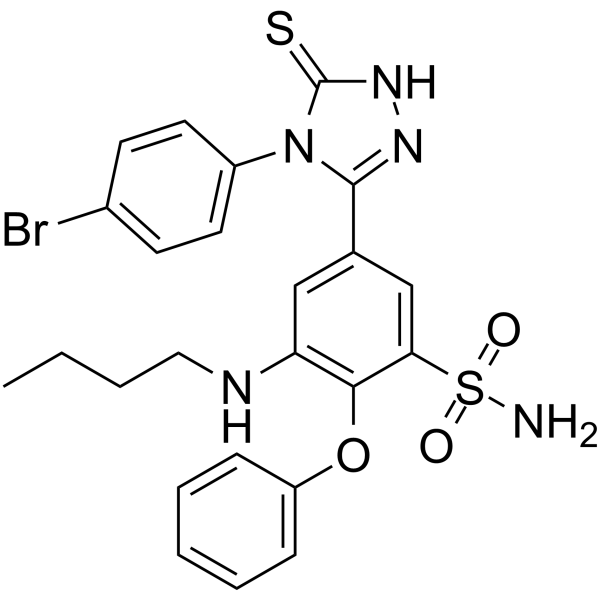 0 ImagesCat. No.: HY-147963CAS No.: 2417995-10-7
COX-2-IN-24 is an orally active inhibitor of COX-2 with IC50 value of 0.17 μM, shows anti-inflammatory and low ulcerogenic activities.
-
Tetrahydrobostrycin
 0 ImagesCat. No.: HY-113614CAS No.: 1072119-07-3
Tetrahydrobostrycin is a secondary metabolite from Aspergillus sp., which exhibits a weak inhibitory activity against Staphylococcus aureus and Escherichia coli (100 mg/disc with the inhibition zones of 15 and 9.2 mm in diameter).
-
Oxoglaucine
 0 Images
Oxoglaucine (O-Methylatheroline) is a natural product with multiple activities including autophagy activation, anti-inflammation, antibacterial activity, and immunoregulation. Oxoglaucine inhibits the TRPV5/calmodulin/CAMK-II pathway, suppresses TGFβ-induced Smad2 phosphorylation by upregulating Smad7, blocks Ca2+ influx, activates autophagy, alleviates apoptosis and inflammation, inhibits ROS production and the expression of fibrosis markers in hepatocytes, and regulates immune cell populations and responses. Oxoglaucine protects against infections caused by Candida albicans and Klebsiella pneumoniae, and exerts effects on adjuvant-induced arthritis. Oxoglaucine can be used in studies related to arthritis, liver fibrosis, bacterial infections, and fungal infections.
-
CotH3 peptide
 0 ImagesCat. No.: HY-P11031
CotH3 peptide is a functional peptide unique to Mucorales that binds to the host GRP78 receptor and allows them to invade endothelial cells. CotH3 peptide–targeted monoclonal antibodies protect immunosuppressed mice from mucormycosis caused by R. delemar and other Mucorales. CotH3 peptide also synergizes with antifungal drugs to protect mice with diabetic ketoacidosis (DKA) from R. delemar infection.
-
Berkeleylactone E
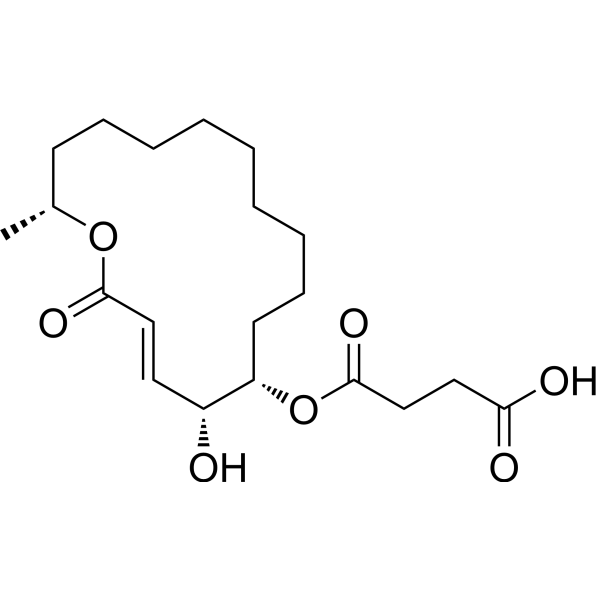 0 ImagesCat. No.: HY-N8381CAS No.: 122211-62-5
Berkeleylactone E is a macrolide antibiotic.