Infection
-
Infection Related Products (18904)
Related Products (18904)

-
Antibodies (22)
-
N-Choloylphenylalanine
 0 ImagesCat. No.: HY-176964CAS No.: 19651-46-8Synonyms: PheCA
-
Antileishmanial agent-13
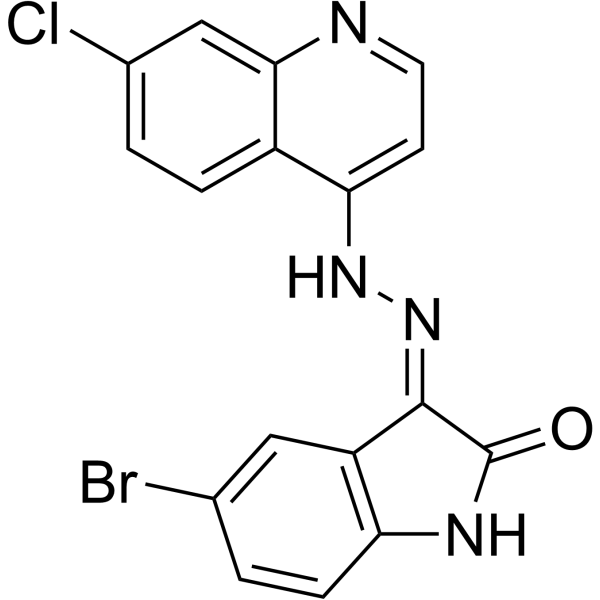 0 ImagesCat. No.: HY-151935CAS No.: 853725-86-7
Antileishmanial agent-13 is a quinoline-isatin hybrid, acts as an antileishmanial agent against L. Major Leishmania strain. Antileishmanial agent-13 acquires the antileishmanial activity via the anti-folate mechanism. Antileishmanial agent-13 has potent inhibition against both promastigote and amastigote forms with IC50s of 0.604 μM and 0.508 μM, respectively.
-
Ciprofloxacin lactate
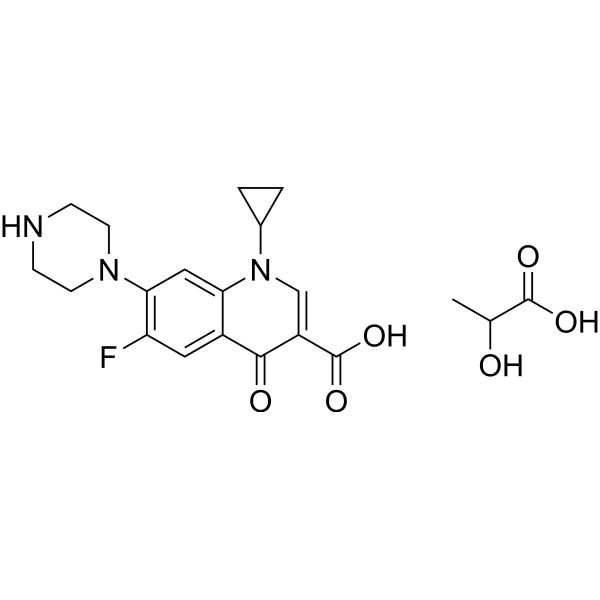 0 ImagesCat. No.: HY-W040298CAS No.: 97867-33-9Synonyms: Bay-09867 lactate
Ciprofloxacin (Bay-09867) lactate is a potent, orally active topoisomerase IV inhibitor. Ciprofloxacin lactate induces mitochondrial DNA and nuclear DNA damage and lead to mitochondrial dysfunction, ROS production. Ciprofloxacin lactate has anti-proliferative activity and induces apoptosis. Ciprofloxacin lactate is a fluoroquinolone antibiotic, exhibiting potent antibacterial activity.
-
Chrodrimanin H
 0 ImagesCat. No.: HY-182490CAS No.: 1446801-59-7
Chrodrimanin H (Compound 13) is a sesquiterpenoid compound. Chrodrimanin H is isolated from the fungus Talaromyces primulinus H21. Chrodrimanin H blocks lipopolysaccharide-induced NO production in immune cells with an IC50 of 24.71 μM.
-
Anti-infective agent 6
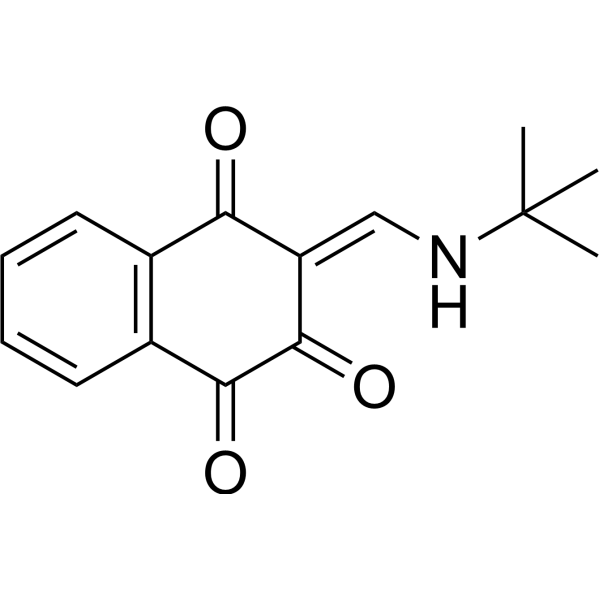 0 ImagesCat. No.: HY-151612CAS No.: 2839192-35-5
Anti-infective agent 6 (compound 28) is a potent anti-infectious agent. Anti-infective agent 6 shows a good activity against P. falciparum F32-ART (IC50=1.4 μM) with a good selectivity index (SI>36). Anti-infective agent 6 also shows a potency against L. donovani (IC50=3.5 μM).
-
Vidarabine phosphate (Standard)
 0 ImagesCat. No.: HY-B0277ARCAS No.: 29984-33-6Synonyms: ara-AMP (Standard); ara-A 5'-monophosphate (Standard)
Vidarabine phosphate (ara-AMP; ara-A 5'-monophosphate) (Standard) is the analytical standard of Vidarabine phosphate. This product is intended for research and analytical applications. Vidarabine phosphate is a purine nucleoside antiviral agent and a prodrug of Vidarabine (HY-B0277). Vidarabine phosphate is rapidly converted into the antiviral active Vidarabine in vivo, which selectively inhibits viral DNA polymerase and cellular ribonucleotide reductase, thereby blocking viral replication. Vidarabine phosphate also exhibits antifungal activity, induces late-stage cellular apoptosis, and causes cell cycle arrest. Vidarabine phosphate can be used in research related to severe chronic active Epstein-Barr virus (EBV) infection, herpes infection, and candidiasis.
-
InhA-IN-4
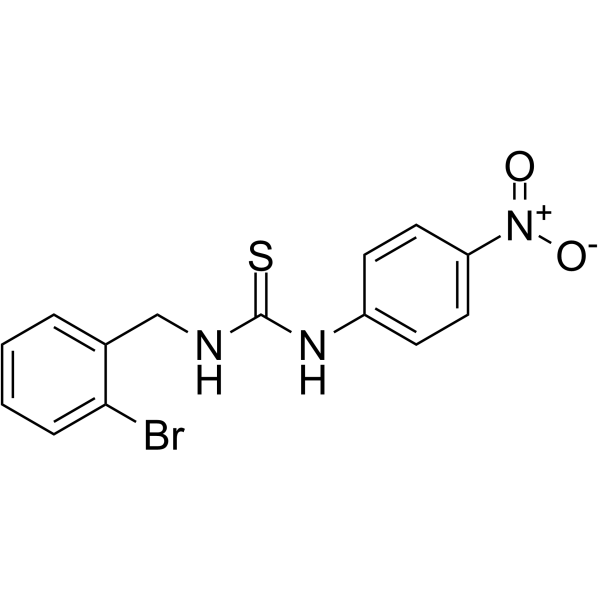 0 ImagesCat. No.: HY-150589CAS No.: 894309-72-9
InhA-IN-4 (TU14) is a Mycobacterium tuberculosis InhA (an enoyl ACP-reductase) inhibitor with an IC50 of 15.6 μM.
-
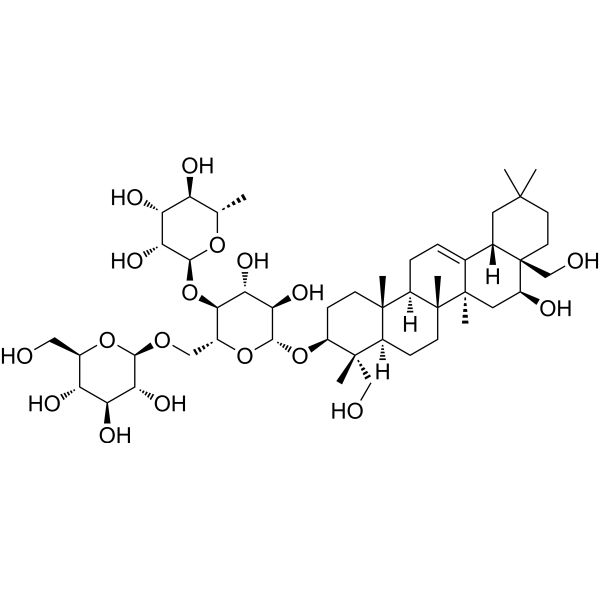
Nepasaikosaponin K
 0 Images
Nepasaikosaponin K is an anti-influenza agent. Nepasaikosaponin K shows an EC50 of 17.91 μM against influenza virus A/WSN/33 (H1N1) in 239T-Gluc cells.
-
Xeruborbactam isoboxil
 0 ImagesCat. No.: HY-172243CAS No.: 2708983-65-5
Xeruborbactam isoboxil is a beta-lactamase inhibitor.
-
NLCQ-1
 0 ImagesCat. No.: HY-126452CAS No.: 221292-08-6Synonyms: NSC 709257
NLCQ-1 (NSC 709257) is an orally active antibacterial agent targeting dormant Mycobacterium tuberculosis. NLCQ-1 is promising for research of tuberculosis.
-
VIRIP
 0 ImagesCat. No.: HY-P10437CAS No.: 339332-64-8Synonyms: human α1-AT(353-372)
-
NPNA hexamer
 0 ImagesCat. No.: HY-P5078CAS No.: 114332-71-7
NPNA hexamer is a peptide. NPNA hexamer can be used for the research of malaria and the development of a sporozoite vaccine.
-
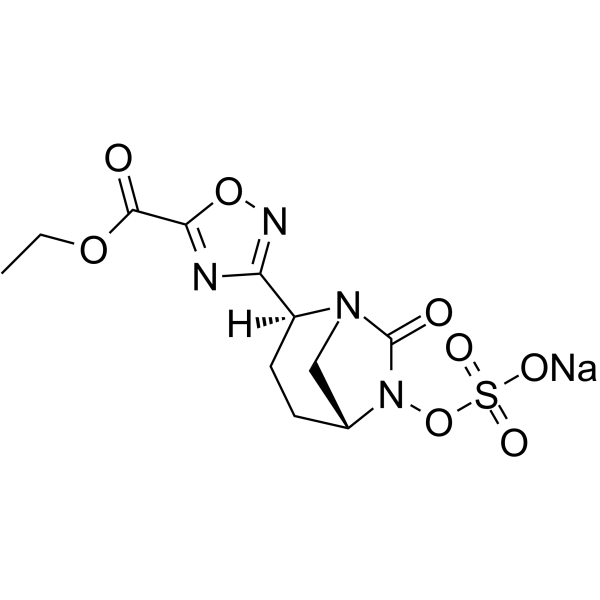
Antibacterial agent 56
 0 ImagesCat. No.: HY-139773CAS No.: 1426572-64-6
Antibacterial agent 56 (example 22) is a antibacterial agent (extracted from patent WO2013030735A1).
-
7,3′-Dihydroxy-8,4′-dimethoxyisoflavone
 0 ImagesCat. No.: HY-N9907CAS No.: 53947-99-2
7,3′-Dihydroxy-8,4′-dimethoxyisoflavone is an isoflavone Antibacterial agent. 7,3′-Dihydroxy-8,4′-dimethoxyisoflavone is isolated from the stems of S. parviflorus. 7,3′-Dihydroxy-8,4′-dimethoxyisoflavone exhibits weak antibacterial activity against Gram-positive and Gram-negative bacterial strains. 7,3′-Dihydroxy-8,4′-dimethoxyisoflavone can be used in the research of bacterial infections.
-
SDH-IN-26
 0 ImagesCat. No.: HY-172804
SDH-IN-26 (Compound C3) is a succinate dehydrogenase (SDH) inhibitor. SDH-IN-26 exhibits significant inhibitory activity against multiple phytopathogenic fungi, such as Rhizoctonia solani and Botrytis cinerea, with an EC50 value of 0.270 μg/mL against Rhizoctonia solani. SDH-IN-26 damages the integrity of the fungal cell membrane, increases membrane permeability, disrupts cell structure, and reduces the number of mitochondria, thus affecting the normal growth of mycelia. SDH-IN-26 leads to a decrease in mitochondrial membrane potential, and induces cell apoptosis. SDH-IN-26 is promising for research of plant diseases caused by fungi.
-
Cy3 labled Ozisiran sodium
 0 ImagesCat. No.: HY-177654D
Cy3 labled Ozisiran sodium is a Cy3 labled Ozisiran sodium.
-
Acacia catechu extract
 0 ImagesCat. No.: HY-N19050
Acacia catechu extract is rich in bioactive components such as catechins, tannins, and flavonoids, and has astringent, anti-inflammatory, antioxidant, and antibacterial properties.
-
Decyl aldehyde-d20
 0 ImagesCat. No.: HY-178396S
Decyl aldehyde-d20 is the deuterium labeled Decyl aldehyde (HY-W012570). Decyl aldehyde is a simple ten-carbon aldehyde. Decyl aldehyde is a bacterial luciferase substrate.

-
Meropenem sodium
 0 ImagesCat. No.: HY-W740053CAS No.: 211238-34-5
Meropenem sodium is a carbapenem antibiotic with broad-spectrum antibacterial activity. Meropenem sodium has activity against susceptible and resistant N. gonorrhoeae (MIC value of 0.02-0.06 mg/mL), H. influenzae (MIC value of 0.03-0.12 mg/mL), and H. ducreyi (MIC value of 0.015-0.12 mg/mL).