Infection
-
Infection Related Products (18683)
Related Products (18683)

-
Antibodies (22)
-
Viridicatol (Standard)
 0 ImagesCat. No.: HY-116474RCAS No.: 14484-44-7
Viridicatol (Standard) is the analytical standard of Viridicatol (HY-116474). This product is intended for research and analytical applications. Viridicatol is a quinolone alkaloid with anti-inflammatory, antibacterial, antifungal, osteogenic and chondrogenic activities. Viridicatol reduces the phosphorylation levels of ERK, JNK, p38 and STAT6; inhibits MMP-2, MMP-9, NF-κB signaling pathway and PTP1B; downregulates genes related to mast cell activation; and binds to SHN3 to activate the Wnt/SHN3 signaling pathway. Viridicatol inhibits the expression of pro-inflammatory mediators and cytokines, and promotes osteogenic/chondrogenic differentiation. Viridicatol can be used in studies related to fibrosarcoma, allergy, bacterial infection, fungal infection and osteoporosis.

-
LeuRS-IN-1
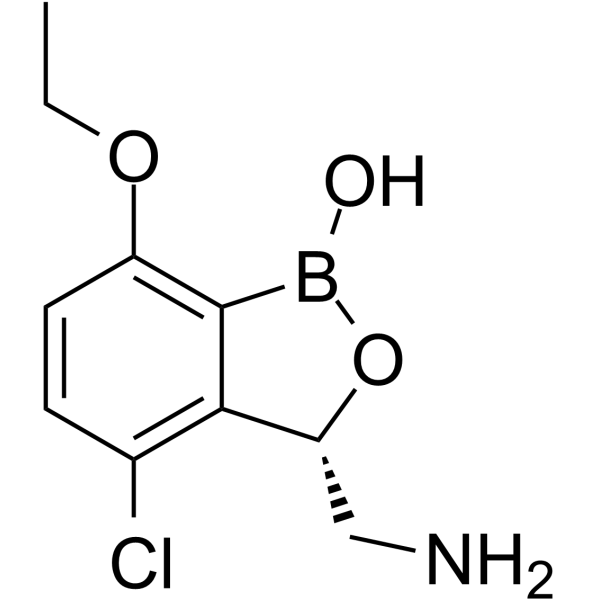 0 ImagesCat. No.: HY-139987CAS No.: 1364914-72-6
LeuRS-IN-1 is a potent, orally active M. tuberculosis leucyl-tRNA synthetase (M.tb LeuRS) inhibitor. LeuRS-IN-1 has IC50 and Kd values of 0.06 μM, 0.075 μM for M.tb LeuRS, respectively. LeuRS-IN-1 inhibits human cytoplasmic LeuRS (IC50=38.8 μM), and HepG2 protein synthesis (EC50=19.6 μM).

-
α-Pyridone (Standard)
 0 Images
α-Pyridone (Standard) is the analytical standard of α-Pyridone. This product is intended for research and analytical applications. α-Pyridone (2-Pyridone) is an antibacterial agent. α-Pyridone can be synthesized via the 1,4-addition of 2-(phenylsulfinyl)acetamide to α,β-unsaturated ketones followed by cyclization and sulfoxide elimination. α-Pyridone can also be used to synthesize a wide range of heterocyclic compounds.
-
EHNA
 0 ImagesCat. No.: HY-103160BCAS No.: 51350-19-7
EHNA is a potent and selective dual inhibitor of cyclic nucleotide phosphodiesterase 2 (PDE2)(IC50=4 μM) and adenosine deaminase (ADA). EHNA exerts a concentration inhibition of the cGMP-stimulated PDE II (cGs-PDE)(IC50:0.8 μM (human), 2 μM (porcine myocardium)), but has smaller inhibitory effect on the unstimulated PDE2 activity. EHNA play roles in mediating diverse pharmacological responses, including antiviral, antitumour and antiarrhythmic effects.
-
HBV-IN-9
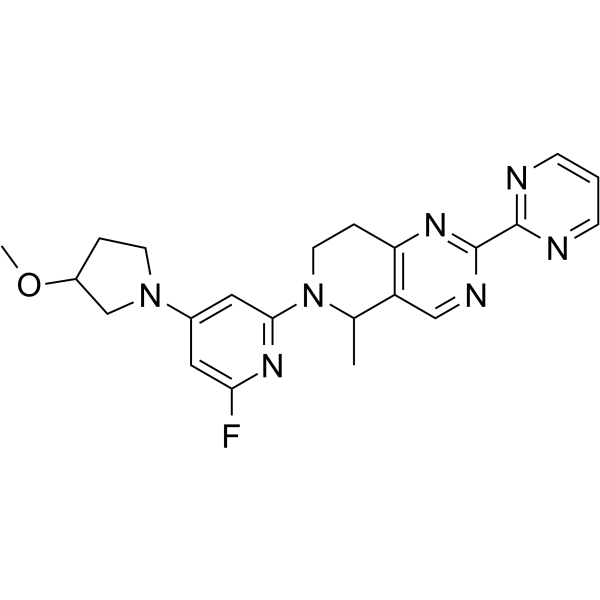 0 ImagesCat. No.: HY-145052CAS No.: 2170998-69-1
-
Helvolic acid-13C33
 0 ImagesCat. No.: HY-N6728SSynonyms: Fumigacin-13C33
Helvolic acid-13C33 (Fumigacin-13C33) is the 13C-labeled Helvolic acid (HY-N6728). Helvolic acid (Fumigacin) is an antibiotic isolated from Xylaria sp, active against the Gram-positive bacteria.
-
Soulattrolide
 0 ImagesCat. No.: HY-182552CAS No.: 65025-62-9
Soulattrolide is a non-nucleoside HIV-1 reverse transcriptase (RT) inhibitor with IC50 values of 0.34 µM for HIV-1 RT, 69.5 µM for E. coli RNase H, and >495 µM for human DNA polymerase β, and can be found in Calophyllum teysmannii latex. Soulattrolide can be used for the research of HIV-1 infection, pain, inflammation, and Mycobacterium tuberculosis infection.
-
Antifungal agent 46
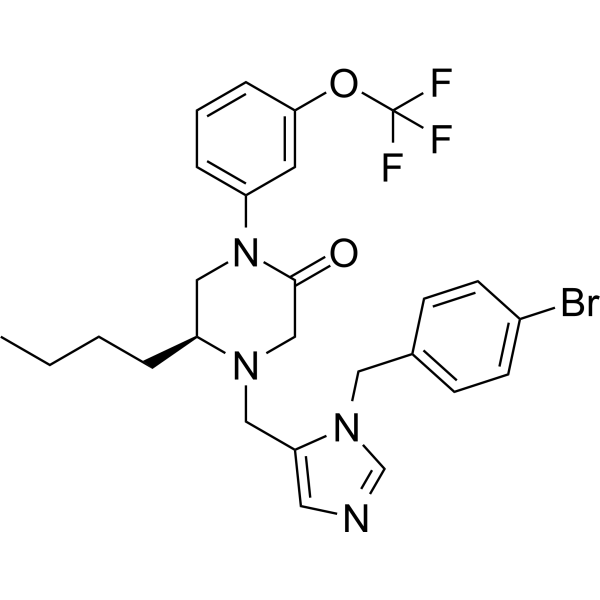 0 ImagesCat. No.: HY-151566CAS No.: 2842067-19-8
Antifungal agent 46 (compound 2f) is a potent antifungal agent. Antifungal agent 46 prevents Ras signaling by inhibiting protein farnesyltransferase.
-
Methyl isocostate
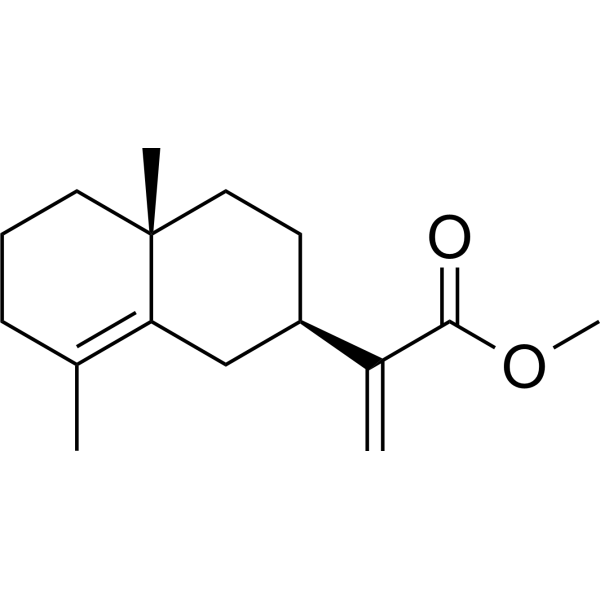 0 ImagesCat. No.: HY-N3274CAS No.: 132342-55-3
Methyl isocostate (compound 24)has antibacterial activity that can be isolated from Globba schomburgkii.
-
Tylosin tartrate (Standard)
 0 ImagesCat. No.: HY-B0519RCAS No.: 74610-55-2
Tylosin (tartrate) (Standard) is the analytical standard of Tylosin (tartrate). This product is intended for research and analytical applications. Tylosin tartrate is a macrolide antibiotic found naturally as a fermentation product of Streptomyces fradiae. Tylosin tartrate exerts potent antimicrobial activity against Gram-positive bacteria. Tylosin tartrate is widely used as a feed additive for promoting animal growth. Tylosin tartrate is used for veterinary purposes against bacterial dysentery and respiratory diseases in poultry, pigs and cattle.
-
Cap-dependent endonuclease-IN-6
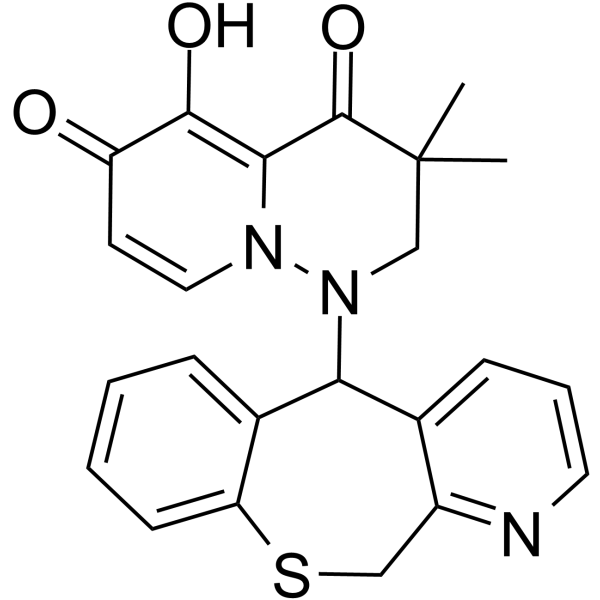 0 ImagesCat. No.: HY-143749CAS No.: 2489248-15-7
Cap-dependent endonuclease-IN-6 (compound 13) is a cap-dependent endonuclease (CEN) inhibitor. Cap-dependent endonuclease-IN-6 shows inhibition against influenza virus (EC50=38.21 nM).
-
Ribavirin (GMP)
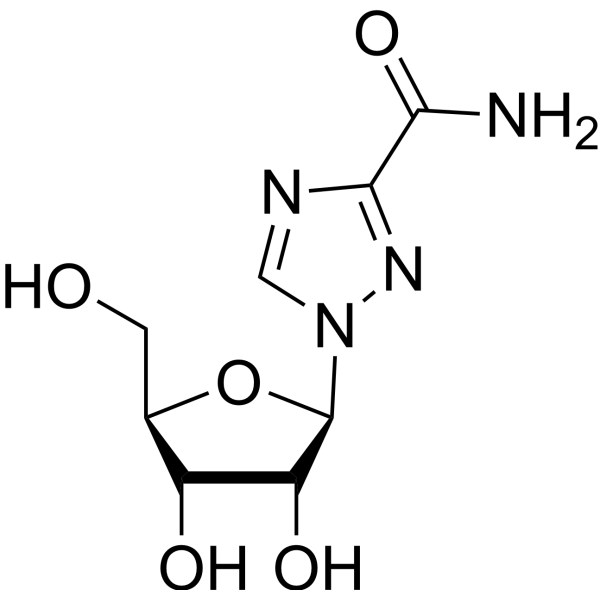 0 ImagesCat. No.: HY-B0434GCAS No.: 36791-04-5Synonyms: Ribasphere (GMP); ICN-1229 (GMP)
Ribavirin (GMP) is Ribavirin (HY-B0434) produced by using GMP guidelines. GMP small molecules work appropriately as an auxiliary reagent for cell therapy manufacture. Ribavirin (ICN-1229) is an antiviral agent against a broad spectrum of viruses including HCV, HIVl, and RSV. Ribavirin also has anti-orthopoxvirus and anti-variola activities.
-
L-640876
 0 ImagesCat. No.: HY-126732CAS No.: 77527-71-0
L-640876 is a broad-spectrum and orally active lactam antimicrobial agent. L-640876 showa MIC90 of 0.125 pg/mL for the E. coli strains, 2 /mg/mL for the S.choleraerai strains and 4 pg/mL for the S. typhinwrium strains.
-
Concanamycin A (purity≥90%)
 0 ImagesCat. No.: HY-N1724BCAS No.: 80890-47-7Synonyms: Antibiotic X 4357B (purity≥90%); Folimycin (purity≥90%); X 4357B (purity≥90%)
Concanamycin A (purity≥90%) (Antibiotic X 4357B) is a macrolide antibiotic, a vacuolar type H+-ATPase (V-ATPase) inhibitor. Concanamycin A (purity≥90%) is also an inhibitor of lysosomal acidification, can be used to T cell-mediated inflammation research-.
-
N4-Acetylsulfamethoxazole-13C6
 0 ImagesCat. No.: HY-W748688Synonyms: Acetylsulfamethoxazole-13C6
N4-Acetylsulfamethoxazole-13C6 (Acetylsulfamethoxazole-13C6) is the 13C-labeled N4-Acetylsulfamethoxazole (HY-W013266). N4-Acetylsulfamethoxazole (Acetylsulfamethoxazole) is a metabolite of?Sulfamethoxazole (HY-B0322). Sulfamethoxazole is a sulfonamide bacteriostatic antibiotic, used for bacterial infections.
-
Brevinin-1Ea
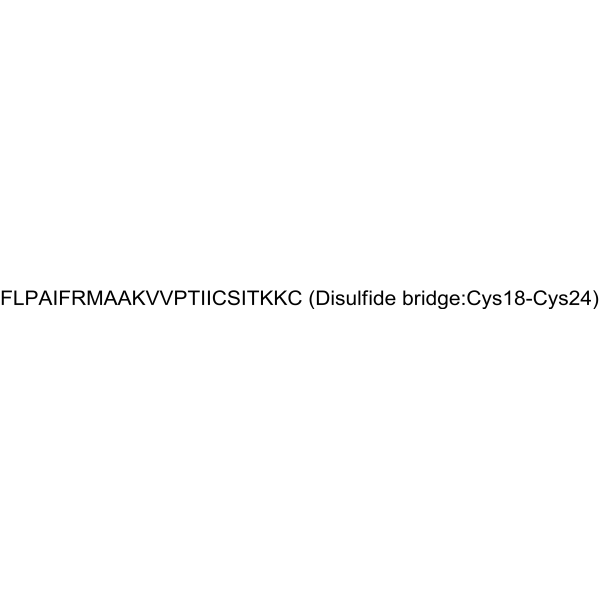 0 ImagesCat. No.: HY-P5656CAS No.: 156793-64-5
Brevinin-1Ea is an antimicrobial peptide derived from the skin secretions of Rana esculenta.
-
Toremifene-d6 hydrochloride
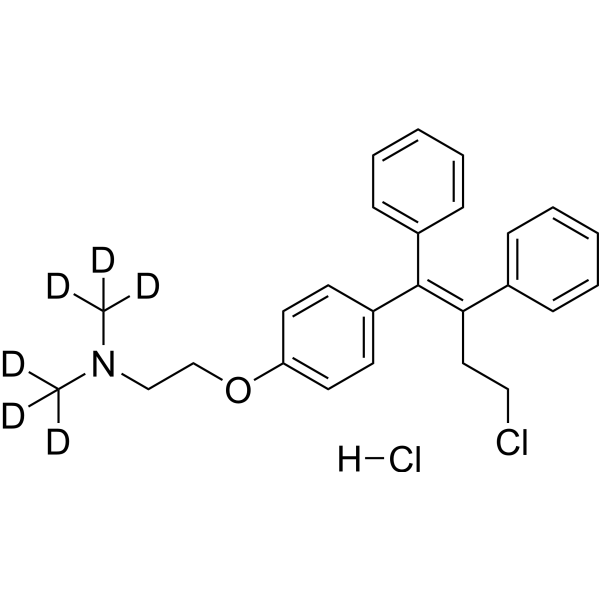 0 ImagesCat. No.: HY-B0005S1Synonyms: Z-Toremifene-d6 hydrochloride; NK 622-d6 hydrochloride; FC-1157a-d6 hydrochloride
Toremifene-d6 (Z-Toremifene-d6) hydrochloride is deuterium labeled Toremifene. Toremifene is a second-generation selective estrogen-receptor modulator (SERM) in development for the prevention of osteoporosis. Toremifene also potent inhibits infectious EBOV Zaire and Marburg (MARV) with IC50 of 0.07 µM and 2.6 µM, respectively.
-
Neuraminidase-IN-10
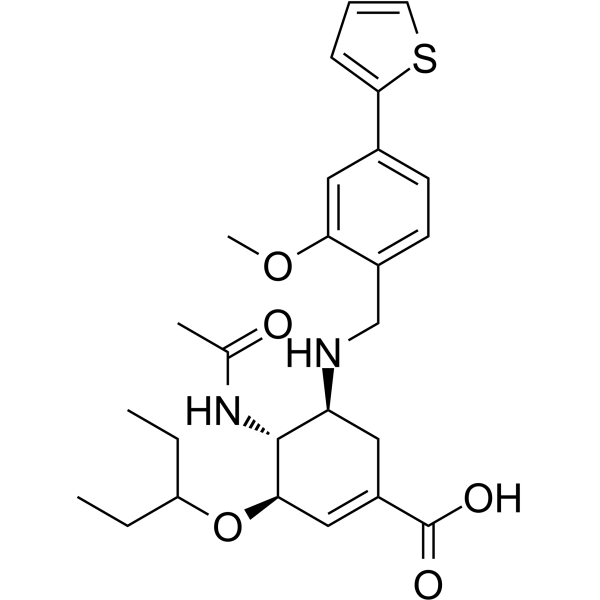 0 ImagesCat. No.: HY-151103CAS No.: 2685786-29-0
Neuraminidase-IN-10 is a potent neuraminidase (NA) inhibitor with anti-influenza activity. Neuraminidase-IN-10 is against H1N1, H5N1, and H5N8 with IC50 values of 2.6 nM, 5.1 nM, and 1.65 nM, respectively.