



Cholinesterase (ChE)
Cholinesterase (ChE) is a family of enzymes present in the central nervous system, particularly in nervous tissue, muscle and red cells, which catalyze the hydrolysis of the neurotransmitter acetylcholine into choline and acetic acid, a reaction necessary to allow a cholinergic neuron to return to its resting state after activation. It is one of many important enzymes needed for the proper functioning of the nervous systems of humans.
There are two types: acetylcholinesterase (AChE, acetylcholine hydrolase) and butyrylcholinesterase (BChE, acylcholine acylhydrolase), also known as nonspecific cholinesterase or pseudocholinesterase. AChE is primarily found in the blood on red blood cell membranes, in neuromuscular junctions, and in neural synapses, while BChE is produced in the liver and found primarily in plasma. The difference between the two types of cholinesterase is their relative preferences for substrates: AChE hydrolyzes acetylcholine faster while BChE hydrolyzes butyrylcholine faster.
Cholinesterase (ChE) Isoform Specific Products
All Product Categories
-
Cholinesterase (ChE) Inhibitors
(939)
View all products
-
Cholinesterase (ChE) Agonists
(5)
View all products
-
Cholinesterase (ChE) Antagonists
(10)
View all products
-
Cholinesterase (ChE) Activators
(33)
View all products
-
Cholinesterase (ChE) Modulators
(11)
View all products
-
Cholinesterase (ChE) Chemical
(1)
View all products
-
Cholinesterase (ChE) Inducer
(1)
View all products
-
Cholinesterase (ChE) Controls
(6)
View all products
-
Cholinesterase (ChE) Substrates
(3)
View all products
-
Cholinesterase (ChE) Related Products (1087)
Related Products (1087)

-
Antibodies (2)
-
Cholinesterase (ChE) Isoform Comparison

-
Coroxon
 0 ImagesCat. No.: HY-W550259CAS No.: 321-54-0Synonyms: Coumaphos oxonCoroxon (Coumaphos oxon) is an oxidative metabolite of the organophosphate insecticide Coumaphos (HY-W653717) and an active AChE inhibitor with insecticidal and acaricidal properties. Coroxon can be hydrolyzed by phosphotriesterases of microorganisms such as Nocardia asteroides to produce the fluorescent product Chlorferon.
-
Trimethylammonium chloride-d6
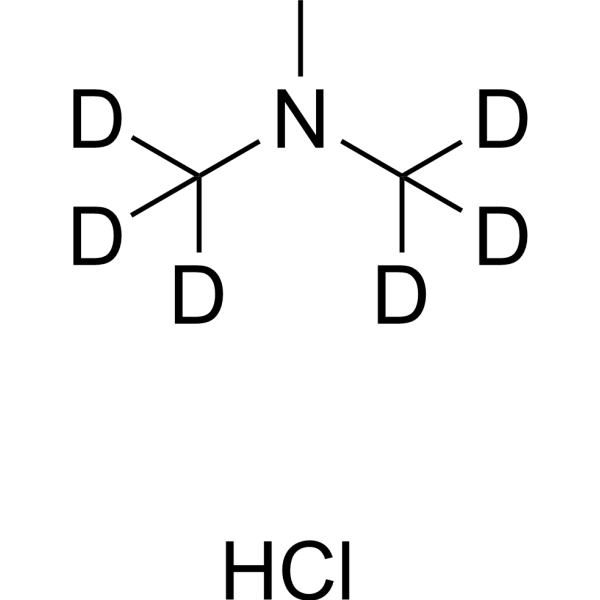 0 ImagesSynonyms: Hegzadesil-d6; Trimethylamine hydrochloric acid-d6; Trimethylamine monohydrochloride-d6Trimethylammonium chloride-d6 (Hegzadesil-d6) is the d6-labeled Trimethylammonium chloride (HY-Y0504). Trimethylammonium chloride (Hegzadesil) is a non-competitive Acetylcholinesterase inhibitor. Trimethylammonium chloride reversibly blocks the deacetylation of acetylcholinesterase.
-
Uridine 5'-monophosphate-15N2
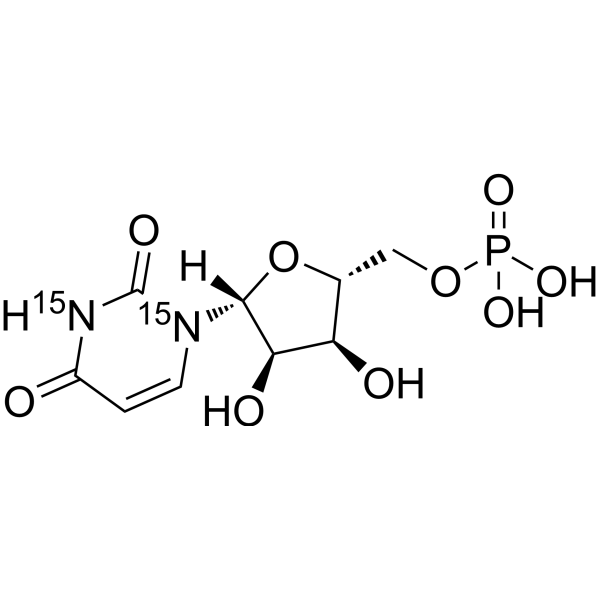 0 ImagesCat. No.: HY-101981SPurity: 98.0%Synonyms: 5'-Uridylic acid-15N2Uridine 5'-monophosphate-15N2 (5'-Uridylic acid-15N2) is the 15N labeled Uridine 5'-monophosphate (HY-101981). Uridine 5'-monophosphate (5'-Uridylic acid) is an orally active mitochondrial ATP-dependent potassium channel activator that has a protective effect on the heart. Uridine 5'-monophosphate can promote the synthesis of CDP-choline and induce apoptosis in intestinal epithelial cells, which is beneficial for gut development and reduces diarrhea.
-
Myristoleyl carnitine-d3
 0 ImagesMyristoleyl carnitine-d3 is the deuterium labeled Myristoleyl carnitine.
-
Carlina oxide
 0 ImagesCat. No.: HY-W643128CAS No.: 502-22-7Carlina oxide is an AChE inhibitor and antioxidant that kills Culex pipiens larvae (LC50=1.39 μg/mL). Carlina oxide is cytotoxic to vertebrate cells, human dermis, HCT116 and MDA-MB231 cell lines.
-
Territrem B
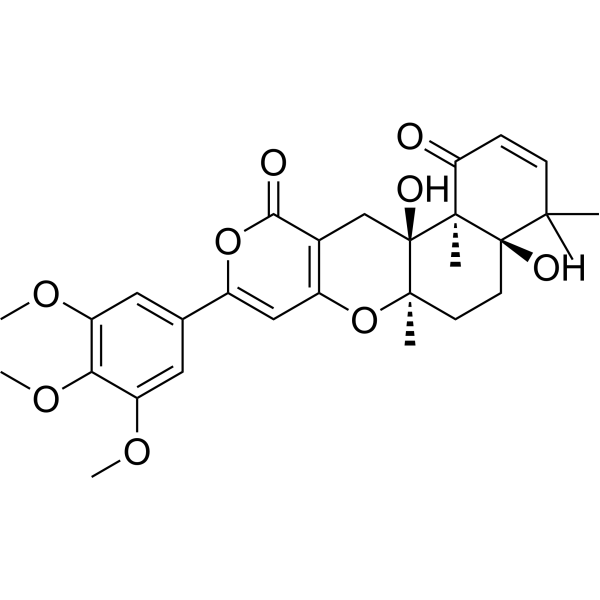 0 ImagesCat. No.: HY-126765CAS No.: 70407-20-4

-
Coumaran (Standard)
 0 ImagesCoumaran (Standard) is the analytical standard of Coumaran. This product is intended for research and analytical applications. Coumaran (2,3-Dihydrobenzofuran) is an AChE inhibitor with antileishmanial activity. Coumaran may acquire antiparasitic capabilities through activation of macrophages and exert immunomodulatory activity. Coumaran can be used as a biopesticide..
-
Iprobenfos
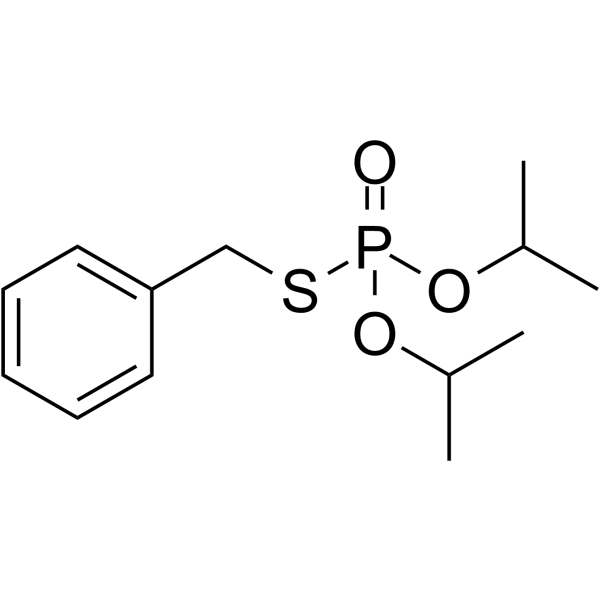 0 ImagesIprobenfos is an organophosphorus fungicide and is widely used to control the rice blast fungus. Iprobenfos can phosphorylate the -OH group on the serine residue in the active (esteratic) site of ChEs and so inhibit both AChE and BChE activity.
-
Z32439948
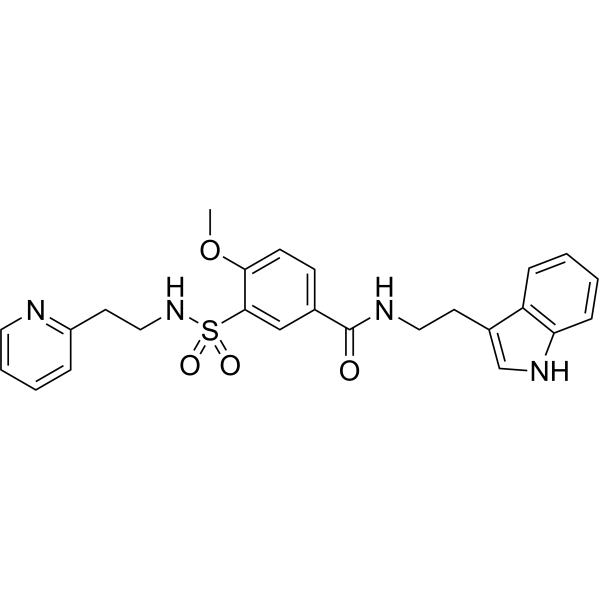 0 ImagesCat. No.: HY-162340CAS No.: 920845-86-9Z32439948 is a butyrylcholinesterase (BChE) inhibitor (IC50: 1.4 μM, hBChE) and is a derivative of m-sulfamoylbenzamide. Z32439948 also exhibited neuroprotective effects against glutamate in SH-SY5Y cells.
-
HDAC6-IN-5
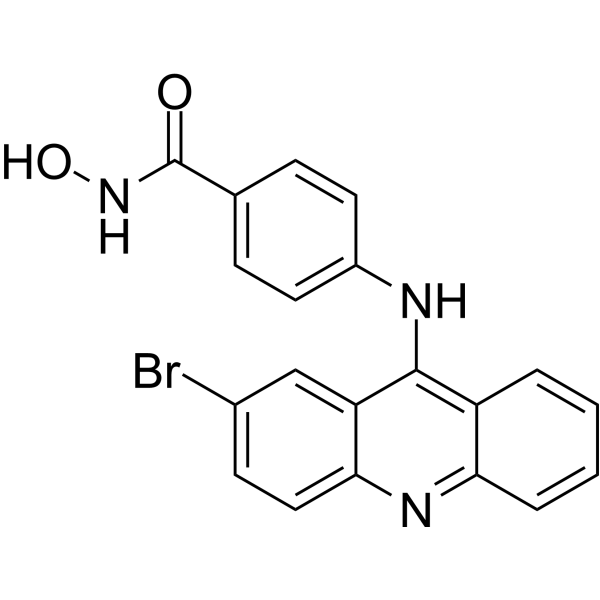 0 ImagesCat. No.: HY-146678CAS No.: 2413603-15-1HDAC6-IN-5 (compound 11b) is a potent and BBB-penetrated HDAC6 inhibitor, with an IC50 of 0.025 μM. HDAC6-IN-5 exhibits strong inhibitory activity against Aβ1-42 self-aggregation and AChE, with IC50 values of 3.0 and 0.72 μM. HDAC6-IN-5 can enhance neurite outgrowth without significant neurotoxicity.
-
BuChE-IN-TM-10
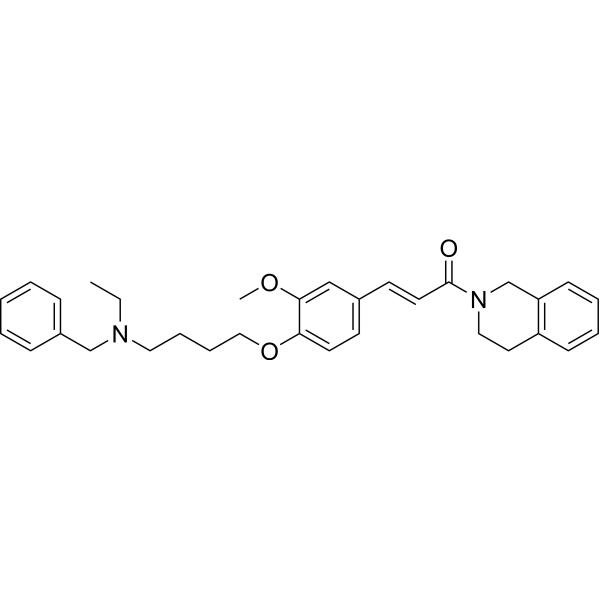 0 ImagesCat. No.: HY-114320CAS No.: 2313524-95-5Synonyms: TM-10BuChE-IN-TM-10 (TM-10) is a potent butyrylcholinesterase (BuChE) inhibitor, with an IC50 of 8.9 nM. BuChE inhibitor 1 inhibits and disaggregates self-induced Aβ aggregation, exhibiting potent antioxidant activity and good blood-brain barrier (BBB) penetration. Has potential to treat Alzheimer’s disease.
-
ZLMT-12
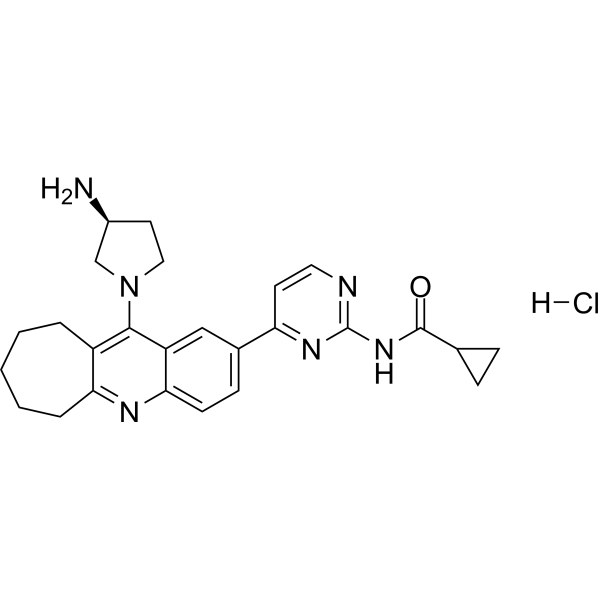 0 ImagesCat. No.: HY-151436CAS No.: 2841473-39-8ZLMT-12 (compound 35), tacrine derivatives, is a potent, orally active CDK2/9 inhibitor with IC50 values of 0.002 and 0.011 μM for CDK9 and CDK2, respectively. ZLMT-12 has a weak inhibitory effect on AChE (IC50=19.023 μM) and BChE (IC50=2.768 μM). ZLMT-12 has low toxicity and antiproliferative activity. ZLMT-12 induces apoptosis and arrests the cell cycle in the S phase and G2/M phase.
-
Icopezil maleate
 0 ImagesCat. No.: HY-105157ACAS No.: 145815-98-1Synonyms: CP-118954 maleateIcopezil maleate (CP-118954 maleate) is an orally active, selective AchE inhibitor with an IC50 of 0.33 nM. Icopezil maleate increases acetylcholine levels in the brain and striatum of mammals, induces centrally mediated tremors and peripherally mediated salivation, and improves working memory performance in aged dogs. Icopezil maleate serves as a parent compound for radioiodine-labeled acetylcholinesterase imaging agents. Icopezil maleate is applicable to research related to Alzheimer's disease.
-
HDAC6-IN-6
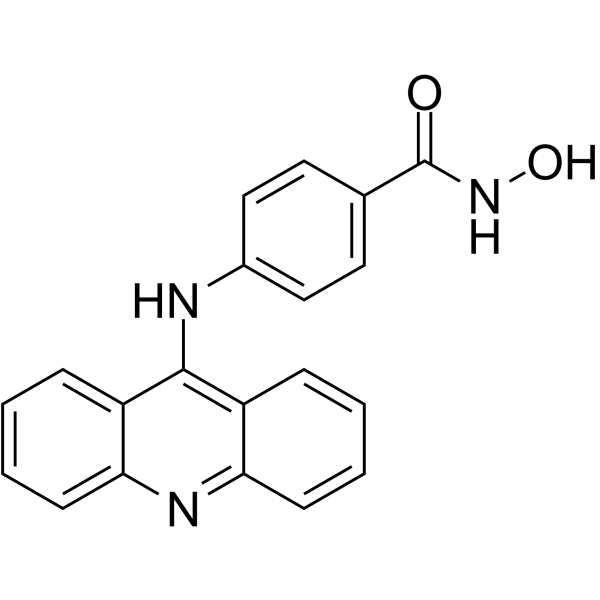 0 ImagesCat. No.: HY-146679CAS No.: 2413603-10-6HDAC6-IN-6 (compound 6a) is a potent and BBB-penetrated HDAC6 inhibitor, with an IC50 of 0.025 μM. HDAC6-IN-6 exhibits strong inhibitory activity against Aβ1-42 self-aggregation and AChE, with IC50 values of 3.0 and 0.72 μM. HDAC6-IN-6 can enhance neurite outgrowth without significant neurotoxicity.
-
Chlorpyrifos-oxon-d10
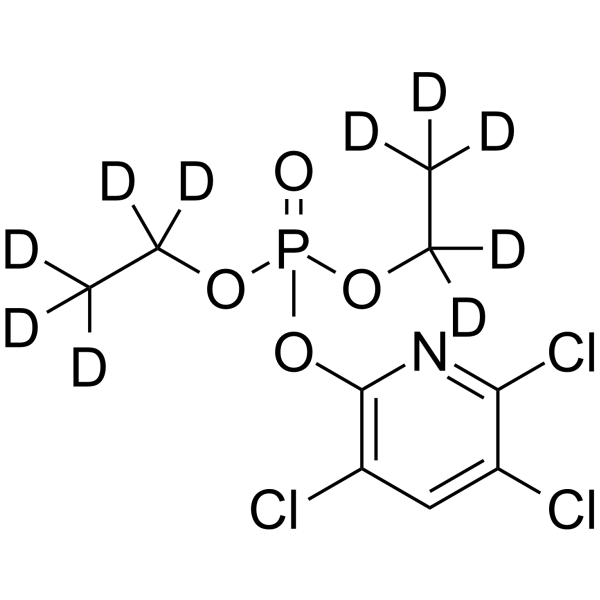 0 ImagesCat. No.: HY-136610SCAS No.: 1794779-85-3Chlorpyrifos-oxon-d10 is the deuterium labeled Chlorpyrifos-oxon. Chlorpyrifos-oxon, an active metabolite of Chlorpyrifos, is a potent phosphorylating agent that potently inhibits AChE. Chlorpyrifos-oxon can induce cross-linking between subunits of tubulin and disrupt microtubule function.
-
Carbosulfan-d18
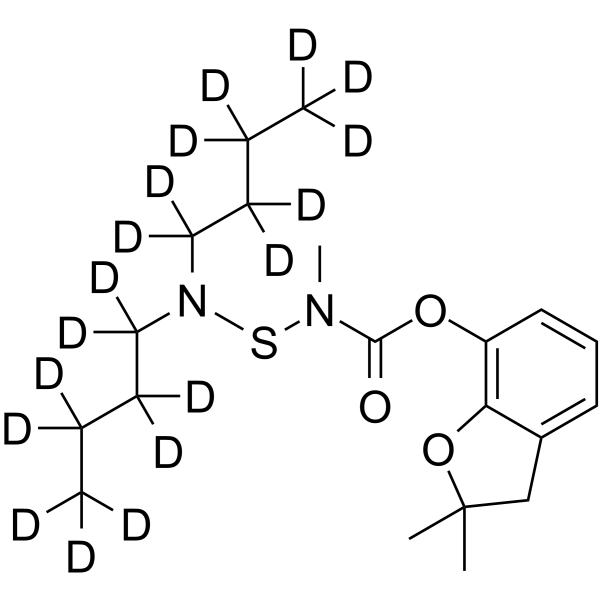 0 ImagesCat. No.: HY-B2015SCAS No.: 1189903-75-0Carbosulfan-d18 is the deuterium labeled Carbosulfan. Carbosulfan is an orally active AChE inhibitor that hydrolyzes to Carbofuran in organisms to exert insecticidal effects. Carbosulfan exhibits broad-spectrum insecticidal activity, and it also induces severe oxidative stress by enhancing lipid peroxidation and impairing the antioxidant defense system. Carbosulfan causes reproductive toxicity in male rats and developmental disorders in their offspring. Carbosulfan shows persistence in paddy field environments and potential hazards to non-target organisms, and it is commonly used in studies related to reproductive toxicity and environmental risk assessment.
-
AChE-IN-72
 0 ImagesCat. No.: HY-163909AChE-IN-72 (Compound 13a) is an inhibitor for acetylcholinesterase (AChE) with an IC50 of 0.59 μM. AChE-IN-72 inhibits BChE with an IC50 of 5.02 μM. AChE-IN-72 exhibits radical scavenging with IC50 of 5.88 μM. AChE-IN-72 exhibits iron-chelating property, inhibits Aβ1−42 aggregation, and inhibits NLRP3 inflammasome activation. AChE-IN-72 ameliorates memory impairment in Betaine (HY-B0710)-induced AD mouse model. AChE-IN-72 is blood-brain barrier (BBB) penetrable.




