



Cholinesterase (ChE)
Cholinesterase (ChE) is a family of enzymes present in the central nervous system, particularly in nervous tissue, muscle and red cells, which catalyze the hydrolysis of the neurotransmitter acetylcholine into choline and acetic acid, a reaction necessary to allow a cholinergic neuron to return to its resting state after activation. It is one of many important enzymes needed for the proper functioning of the nervous systems of humans.
There are two types: acetylcholinesterase (AChE, acetylcholine hydrolase) and butyrylcholinesterase (BChE, acylcholine acylhydrolase), also known as nonspecific cholinesterase or pseudocholinesterase. AChE is primarily found in the blood on red blood cell membranes, in neuromuscular junctions, and in neural synapses, while BChE is produced in the liver and found primarily in plasma. The difference between the two types of cholinesterase is their relative preferences for substrates: AChE hydrolyzes acetylcholine faster while BChE hydrolyzes butyrylcholine faster.
Cholinesterase (ChE) Isoform Specific Products
All Product Categories
-
Cholinesterase (ChE) Inhibitors
(912)
View all products
-
Cholinesterase (ChE) Agonists
(5)
View all products
-
Cholinesterase (ChE) Antagonists
(10)
View all products
-
Cholinesterase (ChE) Activators
(32)
View all products
-
Cholinesterase (ChE) Modulators
(10)
View all products
-
Cholinesterase (ChE) Chemical
(1)
View all products
-
Cholinesterase (ChE) Inducer
(1)
View all products
-
Cholinesterase (ChE) Controls
(6)
View all products
-
Cholinesterase (ChE) Substrates
(2)
View all products
-
Cholinesterase (ChE) Related Products (1060)
Related Products (1060)

-
Antibodies (2)
-
Cholinesterase (ChE) Isoform Comparison
-
BuChE-IN-1
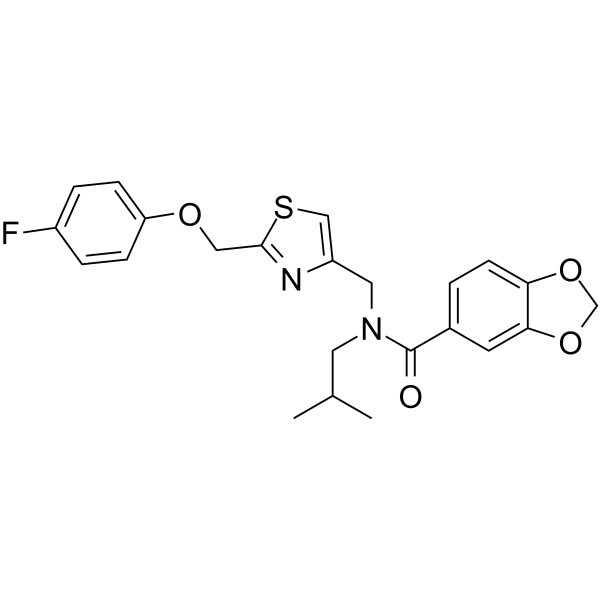 0 ImagesCat. No.: HY-144446CAS No.: 2669070-40-8BuChE-IN-1 (Compound 23) is a potent inhibitor of butyrylcholinesterase (BuChE). Butyrylcholinesterase (BuChE) is recently regarded as a biomarker in progressed Alzheimer’s disease (AD). BuChE-IN-1 shows low cytotoxicity and high blood brain barrier (BBB) permeability. BuChE-IN-1 is a promising BuChE inhibitor for the research of AD.
-
BChE-IN-44
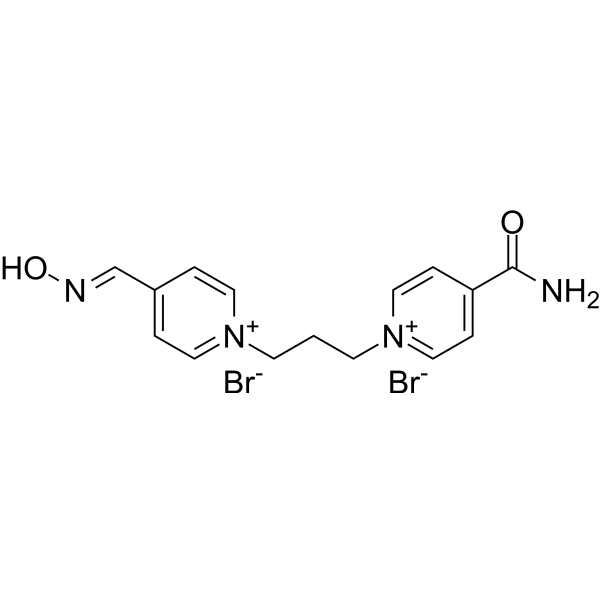
 0 ImagesCat. No.: HY-178356BChE-IN-44 is a potent, brain-penetrant, highly selective BChE inhibitor [equine BChE IC50 = 18.00 pM, human BChE IC50 = 1.50 nM]. BChE-IN-44 shows neuroprotective effects against the Aβ1-42-induced injury model and inhibitory effects on Aβ1-42 self-aggregation. BChE-IN-44 reduces the levels of inflammatory factors (NO, IL-6, and TNF-α) in Lipopolysaccharides (HY-D1056)-induced BV2 cells. BChE-IN-44 can significantly ameliorate Scopolamine (HY-N0296)-induced cognition impairment. BChE-IN-44 exhibits capacity in the regulation of BChE and acetylcholine levels in the mouse hippocampus. BChE-IN-44 can be used for the study of Alzheimer’s disease (AD).
-
hAChE-IN-4
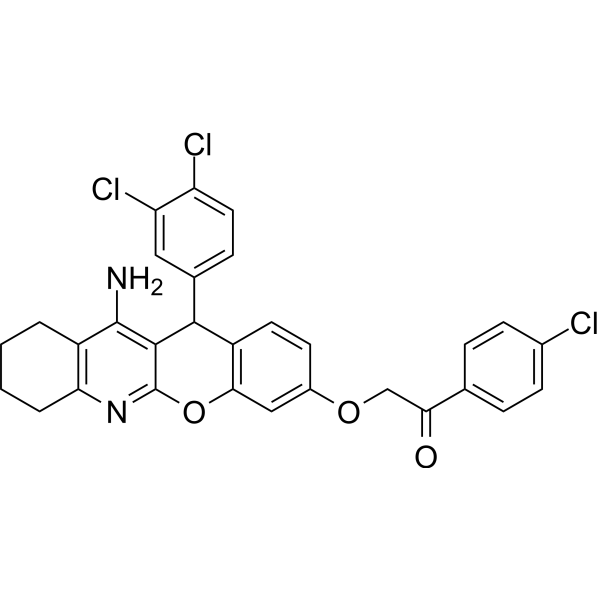 0 ImagesCat. No.: HY-155086CAS No.: 2983723-58-4hAChE-IN-4 (Compd 5d) is a potent, blood-brain barrier-permeable hAChE inhibitor with IC50 of 0.25 μM. hAChE-IN-4 can be used in Alzheimer's disease research.
-
AChE/BChE-IN-9
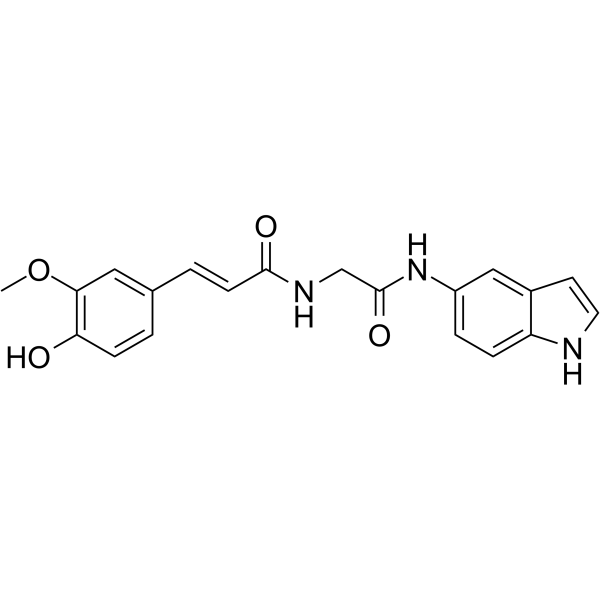 0 ImagesCat. No.: HY-146399CAS No.: 2761542-55-4AChE/BChE-IN-9 (Compound 7a) is a potent, orally active AChE and BChE inhibitor with IC50 values of 5.74 μM and 14.05 μM against hAChE and eqBChE, respectively. AChE/BChE-IN-9 is also an efficacious antioxidant with an IC50 of 57.35 μM. AChE/BChE-IN-9 is able to chelate iron and modulates aggregation of amyloid β1-42. AChE-IN-16 can cross the BBB.
-
hAChE/hBuChE/GSK-3β-IN-1
 0 ImagesCat. No.: HY-170417hAChE/hBuChE/GSK-3β-IN-1 (Compound 6c) is a BBB-penetrable and multi-target anti-Alzheimer's disease compound. hAChE/hBuChE/GSK-3β-IN-1 is the inhibitors of hAChE (IC50: 28.88 nM), hBuChE (IC50: 131.90 nM) and GSK-3β (IC50: 51.42 nM). hAChE/hBuChE/GSK-3β-IN-1 is the tau and Aβ protein aggregation inhibitors.
-
Dyclonine-d9 hydrochloride
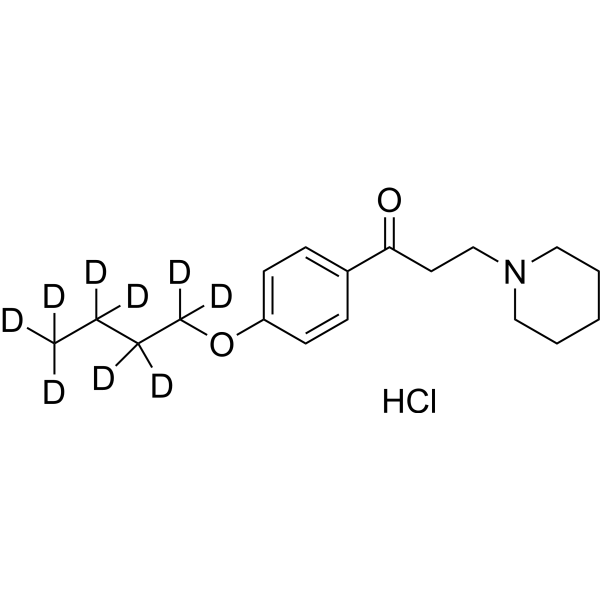 0 ImagesCat. No.: HY-B0364ASSynonyms: Dyclocaine-d9 hydrochlorideDyclonine-d9 hydrochloride (Dyclocaine-d9 hydrochloride) is the deuterated-labeled Dyclonine hydrochloride (HY-B0364A). Dyclonine hydrochloride (Dyclocaine hydrochloride) is an orally active, blood-brain barrier-permeable piperidine phenylacetone small molecule commonly used as a local anesthetic. Dyclonine hydrochloride acts as a highly selective allosteric antagonist of TRPV3; it also reversibly inhibits G9a, ALDH2 and ALDH3A1, non-competitively blocks AChE. Dyclonine hydrochloride activates the Nrf2/ARE pathway, relieves the epigenetic silencing of FXN, blocks Aβ42 aggregation, and promotes remyelination and reparative polarization of microglia. Dyclonine hydrochloride alleviates pruritus via TRPV3 inhibition; it is used in studies of neurodegenerative disease models based on its AChE inhibitory, antioxidant and remyelinating effects; it sensitizes drug-resistant tumors through ALDH inhibition, and combined use with protease inhibitors induces more tumor cell apoptosis; it inhibits Candida albicans in vitro. Dyclonine hydrochloride can be used for research on multiple diseases including neurodegenerative diseases, cancer and pruritic dermatitis.
-
AChE-IN-58
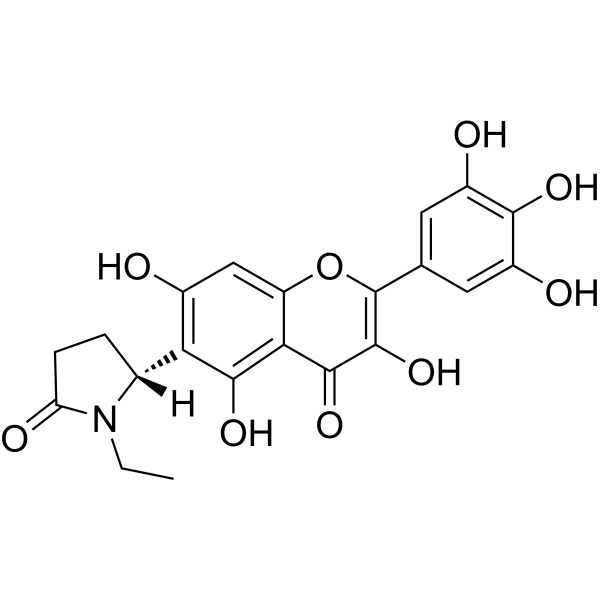 0 ImagesCat. No.: HY-N12622CAS No.: 3032028-08-0AChE-IN-58 (Compound 3) is an acetylcholinesterase (AChE) inhibitor. AChE-IN-58 can extend the mean lifespan, delay the Aβ1-42-induced paralysis, enhanc the locomotion, and alleviate glutamic acid (Glu)-induced neurotoxicity of CL4176 worms.
-
Trimethidinium methosulfate
 0 ImagesCat. No.: HY-180382CAS No.: 14149-43-0Trimethidinium methosulfate is an orally active ganglionic blocker with central antihypertensive activity. Trimethidinium methosulfate inhibits the conduction of sympathetic ganglia and reduces vascular contraction. Trimethidinium methosulfate acts on the cerebrovascular motor center and lowers peripheral vascular resistance. Trimethidinium methosulfate has cholinergic nerve inhibitory side effects, but they are relatively mild. Trimethidinium methosulfate can be used in hypertension research.
-
BuChE-IN-20
 0 ImagesCat. No.: HY-172782BuChE-IN-20 is a selective butyrylcholinesterase (hBuChE) inhibitor (IC50 = 0.13 μM) with BBB permeability. BuChE-IN-20 is a L-Tryptophan derivative. BuChE-IN-20 possesses neuroprotective properties by inhibiting the production of nitric oxide (NO) and lowering the levels of ROS. BuChE-IN-20 is proficient in inhibiting the self-aggregation of amyloid-beta (Aβ) peptides. BuChE-IN-20 can be used in research for Alzheimer’s disease.
-
Bis-(-)-8-demethylmaritidine
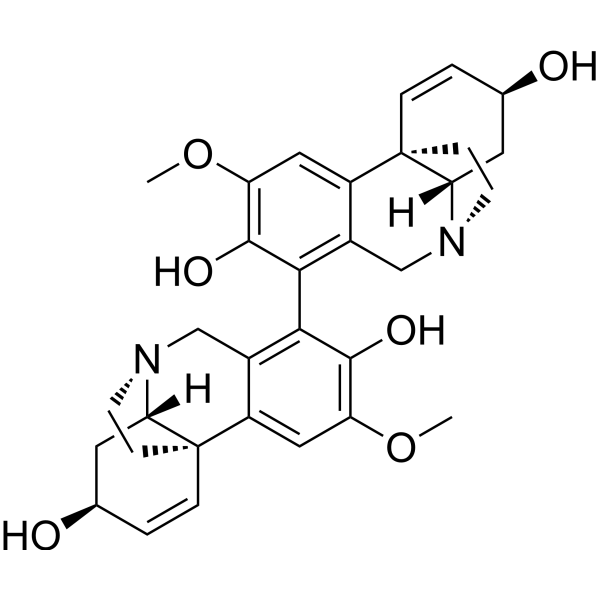 0 ImagesCat. No.: HY-N12423Bis-(-)-8-demethylmaritidine, a natural alkaloid, is a potent acetylcholinesterase (AChE) inhibitor. Bis-(-)-8-demethylmaritidine can be used for Alzheimer's disease research.
-
KW-6055
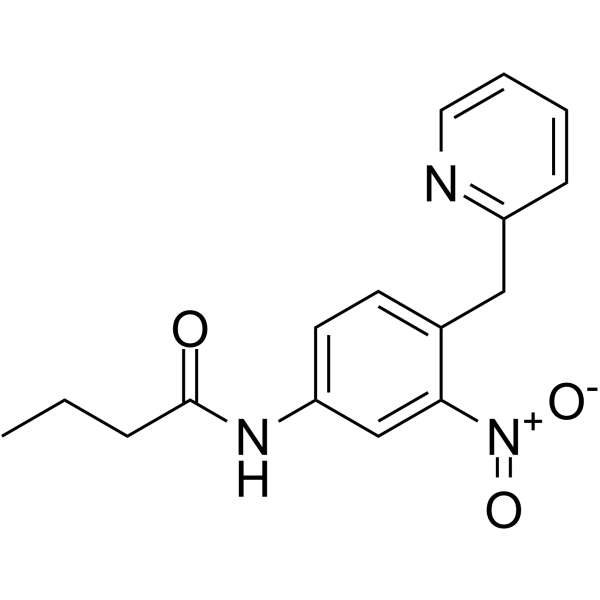 0 ImagesCat. No.: HY-19085CAS No.: 63233-46-5KW-6055 is a benzylpyridine derivative with anti-amnesic effects. KW-6055 can increase the level of ACh in the brain cholinergic system and stimulate cholinergic neurons.
-
Carbonic anhydrase/AChE-IN-1
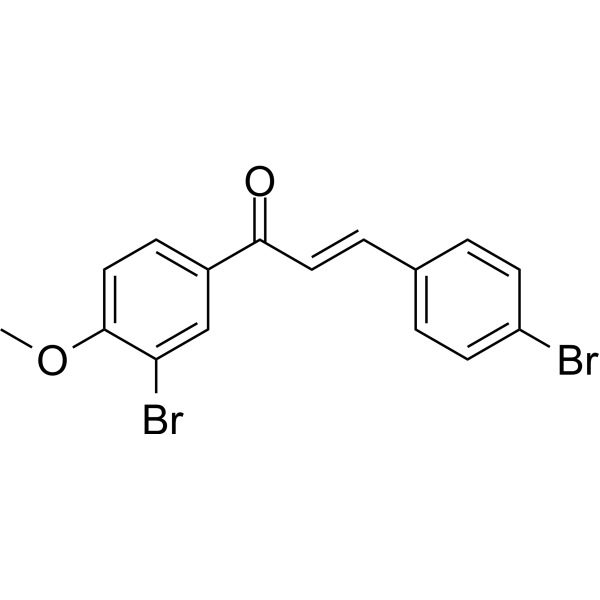 0 ImagesCat. No.: HY-161142CAS No.: 3029817-10-2Carbonic anhydrase/AChE-IN-1 (compound 16) is a carbonic anhydrase and AChE inhibitor with Kis of 24.42 nM, 19.95 nM, and 5.07 nM for hCA I, hCA II, and AChE, respectively.
-
Monarsen sodium scrambled negative control
 0 ImagesCat. No.: HY-148412CMonarsen sodium scrambled negative control is the sequence scrambled negative control of Monarsen sodium.
-
5α-Epoxyalantolactone
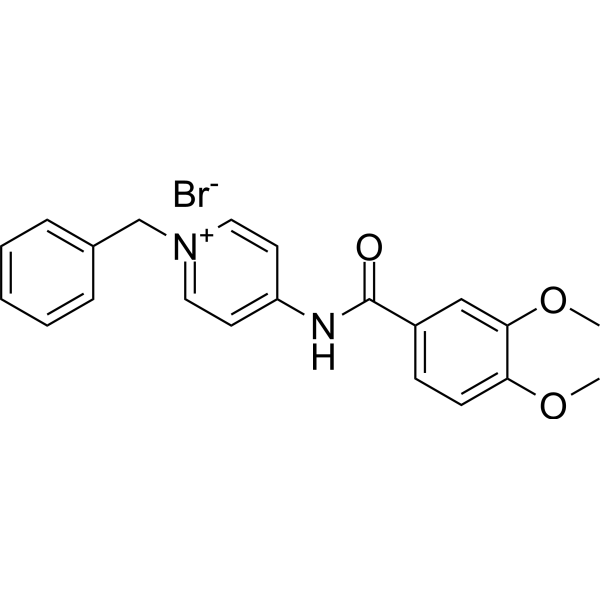
 0 ImagesCat. No.: HY-N21980CAS No.: 65563-75-95α-Epoxyalantolactone is an orally active, blood-brain barrier-permeable ANXA2 inhibitor. 5α-Epoxyalantolactone binds to ANXA2, blocks the formation of ANXA2-S100A10 heterotetramers, inhibits the membrane trafficking of E-cadherin, and prevents metastasis of breast cancer cells as well as proliferation of breast cancer stem cells. 5α-Epoxyalantolactone improves cognitive and memory impairments by inhibiting the iNOS/COX-2/NF-κB pathway and reducing the activity of cerebral AChE. 5α-Epoxyalantolactone can be used in studies related to Alzheimer's disease and triple-negative breast cancer.
-
Isoprocarb (Standard)
 0 ImagesIsoprocarb (Standard) is the analytical standard of Isoprocarb. This product is intended for research and analytical applications. Isoprocarb is carbamate insecticide that widely used to control rice paddy lice and leafhopper. Isoprocarb is also an AChE inhibitor.
-
Trihexyphenidyl-d5
 0 ImagesCat. No.: HY-B1277ASTrihexyphenidyl-d5 is deuterium labeled Trihexyphenidyl (HY-B1277A). Trihexyphenidyl is a selective and orally active M1 muscarinic receptor antagonist with an IC50 of 3.7 nM for rat cerebral cortex M1 muscarinic receptors. Trihexyphenidyl modulates cholinergic activity, countering acetylcholine supersensitivity in neural pathways. Trihexyphenidyl improves movement disorder, inhibits McN-A-343 (HY-107648)-induced pressor responses, vagally-induced bradycardia and vasodilatation. Trihexyphenidyl can be used for the research of Parkinson's disease..
-
Schisanhenol (Standard)
 0 ImagesCat. No.: HY-N0859RCAS No.: 69363-14-0Synonyms: Schizanhenol (Standard); Gomisin-K3 (Standard)Schisanhenol (Standard) (Schizanhenol (Standard)) is the analytical standard of Schisanhenol (HY-N0859). This product is intended for research and analytical applications. Schisanhenol, a lignan, is an orally active antioxidant. Schisanhenol reduces AChE activity, increases SIRT1 and PGC-1α expression, and decreases phosphorylated Tau (Ser 396) levels. Schisanhenol increases SOD and glutathione peroxidase activity, decreases malondialdehyde (MDA) content, and inhibits UGT2B7 activitY. Schisanhenol attenuates ox-LDL-induced apoptosis, intracellular reactive oxygen species generation, and cytotoxicity in endothelial cells. Schisanhenol inhibits LDL oxidation, brain mitochondrial and membrane peroxidative damage, and brain mitochondrial swelling and disintegration. Schisanhenol can be used for the research of Alzheimer’s disease, atherosclerosis, brain ischemia, and age-related brain deterioration.




