



Cholinesterase (ChE)
Cholinesterase (ChE) is a family of enzymes present in the central nervous system, particularly in nervous tissue, muscle and red cells, which catalyze the hydrolysis of the neurotransmitter acetylcholine into choline and acetic acid, a reaction necessary to allow a cholinergic neuron to return to its resting state after activation. It is one of many important enzymes needed for the proper functioning of the nervous systems of humans.
There are two types: acetylcholinesterase (AChE, acetylcholine hydrolase) and butyrylcholinesterase (BChE, acylcholine acylhydrolase), also known as nonspecific cholinesterase or pseudocholinesterase. AChE is primarily found in the blood on red blood cell membranes, in neuromuscular junctions, and in neural synapses, while BChE is produced in the liver and found primarily in plasma. The difference between the two types of cholinesterase is their relative preferences for substrates: AChE hydrolyzes acetylcholine faster while BChE hydrolyzes butyrylcholine faster.
Cholinesterase (ChE) Isoform Specific Products
All Product Categories
-
Cholinesterase (ChE) Inhibitors
(922)
View all products
-
Cholinesterase (ChE) Agonists
(5)
View all products
-
Cholinesterase (ChE) Antagonists
(10)
View all products
-
Cholinesterase (ChE) Activators
(33)
View all products
-
Cholinesterase (ChE) Modulators
(11)
View all products
-
Cholinesterase (ChE) Chemical
(1)
View all products
-
Cholinesterase (ChE) Inducer
(1)
View all products
-
Cholinesterase (ChE) Controls
(6)
View all products
-
Cholinesterase (ChE) Substrates
(2)
View all products
-
Cholinesterase (ChE) Related Products (1069)
Related Products (1069)

-
Antibodies (2)
-
Cholinesterase (ChE) Isoform Comparison
-
AChE/BChE-IN-26
 0 ImagesCat. No.: HY-173152AChE/BChE-IN-26 (Compound 20aa) is a cholinesterase inhibitor with IC50 values of 0.75 μM and 4.11 μM against eeAChE and eqBChE, respectively. AChE/BChE-IN-26 has antioxidant activity and can be used in the research of diseases such as Alzheimer's disease.
-
AChE/BChE/BACE-1-IN-2
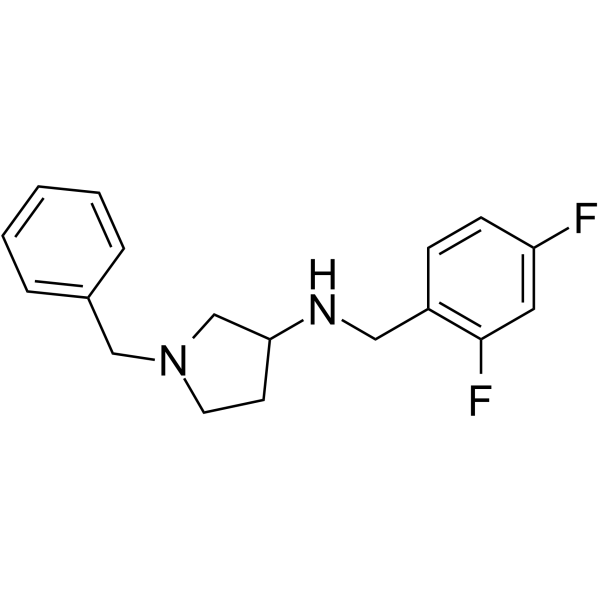 0 ImagesCat. No.: HY-147659CAS No.: 1877000-20-8AChE/BChE/BACE-1-IN-2 (Compound 4o) is an orally active inhibitor of AChE, BChE, and BACE-1 with IC50 values of 0.069, 0.127 and 0.097 μM against hAChE, hBChE and hBACE-1, respectively. AChE/BChE/BACE-1-IN-2 shows considerable PAS-AChE binding capability, excellent brain permeation, potential disassembly of Aβ aggregates, and neuroprotective activity against Aβ-induced stress. AChE/BChE/BACE-1-IN-2 has remarkable antioxidant potential.
-
Bleformin A
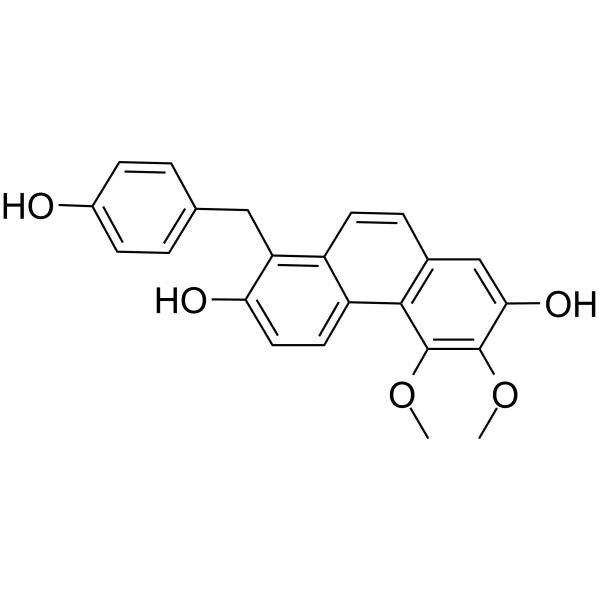 0 ImagesCat. No.: HY-N10487CAS No.: 1980064-35-4Bleformin A is a potent BChE inhibitor with an IC50 value of 5.2 μM. Bleformin A is a nature product that could be isolated from Bletilla striata. Bleformin A can be used for research of Alzheimer's disease (AD).
-
Melineurine
 0 ImagesCat. No.: HY-N17394CAS No.: 85802-28-4Melineurine is a reversible mixed-type acetylcholinesterase inhibitor, with an IC50 of 95.3 μM against AChE and an IC50 of 28.0 μM against BChE. Melineurine is applicable to the research of Alzheimer's disease.
-
AChE/BuChE-IN-6
 0 ImagesCat. No.: HY-170561CAS No.: 3105110-19-5AChE/BuChE-IN-6 (Compound 11f) is an inhibitor of AChE and BuChE, with IC50 values of 1.24 and 1.85 μg/mL, respectively. AChE/BuChE-IN-6 also exhibits strong DPPH free radical scavenging activity (IC50 = 3.15 μg/mL). In vivo toxicity studies indicate that AChE/BuChE-IN-6 is safe, showing no significant differences in blood and biochemical markers compared to the control group after long-term administration, and no abnormalities were observed in liver and kidney tissues. AChE/BuChE-IN-6 holds promise for research into Alzheimer's disease.
-
SON38
 0 ImagesCat. No.: HY-159888CAS No.: 3034673-37-2SON38 is a copper chelator capable of chelating divalent copper. SON38 can inhibit the activity of cholinesterases and has potential applications in Alzheimer's disease research.
-
Fasciculin-II
 0 ImagesCat. No.: HY-P5797CAS No.: 95506-56-2Synonyms: Fas-2Fasciculin-II (Fas-2) is a potential inhibitor of acetylcholinesterase (AChE).
-
SCR1693
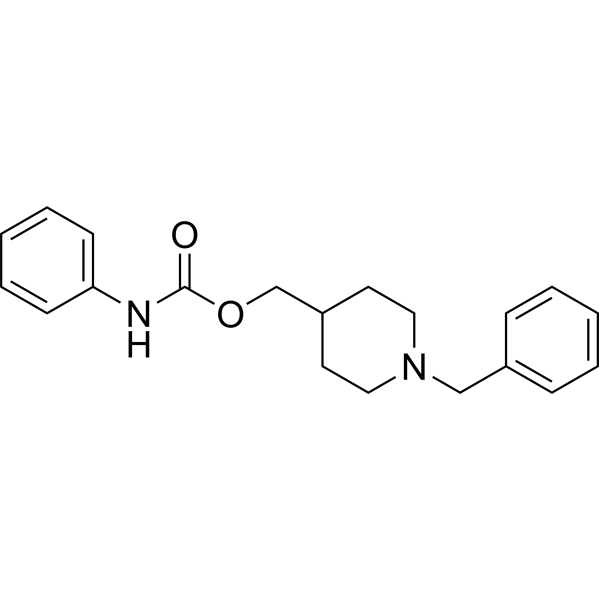
 0 ImagesCat. No.: HY-165341CAS No.: 1442559-20-7SCR1693 is a selective, reversible, orally active and noncompetitive inhibitor of AChE (IC50 = 0.68 μM) as well as a calcium channel blocker. SCR1693 reduces tau phosphorylation levels, and inhibits the generation and release of Aβ. SCR1693 restores insulin signaling and improves cognitive deficits. SCR1693 can be used for the study of Alzheimer's disease, especially which complicated with type 2 diabetes mellitus.
-
MAO-A/B-IN-3
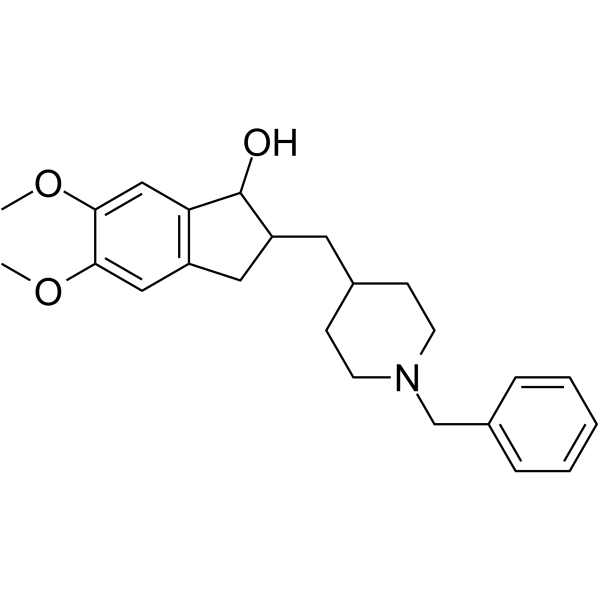
 0 ImagesCat. No.: HY-162606CAS No.: 315210-31-2MAO-A/B-IN-3 (Compound 12) stands out as a key dual MAO-AChE inhibitor, displaying excellent multi-target efficacy against MAO-A, MAO-B, and AChE with IC50 values of 67 nM, 29 nM, and 1370 nM respectively. MAO-A/B-IN-3 is adept at altering the A site (hydrophobic ring) and C site (semicarbazone chain) within ketone amine-based MTDLs to bolster the inhibitory potential against MAO-A/B while notably diminishing activity against AChE. MAO-A/B-IN-3 is poised for research applications in the field of neurodegenerative diseases.
-
TZ3O
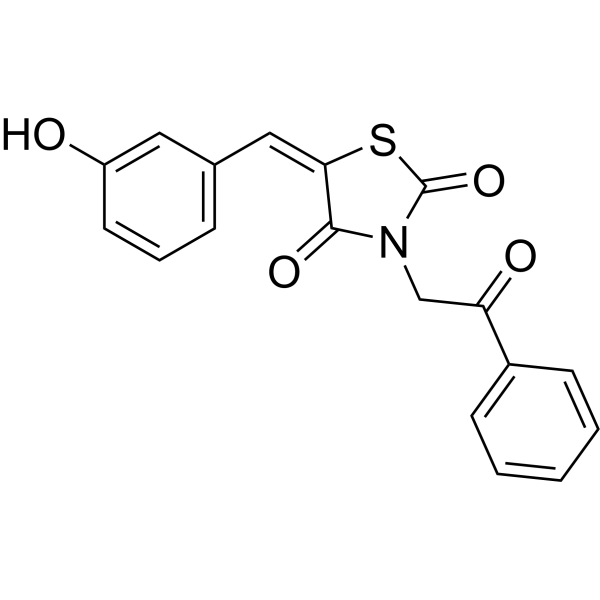 0 ImagesCat. No.: HY-155822Purity: 98.17%TZ3O is an anticholinergic agent with neuroprotective effects. TZ3O inhibits acetylcholinesterase (AChE) activity in human plasma with an IC50 of 304.5 μM. TZ3O can improve memory impairment and cognitive decline in rats in the Scopolamine (HY-N0296)-induced Alzheimer-type model. TZ3O could be used in Alzheimer’s research.

-
AChE-IN-52
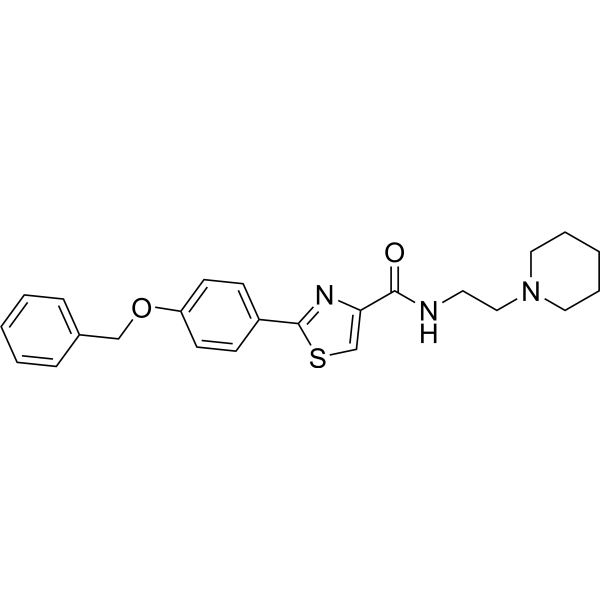 0 ImagesCat. No.: HY-163126CAS No.: 2214210-63-4AChE-IN-52 (compound A6) is an acetylcholinesterase (AChE) inhibitor. AChE-IN-52 shows antitumor efficacy, especially against breast cancer MCF-7 cells. AChE-IN-52 significantly disrupts the amino acid metabolism and inhibits migration of MCF-7. AChE-IN-52 plays anticancer role by regulating Best1 and HIST1H2BJ.
-
AD-BChE/HClO
 0 ImagesCat. No.: HY-D3171AD-BChE/HClO is a dual-target two-photon fluorescent probe. AD-BChE/HClO produces strong fluorescence only in the simultaneous presence of BChE and HClO. AD-BChE/HClO enables two-photon imaging in nerve cells and mouse brain tissues via tail vein injection. AD-BChE/HClO can be used for the research of Alzheimer's disease (Ex/Em = 450 nm/500 nm).
-
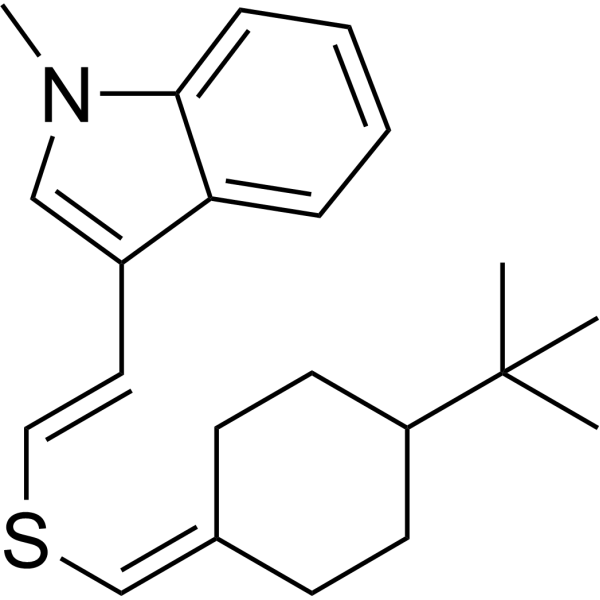
JNJ-1930942
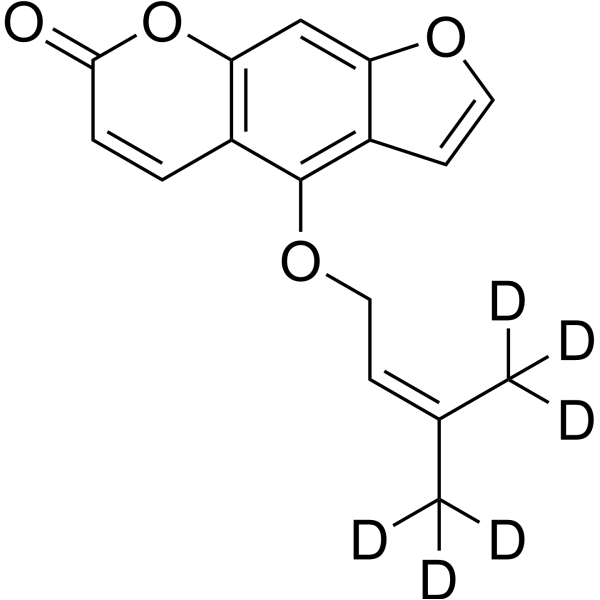
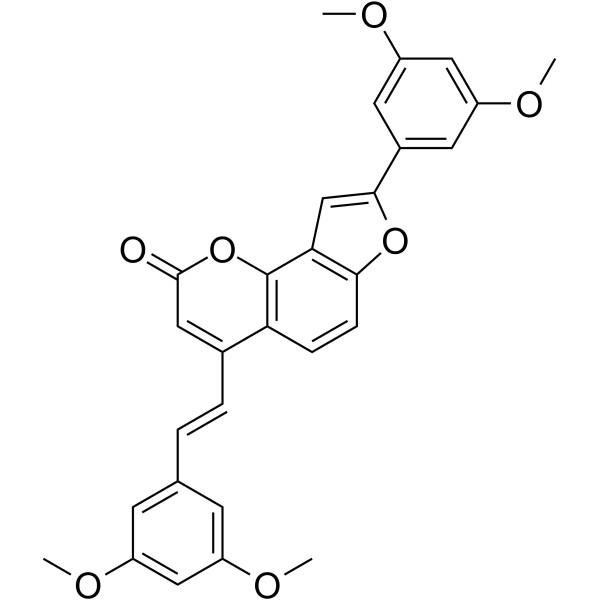
 0 ImagesCat. No.: HY-12153CAS No.: 929562-28-7JNJ-1930942 is a selective and blood-brain barrier (BBB) penetrant α(7) nAChR positive allosteric modulator.JNJ-1930942 enhances the Choline (HY-B0282)-evoked rise in intracellular Ca2+ levels and neurotransmission at hippocampal dentate gyrus synapses. JNJ-1930942 reverses the naturally occurring sensory gating deficit in DBA/2 mice.
-
1,2,4,6-Tetra-O-galloyl-β-D-glucose
 0 ImagesCat. No.: HY-N15572CAS No.: 84297-49-41,2,4,6-Tetra-O-galloyl-β-D-glucose is an acetylcholinesterase inhibitor with an IC50 of 1.5 μM against human targets. 1,2,4,6-Tetra-O-galloyl-β-D-glucose inhibits the aggregation of amyloid-β. 1,2,4,6-Tetra-O-galloyl-β-D-glucose exhibits anti-herpesvirus activity against both HSV-1 and HSV-2 in vitro. 1,2,4,6-Tetra-O-galloyl-β-D-glucose possesses superoxide dismutase-like antioxidant activity, and also inhibits tyrosinase and hyaluronidase. 1,2,4,6-Tetra-O-galloyl-β-D-glucose can be used in studies related to Alzheimer's disease, herpesvirus infection and antioxidation.




