Cholinesterase (ChE)
Cholinesterase (ChE) is a family of enzymes present in the central nervous system, particularly in nervous tissue, muscle and red cells, which catalyze the hydrolysis of the neurotransmitter acetylcholine into choline and acetic acid, a reaction necessary to allow a cholinergic neuron to return to its resting state after activation. It is one of many important enzymes needed for the proper functioning of the nervous systems of humans.
There are two types: acetylcholinesterase (AChE, acetylcholine hydrolase) and butyrylcholinesterase (BChE, acylcholine acylhydrolase), also known as nonspecific cholinesterase or pseudocholinesterase. AChE is primarily found in the blood on red blood cell membranes, in neuromuscular junctions, and in neural synapses, while BChE is produced in the liver and found primarily in plasma. The difference between the two types of cholinesterase is their relative preferences for substrates: AChE hydrolyzes acetylcholine faster while BChE hydrolyzes butyrylcholine faster.
Cholinesterase (ChE) Isoform Specific Products
All Product Categories
-
Cholinesterase (ChE) Inhibitors
(922)
View all products
-
Cholinesterase (ChE) Agonists
(5)
View all products
-
Cholinesterase (ChE) Antagonists
(10)
View all products
-
Cholinesterase (ChE) Activators
(33)
View all products
-
Cholinesterase (ChE) Modulators
(11)
View all products
-
Cholinesterase (ChE) Chemical
(1)
View all products
-
Cholinesterase (ChE) Inducer
(1)
View all products
-
Cholinesterase (ChE) Controls
(6)
View all products
-
Cholinesterase (ChE) Substrates
(2)
View all products
-
Cholinesterase (ChE) Related Products (1069)
Related Products (1069)

-
Antibodies (2)
-
Cholinesterase (ChE) Isoform Comparison
-
BChE-IN-15
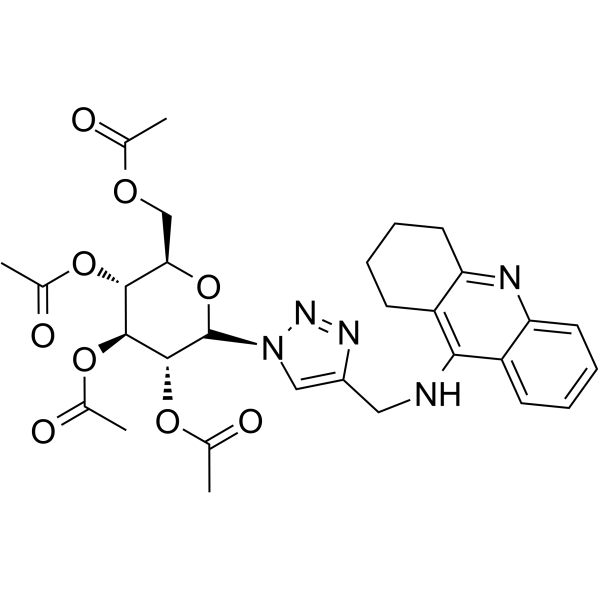
 0 ImagesCat. No.: HY-152232CAS No.: 3060336-91-3BChE-IN-15 (Compound 6) is a pseudo-irreversible and covalent BChE inhibitor with an IC50 of 1.76 nM against hBChE .
-
1,10-Bis(pyridinium)decane
 0 ImagesSynonyms: Decamethylenebispyridinium dibromide1,10-Bis(pyridinium)decane (Decamethylenebispyridinium dibromide) is an acetylcholinesterase (AChE) inhibitor with an IC50 of 25.8 nM. 1,10-Bis(pyridinium)decane acts as a bis-quaternary ligand that bridges the enzyme's catalytic site and peripheral site via its two pyridinium groups. 1,10-Bis(pyridinium)decane can be used for the research of alzheimer's disease.
-
Bis-Q
 0 ImagesCat. No.: HY-121143CAS No.: 73711-18-9Bis-Q is an acetylcholine (ACh) agonist that targets voltage-clamped muscle fibers of the fish Xenomystus nigris. Bis-Q exists in two forms: cis-Bis-Q (non-agonist) and trans-Bis-Q (agonist). Photoisomerization converts cis-Bis-Q to trans-Bis-Q, which induces agonist-induced currents. Channels activated by trans-Bis-Q and ACh have similar conductances and open times. Flashes increase the ratio of trans-Bis-Q to cis-Bis-Q until light equilibrium is reached. Further flashes transiently increase agonist-induced currents, indicating binding of trans-Bis-Q to desensitized receptors. Higher concentrations of cis-Bis-Q produce larger agonist-induced currents that decay exponentially..
-
Demethyl-Ganstigmine hydrochloride
 0 ImagesCat. No.: HY-118928CAS No.: 412044-92-9Synonyms: Demethyl-CHF 2819Demethyl-Ganstigmine hydrochloride (Demethyl-CHF 2819) is an orally active AChE inhibitor. Demethyl-Ganstigmine hydrochloride promotes the release of sAPPα from neuroblastoma cells. Demethyl-Ganstigmine hydrochloride increases the concentration of acetylcholine in the prefrontal cortex of rats. Demethyl-Ganstigmine hydrochloride is used in research on neurological diseases such as Alzheimer's disease.
-
LINS05414
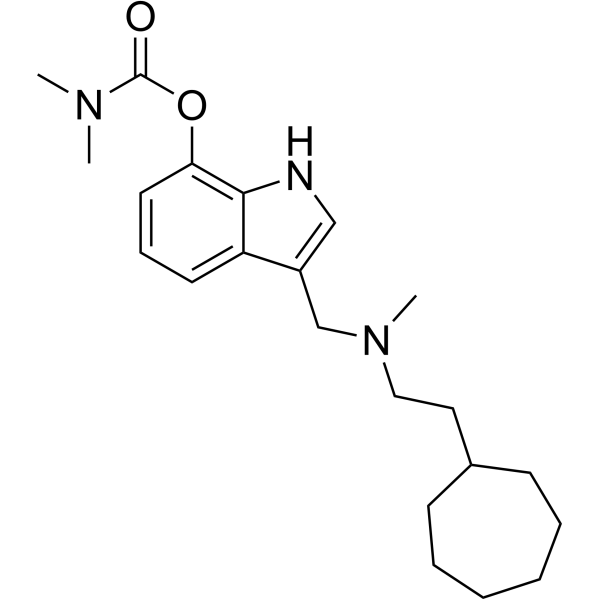
 0 ImagesCat. No.: HY-181597LINS05414 is a histamine H3 receptor ligand with antiCholinesterase and metal chelating activities. LINS05414 exhibits inhibitory activity against acetylcholinesterase (pIC50 = 4.03) and butyrylcholinesterase (pIC50 = 3.83), with a pKi of 6.37 for human histamine H3 receptors. LINS05414 chelates copper ions, ferrous ions and ferric ions. LINS05414 regulates the release of neurotransmitters. LINS05414 can be used in the research of neurodegenerative diseases.
-
Trihexyphenidyl
 0 ImagesTrihexyphenidyl is a selective and orally active M1 muscarinic receptor antagonist with an IC50 of 3.7 nM for rat cerebral cortex M1 muscarinic receptors. Trihexyphenidyl modulates cholinergic activity, countering acetylcholine supersensitivity in neural pathways. Trihexyphenidyl improves movement disorder, inhibits McN-A-343 (HY-107648)-induced pressor responses, vagally-induced bradycardia and vasodilatation. Trihexyphenidyl can be used for the research of Parkinson's disease..
-
Multi-kinase-IN-13
 0 ImagesCat. No.: HY-182001Multi-kinase-IN-13 (Compound 10F) is an inhibitor of AChE, BuChE, and GSK-3β, with an IC50 of 3 nM against hAChE, 303 nM against hBuChE, and 7.58 nM against GSK-3β. Multi-kinase-IN-13 exhibits in vitro iron chelating activity. AChE-IN-110 can be used in the research of Alzheimer's disease.
-
BChE-IN-13
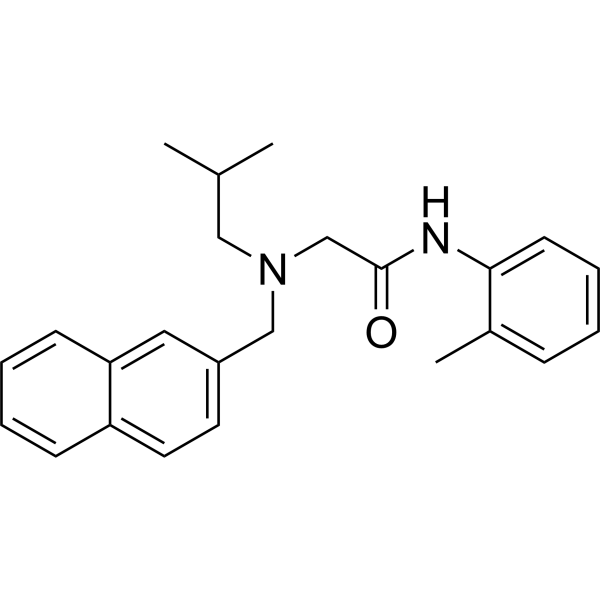 0 ImagesCat. No.: HY-151386CAS No.: 2700896-73-5BChE-IN-13 (Compound 17c) is an orally active, potent and selective Butyrylcholinesterase (BChE) inhibitor with IC50s of 0.22 and 0.016 μM for eqBChE and hBChE, respectively. BChE-IN-13 can improve memory and cognitive impairments, and be used in Alzheimer’s disease (AD) research.
-
AChE-IN-118
 0 ImagesCat. No.: HY-184163AChE-IN-118 is an arensulfonylhydrazinoxamoyl derivative with acetylcholinesterase inhibitory activity (IC50 = 24.05 ± 1.29 μM) and weak cytotoxicity against breast and liver cancer cells.AChE-IN-118 can be used for the research of alzheimer's disease, breast cancer, liver cancer.
-
AChE-IN-102
 0 ImagesCat. No.: HY-180243AChE-IN-102 (compound C8) is a potent, selective and competitive AChE inhibitor with a Ki of 7.55 nM and an IC50 of 15.25 nM. AChE-IN-102 shows selectivity over BuChE (IC50 = 21.15 nM, b>Ki = 6.17 nM). AChE-IN-102 can be used for Alzheimer’s disease research.
-
(+)-(3S)-ψ-Ribalinine
 0 ImagesCat. No.: HY-N21824CAS No.: 155158-70-6(+)-(3S)-ψ-Ribalinine is an inhibitor of acetylcholinesterase (AChE) and butyrylcholinesterase (BChE), with an IC50 of 62.46 μM against electric eel acetylcholinesterase and an IC50 of 150.04 μM against equine butyrylcholinesterase. (+)-(3S)-ψ-Ribalinine can be used for the research of neurological disorders.
-
p38α-IN-13
 0 ImagesCat. No.: HY-114422CAS No.: 3077831-12-7p38α-IN-13 is p38α MAPK, BChE and AChE inhibitor with IC50 values of 5.79, 16.24, 51.8 µM for p38α MAP, hBChE, hAChE, respectively. p38α-IN-13 has the potential for the research of Alzheimer’s disease.
-
AChE-IN-59
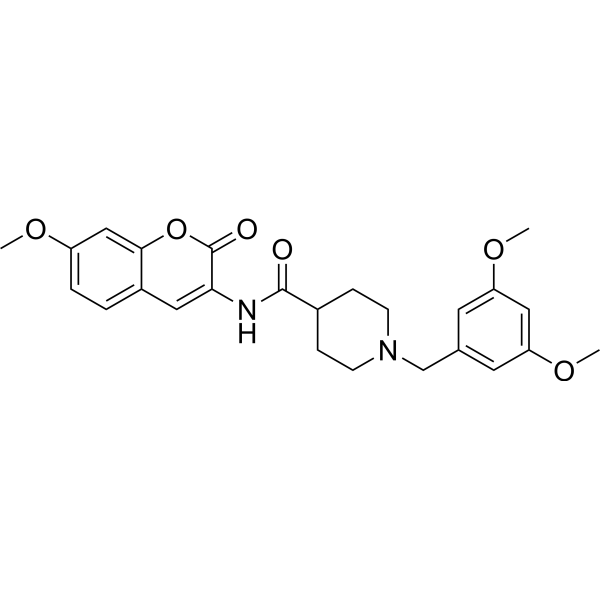 0 ImagesCat. No.: HY-157978CAS No.: 2957916-86-6AChE-IN-59 (compounds 3b) is an AChE inhibitor, with an IC50 value of 0.05 μM. AChE-IN-59 can inhibit the aggregation of Aβ1-42, protect nerve cells and penetrate the blood-brain barrier well. AChE-IN-59 can be used for the research of Alzheimer's disease (AD).
-
Desoxypeganine hydrochloride
 0 ImagesCat. No.: HY-108048ACAS No.: 61939-05-7Synonyms: Deoxypeganine hydrochloride; Deoxyvasicine hydrochlorideDesoxypeganine (Deoxypeganine) hydrochloride, an alkaloid, is a potent and orally active cholinesterase (BChE and AChE) and selective MAO-A inhibitor, with IC50 values of 2, 17, and 2 μM, respectively. Desoxypeganine hydrochloride can be used for alcohol abuse research.
-
AChE/BChE-IN-3 hydrochloride
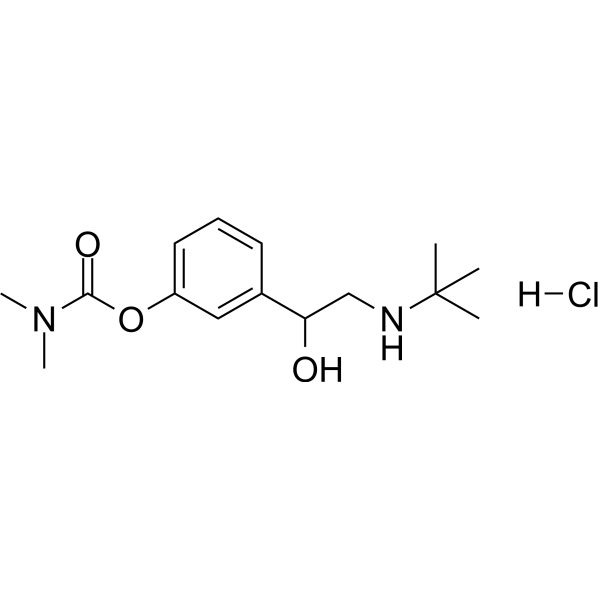 0 ImagesCat. No.: HY-146663ACAS No.: 2410992-69-5
-
MR2938
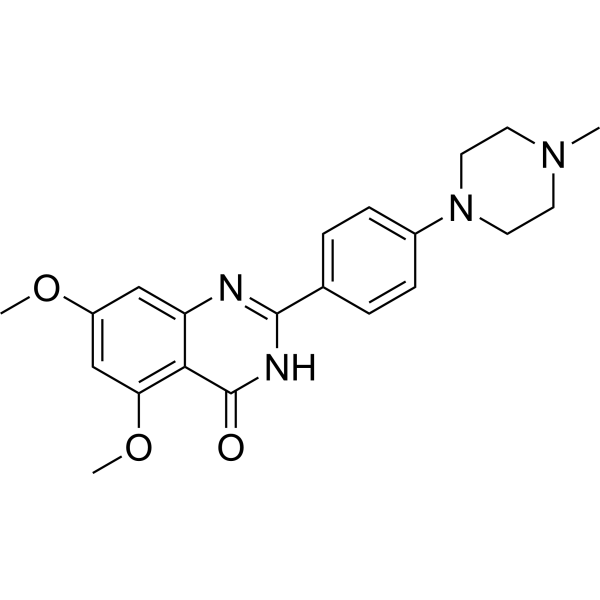 0 ImagesCat. No.: HY-149087CAS No.: 1044870-65-6
-
Icopezil
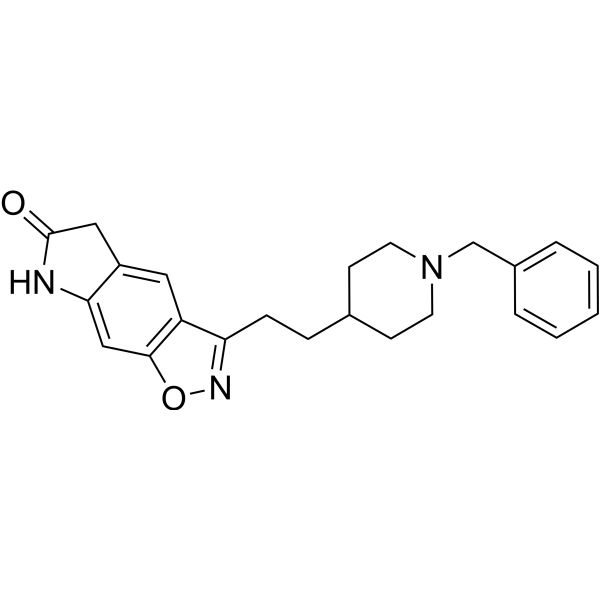 0 ImagesCat. No.: HY-105157CAS No.: 145508-78-7Synonyms: CP-118954Icopezil (CP-118954) is an orally active, selective AchE inhibitor with an IC50 of 0.33 nM. Icopezil increases acetylcholine levels in the brain and striatum of mammals, induces centrally mediated tremors and peripherally mediated salivation, and improves working memory performance in aged dogs. Icopezil serves as a parent compound for radioiodine-labeled acetylcholinesterase imaging agents. Icopezil is applicable to research related to Alzheimer's disease.
-
Pitofenone
 0 ImagesCat. No.: HY-105853CAS No.: 54063-52-4Pitofenone, a spasmolytic compound, inhibits the acetylcholinesterase (AChE) activity from bovine erythrocytes and from electric eel with Kis of 36 and 45 μM, respectively.