



Cholinesterase (ChE)
Cholinesterase (ChE) is a family of enzymes present in the central nervous system, particularly in nervous tissue, muscle and red cells, which catalyze the hydrolysis of the neurotransmitter acetylcholine into choline and acetic acid, a reaction necessary to allow a cholinergic neuron to return to its resting state after activation. It is one of many important enzymes needed for the proper functioning of the nervous systems of humans.
There are two types: acetylcholinesterase (AChE, acetylcholine hydrolase) and butyrylcholinesterase (BChE, acylcholine acylhydrolase), also known as nonspecific cholinesterase or pseudocholinesterase. AChE is primarily found in the blood on red blood cell membranes, in neuromuscular junctions, and in neural synapses, while BChE is produced in the liver and found primarily in plasma. The difference between the two types of cholinesterase is their relative preferences for substrates: AChE hydrolyzes acetylcholine faster while BChE hydrolyzes butyrylcholine faster.
Cholinesterase (ChE) Isoform Specific Products
All Product Categories
-
Cholinesterase (ChE) Inhibitors
(912)
View all products
-
Cholinesterase (ChE) Agonists
(5)
View all products
-
Cholinesterase (ChE) Antagonists
(10)
View all products
-
Cholinesterase (ChE) Activators
(32)
View all products
-
Cholinesterase (ChE) Modulators
(10)
View all products
-
Cholinesterase (ChE) Chemical
(1)
View all products
-
Cholinesterase (ChE) Inducer
(1)
View all products
-
Cholinesterase (ChE) Controls
(6)
View all products
-
Cholinesterase (ChE) Substrates
(2)
View all products
-
Cholinesterase (ChE) Related Products (1060)
Related Products (1060)

-
Antibodies (2)
-
Cholinesterase (ChE) Isoform Comparison
-
AChE/BuChE/MAO-B-IN-2
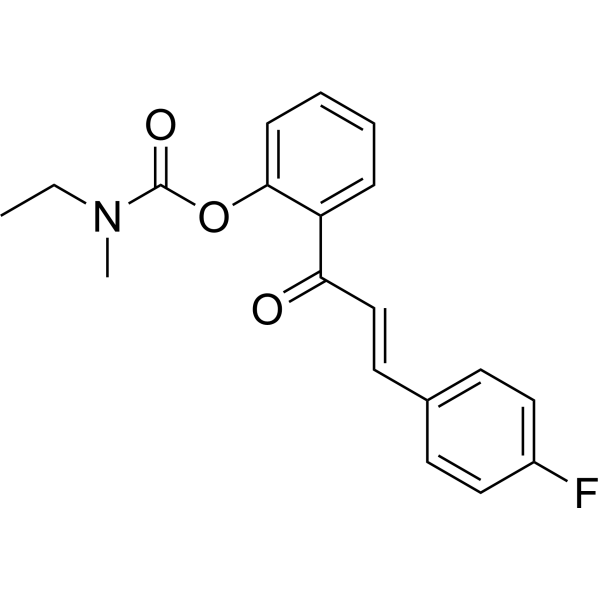 0 ImagesCat. No.: HY-149090CAS No.: 3044829-88-8AChE/BuChE/MAO-B-IN-2 (compound 4b) is a potent AChE/BuChE inhibitor and showed good blood brain barrier (BBB) permeability in vitro with an IC50 value of 5.3 μM, 12.4 μM, 1.9±0.08 μM, for AChE, BuChE, huMAO-B, respectively. AChE/BuChE/MAO-B-IN-2 (compound 4b) can inhibit excess AChE/BuChE in Alzheimer's disease (AD) brain. AChE/BuChE/MAO-B-IN-2 (compound 4b) can be used in anti-Alzheimer's research.
-
S 1432
 0 ImagesCat. No.: HY-117162CAS No.: 24932-86-3S 1432 is a central nervous system depressant with anticonvulsant and muscle relaxant effects. S 1432 significantly reduces acetylcholine levels in the striatum inhibits convulsions induced by pentylenetetrazol. S 1432 can be used in the development of psychotropic drugs.
-
sEH/AChE-IN-3
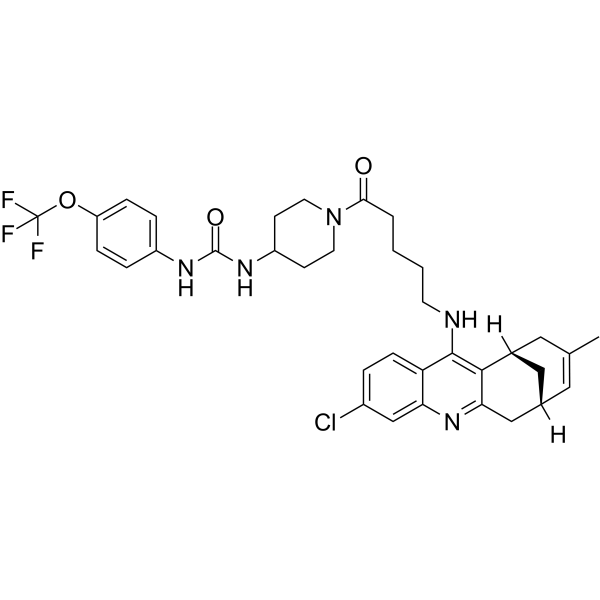 0 ImagesCat. No.: HY-145833CAS No.: 2490589-11-0sEH/AChE-IN-3 (compound (−)-15) is a potent and BBB-penetrated dual inhibitor of sEH (soluble epoxide hydrolase) and AChE (acetylcholinesterase), with IC50 values of 0.4 nM (hsEH), 1.94 nM (hAChE), 615 (hBChE, human butyrylcholinesterase), 4.3 nM (msEH), and 2.61 nM (mAChE), respectively.
-
Donepezil-d4 hydrochloride
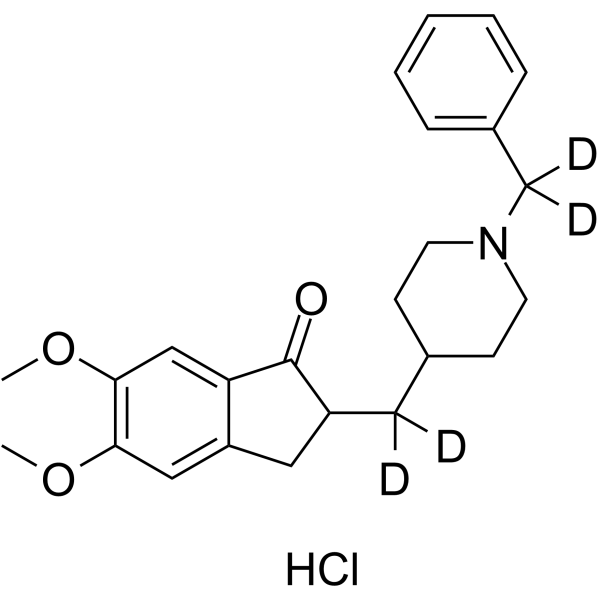 0 ImagesSynonyms: E2020-d4Donepezil-d4 (hydrochloride) is the deuterium labeled Donepezil hydrochloride. Donepezil Hydrochloride (E2020) is a reversible, selective AChE inhibitor with an IC50 of 6.7 nM for AChE activity. Donepezil shows high selectivity for AChE over BuChE. Donepezil exhibits neuroprotective effect on Aβ42 neurotoxicity.
-
Phenthoate (Standard)
 0 ImagesCat. No.: HY-118165RCAS No.: 2597-03-7Phenthoate (Standard) is the analytical standard of Phenthoate. This product is intended for research and analytical applications. Phenthoate is an organophosphorus pesticide having low toxicity in animals. Phenthoate is also a AChE inhibitor.
-
BChE-IN-23
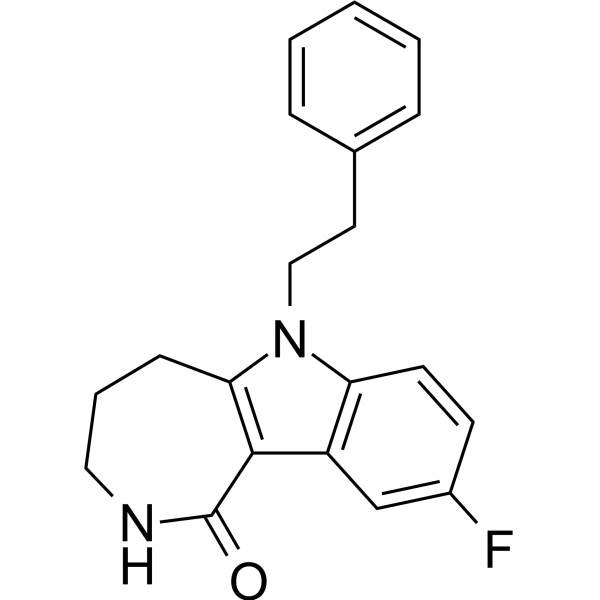 0 ImagesCat. No.: HY-162138CAS No.: 2020357-32-6BChE-IN-23 (compound 2a) is a BChE inhibitor with an IC50 value of 21 nM. BChE-IN-23 can be used in Alzheimer's disease (AD) research.
-
MHP 133
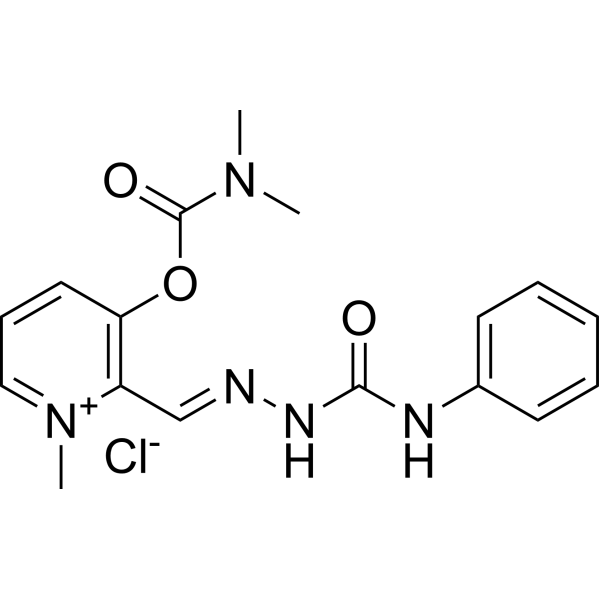 0 ImagesCat. No.: HY-101653CAS No.: 147340-43-0MHP 133 is a agent with multiple CNS targets, and inhibits acetylcholinesterase (AChE) with Ki of 69 μM; also active against muscarinic M1 and M2 receptors, serotonin 5HT4 receptors, and imidazole I2 receptors.
-
BuChE-IN-4
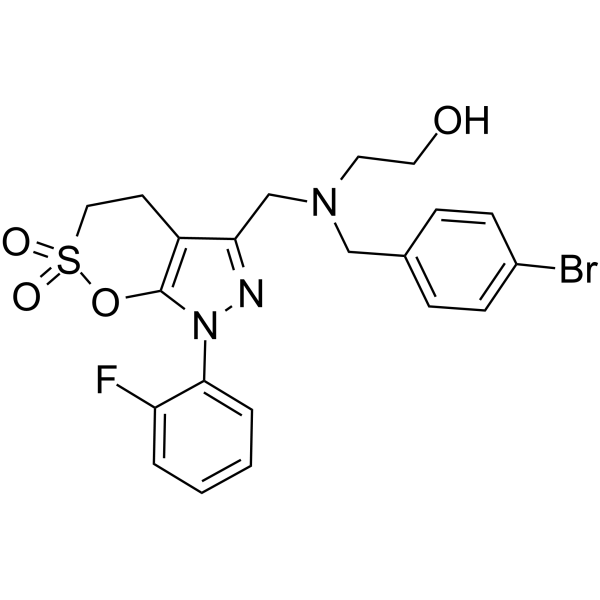 0 ImagesCat. No.: HY-146687CAS No.: 2499490-52-5BuChE-IN-4 (Compound C6) is a potent inhibitor of BuChE with an IC50 of 7.7 nM. BuChE-IN-4 exhibits mild antioxidant capacity, nontoxicity, lipophilicity and neuroprotective activity.
-
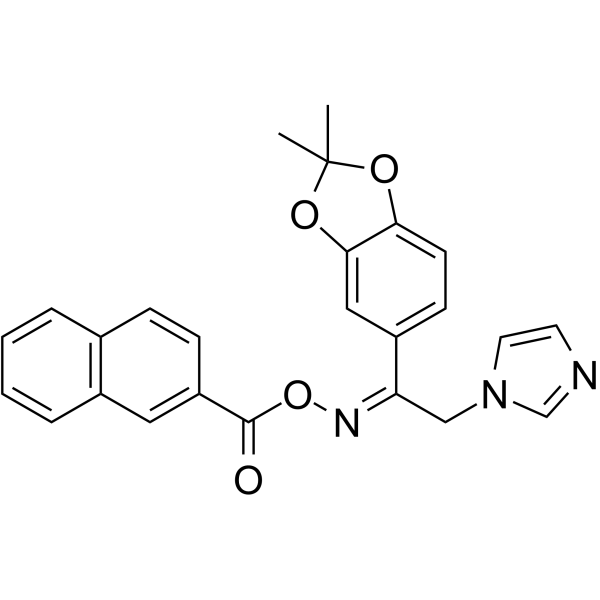
Salithion
 0 ImagesSalithion is an acetylcholinesterase inhibitor and neurotoxicant. Salithion binds to the active site of acetylcholinesterase to interfere with acetylcholine hydrolysis, and there is an enantioselective difference between its (R) and (S) enantiomers.
-
Pyridostigmine bromide (Standard)
 0 ImagesCat. No.: HY-B0207ARCAS No.: 101-26-8Pyridostigmine (bromide) (Standard) is the analytical standard of Pyridostigmine (bromide). This product is intended for research and analytical applications. Pyridostigmine bromide is a reversible cholinesterase inhibitor.
-
Fenobucarb-d3
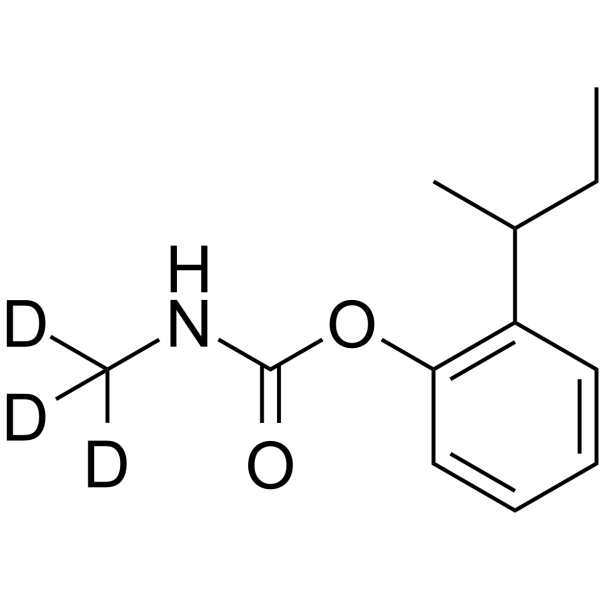 0 ImagesFenobucarb-d3 is the deuterium labeled Fenobucarb. Fenobucarb is a carbamate insecticide. Fenobucarb induces zebrafish developmental neurotoxicity through pathways involved in inflammation, oxidative stress, degeneration and apoptosis. Fenobucarb is a possible risk factor to cardiovascular and cerebrovascular systems in animals.
-
hBChE-IN-3
 0 ImagesCat. No.: HY-169162hBChE-IN-3 (compound 30) is a combination of carbonic anhydrase (CA) activator and cholinesterase (ChE) inhibitor with IC50 values of 7.4 and 1.9 nM for AchE and BchE, respectively. hBChE-IN-3 can be used in the study of neurodegeneration and psychiatric disorders.
-
MDAR-IN-1
 0 ImagesCat. No.: HY-172884MDAR IN-1 (Compound 5m) is a brain-penetrant inhibitor of acetylcholinesterase (AChE) and antagonist of the GluN1/GluN2B subtype of NMDAR receptor. MDAR IN-1 effectively inhibits AChE activity, enhances cholinergic neurotransmission, and blocks NMDAR, reducing excitatory neurotoxicity. MDAR IN-1 is promising for research of Alzheimer's disease.
-
AChE/MAO-IN-2
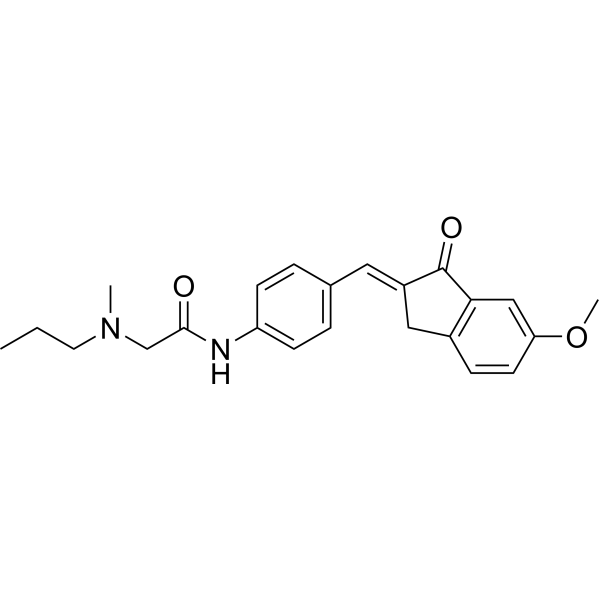 0 ImagesCat. No.: HY-152110Dual AChE-MAO B-IN-5, indanone derivative, is a potent dual AChE/MAO-B inhibitior with IC50 values of 0.0224, 0.0412, and 0.1116 μM for AChE, MAO-B and MAO-A, respectively. Dual AChE-MAO B-IN-5 has antioxidant activity and prevents β-amyloid plaque aggregation. Dual AChE-MAO B-IN-5 can be used for Alzheimer’s disease (AD) research.
-
AChE-IN-103
 0 ImagesCat. No.: HY-180296CAS No.: 113027-75-1AChE-IN-103 (Compound 10) is an inhibitor of ACh. AChE-IN-103 exhibits log IC50 values of 1.477 and 2.2 for models based on alignments I and II. AChE-IN-103 can be studied in research on Alzheimer’s disease.
-
Brassicasteryl linoleate
 0 ImagesCat. No.: HY-186298CAS No.: 73691-63-1Brassicasteryl linoleate is a cholinesterase inhibitor. Brassicasteryl linoleate inhibits acetylcholinesterase, butyrylcholinesterase and urease. Brassicasteryl linoleate inhibits lipid peroxidation. Brassicasteryl linoleate is applicable to research related to breast cancer, lung cancer and colon adenocarcinoma.
-
Merulinic acid
 0 ImagesCat. No.: HY-N19855CAS No.: 69506-63-4Synonyms: Geranicardic acid
-
Pseudocoptisine acetate
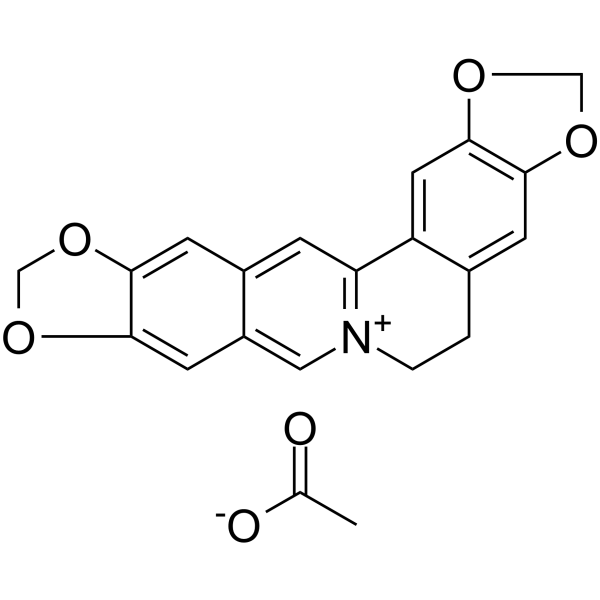 0 ImagesCat. No.: HY-N6894CAS No.: 30426-66-5Synonyms: Isocoptisine acetatePseudocoptisine (Isocoptisine) acetate is a quaternary alkaloid with benzylisoquinoline skeleton, was isolated from Corydalis Tuber. Pseudocoptisine acetate inhibits acetylcholinesterase (AChE) activity with an IC50 of 12.8 μM. Anti-inflammatory and anti-amnestic effects.
-
hAChE-IN-3
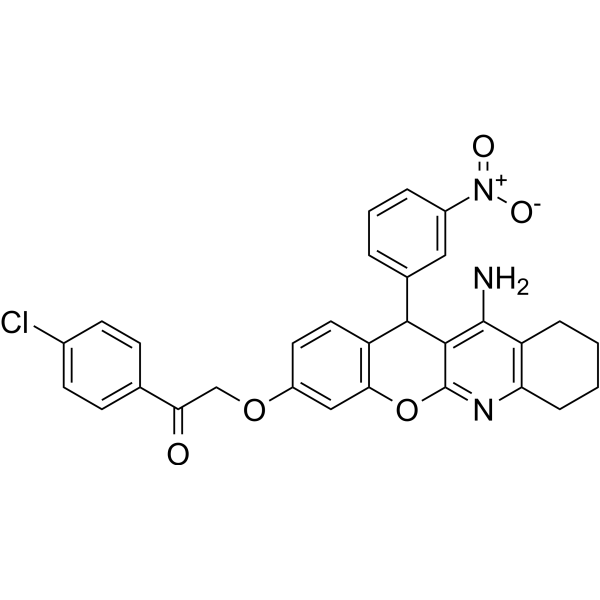 0 ImagesCat. No.: HY-155085CAS No.: 2983723-56-2hAChE-IN-3 (compounds 5c) is a potent and blood-brain barrier permeable AChE, BuChE, MAO-B-IN-1 and BACE-1 inhibitor, with IC50 values of 0.44, 0.08, 5.15 and 0.38 μM, respectively. hAChE-IN-3 has antioxidant activity and metal chelating ability. In addition, hAChE-IN-3 can bind to peripheral anion sites, and affect β amyloid and reduce Alzheimer's-associated neurodegeneration. hAChE-IN-3 has the potential for the research of Alzheimer's disease.




