



Amyloid-β
β-amyloid peptide; Aβ; Abeta
Amyloid-β (Aβ) denotes peptides of 36–43 amino acids that are crucially involved in Alzheimer's disease as the main component of theamyloid plaques found in the brains of Alzheimer patients. The peptides result from the amyloid precursor protein (APP), which is being cut by certain enzymes to yield Aβ. Amyloid-β molecules can aggregate to form flexible soluble oligomers which may exist in several forms. Amyloid-β peptide is due to overproduction of Aβ and/or the failure of clearance mechanisms. Amyloid-β self-aggregates into oligomers, which can be of various sizes, and forms diffuse and neuritic plaques in the parenchyma and blood vessels. Amyloid-β oligomers and plaques are potent synaptotoxins, block proteasome function, inhibit mitochondrial activity, alter intracellular Ca2+levels and stimulate inflammatory processes. Loss of the normal physiological functions of Aβ is also thought to contribute to neuronal dysfunction.
All Product Categories
-
Amyloid-β Inhibitors
(489)
View all products
-
Amyloid-β Agonists
(2)
View all products
-
Amyloid-β Antagonists
(5)
View all products
-
Amyloid-β Activators
(5)
View all products
-
Amyloid-β Modulators
(4)
View all products
-
Amyloid-β Chemicals
(7)
View all products
-
Amyloid-β Inducers
(5)
View all products
-
Amyloid-β Degraders
(6)
View all products
-
Amyloid-β Controls
(3)
View all products
-
Amyloid-β Substrate
(1)
View all products
-
Amyloid-β Ligands
(11)
View all products
-
Amyloid-β Related Products (767)
Related Products (767)

-
Antibodies (9)
-
Aβ-IN-6
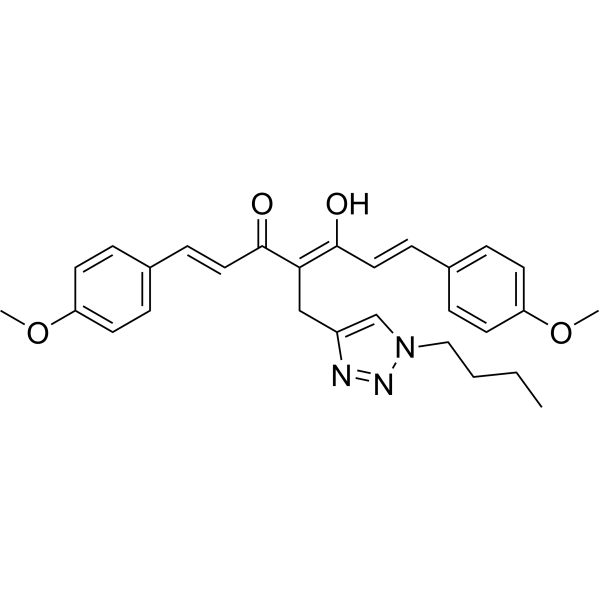 0 ImagesCat. No.: HY-149246CAS No.: 3043752-01-5Aβ-IN-6 reduces pro-inflammatory cytokine release from microglia cells. Aβ-IN-6 significantly induces Nrf2 nuclear translocation and hamperes Aβ oligomers formation. Aβ-IN-6 exerts a consistent neuroprotective effect by modulating the redox-sensitive signalling pathways in vivo oxidative stress model. Aβ-IN-6 is an orally active and has antiinflammatory, Antioxidant and Anti-oligomeric activity. Aβ-IN-6 has the potential for Alzheimer's disease (AD) research.
-
(Gln22)-Amyloid β-Protein (1-42)
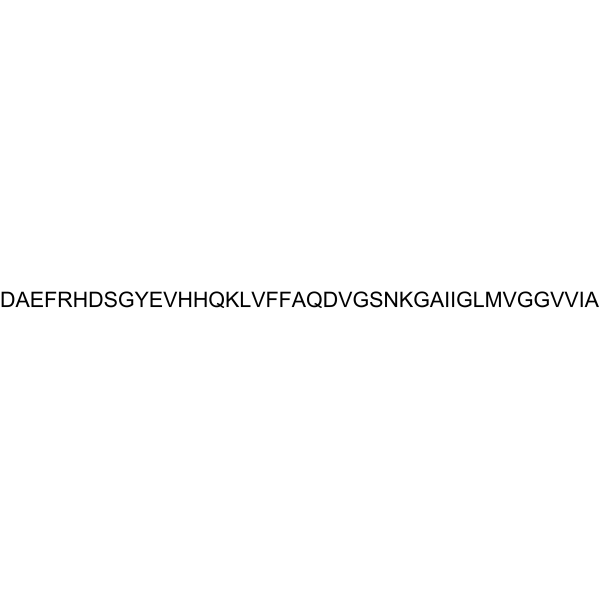 0 ImagesCat. No.: HY-P4585CAS No.: 147335-12-4(Gln22)-Amyloid β-Protein (1-42) is a Dutch mutation (E22Q) form of β-Amyloid (1-42) (HY-P1363). (Gln22)-Amyloid β-Protein (1-42) exhibits enhanced fibrillogenic and pathogenic properties.
-
β-Amyloid (10-20)
 0 ImagesCat. No.: HY-P1053CAS No.: 152286-31-2β-Amyloid (10-20) is a fragment of Amyloid-β peptide and maybe used in the research of neurological disease.
-
MAO-B-IN-56
 0 ImagesCat. No.: HY-182786MAO-B-IN-56 is a multi-target-directed ligand with AChE, BChE, MAO-B, and BACE1 inhibitory activity, with IC50 values of 0.35 μM, 3.22 μM, 0.14 μM, and 3.85 μM respectively, and shows selectivity for AChE over BChE and MAO-B over MAO-A.MAO-B-IN-56 reduces amyloid-beta production, reduces paw edema, improves spatial memory, and enhances Alzheimer's disease hallmarks and associated histopathological alterations.MAO-B-IN-56 can be used for the research of alzheimer's disease.
-
Ambrosin
 0 ImagesAmbrosin is an orally active NF-κβ and BACE1 inhibitor. Ambrosin reduces pro-inflammatory and nitrosative mediators, increases PPARγ levels, inhibits apoptosis (Apoptosis), enhances autophagy (Autophagy), and ameliorates oxidative stress. Ambrosin reduces Amyloid plaque deposition. Ambrosin improves lipopolysaccharide-induced memory impairment and colonic histopathological changes. Ambrosin can be used in research related to Alzheimer's disease and colitis.
-
Protriptyline-d3
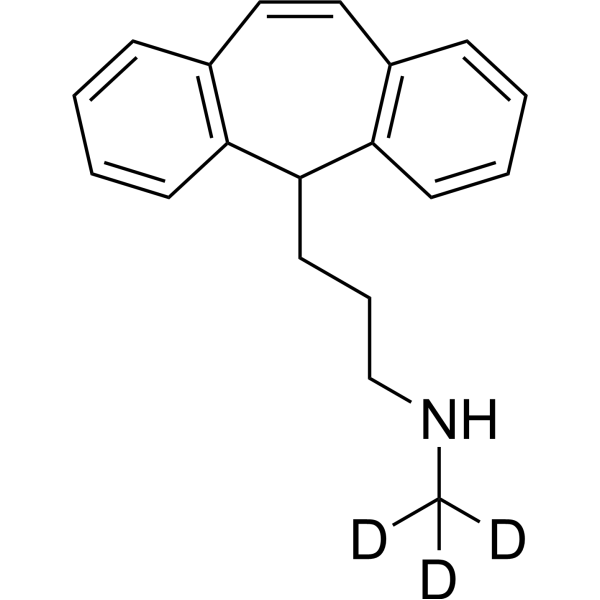 0 ImagesCat. No.: HY-B0949ASCAS No.: 136765-50-9Protriptyline-d3 is deuterium labeled Protriptyline (HY-B0949). Protriptyline is a potent tricyclic antidepressant (TCA). Protriptyline inhibits AChE activity with an IC50 value of 0.06 mM and inhibits Aβ self-assembly. Protriptyline can be used for the study of depression and Alzheimers disease.
-
QP5020
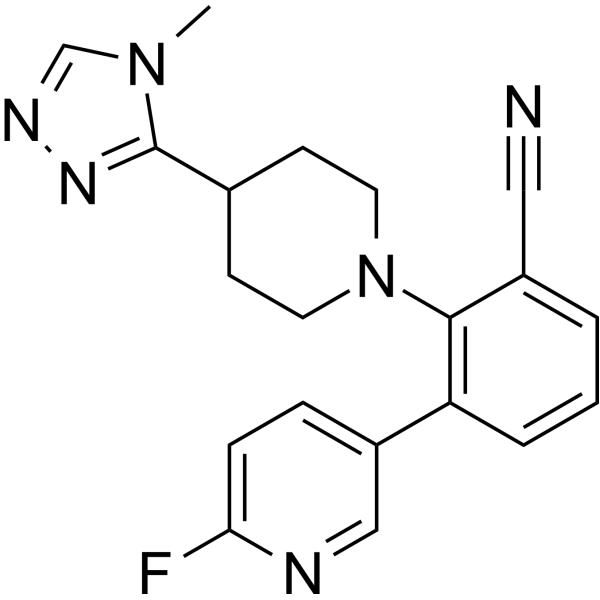 0 ImagesCat. No.: HY-161077CAS No.: 3027434-06-3QP5020 (compound 28) is an inhibitor of QPCTL with an IC50 value of 15 nM. QP5020 has antitumor efficacy.
-
Squoxin
 0 ImagesSynonyms: ST1859; 1,1′-Methylenedi-2-naphtholSquoxin (ST1859) is an antiamyloid agent that specifically binds to Aβ1-42 and prevents the aggregation and fibril formation of Aβ. Squoxin crosses the blood-brain barrier (BBB) and has anthelmintic activity and anti-inflammatory properties.
-
DDC 2′,3′-O-disulfate
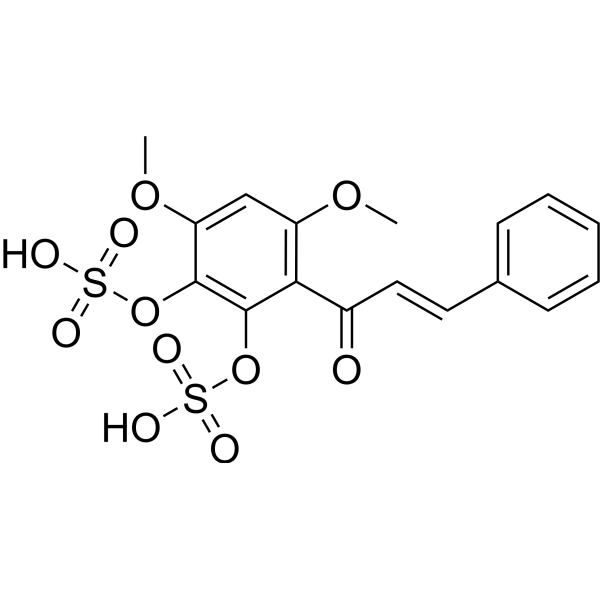 0 ImagesCat. No.: HY-156179DDC 2′,3′-O-disulfate (compound 4) prevents the fibrillization and oligomerization of Aβ42. DDC 2′,3′-O-disulfate has the potential for Alzheimer's disease (AD) research.
-
JLK-6
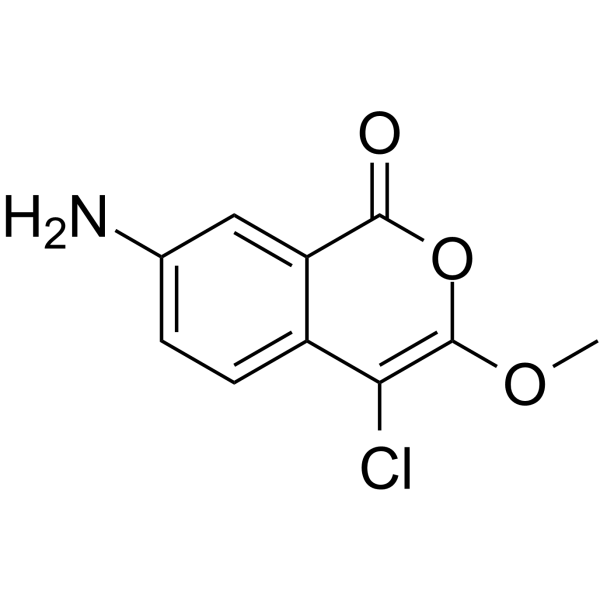 0 ImagesCat. No.: HY-103538CAS No.: 62252-26-0JLK-6 is a rhomboid protease GlpG inhibitor. JLK-6 reduces the production of Amyloid β-peptide by altering the cleavage of β-amyloid precursor protein by γ-secretase, with no effect on the cleavage of Notch receptors. JLK-6 can be used in research related to Alzheimer's disease.
-
Bavachinin (Standard)
 0 ImagesSynonyms: 7-O-Methylbavachin (Standard); Bavachinin A (Standard)Bavachinin (Standard) is the analytical standard of Bavachinin. This product is intended for research and analytical applications. Bavachinin is agonist of pan-peroxisome proliferator-activated receptor (PPAR), with the IC50 value of 21.043 μM, 12.819 μM, and 0.622 μM to PPAR-α, RRAR-β/δ, and PPAR-γ, respectively. Bavachinin is an inhibitor of HIF-1α. Bavachinin exhibits antitumor activity against non-small cell lung cancer by targeting RRAR-γ. Bavachinin is a natural compound with anti-inflammatory and anti-angiogenic activities. Bavachinin has orally bioactivity..
-
AChE/BChE-IN-29
 0 ImagesCat. No.: HY-175658AChE/BChE-IN-29 is an AChE/BChE inhibitor. AChE/BChE-IN-29 exhibits balanced dual cholinesterase inhibitory activity with IC50 values of 2.1 μM for Electrophorus electricus AChE (eeAChE) and 6.3 μM for equine serum butyrylcholinesterase (eqBChE). AChE/BChE-IN-29 effectively inhibits amyloid-β (Aβ42) aggregation and tau protein aggregation in E. coli cell models. AChE/BChE-IN-29 can be used for the study of Alzheimer’s disease (AD).
-
Aβ42-IN-4
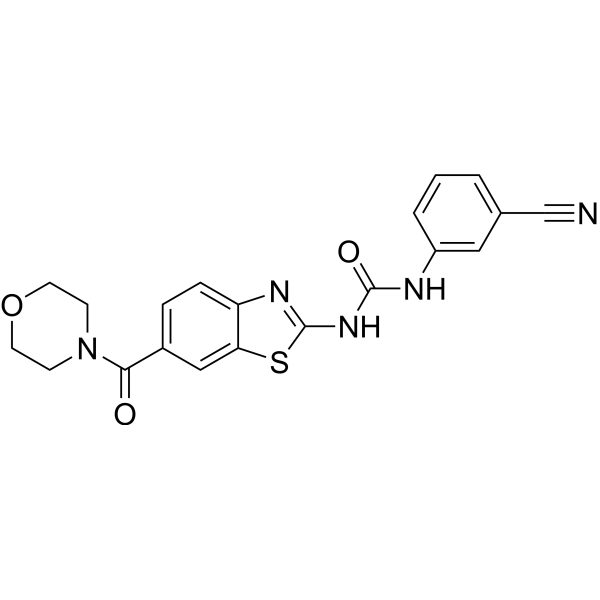 0 ImagesCat. No.: HY-161109CAS No.: 2387822-02-6Aβ42-IN-4 (compound 0043) degrades amyloid precursor protein (APP) and reduces Aβ42 production.
-
Aβ-IN-5
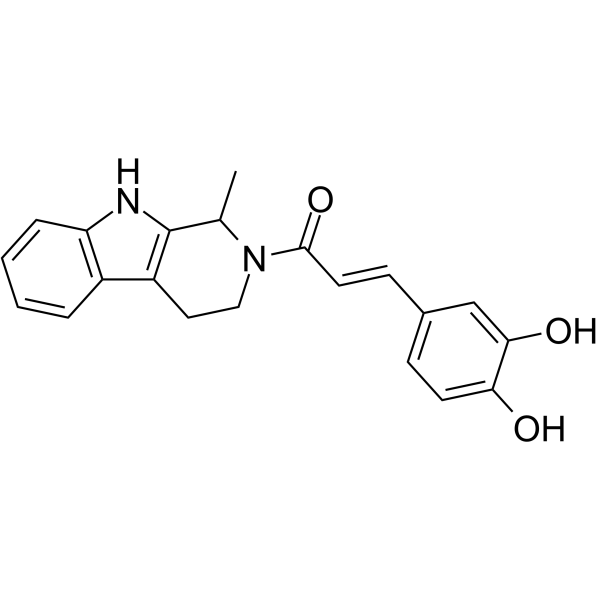 0 ImagesCat. No.: HY-147980CAS No.: 2417977-65-0Aβ-IN-5 (Compound e12) is an orally active Aβ aggregation inhibitor. Aβ-IN-5 also inhibits AChE and BuChE with IC50 values of 21.29 μM and 1.32 μM, respectively. Aβ-IN-5 shows excellent neuroprotective effects and low neurotoxicity.
-
Doliroside A
 0 ImagesCat. No.: HY-N17929CAS No.: 93078-67-2Doliroside A is an Aβ42-binding agent with an IC50 of 26.57 μM for Aβ42. Doliroside A binds to Aβ42 nuclei and oligomers to form stable complexes, suppresses Aβ42 fibrillation, and redirects Aβ42 into off-pathway, amorphous oligomers. Doliroside A can be used for the research of alzheimer’s disease (ad).
-
Neuroinflammatory-IN-2
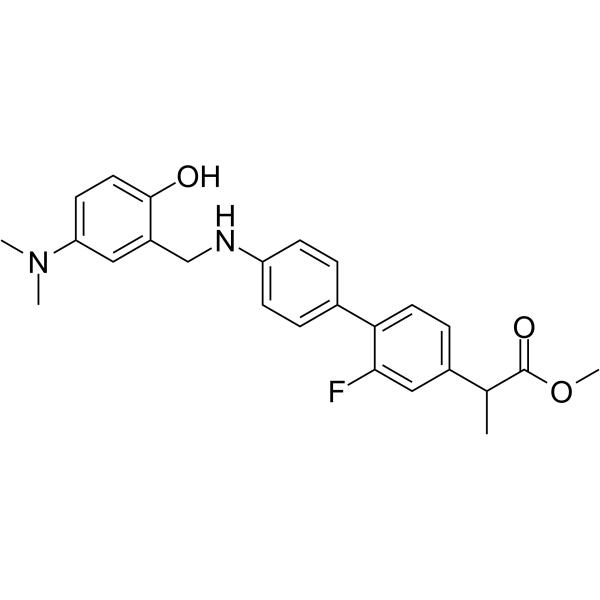 0 ImagesCat. No.: HY-150563CAS No.: 2361384-14-5Neuroinflammatory-IN-2 is a potent anti-neuroinflammatory agent with an IC50 value of 10.30 μM for MAO-B, and 96.33% inhibition of Aβ1-42 aggregation at 25 μM. Neuroinflammatory-IN-2 has neuroprotective activity in H2O2-induced PC-12 cell injury. Neuroinflammatory-IN-2 also has biometal chelating abilities, antioxidant activity, anti-neuroinflammatory activity and appropriate BBB permeability. Neuroinflammatory-IN-2 can be used for researching Alzheimer’s disease.
-
Lanuginosine
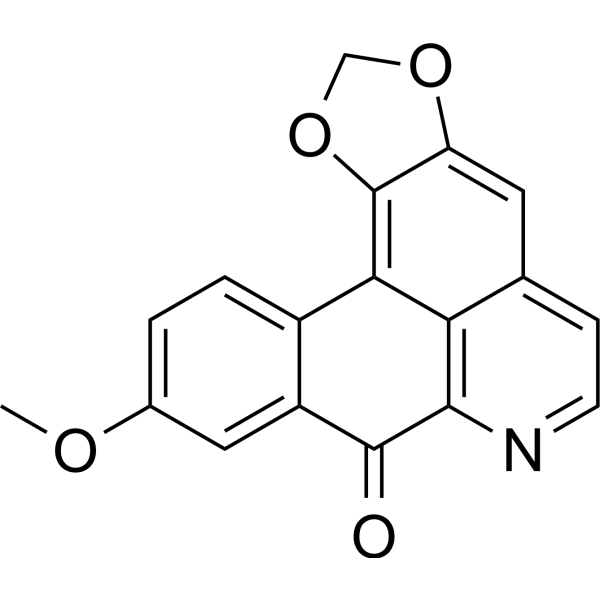 0 ImagesLanuginosine is an alkaloid. Lanuginosine can be isolated from the stems of Xylopia laevigata (Annonaceae) and the leaves of Magnolia grandiflora. Lanuginosine induces Apoptosis. Lanuginosine inhibits AChE (IC50: 10.9 μM). Lanuginosine inhibits Aβ aggregation. Lanuginosine exhibits anticancer activity against hepatocellular carcinoma, human promyelocytic leukemia, human chronic myeloid leukemia, melanoma, and brain tumors. Lanuginosine can be used in the research of Alzheimer's disease.
-
Velaprumig
 0 ImagesCat. No.: HY-P991168CAS No.: 2988741-17-7Velaprumig is a monoclonal antibody targeting human CD99, CCL25, and anti-human Aβ (Aβ-47F). Velaprumig regulates immune cell migration and reduces β-amyloid-related pathological processes, exerting immunomodulatory and potential anti - Alzheimer's disease activities.
-
Biotin-β-amyloid (1-28)
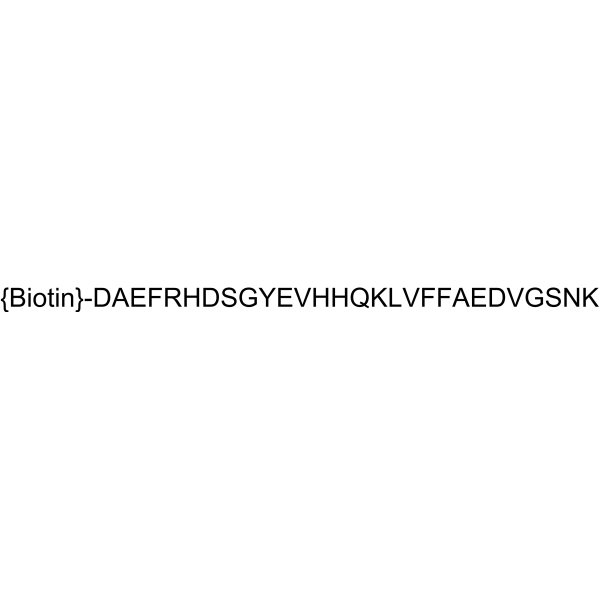 0 ImagesCat. No.: HY-P1468FSynonyms: Biotin-amyloid β-protein (1-28)Biotin-β-amyloid (1-28) (Biotin-amyloid β-protein (1-28)) is abiotinylated β-Amyloid (1-28) (HY-P1468).
-
17β-HSD10/CDK5-IN-1
 0 ImagesCat. No.: HY-18328017β-HSD10/CDK5-IN-1 is a poent dual 17β-HSD10 and CDK5 inhibitor with IC50s of 2.44 and 0.26 μM for 17β-HSD10 and CDK5, respectively. 17β-HSD10/CDK5-IN-1 reduces ROS accumulation, attenuates pathological Tau phosphorylation, reduces Aβ plaque deposition, and ameliorates cognitive deficits in Alzheimer's mice. 17β-HSD10/CDK5-IN-1 can be used for the research of Alzheimer's disease.




