



Acyltransferase
Diacylglycerol acyltransferase; Diglyceride acyltransferase; acyl-CoA:cholesterol acyltransferase; mono- acylglycerol acyltransferase
Acyltransferase (AT) catalyzes the transfer of an acyl moiety from acyl-coenzyme A (acyl-CoA) to an acceptor. Acyltransferases play important roles in the maintenance of homeostasis in the human body and have been linked to various diseases. The Acyltransferase family includes acyl-CoA:cholesterol AT (ACAT), diacylglycerol AT (DGAT), and monoacylglycerol AT (MGAT) for the metabolism of lipids.
ACAT (acyl-coenzyme A:cholesterol acyltransferase) is an intracellular enzyme that catalyzes the formation of cholesterol esters from cholesterol and fatty acyl-coenzyme A. In mammals, two isoenzymes, ACAT1 and ACAT2, encoded by two different genes, exist. ACATs play important roles in cellular cholesterol homeostasis in various tissues.
DGAT (acyl-CoA:diacylglycerol acyltransferase) is an integral membrane enzyme that catalyses the last step of triacylglycerol synthesis from diacylglycerol and acyl-CoA. DGAT activity resides mainly in two distinct membrane bound polypeptides, known as DGAT1 and DGAT2.
MGAT (acyl-CoA:monoacylglycerol acyltransferase) catalyzes the synthesis of diacylglycerol, the precursor of physiologically important lipids such as triacylglycerol and phospholipids. In the intestine, MGAT plays a major role in the absorption of dietary fat because resynthesis of triacylglycerol is required for the assembly of lipoproteins that transport absorbed fat to other tissues.
Acyltransferase Isoform Specific Products
All Product Categories
-
Acyltransferase Related Products (244)
Related Products (244)

-
Antibodies (4)
-
Acyltransferase Isoform Comparison
-
Obeversen sodium
 0 ImagesCat. No.: HY-145624ACAS No.: 2304711-35-9Synonyms: ION-769357 sodiumObeversen sodium is an antisense oligonucleotide that inhibits the synthesis of Diacylglycerol acyltransferase 2 (DGAT-2). Obeversen sodium can be used in the research of nonalcoholic fatty liver disease.
-
DH20931
 0 ImagesCat. No.: HY-183140CAS No.: 1629992-28-4DH20931 is a ceramide synthase 2 (CerS2) activator. DH20931 inhibits growth of cancer cells by inducing lipotoxic endoplasmic reticulum (ER) stress. DH20931 shows synergistic anti-tumor efficacy with Doxorubicin (HY-15142A). DH20931 can be used for the research of breast cancer.
-
ACAT-IN-4 hydrochloride
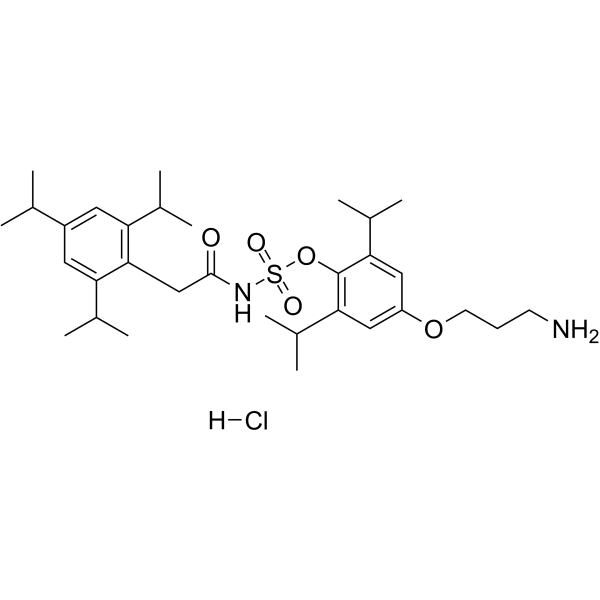 0 ImagesCat. No.: HY-139021ACAS No.: 199984-46-8ACAT-IN-4 hydrochloride (Example 208) is an acyl-Coenzyme A:cholesterol acyltransferase (ACAT) inhibitor. ACAT-IN-4 hydrochloride inhibits NF-κB mediated transcription.
-
Oleyl anilide
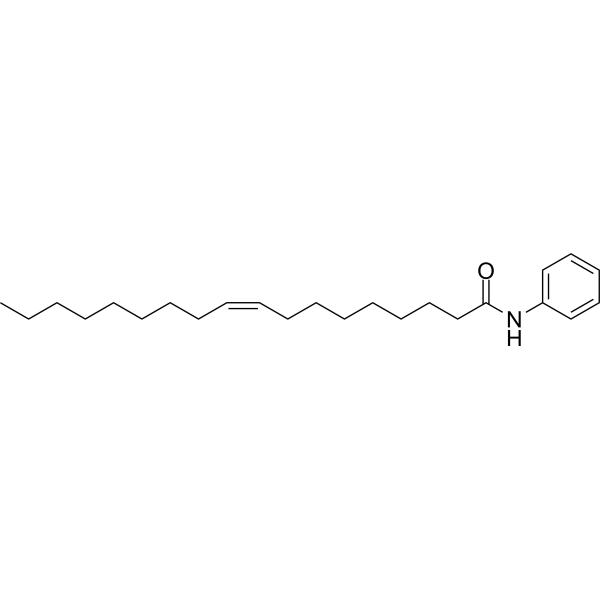 0 ImagesOleyl anilide (Oleic acid anilide) is a toxic agent found in some stocks of toxic oil, which is associated with toxic oil syndrome (TOS). Oleyl anilide is an inhibitor of acyl-coenzyme A:cholesterol acyltransferase (ACAT) (IC50: 26 µM).
-
9''-Methyl lithospermic acid
 0 ImagesCat. No.: HY-N20677CAS No.: 1151683-53-29''-Methyl lithospermic acid is a serine palmitoyltransferase (SPT) activator. 9''-Methyl lithospermic acid increases the levels of SPT1 and SPT2 in human keratinocytes. 9''-Methyl lithospermic acid maintains epidermal permeability barrier function by promoting SPT expression.
-
Ilexoside XLVIII
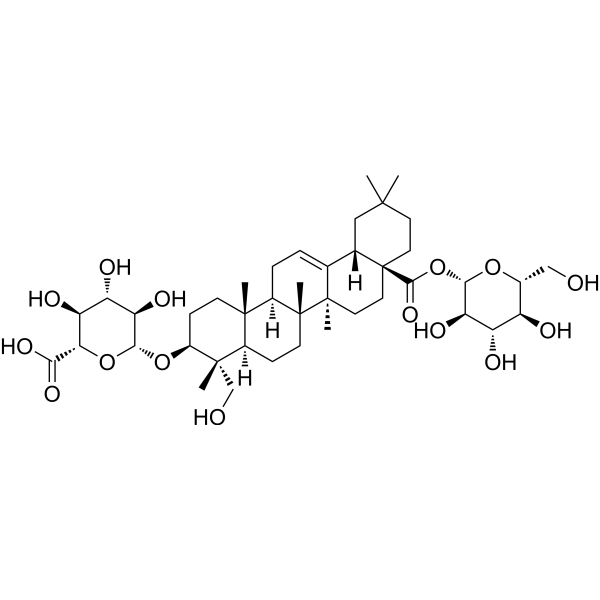 0 ImagesCat. No.: HY-N9524CAS No.: 129095-76-7Ilexoside XLVIII is an acyl CoA cholesteryl acyl transferase (ACAT) inhibitor. Ilexoside XLVIII is a triterpene saponin isolated from an aqueous extract of the leaves of Ilex kudincha.
-
Amidepsine D
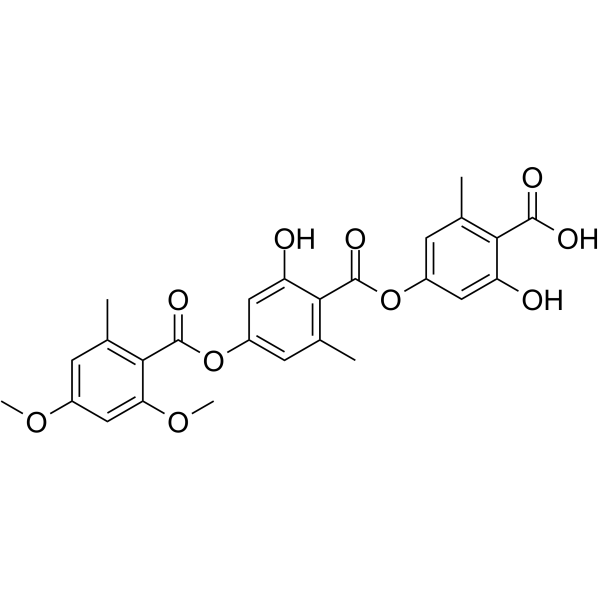 0 ImagesCat. No.: HY-129295CAS No.: 79786-34-8Amidepsine D is a fungal metabolite isolated from the culture broth of Humicola sp. FO-2942 that inhibits Diacylglycerol acyltransferases (DGAT) activity.
-
Lecimibide
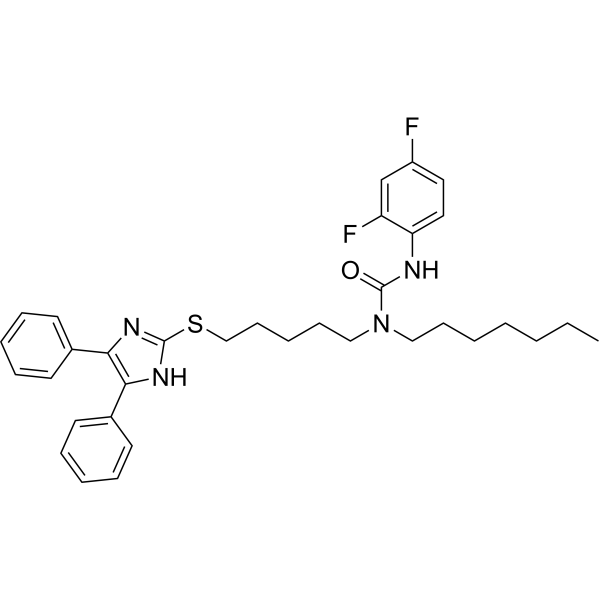 0 ImagesCat. No.: HY-16281CAS No.: 130804-35-2Synonyms: DuP 128Lecimibide (DuP 128) is a potent and specific acyl-CoA:cholesterol acyltransferase (ACAT) inhibitor for antihyperlipidemia research.
-
F-1394
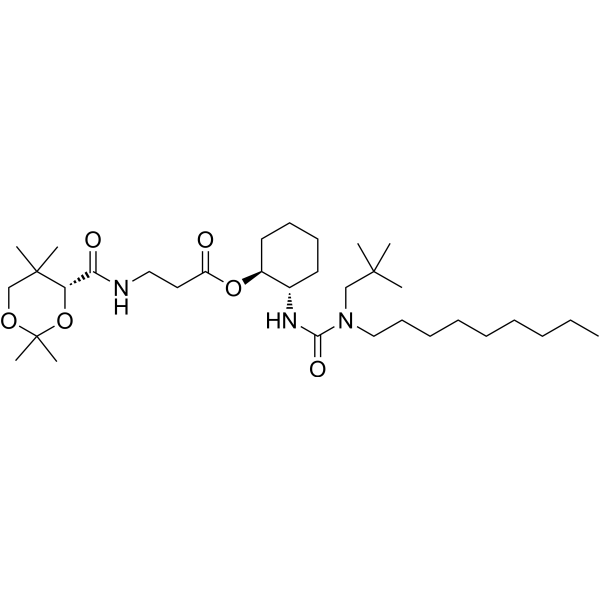 0 ImagesCat. No.: HY-106902CAS No.: 162490-89-3F-1394 is an orally active acyl-CoA:cholesterol acyltransferase (ACAT) inhibitor that inhibits dietary cholesterol absorption in mice. F-1394 can be used in cardiovascular disease research.
-
Enniatin B-13C33
 0 ImagesCat. No.: HY-N3806SEnniatin B-13C33 is the 13C-labeled Enniatin B (HY-N3806). Enniatin B is a Fusarium mycotoxin. Enniatin B inhibits acyl-CoA: cholesterol acyltransferase (ACAT) activity with an IC50 of 113 μM in an enzyme assay using rat liver microsomes. Enniatins B decreases the activation of ERK (p44/p42).
-
BAY 74-4113
 0 ImagesCat. No.: HY-16088CAS No.: 791593-56-1BAY 74-4113 is a DGAT1 inhibitor (IC50: 72 nM). BAY 74-4113 can be used in obesity research.
-
(E)-Hyzetimibe
 0 ImagesCat. No.: HY-107176CAS No.: 1266548-75-7Synonyms: (E)-HS-25(E)-Hyzetimibe ((E)-HS-25) (Compound I-1Z) is the trans isomer of Hyzetimibe (HY-107176A), a cholesterol-lowering agent. (E)-Hyzetimibe has cholesterol acyltransferase (ACTA) inhibitory activity, but its cholesterol-lowering effect is relatively weak. (E)-Hyzetimibe can inhibit the entry of hepatitis C virus (HCV) into host cells, and it has a synergistic effect when used in combination with interferon-α. (E)-Hyzetimibe can be used for the study of HCV infection.
-
ACAT-IN-9
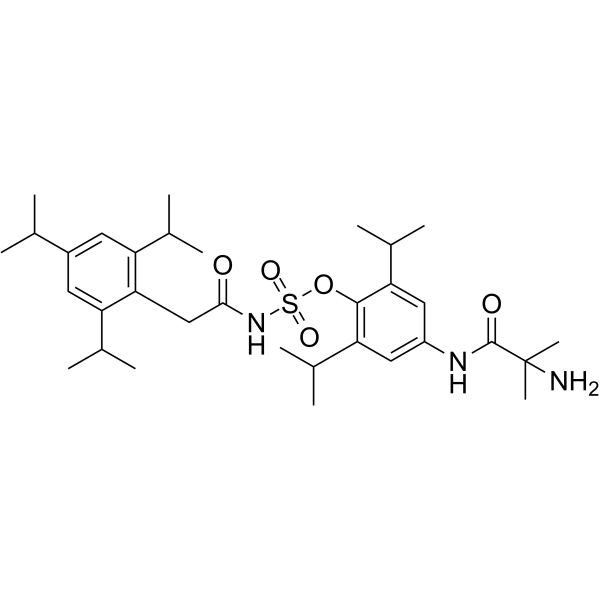 0 ImagesCat. No.: HY-139026CAS No.: 199984-40-2ACAT-IN-9 is an acyl-Coenzyme A:cholesterol acyltransferase (ACAT) inhibitor extracted from patent EP1236468A1, example 207. ACAT-IN-9 inhibits NF-κB mediated transcription.
-
ACAT-IN-4
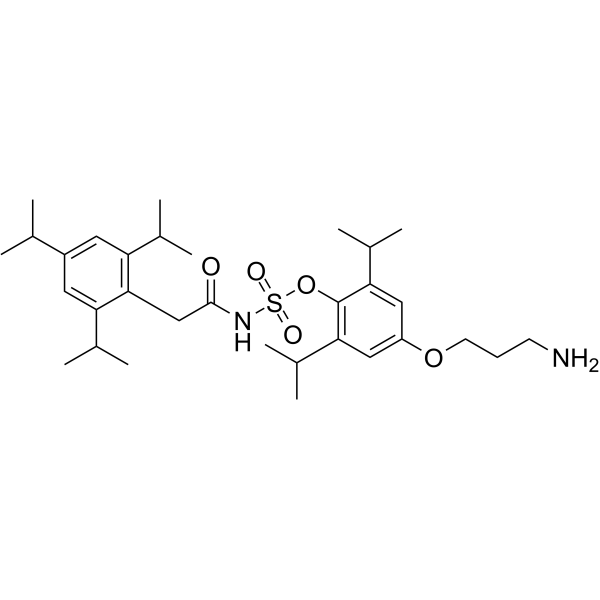 0 ImagesCat. No.: HY-139021CAS No.: 454203-56-6ACAT-IN-4 (Example 208) is an acyl-Coenzyme A:cholesterol acyltransferase (ACAT) inhibitor. ACAT-IN-4 inhibits NF-κB mediated transcription.
-
1-Methyl-2-[(4Z,7Z)-4,7-tridecadienyl]-4(1H)-quinolone
![1-Methyl-2-[(4Z,7Z)-4,7-tridecadienyl]-4(1H)-quinolone](https://file.medchemexpress.com/product_pic/hy-n9530.gif "Click to View 1-Methyl-2-[(4Z,7Z)-4,7-tridecadienyl]-4(1H)-quinolone Product Detail") 0 ImagesCat. No.: HY-N9530CAS No.: 120693-53-01-Methyl-2-[(4Z,7Z)-4,7-tridecadienyl]-4(1H)-quinolone, a quinolone alkaloid, is a diacylglycerol acyltransferase inhibitor and angiotensin II receptor blocker, with IC50s of 20.1 μM and 34.1 μM, respectively. 1-Methyl-2-[(4Z,7Z)-4,7-tridecadienyl]-4(1H)-quinolone shows potent anti-Helicobacter pylori activity with the MIC of 10 μg/mL.
0 ImagesCat. No.: HY-N9530CAS No.: 120693-53-01-Methyl-2-[(4Z,7Z)-4,7-tridecadienyl]-4(1H)-quinolone, a quinolone alkaloid, is a diacylglycerol acyltransferase inhibitor and angiotensin II receptor blocker, with IC50s of 20.1 μM and 34.1 μM, respectively. 1-Methyl-2-[(4Z,7Z)-4,7-tridecadienyl]-4(1H)-quinolone shows potent anti-Helicobacter pylori activity with the MIC of 10 μg/mL.
-
ACAT-IN-10 dihydrochloride
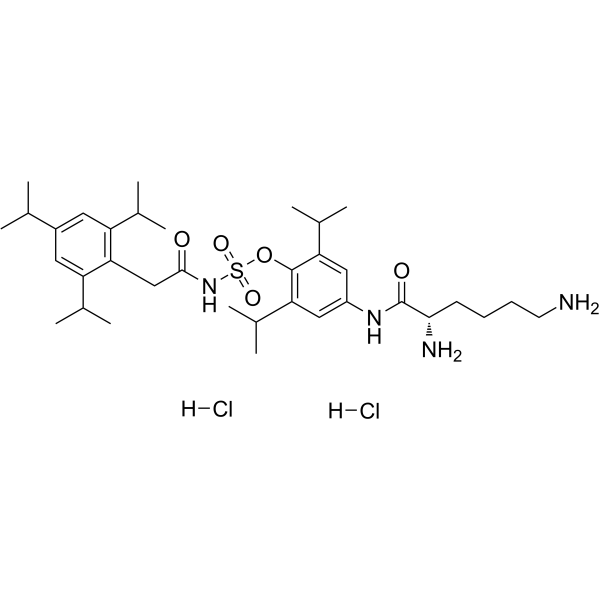 0 ImagesCat. No.: HY-139027ACAS No.: 199983-77-2ACAT-IN-10 dihydrochloride is an acyl-Coenzyme A:cholesterol acyltransferase (ACAT) inhibitor extracted from patent EP1236468A1, example 197. ACAT-IN-10 dihydrochloride weakly inhibits NF-κB mediated transcription.
-
CL-283796
 0 ImagesCat. No.: HY-19251CAS No.: 107376-72-7CL-283796 is a potent and orally active acyl-CoA:cholesterol acyltransferase (ACAT) inhibitor. CL-283796 reduces low-density lipoprotein (LDL) cholesterol without affecting cholesterol absorption in African green monkeys. CL-283796 can be used for hypercholesterolemia research.
-
Phenylpyropene C
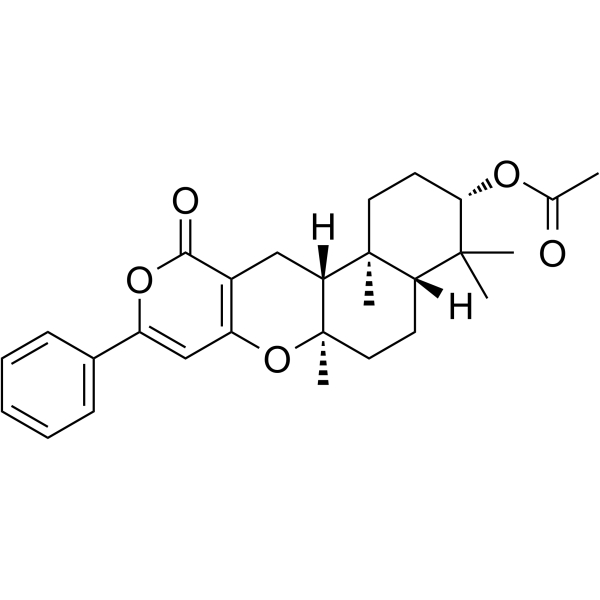 0 ImagesCat. No.: HY-115734CAS No.: 419532-92-6Synonyms: S14-95Phenylpyropene C (S14-95), a JAK/STAT pathway inhibitor, can inhibit IFN-γ mediated expression of the reporter gene (IC50=5.4~10.8 μM). Phenylpyropene C also is an inhibitor of acyl-CoA, with an IC50 of 16.0 μM.
-
Enniatin A-13C36
 0 ImagesCat. No.: HY-N6702SEnniatin A-13C36 is the 13C-labeled Enniatin A (HY-N6702). Enniatin A is a Fusarium mycotoxin. Enniatin A inhibits acyl-CoA: cholesterol acyltransferase (ACAT) activity with an IC50 of 22 μM in an enzyme assay using rat liver microsomes.
-
Bay-02752
 0 ImagesCat. No.: HY-123666CAS No.: 78991-74-9Synonyms: Bay o 2752Bay-02752 (Bay o 2752) is a lipid-lowering agent. Bay-02752 inhibits acyl-CoA activity in liver microsomes (IC50 = 0.95 μg/mL). Bay-02752 inhibits intestinal cholesterol absorption in rats. Bay-02752 inhibits gallstone formation in hamsters.




