



Endogenous Metabolite
Endogenous metabolites refer to the collective set of small-molecule chemical substances present within organelles, cells, organs, biological fluids, or entire organisms; their molecular weights are typically less than 1500 Da. These endogenous metabolites—including lipids, amino acids, short peptides, nucleic acids, carbohydrates, alcohols, and organic acids—not only participate in signal transduction governing genomic function but also receive upstream signals from the environment, thereby bridging the interrelationships among genotype, environment, and phenotype.
Based on their biological functions, microbial endogenous metabolites can be broadly classified into two categories: primary metabolites and secondary metabolites. Primary metabolites are the core molecules essential for supporting microbial growth and proliferation; they serve to provide energy to the microbes or act as precursors and cofactors for the synthesis of biological macromolecules. In contrast, microbial secondary metabolites are a class of low-molecular-weight products that are not strictly essential for microbial growth. Nevertheless, microbial secondary metabolites include numerous substances—such as antibiotics, anti-tumor agents, and cholesterol-lowering agents—that are of critical importance to human health[1][2][3]. Furthermore, the metabolome of a biological organism is influenced by a variety of endogenous factors, including age, sex, body composition, genetic background, and underlying pathological states. The small-molecule metabolites within an organism are diverse and highly distinct; their levels are typically subject to the synergistic regulation of a vast array of enzymes and transport proteins, undergoing processes of synthesis, transformation, degradation, and compartmentalized distribution. Metabolomics research based on endogenous metabolites has been widely applied in the fields of metabolic disorders, neurodegenerative diseases, cancer, cardiovascular diseases, and infectious diseases, where these metabolites hold potential utility as biomarkers or therapeutic targets[1][2][3].
References:
- [1]. Seyedsayamdost MR. Toward a global picture of bacterial secondary metabolism. J Ind Microbiol Biotechnol. 2019 Mar;46(3-4):301-311. [Content Brief]
- [2]. Ruiz B, et al. Production of microbial secondary metabolites: regulation by the carbon source. Crit Rev Microbiol. 2010 May;36(2):146-67. [Content Brief]
- [3]. Wishart DS. Metabolomics for Investigating Physiological and Pathophysiological Processes. Physiol Rev. 2019 Oct 1;99(4):1819-1875. [Content Brief]
Endogenous Metabolite Isoform Specific Products
All Product Categories
-
Endogenous Metabolite Related Products (8353)
Related Products (8353)

-
Antibodies (477)
-
Endogenous Metabolite Isoform Comparison
-
N-Acetyl-D-glucosamine-13C,15N
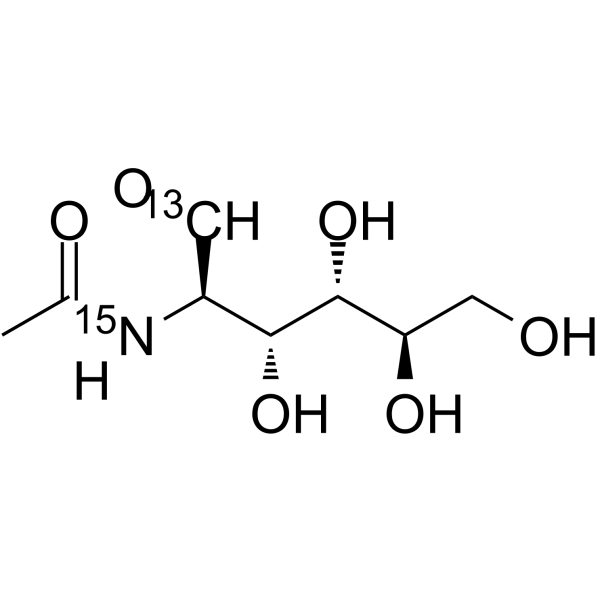 0 ImagesCat. No.: HY-A0132S8CAS No.: 478529-40-7Synonyms: N-Acetyl-2-amino-2-deoxy-D-glucose-13C,15NN-Acetyl-D-glucosamine-13C,15N is the 13C and 15N labeled N-Acetyl-D-glucosamine. N-Acetyl-D-Glucosamine (N-Acetyl-2-amino-2-deoxy-D-glucose) is a monosaccharide derivative of gluc.
-
Nudifloramide-13C,d3
 0 ImagesCat. No.: HY-113432S2Synonyms: 2PY-13C,d3Nudifloramide-13C,d3 (2PY-13C,d3) is the 13C- and deuterium labeled Nudifloramide (HY-113432). Nudifloramide (2PY) is one of the end products of nicotinamide-adenine dinucleotide (NAD) degradation. Nudifloramide significantly inhibits poly(ADP-ribose) polymerase (PARP-1) activity in vitro.
-
Acetaldophosphamide
 0 ImagesCat. No.: HY-127027CAS No.: 113341-60-9Acetaldophosphamide is a novel stable aldophosphamide analogue. Acetaldophosphamide has potential for cancer research.
-
Hydrocinnamic acid (Standard)
 0 ImagesSynonyms: 3-Phenylpropionic acid (Standard); 3-Phenylpropanoic acid (Standard); 3-Phenyl-n-propionic acid (Standard)Hydrocinnamic acid (Standard) is the analytical standard of Hydrocinnamic acid. This product is intended for research and analytical applications. Hydrocinnamic acid is the major rhizospheric compound with known growth regulatory activities.
-
2-(2-Methylbenzamido)acetic acid (Standard)
 0 Images2-(2-Methylbenzamido)acetic acid is a metabolite detected in urine.
-
Afalanine (Standard)
 0 ImagesAfalanine (Standard) is the analytical standard of Afalanine. This product is intended for research and analytical applications. Afalanine (N-Acetyl-DL-phenylalanine) is an endogenous metabolite of an endophytic fungus with antidepressant activity. Afalanine can be used in combination with antibiotics to prevent renal damage.
-
S-(2-Carboxypropyl)-L-cysteine (Standard)
 0 ImagesCat. No.: HY-W251393RCAS No.: 6852-42-2Synonyms: β-Isobuteine (Standard)S-(2-Carboxypropyl)-L-cysteine (β-Isobuteine) (Standard) is the analytical standard of S-(2-Carboxypropyl)-L-cysteine (HY-W251393). This product is intended for research and analytical applications. S-(2-Carboxypropyl)-L-cysteine is a sulfur-containing amino acid derivative. S-(2-Carboxypropyl)-L-cysteine is excreted in urine within 24 hours after acute ingestion of black garlic by humans.
-
5-Methoxy-5-oxopentanoic acid (Standard)
 0 Images5-Methoxy-5-oxopentanoic acid is an endogenous metabolite.
-
Dihydrosamidin
 0 ImagesDihydrosamidin is a coumarin component isolated from the fruits of ammi visnaga. Dihydrosamidin promotes neuroplasticity, modulates glycolysis and oxidative phosphorylation and enhances antioxidant defences. Dihydrosamidin inhibits triacylglycerol accumulation in 3T3-L1 preadipocytes. Dihydrosamidin can be used for neuroprotective, anti-obesity study.
-
1,2-Dipalmitoyl-sn-glycerol (Standard)
 0 ImagesCat. No.: HY-W010736RCAS No.: 30334-71-51,2-Dipalmitoyl-sn-glycerol is an endogenous metabolite.
-
Sodium 3-methyl-2-oxobutanoate-13C2,d
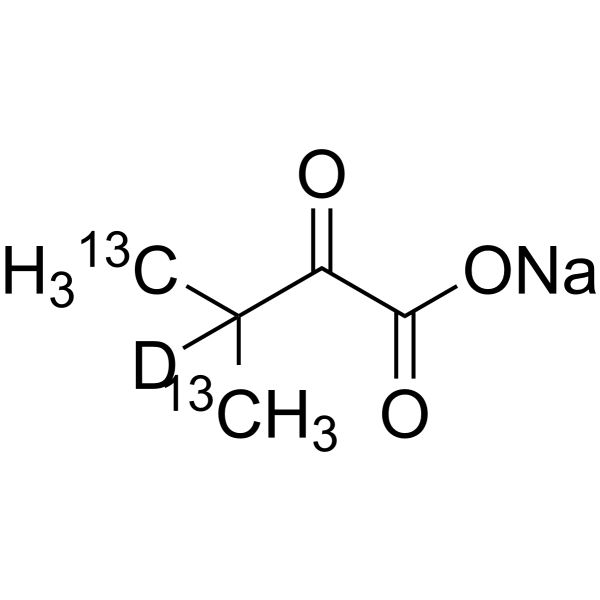 0 ImagesSodium 3-methyl-2-oxobutanoate-13C2,d is the deuterium and 13C labeled Sodium 3-methyl-2-oxobutanoate.
-
5,9,14,18,23,27,32,36-Octabutoxy-2,3-naphthalocyanine
 0 ImagesCat. No.: HY-W585442CAS No.: 105528-25-45,9,14,18,23,27,32,36-Octabutoxy-2,3-naphthalocyanine is a photosensitive material with excellent light absorption and electron conduction activity. 5,9,14,18,23,27,32,36-Octabutoxy-2,3-naphthalocyanine is widely used in optoelectronic devices and is considered to be an effective photocatalyst. 5,9,14,18,23,27,32,36-Octabutoxy-2,3-naphthalocyanine can be used to improve the performance of solar cells and increase the photoelectric conversion efficiency. 5,9,14,18,23,27,32,36-Octabutoxy-2,3-naphthalocyanine also has potential anti-tumor activity and can inhibit the proliferation of certain cancer cells. 5,9,14,18,23,27,32,36-Octabutoxy-2,3-naphthalocyanine exhibits excellent fluorescence properties in medical imaging, which helps to improve the clarity and accuracy of imaging. 5,9,14,18,23,27,32,36-Octabutoxy-2,3-naphthalocyanine is studied as a component of a novel compound delivery system to improve the targeting and release effect of the compound.

-
Disperse Red 1 acrylate
 0 ImagesCat. No.: HY-W927157CAS No.: 13695-46-0Disperse Red 1 acrylate serves as the primary component in the NLO material.
-
Glycoursodeoxycholic acid 3-sulfate
 0 ImagesCat. No.: HY-48813CAS No.: 133429-88-6Glycoursodeoxycholic acid 3-sulfate is a glycine-conjugated sulfated bile acid 3-sulfate, which is produced by SULT2A1-mediated sulfation of glycoursodeoxycholic acid (HY-N1424) in the liver. Glycoursodeoxycholic acid 3-sulfate attenuates the anti-inflammatory effect of glycoursodeoxycholic acid and impairs the inhibitory effect on the IL-17 and NF-κB signaling pathways. Glycoursodeoxycholic acid 3-sulfate shows a significant correlation with aortic flow velocity and BNP in patients with aortic stenosis. Glycoursodeoxycholic acid 3-sulfate is mainly used in related studies such as quantitative analysis, quality control and biochemical experiments; it often serves as a reagent for metabolomics analysis and can also be applied to research related to aortic stenosis.
-
Iodoacetic anhydride
 0 ImagesCat. No.: HY-W686605CAS No.: 54907-61-8Iodoacetic anhydride is a bioactive compound with enzyme inhibitory properties. Iodoacetic anhydride can participate in protein modification and is widely used in biochemical research and compound development. Iodoacetic anhydride is also used to synthesize various bioactive molecules, showing its diversity as a chemical reagent.
-
trans-Coniferyl aldehyde
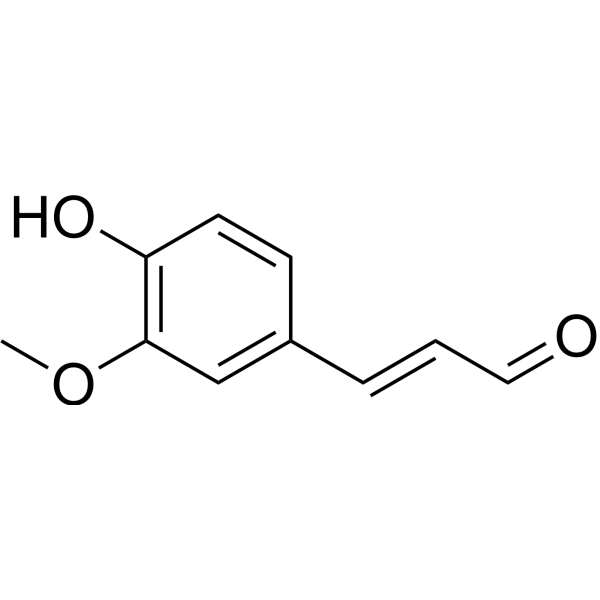 0 ImagesCat. No.: HY-N3616CAS No.: 20649-42-7trans-Coniferyl aldehyde (compound 2) is a natural compound isolated from the buds of clove (Syzygium aromaticum).trans-Coniferyl aldehyde suppresses 63% of the UV mutable gene expression at 1.20 μM, and with an ID50 value of 0.76 μM,and has the antimutagenic activities against furylfuramide, Trp-P-1, and activated Trp-P-1.
-
8-Hydroxy loxapine
 0 ImagesCat. No.: HY-127025CAS No.: 61443-77-4
-
(±)-Geosmin
 0 ImagesCat. No.: HY-138933CAS No.: 16423-19-1(±)-Geosmin is a natural organic compound with biological activity that causes earthy aroma. (±)-Geosmin plays an important role in microbial metabolism and is commonly used as a fragrance in food and air. (±)-Geosmin has also been studied for detecting soil and water pollution.




