1. Signaling Pathways
  2. Apoptosis
  3. Ferroptosis

Ferroptosis

Ferroptosis

Ferroptosis is a non-apoptotic form of regulated cell death. It is distinct from other regulated cell death phenotypes, such as apoptosis and necroptosis. Ferroptosis is characterized by extensive lipid peroxidation, which can be suppressed by iron chelators or lipophilic antioxidants. Mechanistically, Ferroptosis inducers are divided into two classes: (1) inhibitors of cystine import via system xc (e.g., Erastin), which subsequently causes depletion of glutathione (GSH), and (2) covalent inhibitors (e.g., (1S, 3R)-RSL3) of glutathione peroxidase 4 (GPX4). Since GPX4 reduces lipid hydroperoxides using GSH as a co-substrate, both compound classes ultimately result in loss of GPX4 activity, followed by elevated levels of lipid reactive oxygen species (ROS) and consequent cell death.

Ferroptosis is an iron- and ROS-dependent form of regulated cell death (RCD). Misregulated Ferroptosis has been implicated in multiple physiological and pathological processes, including cancer cell death, neurotoxicity, neurodegenerative diseases, acute renal failure, drug-induced hepatotoxicity, hepatic and heart ischemia/reperfusion injury, and T-cell immunity.

Cat. No. Product Name Effect Purity Chemical Structure
  • HY-181665
    Ferroptosis-IN-23
    Inhibitor
    Ferroptosis-IN-23 is an inhibitor of ferroptosis. Ferroptosis-IN-23 exerts a synergistic effect by simultaneously activating Steap4 and glutathione peroxidase 4 (GPX4), thereby maintaining iron metabolism homeostasis. Ferroptosis-IN-23 reverses neuronal ferroptosis and inhibits lipid ROS accumulation in cells. Ferroptosis-IN-23 inhibits ferroptosis in zebrafish, alleviates neuronal apoptosis, ROS accumulation, and dopaminergic neuron damage in a zebrafish model of Parkinson's disease. Ferroptosis-IN-23 can be used for research on Parkinson's disease.
    Ferroptosis-IN-23
  • HY-N0660R
    Jujuboside B (Standard)
    Inducer
    Jujuboside B (Standard) is the analytical standard of Jujuboside B. This product is intended for research and analytical applications. Jujuboside B is a bioactive saponin component isolated from Ziziphi Spinosae Semen (sour jujube seed), with oral efficacy and blood-brain barrier permeability. Jujuboside B induces acute leukemia cell death and drives necroptosis apoptosis by activating the RIPK1/RIPK3/MLKL pathway. Jujuboside B upregulates the expression of NOXA, PARP and caspase-3, activates AMPK, inhibits the proliferation of breast cancer cells, and induces cell apoptosis and autophagy. Jujuboside B inhibits angiogenesis and tumor growth by blocking the VEGFR-2 signaling pathway. Jujuboside B alleviates liver injury in mice by regulating the Nrf2-STING signaling pathway. Jujuboside B alleviates liver injury by regulating anti-inflammatory responses and downregulating the expression of 11β-HSD2. Jujuboside B induces ferroptosis and overcomes radioresistance in non-small cell lung cancer via the PPARγ-ATF3-Gpx4 signaling pathway. Jujuboside B exerts inhibitory effects on platelet aggregation. Jujuboside B inhibits febrile seizures by suppressing the activity of AMPA receptors. Jujuboside B reverses chronic unpredictable mild stress-promoted tumor progression by blocking the PI3K/Akt and MAPK/ERK pathways and dephosphorylating CREB signaling. Jujuboside B is applicable to related studies on acute leukemia, breast cancer, PM2.5-induced lung injury, hepatotoxicity, liver injury, colorectal cancer, non-small cell lung cancer, thromboembolic diseases, cardiovascular diseases associated with high platelet aggregation, febrile seizures, and depressive-like phenotypes.
    Jujuboside B (Standard)
  • HY-179531
    DHODH-IN-33
    Inducer
    DHODH-IN-33 is a selective dihydroorotate dehydrogenase (DHODH) inhibitor with potent activity against A549 (IC50 = 5.22 μM) and 5637 (IC50 = 3.03 μM). DHODH-IN-33 induces autophagy-dependent ferroptosis (mitochondrial dysfunction, lipid peroxidation, and ROS accumulation) with no notable toxicity in vivo. DHODH-IN-33 exerts anti-cancer effect by promoting the autophagy-dependent degradation of DHODH. DHODH-IN-33 can be used for non-small cell lung cancer and bladder cancer.
    DHODH-IN-33
  • HY-14608AR
    L-Glutamic acid monosodium salt (Standard)
    Activator
    L-Glutamic acid (monosodium salt) (Standard) is the analytical standard of L-Glutamic acid (monosodium salt). This product is intended for research and analytical applications. L-Glutamic acid monosodium salt is an excitatory amino acid neurotransmitter that acts as an agonist for all subtypes of glutamate receptors (metabolic rhodophylline, NMDA, and AMPA). L-Glutamic acid monosodium salt has an agonist effect on the release of DA from dopaminergic nerve endings. L-Glutamic acid monosodium salt can be used in the study of neurological diseases.
    L-Glutamic acid monosodium salt (Standard)
  • HY-N3097R
    Pellitorine (Standard)
    Inhibitor
    Pellitorine (Standard) is the analytical standard of Pellitorine (HY-N3097). Pellitorine is a bioactive natural amide compound. Pellitorine can competitively antagonize the activation of TRPV1 by Capsaicin (HY-10448), thereby reducing pain signal transmission. Pellitorine improves cognitive dysfunction by upregulating the BDNF-ERK1/2-CREB and Nrf2-HO-1 pathways. Pellitorine exerts anti-inflammatory and anti-sepsis effects by inhibiting the release of high mobility group protein B1 (HMGB1) and the expression of RAGE/TLR4. Pellitorine exerts its antithrombotic effect by prolonging the clotting time, inhibiting the activity of clotting factors and thrombin. Pellitorine inhibits lipid peroxidation and resists ferroptosis by upregulating GPX4 and DHODH. Pellitorine kills Aedes aegypti mosquito larvae by inhibiting V-type H⁺-ATPase and aquaporin 4 (AaAQP4). Pellitorine exhibits anti-cancer activity (e.g., leukemia and breast cancer) and has inhibitory effects on certain bacteria.
    Pellitorine (Standard)
  • HY-162944
    NA-Ir
    Inducer
    NA-Ir is a Ferroptosis inducer. NA-Ir targets mitochondrial DNA (mtDNA) and activates the cGAS-STING pathway to induce ferritinophagy (Autophagy), while also generating reactive oxygen species (ROS) through photodynamic therapy (PDT), depleting glutathione (GSH), and downregulating glutathione peroxidase 4 (GPX4), thereby triggering lipid peroxidation and Ferroptosis. NA-Ir exhibits higher anticancer activity under light exposure and selectively inhibits cancer cells with high H2S levels.
    NA-Ir
  • HY-17355AR
    Dexpramipexole dihydrochloride (Standard)
    Inhibitor
    Dexpramipexole ((R)-Pramipexole) dihydrochloride (Standard) is the analytical standard of Dexpramipexole (dihydrochloride). This product is intended for research and analytical applications. Dexpramipexole dihydrochloride is an orally active, blood-brain barrier permeable mitochondrial protective agent. Dexpramipexole dihydrochloride upregulates the expression of Parkin, PINK1, GPX4 and FSP1; binds to mitochondrial F1/Fo-ATP synthase; blocks the Nav1.8 sodium channel; and inhibits the activation of the NLRP3 inflammasome. Dexpramipexole dihydrochloride induces mitophagy, inhibits ferroptosis, pyroptosis, apoptosis, neuroinflammation and eosinophilopoiesis; maintains mitochondrial function and redox homeostasis; reduces reactive oxygen species production; and decreases myocardial infarct size. Dexpramipexole dihydrochloride is applicable to studies on eosinophilic asthma, myocardial ischemia/reperfusion injury, sepsis-associated encephalopathy, analgesia, and more.
    Dexpramipexole dihydrochloride (Standard)
  • HY-186145
    WMK-1
    Inducer
    WMK-1 is a 1,2,4,5-tetraoxane derivative and ferroptosis inducer, with significantly higher cytotoxicity against cancer cells than non-cancerous cells. WMK-1 triggers ferroptosis in cancer cells and cancer stem cells. WMK-1 can be used for the research of cancer.
    WMK-1
  • HY-161930
    PROTAC GPX4 degrader-3
    Inducer
    PROTAC GPX4 degrader-3 is a potent PROTAC GPX4 degrader with a DC50 (24h) of 0.019 μM and an IC50 of 0.024 μM in HT1080 cell.
    PROTAC GPX4 degrader-3
  • HY-100489S
    TBHQ-d12
    TBHQ-d12 (tert-Butylhydroquinone-d12) is the deuterium labeled TBHQ (HY-100489). TBHQ (tert-Butylhydroquinone) is a widely used Nrf2 activator, protects against Doxorubicin (DOX)-induced cardiotoxicity through activation of Nrf2. TBHQ (tert-Butylhydroquinone) is also an ERK activator; rescues Dehydrocorydaline (DHC)-induced cell proliferation inhibitionin melanoma[2].
    TBHQ-d<sub>12</sub>
  • HY-178425S
    Butylhydroxyanisole-d24
    Butylhydroxyanisole-d24 (Butylated hydroxyanisole-d24) is the deuterium labeled Butylhydroxyanisole (HY-B1066). Butylhydroxyanisole (Butylated hydroxyanisole) is an antioxidant used as a food additive preservative. Butylhydroxyanisole mediates liver toxicity, retardation in reproductive organ development and learning, and sleep deficit. Butylhydroxyanisole exerts neurotoxic effects and leads to disruption of the brain and nerve development. Butylhydroxyanisole is a ferroptosis inducer.
    Butylhydroxyanisole-d<sub>24</sub>
  • HY-151429
    Antitumor agent-77
    Inducer
    Antitumor agent-77 is an antitumor agent, inhibits cancer cells growth and migration. Antitumor agent-77 triggers ferroptosis by inhibiting GPx-4 and elevating COX2. Antitumor agent-77 also activates intrinsic apoptotic pathway (Bax-Bcl-2-caspase-3) and hinders Epithelial-mesenchymal transition (EMT) process of cancer cells.
    Antitumor agent-77
  • HY-183546
    TDP1-IN-6
    Inducer
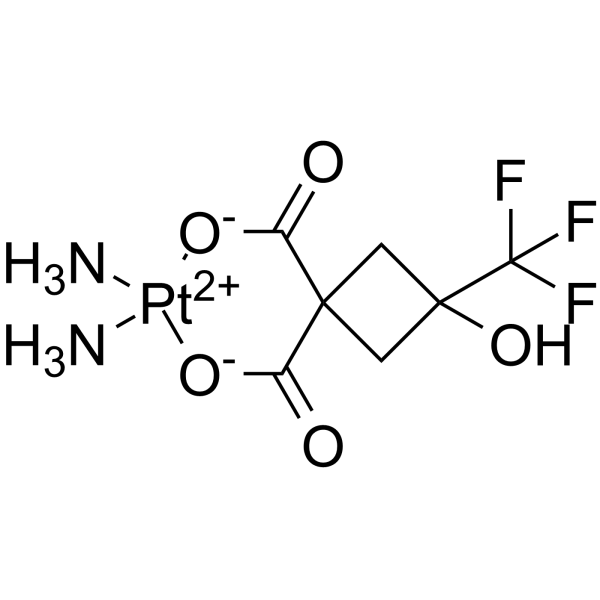
    TDP1-IN-6 is a TDP1 inhibitor with an IC50 of 1.52 μM. Combination of TDP1-IN-6 with Topotecan (HY-13768) enhances DNA damage, induces Apoptosis, triggers S-phase cell cycle arrest, and promotes Ferroptosis. TDP1-IN-6 can be used for the research of cervical cancer.
    TDP1-IN-6
  • HY-112005G
    DOPE (GMP)
    Inhibitor
    DOPE GMP is DOPE (HY-112005) produced by using GMP guidelines. GMP small molecules works appropriately as an auxiliary reagent for cell therapy manufacture. DOPE (Dioleoylphosphatidylethanolamine; 1,2-Dioleoyl-sn-glycero-3-phosphoethanolamine) is an orally active inhibitor of ferroptosis with anti-inflammatory and intestinal barrier maintenance activities. DOPE regulates the expression of ACSL4, SLC7A11 and GPX4 to restore the redox system balance, thereby reducing the levels of lipid peroxides, iron ions and intestinal inflammatory factors (IL-1β and IL-6). DOPE promotes the migration and proliferation of intestinal epithelial cells and increases the level of tight junction proteins; it also destabilizes endosomal membranes, mediates the conjugation of RVG peptides with mesenchymal stem cell-derived exosomes to enhance brain targeting. DOPE can be applied to research related to neonatal necrotizing enterocolitis and Alzheimer's disease.
    DOPE (GMP)
  • HY-N6939R
    Pseudolaric Acid B (Standard)
    Activator
    Pseudolaric Acid B (Standard) is the analytical standard of Pseudolaric Acid B. This product is intended for research and analytical applications. Pseudolaric Acid B is an orally active diterpene acid. Pseudolaric Acid B has anti-fungal, anti-fertility, anti-angiogenesis and anticancer activity, and can induce tumor cell apoptosis and autophagy. In addition, Pseudolaric Acid B can inhibit the secretion of hepatitis B virus (HBV) and has immunosuppressive effect, selectively inhibiting the proliferation of T lymphocytes and the production of IL-2.
    Pseudolaric Acid B (Standard)
  • HY-N0353R
    Curdione (Standard)
    Inhibitor
    Curdione (Standard) is the analytical standard of Curdione. This product is intended for research and analytical applications. Curdione ((+)-Curdione) is an orally active sesquiterpenoid. Curdione inhibits platelet aggregation. Curdione induces ferroptosis in colorectal cancer via m6A methylation mediated by METTL14 and YTHDF2. Curdione inhibits ferroptosis in Isoproterenol (HY-B0468)-induced myocardial infarction by regulating the Keap1/Trx1/GPX4 signaling pathway, suppressing oxidative stress (ROS) and apoptosis. Curdione ameliorates Doxorubicin (HY-15142)-induced cardiotoxicity by inhibiting oxidative stress (ROS) and activating the Nrf2/HO-1 pathway. Curdione ameliorates sepsis-induced lung injury by inhibiting platelet-mediated neutrophil extracellular trap formation. Curdione ameliorates Bleomycin (HY-17565A)-induced pulmonary fibrosis by inhibiting TGF-β-induced fibroblast-to-myofibroblast differentiation. Curdione exhibits neuroprotective effects against focal cerebral ischemia-reperfusion injury in rats. Curdione exerts antiproliferative effects against human uterine leiomyosarcoma by targeting IDO1. Curdione protects vascular endothelial cells and atherosclerosis by regulating DNMT1-mediated ERBB4 promoter methylation. Curdione inhibits inducible prostaglandin E2 production (IC50 = 1.1 μM) and cyclooxygenase 2 expression.
    Curdione (Standard)
  • HY-P10132
    PRDX3(103-112), human
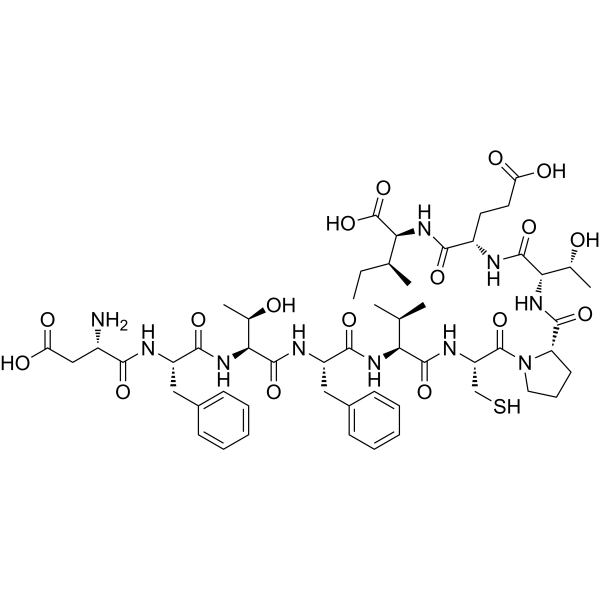
    PRDX3(103-112), human is a marker for ferroptosis. PRDX3 is hyperoxidated by mitochondrial lipid peroxides. PRDX3 inhibits cystine uptake after hyperoxidization.
    PRDX3(103-112), human
  • HY-183353
    Nrf2 activator-25
    Inhibitor
    Nrf2 activator-25 is a Nrf2 activator. Nrf2 activator-25 promotes the dissociation of Nrf2 from Keap1 (with a Kd of 21.3 μM for Keap1), drives Nrf2 nuclear translocation, and increases the production of downstream antioxidant enzymes. Nrf2 activator-25 inhibits apoptosis, ferroptosis and vascular fibrosis, and protects vascular endothelial cells from damage. Nrf2 activator-25 can be used in the research of diabetic vascular diseases.
    Nrf2 activator-25
  • HY-178163
    Zharp1-163
    Inhibitor
    Zharp1-163 is a dual inhibitor of ferroptosis and necroptosis. Zharp1-163 effectively blocks ferroptosis by reducing reactive oxygen species (ROS) levels and inhibits necroptosis by potently and selectively targeting RIPK1 kinase activity (KD = 240 nM; IC50 = 406.1 nM). Zharp1-163 inhibits the cellular activation of RIPK1, RIPK3 and MLKL in response to necroptotic stimulation. Zharp1-163 markedly attenuates TNF-α (HY-P1875)-induced systemic inflammatory syndrome, including the prevention of TNF-α-induced mortality and hypothermia in mice. Zharp1-163 significantly alleviates acute kidney injury associated with both necroptosis and ferroptosis in models induced by Cisplatin (HY-17394) and ischemia-reperfusion. Zharp1-163 can be used for the study of diseases associated with cell death pathways, such as kidney disease.
    Zharp1-163
  • HY-173000
    STAT3-IN-40
    Inducer
    STAT3-IN-40 (Compound 8b) is an anti-cancer agent. STAT3-IN-40 can trigger the immune responses of CD4+ and CD8+ T lymphocytes and induce ferroptosis and apoptosis of tumor cells by inhibiting the expression and phosphorylation of STAT3. STAT3-IN-40 can be used in the research of chemoimmunotherapeutic agents for cancer.
    STAT3-IN-40
Cat. No. Product Name / Synonyms Application Reactivity