



Endogenous Metabolite
Endogenous metabolites refer to the collective set of small-molecule chemical substances present within organelles, cells, organs, biological fluids, or entire organisms; their molecular weights are typically less than 1500 Da. These endogenous metabolites—including lipids, amino acids, short peptides, nucleic acids, carbohydrates, alcohols, and organic acids—not only participate in signal transduction governing genomic function but also receive upstream signals from the environment, thereby bridging the interrelationships among genotype, environment, and phenotype.
Based on their biological functions, microbial endogenous metabolites can be broadly classified into two categories: primary metabolites and secondary metabolites. Primary metabolites are the core molecules essential for supporting microbial growth and proliferation; they serve to provide energy to the microbes or act as precursors and cofactors for the synthesis of biological macromolecules. In contrast, microbial secondary metabolites are a class of low-molecular-weight products that are not strictly essential for microbial growth. Nevertheless, microbial secondary metabolites include numerous substances—such as antibiotics, anti-tumor agents, and cholesterol-lowering agents—that are of critical importance to human health[1][2][3]. Furthermore, the metabolome of a biological organism is influenced by a variety of endogenous factors, including age, sex, body composition, genetic background, and underlying pathological states. The small-molecule metabolites within an organism are diverse and highly distinct; their levels are typically subject to the synergistic regulation of a vast array of enzymes and transport proteins, undergoing processes of synthesis, transformation, degradation, and compartmentalized distribution. Metabolomics research based on endogenous metabolites has been widely applied in the fields of metabolic disorders, neurodegenerative diseases, cancer, cardiovascular diseases, and infectious diseases, where these metabolites hold potential utility as biomarkers or therapeutic targets[1][2][3].
References:
- [1]. Seyedsayamdost MR. Toward a global picture of bacterial secondary metabolism. J Ind Microbiol Biotechnol. 2019 Mar;46(3-4):301-311. [Content Brief]
- [2]. Ruiz B, et al. Production of microbial secondary metabolites: regulation by the carbon source. Crit Rev Microbiol. 2010 May;36(2):146-67. [Content Brief]
- [3]. Wishart DS. Metabolomics for Investigating Physiological and Pathophysiological Processes. Physiol Rev. 2019 Oct 1;99(4):1819-1875. [Content Brief]
Endogenous Metabolite Isoform Specific Products
All Product Categories
-
Endogenous Metabolite Related Products (8420)
Related Products (8420)

-
Antibodies (477)
-
Endogenous Metabolite Isoform Comparison
-
2-Acetyl-3-ethylpyrazine (Standard)
 0 Images2-Acetyl-3-ethylpyrazine (Standard) is the analytical standard of 2-Acetyl-3-ethylpyrazine. This product is intended for research and analytical applications. 2-Acetyl-3-ethylpyrazine is an endogenous metabolite.
-
Amitriptyline pamoate
 0 ImagesCat. No.: HY-W008613ACAS No.: 17086-03-2Amitriptyline pamoate is a common oral anticholinergic. Amitriptyline pamoate has anticholinergic properties. Amitriptyline pamoate can be used to quantify anticholinergic adverse reactions in patients taking amitriptyline and placebo .
-
Lipoprotein Lipase, Bovine
 0 ImagesCat. No.: HY-P2752ALipoprotein lipase, Bovine (EC 3.1.1.34) belongs to the lipase gene family and is a water-soluble enzyme that hydrolyzes triglycerides in lipoproteins (such as those in chylomicrons and very low-density lipoproteins (VLDL)) into two free fatty acid molecules and one monoacylglycerol molecule. Lipoprotein also participates in promoting cellular uptake of chylomicron remnants, cholesterol-rich lipoproteins, and free fatty acids. Lipoprotein requires ApoC-II as a cofactor. Lipoprotein attaches to the luminal surface of capillary endothelial cells via glycosylphosphatidylinositol high-density lipoprotein-binding protein 1 (GPIHBP1) and heparan sulfate proteoglycan.
-
Glycoursodeoxycholic acid-d5
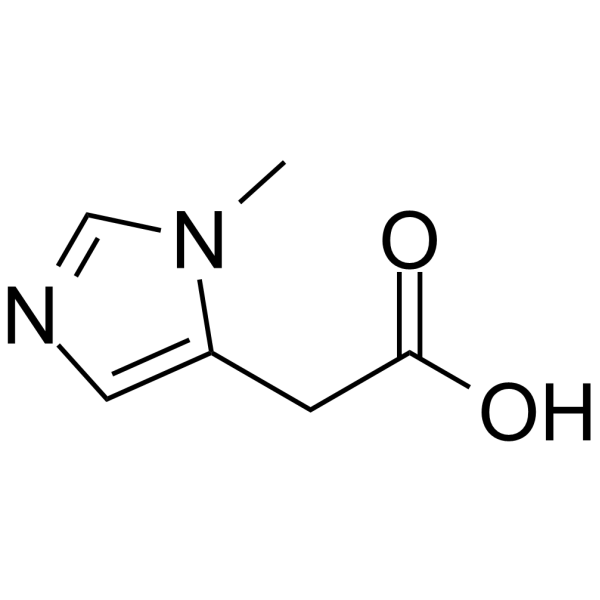
 0 ImagesCat. No.: HY-W653947Synonyms: Ursodeoxycholylglycine-d5Glycoursodeoxycholic acid-d5 (Ursodeoxycholylglycine-d5) is the deuterium labeled Glycoursodeoxycholic acid (HY-N1424). Glycoursodeoxycholic acid, a acyl glycine and a bile acid-glycine conjugate, is a metabolite of ursodeoxycholic acid.
-
(3E,8Z,11Z)-3,8,11-Tetradecatrienyl acetate (Standard)
 0 ImagesCat. No.: HY-W336192RCAS No.: 163041-94-9Flamprop-methyl (Standard) is the analytical standard of Flamprop-methyl. This product is intended for research and analytical applications. Flamprop-methyl is an active compound.
-
Avenanthramide L
 0 ImagesCat. No.: HY-N18069CAS No.: 172549-38-1Avenanthramide L is a phytoalexin that can inhibit the spore germination of Puccinia coronata f. sp. avenae. Avenanthramide L is found in the leaves of inoculated oats, but not in the leaves of healthy oat seedlings, and at a concentration of 200-300 μg/mL. Avenanthramide L inhibits fungal spore germination by up to 50%. Avenanthramide L is absent from the leaves of healthy oat seedlings. Avenanthramide L can be used for the research of oat crown rust.
-
Lipoic acid (GMP)
 0 ImagesSynonyms: (R)-(+)-α-Lipoic acid (GMP); R-(+)-Thioctic acid (GMP)Lipoic acid (GMP) ((R)-(+)-α-Lipoic acid (GMP)) is Lipoic acid (HY-18733) produced by using GMP guidelines. GMP small molecules works appropriately as an auxiliary reagent for cell therapy manufacture. Lipoic acid ((R)-(+)-α-Lipoic acid) is an antioxidant, which is an essential cofactor of mitochondrial enzyme complexes. (R)-(+)-α-Lipoic acid is more effective than racemic Lipoic acid.
-
Lignoceric acid-d9
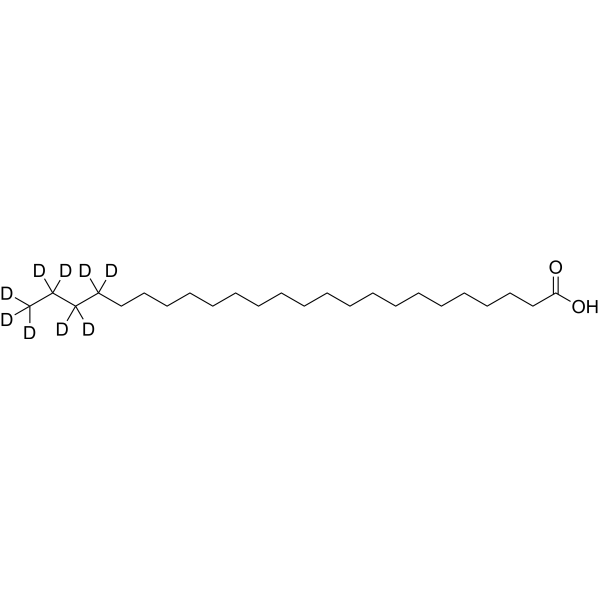 0 ImagesLignoceric acid-d9 is the deuterium labeled Lignoceric acid. Lignoceric acid (Tetracosanoic acid) is a 24-carbon saturated (24:0) fatty acid, which is synthesized in the developing brain. Lignoceric acid is also a by-product of lignin production. Lignoceric acid can be used for Zellweger cerebro‐hepato‐renal syndrome and adrenoleukodystrophy research.
-
1-Arachidoyl-sn-glycero-3-phosphocholine-d4
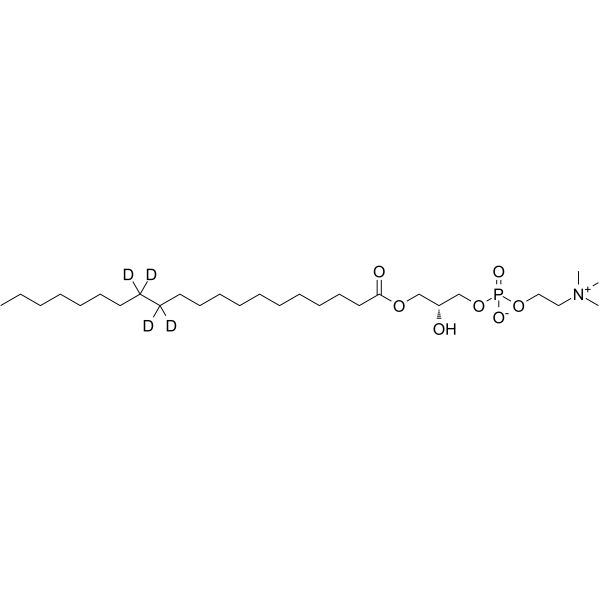 0 ImagesCat. No.: HY-113010S1CAS No.: 2483831-16-71-Arachidoyl-sn-glycero-3-phosphocholine-d4 is the deuterium labeled 1-Arachidoyl-sn-glycero-3-phosphocholine. 1-Arachidoyl-sn-glycero-3-phosphocholine is a lysophospholipid (LyP).
-
Spaglumic acid (Standard)
 0 ImagesCat. No.: HY-100921RCAS No.: 3106-85-2Synonyms: N-Acetylaspartylglutamic acid (Standard)Spaglumic acid (Standard) is the analytical standard of Spaglumic acid. This product is intended for research and analytical applications. Spaglumic acid (N-Acetylaspartylglutamic acid) is a neuropeptide found in millimolar concentrations in brain.
-
Stephacidin B
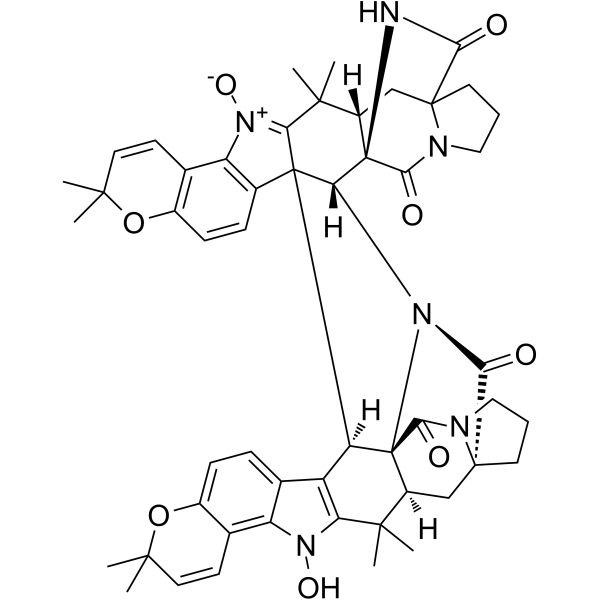 0 ImagesCat. No.: HY-N10265CAS No.: 360765-75-9
-
ML077
 0 ImagesCat. No.: HY-115606CAS No.: 1135304-61-8ML007 is a selective antagonist targeting the neuron-specific potassium-chloride co-transporter 2 (KCC2) with an IC50 for KCC2 is 537 nM, while its inhibitory activity on KCC1 is extremely weak (IC50 > 50 μM). ML077 inhibits the chloride ion excretion function of KCC2, increasing the intracellular chloride ion concentration, thereby enhancing the depolarization mediated by chloride ion channels. ML007 can promote glucose-stimulated insulin secretion (GSIS) without relying on KATP channels. ML007 can be used to study the functions related to pain, epilepsy, and insulin secretion.
-
Etozolin hydrochloride
 0 ImagesEtozolin hydrochloride is a diuretic agent. Etozolin hydrochloride inhibits fluid and electrolyte reabsorption in the loop of Henle. Etozolin hydrochloride can be used in research of congestive heart failure, hypertension and edema.
-
2-(2',3',4'-Trihydroxybutyl)quinoxaline
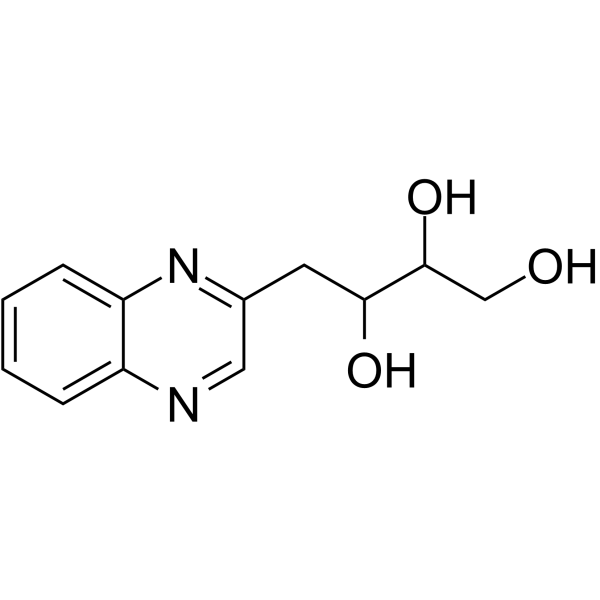 0 ImagesCat. No.: HY-N7427CAS No.: 42015-38-32-(2',3',4'-Trihydroxybutyl)quinoxaline is a food metabolite. 2-(2',3',4'-Trihydroxybutyl)quinoxaline can be formed from homoglucans.
-
D-Mannose-13C-4
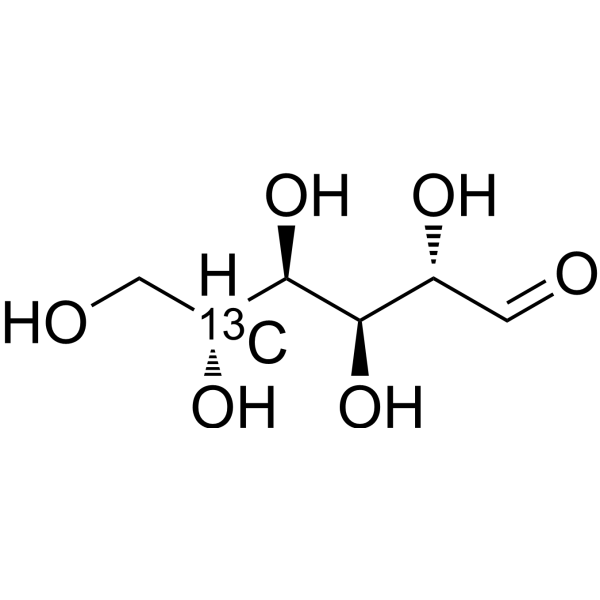 0 ImagesCat. No.: HY-N0379S9D-Mannose-13C-4 is the 13C labeled D-Mannose. D-Mannose is a carbohydrate, which plays an important role in human metabolism, especially in the glycosylationof specific prote.
-
SU9518
 0 ImagesCat. No.: HY-112352CAS No.: 251356-32-8SU9518 is a tyrosine kinase inhibitor with specific activity against PDGFRα. SU9518 can inhibit the development of proliferative vitreoretinopathy (PVR) in fibroblast and Muller cell rabbit models. SU9518 showed effective inhibitory effects in these models without toxic effects. Therefore, SU9518 has the potential to be used to inhibit PVR in humans and other proliferative eye diseases involving fibrosis and gliosis.
-
Asperaculane B
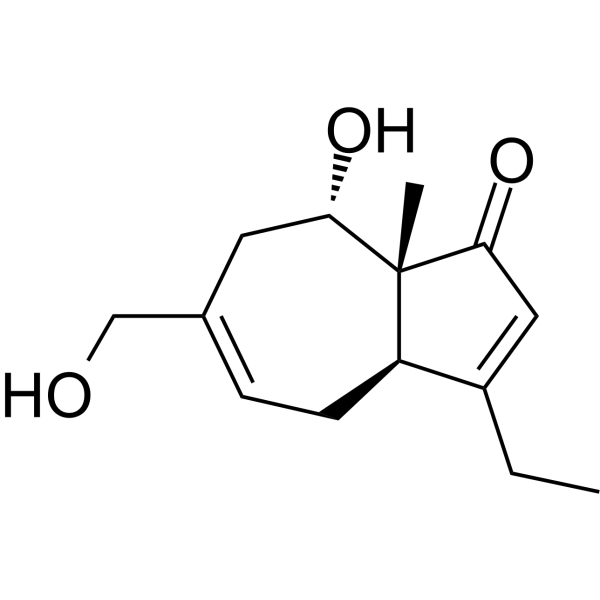 0 ImagesCat. No.: HY-N10190CAS No.: 2378379-27-0Asperaculane B is a fungal metabolite against P. falciparum transmission with an IC50 of 7.89 µM. Asperaculane B also inhibits the development of asexual P. falciparum with IC50 of 3 µM, and it is nontoxic to human cells.
-
D-Fructose-1,2-13C2
 0 ImagesCat. No.: HY-W768220D-Fructose-1,2-13C2 is the 13C-labeled D-Fructose. D-Fructose (D(-)-Fructose) is a monosaccharide found in honey, fruits, and?other?plants. Two D-Fructose molecules can combine to form a disaccharide, sucrose.
-
PF-05387252
 0 ImagesCat. No.: HY-116184CAS No.: 1604034-71-0PF-05387252 is a potent and selective IRAK4 inhibitor with the activity of inhibiting endogenous TLR signaling pathways. PF-05387252 has shown anti-inflammatory activity in experimental models and may have potential clinical application value in inhibiting psoriasis. Although PF-05387252 and its related compounds have shown anti-inflammatory effects in animal models, their efficacy in inhibiting psoriasis has not yet been verified.




