



Endogenous Metabolite
Endogenous metabolites refer to the collective set of small-molecule chemical substances present within organelles, cells, organs, biological fluids, or entire organisms; their molecular weights are typically less than 1500 Da. These endogenous metabolites—including lipids, amino acids, short peptides, nucleic acids, carbohydrates, alcohols, and organic acids—not only participate in signal transduction governing genomic function but also receive upstream signals from the environment, thereby bridging the interrelationships among genotype, environment, and phenotype.
Based on their biological functions, microbial endogenous metabolites can be broadly classified into two categories: primary metabolites and secondary metabolites. Primary metabolites are the core molecules essential for supporting microbial growth and proliferation; they serve to provide energy to the microbes or act as precursors and cofactors for the synthesis of biological macromolecules. In contrast, microbial secondary metabolites are a class of low-molecular-weight products that are not strictly essential for microbial growth. Nevertheless, microbial secondary metabolites include numerous substances—such as antibiotics, anti-tumor agents, and cholesterol-lowering agents—that are of critical importance to human health[1][2][3]. Furthermore, the metabolome of a biological organism is influenced by a variety of endogenous factors, including age, sex, body composition, genetic background, and underlying pathological states. The small-molecule metabolites within an organism are diverse and highly distinct; their levels are typically subject to the synergistic regulation of a vast array of enzymes and transport proteins, undergoing processes of synthesis, transformation, degradation, and compartmentalized distribution. Metabolomics research based on endogenous metabolites has been widely applied in the fields of metabolic disorders, neurodegenerative diseases, cancer, cardiovascular diseases, and infectious diseases, where these metabolites hold potential utility as biomarkers or therapeutic targets[1][2][3].
References:
- [1]. Seyedsayamdost MR. Toward a global picture of bacterial secondary metabolism. J Ind Microbiol Biotechnol. 2019 Mar;46(3-4):301-311. [Content Brief]
- [2]. Ruiz B, et al. Production of microbial secondary metabolites: regulation by the carbon source. Crit Rev Microbiol. 2010 May;36(2):146-67. [Content Brief]
- [3]. Wishart DS. Metabolomics for Investigating Physiological and Pathophysiological Processes. Physiol Rev. 2019 Oct 1;99(4):1819-1875. [Content Brief]
Endogenous Metabolite Isoform Specific Products
All Product Categories
-
Endogenous Metabolite Related Products (8420)
Related Products (8420)

-
Antibodies (477)
-
Endogenous Metabolite Isoform Comparison
-
L-Arginine arginine
 0 ImagesCat. No.: HY-N0455CCAS No.: 37466-21-0L-Arginine arginine is the substrate for the endothelial nitric oxide synthase (eNOS) to generate NO. L-Arginine is transported into vascular smooth muscle cells by the cationic amino acid transporter family of proteins where it is metabolized to nitric oxide (NO), polyamines, or L-proline. L-Arginine is a potent vasodilator, and can be used to induce experimental acute pancreatitis.
-
Alkalophilic Proteinase, Streptomyces sp
 0 ImagesCat. No.: HY-E70328Alkalophilic Proteinase, Streptomyces sp is a biocatalyst and a key enzyme in new biocatalyst technology. Enzyme engineering focuses on enhancing enzyme reaction kinetics, substrate selectivity, and activity under harsh conditions such as low or high pH. By introducing stimulus responsiveness to these enzyme modifications, dynamic control of activity is also possible.

-
21-Desoxycortisol-d4
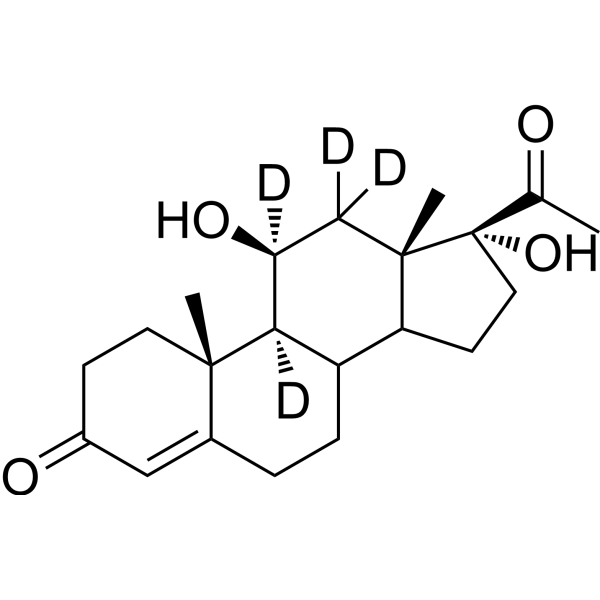 0 ImagesCat. No.: HY-113405S21-Desoxycortisol-d4 is the d4-labeled 21-Deoxycortisol (HY-113405). 21-Deoxycortisol is an adrenal-specific C21 steroid that accumulates via alternative pathways due to 21-hydroxylase (CYP21A2/P450c21) deficiency. 21-Deoxycortisol serves as a sensitive and specific biomarker for steroid 21-hydroxylase deficiency (21OHD).
-
LY 135114 free base
 0 ImagesCat. No.: HY-117679CAS No.: 126254-82-8LY 135114 free base is a metabolite with antitumor activity. LY 135114 free base is a metabolite of LY 195448, a phenylethanolamine compound with antitumor activity. LY 135114 free base has shown potential biological activity in research and may be used for cancer inhibition.
-
1,3-Dipalmitoyl-2-eicosapentaenoyl glycerol
 0 ImagesCat. No.: HY-145537CAS No.: 148691-18-31,3-Dipalmitoyl-2-eicosapentaenoyl glycerol is a positional isomer of triglyceride that can affect lipid metabolism.

-
7α-Hydroxypregnenolone
 0 ImagesCat. No.: HY-W742645CAS No.: 30626-96-17α-Hydroxypregnenolone, a bioactive neurosteroid, is a key neuronal modulator of locomotion. 7α-Hydroxypregnenolone stimulates upstream migration by means of the dopaminergic system in salmon.
-
Benzoyl coenzyme A
 0 ImagesBenzoyl coenzyme A (Benzoyl CoA) is A derivative of Coenzyme A (CoA) in which the mercaptan group of CoA binds to the benzoyl group. Benzoyl coenzyme A is involved in the catalytic reaction as a substrate for the acyl transfer reaction. Benzoyl coenzyme A is a versatile metabolic intermediate that can be used to reveal substrate specificity of enzymes, metabolic regulation, and drug metabolism.
-
Desloratadine (Standard)
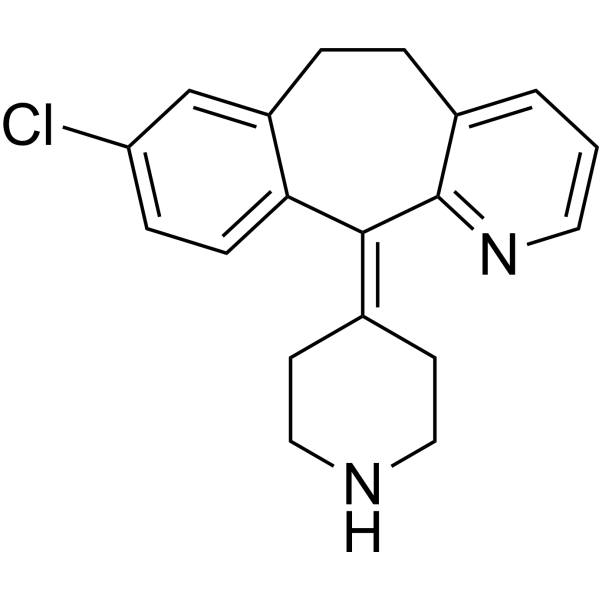 0 ImagesSynonyms: Sch34117 (Standard)Desloratadine (Standard) is the analytical standard of Desloratadine. This product is intended for research and analytical applications. Desloratadine (Sch34117) is the orally active major metabolite of the nonsedating H1-antihistamine Loratadine. Desloratadine is a selective H1-receptor antagonist that has anti-allergic and anti-inflammatory activities.
-
Xylose-13C2
 0 ImagesCat. No.: HY-W779018CAS No.: 201741-00-6Synonyms: D-(+)-Xylose-13C2; (+)-Xylose-13C2; Wood sugar-13C2Xylose-13C2 (D-(+)-Xylose-13C2) is the 13C-labeled Xylose. Xylose (D-(+)-Xylose) is a natural pentose sugar that is catalyzed by xylose isomerase to form xylulose, which is a key step in the anaerobic ethanol fermentation of Xylose. Xylose can be used by microorganisms to produce fuels, chemicals, and bulk industrial enzymes. Xylose provides the substances and energy for cells, as a carbon source for the biosynthesis of high-value chemicals and biofuel. Xylose can be used to fully explore lignocellulose resources and provide a new direction for microbia fermentation.
-
Malonyl CoA
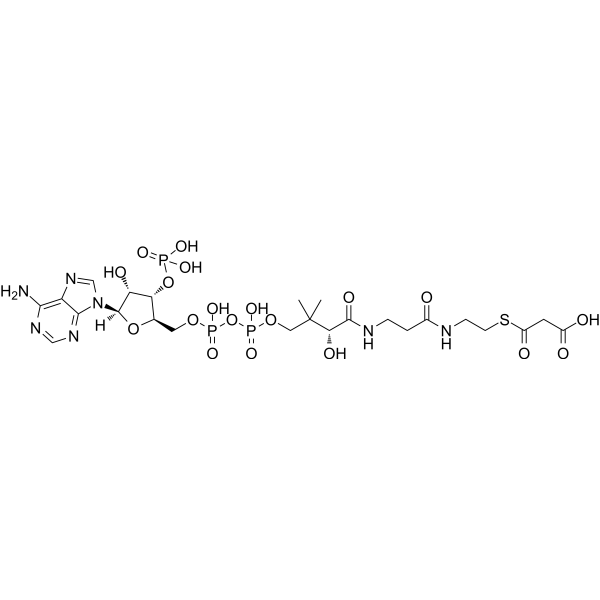 0 ImagesMalonyl CoA is a substrate for fatty acid biosynthesis and an inhibitor of fatty acid oxidation. Malonyl CoA is also a reversible inhibitor of mitochondrial carnitine palmitoyltransferase (CPT) 1.
-
N-Acetyl-D-glucosamine-2-13C
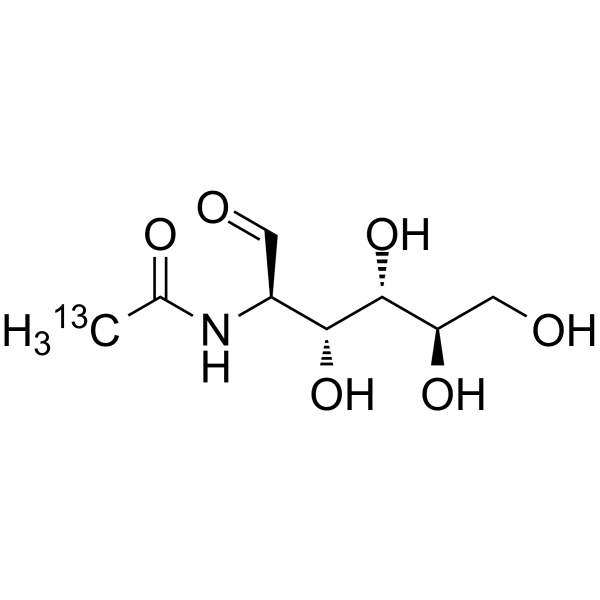 0 ImagesSynonyms: N-Acetyl-2-amino-2-deoxy-D-glucose-2-13CN-Acetyl-D-glucosamine-2-13C is the 13C labeled N-Acetyl-D-glucosamine. N-Acetyl-D-Glucosamine (N-Acetyl-2-amino-2-deoxy-D-glucose) is a monosaccharide derivative of gluc.
-
ATP ditromethamine
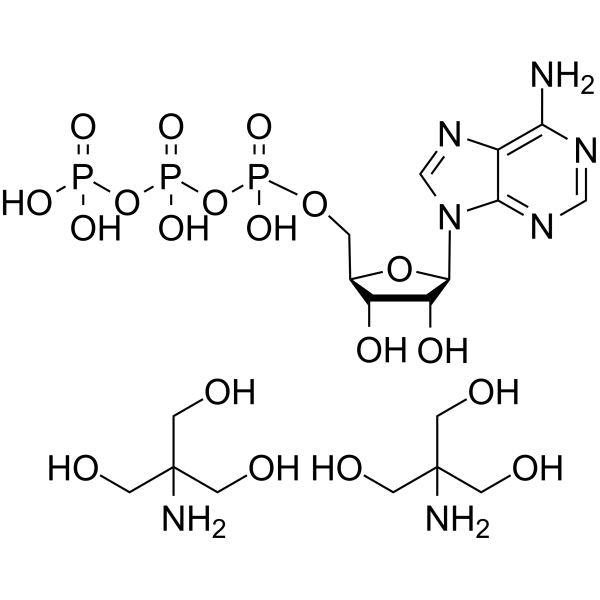 0 ImagesCat. No.: HY-B2176DCAS No.: 102047-34-7Synonyms: Adenosine 5'-triphosphate ditromethamineATP (Adenosine 5'-triphosphate) ditromethamine is a central component of energy storage and metabolism in vivo. ATP ditromethamine provides the metabolic energy to drive metabolic pumps and serves as a coenzyme in cells. ATP ditromethamine is an important endogenous signaling molecule in immunity and inflammation. ATP ditromethamine can activate the NLRP3 inflammasome and induce IL-1β and chemokines secretion. ATP ditromethamine has anti-bacterial infection effects and can protect mice against bacterial infection in mice.
-
N,N,O-Tridesmethylvenlafaxine (Standard)
 0 ImagesCat. No.: HY-W049735RCAS No.: 149289-29-2Vardenafil (dihydrochloride) (Standard) is the analytical standard of Vardenafil (dihydrochloride). This product is intended for research and analytical applications. Vardenafil dihydrochloride is a selective and orally active inhibitor of phosphodiesterase-5 (PDE5), with an IC50 of 0.7 nM. Vardenafil dihydrochloride shows inhibitory towards PDE1, PDE6 with IC50s of 180 nM, and 11 nM respectively, while IC50s are >1000 nM for PDE3 and PDE4. Vardenafil dihydrochloride competitively inhibits cyclic guanosine monophosphate (cGMP) hydrolysis and thus increases cGMP levels. Vardenafil dihydrochloride can be used for the research of erectile dysfunction, hepatitis, diabetes-.
-
Secaubryenol
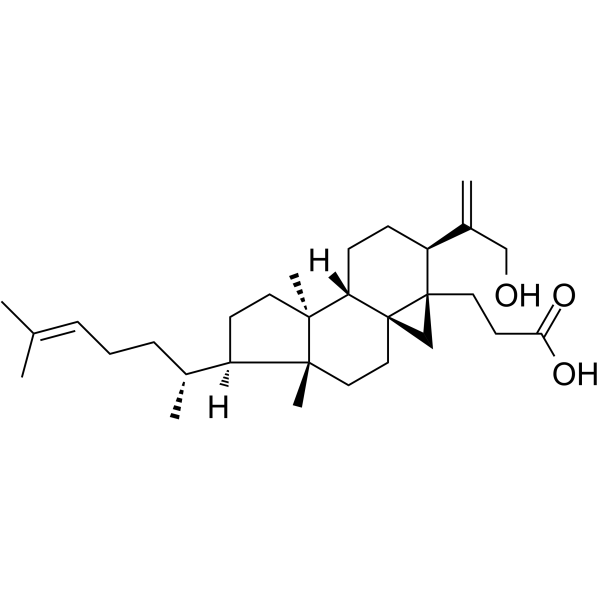 0 ImagesCat. No.: HY-N1272CAS No.: 925932-08-7Secaubryenol is a class of 3,4-secocycloartane triterpenes isolated from Coussarea macrophylla. Secaubryenol does not display any cytotoxic effect at a dose of 10 μg/mL.
-
Histamine N-methyl transferase, rat
 0 ImagesHistamine N-methyl transferase, rat is a biocatalyst and a key enzyme in new biocatalyst technology. Enzyme engineering focuses on enhancing enzyme reaction kinetics, substrate selectivity, and activity under harsh conditions such as low or high pH. By introducing stimulus responsiveness to these enzyme modifications, dynamic control of activity is also possible.
-
N-Trifluoroacetyladriamycin
 0 ImagesCat. No.: HY-129878CAS No.: 26295-56-7Synonyms: AD-41N-Trifluoroacetyladriamycin (AD-41) is a chemotherapeutic compound with antitumor activity. N-Trifluoroacetyladriamycin exhibits the highest fluorescence and radioactivity levels in the small intestine and liver, indicating its significant accumulation in these tissues. N-Trifluoroacetyladriamycin also shows significant accumulation in the kidney, spleen, large intestine, lung, and heart. N-Trifluoroacetyladriamycin is a metabolite of Valrubicin, which is used to inhibit bladder cancer. The presence of N-Trifluoroacetyladriamycin and its derivatives may be related to the biotransformation of the compound and its antitumor mechanism.
-
Emopamil
 0 ImagesCat. No.: HY-111499CAS No.: 78370-13-5Emopamil is an inhibitor of calcium channel that can reduce ischemia-induced neuronal cell damage.
-
Violaxanthin (HPLC≥90%)
 0 ImagesViolaxanthin (HPLC≥90%) is a naturally derived diepoxy xanthophyll carotenoid and light-harvesting accessory pigment with biological activities such as antioxidation and anti-inflammation. Violaxanthin (HPLC≥90%) transfers excitation energy to chlorophyll a under low-light conditions. Violaxanthin (HPLC≥90%) participates in the xanthophyll cycle and dissipates excess light energy in the form of heat, thereby protecting thylakoid membrane lipids from photo-oxidative damage. Violaxanthin (HPLC≥90%) exhibits activities including inhibition of lipid peroxidation, quenching of singlet oxygen, scavenging of DPPH free radicals, and scavenging of ABTS+ free radicals. Violaxanthin (HPLC≥90%) can be used in antioxidant-related research.




