



Endogenous Metabolite
Endogenous metabolites refer to the collective set of small-molecule chemical substances present within organelles, cells, organs, biological fluids, or entire organisms; their molecular weights are typically less than 1500 Da. These endogenous metabolites—including lipids, amino acids, short peptides, nucleic acids, carbohydrates, alcohols, and organic acids—not only participate in signal transduction governing genomic function but also receive upstream signals from the environment, thereby bridging the interrelationships among genotype, environment, and phenotype.
Based on their biological functions, microbial endogenous metabolites can be broadly classified into two categories: primary metabolites and secondary metabolites. Primary metabolites are the core molecules essential for supporting microbial growth and proliferation; they serve to provide energy to the microbes or act as precursors and cofactors for the synthesis of biological macromolecules. In contrast, microbial secondary metabolites are a class of low-molecular-weight products that are not strictly essential for microbial growth. Nevertheless, microbial secondary metabolites include numerous substances—such as antibiotics, anti-tumor agents, and cholesterol-lowering agents—that are of critical importance to human health[1][2][3]. Furthermore, the metabolome of a biological organism is influenced by a variety of endogenous factors, including age, sex, body composition, genetic background, and underlying pathological states. The small-molecule metabolites within an organism are diverse and highly distinct; their levels are typically subject to the synergistic regulation of a vast array of enzymes and transport proteins, undergoing processes of synthesis, transformation, degradation, and compartmentalized distribution. Metabolomics research based on endogenous metabolites has been widely applied in the fields of metabolic disorders, neurodegenerative diseases, cancer, cardiovascular diseases, and infectious diseases, where these metabolites hold potential utility as biomarkers or therapeutic targets[1][2][3].
References:
- [1]. Seyedsayamdost MR. Toward a global picture of bacterial secondary metabolism. J Ind Microbiol Biotechnol. 2019 Mar;46(3-4):301-311. [Content Brief]
- [2]. Ruiz B, et al. Production of microbial secondary metabolites: regulation by the carbon source. Crit Rev Microbiol. 2010 May;36(2):146-67. [Content Brief]
- [3]. Wishart DS. Metabolomics for Investigating Physiological and Pathophysiological Processes. Physiol Rev. 2019 Oct 1;99(4):1819-1875. [Content Brief]
Endogenous Metabolite Isoform Specific Products
All Product Categories
-
Endogenous Metabolite Related Products (8420)
Related Products (8420)

-
Antibodies (477)
-
Endogenous Metabolite Isoform Comparison
-
Secalciferol-d6
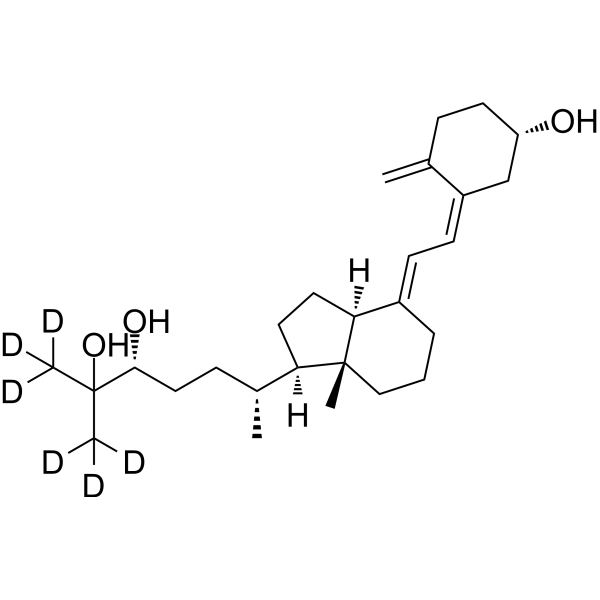 0 ImagesCat. No.: HY-32343SCAS No.: 1440957-55-0Synonyms: (24R)-24,25-Dihydroxyvitamin D3-d6Secalciferol-d6 is the deuterium labeled Secalciferol. Secalciferol is a metabolite of Vitamin D, a possibly anti-inflammatory steroid which is involved in bone ossification.
-
N8-Acetylspermidine dihydrochloride (Standard)
 0 ImagesCat. No.: HY-113253ARCAS No.: 34450-15-2N8-Acetylspermidine dihydrochloride (Standard) is the analytical standard of N8-Acetylspermidine dihydrochloride. This product is intended for research and analytical applications. N8-Acetylspermidine dihydrochloride is a polyamine metabolite. N8-Acetylspermidine dihydrochloride can be oxidatively deaminated by copper amine oxidase. N8-Acetylspermidine dihydrochloride can also induce the differentiation of PC12 cells and promote neurite outgrowth.
-
4-Aminobenzoic acid potassium (Standard)
 0 ImagesSynonyms: PABA potassium (Standard); p-Aminobenzoic acid potassium (Standard)4-Aminobenzoic acid (potassium) (Standard) is the analytical standard of 4-Aminobenzoic acid (potassium). This product is intended for research and analytical applications.
-
A-395N
 0 ImagesCat. No.: HY-124660ACAS No.: 2089056-09-5A-395N serves as a control probe for A-395, a highly potent and selective chemical probe targeting the polycomb protein EED, a key player in Polycomb repressive complex 2 (PRC2) responsible for transcriptional repression via histone H3K27 methylation. While A-395N bears structural similarities to A-395, it demonstrates no pharmacological activity in biochemical or cellular assays, making it an ideal control compound.
-
Dimethyl sulfone (Standard)
 0 ImagesDimethyl sulfone (Standard) is the analytical standard of Dimethyl sulfone. This product is intended for research and analytical applications. Dimethyl sulfone (Methyl Sulfonyl Methane) is a metabolic product of endogenous methanethiol metabolism and intestinal bacterial metabolism. Dimethyl sulfone inhibits choriocapillary endothelial (CCE) cell proliferation, also has many biological effects, including antiinflammatory, antioxidant, and local anesthetic effects that could be neuroprotective.
-
4-Hydroxy-3-methylbenzoic acid (Standard)
 0 ImagesCat. No.: HY-W002587RCAS No.: 499-76-34-Hydroxy-3-methylbenzoic acid is a normal organic acid identified in urine specimens from a healthy population.
-
Lithocholic acid 3-sulfate-d4(sodium salt)
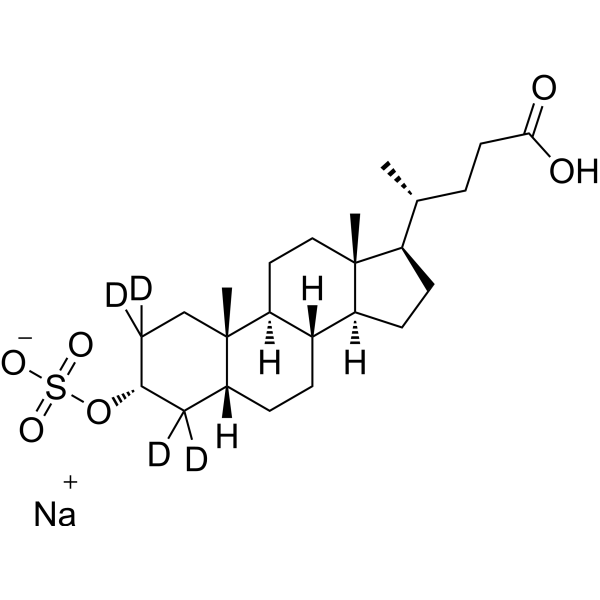 0 ImagesCat. No.: HY-113238S1Lithocholic acid 3-sulfate-d4(sodium salt) is the deuterium labeled Lithocholic acid 3-sulfate.
-
Tetrahydropteroylpentaglutamate
 0 ImagesCat. No.: HY-138270CAS No.: 41520-73-4Synonyms: H4PteGlu5Tetrahydropteroylpentaglutamate (H4PteGlu5) is an inhibitor for 10-CHO-THF dehydrogenase with a Kd of 20 nM through binding of an irreversible o 10-CHO-THF dehydrogenase-H4PteGlu5 complex.
-
3,7,11,15-Tetramethyl-2-hexadecen-1-ol (Standard)
 0 ImagesCat. No.: HY-W107616RCAS No.: 7541-49-33,7,11,15-Tetramethyl-2-hexadecen-1-ol (Standard) is the analytical standard of 3,7,11,15-Tetramethyl-2-hexadecen-1-ol (HY-W107616). This product is intended for research and analytical applications. 3,7,11,15-Tetramethyl-2-hexadecen-1-ol can be used to synthesize vitamin E and vitamin E's precursor vitamin K1. 3,7,11,15-Tetramethyl-2-hexadecen-1-ol regulates transcription in cells through the transcription factor PPAR-alpha and the retinoid X receptor (RXR)43.
-
(+/-)13-HODE cholesteryl ester
 0 ImagesCat. No.: HY-W747575CAS No.: 167354-91-8(±)13-HODE cholesteryl ester is originally extracted from atherosclerotic lesions1 and shown to be produced by Cu2+-catalyzed oxidation of LDL. Later studies determined that 15-LO from rabbit reticulocytes and human monocytes were able to metabolize cholesteryl linoleate, a major component of LDL, to 13-HODE cholesteryl ester.
-
3''-Deamino-3''-hydroxykanamycin B
 0 ImagesCat. No.: HY-180328CAS No.: 31077-70-0Synonyms: NK-1012-13''-Deamino-3''-hydroxykanamycin B (NK-1012-1) is a kanamycin antibiotic. 3''-Deamino-3''-hydroxykanamycin B can be produced by S. tenebrarius. 3''-Deamino-3''-hydroxykanamycin B is effective against E. coli ATCC 25922 and E. coli CCARM 1A020, with MIC values of 128 μg/mL.
-
9(Z),11(Z)-Octadecadienoic acid
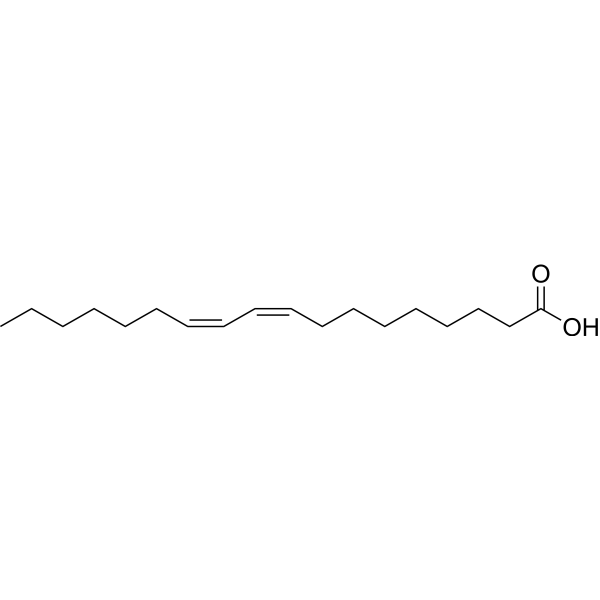 0 Images9(Z),11(Z)-octadecadienoic acid is an isomer of linoleic acid and has antitumor activity (EC 50 = 446.1 µM).
-
L-Arginine-15N4,d7 hydrochloride
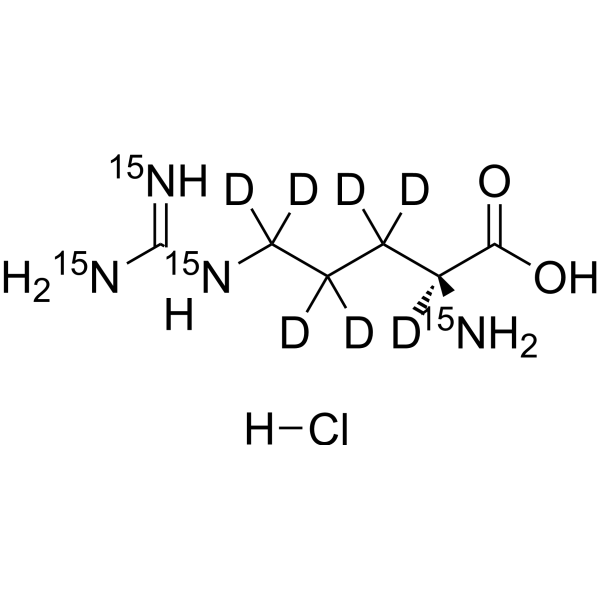 0 ImagesCat. No.: HY-N0455AS9Synonyms: (S)-(+)-Arginine-15N4,d7 hydrochlorideL-Arginine-15N4,d7 (hydrochloride) is the deuterium and 15N-labeled L-Arginine hydrochloride. L-Arginine hydrochloride ((S)-(+)-Arginine hydrochloride) is the nitrogen donor for synthesis of nitric oxide, a potent vasodilator that is deficient during times of sickle cell crisis.
-
M145724
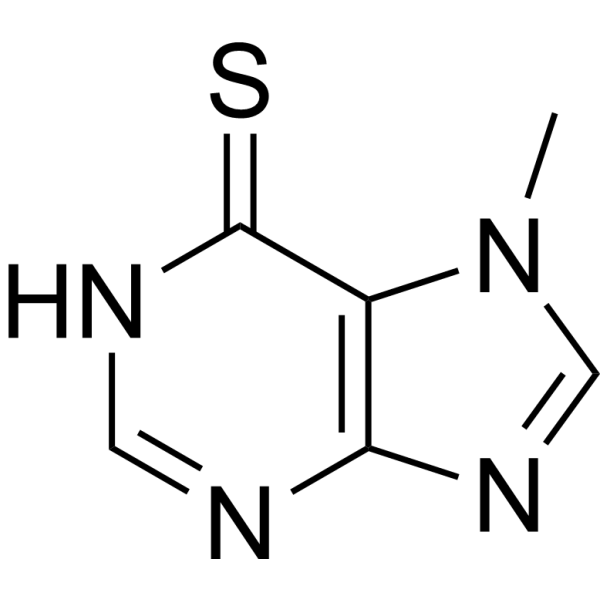
 0 ImagesCat. No.: HY-N13018CAS No.: 90806-04-5Synonyms: (3Z,6E)-1-N-MethylalbonoursinM145724 ((3Z,6E)-1-N-Methylalbonoursin) is a metabolite, which can be isolated from Streptomyces albus.
-
δ-Amyrin
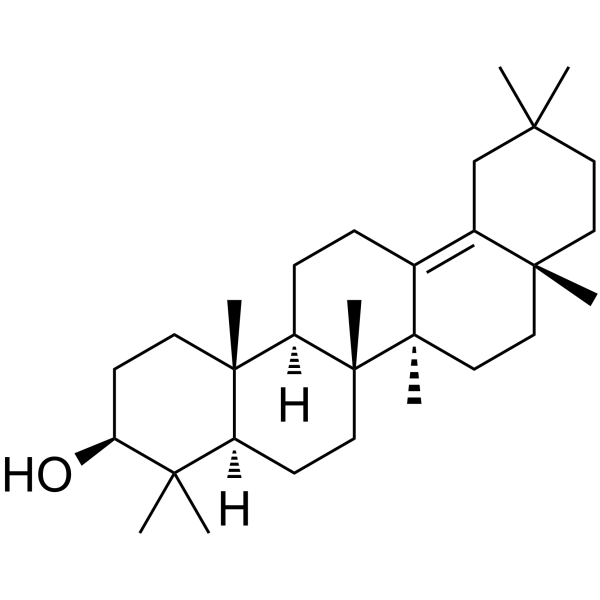 0 Imagesδ-Amyrin ((-)-δ-Amyrin; δ-Amyrenol) is a pentacyclic triterpenoid that is isolated from the bark of Scaevola floribunda. δ-Amyrin is a CD81 receptor binding agent that occupies the active site of CD81 to impede HCV E2-mediated viral entry. δ-Amyrin also exhibits hepatoprotective activity. δ-Amyrin is used in research on hepatitis C virus infection and liver injury.
-
Phosphoenolpyruvic acid
 0 ImagesPhosphoenolpyruvic acid (Phosphoenolpyruvate) is a glycolysis metabolite with a high-energy phosphate group. Phosphoenolpyruvic acid is involved in glycolysis and gluconeogenesis, and used as energy source to produce ATP, under the energy-limited conditions. Phosphoenolpyruvic acid also exhibits cytoprotective and anti-oxidative properties.
-
2,3-Oxidosqualene-d6
 0 ImagesCat. No.: HY-114296SSynonyms: Squalene oxide-d62,3-Oxidosqualene-d6 (Squalene oxide-d6) is a deuterium labeled 2,3-Oxidosqualene (HY-114296). 2,3-Oxidosqualene (Squalene oxide) is a sterol biosynthesis precursor intermediate.2,3-Oxidosqualene participates in cyclization pathways that form sterols and triterpenes, and contributes to introduction of their characteristic 3-hydroxyl group.2,3-Oxidosqualene forms metabolically from squalene in rat liver homogenates under sterol synthesis conditions.2,3-Oxidosqualene converts to sterols including cholesterol, lathosterol, and lanost-8-en-3β-ol in rat liver homogenates under anaerobic conditions.
-
Stearoyl-L-carnitine chloride (Standard)
 0 ImagesStearoyl-L-carnitine (chloride) (Standard) is the analytical standard of Stearoyl-L-carnitine (chloride). This product is intended for research and analytical applications. Stearoyl-L-carnitine chloride is an endogenous long-chain acylcarnitine. Stearoyl-L-carnitine chloride is a less potent inhibitor of GlyT2. Stearoyl-L-carnitine chloride inhibits glycine responses by 16.8% at concentrations up 3 μM.
-
2-Methyldecanenitrile
 0 ImagesCat. No.: HY-W702290CAS No.: 69300-15-82-Methyldecanenitrile is a compound with biological activity for fragrance applications. 2-Methyldecanenitrile exhibits a rich peach aroma with frankincense undertones in perfume compositions. 2-Methyldecanenitrile is stable across the entire pH range, enabling it to create a stable fruity effect at low concentrations in any application.




