



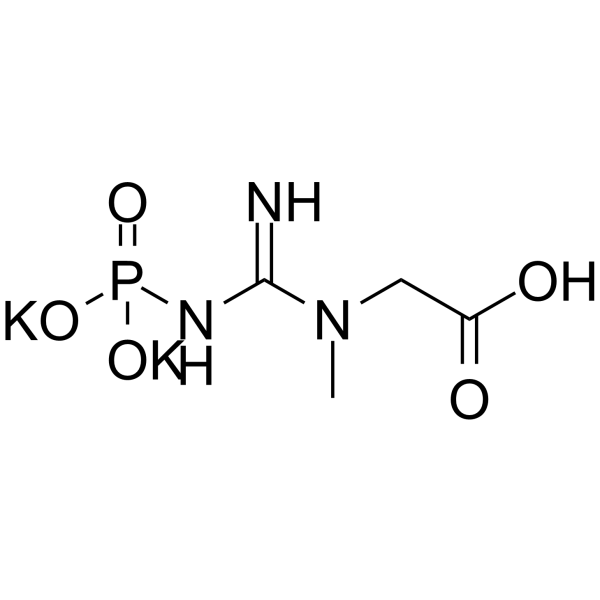
Phosphocreatine dipotassium
Based on 3 publication(s) in Google Scholar
Phosphocreatine (creatine phosphate) is an organic compound found in vertebrate skeletal muscles. Phosphocreatine enhances antioxidant activity, and activates the TAK1 pathway to protect the heart. Phosphocreatine normalizing mitochondrial function and reducing oxidative stress via Akt mediated Nrf2/HO-1 pathway. Phosphocreatine provides renal protection by suppressing Apoptosis and ROS (Reactive Oxygen Species) generation through ERK mediated mediated Nrf-2/HO-1 pathway..
For research use only. We do not sell to patients.
- CAS No.: 18838-38-5
- Formula: C4H8K2N3O5P
- Molecular Weight:287.29
-
Storage:
Please store the product under the recommended conditions in the Certificate of Analysis.

To place orders, for customer services and technical support, please contact: MedChemExpress USA
Tel: 609-228-6898 E-mail: [email protected] [email protected]


-
 Biological Activity
-
Chemical Information
- Purity & Documentation
- References
-
 Help & FAQs


-
HY-W010918
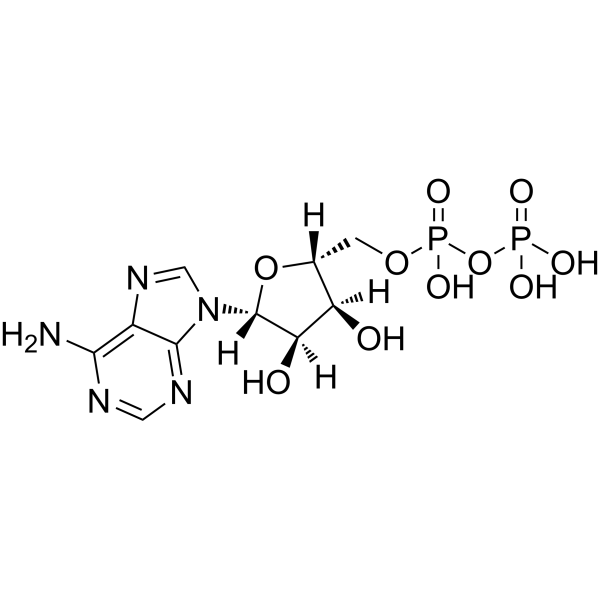
Adenosine 5'-diphosphate -
HY-12695
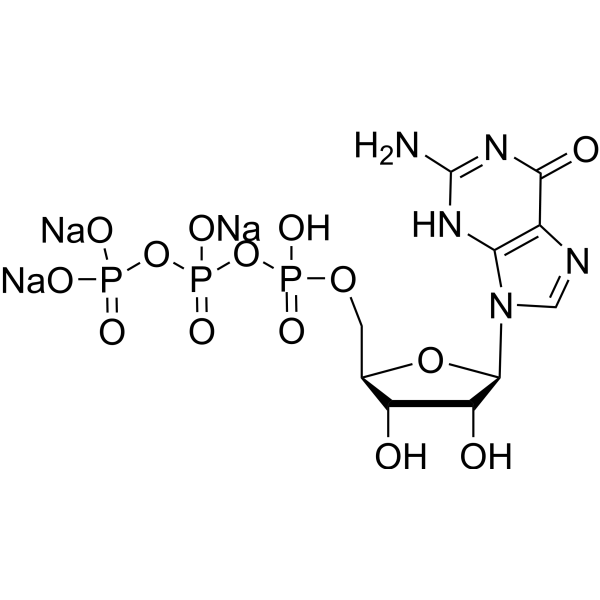
Guanosine triphosphate trisodium -

HY-W010918R
Adenosine 5'-diphosphate (Standard) -
HY-15928
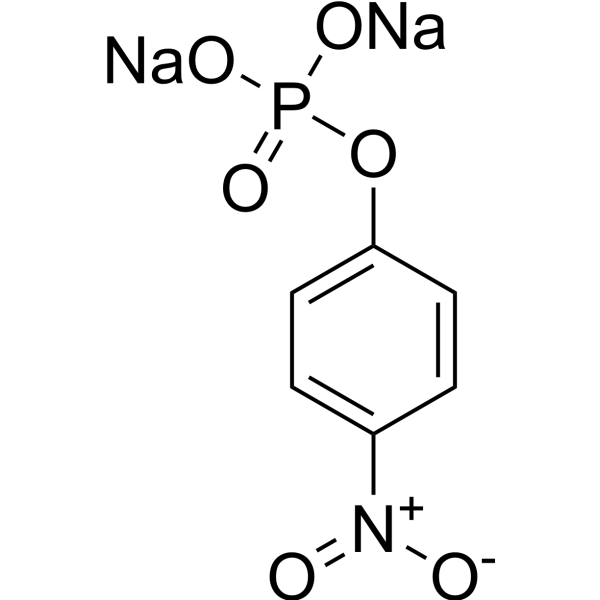
4-Nitrophenyl phosphate disodium -

HY-113225H
GTP trisodium salt, 100 mM Solution, PCR Grade -
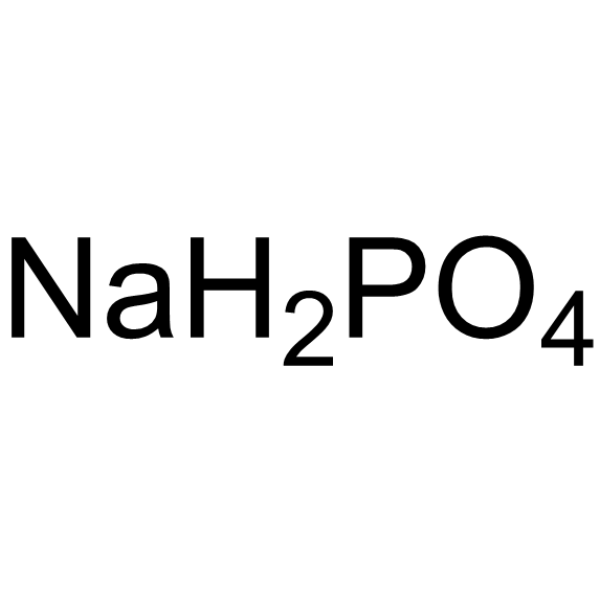
HY-B2243D
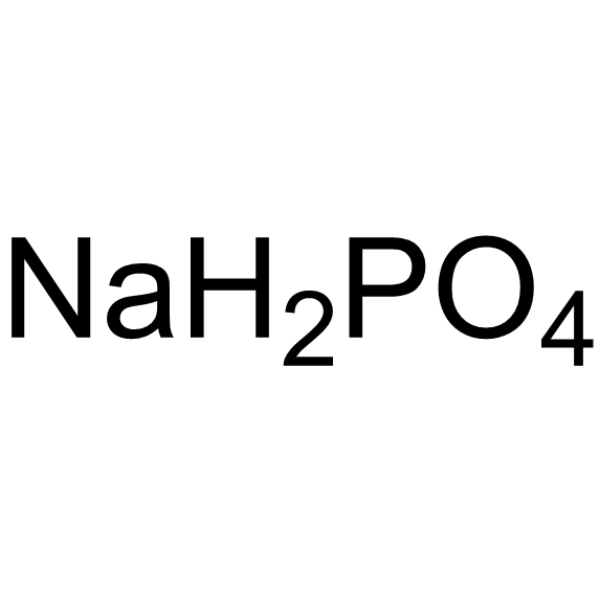
Anhydrous sodium dihydrogen phosphate, for cell culture -
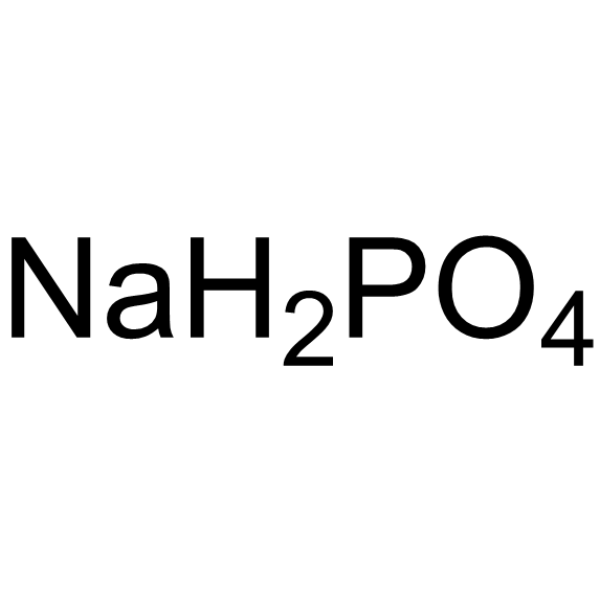
HY-B2243
Anhydrous sodium dihydrogen phosphate -
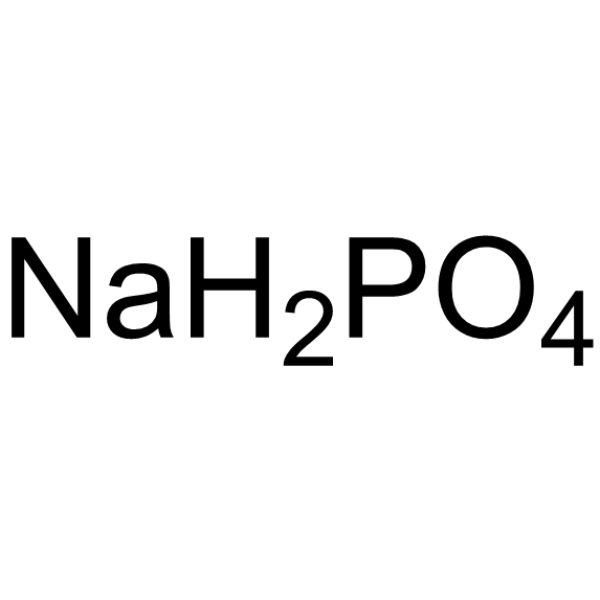
HY-B2243B
Anhydrous sodium dihydrogen phosphate, for molecular biology -
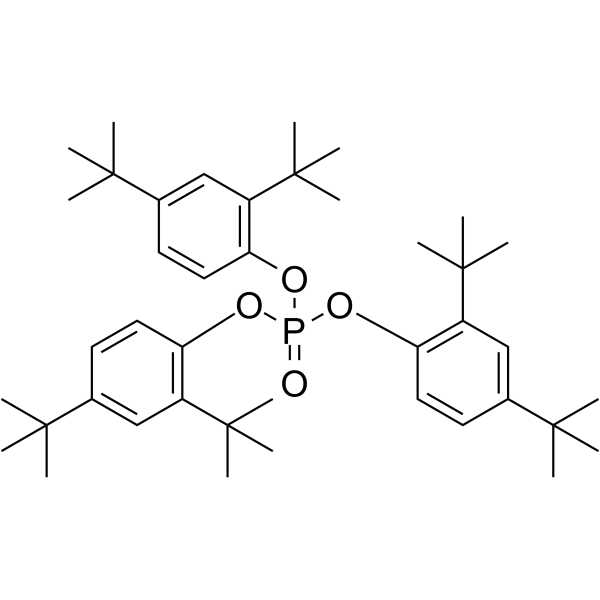
HY-136177
Tris(2,4-di-tert-butylphenyl)phosphate -
HY-B2243A
Anhydrous sodium dihydrogen phosphate, for HPLC -

HY-136177R
Tris(2,4-di-tert-butylphenyl)phosphate (Standard) -
HY-113821
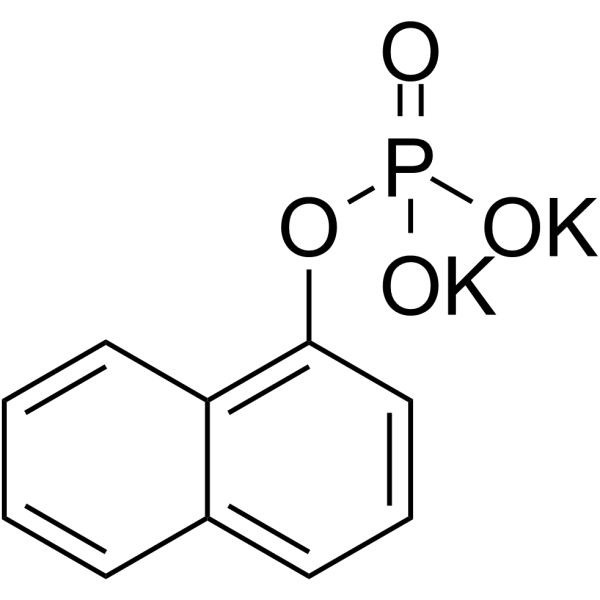
1-Naphthyl phosphate potassium salt
Publications Citing Use of MedChemExpress (MCE) Phosphocreatine dipotassium
MoreAll Endogenous Metabolite Isoforms
MoreAll MAP3K Isoforms
More

Biological Activity
Description
IC50 & Target
|
Human Endogenous Metabolite |
In Vitro
Phosphocreatine (0-1 mM, 24 h) reveals the effect of anti-oxidant, anti-apoptosis and anti-necroptosis to protect agaist DOX (Doxorubicin) (HY-15142A)-induced cardiomyocytes injury in H9c2 cells by targeting TAK1[2].
Phosphocreatine (0-1 mM, 24 h) alleviates oxidative stress by increasing antioxidant activity, subsequently recovers expression level of TAK1 to baseline and reduces apoptosis and necroptosis in DOX-induced myocardial injury[2].
Phosphocreatine (5-20 mM, 24 h) attenuates cell injury and inhibits apoptosis induced by MGO (Methylglyoxal) (HY-106634) in PC12 cell[3].
Phosphocreatine (5-20 mM, 24 h) prevents loss of mitochondrial membrane permeability of MGO (Methylglyoxal) injured PC-12 cells[3].
Phosphocreatine (5-20 mM, 2 h) exhibits the neuroprotective effects in PC-12 cells relying on normalizing mitochondrial function and reducing oxidative stress via Akt mediated Nrf2/HO-1 pathway[3].
Phosphocreatine (5-40 mM, 24 h) at different concentrations might contribute to protection of the NRK-52E cells against MGO-induced kidney injury[4].
Phosphocreatine (10-40 mM, 4 h) suppresses kidney oxidative stress metabolites[4].
MedChemExpress (MCE) has not independently confirmed the accuracy of these methods. They are for reference only.
-
Cell Line:PC-12, NRK-52E cells
-
Concentration:0, 5, 10, 20, 40 mM
-
Incubation Time:24 h
-
Result:Was not toxic to PC-12 cells under the treatment conditions.
Significantly increased PC-12 cell viability at the concentrations of 5, 10 and 20 mM compared with MGO (Methylglyoxal) (HY-106634) groups.
Contributed to protection of the NRK-52E cells against MGO-induced kidney injury.
-
Cell Line:PC-12, NRK-52E cells
-
Concentration:5, 10, 20, 40 mM
-
Incubation Time:2 h
-
Result:Significantly suppressed the enhanced early apoptosis in PC-12 cells in a dose-dependent manner.
Increased the expression of Bcl-2, procaspase-3 and procaspase-9 in NRK-52E cells.
Decreased the expression of Bax and cleaved caspase-3 in NRK-52E cells..
Suppressed karyorrhexis and karyopyknosis in NRK-52E cells..
Decreased the apoptotic rate compared with MGO-treated cells in NRK-52E cells..
Prevented the losing of MMP (mitochondrial membrane potential) in NRK-52E cells.
-
Cell Line:PC-12, NRK-52E cells
-
Concentration:20, 40 mM
-
Incubation Time:24 h
-
Result:Increased the expression levels of Akt, Nrf2 (nuclear factor (erythroid-derived-2)-like 2 (Nrf2)) and HO-1 (Hemeoxygenase-1) in PC12 cells.
Increased the expression of nuclear Nrf2 levels, and decreased Nrf2 level in PC12 cells cytoplasm.
Increased the expression of p-Akt, HO-1 and Nrf2 with compared with pre-treatment for 2 h with LY294002 (a PI3K inhibitor) in PC12 cells.
Significantly increased Bcl-2 and procaspase-9 levels and decreased Bax, cleaved caspase-9 and cleaved caspase-3 C level in NRK-52E cells.
Decreased the expression of p-ERK and increased the Nrf2 and HO-1 expressions in NRK-52E cells.
In Vivo
Phosphocreatine (20-40 mg/kg, i.v., daily, 6 weeks) has a protective effect on the kidney tissues against diabetic nephropathy in SD (Sprague Dawley) rats[4].
MedChemExpress (MCE) has not independently confirmed the accuracy of these methods. They are for reference only.
-
Animal Model:Male Sprague Dawley (SD) rats were divided into three groups, normal control group, DOX group and phosphocreatine group[2].
-
Dosage:200 mg/kg
-
Administration:i.p., once every other day, 7 weeks
-
Result:Improved the heart function abnormality.
Lowered myocardial apoptosis.
Recovered the expression of Nrf2, SOD, FoxO3a and diminished C-Casp3, Bax/Bcl2 in the myocardial tissue of rats.
Markedly improved myocardial necroptosis, as indicated by decreasing expression of RIP3 and CaMKII.
Increased expression level of TAK1.
-
Animal Model:Male Sprague Dawley (SD) rats were divided into five groups: control group, model group (STZ(Streptozotocin) (HY-13753)), low dose group (STZ+ phosphocreatine 22 mg/kg) and high dose group (STZ (HY-13753) + phosphocreatine 40 mg/kg). [4].
-
Dosage:20, 40 mg/kg
-
Administration:i.v., daily, 6 weeks
-
Result:Reduced hyperglycemia compared with STZ (Streptozotocin) (HY-13753) -treated rats.
Increased the weight of rats gradually compared with STZ (Streptozotocin) (HY-13753) group.
Decreased kidney weight index (kidney weight/body weight).
Decreased MDA level and increased of GSH and SOD levels compared with STZ group.
Decreased the apoptotic rate compared with MGO-treated groups.


Chemical Information
-
CAS No. 18838-38-5
-
Molecular Weight 287.29
-
Formula C4H8K2N3O5P
-
SMILES
OC(CN(C(NP(O[K])(O[K])=O)=N)C)=O
-
Synonyms
Creatine phosphate dipotassium; Creatinephosphoric acid dipotassium
-
Structure Classification
-
Initial Source
-
Shipping
Room temperature in continental US; may vary elsewhere.
-
Storage
Please store the product under the recommended conditions in the Certificate of Analysis.


Publications (3)
-
Journal Impact Factor
-
Most Recent
-
Autophagy
ESCRT III-mediated lysosomal repair improve renal tubular cell injury in cisplatin-induced AKI. [Abstract]2025 Sep;21(9):1927-1944. PMID: 40152606 -
-
Toxicol Appl Pharmacol
2022 Apr 15:441:115971. PMID: 35276125


Purity & Documentation
References
[1]. Feldman EB, et al. Creatine: a dietary supplement and ergogenic aid. Nutr Rev. 1999 Feb;57(2):45-50. [Content Brief]
[2]. Wang C, et al. Phosphocreatine attenuates doxorubicin-induced cardiotoxicity by inhibiting oxidative stress and activating TAK1 to promote myocardial survival in vivo and in vitro. Toxicology. 2021 Aug;460:152881. [Content Brief]
[3]. Li H, et al. Neuroprotective effect of phosphocreatine on oxidative stress and mitochondrial dysfunction induced apoptosis in vitro and in vivo: Involvement of dual PI3K/Akt and Nrf2/HO-1 pathways. Free Radic Biol Med. 2018 May 20;120:228-238. [Content Brief]
[4]. Shopit A, et al. Protection of diabetes-induced kidney injury by phosphocreatine via the regulation of ERK/Nrf2/HO-1 signaling pathway. Life Sci. 2020 Feb 1;242:117248. [Content Brief]

Calculators
Concentration (start) × Volume (start) = Concentration (final) × Volume (final)


Phosphocreatine dipotassium Related Classifications
HY-D0885C Related Classifications
 Powered by Bioz