



MAP3K6/ASK2
MAP3K6, also known as MEKK6, functions as a mitogen-activated protein kinase kinase kinase (MAP3K) regulating angiogenesis and tumorigenesis through modulation of vascular endothelial growth factor (VEGF) expression[1]. Under both normoxic and hypoxic conditions, MAP3K6 influences endothelial proliferation and capillary network formation, highlighting its role in vascular remodeling[1]. Germline variants of MAP3K6 have been linked to familial gastric cancer, acting as a tumor suppressor and predisposing factor in hereditary cases lacking CDH1 mutations[2]. Additionally, MAP3K6 mutations are associated with neurovascular disorders characterized by stroke, cognitive impairment, and tremor, potentially via altered VEGF-mediated angiogenic pathways[3]. ASK2, a serine/threonine kinase closely related to ASK1, operates as a functional MAP3K only within a heteromeric complex with ASK1, stabilizing ASK2 and enhancing oxidative stress-induced JNK activation[4]. In this complex, ASK2 reciprocally phosphorylates and activates ASK1, demonstrating a cooperative mechanism distinct from ASK1 alone[4]. In inflammatory and infectious contexts, the ASK1/ASK2 complex regulates NLRP3 inflammasome priming, with ASK2 playing a dominant role in mediating lethal pathology in vivo[5][6]. Compared with related isoforms such as ASK1, ASK2 is more directly implicated in proapoptotic responses while ASK1 predominantly drives cytokine-mediated inflammatory signaling[7][4]. For experimental applications, targeting ASK2 within the heteromeric ASK1/ASK2 complex may allow selective modulation of stress-induced apoptosis without broadly affecting ASK1-dependent inflammatory pathways[4][5].
References:
- [1]. Gençkaya TP, et al. Fruit anatomy of Tragopogon species (Asteraceae) and its taxonomic implications. BMC Plant Biol. 2026 May 21. [Content Brief]
- [2]. Iriyama T, et al. ASK1 and ASK2 differentially regulate the counteracting roles of apoptosis and inflammation in tumorigenesis. EMBO J. 2009 Apr 8;28(7):843-53. [Content Brief]
- [3]. Ilinca A, et al. MAP3K6 Mutations in a Neurovascular Disease Causing Stroke, Cognitive Impairment, and Tremor. Neurol Genet. 2021 Jan 21;7(1):e548. [Content Brief]
- [4]. Gaston D, et al. Germline mutations in MAP3K6 are associated with familial gastric cancer. PLoS Genet. 2014 Oct 23;10(10):e1004669. [Content Brief]
- [5]. Place DE, et al. ASK Family Kinases Are Required for Optimal NLRP3 Inflammasome Priming. Am J Pathol. 2018 Apr;188(4):1021-1030. [Content Brief]
- [6]. Tartey S, et al. ASK1/2 signaling promotes inflammation in a mouse model of neutrophilic dermatosis. J Clin Invest. 2018 May 1;128(5):2042-2047. [Content Brief]
- [7]. Takeda K, et al. Apoptosis signal-regulating kinase (ASK) 2 functions as a mitogen-activated protein kinase kinase kinase in a heteromeric complex with ASK1. J Biol Chem. 2007 Mar 9;282(10):7522-31. [Content Brief]
- [8]. Eto N, et al. Mitogen-activated protein 3 kinase 6 mediates angiogenic and tumorigenic effects via vascular endothelial growth factor expression. Am J Pathol. 2009 Apr;174(4):1553-63. [Content Brief]
All Product Categories
-
MAP3K6/ASK2 Related Products (1)
Related Products (1)

-
DDO3711
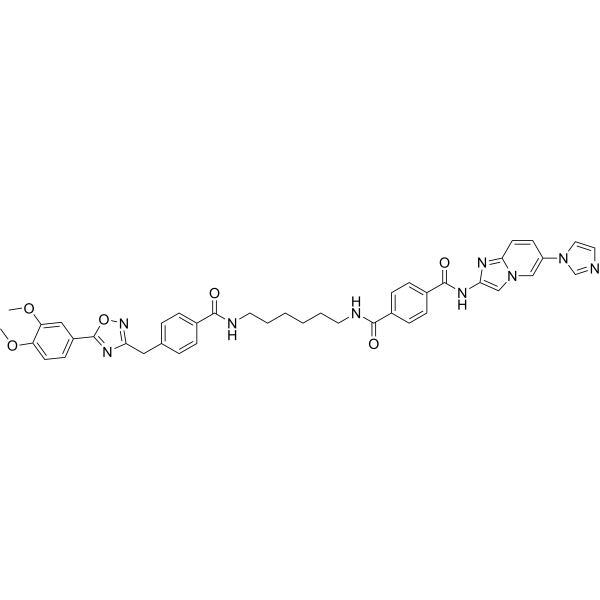 0 ImagesCat. No.: HY-152247CAS No.: 2673364-10-6DDO3711, a PP5-recruiting phosphatase recruitment chimeras (PHORCs), is formed by connecting a small molecular apoptosis signal-regulated kinase 1 (ASK1) inhibitor to a PP5 activator through a chemical linker. DDO3711 specifically inhibits ASK1 (IC50 =164.1 nM) not ASK2 (IC50>20 μM). DDO3711 significantly dephosphorylates p-ASK1T838 by recruiting PP5 and shows the ASK1-dependent antiproliferative activity. DDO3711 has anti-cancer activity and has the potential for abnormally phosphorylated oncoproteins research.



